
After the last hailstorm, a lot of Texas property owners found themselves in the same spot. You walk outside, look up, see bruised shingles, scattered granules in the gutter, maybe a water stain starting inside, and suddenly a basic repair turns into a bigger question. Do you put back what was there, or do you upgrade?
That's where the asphalt vs metal roofing decision gets real. In Dallas, Fort Worth, Arlington, Plano, Tyler, Longview, Austin, and San Antonio, a roof doesn't just need to look good. It has to handle hail, high winds, heavy rain, and months of hard sun without turning into a repeating expense.
If you're replacing a roof in Texas, my advice is simple. Don't choose based on sticker price alone. Choose based on total cost of ownership, storm performance, and how long you plan to keep the property. That's the difference between buying a roof once and buying the same lesson twice.
Choosing Your Next Roof in Texas
A hailstorm rolls through McKinney at 2 a.m. By breakfast, you're looking at bruised shingles, granules in the gutters, and an insurance claim that may or may not cover what your roof needs. That's the moment the crucial decision starts. Do you buy the cheaper roof again, or do you spend more now and cut down the chance of paying for this problem twice?
For Texas property owners, that choice should be based on total cost of ownership. Not just the contract price. You need to weigh how the roof holds up in DFW and East Texas weather, what it can do for insurance premiums if you install a Class 4 impact-rated system, how much summer heat it pushes into the attic, and what it will cost later if solar panels have to be detached and reset for another reroof.
Here's the plain answer. Asphalt shingles usually win on upfront price. Metal usually wins on long-term cost control. If you plan to keep the property for years, metal deserves serious attention. If you need the lowest entry price and may sell soon, asphalt still has a place.
Use this side-by-side view to frame the decision:
| Roofing factor | Asphalt shingles | Metal roofing |
|---|---|---|
| Upfront cost | Lower initial cost | Higher initial cost |
| Typical lifespan | Shorter service life in general | Longer service life in general |
| Heat performance | Absorbs more heat, especially in darker colors | Reflective finishes can reduce heat gain |
| Hail and storm durability | More likely to show wear and require repair after repeated storms | Better fit for owners focused on long-term storm resistance |
| Insurance impact | Depends heavily on product rating and carrier | Class 4 options may help with premium discounts, depending on carrier |
| Solar panel considerations | More likely to trigger detach and reset costs sooner if the roof needs replacement again | Longer roof life can line up better with the lifespan of a solar system |
| Best fit | Lower upfront budget, shorter ownership timeline | Longer ownership timeline, lower repeat-replacement risk |
What Texas changes
Texas compresses roofing decisions. In milder states, an owner can get away with choosing on price alone. In Dallas, Fort Worth, Arlington, Tyler, and Longview, hail and wind test that choice fast. In Austin, Round Rock, and New Braunfels, extended heat does the rest.
That matters because the cheapest roof can become the most expensive roof if you replace it sooner, file more claims, or pay to remove and reinstall solar panels before the panels themselves are near the end of their useful life.
Practical rule: In Texas, buy the roof that fits your ownership timeline, not just this year's budget.
The decision that matters most
If you expect to move in a few years, asphalt often does the job. If you plan to stay put, hold the home as a rental, or own a commercial building where another reroof would disrupt tenants, operations, or solar equipment, metal is usually the smarter financial move.
If you're considering premium metal systems, this guide to standing seam metal roofing options for Texas properties gives you a clearer picture of what you're paying for.
A roof in Texas is not a cosmetic purchase. It's a cost-control decision tied to storms, insurance, energy use, and how many times you want to deal with replacement crews over the next few decades.
Performance in Texas Weather Head to Head
A June hailstorm hits McKinney at 2 a.m. By breakfast, the neighbor with older shingles is calling insurance. The house with a well-installed metal roof may still need inspection, but it is usually in a much better position. That is Texas roofing in real life.
Lifespan under Texas sun
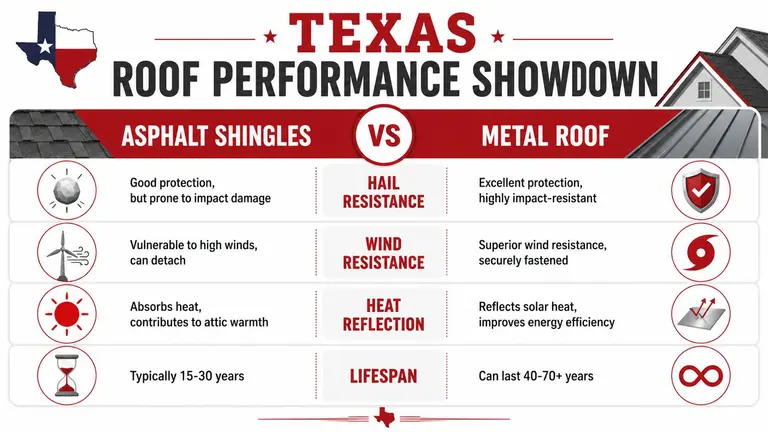
Texas heat is hard on every roof, but it is especially hard on lower-cost asphalt systems. Constant UV exposure, long summers, and sharp temperature swings wear shingles down faster here than many owners expect. You see the result in dried-out mats, granule loss, and roofs that still look acceptable from the street but are aging faster than the owner realizes.
Metal holds up better over time. A properly installed metal roof resists heat damage, sheds water fast, and does not depend on exposed granules for its weathering surface. If you want to compare premium panel profiles, this guide to standing seam metal roofing options for Texas properties is a useful starting point.
The practical takeaway is simple. In Texas, asphalt is more likely to age on a shorter replacement cycle. Metal is more likely to keep performing deep into long-term ownership.
Hail resistance in plain English
Hail is the pressure test that changes opinions fast. One good storm can leave an asphalt roof with bruising, displaced granules, torn tabs, and shortened remaining life, even if the leak does not show up that same week. That matters in DFW and East Texas, where roofs often take more than one serious hail event during the time an owner keeps the property.
Metal usually handles repeated impact better, especially products tested to higher impact standards. The Insurance Institute for Business and Home Safety explains that roof coverings with a UL 2218 Class 4 rating have met the highest standard in that test category, which is why Class 4 products often get attention in hail-prone regions and in insurance conversations with Texas carriers and agents. See IBHS guidance on impact-resistant roofs and hail ratings.
That rating does not make a roof indestructible. It does put you in a better position after the kind of storm that drives claims across Frisco, Plano, Tyler, and Longview.
Wind performance when storms turn violent
Wind exposes weak installation fast. It finds lifted shingle edges, poorly secured ridge caps, loose flashing, and vulnerable penetrations. Once the roof system starts to open up, wind-driven rain does the rest.
Metal has the edge here, especially in panel systems designed and installed for high-wind exposure. The Federal Emergency Management Agency notes that metal panels can perform well in severe wind if the system is properly engineered and attached, and if edge details and flashing are handled correctly. Their guidance on protecting buildings from high winds lines up with what experienced Texas contractors see after major storms.
Material matters. Installation matters more.
A cheap bid can wipe out the advantage of either roof type, but metal still gives you the stronger starting point for storm resistance.
Heat and attic comfort
North and East Texas summers punish dark, heat-holding roofs. Asphalt absorbs more solar heat, which can push more heat into the attic and make upper floors harder to keep comfortable. That does not just affect comfort. It can also keep HVAC systems running harder for longer stretches.
Metal reflects more sunlight, especially with lighter colors and factory-applied reflective coatings. The U.S. Department of Energy explains that cool roofing materials can reduce roof temperatures and help lower cooling demand, which is a real benefit during long Texas summers. Their overview of cool roofs and reflective roofing performance is worth reading.
For Texas owners, that benefit carries beyond the electric bill. Lower heat load can support better long-term performance from the attic space, improve comfort upstairs, and strengthen the total cost picture over years of ownership.
The True Cost of a Texas Roof Upfront vs Lifecycle
A lot of Texas owners get hit with the same decision right after a storm. The insurance scope is on the table, the deductible is real, and the first question is whether to keep the roof payment low or spend more now and stop repeating this process every decade or two.
That shift makes the asphalt vs metal roofing choice a business decision, not just a price comparison.

What you pay at installation
Metal costs more at the start. In Texas, that price gap is usually wide enough to get your attention.
The 2024 Remodeling Cost vs. Value report consistently shows metal roofing as a higher-ticket upgrade than asphalt-based roofing work, which matches what property owners see on real estimates across DFW and East Texas. Standing seam metal usually lands far above architectural shingles because the panels, trim packages, underlayment, and labor are all more demanding.
If you want a tighter handle on the shingle side before comparing bids, review this breakdown of asphalt shingle roof cost per square foot.
Upfront price is only part of the bill
Texas roofs do not live easy lives. Hail in DFW, straight-line wind in North Texas, and brutal summer heat across East Texas shorten the useful life of lower-cost systems and increase the odds of repair calls between replacements.
That matters because ownership cost is not just the install invoice. It is the first roof, the repairs after storms, the timing of the next replacement, the deductible on future claims, the disruption to your household or tenants, and the cost of removing and reinstalling anything sitting on top of that roof.
For a long-term owner, asphalt often costs less today and more over time.
Texas costs owners forget to count
Some of the biggest expenses never show up in the contractor's first proposal.
- Insurance premiums: A Class 4 impact-resistant roof can help some Texas owners qualify for premium discounts, depending on the carrier and policy. The Insurance Institute for Business & Home Safety guidance on impact-resistant roofing and insurer credits is worth reviewing before you choose a system. If your replacement qualifies, that discount changes the math.
- Solar detach and reset: If you have rooftop solar, every reroof can trigger panel removal and reinstallation. On a shorter-life roof, you are more likely to pay that bill again while the solar system still has useful years left.
- Repeat deductibles: In hail country, another replacement cycle can mean another claim and another deductible. Texas owners in places like McKinney, Denton, Tyler, and Longview know how fast those costs stack up.
- Cooling costs: Reflective metal can cut heat gain into the attic and reduce summer strain on the HVAC system. In a hot market, that savings adds up year after year.
One extra reroof over your ownership period can wipe out a big chunk of asphalt's lower upfront price.
My practical read
If you need the lowest initial cost and you may sell in the near term, asphalt is still a workable option.
If you plan to hold the property, especially in DFW or East Texas, metal usually wins the total cost argument. You pay more once, you improve your odds on storm performance, you may get insurance advantages with the right rated system, you avoid repeat solar detach and reset costs, and you keep more control over long-term ownership expenses. In Texas, that is the comparison that matters.
Aesthetics Resale Value and Curb Appeal
In Texas, buyers notice the roof before they ask about the water heater, insulation, or even the kitchen. In hail and heat country, the roof signals one thing fast. How much trouble this house is likely to bring.
Asphalt still wins on familiarity
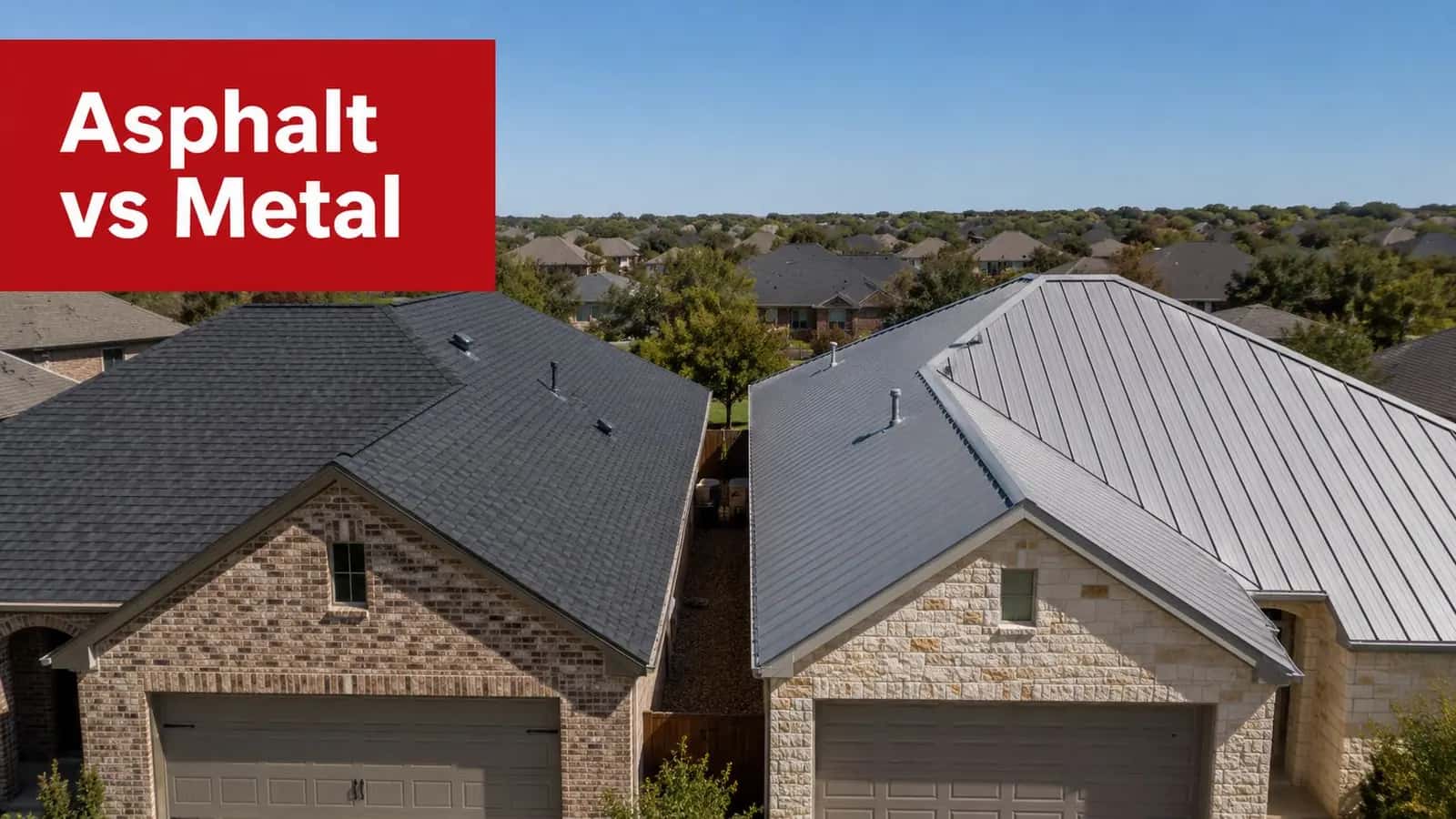
Asphalt shingles fit almost any neighborhood in Texas. Architectural shingles give you better shadow lines and a fuller look than old three-tab roofs, which helps a traditional brick home in Garland, Mesquite, or Marshall look right for the street.
That familiarity has value.
A fresh shingle roof photographs well, looks clean in listing photos, and removes an obvious objection for buyers who do not want to inherit a worn-out roof right after closing. If you expect to sell soon and you need broad buyer acceptance without stretching the budget, asphalt still does that job well.
Metal wins on presence and perceived quality
Metal gives a house a stronger first impression. Standing seam looks sharp on modern homes. Stone-coated profiles work better on more traditional homes where you want durability without the agricultural look some owners still picture.
The practical side matters too. Metal roofing is lighter than many asphalt systems, which can reduce structural load. The Metal Roofing Alliance overview of residential metal roofing is a solid reference if you want to compare styles and general design options.
Here's a visual example of the style difference as seen in practice:
Curb appeal affects resale, but Texas buyers also price in future roof costs
Curb appeal connects directly to sale price. So does buyer confidence.
In DFW and East Texas, buyers know storms are part of ownership. A roof that looks durable and expensive can help. A roof that also suggests fewer future replacements, fewer insurance headaches, and less chance of paying to remove and reinstall solar later helps even more. That is why metal often supports stronger premium positioning in the Texas market.
Remodeling industry cost recoup data regularly places roofing high on the list of exterior projects buyers notice, especially when the upgrade improves both appearance and durability. You can review the Remodeling Cost vs. Value report for market-wide resale trends.
If the house has solar, buyers may also think one step ahead. A longer-lasting roof underneath the panels is easier to sell than a roof that may force a detach and reset bill later. Owners who already maintain solar know that roof access and panel upkeep go together, and even basic tasks like how to clean solar panels become simpler to plan when the roof under them is built for the long haul.
My advice is simple. Choose asphalt if you want the safest neighborhood fit and you may sell in the near term. Choose metal if you want stronger curb appeal, better premium perception, and a roof that supports the total cost story Texas buyers care about.
Maintenance Insurance and Solar Panel Considerations
A roof decision gets expensive after installation, not just at signing. In Texas, the ownership math usually swings on three things: storm maintenance, insurance treatment, and whether solar panels have to come off and go back on later.
What ongoing maintenance looks like
Ongoing maintenance needs are different for each material.
Asphalt requires more attention in DFW and East Texas because hail, high wind, and brutal summer heat wear it down faster. After major storms, you need someone checking for bruising, lifted tabs, granule loss, exposed nail lines, and flashing problems. That inspection cycle is part of the total cost of owning shingles here.
Metal usually creates fewer repeat repairs over time. You still need inspections after storms, especially around penetrations, sealants, flashings, and fasteners. But if your goal is less recurring roof work over the next couple of decades, metal is the stronger play.
That difference matters even more once solar enters the picture. A shorter-life roof under panels can force you to pay for access twice.
Insurance and impact ratings
Insurance is not a side issue in Texas. It is part of total cost of ownership.
If you are replacing a roof in hail country, ask your contractor and your carrier about Class 4 impact-resistant products before you sign anything. Some Texas insurers offer discounts for qualifying systems, and those savings can change the long-term math, especially on larger homes in storm-prone parts of North Texas.
Do not assume the discount is automatic. Confirm the product qualifies, confirm your carrier recognizes it, and confirm what paperwork they require. Handle that before installation.
Metal often has the edge here, but product selection matters more than marketing. A properly specified impact-rated system is what helps your premium conversation, not a generic claim that "metal is better."
Solar detach and reset needs to be planned early
Solar changes the replacement schedule. If panels are already installed, reroofing usually means a detach and reset by the solar company or another qualified crew. That adds labor, coordination, and delay. It can also add a painful bill that homeowners forget to include when they compare asphalt to metal.
I see the same mistake over and over. A homeowner installs solar over an aging shingle roof, then has to pay to remove and reinstall the array years earlier than expected because the roof gave out first. That is bad sequencing and bad money management.
If you plan to stay in the house and already have solar, or know solar is coming soon, a longer-lasting roof under the panels usually makes better financial sense. It reduces the odds that you will pay for detach and reset in the middle of the roof's life. It also makes future service planning easier, including basic upkeep like how to clean solar panels.
My recommendation on ownership logistics
For Texas owners focused on long-term cost control, metal is the cleaner answer. It usually means fewer maintenance headaches, a better shot at insurance advantages if you choose the right impact-rated product, and less risk of paying solar detach and reset costs on an accelerated timeline.
Choose asphalt only if the lower upfront price is still worth those tradeoffs to you. If solar is involved, coordinate the roofing scope and the solar scope as one job from day one.
Making the Right Choice for Your Texas Property
By this point, the answer should be clearer. The right roof depends on how you own the property, not just what the estimate says.
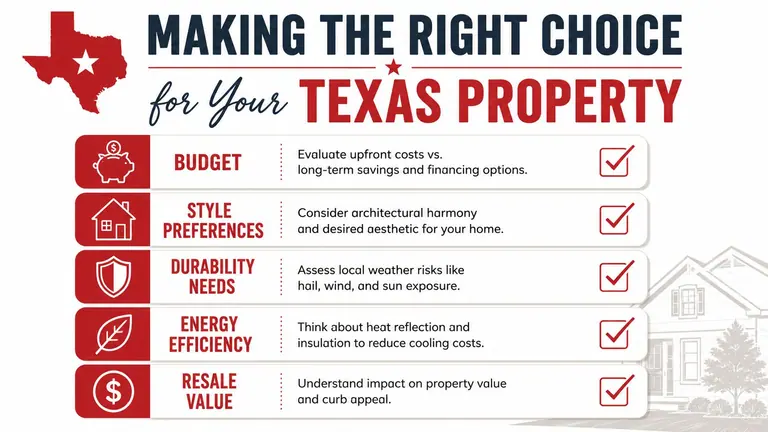
Choose asphalt if this sounds like you
Asphalt shingles are the smart choice when the priority is straightforward and immediate.
- You need the lowest upfront cost: That's where asphalt still holds its ground.
- You may move sooner rather than later: If you don't expect to keep the property long term, the premium for metal may not matter as much to you personally.
- You want a familiar neighborhood look: In many subdivisions across Dallas, Irving, and Longview, asphalt blends in easily.
- You're handling a repair-driven replacement: Sometimes the practical move is replacing like for like and keeping the project simple.
Choose metal if you're thinking long term
Metal is the stronger investment profile for many Texas properties.
First, it fits owners who plan to stay put. If this is your long-term home in Frisco, McKinney, Round Rock, or San Antonio, durability starts to matter more than invoice price.
Second, it's a strong fit for hail exposure and extreme sun. That includes large parts of Dallas-Fort Worth and East Texas where weather is rough enough to make repeat roof work a serious nuisance.
Third, metal makes sense for owners focused on energy efficiency, resale positioning, and fewer replacement cycles. Commercial property owners often see the logic quickly because disruption has its own cost even when it doesn't show up on the roofing line item.
A practical decision checklist
Ask yourself these questions:
- How long will I own this property?
- Am I choosing based on this year's budget or the next few decades of ownership?
- How much hail and wind exposure does this building get?
- Do I have solar panels, or plan to add them?
- Do I want the safest short-term spend, or the strongest long-term value?
If you're planning around Texas weather instead of hoping around it, metal usually comes out ahead.
That doesn't make asphalt a bad roof. It makes it a different kind of decision. Asphalt is the practical short-term buy. Metal is the better long-term buy for many Texas owners.
Get Your Free Expert Roof Assessment
A roof looks simple from the street. It isn't simple when hail, heat, ventilation, flashing details, insurance paperwork, and long-term cost all get involved.
The best way to settle the asphalt vs metal roofing question is to have someone inspect your actual property, your actual storm exposure, and your actual budget. A house in Fort Worth may call for one answer. A rental in Tyler may call for another. A commercial building in Austin may point in a different direction entirely.
If you're dealing with storm damage roof repair, trying to compare roof replacement near me options, or weighing a metal upgrade against asphalt shingles, get a professional assessment before you commit. A good inspection should give you a clear read on damage, remaining life, replacement options, and what makes the most financial sense for your situation.
That's how you avoid guesswork. That's also how you stop making roofing decisions based on the cheapest number on a sheet of paper.
If you want a clear recommendation for your home or commercial property, contact Hail King Professionals. They serve Dallas, TX, Fort Worth, TX, Arlington, TX, Plano, TX, Frisco, TX, McKinney, TX, Garland, TX, Irving, TX, Mesquite, TX, Tyler, TX, Longview, TX, Marshall, TX, San Antonio, TX, Austin, TX, New Braunfels, TX, San Marcos, TX, Boerne, TX, Round Rock, TX, and Georgetown, TX with free roof inspections, storm damage assessments, repair estimates, and roof replacement consultations.