
When a nasty Texas storm finally rumbles off into the distance, it’s easy to feel overwhelmed. Whether you've just weathered a Dallas hailstorm or high winds in Fort Worth, your first moves are critical. Before you even pick up the phone to call your insurance company, taking a few key actions can make or break your claim. As a trusted local roofing expert serving Dallas-Fort Worth, East Texas, and Central Texas, Hail King Professionals is here to guide you.
Your First Steps After a Texas Storm Hits
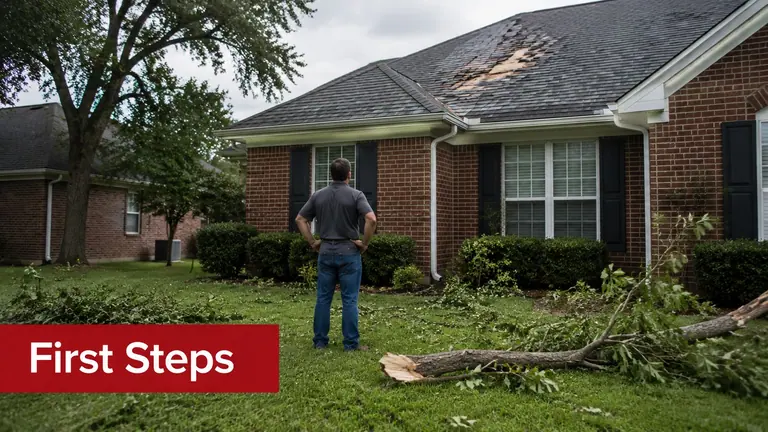
The storm has passed. Now what? Your absolute first priority is safety. It might be tempting to get a closer look, but stay off the roof. It's likely wet, slippery, and could even be structurally compromised by the severe thunderstorms and high winds common in Texas.
Instead, do a quick visual check from the safety of the ground. You're just looking for the obvious red flags at this point—things you can easily spot without putting yourself at risk.
The infographic below breaks down the immediate sequence of events that will set you up for a smoother roof insurance claim process.
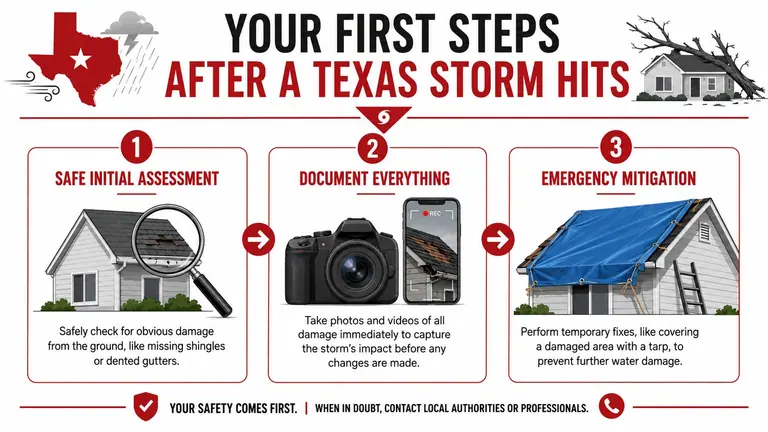
Following this simple assess, document, and mitigate flow creates a solid foundation of evidence and stops small problems from turning into catastrophic ones.
Document and Mitigate Damage
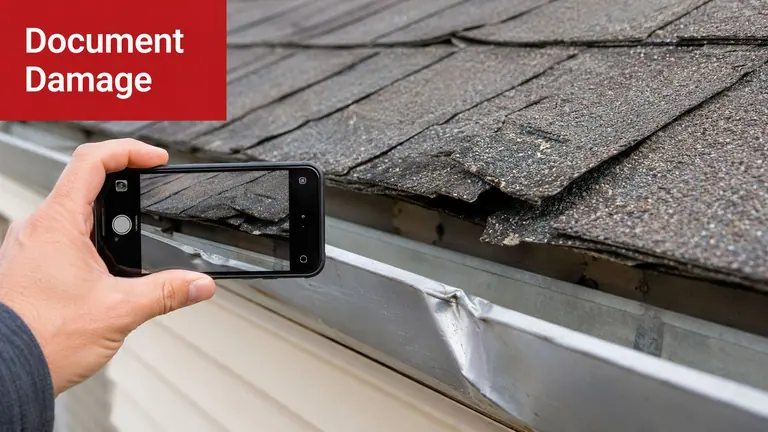
Right after your walk-around, it's time to document everything. Your smartphone is your most important tool here. Take more photos and videos than you think you need. Get close-ups and wide shots of:
- Any shingles you find on the ground, especially if they are cracked or missing granules.
- Dents and dings on your gutters, downspouts, or the fins of your outdoor AC unit from hail.
- Fallen tree limbs, particularly if they are on or near the house.
- New water stains appearing on your interior ceilings or walls.
This initial evidence is pure gold because it captures the immediate aftermath of the storm, time-stamped, before anything gets moved or repaired.
You don't need to be a roofing expert right now. Your job is to create an undeniable record of the storm's impact on your property. Think of it as creating your first and most powerful piece of evidence for the insurance company.
If you spot active leaks or gaping holes, you need to take action to prevent further damage. This is what the insurance world calls emergency mitigation. Something as simple as securing a tarp over a damaged area can stop water from pouring into your attic and ruining your drywall, insulation, and belongings. This is a critical step in property protection.
Most insurance policies actually require you to take these reasonable steps. It shows you’re being a responsible property owner and can prevent more expensive and disruptive repairs down the line. By taking these first few steps, you're not just reacting—you're taking control and paving the way for a successful roof insurance claim.
When a storm hits Texas, what you do in the next 24 hours can make or break your insurance claim. In the eyes of an insurance carrier, a claim without proof is just a story. To get your roof repaired or replaced without a fight, you need to provide undeniable evidence that the storm—and not old age or poor maintenance—is the culprit.
This is where many property owners stumble. Insurance companies are experts at finding reasons to deny claims, often pointing to pre-existing wear and tear. Your job is to build a case so strong they can't argue. A detailed file of photos and notes is your single best tool to prove the damage is fresh and directly caused by the recent storm.
Building Your Evidence File
It’s time to think like a crime scene investigator. Your mission is to create a visual record that leaves absolutely no room for interpretation.
First, take wide-angle photos of all four sides of your house. This establishes the "before" scene for the adjuster and shows the overall context. Then, it's time to get specific. If a Texas hailstorm just rolled through your neighborhood in Arlington or Plano, you'll want to zoom in on the shingles. Look for the tell-tale signs: dark, circular bruises where the storm has knocked off the protective granules. For wind damage, capture photos of any shingles that are lifted, creased, or missing entirely.
Pro Tip: When photographing hail impacts, always place a coin or a small ruler next to the dent. This gives the adjuster an immediate and undeniable sense of scale.
But don't just stop at the roof. To truly show the storm's power, you need to document the collateral damage.
- Gutters and Downspouts: Get pictures of any dents and dings. Crucially, photograph the thick sludge of granules that washes off your shingles and collects in the gutters—it's powerful proof of roof damage.
- Around the Property: Check for damage to your window screens, the fins on your AC unit, siding, and fences. Documenting this helps create a complete picture of the storm's severity.
- Keep a Simple Log: Alongside your photos, jot down a quick log with dates, times, and a short description of what you found and where. This narrative adds valuable context to your visual evidence.
Keeping all this organized is half the battle. Many homeowners in Dallas, Austin, and San Antonio use a dedicated system like Vorby's photo inventory solution to keep all their photos and notes tidy and accessible.
Roof issues are incredibly common, making up nearly one in five U.S. homeowners insurance claims each year. Acting fast and documenting everything meticulously is what separates a smooth process from a frustrating one. You can learn more about the importance of strong evidence on farmerbrown.com.
Getting this documentation right from the start lays the groundwork for success. For a deeper dive, check out our guide on what to expect during a professional roof inspection after a storm.
After a big storm, your first instinct is probably to grab the phone and call your insurance agent. Our advice? Hold that thought. Before you start a claim, you need to know exactly what you're dealing with, and that means getting a professional on your roof first.
This isn't the time for a quick "free estimate." You need a detailed storm damage assessment from a seasoned roofing contractor. This one step is the most powerful move you can make in the entire roof insurance claim process.
Here in Texas, our roofs take a beating. Years of intense sun, coupled with hailstorms that seem to come out of nowhere, create complex conditions. A roofer with real-world experience in places like Plano, Frisco, or McKinney can spot the subtle signs of hail and wind damage that are completely invisible from the ground.
This is where expertise really counts. A true professional, like the team at Hail King Professionals, knows precisely how to tell the difference between new storm damage and normal wear and tear. That distinction is everything to your insurance company. We are a trusted choice for both residential and commercial roofing services.
The Power of a Professional Roof Report
The entire point of this pre-claim inspection is to arm yourself with a detailed, professional roof report. This document is much more than an estimate—it’s a non-negotiable part of a successful claim. It's a comprehensive digital assessment that gives the adjuster everything they need to verify your damage and process the claim efficiently. As you can learn more about the impact of these reports on 1esx.com, they include precise roof measurements, elevation data, and a complete inventory of every single damaged area.
This report, packed with photos, precise measurements, and an expert's analysis, becomes your single most valuable piece of evidence. It gives you the third-party validation needed to build credibility and gain leverage before you even file.
Think of it this way: instead of just telling your insurer your roof is damaged, you're showing them with a complete, data-backed assessment from a qualified expert like Hail King Professionals. This immediately changes the dynamic. The conversation is no longer your word against theirs; it's a collaborative review of clear, professional findings. You’re setting the stage for a much smoother and more successful outcome.
Filing Your Claim and Meeting the Adjuster
With your photos and the professional inspection report in hand, you're now in a strong position to file your roof insurance claim. This is the moment you'll formally notify your insurance company about the storm damage.
When you call, make sure you have your policy number and the exact date of the storm ready to go. You'll be asked to give a basic description of the damage, so just stick to the facts you’ve already documented.
The All-Important Adjuster Meeting
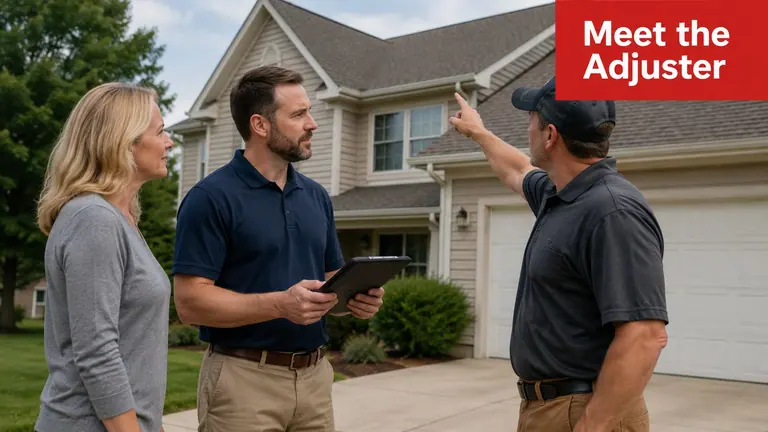
The adjuster meeting is, without a doubt, the most critical point in your claim's journey. This is when the insurance company sends their representative to your property to evaluate the damage, and how this meeting goes can make or break your claim's outcome.
If there’s one piece of advice we give every property owner, it’s this: schedule the adjuster meeting only when your roofer can be there with you. Having an expert from Hail King Professionals on your side is like having your own advocate at the table.
Think of it this way: your roofer will walk the roof right alongside the adjuster, making sure not a single piece of damage gets missed. They can point out the subtle but significant signs of hail hits or wind lift that an adjuster, who might be rushing through dozens of inspections, could easily overlook. They also speak the same technical language and can professionally counter any arguments that the damage is just normal "wear and tear."
Having your contractor present changes the entire dynamic. It shifts the meeting from a simple inspection into a collaborative review of the facts. It immediately shows the insurance company you are serious and have a well-documented, professional case for your new roof.
Your job during this meeting is simple: stay calm, be polite, and let your Hail King Professionals contractor do the talking when it comes to the technical details. You have all your documentation and a professional report; let that evidence, backed by our expertise, do the heavy lifting.
This strategy ensures that every detail is considered, setting the stage for a fair and accurate settlement that truly covers the full scope of your storm damage restoration.
What to Do When Your Insurance Claim Is Denied
It’s a gut-punch, no doubt about it. That denial letter from your insurance company can feel like the final word, but we're here to tell you it’s not. A denial is often just the insurer’s opening move, and you have every right to push back.
Frankly, we're seeing more denials now than ever in Texas. The entire roof insurance claim process has become a battleground. Projections for 2026 suggest that a staggering four out of every 10 roof claims could end with a $0 payout, leaving property owners to foot the bill. As experts at the National Insurance Crime Bureau (NICB) have noted, this trend makes it critical to know exactly how to fight back effectively.
Countering Common Denial Reasons
We've seen it a thousand times. The insurance company pulls out one of a few standard reasons to deny a claim. The key is to see them coming and have your evidence ready to counter their argument. This is where your detailed photo evidence and the professional roof report from Hail King Professionals become your most powerful tools.
Here are the two most common excuses we see:
- "Cosmetic Damage": This is a classic, especially for hail damage claims in areas like Dallas or Austin. The adjuster will say the dents on your shingles are just cosmetic and don't actually hurt the roof's ability to function. Your contractor’s report is the perfect rebuttal, as it can professionally document how those impacts have fractured the shingle matting, compromised the seals, and drastically shortened your roof’s lifespan.
- "Pre-Existing Wear and Tear": With this one, the carrier is essentially blaming you, claiming the roof was old or wasn't maintained properly before the storm. Your timestamped photos from right after the storm—showing the roof was in good shape—are your best defense here. They prove the damage is new and directly related to the event.
An initial denial is not a dead end. It’s a signal to gather your evidence, partner with your roofer, and formally request a second look.
Your first move after a denial should be to request a re-inspection with a different adjuster. It's crucial that your Hail King Professionals representative is there for that meeting to point out the damage and advocate on your behalf.
If the dispute continues, your policy likely has an "appraisal clause." This process allows both you and the insurer to hire independent appraisers who then work to settle the disagreement over the cost of repairs. In the rare case a denied claim turns into a more serious legal battle in San Antonio, you might need to consult with civil litigation attorneys San Antonio. To get ahead of the game, you can read also about common insurance claim denial reasons and prepare yourself for what they might throw at you.
Common Questions About Texas Roof Claims
Even after you've walked through the steps, the roof insurance claim process can feel murky. It’s natural to have questions. Based on our experience with property owners across Dallas, Austin, and San Antonio, here are a couple of the most common concerns we hear.
How Long Do I Have to File a Claim in Texas?
This is a tricky one. While Texas law gives you a generous window—sometimes up to two years—your insurance policy tells a different story. Almost every policy has a clause requiring you to report damage "promptly."
Waiting months to file gives the insurance company an easy out. They can argue that new, unrelated damage occurred in the meantime, complicating your claim or even giving them grounds for denial. The best practice is simple: file your claim as soon as a professional roof inspection from a contractor like Hail King Professionals confirms the damage.
Will Filing a Claim Raise My Insurance Rates?
Here’s the reality: an insurer can't single you out for a rate hike after a storm claim. Why? Because a storm is considered an "act of God," not a sign of your negligence.
However, if a major storm causes widespread damage across your entire zip code or region, carriers often raise rates for everyone in that area to cover their massive losses. So, your rates might go up whether you file a claim or not. A common concern for homeowners dealing with roof issues is whether their policy will cover the damage, especially for problems like leaks; you can get more details by understanding roof leak repair coverage.
The Takeaway: Your insurance premium is a sunk cost that may rise after a widespread storm, regardless of your actions. Don't let the fear of a potential rate increase stop you from using the benefits you’ve been paying for to protect your property.
Navigating storm damage and insurance paperwork is complex, but you don't have to do it alone. If your home or business in Dallas-Fort Worth, East Texas, or Central Texas has been hit by a storm, trust Hail King Professionals to provide a free, thorough inspection and expert guidance. Contact us today for a storm damage assessment or to discuss your roof replacement and repair needs. https://hailkingpros.com