Asphalt Shingle Replacement: A Texas Homeowner’s Guide
You're probably reading this after a storm, after spotting granules in the gutter, or after noticing that one ceiling stain that keeps coming back every time Texas gets a hard rain. In Dallas, Fort Worth, Arlington, Tyler, Austin, and San Antonio, that's usually how the asphalt shingle replacement conversation starts. Not with a dramatic failure. With a roof that's gradually losing the fight against hail, heat, and wind.
My advice is simple. Don't judge your roof by one missing shingle. Judge it by the whole system. In Texas, roofs don't age gently. Intense sun dries them out, hail bruises the mat, and high winds test every nail line and exposed edge. If the roof has widespread wear, repeated leaks, storm strikes, or sloppy past repairs, replacement usually makes more sense than stretching the problem one season longer.
When to Consider a Full Roof Replacement
A lot of homeowners wait too long because the roof still looks “mostly fine” from the driveway. That's a mistake. Asphalt shingles can fail in ways that aren't obvious until water gets under them.
The signs that matter most are usually practical, not cosmetic. You see granules collecting in gutters. You find cracked or lifted shingles after a thunderstorm. You notice leaks that show up only during wind-driven rain. In Texas cities like Plano, Frisco, and San Marcos, I'd also pay attention to repeated storm history. A roof that's taken several hail and wind events may be done, even if the damage looks scattered.
What Texas weather does to shingles
Texas is hard on asphalt. Heat exposure dries the shingle surface and speeds up wear. Hail can fracture the shingle body or knock off protective granules. Strong wind can break seals and expose weak fastening patterns.
That's why patching has limits. A small, isolated repair can make sense. A roof with broad storm wear usually needs a bigger decision.
When repairs stop being smart
Here's the line I use with homeowners. If you're asking for another patch in a different area every few months, you're not managing the roof anymore. You're financing its failure.
Practical rule: Repair isolated damage. Replace widespread damage, repeated leaks, and aging systems with multiple weak spots.
There's also a warranty issue that too many people learn about too late. While repair guides often present patching as the cheaper path, some manufacturer warranties can be affected by extensive patchwork. One cited example states that manufacturers such as GAF and Owens Corning may void full-system guarantees if more than 15% of shingles are patched, and it also claims 74% of homeowners attempted DIY repairs and later faced 3x higher replacement costs due to warranty denial (details in this roofing warranty discussion).
That's why the better question often isn't “Can this be repaired?” It's “Should I keep putting money into this roof?” If you're weighing both options, this breakdown of roof repair vs replacement is worth reading before you sign anything.
Signs that push me toward replacement
- Repeated leak locations: One leak can be local. Multiple leak areas usually point to system failure.
- Granule loss: Bald spots and heavy gutter granules mean the weathering surface is wearing out.
- Storm impact across several slopes: Hail and wind rarely damage just one perfect square.
- Visible roofline issues: Sagging or uneven sections can mean the problem goes below the shingles.
- A repair history that keeps growing: If your invoice stack is getting thicker, replacement usually costs less in the long run.
The Asphalt Shingle Replacement Process Explained
A proper asphalt shingle replacement should feel organized, controlled, and boring. That's a compliment. Homeowners shouldn't have to guess what happens next, and crews shouldn't improvise on your property.
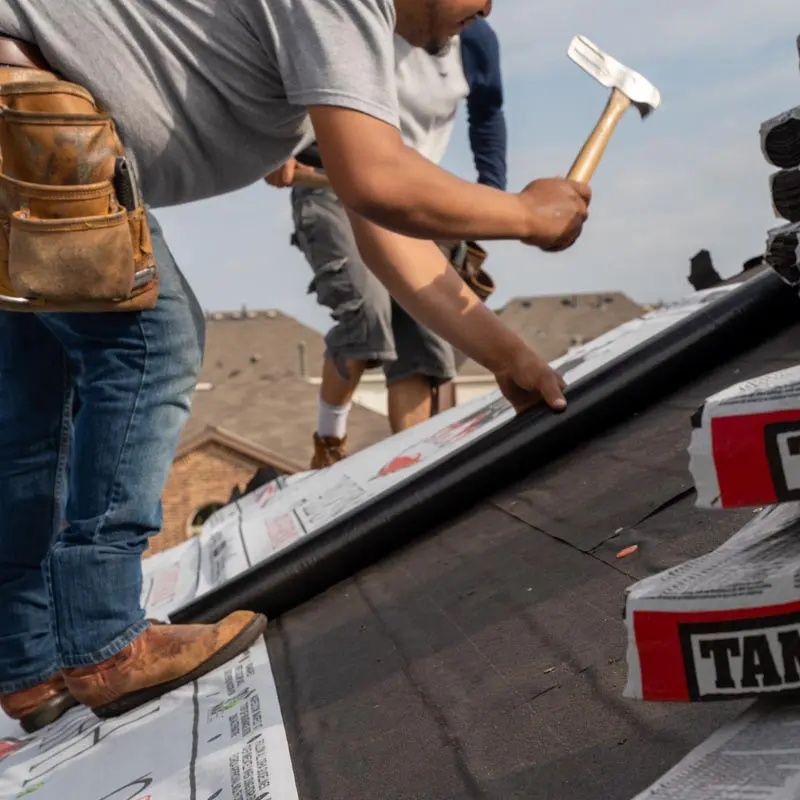
On replacement day, the sequence matters. Materials arrive first. Then the crew protects the home before tear-off starts. Good crews cover vulnerable landscaping, protect windows where needed, and keep an eye on condensers, fence lines, and access paths. If the contractor acts like property protection is optional, that's a bad start.
What happens on the roof
First comes full tear-off. The old shingles, underlayment, and worn accessories come off so the roof deck can be inspected. That inspection matters because new shingles installed over bad wood just hide the problem.
Then the crew checks the decking, flashing areas, penetrations, valleys, and ventilation openings. Asphalt shingle replacement has to follow installation standards, not guesswork. One specification document states that fiberglass-based asphalt shingles must meet ASTM D228 and ASTM D3018, provide 98.4 sq ft per square, and be installed with details such as a starter course extending 1/4 inch over the roof edge and valley laps of at least 6 inches for waterproofing (roofing specification reference).
If the decking is soft, delaminated, or wet-damaged, replacing shingles without replacing bad wood is a shortcut that comes back to bite you.
After deck prep, the crew installs underlayment, flashing, starter material, field shingles, and ridge components in the right order. Valleys and penetrations need careful waterproofing. Ridge vent work also needs to match the product requirements, not just “look right” from the street.
The Texas nailing detail that matters
In high-wind Dallas-Fort Worth areas, shingle fastening isn't a minor detail. Asphalt shingle installations there require a minimum of 6 nails per shingle to comply with the International Residential Code, helping resist wind uplift and maintain structural integrity (Dallas high-wind nailing requirement).
That one detail separates a roof built for Texas weather from a roof built to pass for a few months.
If you want to understand why nail placement matters so much, this proper roofing shingle installation guide gives a useful visual explanation.
What a clean finish looks like
A professional replacement ends with cleanup, not just installation.
- Magnetic sweep: Nails in the grass and driveway are unacceptable.
- Debris haul-off: Dump trailers and cleanup plans should be clear before work starts.
- Final walkthrough: The contractor should inspect accessories, vents, flashing lines, and ground conditions.
- Punch-list mindset: Any damaged screen, crushed plant, or missed detail should be addressed before the crew leaves.
Choosing Your Shingles Architectural vs 3-Tab and Class 4 Upgrades
Not all asphalt shingles are equal, and Texas homeowners shouldn't shop for them like they're all the same product with different colors. They're not. The right choice depends on storm exposure, expected ownership timeline, budget, and how much risk you want to carry in the next hail season.
For most homes in McKinney, Garland, Round Rock, and New Braunfels, I think architectural shingles are the practical baseline. They look better, they're heavier, and they generally hold up better than old-school 3-tab products. If your property gets hit by recurring hail, Class 4 deserves a serious look.
The numbers that actually matter
One roofing reference explains that architectural shingles use a two-layer bonded construction and weigh 240–340 lbs per square, while 3-tab shingles are single-layer products in the 205–240 lbs per square range. The same source notes that Class 4 impact-rated shingles (UL 2218) offer measurable hail resistance, and lifespan ranges can run from 20-25 years for 3-tab to 30-50 years for premium Class 4 options (material comparison details).
That heavier construction isn't just marketing. Weight and build quality affect how the roof handles wind, impact, and long-term wear.
Asphalt Shingle Comparison
| Feature | 3-Tab Shingles | Architectural Shingles | Class 4 Impact-Resistant |
|---|---|---|---|
| Construction | Single-layer | Two-layer bonded construction | Upgraded impact-resistant construction |
| Weight | 205–240 lbs per square | 240–340 lbs per square | Varies by product, generally built for stronger impact performance |
| Appearance | Flat, uniform look | Dimensional profile | Dimensional look, often similar to architectural |
| Lifespan | 20–25 years | Longer than typical 3-tab options | 30–50 years for premium options |
| Best fit | Tight budgets | Most residential replacements | Hail-prone areas and long-term ownership |
A quick visual can help if you're comparing profiles and performance expectations.
Which one I'd recommend
If you're replacing a roof on a typical Texas home and want balanced value, choose architectural shingles. They've become the standard for a reason.
Choose 3-tab only if budget is the overriding factor and you understand you're buying the most basic system. Choose Class 4 if your neighborhood sees repeated hail, your insurer values impact resistance, or you plan to stay in the property long enough to benefit from the upgrade.
Best-fit advice: In storm-heavy Texas markets, cheap shingles usually aren't cheap for long.
A good contractor should explain product trade-offs in plain English, show actual samples, and talk through ventilation, ridge components, and color heat absorption, not just hand you a brochure.
Understanding Roof Replacement Costs and Financing in Texas
Roof pricing gets confusing because many estimates look similar at first glance, then drift apart once the job starts. That's usually not because one contractor discovered magic efficiency. It's because some bids leave out the ugly parts until you're already committed.
The actual cost of asphalt shingle replacement depends on roof size, pitch, access, material grade, ventilation work, flashing complexity, number of existing layers, and whether the decking underneath is still sound. A steep, cut-up roof in Irving or Boerne costs more to replace than a simple walkable roof with clean access. That's normal. What isn't normal is hiding the line items that swing the total.
The hidden fees homeowners miss
One cost guide notes that while many articles cite $5,800–$20,000 average replacement costs, 30–40% of the variation can come from hidden charges such as debris hauling at $1.2K–$2.5K and plywood sheathing replacement at $1.5K–$3K. The same source says 68% of homeowners didn't realize those contract clauses were there until the project was underway (roof replacement cost questions to review).
That's why I tell homeowners to stop asking only for the “roof price.” Ask for the tear-off terms, haul-off terms, decking replacement terms, and property protection language.
What should be in the estimate
A solid estimate should clearly spell out:
- Tear-off scope: One layer or multiple layers, and whether pricing changes per layer.
- Decking terms: How rotten or damaged sheathing is handled if found after tear-off.
- Accessory replacement: Flashing, ridge vent, pipe boots, starter strips, and disposal.
- Property protection: Cleanup responsibility, landscaping precautions, and damage handling.
- Payment structure: Deposit, progress draws if any, and final payment terms.
A cheap estimate with vague language usually becomes an expensive project with very specific change orders.
Financing without making a bad decision
A roof is a capital expense. Treat it like one. If insurance isn't covering the full project, financing can make sense when it helps you install the right system now instead of settling for the bare minimum and redoing work later.
If you're comparing options, start with the contractor's own programs and then look at broader lending structures. For homeowners who want to understand how standard mortgage-style lending works in general, this overview of Conventional Financing Information gives useful background. For roof-specific payment planning, this page on roof financing options is a practical place to start.
In Texas, financing should make the project manageable. It shouldn't pressure you into buying upgrades you don't need or signing a contract before the scope is clear.
Navigating Insurance Claims for Storm and Hail Damage
Texas homeowners deal with a lot of storm claims, and too many of them make the same mistake. They call the insurer first, before they know what was damaged. That can put you behind from the start.
The better sequence is straightforward. Get the roof inspected. Document the damage. Tarp emergency openings if needed. Then file the claim with a clear understanding of what the adjuster needs to see. If you're in Fort Worth, Frisco, Longview, or Georgetown after a hail event, speed matters, but accuracy matters more.
The claim process that works
A clean insurance workflow usually looks like this:
Initial damage assessment
Identify hail hits, wind damage, lifted shingles, flashing problems, interior leak evidence, and detached accessories.Emergency protection
Stop active water intrusion with temporary protection if necessary.Photo and scope documentation
Good documentation helps when the adjuster visit happens. Bad documentation turns obvious damage into an argument.Adjuster meeting
Someone who understands roofing should be present. Adjusters are evaluating loss, not designing your replacement scope.Estimate review and supplements if needed
If the carrier missed code items, accessory components, or detach-and-reset needs, those issues need to be documented and submitted properly.
Texas code and insurance discounts matter
Material selection affects claims and long-term premiums. In Texas, asphalt shingles chosen for qualifying installations must meet ASTM D 3161 Class F or ASTM D 7158 Class H wind and impact resistance standards to qualify for hail and windstorm insurance discounts and to comply with Texas Department of Insurance underlayment requirements (Texas roofing requirement summary).
That's not a trivial checkbox. It means the replacement roof has to be built with insurance and code in mind, not just aesthetics.
If you want a clear primer on how code-required items can affect reimbursement, this guide to understanding building code upgrades is helpful.
Don't overlook solar detach and reset
Handling solar panels during roof replacement is a common area where claims get sloppy. If your home has rooftop solar, the roof replacement may involve panel detach-and-reset before tear-off and reinstallation after the new system is complete. That work needs to be coordinated early, documented in scope, and addressed in the claim conversation where appropriate.
Roof claims get harder when the contractor, solar company, and adjuster all work from different assumptions.
The same goes for gutters, screens, and storm-related accessory damage. If the inspection only focuses on field shingles, you may leave money and necessary repairs off the table.
Your Checklist for Hiring the Right Roofing Contractor
Texas has plenty of roofing contractors. That doesn't mean Texas has plenty of good ones. After a major hail storm, the market fills up fast with sales-driven crews, vague estimates, and promises that sound better than the paperwork behind them.
Hiring the right contractor isn't about finding the friendliest salesperson. It's about finding a company that can protect your property, build to code, document the work, and communicate clearly when something unexpected shows up.
The non-negotiables
Use this checklist before you sign.
- Insurance proof: Ask for current liability and workers' comp documentation. If they dodge, move on.
- Local track record: Get references in Dallas, Mesquite, Marshall, Austin, or wherever you live. Local work matters more than generic testimonials.
- Detailed written estimate: You want line items, material descriptions, scope notes, cleanup terms, and warranty language.
- Code knowledge: Ask how they handle high-wind fastening, underlayment, flashing, and ventilation details in your area.
- Project supervision: Find out who runs the jobsite each day and who answers your calls.
The question most homeowners forget
Ask whether they handle solar panel detach-and-reset on reroof projects.
That one question tells you a lot. A contractor who has never coordinated solar work can delay your project, create scope disputes, or leave you juggling multiple vendors with no clear accountability. On modern Texas homes, that's a serious issue.
What to ask before signing
A better interview sounds like this:
| Question | Why it matters |
|---|---|
| Who inspects the decking after tear-off? | You need a real decision-maker on site |
| How do you protect landscaping and windows? | Property protection should be planned, not improvised |
| What happens if damaged plywood is found? | Change-order terms should already be in writing |
| Who handles communication with the adjuster if this is a claim? | Insurance jobs require documentation discipline |
| What warranties apply to materials and labor? | You need both explained clearly |
Hiring standard: If the proposal is vague before the first payment, communication won't improve after the check clears.
Red flags worth taking seriously
- Big upfront payment demands
- No local address or inconsistent branding
- Pressure to sign on the spot
- Promises to “cover your deductible”
- No discussion of ventilation, flashing, or deck condition
- No answer on solar coordination for solar-equipped homes
The best roofing contractor near me search result isn't always the loudest one. It's the company that can explain the work, prove the scope, and finish cleanly without drama.
Aftercare Maintenance and Frequently Asked Questions
A new roof isn't a one-time event you forget about. It's a system you protect. If you want your asphalt shingle replacement to last, pay attention after the crews leave.
Simple maintenance that protects the investment
Start with the basics.
- Keep gutters clear: Backed-up gutters push water where it doesn't belong.
- Inspect after storms: Look for displaced shingles, metal damage, and debris impact after hail, wind, and heavy rain.
- Trim overhanging branches: They scrape granules off shingles and drop debris into valleys.
- Watch the attic and ceilings: New stains, damp insulation, or musty smells need quick follow-up.
- Schedule professional inspections: A trained eye catches small flashing or ventilation issues before they become interior repairs.
Frequently asked questions
How long will a roof replacement take
Most residential replacements move quickly when weather cooperates, but the exact timeline depends on roof size, complexity, access, decking condition, and whether solar detach-and-reset is involved. Your contractor should give you a realistic schedule, not a sales pitch.
How disruptive is the process
It's noisy. There's no honest way around that. Tear-off, material movement, compressors, and cleanup equipment all create disruption, so plan for pets, remote work, and vehicles accordingly.
How should I prepare my home
Move vehicles out of the driveway, secure fragile wall hangings inside, clear patio furniture or loose items near the work zone, and give the crew access to gates and exterior power if requested. Ask in advance how they'll protect landscaping and A/C units.
What about commercial roofing
If you own or manage a commercial property, the decision process is different because flat roofing, coatings, drainage, tenant disruption, and phasing all matter. You still need the same fundamentals: clear scope, code compliance, property protection, and documentation.
Should I call for an inspection after every hail storm
If the storm was strong enough to concern you, yes. You don't need to panic, but you do need to verify. Hail damage roof repair decisions are easier and cheaper when the damage is caught early.
If your roof has taken hail, wind, or repeated Texas heat and you need a straight answer, contact Hail King Professionals for a professional inspection and replacement consultation. They serve homeowners and property owners across Dallas, TX, Fort Worth, TX, Arlington, TX, Plano, TX, Frisco, TX, McKinney, TX, Garland, TX, Irving, TX, Mesquite, TX, Tyler, TX, Longview, TX, Marshall, TX, San Antonio, TX, Austin, TX, New Braunfels, TX, San Marcos, TX, Boerne, TX, Round Rock, TX, and Georgetown, TX.