
A Homeowner’s Guide to Hail Resistant Roofing Materials
For homeowners in Dallas-Fort Worth and East Texas, choosing the right roofing material isn't just a matter of style—it's your first line of defense against our wild weather. If you want to protect your home from serious storm damage, you need to be thinking about hail-resistant roofing. Options like Class 4 impact-resistant shingles and standing seam metal roofs are built specifically to handle what Texas storms throw at them, saving you a world of headaches and repair bills down the road.
Why Hail Resistance Is a Critical Investment
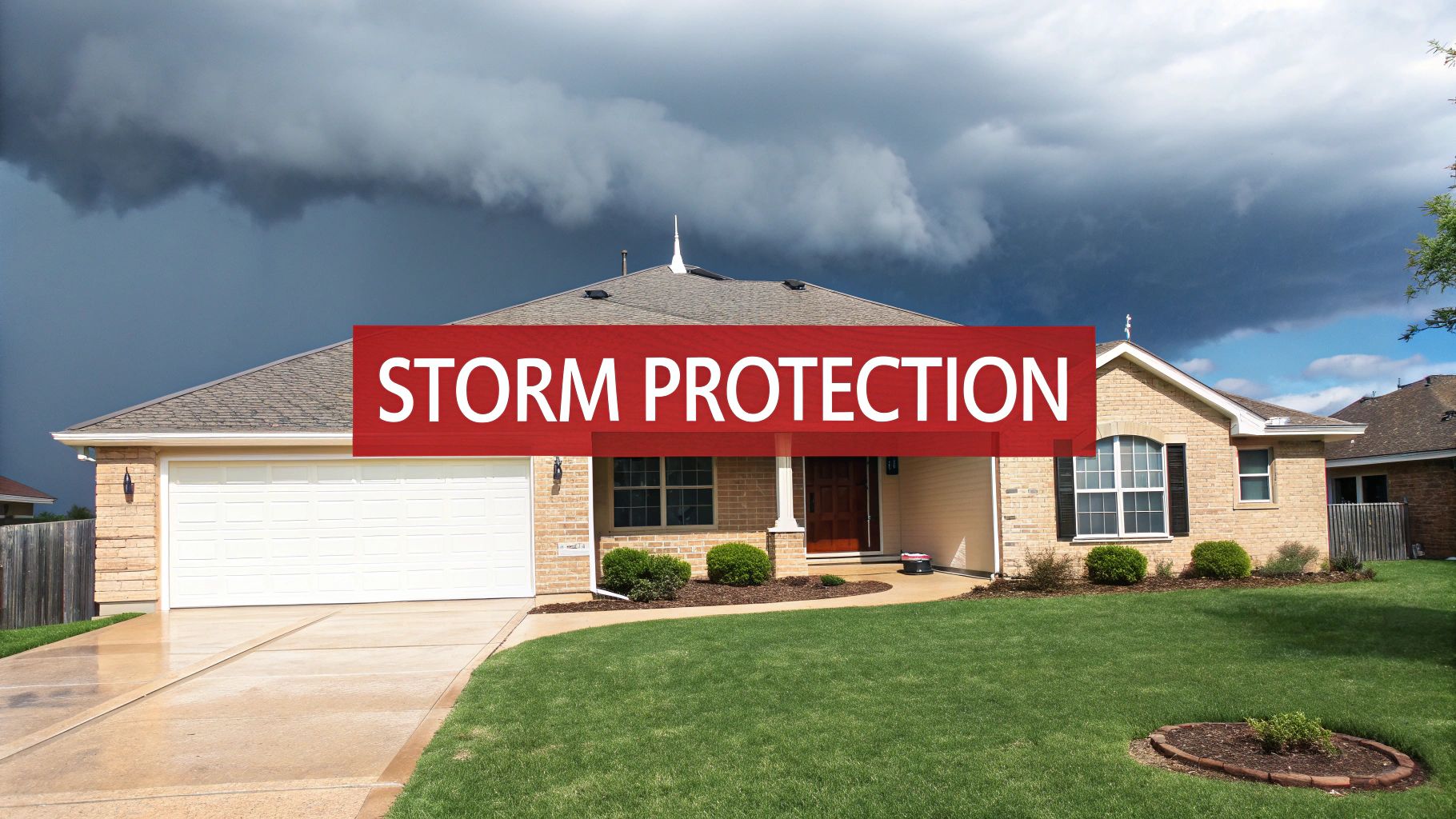
Living in North Texas means you’re in the heart of "Hail Alley." A standard roof here is more of a liability than an asset. We see hailstorms that can shred conventional asphalt shingles, crack clay tiles, and leave metal panels looking like golf balls. The stress and expense of dealing with roof replacements every few years are enough to make anyone look for a better solution.
Choosing a hail-resistant roof isn't just about preventing damage. It's a proactive financial move that brings security and genuine peace of mind, because these advanced systems are designed for the unique challenges we face right here.
Key Benefits of Upgrading Your Roof
Stepping up to a storm-ready roof gives you immediate and long-term perks that go way beyond just keeping the rain out. For those of us in Texas, these benefits directly combat the high costs and anxiety that come with every storm season.
- Fewer Repairs, Period: A Class 4 rated roof is tough enough to take hits that would destroy a standard one, which means you're not calling a roofer after every storm.
- Serious Insurance Discounts: This is a big one. Many insurance companies will knock off as much as 30% from your premium if your home is protected by certified impact-resistant materials.
- Boosted Home Value: A durable, long-lasting roof isn’t just practical; it’s a huge selling point that enhances curb appeal and increases your home's resale value.
Comparing Your Options at a Glance
To make sense of the main choices out there, here's a quick rundown of the most common hail-resistant roofing materials that work well for homes in DFW and East Texas.
| Material Type | Impact Resistance | Primary Advantage | Main Consideration |
|---|---|---|---|
| Impact-Resistant Shingles | High (Class 4) | Great value and a classic look. | Not as long-lasting as metal or tile. |
| Metal Roofing | Very High | Unbeatable longevity and toughness. | The upfront cost is higher. |
| Tile (Concrete/Clay) | Very High | Top-tier durability and aesthetics. | Very heavy; your home's structure must support it. |
| Synthetic/Composite | High | Looks authentic but is lightweight. | Can cost more than high-end asphalt. |
What "Class 4" Really Means for Your Roof
When you start looking at hail-resistant roofing, you'll hear "impact resistant" and "Class 4" thrown around a lot. These aren't just fancy marketing terms; they're a standardized way to measure how well a roof can take a punch from mother nature. Getting a handle on these ratings is the first, and most important, step in protecting your home.
The whole system comes from Underwriters Laboratories (UL), a group that's been testing product safety for over a century. Their UL 2218 impact resistance test is the national benchmark for figuring out just how tough a roofing material is against hail. It’s a simple, brutal test designed to copy what happens in a real storm.
How the UL 2218 Test Works
To test a material, technicians drop solid steel balls of different sizes from specific heights to simulate hailstones hitting your roof. Afterward, they closely inspect the material—front and back—for any signs of cracking, splitting, or damage. If it holds up without losing its ability to keep water out, it passes.
The test breaks down into four classes:
- Class 1: Can handle a 1.25-inch steel ball dropped from 12 feet.
- Class 2: Can handle a 1.5-inch steel ball dropped from 14 feet.
- Class 3: Can handle a 1.75-inch steel ball dropped from 17 feet.
- Class 4: Can handle a massive 2-inch steel ball dropped from 20 feet.
As you can see, the jump between each class is pretty significant. A Class 1 roof might be fine for a light storm, but it's not going to cut it against the kind of hail we see all too often here in North Texas.
Why Class 4 is the Only Real Choice for Texans
In an area where golf ball-sized hail is practically a season, settling for anything less than a Class 4 rating is a serious gamble. This top-level rating means the material is engineered to withstand extreme impacts without failing. For homeowners in Dallas-Fort Worth and East Texas, it’s really the only option that makes sense.
Think of it this way: a Class 4 rating means your roof can absorb the energy of a large, fast-falling hailstone. It's the difference between a pebble hitting your roof and a baseball hitting it. The force is worlds apart, and your roof has to be built for it.
This isn't just theory; we see the results in the real world. In hail-prone areas like Texas, Class 4 shingles have been a total game-changer. They're tested to withstand hail up to 2 inches in diameter at 88 mph, which is how they earn that top UL 2218 rating. The proof is in the numbers: after one recent Texas hail season, homes with Class 4 shingles had 70% fewer insurance payouts than homes with standard Class 3 shingles. You can dig into more roofing industry trends and statistics on Zuper.co.
When you choose a Class 4 rated roof, you're not just buying shingles; you're investing in a shield built specifically to handle our climate. It gives you the confidence to talk to contractors and insurance adjusters, knowing exactly what level of protection your home needs.
Comparing The Best Hail Resistant Roofing Materials
When it comes to picking the right hail-resistant roof for your Texas home, you’re trying to find that sweet spot between looks, budget, and long-term performance. A Class 4 rating is a great starting point, but it doesn't tell the whole story. Not all "hail-resistant" materials are the same—each has its own personality, its own strengths, and its own ideal use case.
Let's break down the real-world differences between the top contenders.
First, to understand what a Class 4 rating really means, take a look at the test these materials have to pass. The industry standard, UL 2218, is no joke.
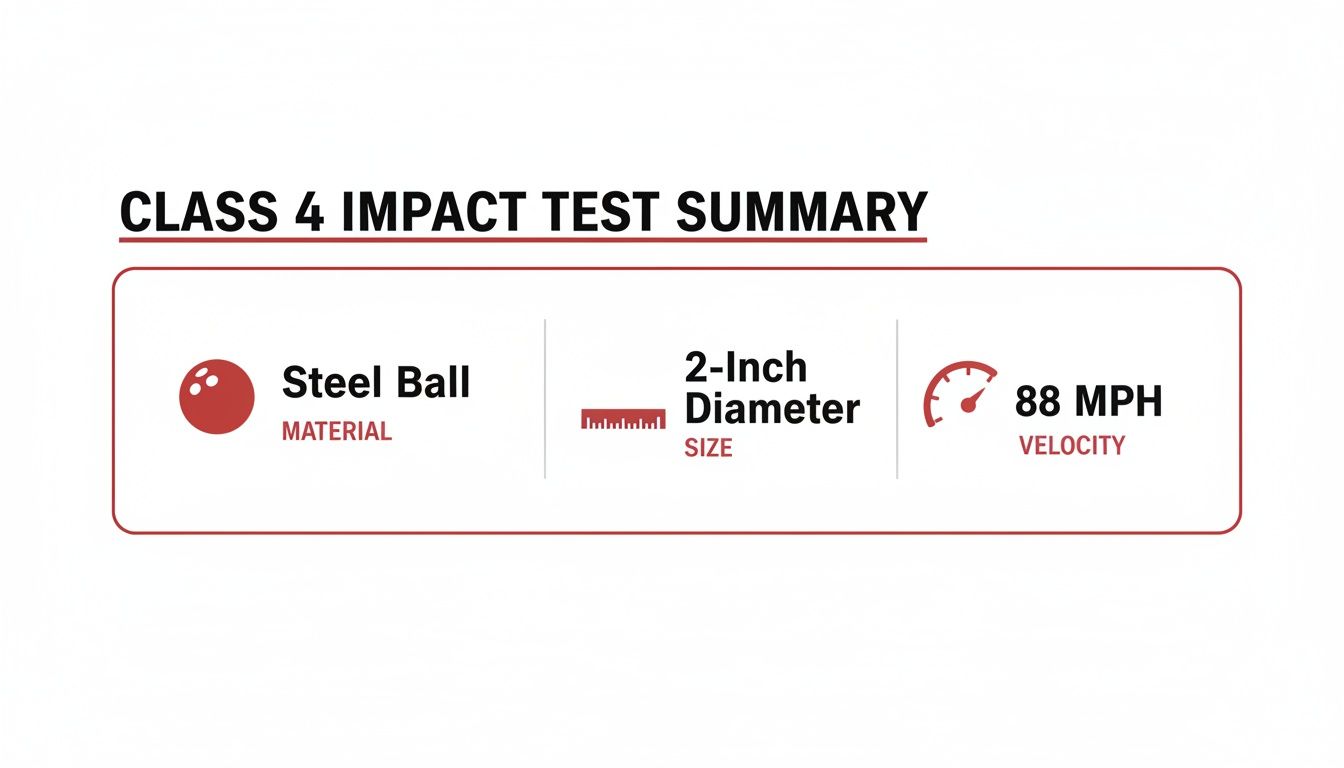
They're essentially firing a 2-inch steel ball at the material to simulate the kind of monster hail we sometimes see here. Passing this test means the material didn't crack or show any signs of letting water through. It’s a serious benchmark for durability.
Impact-Resistant Asphalt Shingles: The Versatile Mainstay
There's a good reason impact-resistant asphalt shingles have become the go-to upgrade for so many homeowners. They look just like the traditional shingles everyone is used to, so they blend right into most DFW and East Texas neighborhoods, all while packing certified Class 4 protection.
The secret sauce is a rubberizing polymer, usually Styrene-Butadiene-Styrene (SBS), that gets mixed into the asphalt during manufacturing. This gives the shingle a flexible, almost rubbery quality. Instead of shattering when a hailstone hits, it gives a little, absorbing the impact and bouncing back. That elasticity is a game-changer in our climate, where brutal summer sun can make standard shingles brittle and easy to damage.
Expert Insight: It’s important to know that "impact-resistant" doesn't mean "hail-proof." These shingles are engineered to prevent functional damage—the kind that causes leaks. A massive, jagged hailstone might still leave a cosmetic mark, but the shingle’s core integrity and waterproofing will hold up, which is what really matters.
Bottom Line: Impact-resistant asphalt shingles are the perfect fit for homeowners who want a serious, cost-effective upgrade without a drastic change in appearance. They strike a fantastic balance between performance, price, and classic style.
Metal Roofing: The Lifetime Durability Champion
If you're looking for sheer, brute-force resilience, metal roofing is in a league of its own. It's built to handle the worst of Texas weather—from severe hail and hurricane-force winds to fire. For homes, we typically see two main players: standing seam and stone-coated steel.
Standing seam metal gives you that clean, modern look with raised seams that are fantastic at shedding water. While a big enough hailstone can leave a cosmetic dent (especially on thinner panels), the roof's function is almost never compromised. Opting for a thicker 24-gauge steel makes a huge difference in preventing those visible dings.
Stone-coated steel is a different animal altogether. It gives you the hardcore strength of steel but is designed to look like traditional shingles, wood shakes, or even tile. The steel panels are coated with stone granules, which not only provides color and texture but also helps deaden the impact of hail.
A Closer Look at Stone-Coated Steel
This system is brilliantly suited for the North Texas market, where HOAs and personal taste often favor a classic look.
- Impact Absorption: That granular coating acts like a built-in shock absorber, softening the blow from hail and protecting the steel from dents.
- Aesthetic Flexibility: You can get the look of a rustic wood shake or a Mediterranean tile roof, but with the underlying strength of steel.
- Wind Resistance: The panels interlock on all four sides, creating a single, unified shell that’s incredibly secure against wind uplift—a must-have feature here.
For a deeper dive, check out our comprehensive guide on stone-coated steel roofing.
Bottom Line: Metal is the ultimate "one and done" roofing solution for homeowners who value longevity above all else. Standing seam is perfect for modern or farmhouse designs, while stone-coated steel gives you Class 4 durability without giving up that traditional curb appeal.
Concrete and Clay Tiles: The Heavyweight Protector
There's a reason tile roofs have been around for centuries: they are incredibly tough. Known for their distinctive beauty and legendary lifespan, tile is a premium choice. The sheer mass of a tile roof allows it to shrug off hailstones that would obliterate lesser materials.
Concrete tiles are engineered for brute strength and can be made to mimic slate, wood, or classic barrel tiles. They are exceptionally resistant to hail, as their weight and thickness do a great job of dissipating the energy from an impact.
Clay tiles offer that timeless, elegant look, especially for Spanish or Mediterranean-style homes. While extremely durable, they can be more brittle than concrete and might crack under the force of unusually large, hard hail. That said, modern manufacturing has made them much tougher than they used to be.
Key Considerations for Tile Roofing
Before you fall in love with tile, there are two non-negotiables to consider.
- Structural Support: Tile is heavy. Your roof structure has to be strong enough to handle the load, which can be 2 to 4 times the weight of an asphalt shingle roof. This isn't something you can guess about.
- Expert Installation: This is not a job for a general-purpose roofer. Every single tile has to be fastened perfectly to ensure the system can handle high winds and shed water properly. A bad installation will lead to catastrophic failure.
Bottom Line: Tile is the premier option if you’re aiming for a specific architectural style and are prepared for the higher upfront cost and potential structural engineering. The curb appeal and longevity are simply unmatched.
Hail Resistant Roofing Materials At A Glance
To make the choice a bit easier, this table gives you a side-by-side comparison of the key features for these top-tier roofing materials.
| Material Type | Impact Resistance (UL 2218) | Average Lifespan (Years) | Estimated Cost (Per Sq. Ft.) | Best For |
|---|---|---|---|---|
| Impact-Resistant Asphalt | Class 4 (Excellent) | 25–30 | $$ | A high-performance, cost-effective upgrade for most homes. |
| Stone-Coated Steel | Class 4 (Superior) | 50–70+ | $$$ | Homeowners wanting a "forever roof" with a traditional look. |
| Concrete & Clay Tile | Class 4 (Superior) | 50–100+ | $$$$ | High-end homes needing a specific architectural style and robust structure. |
In the end, the "best" material really comes down to your priorities. By weighing the real-world differences in performance, cost, and style, you can make a smart decision that protects your home for decades to come.
The Financial Case for a Hail-Resistant Roof
When you invest in a top-tier hail-resistant roof, you're doing more than just protecting your home from Texas weather—you're making a smart financial move. Yes, the upfront cost is higher than a standard roof, but the long-term savings create a clear return on that investment, paying you back for years. It's not just about dodging one big repair bill; it's about the cumulative financial benefits that improve your home's bottom line.
This value comes from three key areas: serious insurance savings, far fewer repairs, and a real bump in your home's resale value. Together, these benefits work to offset the initial cost, making a high-performance roof one of the shrewdest upgrades a homeowner in DFW or East Texas can choose.
Cashing in on Big Insurance Discounts
One of the best and most immediate financial wins is the drop in your homeowner's insurance premium. Insurance companies aren't just being nice here; it’s a pure business decision on their part. They lose a fortune to hail damage claims every year, and they know a certified Class 4 roof is a much lower risk for them.
Most big Texas insurance providers offer some hefty discounts for homes with a UL 2218 Class 4 rated roof—we're often talking 15% to 35% off your annual premium. For a lot of folks, that adds up to hundreds, sometimes even thousands, of dollars back in your pocket each year.
Expert Insight: A Class 4 roof dramatically lowers the insurance company's financial risk. They reward homeowners for making the upgrade because it helps them build a more resilient housing market, which is a win for everyone. Make sure you give your agent the installation certificate to lock in the biggest discount possible.
Breaking the Cycle of Costly Repairs
That endless loop of storm, damage, claim, and repair is both draining and expensive. Here in North Texas, a standard roof might only make it a few years before a big hailstorm forces a total replacement. Choosing a truly hail-resistant material is how you finally break that cycle.
A Class 4 roof can take a beating that would shred conventional shingles, which means you're not constantly calling for repairs or facing premature replacements. You save a ton of money by not having to pay deductibles over and over again, not to mention avoiding the hassle of having a crew on your roof. This kind of durability means your investment lasts for decades, not just until the next storm rolls in. A tough roof also makes the claims process much cleaner if damage ever does happen. Beyond the roof itself, knowing how to handle the paperwork, like a Hail Damage Supplement, is key to getting the right financial outcome.
Boosting Your Home's Resale Value
A strong, durable roof isn't just a shield; it's a major selling point that increases your home's curb appeal and market value. Homebuyers in Texas are getting smarter about the hidden costs of storm damage. A house with a certified hail-resistant roof is instantly more appealing because it promises lower maintenance costs and a whole lot more peace of mind.
- Stand Out in the Market: When you're ready to sell, a premium roof can make your home the obvious choice over others.
- Higher Appraisal: Appraisers often factor in the value of a high-performance roof, which can lead to a better valuation.
- Buyer Confidence: It’s a clear signal to potential buyers that you’ve invested in quality, long-lasting materials for the home.
This boost in property value means your investment pays off not just in savings, but in actual equity. If the upfront cost is a concern, it's worth looking into financing. You can get a better idea of how to budget by checking out guides on how much a new roof costs. Many roofing contractors offer payment plans that put this essential upgrade within reach.
Why Expert Installation Is Critical for Performance
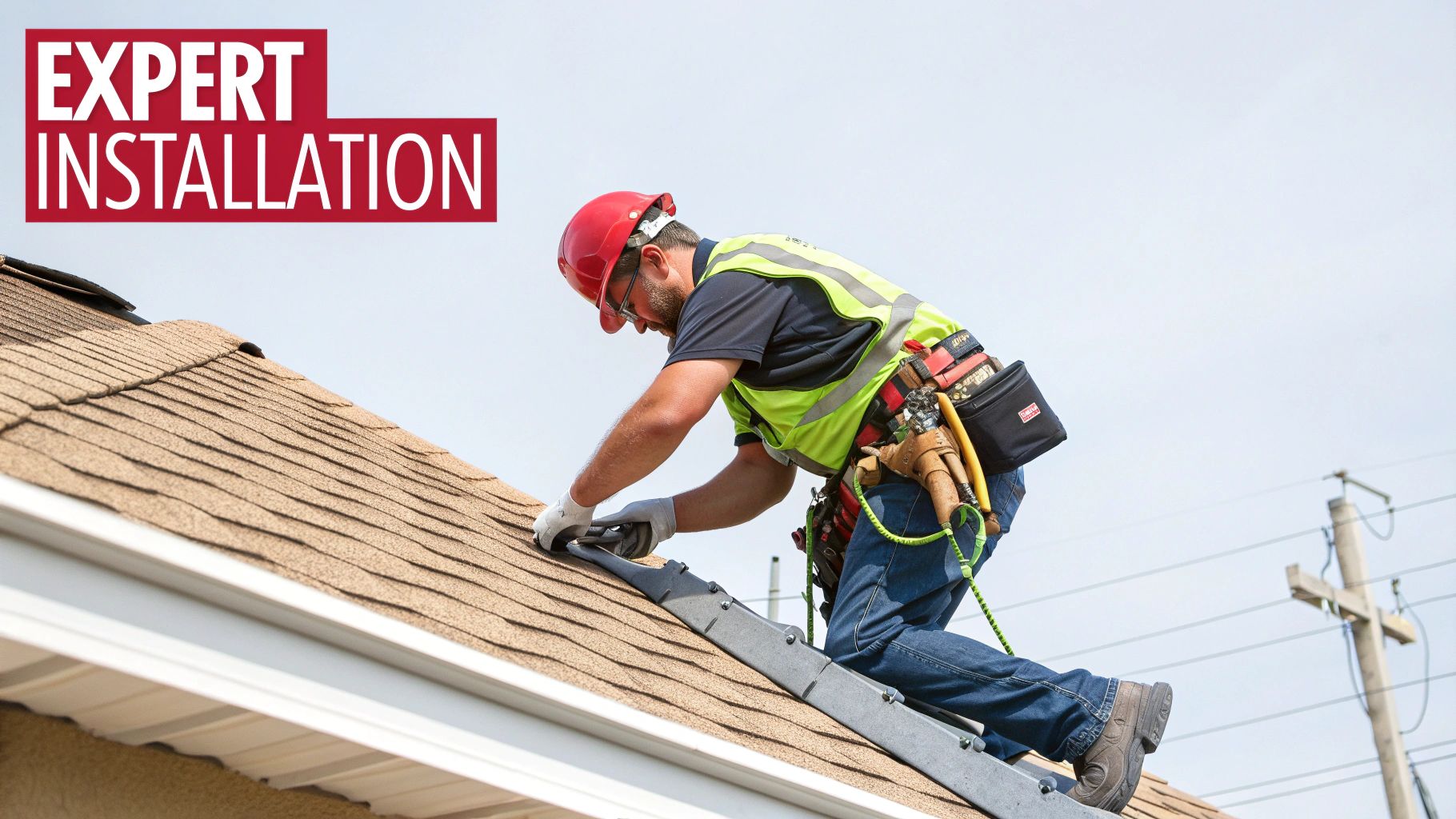
You can choose the most advanced hail-resistant roofing materials on the market, but they're only as good as the hands that install them. The real test of a roof's strength—its ability to shake off a Texas hailstorm and actually live up to its warranty—is determined by the quality of the installation. A flawless installation is what ties everything together into a single, cohesive shield.
Even a top-tier Class 4 shingle will fail if it's nailed improperly. A standing seam metal roof will leak if the panels aren't locked together just right. It's a hard truth, but manufacturers' warranties are almost always tied to their materials being installed exactly to spec. Cutting corners on labor to save a bit upfront can easily void that warranty and set you up for a disaster when the next storm rolls through.
Key Takeaway: Think of your roof as a complete system, not just a pile of shingles. The installation is what integrates every single part—from the deck and underlayment to the flashing and fasteners—into a unified defense for your home.
Installation Details That Matter in Texas
The Dallas-Fort Worth and East Texas climate brings a unique set of challenges. We're not just fighting off rain; we're building roofs to withstand punishing heat, thermal shock, and the violent winds that often come with our hail events.
A roofer who truly knows this area will obsess over a few key details:
- Proper Fastening for High Winds: Here in North Texas, wind uplift is a huge threat. A pro installer knows to use the right number of fasteners—often more than the minimum—and place them precisely where the manufacturer dictates. This is what keeps shingles from turning into kites during a storm.
- Adequate Attic Ventilation: Our brutal summer heat can literally cook shingles from the inside out, making them brittle and far more likely to crack when hail hits. A skilled roofer will ensure your attic has a balanced ventilation system, which is crucial for regulating the roof’s temperature and extending its life.
- Correct Underlayment and Flashing: The underlayment is your roof's last line of defense against water. Using a high-quality synthetic underlayment and getting the flashing details perfect around chimneys, skylights, and valleys is absolutely non-negotiable for keeping your home dry.
Maintenance Tips to Maximize Lifespan
Once your new roof is installed by a professional, a little bit of proactive care can go a long way. This doesn't mean you need to get up on a ladder every weekend, but being an observant homeowner pays dividends. You can find some great principles in our guide to slate roof longevity that apply to almost any premium roof.
Simple habits make a huge difference. After a big storm, take a quick look from the ground with binoculars. Keep your gutters clear so water doesn't back up and creep under the edges of your roof. Most importantly, have a trusted professional give it a once-over every year or two to spot small issues before they snowball into costly repairs.
Ultimately, choosing a certified, experienced contractor is the single most important decision you'll make for the long-term protection of your home.
How to Choose the Right DFW Roofing Contractor
Picking the right materials is only half the battle; your choice of a local contractor is just as critical, especially here in North Texas. The Dallas-Fort Worth market is flooded with roofing companies, and after a big storm, new ones seem to pop up overnight. To protect your investment, you need a vetting process that weeds out the fly-by-night crews.
Your goal is simple: find an established, reputable contractor who genuinely cares about their work and will be around to stand behind it for years to come.
First Things First: Check Their Credentials
Before you even talk about shingles, verify their credentials. Any legitimate DFW contractor will be fully insured, and this is non-negotiable. It’s for their protection and, more importantly, for yours.
Always ask to see proof of two things: general liability insurance and workers' compensation. When you’re evaluating a DFW roofer, it's smart to get a handle on their business insurance for contractors. This coverage is what shields you from liability if someone gets hurt on your property during the job.
Key Questions to Ask Potential Contractors
Once the insurance box is checked, it’s time to dig a little deeper to tell the seasoned pros from the "storm chasers." A good contractor will have no problem answering your questions and will provide clear, honest answers. Don't be shy—it’s your home, after all.
Here are a few questions I always recommend asking:
- How long have you been in business in DFW? You want a company with real roots in our community, not an out-of-state crew that just follows the latest hailstorm.
- Can I see some of your recent local work? Ask for addresses and names of past customers. A quick drive-by and a phone call can tell you a lot about their quality and service.
- What manufacturer certifications do you have? Certifications from brands like GAF or Owens Corning aren't just fancy pieces of paper. They mean the crew has been properly trained to install the materials, which is often required to keep your warranty valid.
- How will you communicate during the project and what's your cleanup process? A professional team respects your home, gives you daily updates, and leaves your yard looking like they were never there.
A Word of Warning: If a roofer pressures you to sign a contract on the spot or—a huge red flag—offers to "eat" your insurance deductible, walk away. These are classic signs of a shady operator.
Finally, insist on a detailed, written estimate. It’s not a real proposal unless it clearly breaks down the entire scope of work, all material specifications, labor costs, and a realistic timeline. Follow these steps, and you’ll find a reliable partner ready to install a roof that can handle whatever Texas weather throws at it.
Answering Your Questions About Hail-Resistant Roofing
When you're looking into a hail-resistant roof, a lot of questions come up. It's a significant investment, so you want to get it right. Here are some of the most common questions we hear from homeowners across Texas, along with straightforward answers from our experience.
Will My Insurance Premium Really Go Down?
Yes, almost certainly. Most major insurance carriers in Texas offer some pretty substantial discounts for installing a certified Class 4 impact-resistant roof. We typically see homeowners save anywhere from 15% to 35% on their premiums. Just make sure you send your insurance agent the installation certificate to get that discount applied.
How Much More Is This Going to Cost Me?
You can expect to invest about 15% to 30% more for hail-resistant roofing materials compared to standard architectural shingles. It’s an upfront cost, for sure, but it almost always pays for itself. Think about it: you’re saving on insurance premiums, paying for fewer (if any) repairs, and most importantly, avoiding the pain of paying a new deductible every time a big storm rolls through.
Our Take: That initial higher cost buys you long-term peace of mind. You're investing in a roof that can actually stand up to North Texas weather, breaking that frustrating cycle of damage, claim, and repair.
Can I Just Upgrade One Section of My Roof?
Technically, yes. If a full replacement isn't in the budget right now, you could reinforce the most vulnerable parts of your roof—like the slope that gets hammered by storms—with impact-resistant shingles during a repair. However, for complete protection and a valid system-wide warranty, a full replacement is always the best route. A patchwork solution can leave you exposed.
How Long Will These Materials Actually Last?
These roofing systems are built for the long haul. Because they are specifically designed to fend off the kind of storm damage that kills a standard roof, you can realistically expect them to last 25-50% longer than their conventional counterparts. You're not just buying a roof; you're buying more time.
Ready to see what a roof built for Texas weather looks like on your home? The team at Hail King Professionals can provide a free, same-day inspection to give you a clear assessment and a solid plan. Schedule your free inspection with Hail King Professionals today!