Picture this: a roof with the timeless, elegant look of classic slate or clay tile, but underneath, it has the raw strength of steel built to shrug off even the most severe Texas storms. That’s exactly what you get with stone-coated metal tile roofing. It’s a modern roofing system that masterfully combines old-world beauty with next-generation protection.
A Perfect Blend of Strength and Style
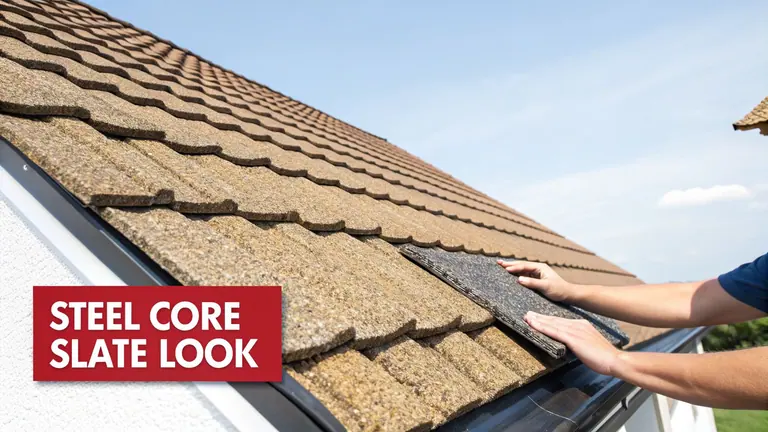
When most people hear "metal roof," they immediately think of the loud, industrial-looking standing seam panels you see on barns. Stone-coated metal tile is in a completely different league. Think of it less like a simple panel and more like an armored shield designed to look like a piece of art. It was engineered from the ground up to solve the common problems of traditional roofing materials, all without compromising on curb appeal.
The foundation of every tile is a high-grade, 26-gauge steel panel. This steel core is what provides the incredible resistance to impact, high winds, and fire. But the raw steel is only where the story begins.
The Multi-Layered Composition
What makes this system so effective is its layered construction. The steel is first treated with a series of coatings to fight off rust and corrosion, which is a must-have in humid Texas weather. A special acrylic resin is then applied over these protective layers, acting like a super-strong glue for the final, visible surface.
This top layer is where the "stone-coated" name comes from. It's a dense layer of finely crushed stone granules bonded directly to the steel. These granules do a lot more than just look good.
- Aesthetic Versatility: They provide the authentic texture and rich color blends that perfectly mimic materials like clay tile, wood shake, or high-end architectural shingles.
- Enhanced Durability: The stone coating adds another barrier against the elements, especially the harsh UV rays that can make other roofing materials fade and become brittle over time.
- Sound Dampening: That granular texture does a fantastic job of breaking up and absorbing the sound of heavy rain, completely eliminating the "tinny" noise you might expect from a metal roof.
The result is a roofing system that doesn't force you to choose between durability and design. You get the lightweight, high-performance benefits of steel and the sophisticated curb appeal of classic roofing profiles.
Why It Excels for Home Upgrades
One of its biggest, and often overlooked, advantages is its weight. Traditional slate or concrete tiles are incredibly heavy and often require a roofer to bring in a structural engineer to reinforce the roof deck—a costly and complicated extra step. Stone-coated steel, on the other hand, is surprisingly lightweight.
This makes it a perfect fit for nearly any home, especially for reroofing projects. You can get a massive upgrade in protection and property value without having to worry about a major, expensive structural overhaul. It’s a quiet, efficient, and beautiful shield for your home—a true investment in long-term peace of mind.
A Roof Built for Texas Weather
If you live in Texas, you know our weather is more than just a forecast—it's a force of nature. We get it all: golf-ball-sized hail, blistering summer sun, and winds that can feel like a hurricane. A roof here isn't just a cover; it has to be armor. This is where stone-coated metal tile roofing truly leaves every other material in the dust.
It’s one thing to survive a storm, but it's another thing entirely to look brand new afterward. A single nasty hailstorm can shred a standard asphalt shingle roof, forcing you into the headache of insurance claims and repairs. A stone-coated metal system, on the other hand, is built to take the hit and keep going. This isn't just a marketing claim; it's a measurable, proven reality.
The Power of a Class 4 Impact Rating
In the roofing industry, the gold standard for toughness is the Class 4 rating. To earn this, a roofing material has to prove it can take a beating—specifically, getting hit by a 2-inch steel ball dropped from 20 feet without cracking. For a Texas homeowner, that lab test translates into serious peace of mind.
Picture a big thunderstorm rolling through Dallas-Fort Worth. The hail starts, and you hear it getting louder and larger. While your neighbors with asphalt roofs are wringing their hands, wondering about the dents and cracks, a Class 4 roof is engineered to deflect that force. Its steel core provides the muscle, and the stone coating acts as a textured cushion, absorbing the impact.
It’s a game-changer. This is the difference between filing an expensive insurance claim and just sweeping some leaves off your driveway after the storm passes.
A Fortress Against Hurricane-Force Winds
Hail is just one part of the equation. Those Texas storms often bring vicious, straight-line winds that can peel shingles right off a roof—a problem called wind uplift. This is where the smart, interlocking design of stone-coated metal tile roofing gives it a massive advantage.
Instead of individual shingles held on by a thin strip of adhesive, these systems are made of interlocking panels. Every tile is fastened directly to the roof deck and then locked into its neighbors on all four sides.
This creates a single, solid shield over your home. The wind simply can’t find an edge to get under and start tearing things apart. It’s why these roofs are often rated to handle winds of 120 mph and up. You’re not just getting a roof; you’re getting a monolithic barrier that stands its ground.
This focus on strength is why more and more homeowners are making the switch. In fact, stone-coated metal tile roofing now makes up nearly 20% of the residential metal roofing market—a huge leap from just 3.7% back in 1998. That growth is especially strong in places like Dallas-Fort Worth, where these systems are valued for their ability to withstand 140 mph winds and resist hail without cracking. You can dive deeper into the market trends for stone coated steel roofing to see the data for yourself.
Standing Up to Sun and Fire
Beyond the storms, a Texas roof is under constant attack from the sun. That intense UV radiation is what makes asphalt shingles brittle and causes them to lose their protective granules. The ceramic-coated stone granules on a metal tile roof, however, act like a permanent sunscreen. They protect the steel underneath and ensure the color doesn't fade away.
That means the beautiful roof you install today will still look just as vibrant decades from now, protecting your home's curb appeal and value. And this toughness extends to fire safety, too. Stone-coated metal roofs boast a Class A fire rating—the best you can get. They are completely non-combustible, so they won't catch fire from stray embers, giving your family another critical layer of protection.
Comparing Your Roofing Options Head-To-Head
Choosing a new roof is a massive decision, and honestly, the options can feel overwhelming. But when you put the different materials side-by-side, the real-world value of stone-coated metal tile roofing becomes crystal clear. This isn't just about weathering the next hailstorm; it's about making a smart, long-term investment that actually pays you back over the years.
Sure, a traditional asphalt shingle roof looks cheaper on paper. This is a classic trap of comparing the initial price tag to the total cost of ownership. In Texas, a typical asphalt roof might last 15-20 years if you're lucky. That means you'll likely be paying for a full, disruptive roof replacement two or even three times over the lifespan of a single stone-coated metal roof.
Lifetime Value Over Upfront Cost
Think of it like this: you can buy a cheap pair of boots that falls apart after one rough winter, or you can invest in a high-quality pair that lasts a decade. The initial sticker shock of the better boots disappears when you realize you've avoided buying new ones year after year. A stone-coated metal roof works on the exact same principle, saving you from repeated replacement costs, insurance headaches, and the constant stress of wondering if your roof will survive the next storm.
This "do it right the first time" approach is why the market is shifting so dramatically. The global stone-coated steel roofing market was valued at $69.41 billion in 2024 and is projected to explode to $244.13 billion by 2035. Why the massive jump? It's driven by homeowners right here in storm-prone areas like Dallas-Fort Worth who are tired of temporary fixes. They're choosing durable, modern roofing that can actually stand up to our extreme weather. You can learn more about the global shift toward resilient roofing materials and see why this trend is picking up speed.
Performance Across The Board
To make the right call for your home, you have to compare the things that matter most for a Texas homeowner. Let’s get practical and break down how the most common roofing materials really stack up against each other—from hail and wind resistance to energy bills and curb appeal.
The decision tree below is a great way to visualize whether your current roof is truly ready for the hail, wind, and intense sun we get around here.
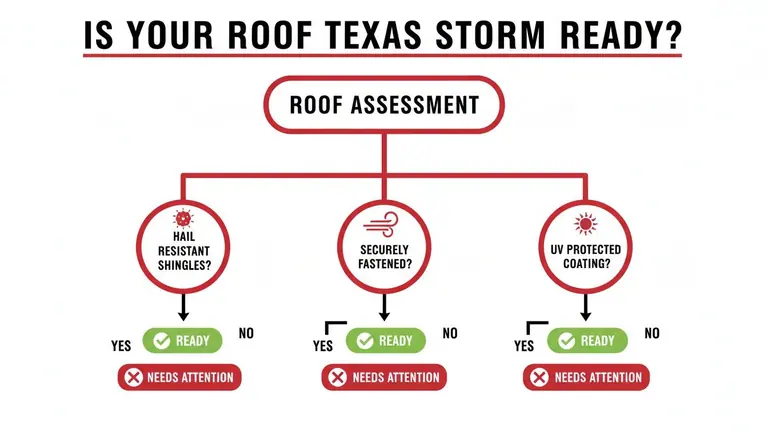
As this graphic shows, a truly storm-ready roof has to be an all-rounder. It needs to excel in multiple categories, not just one, which is why a balanced, high-performance system is so critical.
When you look at the complete picture—lifespan, durability, maintenance, and insurance benefits—stone-coated metal roofing consistently provides the highest return on investment, delivering decades of worry-free protection.
Roofing Material Comparison For Texas Homeowners
To make this even clearer, we’ve put together a straightforward table comparing the most popular roofing choices. This helps you weigh the pros and cons based on what you value most for your home and family.
| Feature | Stone-Coated Metal Tile | Asphalt Shingles | Concrete/Clay Tiles |
|---|---|---|---|
| Expected Lifespan | 50-70+ years | 15-25 years | 50-100+ years |
| Hail Resistance | Excellent (Class 4) – Resists cracking from large hail. | Poor to Fair – Granule loss and cracking are common. | Good to Poor – Can crack or shatter from direct impact. |
| Wind Resistance | Excellent (120+ mph) – Interlocking panels stop wind uplift. | Fair – Prone to shingles blowing off in high winds. | Good – Heavy weight helps, but tiles can still fail. |
| Maintenance Needs | Very Low – Requires minimal upkeep. | Moderate – Prone to granule loss, algae, and curling. | Moderate – Tiles can crack and need regular inspection. |
| Energy Efficiency | Good to Excellent – Reflects solar heat, lowering A/C costs. | Poor – Absorbs heat, making your attic hotter. | Good – Airspace underneath provides natural insulation. |
| Curb Appeal | Excellent – Mimics slate, tile, or shake with rich colors. | Good – Lots of colors, but can look dated quickly. | Excellent – Offers a premium, traditional look. |
| Initial Cost | High – A significant upfront investment. | Low – The most affordable initial option. | Very High – Often the most expensive choice. |
| Weight | Lightweight – Works on most existing home structures. | Lightweight – Can be installed on almost any roof. | Extremely Heavy – Often requires structural reinforcement. |
As you can see, while asphalt shingles have a low entry cost, they fall short in nearly every other category that matters in Texas. Concrete and clay tiles offer a long lifespan but come with extreme weight and a high risk of shattering from our notorious hailstorms.
For a deeper dive, check out our guide on the most common residential roofing system types for a more detailed analysis.
In the end, stone-coated metal tile roofing emerges as the clear winner for homeowners looking for a balanced solution: elite performance, lasting beauty, and unmatched lifetime value.
The Installation Process And Lifetime Maintenance
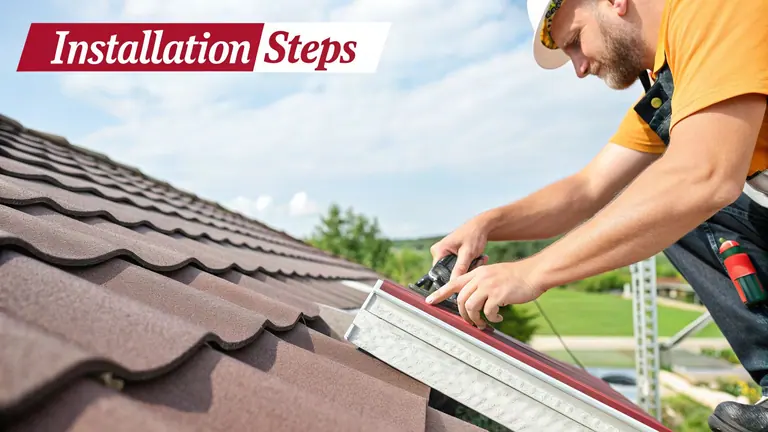
A high-performance roofing system like stone-coated metal tile demands an equally high-performance installation. The final result—a roof that can genuinely last over 50 years—depends just as much on the crew's skill as it does on the material itself. A professional job isn't just about fastening panels; it’s a meticulous process designed to give you flawless, long-term protection.
The whole thing starts with carefully tearing off your old roof. We don't just rip and toss; this is a critical moment to give your roof's underlying structure a full health check. Once the old material is gone, we thoroughly inspect the wooden roof deck for any rot, water damage, or weak spots that need to be fixed before a single new tile goes on.
With a solid, clean deck ready to go, the next layer is a high-quality synthetic underlayment. Think of this as the roof’s last line of defense—a modern, water-resistant barrier that protects the sheathing from any moisture that might find its way through.
The Art of Precision and Compliance
Installing stone-coated metal tiles is where true craftsmanship really comes into play. These aren't like asphalt shingles that you just overlap. The tiles have an interlocking design, and each panel has to be placed and fastened with precision, following the manufacturer’s exact specifications to create a single, unified shell over your home.
This precision is non-negotiable. Getting it right ensures the interlocking system can stand up to high winds and prevent any chance of leaks. It’s also the key to keeping your warranty valid for the long haul.
A professional installer’s job is to follow two sets of rules at all times: local building codes and the manufacturer's guidelines. This guarantees the roof performs as it should and ensures your investment is fully protected by the warranty for decades.
Of course, the cost of a project like this depends on several factors. To get a clearer picture of what goes into the final price, you might want to check out our guide on how much a new roof costs, which breaks down the variables.
Enjoying Decades of Low-Maintenance Ownership
Here’s the best part: once a stone-coated metal tile roofing system is installed correctly, your work is pretty much done. The lifetime maintenance is practically zero. You can say goodbye to the constant worry and upkeep that comes with other roofing materials. The tough steel core and bonded stone granules are built to take a beating from the weather without needing your help.
While the system is designed to be self-sufficient, a little common sense goes a long way. The most you'll likely ever need to do is some simple housekeeping.
- Keep Valleys Clear: Make sure the valleys, where two roof slopes meet, are clear of heavy debris like packed leaves or pine needles so water can flow off easily.
- Check Your Gutters: Keep your gutters clean to prevent water from backing up under the roof's edge—this is just good practice for any roof.
That’s really it. No re-sealing, no replacing cracked tiles, and no worrying about granule loss after a hailstorm. This hassle-free ownership is one of the biggest perks, letting you simply enjoy the peace of mind that comes with a permanent, beautiful roof over your head.
Navigating Insurance, Warranties, And Solar Integration
Choosing a stone-coated metal tile roofing system is a serious upgrade for your home, but the payoff goes well beyond just shrugging off storms. A premium roof like this can actually put money back in your pocket through insurance savings and makes adding solar panels a breeze. Knowing how to handle these details ensures you’re getting the most out of your investment for years to come.
It all starts with the roof’s incredible durability. Most insurance companies love to see a Class 4 impact-rated roof, and they often reward homeowners with significant policy discounts. Why? Because a roof that can stand up to massive hail is far less likely to result in a huge, costly claim. From their perspective, your home just became a much safer bet.
When you call your insurance agent, make sure you have the paperwork for your new roof handy, specifically the product specs showing that Class 4 rating. A single phone call could lead to real, tangible savings every year, helping the new roof pay for itself over time.
Decoding Your Manufacturer Warranty
One of the biggest draws of a stone-coated metal roof is the impressive warranty, with many manufacturers backing their products for 50 years or even a "lifetime." But it’s not a blank check—you have to know what’s covered and what your responsibilities are.
First, "lifetime" warranties are usually prorated, meaning the coverage amount might shrink as the years go by. They are designed to cover manufacturing defects, like the stone coating peeling off or the steel base starting to rust prematurely. What they don't cover is storm damage. That’s a job for your homeowner's insurance policy.
The absolute number one rule for keeping your warranty valid is a professional, code-compliant installation. Manufacturers have very specific instructions for how their roofs must be installed. Hiring a cheap, uncertified crew can void your warranty before they’ve even packed up their tools.
If you ever do have to file a claim for unexpected damage, knowing the process is half the battle. For a deep dive into the claims process, these hail damage roof insurance claim tips are a fantastic resource. And if you're curious about different roof structures, check out our guide on the differences between flat and pitched roofs.
Seamless Solar Panel Integration
As solar power gets more and more popular here in Texas, a common question is: "What happens to my panels if I get a new roof?" The good news is that stone-coated metal tile roofing is the perfect partner for solar. It’s so lightweight that it almost never requires extra structural support for the panels, which is a huge advantage.
This roofing technology, which got its start in New Zealand, has exploded in popularity across the U.S. for exactly this reason. It can reflect up to 70% of the sun's radiation, and its extreme durability provides a stable foundation for your solar investment for decades—two to three times longer than a standard asphalt roof.
If you already have solar panels, the process for a reroof is called a "detach and reset." An experienced contractor like Hail King Professionals manages this from start to finish.
Step 1: Safe Detach
Our crew carefully disconnects and removes your solar panels and mounting racks. We label every component so it all goes back exactly where it belongs.Step 2: New Roof Installation
With the panels stored safely, we install your beautiful new stone-coated metal roof. We pay extra attention to the flashing and seals where the panel mounts will be reinstalled.Step 3: Secure Reset
Once the new roof is on, we reinstall the solar array, making sure every connection is watertight, secure, and perfectly angled to catch the sun.
This careful, step-by-step process ensures your solar system performs flawlessly and your new roof remains 100% leak-free. You get the best of both worlds: a bulletproof roof and clean, green energy.
Why Your Choice Of Contractor Matters Most
Picking a premium roof like stone coated metal tile is a fantastic start, but it's only half the equation. The best roofing system in the world can turn into an absolute disaster if the installation is botched. That’s why your choice of contractor is just as critical—if not more so—than the material itself. The crew you hire is the one responsible for turning that great product into decades of real-world protection for your home.
Think of it this way: a high-performance roof is a complete system where every single component has to work in harmony. That system is only as strong as its weakest link. A sloppy installation can create countless vulnerabilities—tiny gaps that invite leaks, improperly secured panels that catch the wind, or shortcuts that instantly void your manufacturer's warranty. Suddenly, all the benefits you paid a premium for are gone. This is exactly why trusting the job to a proven, local expert isn't just a good idea; it's non-negotiable.
The Hallmarks Of A True Professional
A top-tier contractor does a lot more than just fasten panels to your roof. They bring a deep understanding of the local environment, especially the brutal weather we get here in Texas. They know the specific building codes for your city like the back of their hand and ensure every single step—from the underlayment and decking to the final piece of flashing—is done by the book.
Here are the non-negotiable qualities you should look for in a roofing partner:
- Code-Compliant Installations: They follow all local building codes and manufacturer specifications to the letter. This isn't just about red tape; it’s about ensuring your roof is safe and your warranty stays intact.
- Transparent Communication: You should expect clear, honest updates from the first inspection to the final walkthrough. No hidden fees, no surprise changes—just straight talk.
- A Solid Guarantee: A contractor who is confident in their work will stand behind it with a strong satisfaction guarantee. This gives you peace of mind that you're investing in quality craftsmanship.
A contractor's professionalism isn't just about the work on the roof; it's reflected in their entire business. Top-tier companies are always optimizing their operations in the roofing and siding industry to provide better client service from start to finish.
Making Your Project Accessible And Stress-Free
Let’s be practical—a new roof is a major investment. A great contractor gets this and should offer flexible financing options to make the project more manageable. This allows you to get the absolute best protection for your home without having to drain your savings. At Hail King Professionals, we lay out all the financing solutions clearly so you can move forward with confidence.
Ultimately, the right material and the right partner are a team. One without the other is just a recipe for disappointment. When you choose a contractor with a proven track record, a deep-seated commitment to quality, and a genuine focus on customer satisfaction, you’re ensuring your investment in stone coated metal tile roofing pays off with the lasting value and peace of mind you deserve.
Ready to see what the perfect combination of material and expertise can do for your home? Schedule a free, no-obligation inspection with our team today, and let us show you how we protect your property for the long haul.
Got Questions? We've Got Answers
Making a big decision like a new roof naturally comes with a few questions. It's a major investment, after all. To help you feel confident, we've put together straightforward answers to the questions we hear most often from Texas homeowners just like you.
Is a Metal Roof Going to Be Loud When It Rains?
This is easily the biggest myth out there, and the short answer is no. Forget the image of a noisy tin roof on an old barn. A stone-coated metal tile roofing system is engineered to be quiet.
The magic is in the stone granules. This textured top layer doesn't just look good; it acts as a fantastic sound buffer, breaking up the impact of raindrops before they can make a racket. When installed correctly over your roof deck with proper underlayment, a stone-coated metal roof is often even quieter than a standard asphalt shingle roof.
Can You Walk On a Stone-Coated Metal Tile Roof?
Yes, but there's a right way to do it. Manufacturers have specific guidelines for a reason. Anyone on the roof—whether it's an installer or a chimney sweep—should walk on the lower, supported part of the tile, often called the "batten." This avoids putting pressure on the unsupported arches, which could cause dents.
A neat bonus is that the stone granules actually provide more grip underfoot than a slick metal panel or even many types of asphalt shingles, which is a nice safety feature.
Even though the roof is walkable for necessary tasks, it's always smartest to let trained professionals handle any work up there. They know how to move around safely without causing accidental damage.
How Much More Does It Really Cost Than Asphalt Shingles?
Let's talk numbers. Upfront, you are looking at a higher price tag—typically two to three times what a standard asphalt shingle roof costs. But that's only half the story.
Think of it this way: a stone-coated metal roof is a one-time purchase. It’s built to last 50-70+ years. In that same span of time, you would likely have to pay to tear off and replace an asphalt roof two, maybe even three, times.
When you add up the savings from avoiding future replacements, potential discounts on your homeowner's insurance, and better energy efficiency, the long-term value is undeniable. You're investing once for a lifetime of security.
Ready to invest in a roof that lasts a lifetime? The team at Hail King Professionals is here to answer any other questions you have and provide a free, no-obligation inspection. Get your project started at https://hailkingpros.com.