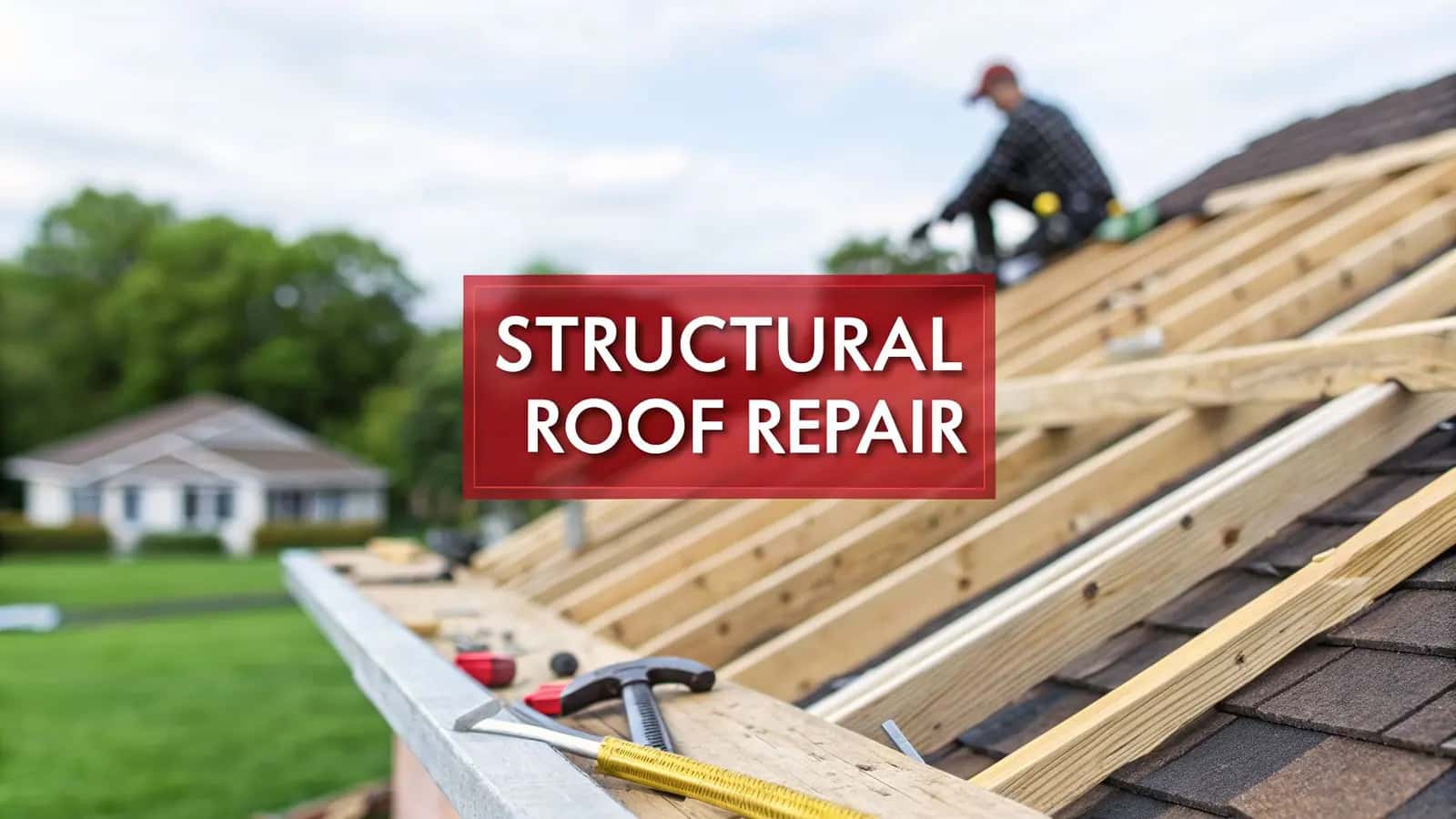
When most homeowners think about roof repair, they're picturing someone nailing down a few loose shingles or patching a leak. That’s just scratching the surface. Real trouble often lurks underneath, in the very bones of your roof.
Structural roof repair isn't about the shingles you see; it's about fixing the hidden framework—the rafters, trusses, and decking—that holds everything up.
What Is Structural Roof Repair
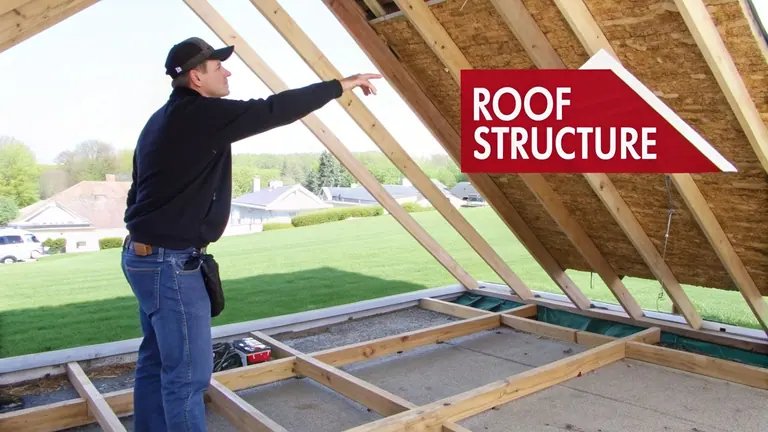
Think of it this way: fixing a missing shingle is like getting a paint touch-up on your car. Structural roof repair, on the other hand, is like fixing a bent frame after a collision. It's a serious job that addresses deep, foundational problems with your roof's core support system.
This framework is the unsung hero of your home. It’s an engineered network of wooden beams and solid sheathing designed to bear incredible loads. From the constant pull of gravity to the violent uplift forces of a tornado or hurricane-force winds we see in East Texas, this skeleton is what keeps your home intact.
When that skeleton is compromised, the whole house is in jeopardy.
A failing roof structure is more than just an expensive problem—it's a direct threat to your family's safety. That sagging roofline you see isn't just an eyesore; it's a desperate warning sign that the very system holding tons of material over your head is giving way.
Looking Beyond the Shingles
It's crucial to know when a simple leak is pointing to something much worse. Sure, a single water spot might just be a failed sealant or a cracked shingle. But if you're seeing widespread water damage or stains popping up in multiple rooms, it’s a good bet the water has been seeping into the wood structure for a while.
You're not just fixing the leak anymore; you're dealing with what the water left behind.
We created this quick guide to help you recognize the difference between a simple fix and a major structural red flag.
Quick Guide to Spotting Structural Roof Damage
| Symptom | Potential Structural Problem | Recommended Action |
|---|---|---|
| Noticeable sagging or dipping in the roofline | Broken or weakened rafters/trusses | Immediate professional inspection. This is a critical failure warning. |
| Cracks spreading on interior ceilings or walls | Roof frame is shifting, putting stress on your home's interior structure. | Get a structural assessment. Don't just patch the drywall. |
| Loud creaking, groaning, or popping sounds | Wood framing is moving or breaking under stress, often during high winds. | Call a roofer to investigate the source of the sounds. |
| Spongy or soft spots when walking on the roof | Rotted or water-damaged roof decking (the plywood/OSB sheathing). | Professional inspection is needed to determine the extent of the rot. |
If you see any of these signs, don't wait for the problem to get worse. A small issue today can become a catastrophic failure tomorrow.
The Real Cost of Waiting
Ignoring structural red flags is a surefire way to turn a manageable repair into a financial nightmare. The U.S. roofing market is projected to hit $76.4 billion by 2025, and it's not just from standard replacements. Major repairs are on the rise, with leaks impacting nearly 6 million homes and sagging roofs affecting another 1.9 million.
While a minor structural fix might average around $1,150, letting a problem fester can escalate costs into the tens of thousands for a complete structural rebuild. It’s far better to catch these things early.
A professional assessment can uncover hidden damage. Ask for photographs and a written explanation of the findings and recommended repairs.
What Causes Structural Roof Damage in Texas
Your roof’s underlying structure is surprisingly tough, designed to take a real beating from Mother Nature. But here in Texas, it’s up against a special kind of relentless assault. While a single, dramatic event can certainly cause a catastrophic failure, structural damage is more often a story of accumulated stress over many years.
Learning to spot the culprits is the key to stopping a small issue before it spirals into a major, and expensive, structural roof repair project. In Dallas-Fort Worth and across East Texas, the threats range from the loud and obvious to the silent and sneaky.
The Force of Nature and Extreme Weather
Let’s be honest: Texas weather is the main villain in this story. It doesn’t just chew up your shingles; it goes after the very bones of your roof.
Intense Hailstorms: We’re not talking about pea-sized ice. The large, destructive hail common in North Texas hits your roof like a volley of hammers. That impact doesn't just leave a mark on the surface; its kinetic energy can actually fracture the plywood or OSB decking underneath. One bad storm can riddle your roof decking with tiny cracks, opening the door for water to soak directly into the wooden frame and kickstart the rotting process.
High Winds and Uplift: The powerful straight-line winds and tornadoes in our region create a powerful vacuum effect. This "uplift" literally tries to suck the roof right off your house. Even if the roof holds on, the force strains every connection point, pulls at rafters, and gradually weakens the entire truss system over the years.
This constant battle with wind and hail is a huge driver of roofing costs. In 2024, the nationwide bill for roof repairs and replacements climbed to almost $31 billion. In a storm-heavy state like Texas, wind and hail are the top reasons for a claim, making up over half of all residential insurance filings. It's no surprise that research shows homes with roofs already in poor shape face 60% higher loss costs and are 50% more likely to get severely damaged in a storm. For a deeper dive into these risks, the latest findings from Verisk are quite revealing.
Silent Destroyers Working from Within
While a storm is impossible to ignore, some of the worst damage happens quietly, hidden from view. These problems can compromise your roof's integrity for years, often leading to a sudden, shocking failure.
Think of it like termites in a wooden beam. The damage happens out of sight, slowly weakening the structure until it can no longer support its intended load. By the time you see the evidence, the core strength is already compromised.
Here are the key hidden culprits we see all the time:
Improper Initial Construction: A roof built with undersized rafters, missing braces, or fasteners spaced too far apart is a ticking time bomb. It might pass a visual inspection for years, but it simply wasn't built to handle the long-term stress of Texas weather. This makes it incredibly vulnerable to sagging and eventual failure.
Persistent Water Intrusion: A small, unfixed leak is a roof's worst enemy. Water that finds its way in will slowly saturate the decking, rafters, and insulation, creating a permanently damp environment. This is the perfect breeding ground for wood rot, which literally digests the structural lumber, turning strong supports into a soft, spongy mess.
Excessive Weight and Unbalanced Loads: Piling on too much weight can place stress on parts of the roof that were never meant to carry it. This can be a heavy HVAC unit installed without proper support, or even a solar panel system that wasn't planned correctly to distribute the load across the main rafters and trusses.
A classic scenario we run into involves a slow leak around a chimney flashing. For months, or even years, water drips onto a single rafter. Eventually, that wood rots through and cracks. Its load then gets transferred to the rafters on either side, which start to bow under the extra strain. This cascade effect is exactly how a tiny, hidden leak quietly becomes a massive structural failure.
The Professional Structural Repair Process
When your home's underlying structure is at risk, a true professional repair is far more than just swapping out a few bad pieces of wood. It's a careful, methodical operation that gets to the root cause, engineers a durable solution, and is executed with precision. The goal isn't just to patch the problem—it's to make your roof even stronger against what the future might throw at it.
The whole process kicks off with a deep-dive inspection. This isn't a quick peek from the ground; it's a forensic investigation of your entire roofing system. A real pro will start in your attic, armed with a powerful flashlight, hunting for the classic signs of trouble: water stains on the underside of the decking, cracked or sagging rafters, and truss connections that are showing signs of stress.
From there, the inspection moves up to the rooftop itself. Here, they're feeling for spongy spots that scream "rotted decking," looking for the hail or wind damage that let water in, and checking the flashings around chimneys and vents, which are notorious failure points.
The Role of the Structural Engineer
For anything beyond minor damage, a reputable roofing contractor will bring a structural engineer into the loop. Think of the engineer as the architect of the repair. While your roofer is the expert builder, the engineer does the complex math to ensure the repair plan is safe, sound, and up to local building codes.
Their involvement is non-negotiable in a few key scenarios:
- Major Sagging or Deflection: If you can see a noticeable dip in your roofline, an engineer has to design the fix to safely correct the sag and add the right reinforcement.
- Broken Trusses or Rafters: You can't just slap a new board on these. Repairing these core framing members requires an engineered plan to properly redistribute the roof's massive load.
- Changes to the Original Structure: Thinking of adding a dormer or putting a heavy HVAC unit on the roof? An engineer must verify the existing frame can handle the new weight.
The engineer delivers a formal report with stamped plans that becomes the contractor's playbook. This official document is what your city permit office and insurance company need to see, adding a critical layer of safety and accountability.
Common Structural Repair Techniques
With the engineer's plan in hand, the crew can finally get to work. The specific methods they use will depend entirely on the type and severity of the damage found.
A structural roof repair isn’t just about replacement; it's often about strategic reinforcement. The goal is to restore and even enhance the roof’s original strength, creating a system that’s more resilient than before.
Here are a few of the most common techniques you’ll see on a job site:
Replacing Roof Decking: The plywood or OSB sheathing is the solid surface right under your shingles. When it rots, it gets soft and spongy. The crew will strip the shingles and underlayment in that area, cut out every bit of damaged decking, and fasten new sheathing securely to the rafters below.
Sistering Rafters or Joists: When a rafter is cracked or starting to sag but hasn't failed completely, we often use a technique called "sistering." This involves bolting a new, identical piece of lumber right alongside the damaged one. It powerfully reinforces the weakened board by transferring the load to the new lumber, restoring its strength without the massive job of a full replacement.
Repairing or Replacing Trusses: Roof trusses are surprisingly complex, factory-engineered components. Damage to even one can put the whole roof in jeopardy. Depending on the break, a pro might brace it with engineered gusset plates. If the damage is too severe, the entire truss has to be replaced—a major operation that often requires a crane to lift the new one into place.
This process highlights how common events, especially here in Texas, can lead straight to these kinds of repairs.
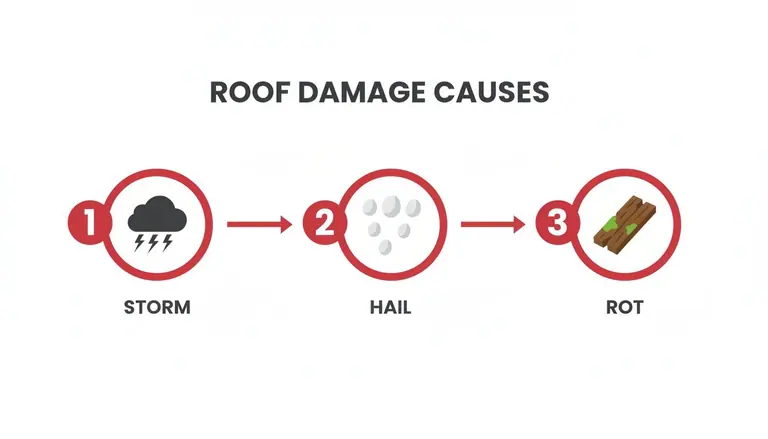
As you can see, a severe storm drops hail, which punches through the shingles. That impact creates an opening for water, which eventually leads to the wood rot that compromises your roof's entire structure.
Finishing with Long-Term Protection
Finally, a quality structural repair doesn't stop once the new wood is in. The finishing details are what prevent the problem from happening all over again. This means ensuring your attic has proper ventilation to fight moisture buildup and installing brand-new, meticulous flashing and ice-and-water shield to lock out water from every vulnerable seam.
For homeowners with solar panels, this is also when a professional "detach-and-reset" happens. The panels are carefully removed before the work starts, and then they're expertly reinstalled on the new, structurally sound roof, ensuring both your roof and your solar array are ready for the long haul.
Breaking Down Structural Repair Costs and Timelines
If you’ve just been told you need a structural roof repair, two questions probably hit you right away: "How much is this going to cost me?" and "How long will my house be a construction zone?"
Unlike a simple shingle replacement, which is mostly about surface-level work, structural repairs are a different beast entirely. We're talking about the bones of your roof. The final cost and timeline depend completely on how deep the damage goes.
What Goes into the Final Price
The scope of the job is the single biggest factor driving the cost. Reinforcing a couple of cracked rafters is one thing; tearing out and rebuilding an entire section of rotted decking and broken trusses is a whole other level of complexity. Each scenario dictates the labor, materials, and expertise needed.
Here’s a breakdown of what makes up the final invoice:
- Labor and Expertise: This is almost always the biggest chunk of the budget. You're not just paying for roofers; you're paying for skilled carpenters who understand framing. A complex truss replacement requires a much higher skill level—and more hours—than just slapping on new shingles.
- Materials: This isn't just the price of lumber. It includes specialized fasteners, heavy-duty metal connectors, premium underlayment, and everything else needed to rebuild the structure correctly. Lumber prices can also swing depending on the market.
- Structural Engineering Fees: For significant damage, a structural engineer is non-negotiable. They assess the load requirements and design a repair that is safe and up to code. Their fee is a crucial part of the project budget.
- Permits and Inspections: Your city or county requires permits for major structural work. These fees, plus the cost of having an inspector sign off on the work at various stages, are all factored in.
The financial incentive for staying ahead of these problems is huge. It really pays to be proactive. Data shows that with nearly 29% of asphalt roofs having less than four years of life remaining, ignoring small issues can lead to 50% more storm damage.
A little proactive maintenance goes a long way, especially when you compare the costs.
Cost Comparison Proactive Maintenance vs. Emergency Structural Repair
This table shows just how much you can save by addressing minor roof issues before they snowball into a full-blown structural failure.
| Repair Type | Typical Cost Range | Long-Term Savings Potential |
|---|---|---|
| Proactive Maintenance | $150 – $1,000 | $10,000+ by avoiding major failure |
| Major Structural Repair (Sagging) | $3,000 – $8,000 | N/A (Reactive cost) |
| Full Structural Rebuild/Replacement | $12,000+ | N/A (Reactive cost) |
As you can see, investing a few hundred dollars in maintenance can prevent tens of thousands of dollars in emergency repairs down the road. You can see more data on how roof maintenance saves money on bloomroofing.com.
Typical Timelines and What Causes Delays
Just as the costs can vary wildly, so can the project schedule. A minor job reinforcing a few rafters might only take a couple of days. A major overhaul involving custom-ordered trusses could easily stretch into several weeks. A good contractor will walk you through a realistic schedule from the start.
But even the most carefully laid plans can get sidetracked.
A structural repair schedule is a roadmap, not a guarantee. Weather, inspections, and material logistics are the three main variables that can alter the journey from start to finish.
Here are the most common things that can throw a wrench in the timeline:
- Weather: This is the ultimate wild card, especially here in Texas. Heavy rain, high winds, or blistering heat can shut down work for days at a time. Safety always comes first, and you can't work on an open roof in bad weather.
- Permitting and Inspections: Getting the initial permit can take time, depending on how busy your local building department is. The project also has to pause at key milestones to wait for a city inspector to come out and approve the work, and that happens on their schedule, not ours.
- Material Orders: We can get standard lumber pretty quickly. But if your repair requires custom-fabricated trusses or engineered beams, those have to be ordered from a specialty supplier, which can add significant lead time to the project.
Knowing about these potential hurdles from the beginning helps set clear expectations and allows you to work with your contractor to manage any delays that pop up.
Navigating Insurance Claims for Roof Damage
After a major Texas storm blows through, the sight of a sagging roof is bad enough. The thought of fighting your insurance company to get it fixed can feel downright exhausting. But trust me, having a game plan makes all the difference. It's the key to a smooth repair, not a drawn-out battle.
The very first thing you need to do—before you even think about calling your agent—is document everything. Grab your phone and go to town. Take tons of photos and videos of the damage from every conceivable angle. Get shots of that sagging ridge from the street, the cracked rafters in your attic, and any water stains popping up on your ceilings. The more proof you have right from the start, the stronger your claim will be.
The Adjuster, The Contractor, and The Claim
Once you file the claim, your insurance company will send out an adjuster. It’s absolutely critical to understand who they work for: the insurance company. Their job is to evaluate the damage according to the insurer's rulebook and come up with a payout number. They are not a roofing pro, and they're certainly not your personal advocate.
This is exactly why you need a contractor who knows the storm-damage game on your side. Your contractor works for you. They’ll perform a much deeper inspection, uncovering the full scope of the structural problems—often finding issues the adjuster's quick inspection might miss. From there, they’ll build a detailed, line-item estimate based on what it actually costs to do the job right.
When your contractor’s estimate comes in higher than the adjuster’s initial offer, don't panic. This is normal. It’s simply the start of a negotiation. A good contractor will go to bat for you, using their detailed report, photos, and any engineering plans to justify the true scope of the structural roof repair.
Decoding Your Insurance Settlement
When your claim gets approved, you'll get a flood of paperwork filled with confusing terms. The two you absolutely have to understand are Actual Cash Value (ACV) and Replacement Cost Value (RCV). Getting this straight is vital for your budget.
- Actual Cash Value (ACV): Think of this as what your damaged roof is worth today, with its age and wear-and-tear factored in. It’s the replacement cost minus depreciation. The first check you get from your insurer will almost always be for the ACV.
- Replacement Cost Value (RCV): This is the total amount needed to replace your damaged roof with brand-new materials at today's prices. You only get the rest of this money—the "recoverable depreciation"—after the work is finished and you send the final invoice to the insurance company.
Let’s say the total RCV for your repair is $20,000. If your roof has depreciated by $5,000 due to its age, your first ACV check will be for $15,000 (minus your deductible). After you prove the $20,000 repair is complete, they'll release that final $5,000.
Knowing how this process works is a huge part of recovering from a storm. For a more detailed breakdown, you can learn more about the storm damage insurance claim process in our complete guide. Having an expert in your corner to translate the jargon and fight for your claim is the best way to make sure your home is made whole again without you getting stuck with a surprise bill.
Choosing the Right DFW Roofing Contractor
Let's be clear: a structural roof repair is a high-stakes project. This isn't the time to call a general handyman or the cheapest crew you can find on a flyer. You're rebuilding the very bones of your home's protection, and that calls for a specialist with proven experience.
In the Dallas-Fort Worth area, picking the right partner for this job is the single most important decision you'll make. It’s less of a quick choice and more of a careful investigation. Your goal is to find a contractor who understands the gravity of the work and has the track record to prove it.
Your Non-Negotiable Contractor Checklist
Think of this process as an interview for a critical role, because that’s exactly what it is. Any legitimate contractor should be able to instantly provide the following without any hesitation.
These are the absolute deal-breakers:
- Licensing and Insurance: You need to see proof of their state license, general liability insurance, and worker’s compensation policy. If an uninsured worker gets injured on your property, that liability can fall squarely on your shoulders.
- Deep Structural Experience: Ask them to walk you through past structural roof repair jobs they’ve completed. A company that mostly just replaces shingles is simply not qualified for this level of work.
- Local and Recent References: Don’t just settle for testimonials on a website. Ask for the phone numbers of their last three clients—and then actually pick up the phone and call them.
A contractor's hesitation to provide insurance documents or recent, local references is a massive red flag. Transparency isn't a bonus; it's a fundamental requirement for a job this critical. A professional with a solid track record will be proud to show you their credentials and connect you with happy customers.
Once you’ve covered those essentials, you can dig a bit deeper. Learning the 5 signs a contractor has a good reputation online can also give you valuable insight into their public standing before you ever make a call.
Spotting Red Flags and Ensuring Quality
A trustworthy contractor builds confidence and keeps you informed. A shady one creates pressure and confusion. Be extremely wary of anyone using high-pressure sales tactics or demanding you sign a contract on the spot. A true professional respects that this is a major financial decision.
Pay close attention to the estimate they provide. A vague, one-page quote that just says "roof repair" and a total price is unacceptable. You should expect a detailed, itemized proposal that breaks down the scope of work, specific materials, labor costs, and a clear payment schedule.
Finally, nothing beats a strong local reputation built over years of service in DFW. Look for a company with a physical office in the area, not just a P.O. box and a cell phone. A contractor who offers a satisfaction guarantee and has documented safety protocols for their crew shows a true commitment to quality and professionalism. For a deeper dive, our complete guide on how to choose a roofing contractor offers even more helpful tips.
Answering Your Top Questions About Structural Roof Repairs
When you learn your roof has structural problems, a flood of questions and concerns naturally follows. It's a big deal, and you need straight answers to make the right decisions for your home and family. Here are some of the most common questions we hear from homeowners across the Dallas-Fort Worth area.
Can We Stay in the House During the Repairs?
For most straightforward structural work—like shoring up a few rafters or replacing a smaller patch of decking—you can absolutely stay home. Our crews are pros at containing the work area, sealing it off to keep dust and debris from getting into your living space and minimizing the disruption.
However, if the job is massive, like a full truss replacement or a rebuild of a large part of the roof's frame, it’s often safer and more practical to find temporary lodging. This is especially true if we need to tear out interior ceilings to get access. We'll always evaluate the project's scope upfront and give you a clear, honest recommendation.
My Roof Is Sagging, but It's Not Leaking. Is It a Big Deal?
Yes. A sagging roof is one of the most serious warning signs we see. Think of it as a clear visual signal that the home's skeleton—the rafters or trusses holding everything up—is broken, weak, or overloaded.
While a leak might not have started yet, that sagging structure is under incredible strain. It's dangerously vulnerable to collapsing, especially under the weight of a heavy Texas downpour or during one of our notorious high-wind storms. Putting off this kind of structural roof repair only guarantees the problem will get worse and far more expensive to fix.
What Exactly Is a Class 4 Shingle Upgrade?
A Class 4 shingle is the heavyweight champion of roofing materials. To earn that rating, it has to pass the industry's toughest impact test, UL 2218. During the test, a 2-inch steel ball is dropped from 20 feet onto the shingle, and it can't show any signs of cracking. For anyone living in North Texas, this is a game-changing upgrade.
Our hailstorms can shred standard shingles, which quickly leads to leaks and bigger structural issues. Investing in Class 4 shingles is one of the smartest preventative measures you can take to protect your home. In fact, many insurance carriers offer discounts on your premium because they know a Class 4 roof drastically lowers the risk of a future storm damage claim.
Finding a roofer who understands these premium materials and runs a professional operation is key. Often, you can get a good sense of their quality by looking at their business practices, which includes evaluating a roofer's digital marketing partner to see how they present themselves and communicate with customers online.
If you’ve spotted any of these red flags on your own roof, don’t wait for a small problem to become a catastrophe. Hail King Professionals offers free, same-day inspections to get you a clear picture of your roof's health. Protect your biggest investment and your family’s safety—schedule your assessment today by visiting https://hailkingpros.com.