
A Dallas thunderstorm exposes bad gutters fast. Water shoots over the front edge, down the siding, across flower beds, and then starts collecting where you least want it, right along the base of the house.
Most homeowners notice the overflow. Fewer notice what it means. Gutters aren’t just there to keep water off the porch. In North Texas, they’re part of the system that protects your roof, siding, fascia, windows, landscaping, and foundation. When they stop moving water, other parts of the house start taking the hit.
That’s why experienced dallas gutter cleaners look at more than leaves in a channel. They look at drainage pattern, downspout discharge, storm damage, roof edge condition, and whether the system is doing its job during the kind of weather Dallas gets.
Your Guide to Gutter Maintenance in Dallas
If your gutters only cross your mind when they overflow, you’re not alone. That’s how most gutter problems show up in Dallas. Not on a calm day, but in the middle of a hard rain when the system is already failing.
The practical approach is simple. Treat gutter maintenance as exterior protection, not housekeeping. A clean gutter moves water off the roof, through the downspout, and away from the home before that water can sit where it causes damage.
A good maintenance decision starts with three questions:
- Does water stay inside the gutter during storms
- Do downspouts discharge far enough away from the house
- Has anyone checked the roof edge and gutter condition after recent storms
If the answer to any of those is no, the system needs attention.
Dallas homeowners also have a local complication many generic guides ignore. Tree debris here isn’t always light, dry leaf litter. It can be dense, matted, and packed into corners and outlets. Add strong storms, and a small blockage turns into overflow quickly.
Practical rule: If you’ve seen water pouring over the front of the gutter, the problem is already bigger than “a few leaves.”
The rest of the job is knowing what matters. Not every house needs the same cleaning schedule. Not every gutter problem is a cleaning problem. Some homes need more frequent service because of tree cover. Others need inspection after hail because the gutter itself may be bent, separated, or pulling away at seams.
Why Gutter Cleaning is Not Optional in North Texas
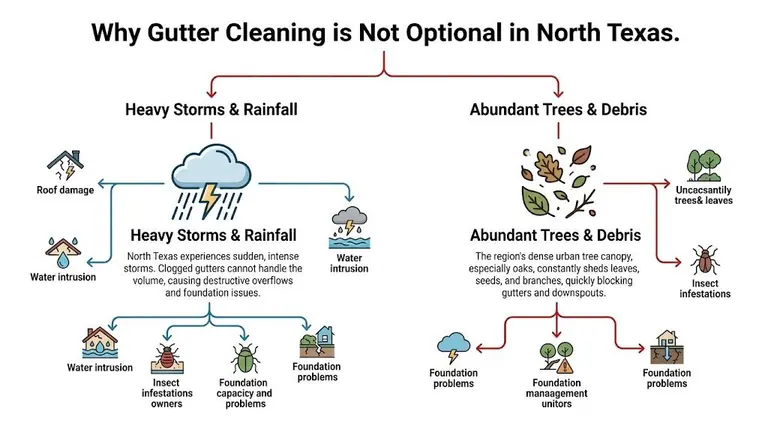
A Dallas roof can shed a lot of water in a short storm. If the gutters cannot carry it, that runoff does not disappear. It drops at the slab edge, soaks planting beds, splashes siding, and puts stress on the same roofline that may already be dealing with hail, wind, and heat.
Clay soil turns overflow into structural risk
North Texas homes sit on expansive clay, and that changes the stakes. Soil movement here is not a theory homeowners read about online. It shows up as sticking doors, interior cracks, and slab movement after repeated wet and dry cycles.
Clogged gutters make that cycle worse because they dump concentrated roof runoff right beside the foundation instead of carrying it away. Clean Pro Gutter Cleaning explains on its Dallas service page that local clay soil expands and contracts with moisture changes. That is exactly why gutter maintenance belongs in the same discussion as drainage correction, grading, and downspout extensions.
The sequence is simple:
- Debris slows or blocks runoff
- Water spills at the perimeter instead of exiting through the downspout
- Soil beside the slab takes on more moisture than it should
- The foundation deals with uneven pressure and movement
That is why I do not treat gutter cleaning as a stand-alone chore. On a North Texas house, it is part of storm damage prevention. It protects the roof edge above and helps control water at grade below, which also matters if a homeowner ever needs to show that water-related damage was not caused by neglected maintenance.
If you need a quick refresher before checking your own system, this guide explaining what a gutter system does gives the basic layout.
Local trees create dense blockages, not light debris
Dallas debris is rarely just a few dry leaves. Live Oaks drop catkins in spring. Cedar Elms create a different mess in fall. Add twigs, roof granules, and dirt from storm runoff, and the material starts packing into outlets and downspout openings.
That packed debris is what stops flow.
A gutter can look only partly filled from the ground and still fail during a hard rain because the choke point is often at the outlet, not along the whole run. In neighborhoods with mature trees, including Lakewood, Highland Park, and Preston Hollow, that pattern shows up all the time. The practical issue is not whether debris is present. The issue is whether water can leave fast enough during a Texas storm.
Roof protection and insurance documentation both start here
Homeowners often separate gutter cleaning from roofing, but storms do not. A backed-up gutter keeps water at the roof edge longer, increases the chance of fascia and soffit damage, and can hide problems after hail or wind events. Bent gutter aprons, loosened spikes, separated seams, and sagging runs are easy to miss if nobody is looking closely after a storm.
That inspection record matters. If a home takes storm damage, insurers may look closely at deferred maintenance versus sudden loss. Clean gutters and documented post-storm inspections help show that the exterior system was being maintained, not ignored. That will not decide every claim, but it can remove an argument that hurts homeowners later.
Maintenance frequency should match the property
A generic once-a-year reminder is not enough for many Dallas homes. Service frequency should follow tree cover, roof design, recent storm activity, and how the downspouts discharge on that lot.
A workable schedule usually looks like this:
- Heavily wooded lots: inspect more than once a year
- Homes under Live Oaks: pay attention in spring
- Homes near Cedar Elms: check again in fall
- After hail, wind, or hard rain: inspect for clogs, loose sections, and poor discharge
North Texas weather is hard on exterior systems. Gutters that are ignored become part of a bigger chain of damage, from roof edge deterioration to drainage issues at the slab. That is why cleaning them is not optional. It is routine protection for the house itself.
The True Cost of Clogged Gutters
A clogged gutter rarely stays a gutter problem. Water moves. Once it loses its intended path, it starts using your house.
Roof edge damage starts early
Homeowners often assume gutter cleaning is about appearance. It isn’t. It’s one of the simplest forms of preventative roof protection.
When debris traps water, that water can back up under shingles. HomeYou notes that clogged gutters can lead to rot and premature roof failure, which puts your $8,000 to $15,000 roof investment at risk on their Dallas gutter cleaning cost page.
That kind of damage doesn’t always announce itself with a ceiling stain right away. It often starts at the roof edge:
- Fascia stays wet
- Shingle edges remain saturated
- Wood trim begins to soften
- Fasteners and joints spend too much time holding moisture
By the time a homeowner sees obvious deterioration, the repair scope has usually expanded.
Foundation and siding don’t get a free pass
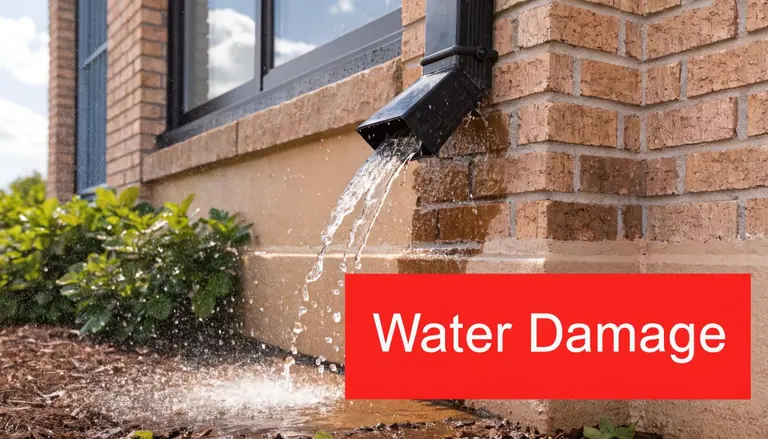
Once water pours over the side instead of moving through the downspout, it hits whatever is below. Sometimes that’s brick veneer. Sometimes it’s painted siding, window trim, beds, or the soil line at the base of the house.
The visible signs are usually familiar:
- Vertical staining on siding
- Splash-back dirt on lower walls
- Washed-out mulch beds
- Persistent wet areas near the perimeter
Those signs matter because they show repeated misdirection of runoff, not a one-time weather event.
Pests follow moisture and debris
Debris-filled gutters hold damp organic material. That environment attracts pests because it provides moisture, shelter, and nesting material.
A neglected gutter line can support mosquito activity, encourage insects near roof edges, and create inviting conditions around soffits and eaves. Rodents and birds also treat clogged sections as staging areas, especially when twigs and seed buildup stay undisturbed.
Small maintenance gets expensive when ignored
This is the trade-off homeowners need to understand. Paying for cleaning feels optional when the weather is dry. Repairing fascia, trim, roof edges, drainage issues, or interior water damage never does.
The cheapest gutter service is usually the one that prevents another contractor from needing to open up your roof edge later.
That’s why the true comparison isn’t “cleaning cost versus doing nothing.” It’s routine maintenance versus stacked repairs across multiple parts of the exterior.
Professional Cleaning vs A Weekend on the Ladder
A Dallas homeowner usually decides to clean gutters after a storm, not before one. That timing creates problems. Wet debris is heavier, downspout clogs are harder to clear, and roof edges are more likely to show fresh storm damage that gets missed from a ladder.
DIY can work on a low, open, single-story run with clear footing and light buildup. For a basic cleanup, some homeowners can handle it safely. The limitation is inspection quality. From ladder height, it is easy to remove visible debris and still miss the outlet clog, the loose spike, the separated seam, or the section that is holding water instead of draining.
That matters in North Texas because gutter cleaning is not just housekeeping. It is part of storm defense. When gutters back up during a heavy Dallas rain, water can push under lower roof edges, soak fascia, and leave damage that later gets blamed on the roof alone. On insurance jobs, I have seen clogged gutters muddy the picture because overflow staining and edge rot make it harder to separate old maintenance issues from new storm-related damage.
What homeowners usually miss on a weekend cleanup
A weekend cleanup often ends when the gutter looks open from the top. A proper service ends when the full drainage path is confirmed and the roof edge has been checked for trouble.
Common misses include:
- Packed outlet debris: The gutter looks clear, but water still bottlenecks at the drop
- Partially blocked downspouts: Enough flow for a hose test, not enough for a hard rain
- Loose connections and slope problems: Water sits in sections that should empty
- Storm-related damage: Bent metal, loosened hangers, or edge wear near shingle lines
- Overflow evidence: Staining and wash patterns that point to repeat drainage failure
Those details affect repair decisions. If a gutter is undersized, poorly sloped, or at the end of its life, cleaning alone will not solve the problem. Ask the contractor whether repair or replacement is needed.
What professional cleaning adds
A good crew does more than scoop leaves.
They clear all accessible runs, flush or test downspouts, check attachment points, and look for signs that overflow has already started affecting fascia, soffits, or roof decking. That last part is where exterior and roofing experience matters. A gutter company focused only on debris removal may leave without mentioning that shingle edges are exposed, drip edge is loose, or the overflow pattern matches a developing roofline issue.
Equipment also changes the result. Hand removal is still the safest method on many homes, especially older systems or decorative profiles that can be bent by aggressive tools. Ground-based vacuum systems can help in the right setup. Pressure washing inside gutters has its place, but used carelessly it can force water behind trim, blow debris into screens, or make a mess of landscaping.
The practical trade-off
DIY saves money only when the house is easy to access, the debris is light, and the person on the ladder knows what to check beyond the obvious blockage.
Professional cleaning costs more upfront, but it reduces the risks that get expensive:
- Ladder falls and unstable footing
- Hidden clogs that keep the system from draining in a real storm
- Missed roof-edge and fascia damage that grows into repair work
- Weak documentation if storm damage later turns into an insurance claim
For taller homes, mature tree cover, or properties that just came through hail and wind, paying for trained eyes is usually the cheaper decision. The same principle shows up in the local SEO playbook for contractors. The visible task is only part of the job. The true value is in knowing what to inspect, what to document, and what problem needs to be handled before it spreads.
How to Hire the Right Dallas Gutter Contractor
Not all dallas gutter cleaners offer the same service, and the differences matter. Some crews remove debris and leave. Others evaluate drainage, inspect for damage, clear downspouts, document problems, and tell you whether the issue is maintenance, repair, or storm-related.

What a complete service should include
Before hiring anyone, ask what the job covers. A real service visit should include the full drainage path, not just visible debris in the horizontal run.
Look for these basics:
- Gutter clearing: Every accessible section, not only the front elevations
- Downspout testing: Water should move freely through the discharge path
- Visible condition check: Sagging, separation, bent sections, loose attachment points
- Site cleanup: Debris should leave with the crew, not stay in your flower beds
If a contractor can’t explain their process clearly, that’s a warning sign.
Questions worth asking before you book
A useful estimate conversation should feel specific. If it sounds vague, keep going.
Ask questions like these:
- Are you insured for exterior ladder and roof-edge work
- How do you clear downspouts
- Do you use hand removal, flushing, vacuum equipment, or a mix
- What happens if you find loose gutters or storm damage
- Do you provide photos before and after service
- How do you protect landscaping during cleanup
- Do you service homes with guards, screens, or specialty gutter profiles
A good contractor won’t act annoyed by those questions. They’ll answer them directly because they handle them every day.
Storm knowledge is a real differentiator
Many gutter companies come up short. They know cleaning. They don’t always know storm damage.
After major hail events in Texas, homeowners often miss gutter damage when they file roof claims. Emerson Pro Services highlights the value of integrated roof and gutter assessments with photo documentation for insurance-compatible reporting on their Dallas gutters and drainage page.
That matters because hail can leave you with more than a clog:
- Bent seams
- Separated downspouts
- Impact damage at edges
- Drainage changes caused by misalignment
- Erosion below damaged discharge points
If your roof was hit, your gutters need to be looked at through the same storm-damage lens.
A contractor who can only talk about debris removal may miss the reason the gutter stopped performing in the first place.
For homeowners comparing contractors online, it also helps to understand how reputable local service companies present trust signals, service areas, and review proof. This local SEO playbook for contractors gives a solid framework for evaluating whether a company’s online presence looks established or thin.
Repair and installation knowledge matters too
Some gutter issues aren’t cleaning issues at all. If pitch is wrong, if sections have pulled loose, or if discharge is poorly placed, another cleaning won’t solve the problem.
Hire a contractor who understands how gutters are installed and corrected, not just emptied. The scope should distinguish maintenance work from system-related defects.
A roofing and exterior contractor such as Hail King Professionals can be one option when the gutter conversation overlaps with roof edge condition, storm documentation, or broader exterior repairs.
A short walkthrough helps homeowners see what a field inspection should look like.
Red flags that should stop the conversation
Some warning signs are obvious. Others are easy to overlook.
Be careful if a contractor:
- Pushes cash-only payment
- Won’t show proof of insurance
- Gives a price without asking about height, access, or footage
- Promises a full fix without checking downspouts or drainage path
- Can’t explain what they’ll do if they find damage
Hiring well isn’t about finding the cheapest crew. It’s about finding the one that understands how water affects Dallas homes.
Decoding Gutter Cleaning Costs in the DFW Area
Most Dallas homeowners don’t need a perfect quote before they call. They need a realistic range and a way to tell whether a bid makes sense.
What Dallas homeowners are paying
In 2026, the average Dallas homeowner spends $183 on gutter cleaning, with most jobs falling between $134 and $236, according to Angi’s Dallas gutter cleaning cost page.
Angi also notes that pricing is typically calculated at $1.07 to $1.34 per linear foot in Dallas. For a standard 150-linear-foot home, that puts a typical professional cleaning between $160 and $201 on the same source.
Those numbers are useful because they give you a baseline before sales language gets involved.
What changes the final quote
Two homes with similar square footage can price differently for gutter service. Contractors usually adjust based on the actual work conditions.
Common pricing factors include:
- Home height: Taller homes increase labor and access complexity
- Linear footage: More gutter means more cleaning time
- Roofline complexity: Corners, elevation changes, and difficult access affect scope
- Debris conditions: Packed material takes longer than light surface buildup
Estimated Gutter Cleaning Costs in Dallas 2026
| Home Type | Approx. Linear Feet | Estimated Cost Range |
|---|---|---|
| Smaller home | 125 | $134 to $168 |
| Standard single-story home | 150 | $160 to $201 |
| Larger home | 200 | $214 to $268 |
The table uses the Dallas per-linear-foot pricing range published by Angi. Actual quotes can move based on access, height, and job complexity.
If a quote is far below the normal range, ask what’s being left out. Downspout clearing, cleanup, and inspection are often the first things cut from bargain pricing.
The goal isn’t to chase the lowest number. It’s to understand whether the scope matches the price.
Why Choose Hail King for Your Exterior Protection
Some contractors treat gutters as a standalone chore. In practice, gutters are tied directly to roof edges, storm exposure, drainage behavior, and insurance documentation after severe weather.
That broader view matters in Texas. A home can have a clogged section, a bent downspout, and hail-related roof concerns at the same time. If those issues get split between multiple contractors who don’t communicate, homeowners end up coordinating the diagnosis themselves.
One exterior problem often touches another
The practical advantage of working with a full exterior contractor is that the inspection doesn’t stop at the gutter lip.
A team with roofing, siding, and gutter experience can look at:
- Whether water backup has affected the roof edge
- Whether gutter alignment changed after a storm
- Whether runoff is landing in a way that threatens the foundation
- Whether a minor cleaning issue is part of a larger repair need
That’s a better fit for homeowners who don’t just want debris removed. They want to know what condition the house is in.
Why the integrated approach makes sense
Hail King Professionals serves Dallas-Fort Worth and East Texas with roofing, gutters, downspouts, siding, and related exterior work. The company also offers free same-day roof inspections, insurance-related storm assessment support, financing with soft credit checks and no prepayment penalties, and a 100% satisfaction guarantee, based on the company information provided by the publisher.
For a homeowner, the practical value is coordination. If the gutters are part of a storm-damage story, the same contractor can evaluate the surrounding exterior systems instead of treating each symptom in isolation.
What that means for long-term home value
The right contractor isn’t just someone who can clean a channel. It’s someone who can tell you whether the channel is the problem, or whether it’s exposing a roof issue, a drainage issue, or a storm-damage issue that needs a different fix.
That’s the difference between maintenance that protects value and maintenance that only checks a box.
Frequently Asked Questions from Texas Homeowners
How often should Dallas gutters be checked if I have heavy tree cover
If your house sits under dense canopy, don’t rely on a once-a-year habit. Tree-heavy lots need checks tied to debris season and storm activity.
Homes under oaks and elms usually need closer attention because the debris isn’t always bulky enough to be obvious from the ground. Fine material can gather near outlets and still create poor drainage.
Do gutter guards eliminate the need for cleaning
No. They can reduce how much large debris enters the gutter, but they don’t make the system maintenance-free.
Small debris, grit, and organic matter still collect over time. Guards also don’t solve drainage problems caused by poor pitch, clogged downspouts, or storm-damaged sections.
What’s the difference between oak debris and pine needles in gutters
Oak debris often mats together and blocks outlets with a heavier, pulp-like buildup. Pine needles behave differently. They can weave together, bridge over openings, and create long narrow clogs that are stubborn inside downspouts.
The practical takeaway is that both materials cause trouble, but they fail differently. Oak debris tends to create dense blockage. Needles tend to create stringy obstruction that can hide deeper in the flow path.
Can gutter problems affect a roof even if I don’t see an interior leak
Yes. Roof-edge moisture often shows up outside before it shows up inside.
Water backup can affect shingle edges, fascia, soffits, and trim long before it creates a visible ceiling stain. Waiting for interior evidence usually means the exterior problem has had too much time to work.
Should I schedule a gutter inspection after a hailstorm even if nothing fell off
Yes. Hail damage isn’t limited to what lands in the yard.
A gutter system can be bent, loosened, separated at joints, or knocked out of alignment without dramatic visual failure from the street. If the roof took a hit, the gutters should be reviewed in the same visit.
What should I expect from a professional service visit
At minimum, expect debris removal, downspout clearing, visible condition review, and site cleanup. A better service also documents problem areas and tells you whether the issue is simple maintenance or a repair concern.
If a crew leaves without confirming drainage, you paid for partial work.
Can roof inspection and gutter service be handled on the same day
In many cases, yes. That’s often the most efficient way to understand whether the gutter issue is isolated or tied to roof-edge wear or storm damage.
Bundling those evaluations also helps avoid duplicate appointments and conflicting opinions from separate trades.
What kind of warranty should I expect on cleaning or minor repair work
For cleaning, expect clarity more than a flashy warranty. The contractor should tell you exactly what was cleaned, whether downspouts were flowing at departure, and what conditions could cause new blockage later.
For minor repairs, ask what materials were addressed, what workmanship is covered, and whether the contractor distinguishes between existing damage and new repair work. A clear written scope matters more than a vague verbal promise.
How do I know whether I need cleaning, repair, or full replacement
Look at symptoms, not assumptions.
You likely need cleaning if the system is intact but overflowing from debris. You likely need repair if sections are sagging, leaking at seams, or discharging poorly despite being clear. You may need replacement if multiple sections are failing, alignment is consistently wrong, or storm damage has compromised the system beyond spot fixes.
When in doubt, ask the contractor to explain which condition they observed and why their recommendation matches it.
Know When Cleaning Is Not Enough
Cleaning can restore flow, but it cannot correct poor slope, weak fastening, undersized runs, or bad discharge points. If those problems keep returning, review how Hail King approaches Dallas gutter installation before paying for another temporary fix.
If your gutters are overflowing, your downspouts are dumping water too close to the house, or a recent storm may have damaged more than the roof, contact Hail King Professionals for a practical exterior evaluation. A coordinated look at gutters, drainage, and roof condition can help you fix the actual problem before it turns into a larger repair.