9 Commercial Roofing Systems Types for Texas Properties
The hail hits at 2 a.m. By breakfast, your property manager has photos from three buildings, one tenant says water is showing up near an RTU, and your insurance carrier wants to know whether the roof was damaged by the storm or was already near the end of its service life.
That is a normal commercial roofing call in Dallas-Fort Worth and East Texas.
I’ve installed and repaired every major system on this list, and the right choice here depends on more than price per square. Texas roofs deal with punishing UV, long heat stretches, spring hail, high-wind thunderstorms, and a lot of rooftop traffic from HVAC crews. Local code requirements also come into play once you move from patching into recover work or full replacement, especially on insulation, edge metal, fastening, and wind uplift details.
A commercial roof in North Texas is part weather barrier, part maintenance item, and part insurance file. Material matters. So do attachment method, seam quality, drainage, and whether the system can be repaired cleanly after a storm. Owners who miss that usually pay for it twice. First in service calls, then again during a claim dispute or premature replacement.
If you are comparing options after hail, age-related leaks, tenant complaints, or a planned capital project, this guide focuses on what each system does well in DFW and where it tends to struggle. It also reflects the questions that come up on real jobs here, like how a membrane handles impact around rooftop units, whether a metal roof will trigger cosmetic-versus-functional damage arguments, and when a coating or commercial flat roof repair approach makes sense versus a full tear-off.
The nine systems below are the ones Texas owners should understand before signing a proposal, filing a claim, or approving a long-term maintenance plan.
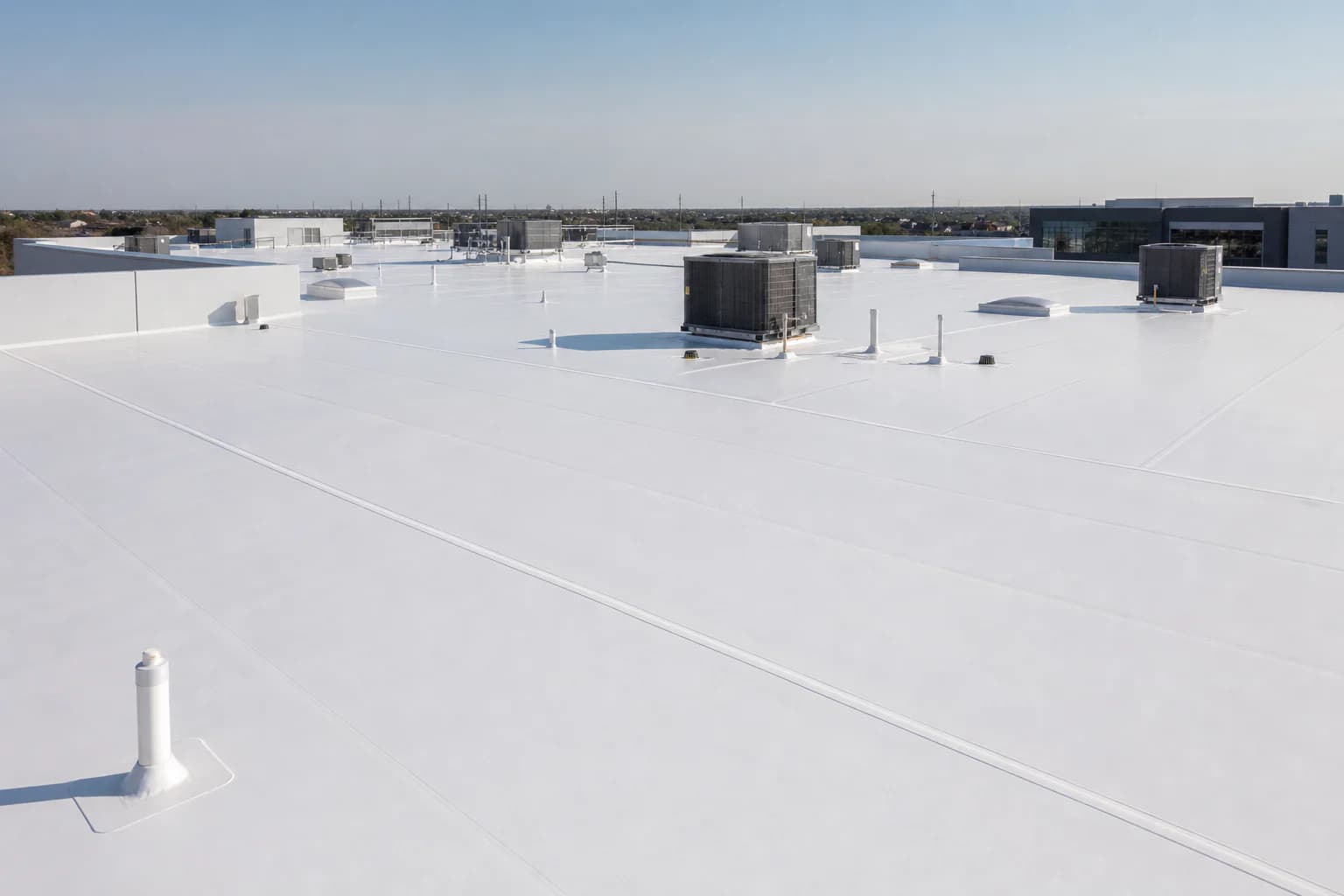
1. TPO (Thermoplastic Polyolefin) Roofing
A DFW owner usually calls about TPO after the first hard summer or the first hail season. The roof still looks clean from the parking lot, but inside we find open seams at the perimeter, soft insulation near a curb, or punctures where service crews have been walking to HVAC units. TPO can be an excellent fit here. It just has to be specified and installed for Texas conditions, not treated like a generic flat-roof package.
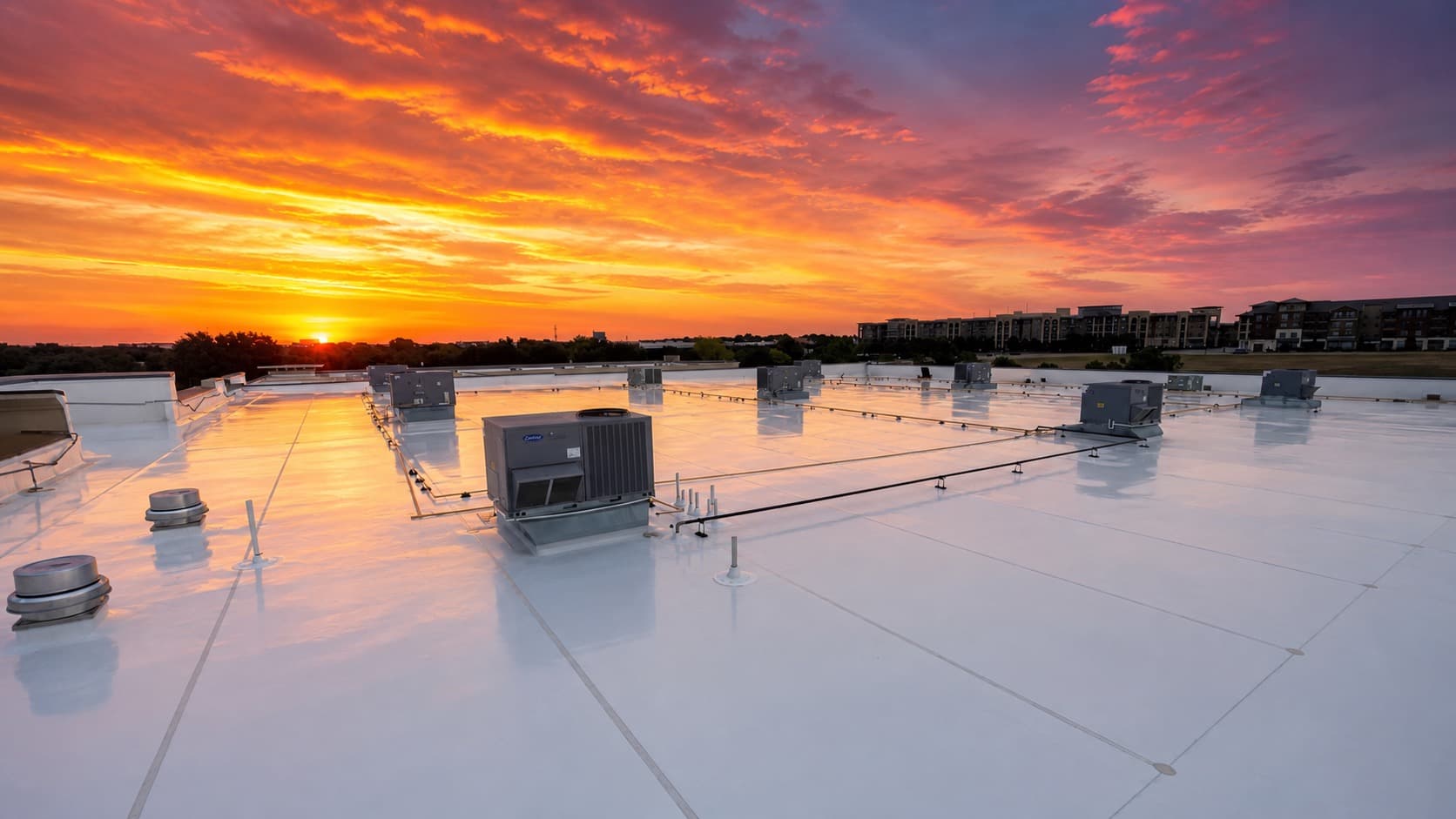
TPO is still one of the systems I recommend most for low-slope commercial buildings in Dallas-Fort Worth and East Texas. Owners like it because it balances upfront cost, solar reflectivity, and repair options better than many alternatives. On retail centers, offices, warehouses, and medical buildings, that combination makes sense, especially where cooling load is high and the roof has a lot of penetrations to flash.
Where TPO earns its keep in Texas
The biggest advantage in our market is heat performance. A white TPO membrane reflects more sun than darker systems, which helps on buildings that spend six straight months fighting attic heat and rooftop temperature buildup. That does not solve every energy problem, but it gives owners a practical edge on large exposed roofs.
TPO also adapts well to the kind of rooftop clutter we see across North Texas. Curbs, drains, vent stacks, gas lines, satellite mounts, and condenser supports can all be flashed cleanly when the crew knows what it is doing. On busy commercial roofs, that matters as much as the membrane itself.
After hail, TPO can be straightforward to inspect and document. That helps with insurance, but only if the original install was done correctly and the membrane thickness, attachment pattern, and edge securement are all clear in the project file. If those details are sloppy, claim discussions get harder fast.
The real weak spots
TPO is not forgiving of average workmanship. I have seen good membranes fail early because the welds were inconsistent, the cover board was skipped, or the edge metal was under-secured for local wind exposure. In DFW, that usually shows up after spring storms, not in the first month after install.
Heat also changes how crews need to work. Membrane temperature, substrate condition, and weld speed all matter more on a July roof in Texas than they do in a mild climate. A crew that installs TPO once in a while is not the same thing as a crew that installs it well in 105-degree weather.
Foot traffic is another common problem. TPO handles normal access, but repeated service paths to RTUs and exhaust fans will wear the surface and stress the seams unless walkway pads are part of the scope.
What I tell owners before they sign
TPO should be judged as a full roof assembly. Membrane thickness is part of it. Fastener pattern, insulation layout, cover board, perimeter detailing, and drainage are what decide how that roof performs in hail and wind.
A few jobsite rules save owners money later:
- Ask how the seams will be tested: Probe testing and documented weld checks matter on every TPO project.
- Use a cover board where traffic or hail exposure is a concern: It improves impact resistance and gives the membrane a better base.
- Match the attachment method to the building and wind zone: Mechanically attached, fully adhered, and induction-welded systems do not behave the same in storms.
- Protect service paths: Walk pads near HVAC equipment reduce punctures and avoid preventable service calls.
- Fix small defects early: Timely commercial flat roof repair for punctures, flashing splits, and seam issues is far cheaper than chasing wet insulation across a large section.
For many DFW buildings, TPO is the practical middle ground. It handles heat well, keeps repairs manageable, and fits a wide range of budgets. The trade-off is simple. TPO rewards disciplined installation and regular maintenance, and it exposes shortcuts quickly when Texas weather shows up.
2. EPDM (Ethylene Propylene Diene Monomer) Roofing
EPDM is still one of the most dependable low-slope systems for owners who want durability without paying for a premium thermoplastic membrane. It’s been around a long time, and that long track record matters when you’re dealing with older industrial buildings, municipal properties, and warehouse roofs across East Texas.
Budget is usually what brings EPDM into the conversation first. Verified pricing places EPDM at $2.80 to $11 per square foot with a typical 25 to 35 year service life in the commercial roof system overview from Quality Exteriors. For a property owner managing a large roof area, those numbers are hard to ignore.
Why EPDM still earns its place
I’ve seen EPDM do its best work on simple roof layouts. Large open deck, fewer penetrations, limited foot traffic, and an owner who understands maintenance. On that kind of building, it can be a steady, no-drama roof.
EPDM also handles movement well. That matters in Texas where buildings expand, contract, and shift through long hot seasons and abrupt weather changes.
The Texas trade-off
The downside is straightforward. Traditional black EPDM absorbs heat, and in DFW that can work against you on cooling-heavy buildings. It also depends heavily on seam quality and adhesive performance, which means installation weather and prep matter a lot.
If I’m looking at an older warehouse in East Texas with limited budget and no need for a highly reflective roof, EPDM stays on the list. If I’m looking at a large occupied office building trying to cut rooftop temperatures, I usually steer the owner toward a reflective system instead.
On older commercial buildings, EPDM often makes sense when the roof geometry is simple and the owner wants long-term serviceability more than maximum reflectivity.
A few field habits make EPDM perform better:
- Keep the roof clean: Loose debris hides punctures and traps moisture around details.
- Inspect seams regularly: Seams and terminations are usually where age starts to show.
- Be realistic about heat: In DFW, black membrane roofs need more thought about insulation and energy use than many owners expect.
3. PVC (Polyvinyl Chloride) Roofing
A North Texas restaurant roof in August tells you quickly whether the membrane was chosen for the building or just for the bid. Grease near the exhaust fans, technicians dragging tools to rooftop units, and long stretches of hard sun will expose a weak system fast. PVC earns its place on roofs like that.
I install PVC most often on restaurants, food-processing buildings, labs, healthcare facilities, and industrial properties where rooftop discharge or chemical exposure is part of normal operation. In those settings, the question is not only hail or wind resistance. It is whether the membrane can hold up to contamination, service traffic, and repeated detailing around curbs, vents, and equipment.
In DFW and East Texas, that matters more than many owners expect. A membrane can survive one problem. It gets tested when it has to handle grease, 105-degree heat, spring hail, and uplift pressure during a thunderstorm season.
Where PVC fits in Texas
PVC’s biggest strength is consistency at the seams and details when the crew knows how to weld it correctly. On equipment-heavy roofs, that gives owners a real advantage. You have more penetrations to flash, more opportunities for maintenance crews to disturb the roof, and more risk if the system was installed carelessly.
I also like PVC on buildings where code and insurance scrutiny are part of the conversation. In our market, wind uplift ratings, attachment methods, and edge metal details need to match the building exposure and local requirements. After a hail or wind claim, adjusters and consultants look closely at seam integrity, flashing condition, and whether the roof assembly was installed to the approved spec. PVC is not immune to storm damage, but a properly installed system usually gives you a cleaner inspection story than a roof with weak details and mixed repair materials.
For owners comparing maintenance paths, some projects also involve adjacent restoration work with elastomer coatings. That only works when the coating matches the substrate and the scope is defined clearly. It is not a substitute for choosing the right membrane in the first place.
The trade-off
PVC costs more than many basic single-ply options, and some buildings do not need what it does best. A simple warehouse in East Texas with limited rooftop traffic and no grease or chemical exposure may be better served by a less expensive system. Paying for PVC only makes sense when the building use justifies it.
Texas hail is another place where owners need straight answers. PVC can perform well, especially with the right cover board under it, but hail resistance depends on the full assembly, not just the top sheet. If a property has a history of claims in Tarrant, Denton, Collin, or nearby counties, I want to discuss membrane thickness, insulation package, and cover board before we talk about price.
When I inspect a food-service roof, I look at three things first. What is landing on the membrane. How often service crews are crossing it. Whether the owner wants a roof built for long-term use or another cycle of reactive repairs.
- Use an experienced PVC crew: Weld temperature, speed, and detail work decide whether the system stays watertight.
- Add protection at traffic areas: Walk pads and reinforced paths around units and exhaust fans prevent avoidable wear.
- Build for hail, not just heat: In North Texas, cover boards and assembly design matter as much as membrane selection.
- Keep repairs compatible: PVC patches, flashings, and accessories need to stay within the same system to avoid premature failure.
4. Metal Roofing (Standing Seam and Corrugated)
A March hailstorm rolls across DFW at 2 a.m. By sunrise, the phone calls start. One owner has a standing seam roof with a few dents but no leaks. Another has an exposed-fastener panel roof with backed-out screws, loose ridge cap, and water showing up at the insulation line. Both are called "metal roofs," but they do not behave the same way in Texas weather.
Metal is often a strong fit for distribution buildings, churches, office campuses, retail centers, agricultural properties, and mixed-use projects where the slope and structure support it. In North Texas and East Texas, I usually frame the decision around three things first. Hail tolerance, wind performance, and how the carrier is likely to treat cosmetic versus functional damage after a claim.
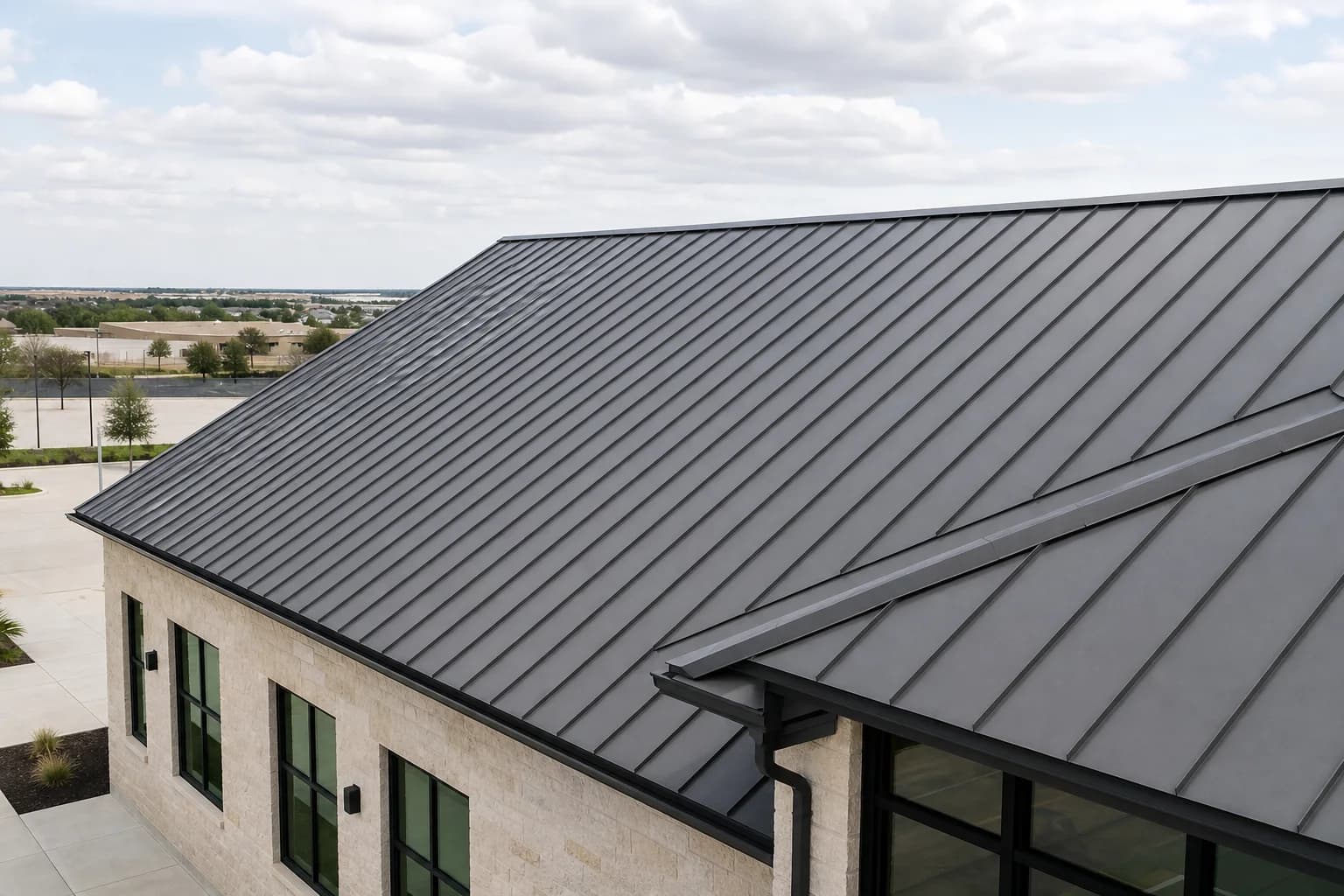
Standing seam is the better commercial system in most cases. The panels lock together, fasteners stay concealed, and the assembly has fewer exposed points that can loosen under heat cycling, wind uplift, and repeated storms. Corrugated or other exposed-fastener systems cost less up front, but they ask for more maintenance in our climate. That trade-off matters on older properties and budget-driven projects, especially if the owner plans to hold the building for a long time.
Hail is where the conversation gets real. A metal roof can stay watertight after a storm and still look rough enough to trigger a dispute with insurance. In Texas, that distinction matters. Cosmetic denting does not always mean the roof failed. Deformed seams, punctures, damaged flashing, loosened panel attachments, and fastener movement are different. Those are functional issues, and they need to be documented carefully after a storm. Owners comparing systems should also understand how hail damage shows up on heavier assemblies such as modified bitumen roofs after a storm, because claim handling often turns on the same cosmetic-versus-functional question.
Installation quality decides whether metal performs like a premium roof or a recurring repair item. I have repaired too many metal roofs that failed at the details, not the panels. Expansion clips were skipped. Closures were missing. Penetrations were flashed like an afterthought. Under North Texas wind loads, those shortcuts show up fast.
Here is the practical advice I give DFW owners:
- Choose standing seam when the budget supports it: It usually gives better long-term performance than exposed-fastener panels on commercial properties.
- Ask about insurance before you sign a contract: Cosmetic hail exclusions are common, and owners need that language reviewed before the first storm hits.
- Match the system to the building use: Warehouses can tolerate more rain noise than offices, schools, or worship spaces.
- Inspect details, not just field panels: Curbs, skylights, transitions, eaves, ridge caps, and wall terminations are where leaks usually start.
- Confirm code and wind requirements: Panel attachment, uplift ratings, edge metal, and fastening patterns need to meet local code, not just manufacturer minimums.
A hail-dented metal roof is not automatically a replacement. In DFW, the right next step is a roof inspection that separates appearance issues from failed components and ties those findings back to code, manufacturer requirements, and the insurance file. That is how owners avoid paying premium-metal prices for a roof that was detailed like a farm building.
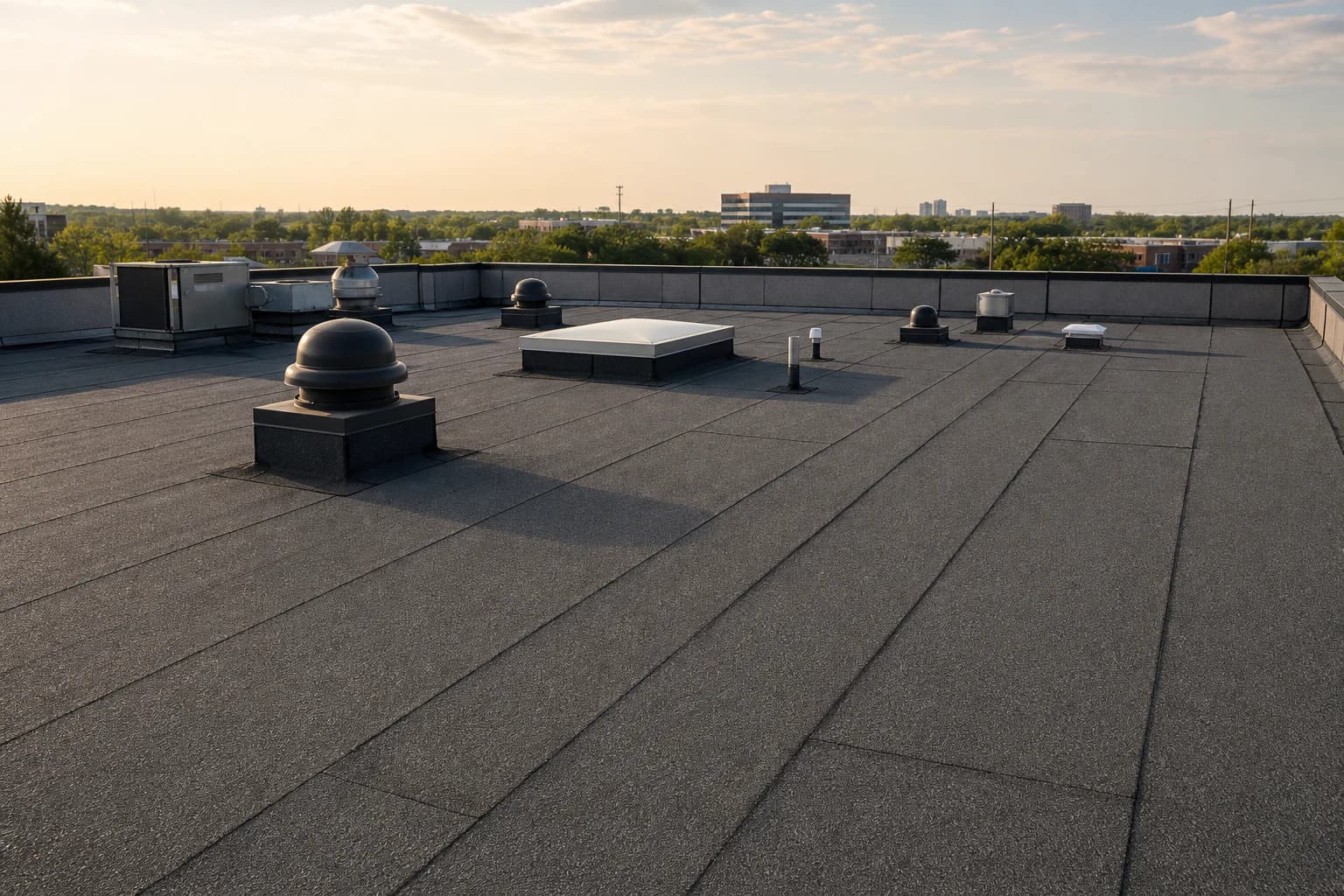
5. Modified Bitumen Roofing
Modified bitumen stays relevant because some roofs need toughness more than they need the newest membrane. If the building has frequent service traffic, lots of rooftop equipment, or an owner who wants a familiar low-slope system with a heavier feel underfoot, modified bitumen still belongs in the discussion.
I see it often on older shopping centers, office buildings, multifamily commercial properties, and retrofit projects where the owner wants a practical roof without jumping straight to a full tear-off and redesign. It’s also one of the systems that many Texas owners inherit rather than choose, which means they need to understand how to maintain it before a leak becomes deck damage.
Why it still makes sense
A well-installed modified roof can hold up well on service-heavy buildings. Crews walking the roof for HVAC work aren’t as likely to abuse it as they would a thinner membrane. On some occupied commercial properties, that matters more than an owner expects.
The downside is that modified roofs need watchful maintenance in our climate. Texas heat works on seams, flashings, and surface condition year after year. Once neglected areas start opening up, leaks can spread wider than the visible entry point.
What I tell DFW owners
If you already have modified bitumen and the roof is still structurally worth saving, don’t rush into replacement without a real inspection. Some roofs are good candidates for targeted repair or restoration. Others are at the point where patching only delays a larger problem.
For owners dealing with storm issues, understanding typical hail damage to modified bitumen roofs can help separate cosmetic surface wear from functional membrane damage.
- Prefer safer install methods: Self-adhered or heat-applied approaches are often easier to manage than torch-heavy work on occupied sites.
- Watch for stress points: Drains, curbs, laps, and wall transitions need regular checks.
- Don’t ignore blisters or splits: They rarely stay small through another Texas summer.
6. Spray Polyurethane Foam (SPF) Roofing
A North Texas owner calls after a hailstorm, convinced the roof needs a full tear-off. We get up there, inspect the assembly, and sometimes the better answer is SPF. On the right building, spray polyurethane foam can add insulation, close off complicated roof geometry, and reduce the number of exposed failure points without rebuilding the whole system.
I use SPF selectively in DFW and East Texas. It fits older office buildings, retail centers, and warehouses with lots of penetrations, uneven transitions, or roofs that are expensive to rework with sheet membranes. Foam conforms well around curbs, supports, and odd details that often become leak locations on other systems.
Where SPF makes sense in Texas
Its biggest advantage is continuity. SPF is applied as a fluid and cures into a monolithic surface, so there are no field seams across the open roof area. In our climate, that matters. Dallas-Fort Worth heat punishes laps and transitions year after year, and every extra joint is another place I inspect closely after a long summer or wind-driven storm.
SPF also brings real energy value because it adds insulation as part of the roofing system. That can help on buildings with high cooling loads, which is most of them in this part of Texas.
The catch is that foam is only as good as the coating protecting it. UV exposure will break down exposed SPF fast if the coating is neglected. Owners considering foam should also understand how commercial flat roof coatings perform on Texas buildings, because coating maintenance is part of owning an SPF roof.
Where SPF creates problems
I do not treat SPF as a fit for every commercial property. Application conditions matter a lot. Wind, humidity, surface moisture, and crew skill affect the finished product, and North Texas wind can absolutely interfere with proper spraying on open sites.
Hail is the other Texas-specific concern. SPF can perform well, but severe hail can damage the protective coating and bruise the foam surface. That does not always mean full replacement, but it does mean the roof needs a trained inspection after a storm, especially if the owner plans to file a claim. Insurance carriers will want to know whether the damage is limited to the coating or extends into the foam enough to affect function.
Overspray is another practical issue. Near dealerships, occupied retail centers, solar arrays, fresh paint, or heavy traffic, SPF takes tighter jobsite control than many owners expect.
What I tell DFW owners
SPF works best for owners who will maintain it on schedule and document that maintenance. Annual inspections are smart. Post-hail inspections are smarter. Recoating at the right interval is part of the life-cycle cost, not an optional upgrade.
I usually recommend SPF when the building has a complicated roof layout, the owner wants better thermal performance, and the site conditions allow careful application. I am more cautious on buildings in high-visibility areas where overspray risk is hard to control, or on properties where no one wants an ongoing coating program.
The best SPF roofs in Texas are managed systems. They reward attention and punish neglect quickly.
7. Roof Coatings and Reflective Systems
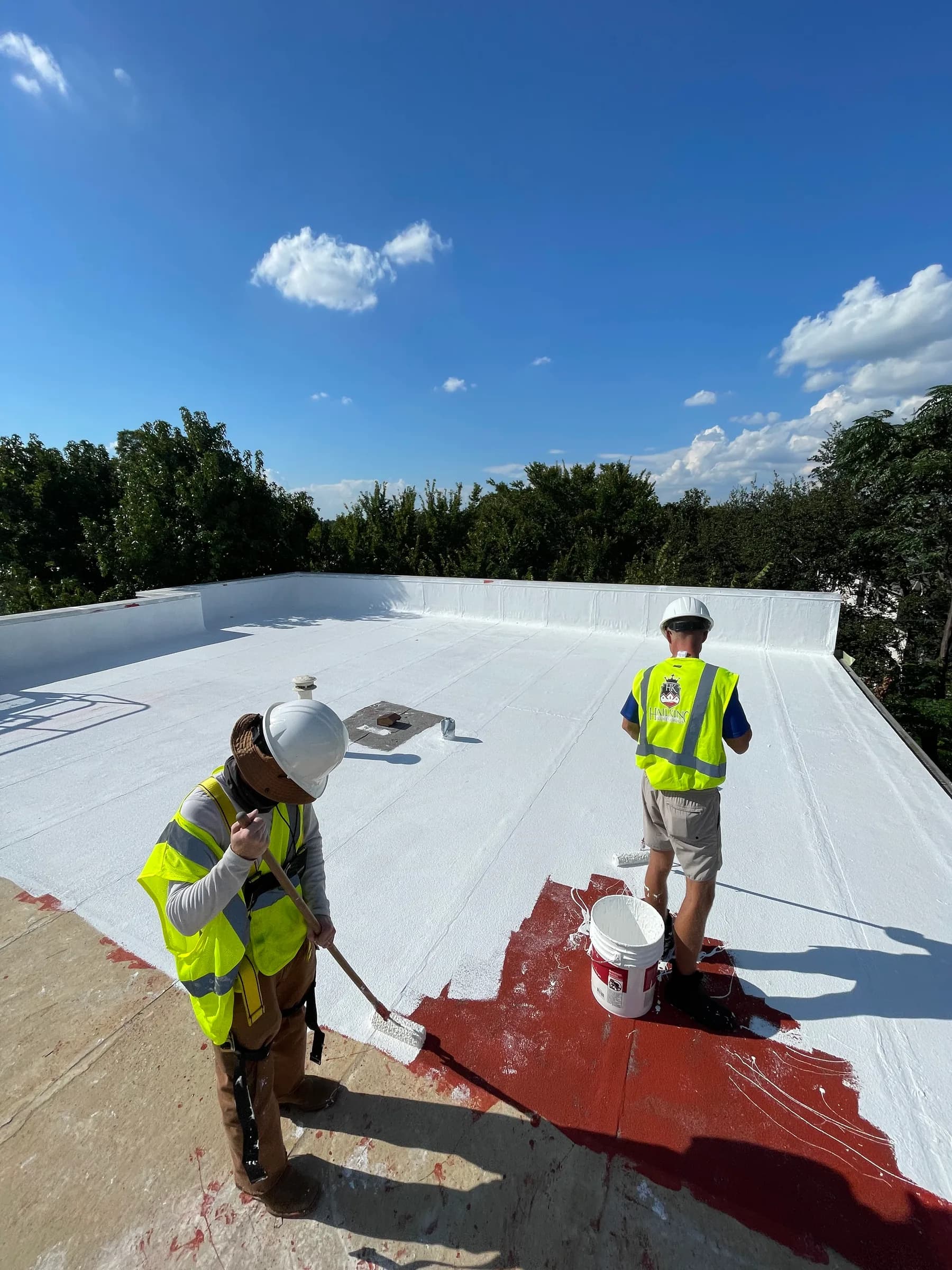
A Dallas warehouse roof takes a few hailstorms, spends another summer baking under 100 degree heat, and the owner starts asking the right question. Does this roof need replacement, or is it still a candidate for restoration?
That is where coatings earn their keep in DFW and East Texas. On the right roof, they can extend service life, improve reflectivity, and reduce disruption for tenants or operations. On the wrong roof, they waste money and complicate the next claim.
I use coatings only after the existing assembly proves it can support one. The roof has to be dry enough, attached well enough, and stable enough to justify the investment. If the insulation is saturated, the seams are failing across the field, or ponding water points to a bigger drainage problem, coating over it does not solve anything.
Texas weather makes that evaluation more demanding. Intense UV breaks down exposed surfaces. Hail can leave impact damage that is easy to miss from the ground. High winds around parapets, corners, and roof edges can expose weak attachment that a coating will not correct. Before any spec gets written, the roof needs a real condition assessment, not a quick walk and a sales pitch.
The chemistry matters too. Silicone, acrylic, polyurethane, and aluminum systems do different jobs, and I do not treat them as interchangeable. A metal roof with oxidation issues, an aging modified bitumen roof, and a single-ply roof with seam repairs each call for different prep, primers, mil thickness, and detailing. If you are comparing options, this guide to commercial flat roof coatings covers the scope items owners should see before signing a contract.
A coating project also needs to make sense for insurance and code compliance in North Texas. After a hail event, carriers usually want clear documentation showing whether the roof had cosmetic wear, functional damage, wet insulation, or prior repairs before coating was applied. Good photo records, moisture testing, and repair maps matter. So does confirming the system will meet local wind uplift and fire requirements where applicable, especially if the building is being sold, refinanced, or repositioned for tenants.
Reflective performance gets plenty of attention, and for good reason. Lower surface temperatures can help the roof age better in Texas sun, but reflectivity alone should not drive the decision. Owners planning future equipment upgrades or solar should also consider roof suitability for solar installations before they commit to a coating system that may affect attachment details or service access.
What I tell DFW owners is simple.
- Use coatings on roofs that are still viable, not roofs already in failure.
- Pay for inspection, moisture testing, and prep work first.
- Match the coating system to the substrate, drainage pattern, and expected foot traffic.
- Keep records now, because those records help with warranties, storm claims, and capital planning later.
A well-scoped coating project can buy meaningful time in Texas. A bad one usually shows up after the next hailstorm.
8. Green/Vegetative Roofing Systems
Green roofs get attention because they look impressive and support sustainability goals. In practice, they’re a niche commercial option in DFW and East Texas, mostly for premium office, institutional, hospitality, or mixed-use properties where branding and design matter as much as roofing function.
I don’t talk owners into vegetative roofs unless the building and ownership team are both suited for it. This isn’t just a membrane with plants on top. It’s a layered system with structural, drainage, waterproofing, and maintenance implications that stay with the property for years.
Texas-specific concerns
Heat and drought are the first reality check. A vegetative roof in North Texas needs a planting strategy that fits the climate, plus a maintenance plan that people will follow. If the irrigation, drainage, and waterproofing details aren’t right, the roof turns into a very expensive vegetation management issue above occupied space.
The second issue is weight. The planning notes for these systems often cite extensive assemblies at 5 to 25 pounds per square foot, and that load consideration is central to whether a retrofit is even feasible. On older commercial buildings, structural review is not optional.
Why some owners still choose them
For the right project, a green roof can support amenity use, improve appearance, and align with sustainability positioning. It can also pair with broader energy and rooftop planning conversations, especially when teams are evaluating roof suitability for solar installations.
What I don’t like is when owners assume a green roof is low-maintenance once it’s planted. In Texas, it isn’t.
- Start with structure: Have the building evaluated before design gets too far along.
- Use climate-appropriate planting: Native and drought-tolerant choices matter.
- Build in access: If nobody can maintain the system safely, it won’t stay healthy or watertight.
9. Roof Restoration and Rejuvenation Coatings
Restoration and rejuvenation sit between repair and replacement. They’re not the same as a simple reflective coating job. The idea is to bring useful life back to an aging roof that still has a serviceable base, especially on membranes or asphalt-based systems that have dried out, weathered, or lost flexibility.
This option comes up a lot in portfolio management. A property owner with multiple commercial buildings often doesn’t want to replace every aging roof in the same budget cycle. Restoration can help stagger capital spending when the roof condition supports it.
Where restoration earns its keep
The verified market data notes that coatings compatible with systems such as TPO and EPDM can extend service life by 10 to 15 years in the U.S. roofing market analysis. That kind of life extension is meaningful when the roof is dry, attached well, and not already at failure point.
I’ve seen this approach make sense on older office roofs, shopping centers, and industrial properties where the owner needed time, not a permanent escape from replacement. That’s the right way to think about it. Restoration is a delay strategy with value, not magic.
Where owners get burned
They use restoration on roofs that should have been replaced. If insulation is saturated, seams are widely failing, or hail damage has compromised too much of the assembly, rejuvenation products won’t solve the root problem.
A solid restoration candidate usually has these traits:
- The deck and insulation are still viable: You’re preserving an asset, not hiding a failure.
- Leaks are limited and identifiable: Widespread mystery leaks usually point to deeper trouble.
- The owner has a follow-up plan: Restoration buys time. It doesn’t remove the need for eventual replacement.
Commercial Roofing Systems: 9-Item Comparison
| System | Implementation complexity | Resource requirements | Expected outcomes | Ideal use cases | Key advantages |
|---|---|---|---|---|---|
| TPO (Thermoplastic Polyolefin) Roofing | Low–Medium; heat-weld seams require certified installers | Moderate materials cost; welding equipment and skilled crew | 20–30 year life, high solar reflectance, energy savings in hot climates | Commercial flat roofs, retail, warehouses in warm climates | Cost-effective, reflective, fast installation |
| EPDM (Ethylene Propylene Diene Monomer) Roofing | Low; straightforward membrane but seam sealing needs skill | Low–moderate material cost; adhesives/tape or mechanical fasteners | 30–40+ year proven performance; durable in temperature swings but absorbs heat | Industrial, warehouses, older commercial buildings needing durable solutions | Flexible, easy to repair, long track record |
| PVC (Polyvinyl Chloride) Roofing | Medium–High; heat-welding requires specialized training | Higher material and labor costs; certified welders and equipment | 30–40+ year life, excellent chemical and fire resistance, high reflectivity | Chemical plants, food processing, healthcare, industrial facilities | Superior durability, chemical/fire resistance, reliable seams |
| Metal Roofing (Standing Seam & Corrugated) | Medium–High; precision installation and panel detailing required | High material and installation cost; panels, underlayment, fasteners | 40–70 year lifespan, excellent wind/hail resistance, strong reflectivity | Premium commercial buildings, hail-prone sites, warehouses seeking longevity | Exceptional durability, aesthetics, recyclability, storm resistance |
| Modified Bitumen Roofing | Medium; torch, self-adhered, or heat methods require skilled crews | Moderate cost; cap sheets, adhesives or torch equipment | 20–25 year life, improved flexibility over BUR, needs protective cap/coating | Low to moderate-slope commercial roofs needing cost-effective waterproofing | Good cost-to-performance, adaptable to roof shapes, repairable |
| Spray Polyurethane Foam (SPF) Roofing | High; specialized spray equipment and strict installation controls | High installer expertise; protective topcoats, safety and weather constraints | Seamless waterproofing, excellent insulation (high R-value), 25–30+ years with recoats | Energy-focused buildings, complex roof geometries, retrofit over existing roofs | Seamless insulation, superior air sealing, strong energy savings |
| Roof Coatings & Reflective Systems | Low–Medium; surface prep critical but application is straightforward | Low material cost; cleaning, primers, and coating crews | Extends life 5–10+ years, reduces cooling costs, requires periodic reapplication | Budget-conscious property managers, aging roofs without structural failure | Cost-effective life extension, energy savings, minimal disruption |
| Green / Vegetative Roofing Systems | High; requires structural design, drainage, and horticultural input | Very high initial cost; structural reinforcement, growing media, irrigation, maintenance | Improved insulation, stormwater management, extended membrane protection (potentially 50+ years) | Premium sustainable projects, urban buildings seeking stormwater and amenity benefits | Environmental benefits, stormwater control, insulation, aesthetic value |
| Roof Restoration & Rejuvenation Coatings | Low–Medium; thorough inspection and prep determine success | Low–moderate cost; specialized rejuvenating coatings and prep work | Extends roof life 10–15 years, restores flexibility to aged membranes, temporary solution | Aged EPDM or bitumen roofs where replacement is deferred for budget reasons | Cost-effective extension, restores function, quick to deploy |
Beyond the Materials: Choosing Your DFW Roofing Partner
A North Texas storm rolls through at 2 a.m. By morning, the calls start. The warehouse has leaks at two curb flashings, the retail center lost edge metal on the windward side, and the office building owner wants to know whether the hail marks are cosmetic or an insurance claim. In Dallas-Fort Worth and East Texas, that is a true test of a commercial roofer. Material selection matters. Field execution matters more.
I have installed and repaired every system on this list, and the pattern is consistent. Roofs in this region rarely fail because the brochure was wrong. They fail at seams, penetrations, perimeter details, drainage points, and poorly handled transitions after months of heat movement or one hard hail event. A contractor who understands TPO welds, EPDM seam prep, PVC contamination risks, metal movement, modified bitumen tie-ins, SPF recoats, and coating prep will give you a very different result than a crew that only knows how to sell one option.
Texas weather changes the decision. DFW hail can turn a maintenance issue into a claim file overnight. East Texas humidity exposes sloppy flashing work and trapped moisture fast. Long stretches of heat punish dark membranes, aging sealants, and rooftop units with bad curb details. High winds put edge securement, fastening patterns, and uplift resistance under real pressure. A system that performs well in another market may still be the wrong fit here if the installer does not build it for Texas conditions and local code enforcement.
Ask direct questions before you sign anything. Which systems does the contractor install every month, not just bid? How do they document wet insulation, storm damage, and hidden deck problems before the job starts? Who handles manufacturer inspection, city inspection, and change-order communication if the existing roof assembly is different from the plans? Those answers tell you more than a polished proposal.
Bid review takes discipline. One number may include tear-off to a clean deck, tapered insulation adjustments, new edge metal, and full flashing replacement. Another may price only the obvious field membrane and leave the expensive details vague. That gap is where owners get hit later with exclusions, delays, and arguments over what the contract was supposed to cover.
Code and insurance work are part of the job in this market. Recover versus tear-off decisions, drainage corrections, attachment requirements, edge metal, insulation upgrades, and rooftop equipment coordination all affect final scope and permit review. If storm damage is involved, the contractor also needs to document conditions in a way carriers and adjusters will use. If you need project-specific help, start with expert roofing services.
Hail King Professionals is one local option for owners who need commercial roofing work in Dallas-Fort Worth and East Texas. The company states that it serves the region, provides inspections, and handles commercial systems including coatings, flat roofing, metal roofing, and storm-related work. Whether you hire that team or another contractor, hold them to the same standard. They should know Texas weather, know the system they are proposing, and explain in plain language how the roof will be fastened, flashed, drained, and warranted.
A commercial roof is a long-term building component with real financial consequences. The right partner helps you choose the correct system, document the job properly, and avoid preventable failures after the next hailstorm or summer heat cycle.
If your commercial property in Dallas-Fort Worth or East Texas needs a roof inspection, repair strategy, coating evaluation, or full replacement proposal, Hail King Professionals is a local contractor you can contact for a project review.