


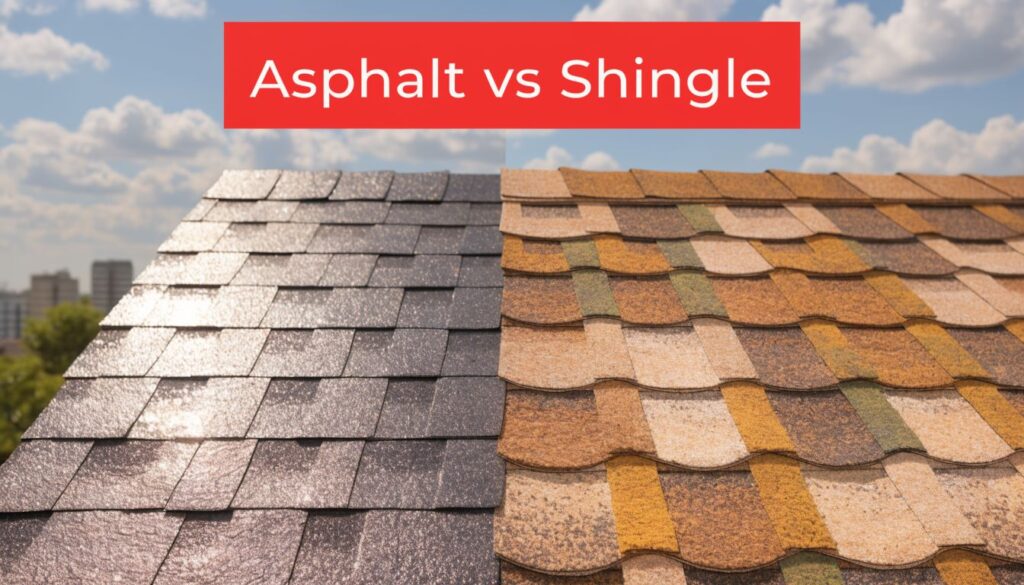
Asphalt vs Shingle Roof: The DFW & East Texas Guide
A lot of North Texas homeowners start this search the same way. A storm rolls through, the adjuster is coming, and now you're comparing quotes while trying to figure out whether the “cheap option” is actually cheap. If you're in Dallas-Fort Worth or East Texas, that question gets more complicated once hail, deductibles, and solar panels enter the conversation.
The phrase asphalt vs shingle roof sounds like two different categories. In practice, it usually means something more specific: should you install a basic asphalt shingle, a better asphalt shingle, or step up to a premium composite product because you're tired of dealing with storm damage?
That's the key decision. And in this region, brochure features matter less than what happens after the next hail event.
Understanding the 'Asphalt vs Shingle Roof' Question
The first thing to clear up is simple. Asphalt shingles are a type of shingle roof. So when someone searches for “asphalt vs shingle roof,” they're usually not comparing two separate roofing systems. They're trying to sort out roofing language while making a replacement decision under pressure.
That confusion makes sense. Homeowners hear terms like 3-tab, architectural, laminate, impact-resistant, composite, synthetic, and Class 4. Most of those get lumped together as “shingles,” even though they perform very differently once wind and hail hit.
Here's the big picture. Asphalt shingles dominate the U.S. residential market, accounting for 81% of the overall market in 2023 according to Ridgeline's roofing market summary. The same source says installed costs for quality architectural asphalt shingles typically run $3.50 to $5.50 per square foot. That market share tells you something important. Asphalt became the standard because it balances price, availability, and install familiarity better than almost anything else.
But “standard” doesn't automatically mean “best for your house.”
In DFW and East Texas, the better question is this: which shingle system gives you the best ownership experience after repeated storms? That includes:
| Roof question | What matters in Texas |
|---|---|
| Upfront price | What you'll pay today to tear off and replace |
| Hail performance | How the roof handles impact damage and granule loss |
| Wind resistance | Whether tabs lift, crease, or blow off in storms |
| Insurance fit | How your carrier views impact-resistant upgrades |
| Solar compatibility | What happens if panels need detach-and-reset later |
| Long-term cost | Repairs, deductibles, and replacement timing |
A roof in North Texas isn't just a finish material. It's a storm-exposed system attached to insurance decisions, resale timing, and sometimes a solar array.
That's why the right answer for one homeowner doesn't work for the next one. A family planning to move soon may choose differently than an owner who wants to avoid another reroof cycle if possible.
Decoding Asphalt Shingles Your Real Options
Most homeowners say “asphalt shingles” as if that's one product. It isn't. In real bids, the practical baseline is usually a choice between 3-tab asphalt and architectural asphalt.
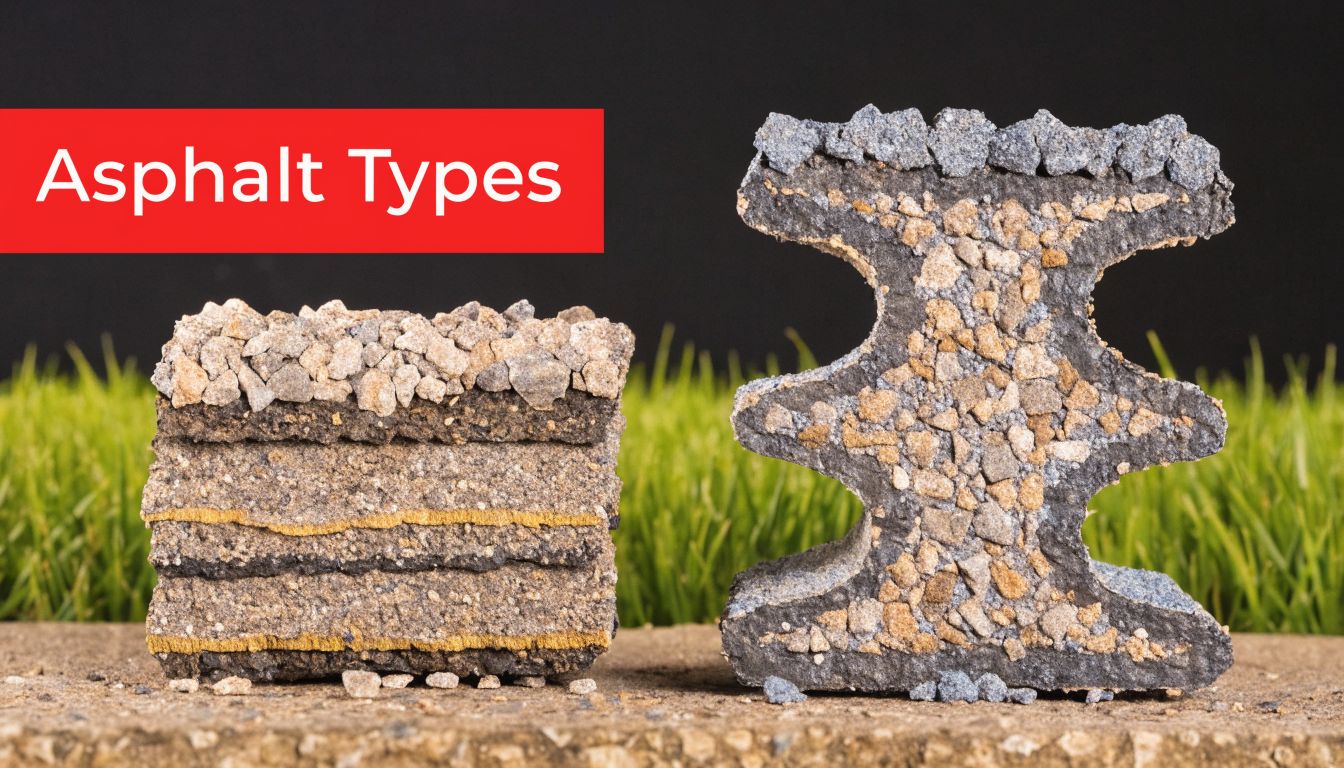
3-tab shingles
3-tab shingles are the simpler, lighter option. They've been used for years, and they still show up on price-driven replacement jobs. If your main goal is the lowest initial quote, this is usually where contractors start.
The tradeoff is performance margin. Basic 3-tab products generally have less thickness, less dimensional strength, and less visual depth. In Texas weather, those differences matter.
Architectural shingles
Architectural shingles are the product most homeowners should think of as the modern default. They use laminated, multi-layer construction, which gives them more weight and a more substantial profile on the roof.
According to Corey & Corey's comparison of architectural and 3-tab shingles, architectural asphalt shingles are about 50% heavier, with a 30 to 50-year service life and 110 to 130 mph wind ratings, compared with 15 to 20 years and 60 to 70 mph for basic 3-tab shingles.
That one comparison explains why so many contractors in hail-prone markets steer homeowners away from 3-tab unless budget leaves no room to move.
Why the construction difference matters
A laminated shingle doesn't just look thicker. It behaves differently when weather pushes on it.
- More mass: Heavier shingles tend to sit more solidly and resist uplift better.
- Stronger adhesive zones: Better bonding helps in sustained wind.
- Deeper profile: Homeowners usually get a more upscale look without moving into a premium material category.
If you want a practical baseline before comparing upgrades, look at asphalt roof shingles for sale and focus less on color boards and more on product class, wind rating, and impact options.
Field rule: In DFW, 3-tab is usually a price decision. Architectural is usually a durability decision.
What works and what doesn't
Here's where I'd draw the line in plain language.
| Option | Works well for | Usually a weak fit for |
|---|---|---|
| 3-tab asphalt | Tight budgets, shorter ownership horizon, basic replacement needs | Owners trying to reduce storm hassle over time |
| Architectural asphalt | Most owner-occupied homes in DFW and East Texas | Homeowners expecting premium appearance and maximum longevity from one install |
Basic shingles can still make sense. But if you've already dealt with hail claims, patch repairs, or lifted tabs, architectural shingles usually give you a better starting point before you even discuss premium materials.
Asphalt vs Composite Shingles A Head-to-Head Comparison
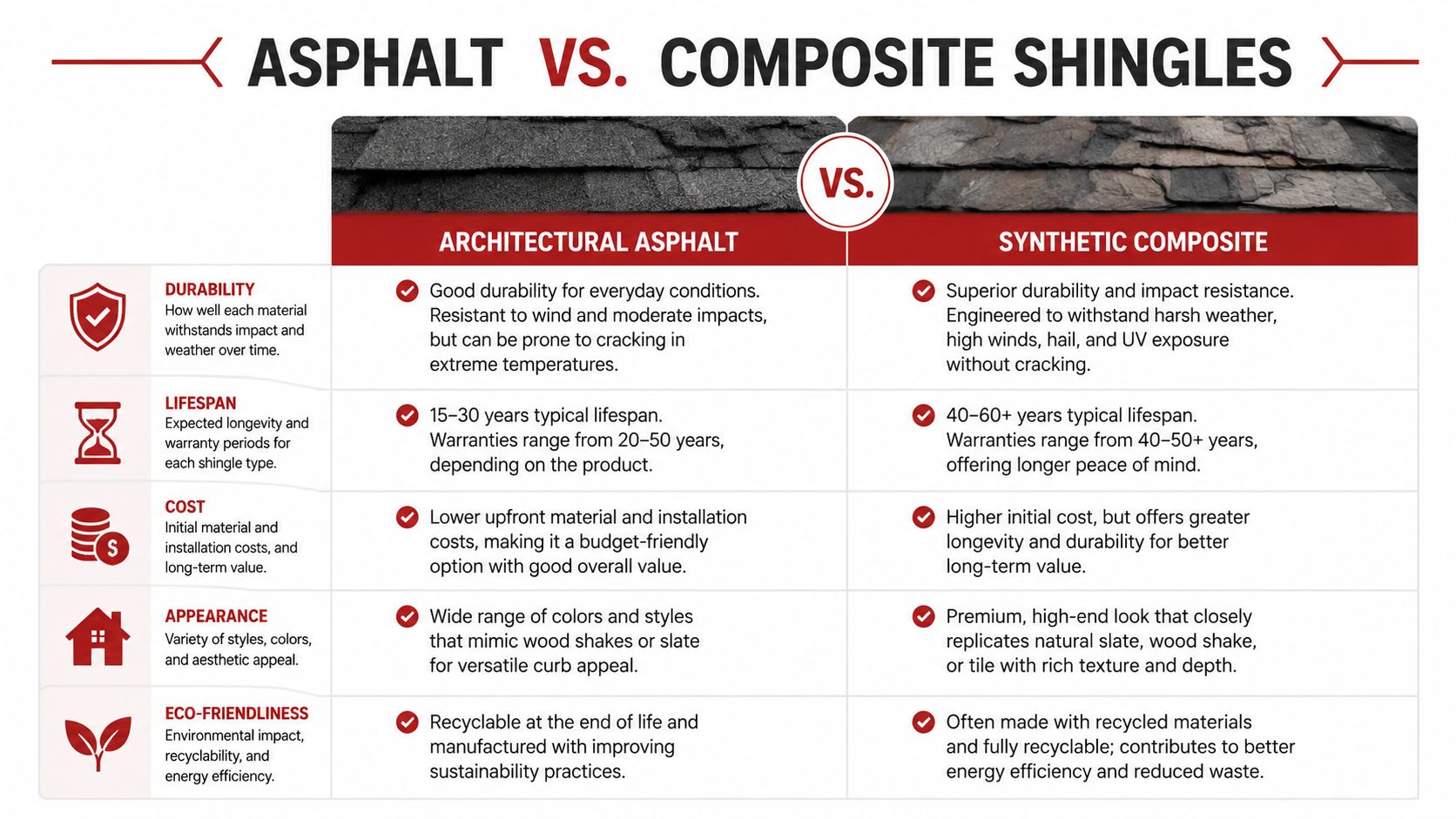
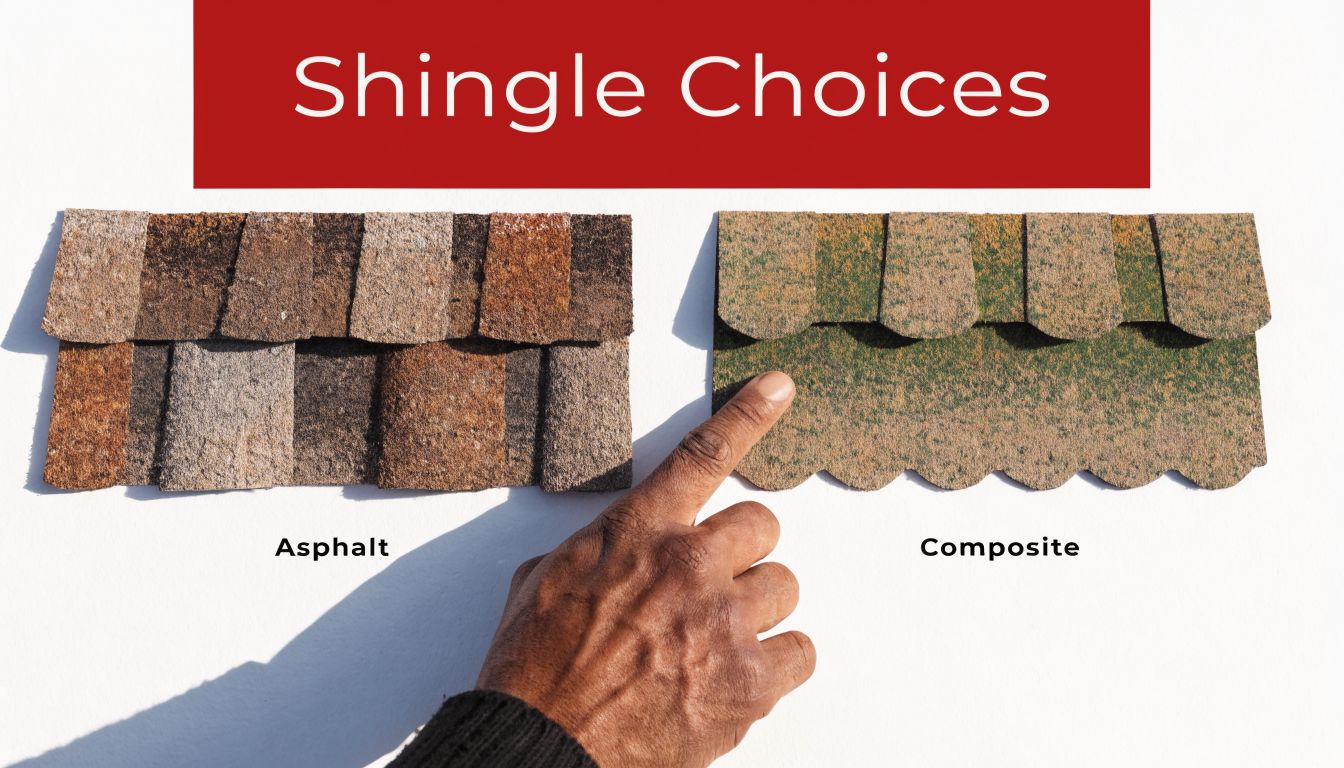
Once you get past the “asphalt vs shingle roof” wording, the primary premium comparison is usually architectural asphalt vs synthetic composite shingles. This isn't a cosmetic debate. It's a question of how much storm resilience and lifespan you want to buy up front.
A visual side-by-side helps:
Upfront cost
Asphalt keeps winning market share. The installed cost gap is real.
For the same roof type, quality architectural asphalt shingles are commonly quoted around $3.50 to $5.50 per square foot, while synthetic composite shingles are often $6.00 to $9.00+ per square foot, based on Ridgeline's roofing cost summary. On a typical 2,000-square-foot roof, that works out to roughly $7,000 to $11,000 for architectural asphalt versus $12,000 to $18,000 for composite.
That price difference is why many homeowners stop the comparison right here. I understand that. But in storm country, stopping here can lead to the wrong choice.
Lifespan and replacement cycles
This is the strongest performance argument for composite.
According to Angi's asphalt shingle guide, asphalt shingles typically last 20 to 30 years, while synthetic composite shingles can last 30 to 50+ years. The same source notes that over a 50-year period, a homeowner might replace an asphalt roof 1 to 2 times, while a composite roof may not need replacement at all.
That doesn't mean every composite roof outlasts every asphalt roof in every case. Installation quality, attic ventilation, and storm severity still matter. But as a category, composite gives you a stronger long-range ownership story.
If you plan to stay in the home long enough to care about your second reroof, composite belongs in the conversation.
Hail resistance in the real world
Texas homeowners need to ignore marketing language and think in terms of damage patterns.
Asphalt shingles can perform well, especially higher-end architectural and impact-resistant versions. But they're still more vulnerable to the kinds of hail effects that trigger repair conversations: granule loss, bruising, fractured mat areas, and shortened service life after repeated hits.
Composite products are often chosen because they're designed for stronger impact performance and better flexibility under stress. In hail-prone neighborhoods, that can mean less visible damage and fewer replacement decisions driven by cumulative storm wear.
The practical takeaway isn't that asphalt fails and composite wins every time. It's that composite usually gives you more forgiveness when weather gets ugly.
Here's a useful video if you want to see how contractors talk through roofing material differences in practical terms:
Appearance and neighborhood fit
Asphalt still offers the most familiar neighborhood look. That matters more than people admit. Many subdivisions, resale-minded owners, and HOA-driven communities still prefer the visual language of architectural shingles.
Composite can give you a thicker, more refined appearance and sometimes mimic premium roofing styles more convincingly. If curb appeal is part of the goal, composite may pull ahead. If you want a safe, broadly accepted look, architectural asphalt is usually the simpler choice.
Repairability and installation habits
Asphalt has one very practical advantage. More crews work with it every day, and repairs tend to be simpler and cheaper. That matters if you want a roofing system every contractor in your market understands.
Composite can be a smart upgrade, but it asks for better product familiarity and a more disciplined install. Homeowners should make sure the contractor has actual experience with that specific product line, not just a willingness to order it.
What I tell neighbors: Don't buy a premium shingle from a crew that only installs it twice a year.
Best fit by homeowner type
- Architectural asphalt: Strong fit for most Texas homeowners who want balanced cost, good appearance, and dependable performance.
- Composite shingles: Better fit for long-term owners, storm-fatigued homeowners, and people who want to reduce the chance of going through another full replacement cycle.
Calculating the True Cost of Your Texas Roof
The cheapest roof on bid day can become the most expensive roof to own. That's the part most comparison articles skip.
In DFW and East Texas, you shouldn't judge a roof only by the contract total. You should judge it by how it behaves over time in a high-storm environment. That means thinking about repairs, claim friction, deductibles, and whether your roof choice makes future work more disruptive.
Think in storm-cost scenarios
A low bid only tells you what the first install costs. It doesn't tell you what happens after the next hail season.
That's why I like the idea of a storm-cost scenario. Start with the initial material choice, then ask:
- How likely is this roof to need spot repairs after hail?
- If damage keeps recurring, how many times am I paying deductibles or out-of-pocket repair costs?
- Will I be reroofing again while I still own this house?
- If I have solar, what extra steps get triggered during replacement?
Peak & Valley's discussion of asphalt versus synthetic value makes the key point clearly: the essential question for DFW homeowners isn't just upfront price, but how often a roof will need repairs or replacement after storms. That source also notes that repeated storm damage, deductibles, and repair frequency can erase the initial savings of a cheaper roof.
Where homeowners misread the math
The most common mistake is assuming lower upfront cost equals lower total cost. That only holds if the roof performs well enough for your ownership timeline.
A better way to compare bids is to separate the decision into three buckets:
| Cost bucket | What to ask |
|---|---|
| Initial install | What am I paying now for the roof system itself? |
| Storm exposure | How likely am I to deal with recurring repair or claim headaches? |
| Future disruption | Will another reroof interrupt solar, resale timing, or planned upgrades? |
If you're trying to anchor the first bucket, this guide to asphalt shingle roof replacement cost is a useful starting point. Then you can compare that number against the ownership risks that don't appear on the first estimate.
A practical DFW decision test
If you answer yes to most of the questions below, it usually makes sense to move above a bare-bones shingle option.
- You've already had more than one storm-related roofing issue.
- You expect to own the home long enough that another reroof would matter.
- You want fewer patch jobs and less insurance friction.
- You have rooftop solar or plan to add it.
Cheap roofs are often cheap because they shift more risk back onto the homeowner later.
That doesn't mean every house needs a premium material. It means a roof in North Texas should be priced like an ownership decision, not just a commodity.
Warranties Insurance and Solar A Complete System View
Most homeowners compare shingles as if the roof exists by itself. It doesn't. Your choice affects warranties, insurance conversations, and whether a future reroof becomes a headache because of solar equipment on top.
Warranties live or die on installation details
Manufacturer warranties sound straightforward until a roof is installed outside spec. Fastener placement, underlayment choices, ventilation, starter alignment, ridge treatment, and accessory compatibility all matter.
That's why the product itself is only half the story. A premium shingle installed poorly is still a weak roof system. A mid-tier product installed correctly often outperforms the homeowner's expectations because the whole assembly works together.
When you review proposals, ask for clarity on system components, not just the brand name printed on the shingle wrapper.
Insurance doesn't just care about price
Homeowners in hail corridors often ask whether impact-resistant shingles can help with insurance. The answer depends on carrier rules and policy specifics, but it's a valid question to ask before signing a contract.
If you're evaluating that route, read through this overview of Class 4 shingles and insurance discount considerations. It's a practical example of how material choice can interact with underwriting, documentation, and premium discussions.
Some roof upgrades aren't about resale at all. They're about reducing the odds that the next storm turns into another claim cycle.
Solar changes the reroof conversation
Solar adds another layer of planning. If panels are already installed, reroofing may require a detach-and-reset process before the roofing crew can do the job correctly. That affects scheduling, coordination, and cost.
Many homeowners get trapped by short-term thinking. If your existing asphalt roof is aging and you expect to add solar soon, it may not make sense to install the cheapest roof available if another replacement could arrive earlier than you want. Likewise, if you already have solar in place, a stronger roof choice can help reduce the chance that you're paying for another detach-and-reset sooner than expected.
For homeowners who want one company to coordinate roofing with exterior work, some contractors, including Hail King Professionals, offer solar panel detach-and-reset alongside reroofing and standard shingle replacement. That kind of coordination matters more than branding when you're trying to avoid delays and finger-pointing between trades.
Questions worth asking before you sign
- What voids the manufacturer warranty on this product?
- How will this roof choice affect a future solar detach-and-reset?
- Is there an impact-resistant version of this shingle line?
- Will the installer document the full system for insurance and warranty records?
Those are better questions than “Which shingle is best?” because they deal with how the roof will live on your home.
The Verdict Which Shingle for Your DFW or East Texas Home
There isn't one winner for every homeowner. There is a best fit for your budget, your storm tolerance, and how long you plan to stay put.
If you want the safest mainstream choice
For most owner-occupied homes in DFW and East Texas, architectural asphalt shingles are the practical center of the market. They're familiar, widely available, and they offer a much better balance than basic 3-tab products.
That isn't just opinion. Mighty Dog Roofing's shingle grade comparison puts a typical 2,000 sq ft architectural asphalt roof at $7,000 to $11,000, while noting that basic 3-tab is cheaper but may need replacement in as little as 12 to 20 years. The same source says that for owners optimizing total cost over multiple storm cycles, the higher upfront cost of architectural or Class 4 shingles often provides better long-term value in hail-prone regions.
That's why architectural shingles are usually the default recommendation unless a homeowner has a specific reason to go cheaper or better.
If you're planning to sell sooner
If your timeline is shorter and your roof just needs to be sound, code-compliant, and marketable, a standard architectural shingle usually makes the most sense. It avoids the weak fit of bare-bones 3-tab while keeping spending under control.
I wouldn't push a premium composite roof on a homeowner who expects to move soon unless they have a strong personal reason for doing it. You may not stay long enough to benefit from the full lifecycle advantage.
If this is your long-term home
At this point, the math shifts.
If you expect to stay put, hate repeat storm hassles, or already know your neighborhood gets hammered by hail, then composite shingles or Class 4 architectural shingles deserve a hard look. The higher initial cost can be easier to justify when you view the roof as a long-hold asset instead of a short-term repair.
The longer you plan to own the house, the more expensive “cheap” becomes.
If budget is tight but you still want a smarter roof
This is the sweet spot for a lot of Texas homeowners. Skip 3-tab if you can. Put the money into a stronger architectural product, and if available in your chosen line, look at impact-resistant upgrades.
That approach usually gives you a better blend of:
- Reasonable upfront cost
- More storm resilience than entry-level shingles
- A roof that looks appropriate in most neighborhoods
- A better ownership experience than the cheapest bid
My bottom-line take
If someone asks me about asphalt vs shingle roof, I translate it into the actual question.
If you want the most balanced answer for DFW and East Texas, choose architectural asphalt as your baseline and compare upward from there. Only go down to basic 3-tab when budget leaves no real alternative. Move up to Class 4 architectural or composite shingles when storm exposure, ownership length, or solar planning makes long-term performance more important than the lowest initial quote.
That's the difference between buying a roof and choosing one you can live with after the next hail storm.
If you're weighing reroof options after hail, Hail King Professionals can inspect the roof, explain whether repair or replacement makes more sense, and walk you through asphalt, Class 4, and solar detach-and-reset considerations in plain language so you can make a decision based on ownership cost, not just the first bid.