


Asphalt Shingle Roof Slope Minimum Guide for 2026
The absolute minimum slope for asphalt shingles is 2:12, which means the roof rises 2 inches for every 12 inches of horizontal run. But for standard installations and full warranty coverage, most manufacturers and roofing professionals recommend 4:12 or steeper.
That difference matters more than most homeowners realize. A roof can look “close enough” from the ground, pass a casual glance, and still sit right on the edge where water starts moving too slowly for shingles to perform the way people expect. In Texas, that's where trouble starts. Hail bruises shingles, hard rain tests every seam, and a low-slope section over a patio, addition, or front porch often becomes the part of the roof that leaks first.
Is Your Roof Slope Putting Your Home at Risk?
A common call starts with a simple question: “This part of my roof looks almost flat. Is that normal?”
Usually it's a homeowner looking at a new addition, a covered patio, a garage conversion, or a roof section that was rebuilt after storm damage. From the yard, it may not look alarming. Then the first heavy rain hits, and they notice a ceiling stain, damp trim, or granules collecting where water keeps lingering longer than it should.
That's the practical issue with the asphalt shingle roof slope minimum. It isn't just a code number. It's the line between a roof that sheds water efficiently and a roof that asks shingles to do a job they weren't designed to do without extra protection.
What homeowners usually notice first
- A roof plane that looks too flat: This often shows up on additions and porch roofs where the builder had limited height to work with.
- Leaks that don't make sense: Water can travel slowly on low slopes and show up far from where it entered.
- Repeated patch jobs: If the slope is marginal, repairs may treat symptoms instead of the cause.
- Confusion about whether the roof is “wrong”: Homeowners often know something feels off, but they don't know whether the issue is pitch, flashing, underlayment, or storm damage.
A low-looking roof isn't automatically defective. But if it was shingled without the right slope-specific details, it can become the weak point of the whole house.
If you're comparing what you see on your home to broader warning signs, this guide to identifying common roofing problems is a useful reference because it helps connect visible symptoms with the underlying roof condition.
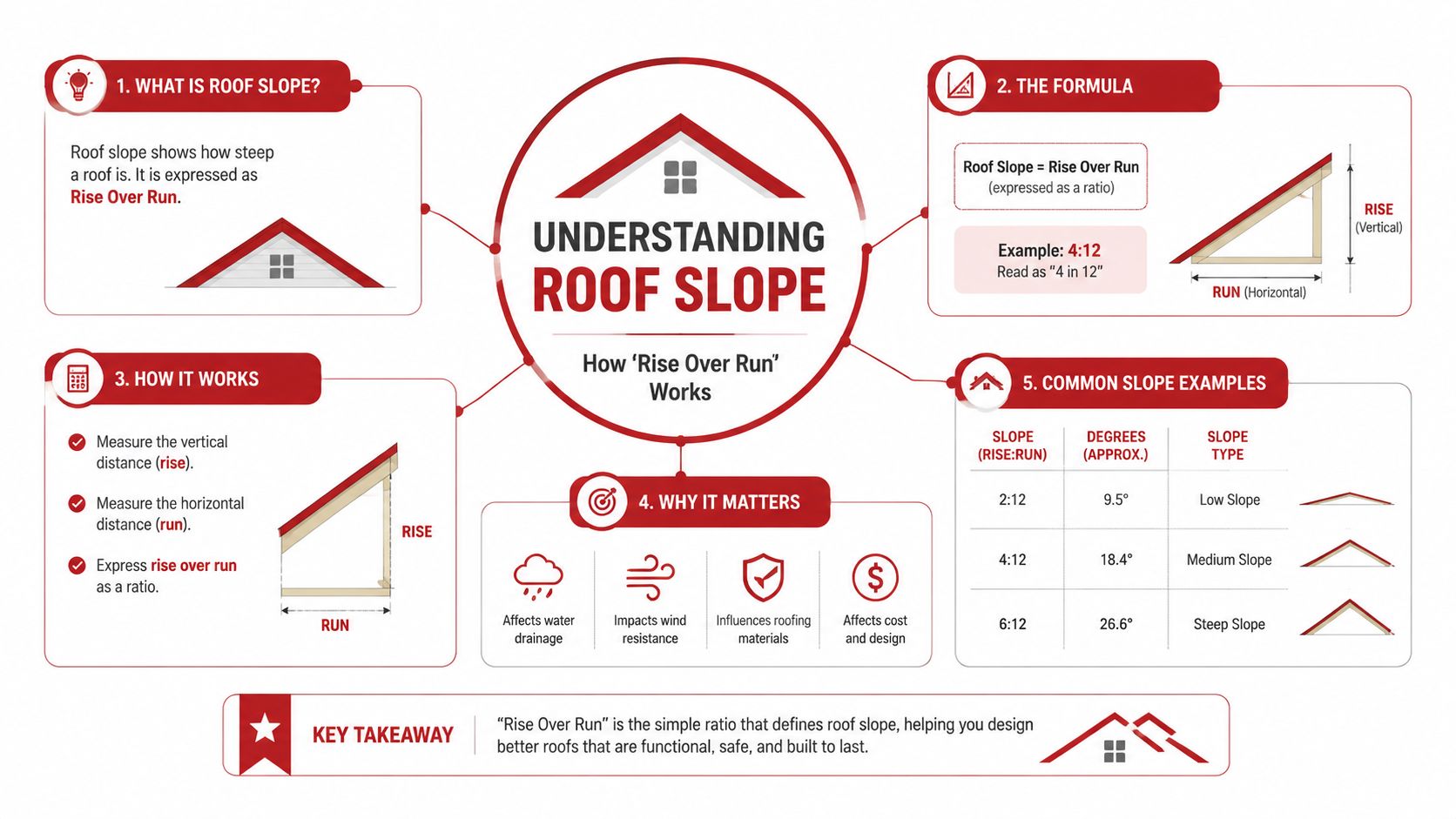
Understanding Roof Slope How 'Rise Over Run' Works
Roofers usually describe slope as rise over run. When someone says a roof is 4:12, they mean the roof rises 4 inches vertically for every 12 inches of horizontal distance. A 2:12 roof rises only 2 inches over that same run. An 8:12 roof rises much faster and sheds water more aggressively.
A roof's slope is comparable to a ramp. A shallow ramp moves things slowly. A steeper ramp moves them quickly. Water behaves the same way on a roof. Asphalt shingles work by overlapping and shedding water downhill. The slower that water moves, the more opportunity it has to push sideways, back up at joints, or linger around penetrations and hail-damaged spots.
What different slopes feel like in real life
- 2:12 feels low from both the ground and the roof surface. Water still drains, but slowly enough that installation details become critical.
- 4:12 is the practical dividing line most homeowners should care about. It's still walkable for trained crews, but it drains much more reliably than a low-slope section.
- 8:12 is noticeably steeper. Water runs off efficiently, but installation becomes more labor-intensive and safety-sensitive.
The code side of this is clear. The International Building Code established 2:12 as the minimum roof pitch for asphalt shingles, and roofs between 2:12 and 4:12 are considered low slope, while slopes above 4:12 are treated as standard according to this explanation of minimum roof pitch for shingles.
Why measurement matters
A lot of homeowners guess wrong by eye. That's normal. Roof lines can appear steeper or flatter depending on house design, soffit depth, and where you're standing. If you want a visual primer before climbing anywhere, Arizona Roofers published a clear guide for determining roof slope that shows how contractors think about pitch.
For a homeowner, the safer move is to have the slope documented during an inspection and added to your records. A practical way to organize that information is with a roof inspection checklist template, especially if you're dealing with repairs, a sale, or a storm claim.
The measurement itself is simple. The consequences of getting it wrong are not.
The Critical Difference Between 2:12 and 4:12 Slopes
The conversation shifts from code compliance to real-world roofing at this point.
A 2:12 roof can legally receive asphalt shingles, but it does not get a standard installation. For roof slopes between 2:12 and 4:12, the 2018 International Residential Code requires double underlayment because slow drainage increases the risk of water backup, especially during heavy rain and freeze-thaw conditions, as explained in this breakdown of minimum roof pitch shingles requirements.
A 4:12 roof changes the whole job. It typically moves into normal shingle territory. Water sheds faster. The installation is simpler. The roof relies less on extra backup layers and more on the shingles doing what they were designed to do.
Roof Slope Requirements 2:12 vs. 4:12
| Attribute | 2:12 Slope (Low Slope) | 4:12 Slope (Standard Slope) |
|---|---|---|
| Code position | Absolute minimum for shingles | Practical standard for typical shingle installation |
| Water movement | Slower drainage | Faster drainage |
| Underlayment | Double underlayment required | Standard single-layer approach is typical |
| Leak exposure | Higher if details are missed | Lower under normal conditions |
| Installation complexity | More detail-sensitive | More straightforward |
| Texas storm performance | More vulnerable at weak points | Better suited to routine water shedding |
| Warranty risk | Higher if protocol is missed | Easier to keep within standard requirements |
Why 2:12 installations fail more often in practice
The failure usually isn't that shingles were installed on a code-allowed roof. The failure is that someone treated a low-slope roof like a standard one.
That can mean:
- Skipping the second underlayment layer
- Poor lap layout
- Weak detailing at penetrations
- Using the same approach on a porch roof as on the main house
- Assuming “code minimum” means “best choice”
On paper, 2:12 and 4:12 can both carry shingles. On the roof, they behave very differently during a Texas storm. When rain comes in hard and wind pushes water uphill, the lower slope gives water more time to test every overlap, nail line, valley, and flashing edge.
What works better for homeowners
If you're designing a new roof section, reframing an addition, or replacing a problem area, 4:12 is usually the safer target for asphalt shingles. It gives the roof a better chance to dry, drain, and hold up without depending on extra safeguards to compensate for a marginal slope.
Practical rule: If a roof section is barely steep enough for shingles, it needs more respect during design and installation than the average homeowner expects.
That's why experienced project managers don't stop at “Can shingles go here?” The better question is “Should they, and under what installation standard?”
How Improper Slope Voids Warranties and Invites Leaks
A roof problem becomes expensive when the paperwork and the field conditions stop matching.
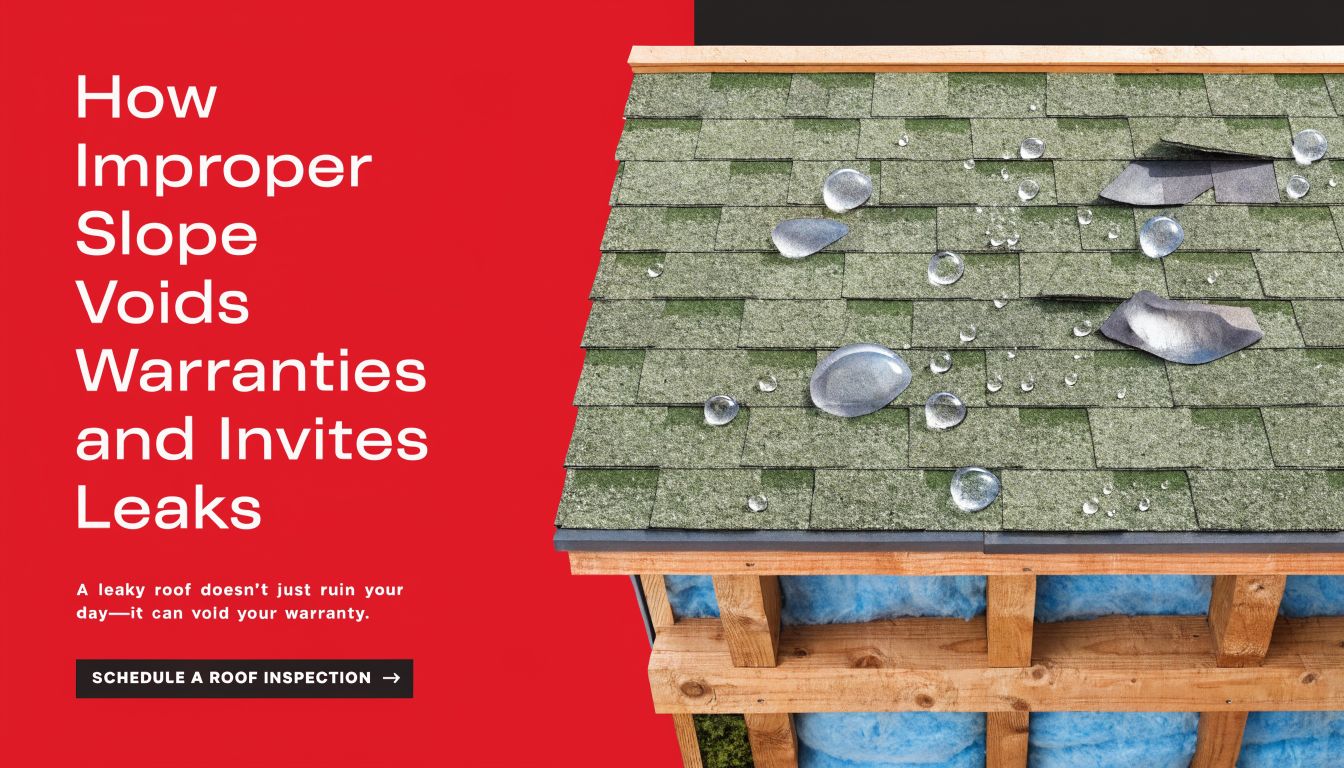
Most homeowners assume that if shingles are on the roof, the warranty must still be in place. That's not how it works. Most asphalt shingle manufacturers tie warranty coverage to slope-dependent installation protocols. Slopes below 2:12 are unsuitable for shingles, and slopes between 2:12 and 4:12 require enhanced water management. If those requirements aren't followed, warranty protection can disappear, as outlined in this article on the lowest pitch for a shingle roof.
The leak scenario nobody wants
A storm hits. Hail damages a low-slope shingle section. Water starts getting through after the event, but the primary debate begins when the roof is inspected.
If the installer used standard shingle methods on a roof that required low-slope protocols, the manufacturer can point to improper installation. At that point, the homeowner may be stuck arguing with both the roofing side and the insurance side while water keeps working into decking, insulation, trim, or interior finishes.
Why insurance gets harder on marginal slopes
The difficult part isn't just proving damage. It's proving the roof was installed correctly for its pitch before the damage occurred.
That's where documentation matters:
- Slope measurement records
- Installation scope showing the underlayment system
- Photos of low-slope sections
- Proof that the material matched the roof geometry
If you want a deeper look at the contract and installation mistakes that lead to rejected coverage, this guide on what voids a roof warranty lays out the common failure points clearly.
A roof can be code-compliant and still create warranty trouble if the installer ignored the manufacturer's slope requirements.
Chronic leaks usually start small
Low-slope shingle leaks often don't pour into the house immediately. They tend to show up as repeated minor issues. A stain near a wall. Dampness after wind-driven rain. A call for “just a small repair” every season. Those patterns often trace back to a roof section that never had enough slope margin for a forgiving installation.
That's why chasing leaks on a borderline roof can feel endless. The leak isn't always one hole. Sometimes the whole system is operating too close to failure.
Roofing Solutions for Low Slopes in Texas
Texas changes the decision-making. A roof that technically qualifies for shingles may still be a poor choice if the section gets hammered by hail, holds water longer after storms, or sits under tree shade where drying is slower.
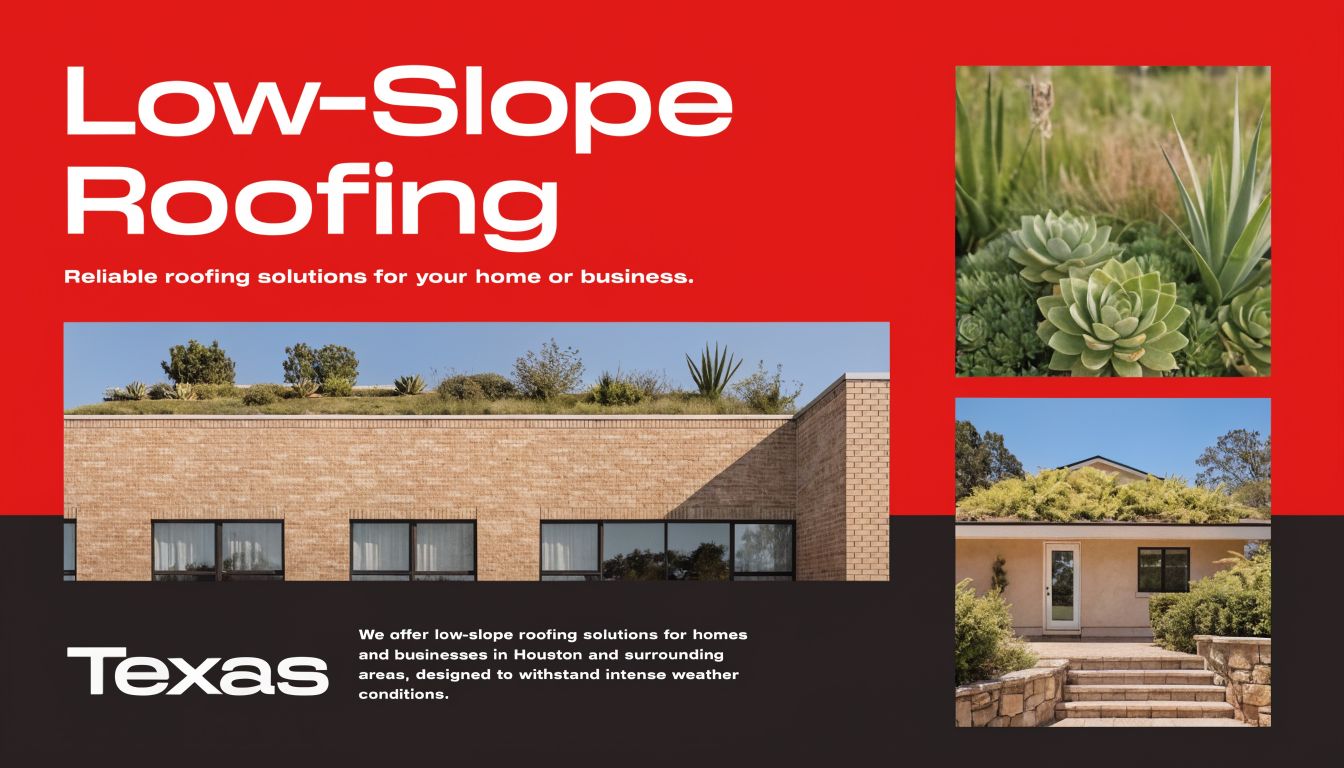
In regions like East Texas, 2:12 roofs are more vulnerable to water backup and pooling around hail impact points, and a 4:12 slope or greater is often recommended for better resilience in severe weather according to ARMA guidance on installation of asphalt shingles on lower sloped roofs.
When shingles still make sense
If the roof is between 2:12 and 4:12, shingles can still be an option, but only if the installer treats that section as a specialized low-slope application.
That means thinking through:
- The full underlayment approach, not just the visible shingles
- Valleys and transitions, which take more abuse on shallow planes
- Penetrations, because pipes, skylights, and roof-to-wall lines stay wet longer
- Storm repair compatibility, especially after hail events
This is the category where many porch roofs and additions land. The system can work, but it has to be built intentionally.
When a different roofing material is the smarter move
If the slope drops below 2:12, shingles are the wrong product. At that point, the better answer is usually a membrane system such as EPDM or PVC, both of which are designed for low-slope and flat-style applications. That's why commercial buildings use them so often, and why they also make sense on residential sections that don't have enough pitch for reliable shingle performance.
For homeowners trying to understand how flat and low-slope systems are typically repaired and maintained, this page on Colorado Springs flat roof repair offers a helpful look at how contractors approach those assemblies differently from steep-slope shingle roofs.
A simple decision path
- If the roof is below 2:12, use a membrane roof.
- If the roof is between 2:12 and 4:12, use shingles only with the correct low-slope installation method.
- If redesign is possible, consider increasing the pitch so the roof performs more like a standard shingle roof.
- If the house has mixed slopes, use different roof systems where each one makes sense.
For homeowners dealing with a patio cover, addition, or low rear section, it helps to understand how a flat or sloped roof should be matched to the right material instead of forcing one product across every plane.
The best roofing choice isn't the one that matches the rest of the house. It's the one that matches the slope and the weather exposure of that specific section.
Get a Professional Slope Assessment from Hail King
The key point is simple. Code-compliant doesn't always mean storm-ready. In Texas, that distinction matters because hail, fast-moving rain, and repeated weather exposure punish low-slope mistakes quickly.
There's also an upper limit that homeowners rarely think about. The Asphalt Roofing Manufacturers Association defines the normal asphalt shingle operating range as 2:12 to 21:12, and slopes steeper than 21:12 require special hand-sealing of every shingle, according to ARMA's recommendations for asphalt shingles on steep slopes and mansard construction. So the primary task isn't just asking whether your roof is steep enough. It's verifying that the material and installation method match the exact slope you have.
What a proper slope assessment should answer
- What is the actual pitch of each roof section
- Whether shingles are appropriate for that section
- Whether the installed underlayment matches the slope
- Whether a low-slope section creates leak or claim risk
- Whether a different roofing system would serve the home better
A professional inspection takes the guesswork out of all of that. It gives you a documented answer before the next storm, before a leak spreads, and before an insurance adjuster starts asking questions.
If you're unsure whether your roof is merely legal or built to last, get the slope measured and the installation reviewed.
If your home in Dallas-Fort Worth or East Texas has a roof section that looks too flat, leaks after storms, or raises questions during a replacement estimate, Hail King Professionals can help. Their team provides free inspections, measures slope by section, checks whether the current installation matches code and manufacturer requirements, and gives you a clear recommendation for repair, replacement, or a better low-slope roofing option.