
After the hail stops, the big question on every homeowner's mind is: "What's this going to cost me?" The truth is, the hail damage roof repair cost varies wildly, from $375 for a few simple fixes to $7,500 or more for significant damage. A full replacement on a larger home can easily top $10,000.
Quick Guide to Hail Damage Repair Costs in Texas
Think of hail damage repair like ordering from a menu. Sometimes, all you need is an à la carte fix—a few patched shingles here and there. Other times, the storm has served up a full-course problem that demands a complete roof replacement. Figuring out which category you fall into is the first step.
For example, if you live in the Dallas-Fort Worth area, which gets hit hard and often, the average hail repair bill hovers around $4,250. For a typical 2,000-square-foot home with asphalt shingles, that could mean a repair cost anywhere from $7,400 to $10,500. On a larger 3,000-square-foot property, you might be looking at $11,200 to $16,000. You can learn more about how roofing costs change based on your location.
Estimated 2026 Hail Damage Repair Costs in Texas
To give you a clearer picture, we've put together a quick breakdown of what you can expect to pay based on how bad the damage is and what kind of roof you have. These are just ballpark figures, but they're a great starting point for budgeting.
| Damage Level | Typical Repair Action | Average Cost Range (Asphalt Shingles) | Average Cost Range (Metal Roof) |
|---|---|---|---|
| Minor | Spot repairs, replacing a few missing or cracked shingles | $375 – $1,200 | $500 – $1,800 |
| Moderate | Patching larger sections, replacing flashing and some underlayment | $1,200 – $7,500 | $1,800 – $9,000 |
| Severe | Full roof replacement due to widespread damage or age | $7,400 – $16,000+ | $10,000 – $25,000+ |
Remember, these numbers are a guide, not a guarantee. The only way to know your exact hail damage roof repair cost is to have a professional get up on your roof and see the damage firsthand.
A no-cost, professional inspection is the most reliable way to understand the full scope of the damage. An expert can identify issues invisible from the ground, ensuring your insurance claim covers every necessary repair and protecting you from unexpected future expenses.
This detailed evaluation gives you a clear and actionable plan. You'll know exactly what’s dented, what’s cracked, and what needs to be fixed, allowing you to move forward with confidence, whether it’s a simple repair or a full-blown replacement.
What Determines Your Final Roof Repair Bill
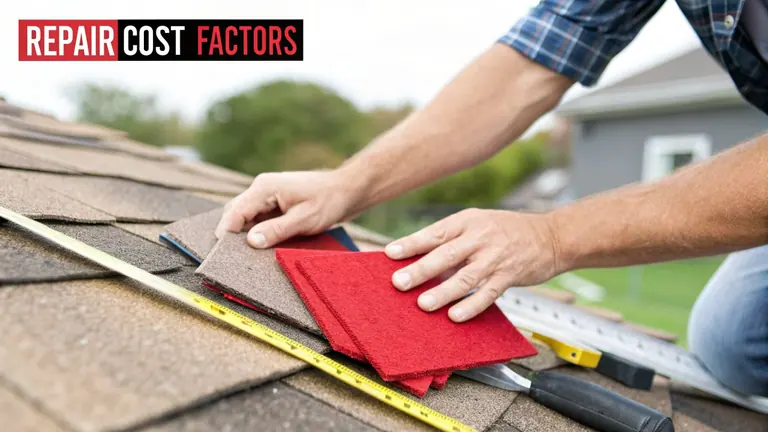
When you start getting quotes for hail damage, the numbers can feel all over the place. Why is your neighbor’s repair just a few hundred bucks while your estimate is in the thousands? It's because the final hail damage roof repair cost isn't a single line item; it's a combination of several factors that are unique to your home.
Think of it like a mechanic’s estimate. A simple oil change is one price, but a full engine rebuild is another. The cost depends entirely on the parts needed, the complexity of the job, and the mechanic's time. A roofer’s quote is no different—it's a detailed breakdown of what it will take to get your roof back to 100%.
The Heavy Hitters: Size, Material, and Damage
A few key variables do most of the heavy lifting when it comes to your total cost. Getting a handle on these will explain why prices can swing so dramatically from one roof to the next.
Roof Size: This one is pretty straightforward. A bigger roof needs more materials and more labor hours to fix. In the roofing world, we measure in "squares," where one square is a 100-square-foot area. The more squares we have to work on, the higher the base cost.
Roofing Material: The materials on your roof are a major cost driver. Standard asphalt shingles are the most common and generally the most affordable to repair. But if you have premium materials like standing seam metal, slate, or tile, you can expect a higher bill. These not only cost more per square foot but also require specialized skills to install correctly.
Extent of Damage: This is the real wildcard. A light hailstorm might only leave you with a handful of cracked shingles that need simple spot repairs. A severe storm, on the other hand, can cause widespread bruising, deep granule loss, and even damage the underlying structure. In those cases, a full roof replacement is often the only way to guarantee your home is protected.
The Hidden Costs That Can Surprise You
Beyond those big three, a handful of other factors can quietly add to your final bill. These are the details that often explain the gap between two quotes that seem similar on the surface.
A thorough, professional roofer will account for every one of these things upfront. It’s not about padding the bill; it's about making sure there are no surprises and the job is done right.
Your roof's pitch, or its steepness, plays a huge role in labor costs. A low-slope, walkable roof is one thing. But a steep roof (over a 6/12 slope) is a different ballgame. It demands extra safety gear, harnesses, and more careful, intensive labor, which directly impacts the hours needed to complete the job.
Other common factors that influence the price include:
- Accessibility: Is your roof easy to get to? Tight property lines, extensive landscaping, or multiple stories can make it harder to load materials and set up equipment, adding time and labor to the project.
- Permit Fees: For most major roof work in the Dallas-Fort Worth and East Texas areas, you’ll need a permit. These fees are set by the city or county and are a standard part of the job's cost.
- Code Upgrades: If you live in an older home, your roof might not be up to current building codes. When we do a major repair or replacement, we’re required to bring it up to code. This could mean adding new ventilation, installing a better ice and water shield, or using specific fasteners.
Once you understand what goes into a professional roofing estimate, you can review any proposal with confidence. You’ll see that line items for things like safety equipment or code-compliant underlayment aren’t just "extras"—they're the essential components of a quality repair that will protect your home for years to come.
Deciding Between Repair and Full Replacement
So, the hail has passed, and you're left staring at your roof, wondering what comes next. The biggest question you’ll face is whether to patch the damage or go for a full-blown replacement. It’s a lot like hanging onto an old car—a few small fixes are one thing, but when the repair bills start looking like a down payment on a new vehicle, you know it’s time to move on.
The same principle holds true for your roof. As a rule of thumb, when the cost of scattered repairs starts to creep up to 30% or more of what a brand-new roof would cost, a replacement is usually the smarter financial move. This is especially true if your roof already has some years on it.
The Role of Your Roof's Age and Lifespan
Your roof's age is probably the single most important factor here. Let's say you have a fairly new roof—maybe just five years old—that got dinged up in a few spots. In that case, a simple, targeted repair makes perfect sense. The rest of your shingles have decades of life left in them, so there’s no need to tear everything off.
But the story changes completely if you have an older roof. Take a 15-year-old asphalt shingle roof with moderate hail damage. Even if a roofer says they can patch it, a replacement is almost always the better call. You're just putting a Band-Aid on a system that's already nearing the end of its useful life.
Insurance adjusters have a term for this: Actual Cash Value (ACV). They calculate your roof's value by taking the full replacement cost and subtracting depreciation for its age and condition. An old roof has a low ACV, which is why insurers are often more inclined to approve a full replacement rather than sink money into temporary repairs.
Hailstorms are no small matter. They now cause over $15 billion in losses across the U.S. every year. In 2024 alone, the cost of roof claims hit nearly $31 billion—a staggering 30% jump from 2022. It's clear that wind and hail are behind more than half of all home insurance claims.
When Replacement Becomes the Smarter Investment
A full roof replacement definitely costs more upfront, but think of it as a long-term strategic move, especially if you live in a storm-prone area like Dallas-Fort Worth or East Texas. Tearing off the old roof gives you a golden opportunity to build back stronger.
This is the perfect time to upgrade to Class 4 impact-resistant shingles. These are engineered specifically to handle the kind of hail we see around here. While they cost a bit more, many insurance companies will give you a significant discount on your premiums for installing them. In the long run, upgrading can drastically cut your future hail damage roof repair cost because the damage won't happen in the first place. You can read our guide on the benefits of different hail-resistant roofing materials.
Here’s what you get with a brand-new roof:
- A Fresh Start: You're hitting the reset button. A new roof gives you a solid 20-30 years of worry-free protection.
- Warranty Protection: Full replacements come with new manufacturer and workmanship warranties. You simply don't get that peace of mind with patch jobs.
- Code Compliance: A new installation ensures your entire roof is up to the latest building codes, which are there to keep you safe.
- Increased Home Value: Nothing spruces up a home’s curb appeal like a new roof. It’s a huge asset if you ever decide to sell.
Ultimately, choosing a replacement isn't just about fixing damage—it's an investment in your home's future, giving you security and predictable costs for years to come.
Getting Your Insurance to Pay: A Homeowner's Guide
After a hailstorm rolls through, filing an insurance claim can feel like the second disaster. The jargon, the paperwork, the back-and-forth—it’s enough to make anyone's head spin. But you can take control of the situation and make sure you get the full amount you're owed.
Your first step? Document everything, and do it right away. Get on the ground and take plenty of photos and videos. Capture the dented gutters, beat-up siding, and any obvious pockmarks on your roof shingles. This is your initial evidence.
Before you even think about calling the insurance company, bring in a professional roofer for an inspection. Think of them as your expert witness. A good contractor will give you a detailed, third-party damage report. This document is your biggest asset, as it gives you a clear picture of what needs to be fixed before the adjuster even sets foot on your property.
Learning the Language of Your Insurance Policy
Insurance policies can feel like they're written in another language, but a few key terms control what you actually pay for the hail damage roof repair cost. Getting a handle on them is non-negotiable.
Here are the big ones you need to know:
- Deductible: This is your part of the bill. It's a fixed amount you have to pay before your insurance coverage starts. If you have a $2,000 deductible on a $10,000 repair, you pay the first $2,000, and the insurance company handles the other $8,000.
- Actual Cash Value (ACV): This is what your roof is worth today, with depreciation (age, wear, and tear) factored in. The first check you get from your insurer is almost always for the ACV.
- Replacement Cost Value (RCV): This is the full price to replace your roof with brand-new materials at today's market rates. It’s the total cost of the job, with no deduction for age.
- Depreciation: This is the difference between RCV and ACV—the value your roof has lost over time. Your insurer holds this money back until you prove the work is finished.
This two-check system is pretty standard. You get the ACV check to start the work, and once your roofer sends the final invoice to the insurer, they "release" the depreciation money to you.
Why Your Roofer Should Meet the Adjuster
Having your contractor on-site for the adjuster's inspection is a game-changer. Seriously. Your roofer is your advocate, there to make sure no detail is overlooked. After a big storm, adjusters are often slammed with claims and can easily miss subtle but critical damage.
Your roofer knows exactly what to look for—things like hidden cracks, granule loss that has compromised the shingles, or damaged flashing. They can point these out directly to the adjuster, ensuring the "scope of work" is accurate and complete from the start. A thorough scope is the foundation for a fair settlement. Getting familiar with and mastering the property damage claim process is key to making sure your hail damage repairs are fully covered.
This flowchart breaks down the decision you'll face based on the condition of your roof.
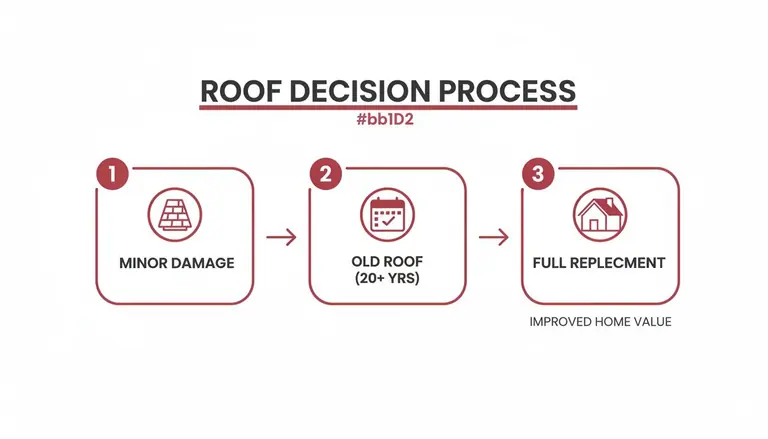
As you can see, the severity of the hail damage and the age of your roof are the two main factors that will point you toward either a simple repair or a full replacement. For a much deeper dive, check out our complete guide to the storm damage insurance claim process.
It's a tough environment for everyone right now. Roofing claims across the country hit $31 billion in 2024, which is a 30% jump from 2022. That’s because hail and high winds are behind more than half of all home insurance losses. When a major hailstorm hits an area, it's not uncommon to see local repair prices spike by 20-30% because contractors get booked solid and materials become scarce.
What if your claim gets denied or the initial offer is way too low? Don't panic. A seasoned roofer can help you file a supplement, which is an add-on to your claim. They’ll provide extra photos and documentation to prove why the additional work is necessary. More often than not, that professional support is what turns a lowball offer or denial into an approval.
Looking Beyond the Roof for Hidden Storm Damage
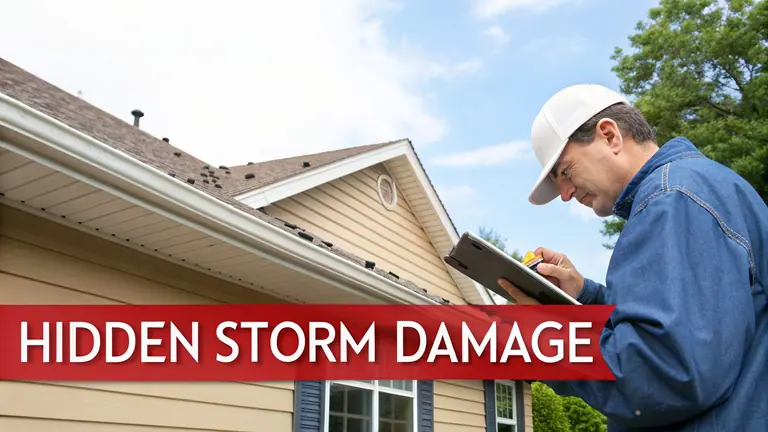
When you're trying to figure out your hail damage roof repair cost, your eyes naturally go straight to the shingles. But a hailstorm is an equal-opportunity destroyer, and the true cost of storm restoration often includes a lot of collateral damage you might not spot right away.
Think of it this way: if you took a bad fall, a doctor wouldn't just check for a broken arm; they'd look for other injuries, too. A proper storm damage inspection works the same way. Overlooking the "hidden" damage to the rest of your home’s exterior is a recipe for bigger problems and more out-of-pocket expenses down the line.
Checking for Damage Beyond the Shingles
Let's be realistic. If hail was big enough and strong enough to wreck your roof, it almost certainly left its mark elsewhere. As you or your contractor walk the property, make sure to inspect these often-overlooked areas.
- Gutters and Downspouts: These are usually made of soft aluminum and act like magnets for hail dents. If they get beat up badly, they can't channel water correctly, leading to overflows that can rot your fascia or even damage your foundation.
- Siding: Whether you have vinyl, wood, or aluminum, siding can be cracked, chipped, or dented. These impacts aren't just cosmetic; they create openings for moisture.
- Window Screens and Frames: Fine mesh screens don't stand a chance against hail—they tear easily. The frames and glazing beads around the glass can also get dinged and chipped.
- Fences and Decks: Hail can leave wood fences and decks looking like they've been blasted with a ball-peen hammer. This often means sanding, re-staining, or replacing entire boards.
- Exterior Paint: Hailstones act like tiny projectiles, chipping paint right off your siding, trim, and doors. This exposes the raw material underneath to the elements, inviting rot and decay.
- AC Units: The delicate metal fins on your air conditioner are incredibly fragile. Hail can flatten them, which severely restricts airflow, kills your AC's efficiency, and drives up your energy bills.
Fixing the roof but ignoring these other issues is like putting on a new suit with scuffed-up shoes. Your home won't look fully restored, and more importantly, it will still be vulnerable to future problems.
Bundling all your exterior repairs with one full-service contractor is almost always the smartest move. Trying to coordinate separate roofers, painters, and gutter installers yourself is a logistical nightmare that usually ends up costing more and producing inconsistent results.
The Solar Panel Detach-and-Reset Process
If you have solar panels on your roof, a replacement adds another layer to the project. You can't just shingle around a solar array—the whole system has to be professionally removed first and then reinstalled. This process is called a "detach-and-reset."
This is a job for specialists. They carefully disconnect the panels and wiring, unbolt the mounting racks, and store everything safely while the roofers do their work. Once the new roof is on, the solar crew comes back to put it all together again, making sure the system is water-tight and producing power. The cost for this is a separate line item, but it's a necessary one that your insurance policy should cover.
To get a complete picture of all the damage, especially on tricky roof lines, many pros now use tools like drone inspection services. By tackling every piece of exterior damage at once, you get a cohesive, professional repair and can finally close the book on the storm, knowing your home is fully protected.
Smart Ways to Finance Your Roof Repair Project
After a hailstorm, the last thing you need is the sticker shock from a repair estimate. A major roof project can bring a sudden, high hail damage roof repair cost, and sometimes the insurance check just doesn't stretch far enough. When you're facing that gap, the pressure is on. But before you drain your savings or reach for a high-interest credit card, you should know there are much better ways to handle it.
Many experienced roofing contractors, ourselves included, have seen homeowners in this exact spot. That's why we often provide access to financing plans designed specifically for this kind of work. Think of it as a tool to get your roof fixed immediately—protecting your home from leaks and further damage—without creating a second financial headache.
One of the biggest perks of these modern plans is how you apply. They typically use a soft credit check to see what you qualify for. It's like window shopping for a loan; you can see your options without it dinging your credit score.
Weighing Your Financing Choices
Choosing the right way to pay is just as important as choosing the right shingles. A credit card might feel like a quick fix, but that high interest can quickly spiral out of control if you can't pay the balance off right away. A personal loan from your bank is another option, but that route can be slow, with lots of paperwork and tougher approval standards.
Here's a key piece of advice: The best financing plans for roofing don't force you to tap into your home's equity. This is a major difference from a Home Equity Line of Credit (HELOC), and it means your home's value stays safe and untouched. Also, always look for plans with no prepayment penalties, so you have the freedom to pay it off early if you can.
Here’s the real-world breakdown of how these specialized financing options compare to other methods:
- Contractor Financing: This is usually the smoothest path. It’s built for home improvement, so you get things like soft credit checks, fast approvals, and funding that lets work begin right away.
- Credit Cards: A very fast but risky choice. Unless you snag a 0% introductory APR and have a rock-solid plan to pay it off before that period ends, the interest can add hundreds, if not thousands, to your final bill.
- Personal Loans: These can have decent rates, but they almost always involve a hard credit pull that affects your score. The approval process can also drag on for days or even weeks, which isn't ideal when you have an urgent repair.
By exploring financing designed for roofing, you can manage the hail damage roof repair cost without putting your financial stability on the line. It empowers you to protect your home now, not later. To see exactly how these plans work and what might fit your budget, you can learn more about how to finance a new roof and make the best decision for your home. It’s all about getting the peace of mind that comes from knowing your home is secure and your finances are, too.
Got Questions About Hail Damage and Roof Costs? We've Got Answers.
Even when you have a good grasp of the numbers, a few nagging questions always pop up after a hailstorm. It's totally normal. When your home is on the line, you want clear, honest answers from someone who's been there before.
Let's walk through some of the most common questions we hear from Texas homeowners dealing with hail damage.
How Long Do I Have to File a Hail Claim in Texas?
Officially, Texas law generally gives you one to two years from the storm date to file a claim. But that timeline can shrink depending on the fine print in your specific insurance policy.
While it's smart to double-check your documents, our advice is always the same: don't wait. The sooner you file, the easier it is for everyone—including your adjuster—to tie the damage directly to a specific storm. It just makes the whole process smoother.
Waiting creates problems you don't need. If you delay and a small leak turns into a major mold issue, your insurer could argue it's neglect, not storm damage, and deny the secondary repairs.
Your best move is always to get a professional inspection right after a storm. It protects your property and your claim.
Will My Insurance Premium Go Up if I File a Hail Claim?
This is the million-dollar question, and it causes a lot of unnecessary stress. The short answer is no. Filing a claim for storm damage, which is considered an "Act of God," does not typically cause your individual premium to go up. Insurance companies can't penalize you for something completely out of your control.
So, where does the confusion come from? If a massive storm sweeps through an entire region, causing widespread damage, the insurance carrier might raise rates for everyone in that area to offset their losses. Your rate might increase, but it won't be because you personally filed a claim. Not filing a necessary claim is far more costly in the long run.
Can I Just Keep the Insurance Money and Not Fix My Roof?
Thinking about pocketing the insurance check? It's a tempting but terrible idea. Not only is it likely insurance fraud, but it also almost certainly violates your mortgage agreement.
Here's how it works: your insurance payout usually comes in two parts. The first check is for the Actual Cash Value (ACV), which is the value of your roof minus depreciation. You only get the second check for the remaining amount (the depreciation) after you provide an invoice showing the work has been completed by a licensed contractor.
If you don't fix the roof, you'll never see that second payment. Even worse, your insurer will almost certainly drop your coverage, leaving your damaged roof completely uninsured when the next storm rolls in.
When it comes to protecting your home after a storm, you need a team with decades of Texas-specific experience. Hail King Professionals provides free, detailed inspections to give you clarity and confidence. Schedule your free inspection today and let our experts handle the rest.