
Asphalt Shingle Roof Sealer: A DFW Homeowner’s Guide
You walk outside after a North Texas storm and your roof looks mostly fine from the driveway. Then the neighbors start talking. One says to file a claim immediately. Another says to seal the shingles before the next storm. A contractor knocks on your door and pushes a coating. Someone else says if you touch the roof at all, you'll ruin your warranty.
That is the true issue in Dallas-Fort Worth. Not just hail. Conflicting advice.
If you're researching asphalt shingle roof sealer, you're probably trying to avoid a full replacement, stop further wear, and make a smart decision before small damage turns into expensive damage. That instinct is good. But a sealer is not a cure-all, and on the wrong roof it can create more problems than it solves.
In DFW, the first question isn't “Should I seal my roof?” The first question is “What condition is my roof in, and will sealing it help or hurt my next insurance conversation?” That distinction matters a lot more here than it does in a generic roofing guide.
After the Storm Your Roofing Options in DFW
A common DFW scenario goes like this. A hailstorm rolls through at night. The next morning, you find dents on the metal vents, leaves everywhere, and a few granules in the gutter. No active leak. No shingles missing from what you can see. Just enough evidence to make you uneasy.
So you start calling around.
One roofer says, “You need a full replacement.” Another says, “Your shingles still have life left. Let's seal them.” A third says to wait and watch it. That's where homeowners get trapped. They assume all three opinions are just different price points for the same problem. They aren't.
A sealer can make sense in some situations. It can also hide the exact kind of surface damage an adjuster needs to see after hail. If your roof has functional storm damage, sealing it before proper documentation is a mistake. If your roof is only aging and drying out, a sealer might buy you useful time. Those are two very different roofs.
Practical rule: After hail, don't approve any sealer, coating, or repair until the roof has been inspected and documented.
If you're still in that first-week chaos stage, this guide on what to do after hail storm damage is a good starting point. It helps you sort immediate priorities before you make a decision you can't undo.
Your three real choices
Most homeowners in DFW end up weighing one of these paths:
- Monitor and maintain if the roof has age-related wear but no major storm damage.
- Seal or coat selectively if the roof is still serviceable and the treatment fits the roof's condition.
- Replace the roof if hail, brittleness, leaks, or structural issues make surface treatment a waste of money.
The hard part is that all three can sound reasonable in a sales pitch. Only one is right for your roof.
What Exactly Is an Asphalt Shingle Sealer
Think of an asphalt shingle roof sealer like treatment for a weathered surface, not a rebuild. It's closer to conditioning an aging deck than replacing rotten boards. The product is meant to soak into worn areas, help bind loose surface material, and slow further breakdown.
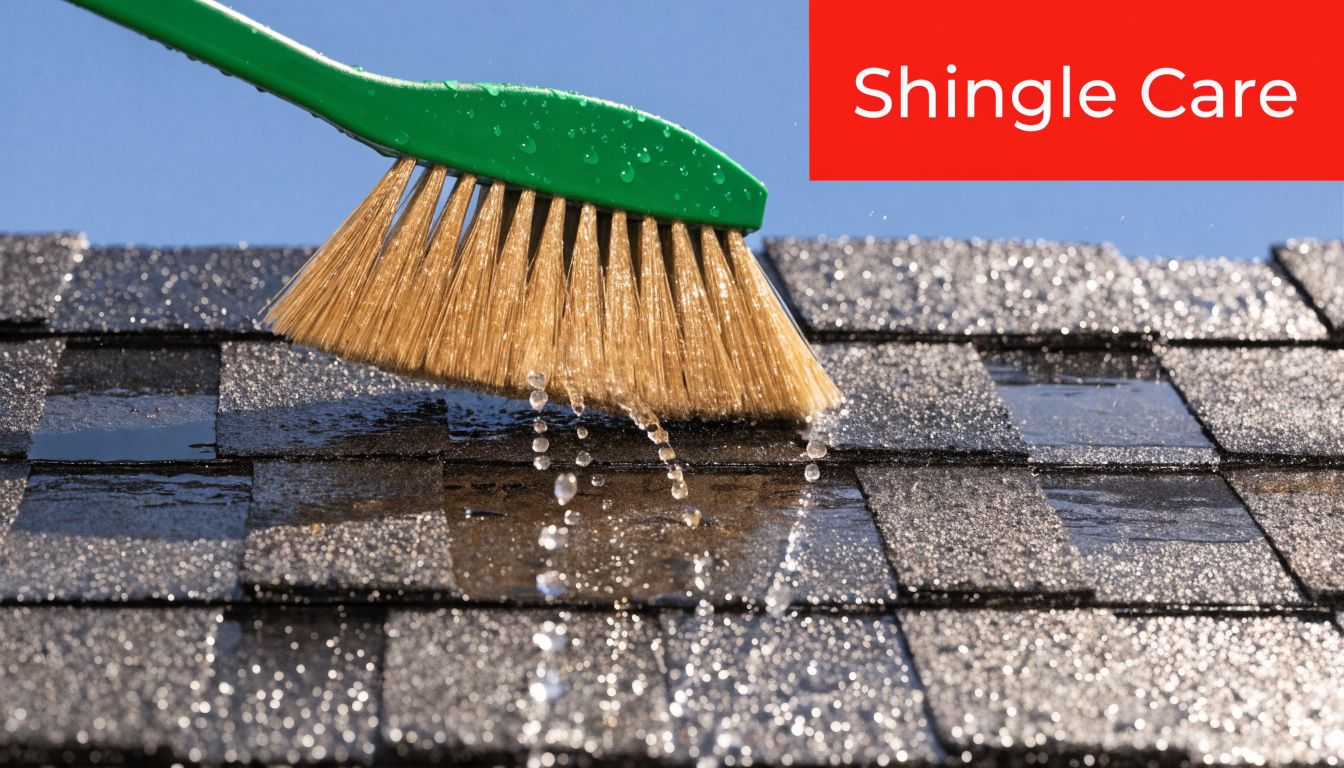
On asphalt shingles, these treatments are typically built around polymers, resins, emulsions, or reflective pigments. Some are thin penetrating sealers. Others act more like surface coatings. The basic idea is the same: get into the tiny spaces between granules, fill micro-cracks, bond to the asphalt surface, and create a protective layer against sun, moisture, and impact.
That matters because aging shingles don't usually fail all at once. They dry out, lose flexibility, shed granules, and become easier to crack. Protective treatments work best when the roof is worn but still structurally sound. If you want broader background on asphalt roof lifespan and maintenance, that resource gives a solid overview of how asphalt roofs age over time.
How the bonding actually works
Homeowners often become confused. A distinction exists between the factory sealant strip on the shingle and a field-applied sealer added later.
Factory sealants are designed to activate with heat after installation. According to the Asphalt Roofing Manufacturers Association, asphalt shingle sealants are heat-activated and need ambient temperatures between 50°F and 70°F (10°C to 21°C) to soften and create the bond needed for wind resistance, and below 40°F (4°C) the sealant remains inactive, compromising roof integrity (ARMA sealant guidance).
That's not a minor detail in Texas. Timing matters. Sun exposure matters. Roof slope matters. South-facing roof sections usually seal faster because they get more solar heat.
What a sealer can and can't do
A sealer can help if your shingles are aging and the surface is starting to open up. It can't reverse structural damage. It can't fix rotten decking. It can't make brittle, storm-beaten shingles new again.
Here's the blunt version:
- Good use: Mid-life shingles with moderate wear, exposed granules, and no major storm damage.
- Bad use: Fresh hail impacts, active leaks, widespread cracking, lifted tabs, or a roof already near failure.
- Worst use: Applying product because the roof “looks rough” without diagnosing why.
Sealer is a preservation tool. It is not a substitute for proper diagnosis.
Sealer vs Coating vs Full Replacement
Homeowners often lump these together. That's a mistake. Sealer, coating, and replacement do completely different jobs.
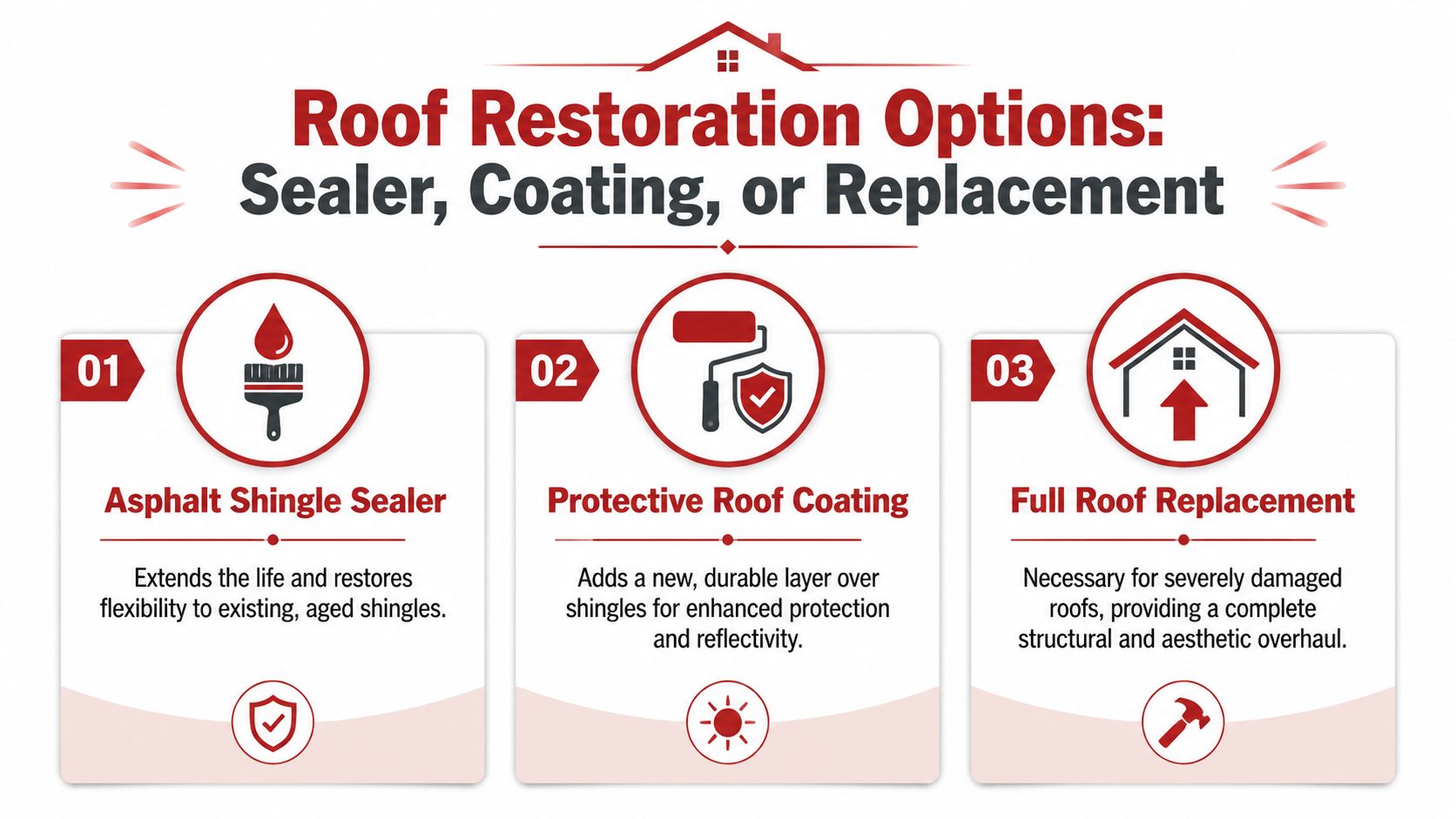
A sealer is the lightest-touch option. It's usually meant to penetrate worn shingles, restore some flexibility, and slow more granule loss. A coating is a broader surface treatment that forms a membrane-like layer over the roof. A full replacement tears off the failing system and installs a new one.
The right tool for the right roof
If your roof is aging but still holding together, a sealer may be a reasonable maintenance move. If the roof is older and you're trying to create a more uniform protective surface, a coating might be considered. If the roof has major hail damage, widespread curling, repeated leaks, or underlying deck issues, replacement is the only answer that makes financial sense.
Here's the part most sales pitches skip. Field-applied coatings come with trade-offs. The Asphalt Roofing Manufacturers Association notes that field-applied, non-permeable coatings can create a vapor-retarding layer that may trap moisture within the roofing system, and they may also shrink during curing, causing visible curling or cupping on aged shingles (ARMA coating guidance).
That means a coating can look like extra protection while creating a hidden moisture problem underneath. In humid conditions or on a poorly ventilated roof, that risk isn't theoretical.
Roofing Solutions at a Glance Sealer, Coating, or Replacement?
| Attribute | Asphalt Shingle Sealer | Roof Coating | Full Roof Replacement |
|---|---|---|---|
| Primary purpose | Extend life of worn but serviceable shingles | Add a protective surface layer over an aging roof | Replace a failing roof system |
| Best fit | Mid-life roof with mild to moderate surface wear | Older roof still functioning but needing broader surface protection | Roof with widespread damage, leaks, brittleness, or structural issues |
| What it does well | Penetrates worn areas, supports flexibility, helps bind surface wear | Creates a more continuous protective layer and may add reflectivity | Resets the roof's condition and solves underlying system failures |
| Main limitation | Won't fix storm damage or structural failure | Can trap moisture and may shrink or distort aged shingles | Highest upfront investment |
| Insurance angle | Can complicate damage visibility if used after hail | Can also mask damage and raise warranty questions | Usually the cleanest path when damage is clearly documented |
| My opinion | Useful in narrow situations | Use carefully and only with a clear reason | Best choice when the roof is already telling you it's done |
My recommendation in DFW
In this market, I'd rather see a homeowner make a hard decision than a hopeful one.
- Choose sealer when the roof is aging evenly and the goal is maintenance.
- Choose coating only when the roof condition, ventilation, and product choice all line up.
- Choose replacement when hail, leaks, or brittleness have already crossed the line from wear into failure.
If you're using a surface treatment to avoid hearing “you need a new roof,” you're probably solving the wrong problem.
Benefits and Critical Risks of Sealing Your Roof
A North Texas storm rolls through at 2 a.m. The next morning, your roof looks mostly fine from the driveway, and a sealer pitch starts sounding attractive. That is exactly how homeowners end up making a roof look cleaner while making hail damage harder to prove.
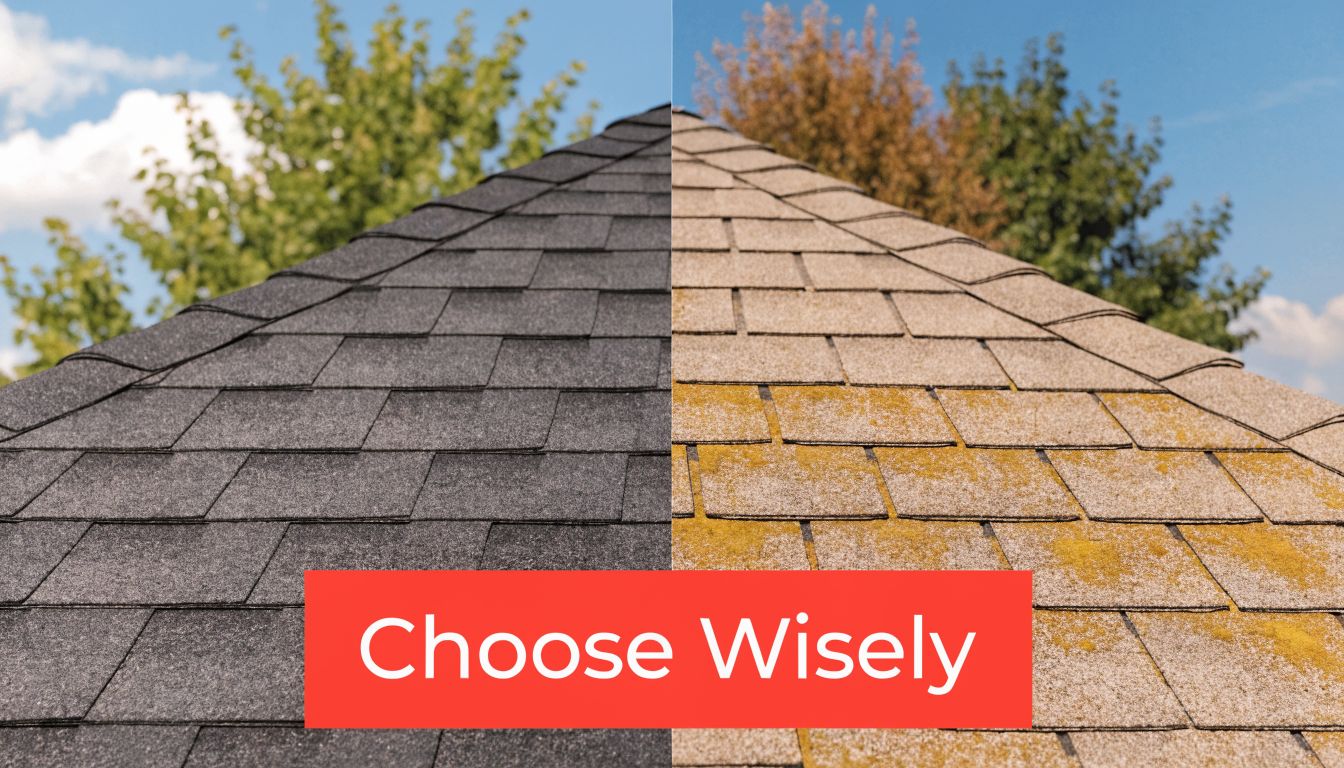
A good sealer does have a place. On the right roof, it can slow surface drying, help with minor granule wear, and buy time on shingles that are aging evenly. If the roof is still sound and the wear is from sun and age, not impact, sealing can be a reasonable maintenance move.
DFW is not a mild-climate market, though. Hail changes the math.
Where sealing helps, and where it causes trouble
The benefit is simple. A sealer can protect an older roof that still has service life left.
The risk is more serious. After hail, surface treatments can soften or blur the visual evidence adjusters and inspectors look for. Bruising, granule loss, and impact marks may not disappear, but they can become harder to document cleanly. Homeowners often overlook this risk until a claim is denied.
That matters here because insurance disputes in Dallas-Fort Worth are often about proof. If you apply product before a proper inspection, you may give the carrier room to argue about pre-existing wear, altered surfaces, or the true extent of storm damage. Before approving any treatment, start with choosing qualified roof inspection pros who know how to document hail damage the right way.
The main pros and cons
- Best-case upside: Helps preserve shingles that are weathered but still structurally sound.
- Biggest DFW risk: Can make hail damage harder to see, photograph, and defend in a claim.
- Warranty exposure: Some field-applied products can create manufacturer warranty problems. Review common roof warranty voiding mistakes before anyone applies anything.
- Moisture risk: The wrong product can hold moisture in the roof system instead of letting it escape.
- False sense of security: A better-looking roof is not the same as a storm-ready roof.
Questions I would ask before any sealer goes on
- Has the roof been inspected for hail or wind damage first?
- Is the product approved for this specific shingle and roof condition?
- Will the treatment affect warranty coverage or future claim documentation?
- Is there any sign of trapped moisture, poor ventilation, or active leaking?
- Are you preserving a sound roof, or trying to hide a roof that should be replaced?
A short video can help you see how roof treatment decisions play out in practical application:
In DFW, a sealer should protect a healthy aging roof. It should never be used to blur the story your roof needs to tell after hail.
Is Your Roof a Good Candidate for Sealing
A common DFW mistake happens right after a hailstorm. A homeowner sees an older roof, hears that a sealer can add life, and applies product before anyone documents the roof properly. Then the claim gets harder because the surface no longer shows the story as clearly.
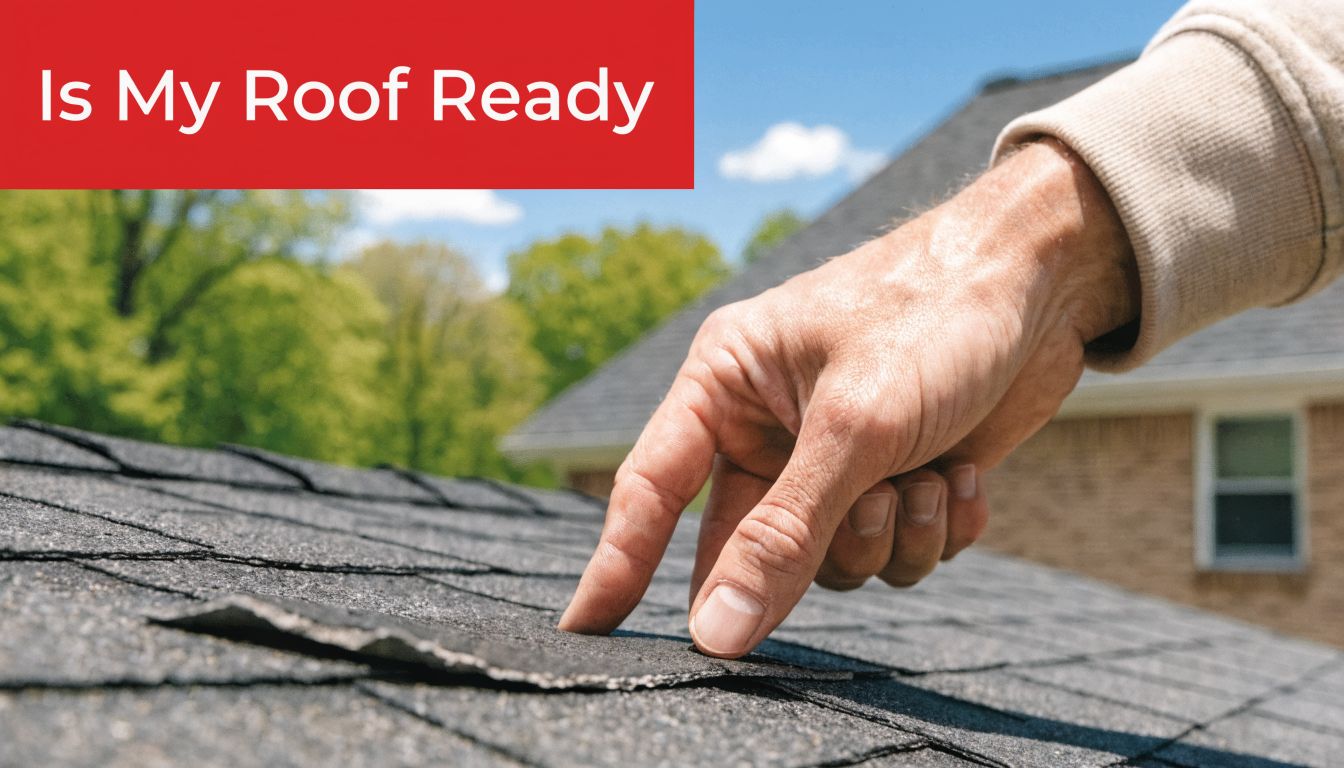
That is why candidacy matters more in North Texas than in calmer climates. A sealer belongs on an aging roof with honest wear, no active moisture problems, and no unresolved storm damage. If hail may have hit the roof, get it inspected first. Do not coat first and ask questions later.
Here is the simple standard I use. Seal a roof only when you are preserving serviceable shingles, not trying to stretch out a roof that is already at the end.
A roof that may be worth sealing
Some older shingle roofs can benefit from a treatment. The roof has to be dry, stable, and worn in a predictable way.
Look for signs like these:
- Granule loss is visible, but the shingles still have solid coverage and are not shedding badly
- Tabs are lying flat with only mild age-related wear
- Attic and ceiling areas show no active leak staining
- The roof has a clean inspection history for recent hail or wind damage
- Previous repairs are limited and localized, not scattered all over the slope
Preparation matters too. If the roof needs cleaning before any treatment, use the right process for cleaning an asphalt shingle roof safely. Bad cleaning can do as much harm as bad sealing.
A roof that should not be sealed
I would pass on sealing if the roof has soft spots, brittle shingles, widespread repairs, lifted tabs, exposed mat, or leak evidence. I would also pass if the roof has taken recent hail and nobody has documented the damage yet.
That last point matters a lot in DFW. Hail claims often depend on showing fresh impact marks, fractured mat, granule displacement, and collateral damage across the system. A field-applied sealer can blur those details, change the surface appearance, and give the carrier one more argument to question timing or extent of damage.
Use this filter before you spend a dollar:
- Good candidate: Older roof, dry system, mild to moderate age wear, no known storm damage
- Questionable candidate: Mixed wear patterns, several patched areas, uncertain storm history, or no recent inspection
- Bad candidate: Recent hail, leaks, soft decking, severe curling, widespread brittleness, or repeated repair issues
One more blunt point. A newer roof usually does not need sealer. An older roof with hail damage usually needs documentation and often repair or replacement, not a cosmetic treatment.
If you are not sure whether you are looking at normal aging or claim-worthy storm damage, get an inspection from someone who knows how roofs are evaluated after hail. Homeowners who are vetting contractors can start with this guide on choosing qualified roof inspection pros.
DIY Application vs Professional Service and Costs
I understand the appeal of DIY. A bucket of sealer looks cheaper than a crew. A weekend project feels more manageable than a roofing contract. But an asphalt shingle roof sealer is one of those jobs that looks simple from the ground and goes sideways fast on the roof.
The biggest DIY mistakes aren't dramatic. They're boring. Bad prep. Wrong product. Over-application. Uneven coverage. Sealing a roof that should've been replaced. Those mistakes don't always fail immediately. They fail later, when moisture gets trapped, shingles curl, or an adjuster asks what was applied and when.
Why pros usually earn their money on this job
A professional should do more than spray product. They should determine whether sealing makes sense in the first place.
The U.S. roof coating market was valued at USD 342.4 million in 2022, with Texas as a major market, and some professional treatments can reduce HVAC consumption by 30 to 40 percent through reflective properties, which can help offset the investment when the product and roof are a good match (roof coating market and energy data).
That doesn't mean every sealer saves energy. It means some systems do, when they're chosen and applied correctly.
My honest take on DIY vs hiring out
- DIY makes sense only if you already know the roof is a valid candidate, the product is compatible, the weather is right, and you can work safely.
- Professional service makes sense when you want the diagnosis, prep, application method, and documentation handled correctly.
- The actual cost question isn't just labor: It's whether you're paying now to preserve the roof, or paying twice after a bad application.
If you're trying to budget the prep side of the work, this roof cleaning cost breakdown can help you understand one piece of what often gets bundled into a professional service. And if you're tempted to wash the roof yourself before sealing, read this guide on how to clean an asphalt shingle roof properly before you start. Aggressive cleaning can do as much harm as a bad coating.
My recommendation
If the roof has any chance of involving an insurance claim, don't DIY it.
If the roof has uncertain damage history, don't DIY it.
If the roof is old and dry and you still want to pursue sealing, at minimum get a professional inspection first and a written product recommendation second.
The Hail King Verdict Your Smart Path Forward in DFW
Here's the straight answer.
If your roof has been through a recent DFW hailstorm, don't seal it first. Inspect it first. Document it first. Decide second.
A sealer has a place. On the right roof, it can help preserve aging shingles and buy useful time. On the wrong roof, it can waste money, complicate insurance, trigger warranty trouble, and hide damage that should have been addressed directly. That's why generic advice fails here. Dallas-Fort Worth is not a generic roofing market. Hail changes the decision.
My opinion is simple:
- If the roof has storm damage, treat this as an insurance and repair problem, not a maintenance project.
- If the roof has ordinary aging, a sealer or coating may be worth discussing.
- If the roof has widespread brittleness, leaks, or system failure, replacement is the right answer even if it's the answer nobody wants to hear.
The safest path is boring, but it works. Get a real inspection. Get photo documentation. Ask whether the roof is a preservation candidate, a repair candidate, or a replacement candidate. If replacement is needed, consider whether moving to an impact-resistant shingle system makes more sense than trying to stretch one more season out of a roof that's already done its job.
If you want a straight answer without pressure, contact Hail King Professionals. They serve Dallas-Fort Worth and East Texas, offer free inspections, and can tell you whether your roof should be sealed, repaired, or replaced before you make an expensive mistake.