
Can Metal Roof Be Installed Over Shingles? 2026 Texas Guide
Yes, a metal roof can be installed over shingles, but only if you have a single, sound layer of shingles and your roof structure is confirmed to handle the load. For Texas homeowners, it's a decision that also involves weather resilience and insurance.
A lot of homeowners in Dallas-Fort Worth and East Texas start in the same place. The roof is aging, hail season is always in the back of your mind, and the idea of a full tear-off sounds expensive, loud, and messy. You want the durability of metal, but you don't want dumpsters in the driveway and torn-off shingles scattered across the yard.
That's where the overlay question comes in. Can metal roof be installed over shingles without creating bigger problems later? Sometimes yes. Sometimes absolutely not. The difference comes down to code, deck condition, ventilation, and whether the existing roof is stable enough to serve as part of the new system.
Considering a Metal Roof Without a Messy Tear-Off
A homeowner in East Texas might call after the second hailstorm in a year and ask the same common question. “Can't we just put metal over what's already there?” That's a fair question. If the current shingles are still lying flat, the attic hasn't shown signs of chronic moisture, and there's only one layer, an overlay can be a practical option.
The appeal is obvious. You avoid the disruption of a full tear-off, and you may keep the house better protected during the install because the old roofing stays in place until the new system goes on. For families trying to balance storm repairs, insurance paperwork, and daily life, that matters.
But this isn't a shortcut in the sloppy sense. A good overlay is still a real roofing job, and it only works when the existing roof gives the metal system a stable base.
Practical rule: A metal overlay only makes sense when the roof underneath is sound enough that you'd trust it to stay in place while the new roof does its job.
Dallas-Fort Worth homes add another layer to the decision. Hail exposure changes how you should think about a roof-over. You're not just choosing a material. You're choosing how the roof will perform under impact, how well the assembly can dry, and how an adjuster may view it if you file another claim later.
That's why the right answer isn't “metal over shingles is good” or “metal over shingles is bad.” The right answer is narrower. It's good when the roof has one existing layer, no meaningful deck trouble, and a contractor can install the metal system in a way that controls moisture and meets code. It's bad when the old roof is already trying to tell you something is wrong.
The Foundation of a Metal-Over-Shingle Roof
Think of an overlay like installing a new floor over an old one. It can work if the base layer is flat, secure, and dry. It fails when the layer underneath is loose, uneven, or hiding damage.
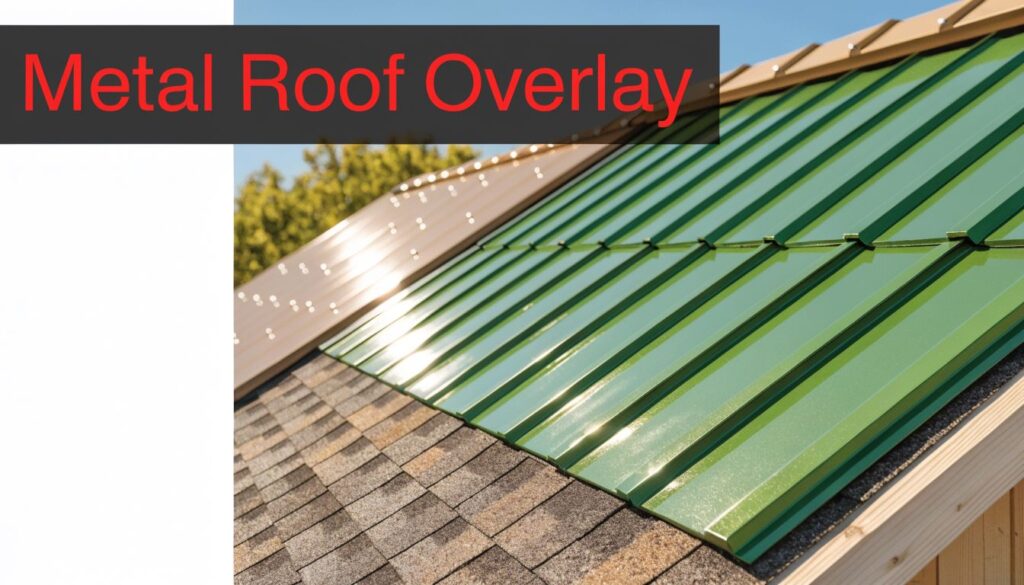
That's the basic logic behind a metal-over-shingle roof. The old shingles don't become the finished roof. They become part of the base assembly under the new metal panels. If that base is stable, the system can perform well. If it isn't, the new roof inherits the old roof's problems.
The one-layer rule matters most
The first checkpoint is simple. Most building codes in Texas allow metal roofing over one existing layer of asphalt shingles, not two. When that condition is met, the job can reduce installation cost by 20-30% and shorten the timeline by 1-2 days, with combined roof weight staying in a workable range because lightweight metal runs about 1-1.5 psf and a single shingle layer runs about 2.5-3 psf according to this roofing code and weight overview.
That one-layer limit is the gatekeeper. If a house already has multiple layers, an overlay stops being a smart upgrade and starts looking like a code and load problem.
What sits between shingles and metal
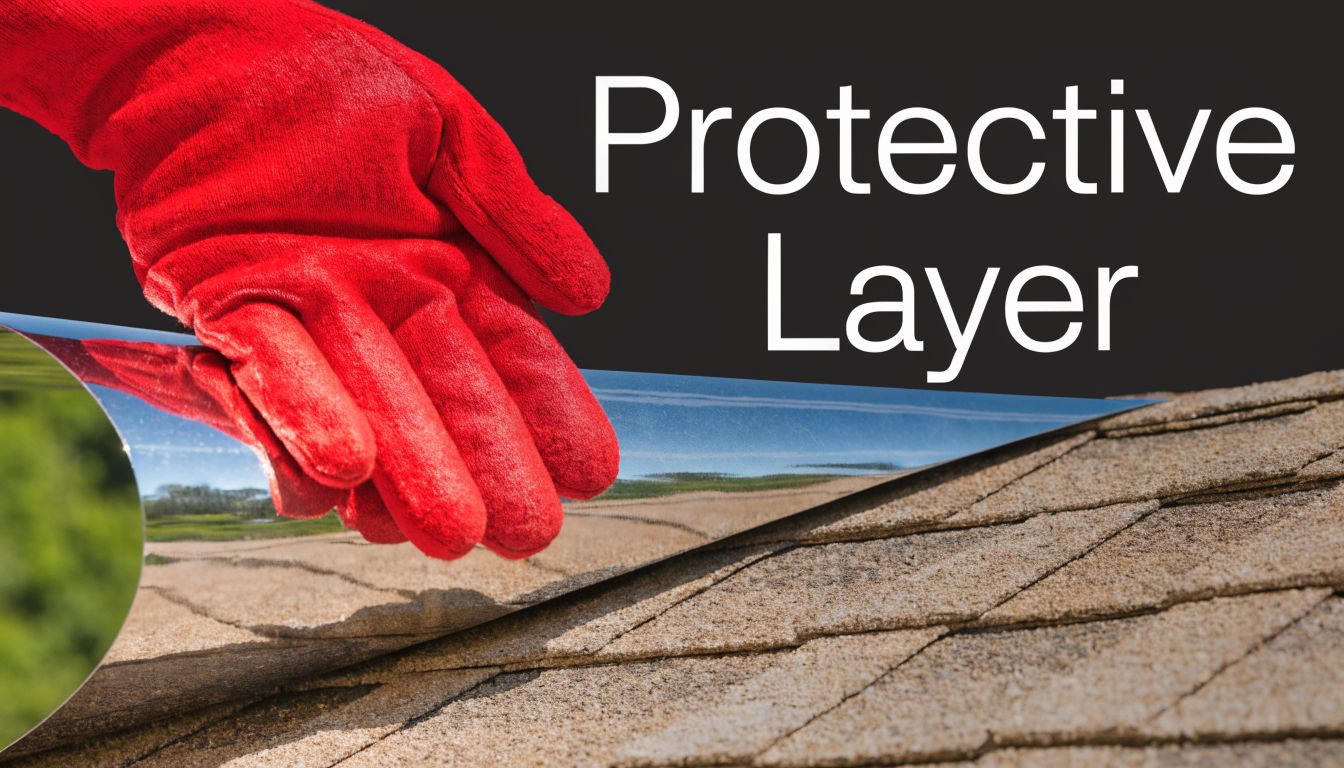
The second checkpoint is separation. Metal panels shouldn't be dropped straight onto old shingles with no thought about abrasion, oils, or moisture movement. A proper assembly usually includes underlayment, and if you want a useful primer on that layer, this guide on what roof underlayment does is worth reading before you compare bids.
A contractor should also check these basics before calling the roof overlay-ready:
- Deck feel from above and below: Soft spots, bounce, or sagging usually mean the deck needs exposure and repair.
- Shingle condition: A sound layer should be lying flat enough to support the new system.
- Penetrations and flashing areas: Chimneys, valleys, skylights, and plumbing vents often reveal the true condition of the roof.
If the old roof is acting like a failing roof, covering it with metal doesn't fix it. It just hides the diagnosis.
Why homeowners choose this route
For the right house, the financial logic is straightforward. You save tear-off labor, avoid disposal work, and shorten the installation window. The practical advantage is just as important. Less disruption on site usually means less stress for the homeowner.
That said, “cheaper” isn't the main reason to do it. “Appropriate” is. A metal overlay is a fit when the structure, code status, and roof condition all line up.
When a Metal Roof Overlay Is a Smart Choice
An overlay makes the most sense when the existing shingle roof is old enough to justify replacement, but still stable enough to support one more step in the roofing assembly. That's common on homes where the shingles are weathered but not collapsing, and the owner wants a longer-term material without paying for work that isn't necessary.
In Texas, the argument gets stronger because heat matters almost as much as rain. Metal roofs last 40-70 years and can reduce annual cooling costs by 10-25% in hot climates because of their high solar reflectance, while the retained shingle layer can add insulation value that boosts energy efficiency by up to 15%, based on this summary of metal roof lifespan and energy performance.
Best-fit homes for an overlay
Some properties are better candidates than others. The strongest candidates usually look like this:
- Single-layer shingle roofs: The roof already clears the biggest code hurdle.
- Homes with high summer cooling demand: Reflective metal does more noticeable work where attic heat is a daily problem.
- Owners planning to stay put: A longer-lasting roof has more time to justify the investment.
- Properties that need lower disruption: If avoiding a tear-off mess matters, an overlay can be easier on the household.
A lot of homeowners comparing materials also want a cost baseline before they decide. This breakdown of asphalt vs metal roof cost helps frame the overlay decision in real budget terms.
Why this works well in Texas heat
A metal roof is a better fit in North Texas than many people realize. It sheds heat more effectively than standard shingles, and when the assembly is designed correctly, the old roof layer isn't just “left behind.” It becomes part of the thermal package.
That doesn't mean every metal product performs the same way. Panel profile, color, underlayment choice, and the installation method all affect the final result. But the broad advantage is real. In a climate where long stretches of hot weather punish roofing materials, metal gives homeowners a system built for endurance.
A good overlay is often less about getting the cheapest roof today and more about avoiding another full replacement cycle sooner than you'd like.
When the value shows up fastest
The homeowners who usually feel the benefit first are the ones dealing with harsh sun, repeated hail exposure, and a roof replacement timeline that can't drag on. They want durability, a faster job, and less site disruption. That's exactly where a properly planned overlay can earn its place.
Another overlooked advantage is the practical comfort factor. A roof that reflects more heat and keeps the assembly more stable can make upstairs rooms feel less punishing during peak summer afternoons. Homeowners often notice that before they ever study their utility bills.
Red Flags That Demand a Full Roof Tear-Off
The biggest mistake homeowners make is treating an overlay like a universal upgrade. It isn't. Some roofs need to be opened up, inspected directly, and rebuilt from the deck up. If the roof has structural warning signs, a metal overlay can lock in trouble instead of solving it.
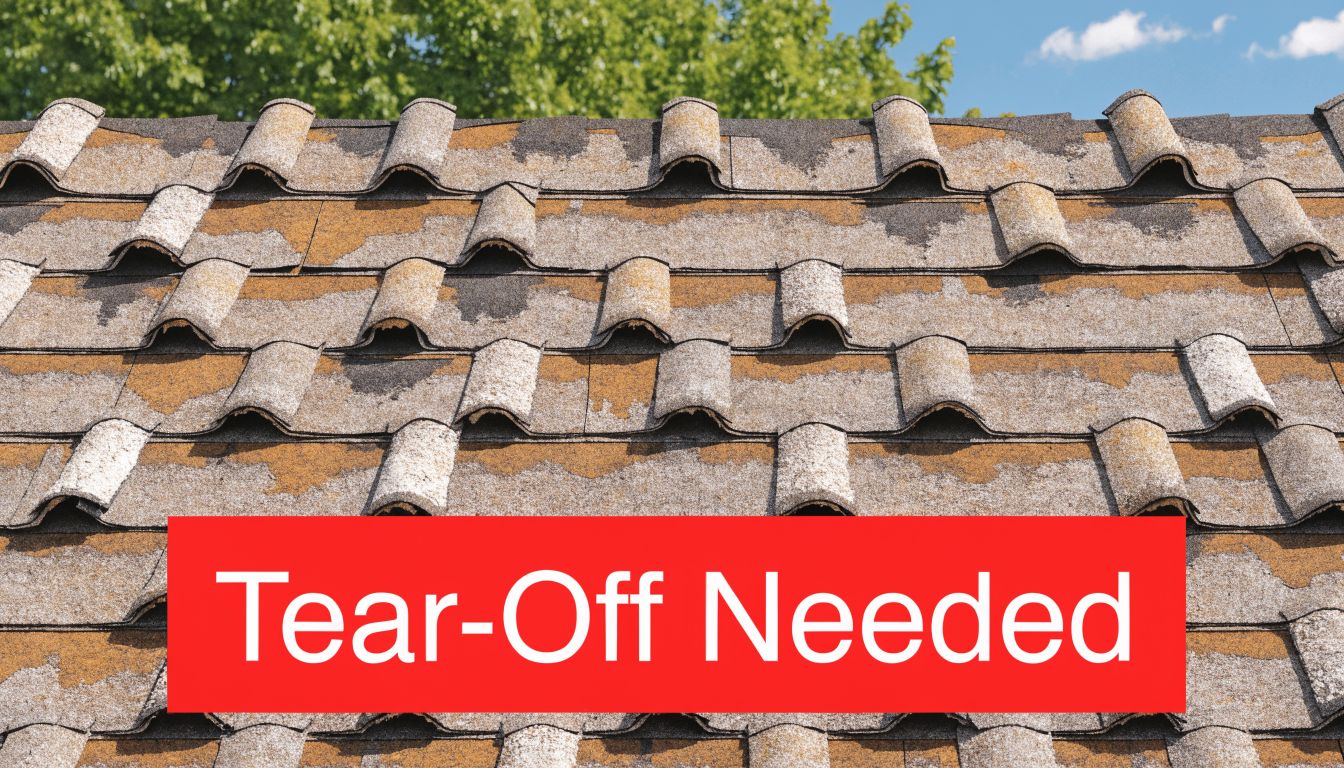
Signs the roof underneath isn't trustworthy
A full tear-off is usually the right call when the old roof is no longer a reliable substrate. Watch for these warning signs:
- More than one existing layer: That usually ends the overlay conversation immediately.
- Soft decking or spongy feel underfoot: The roof may have hidden moisture damage or rot.
- Visible sagging lines: Metal panels won't correct structural movement.
- Widespread curling, cracking, or severe deterioration: The existing layer isn't stable enough to build over.
- Leak history around penetrations or valleys: Those are the first places hidden damage tends to show up.
When homeowners want a sharper sense of how defects are found before materials go on top, resources on understanding property inspections can help explain what inspectors and contractors are looking for in a structure, not just what's visible from the curb.
Why covering damage makes things worse
A tear-off does something an overlay can't do. It gives you a clean look at the deck. That matters because some roofs look acceptable from the yard but fail the moment someone walks them or checks them from the attic.
If a deck has water damage, trapped moisture, or weak fastener holding power, the new metal roof may still go on, but the underlying problem remains active. Over time, that can lead to movement, unevenness, or moisture issues that are much harder to address because the roof now has another system on top of it.
Don't use a premium roofing material to hide a bad foundation. The foundation wins every time.
Situations where tear-off is the smarter long game
Sometimes the best decision isn't the least disruptive one. It's the one that gives the house a clean reset.
A tear-off is often smarter when:
| Condition | Better choice | Why |
|---|---|---|
| Multiple existing roof layers | Full tear-off | Keeps the job within code and avoids excess load |
| Signs of hidden moisture | Full tear-off | Lets the contractor inspect and replace bad decking |
| Uneven roof plane | Full tear-off | Gives metal panels a flatter, more reliable substrate |
| Repeated leak history | Full tear-off | Exposes the failure points instead of burying them |
An overlay should never be sold as an “easy button.” It's a conditional method. When the conditions aren't right, tearing off the old roof isn't overkill. It's the responsible choice.
Comparing Metal Roof Overlay Installation Methods
A qualified overlay still leaves one big decision. How should the metal be installed over the shingles?
For Texas homes, that choice affects heat buildup, panel movement, long-term serviceability, and how clean the roof looks after a few summers and a hail season or two. The two methods used most often are a batten system with furring strips, or a direct attachment system installed over the existing roof assembly.
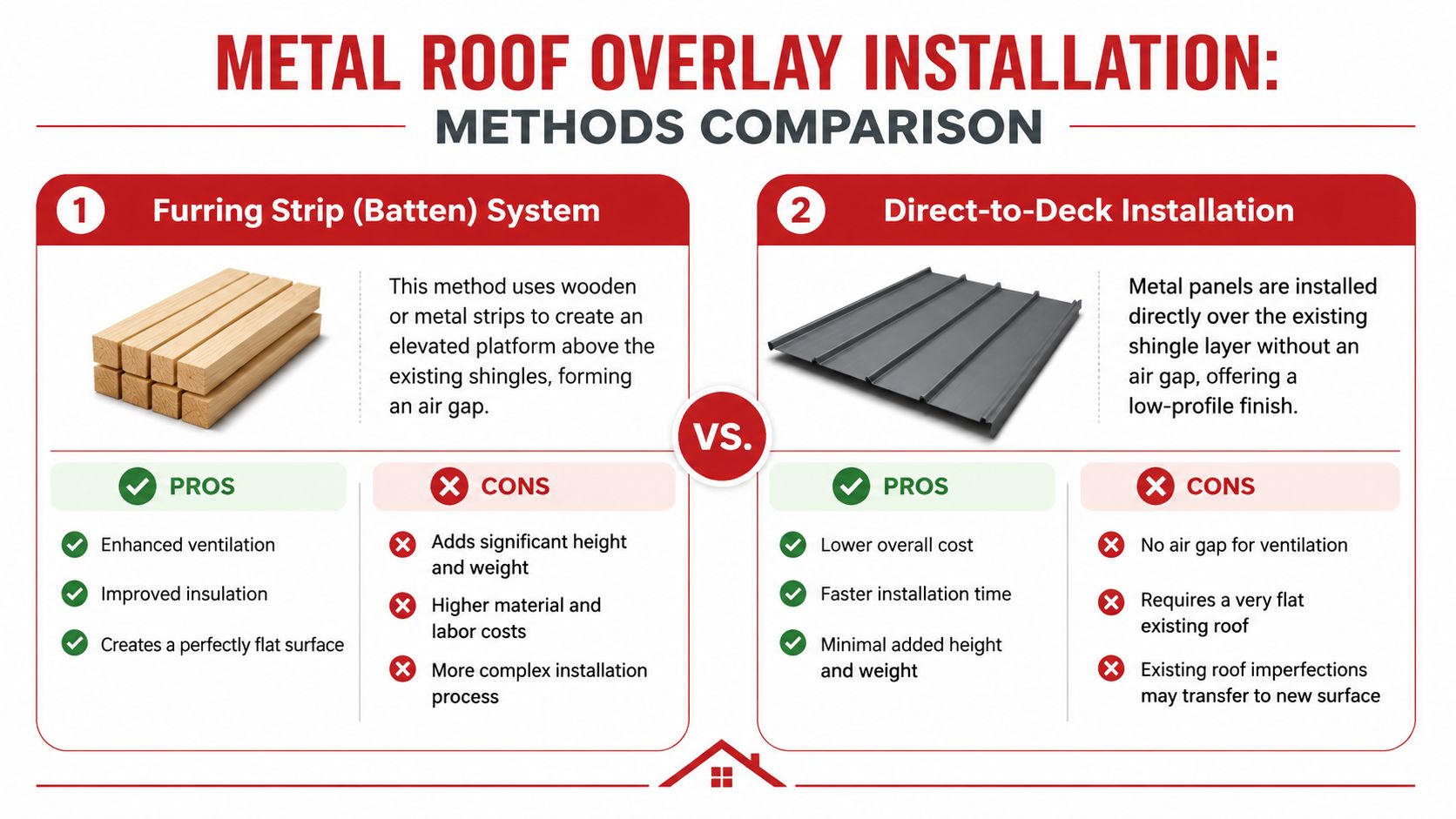
Furring strip systems
A furring strip system adds a raised grid between the shingles and the new metal panels. That creates an air gap, which helps the roof dry out and reduces direct contact between the back of the metal and the rough shingle surface. This installation guide for metal over shingles explains why that separation matters for ventilation, expansion, and warranty protection.
In Dallas-Fort Worth and East Texas, battens solve real problems. They can help smooth out minor waves in an older roof plane, give fasteners a more predictable layout, and reduce the rubbing that can wear at the underside of the panels over time. On homes with solar plans, they also make layout decisions more important, because the roofer needs to coordinate panel ribs, attachment zones, and future solar mounting points instead of treating the roof like a blank surface.
Common upsides include:
- Better drying potential: Air can move beneath the metal instead of trapping heat and moisture against the shingles.
- Cleaner panel appearance: Battens can hide small irregularities that would show through a direct-attach job.
- More separation from the old roof: That helps limit abrasion from shingle texture and granules.
The trade-off is straightforward. Battens add material, labor, and layout work. If the installer misses alignment, fastening depth, or trim detailing, the method loses a lot of its benefit.
Direct attachment systems
A direct attachment system keeps the assembly lower-profile and usually moves faster. It can be a good fit when the existing roof is very flat, the deck below has already been verified, and the contractor has a fastening plan that matches the panel profile and local code requirements.
It is also less forgiving.
Any hump, dip, or soft area under the old roof has a better chance of telegraphing through the metal. Moisture management gets tighter. Fastener holding power matters more. On some homes, the labor savings are real. On others, a direct-attach bid is only cheaper because the contractor skipped steps that should have been priced in.
That is why I do not treat direct-attach as the default in hail country. In North Texas, roofs take repeated impact, then extreme heat, then heavy rain. A method that looks acceptable on installation day can show its weaknesses faster here than it would in a milder climate.
Side-by-side decision factors
Here is the comparison that usually matters most on actual houses:
| Method | Best use case | Main upside | Main risk |
|---|---|---|---|
| Furring strips | Older roof planes, hotter attics, homes where drying and panel separation matter | Better airflow, more forgiveness, cleaner finish | Higher cost and more installation detail |
| Direct attachment | Very flat, sound existing roof with verified deck condition | Lower profile and potentially less labor | More visible irregularities and tighter moisture tolerance |
If you are comparing proposals, this guide to metal roofing installation methods and details helps with the questions that separate a careful bid from a cheap one, especially around fastening pattern, underlayment, trim, and panel layout.
What usually makes more sense in North and East Texas
Local weather changes the recommendation. In DFW, large hail and insurer scrutiny push many homeowners toward assemblies that are easier to explain and easier to inspect later. In East Texas, higher humidity adds another reason to care about drying potential under the panels.
Battens often win for those reasons. They cost more up front, but they can buy you a little margin where Texas roofs need it.
Homeowners dealing with storm damage claims should also keep records of the installation method chosen, because claim disputes sometimes turn on how the roof was built, not just whether the metal itself was damaged. The Ocala guide to storm damage claims is Florida-focused, but the documentation advice carries over well if you expect future hail claims or plan to add solar after the roof project.
Navigating Hail, Solar, and Insurance in North Texas
North Texas changes the overlay conversation because the roof doesn't live in a mild environment. It deals with repeated hail events, hard sun, rapid weather swings, and an insurance environment that gets more skeptical when anything in the roof assembly looks hidden or questionable.
Insurance doesn't just look at the top layer
A metal roof may improve impact resistance, but a claim can still get messy if the underlying assembly contributes to failure. In hail-prone parts of Texas, insurers may deny claims or reduce payouts when trapped moisture in the underlying layer leads to deck rot, and an IBHS report noted that 15% of claim denials for premature roof failure involved multi-layer roofs with inadequate ventilation, as explained in this review of insurance risks for metal-over-shingle roofs.
That issue gets missed in generic online guides. Homeowners often assume the conversation ends once the metal panel is impact-rated. It doesn't. Adjusters and carriers may still care how the whole roof assembly was built, whether ventilation was adequate, and whether pre-existing issues were sealed in.
For homeowners trying to understand the insurance side in plain language, this Ocala guide to storm damage claims is useful because it breaks down how storm claims are evaluated and documented, even though local policy details will still vary.
Solar changes the timeline
Solar-equipped homes need a different level of planning. The question isn't only whether can metal roof be installed over shingles. It's whether that approach still makes sense when solar equipment will sit on top of the roof for years.
If a homeowner expects to keep the solar array in place long term, a full tear-off can be the smarter investment when there's any doubt about the old roof. Nobody wants to detach panels later because the substrate under the metal was never ready.
A contractor should look at more than the panel rack locations. They should think through access, flashing integrity, future serviceability, and whether the old shingle layer introduces avoidable uncertainty.
This walk-through gives a helpful visual of how roof condition and storm exposure affect replacement decisions.
A North Texas decision framework
For Dallas-Fort Worth and East Texas homeowners, the decision usually comes down to three practical questions:
- Will the insurer view the assembly as properly ventilated and code-compliant?
- Will the roof still make sense if another hail claim happens later?
- Will solar equipment make future corrections more expensive than doing the roof cleanly now?
In North Texas, the roof you build today has to make sense for the next hailstorm, not just the next invoice.
That's the lens to use. A metal overlay can still be the right move. But in this region, it has to clear more than a simple install test. It has to clear the storm test and the claim test too.
Hiring the Right Professional for Your Metal Roof Project
A Dallas or East Texas roof can look fine from the driveway and still be a bad candidate for an overlay. I see that mistake in bids all the time. The contractor promises speed, lower labor, and less mess, but never shows how they checked the deck, the attic, the penetrations, or the fastening plan.
That is the difference between a sales appointment and a roof inspection.
A good contractor should be comfortable slowing the conversation down and getting specific. If they want you to sign before they answer technical questions in plain English, keep shopping.
Questions worth asking before you sign
- How are you checking the roof deck before approving an overlay? The answer should include attic inspection, moisture or staining checks, and a plan for soft decking around valleys, chimneys, vents, and previous leak areas.
- Which metal system are you recommending for this house, and why? Standing seam, exposed fastener, and batten-style installs do not perform the same way in hail country or around future solar attachments.
- How are underlayment, ventilation, and flashing being handled? Those details affect heat, condensation, and whether repairs later turn into a bigger job.
- What are you fastening into, and how are you confirming the fasteners have solid purchase? A real roofer should explain whether the screws are going into decking, purlins, or framing, and how they avoid chasing weak wood under old shingles.
- How will this be documented for insurance if hail hits again? In North Texas, photos, material specs, and a clear scope matter. If the claim gets disputed later, vague paperwork will not help you.
Vet the company, not just the roof system
Homeowners usually focus on the panel color, the warranty sheet, and the price spread between bids. The better test is how the company diagnoses the roof. A contractor who takes photos, marks problem areas, explains where an overlay could fail, and puts those findings in writing is usually the safer hire.
Marketing can hide a lot. Even an industry article about how to get roofing leads shows how much effort some companies put into filling the pipeline. That does not tell you whether they know how to build a metal roof over an aging shingle assembly in a hail-prone part of Texas.
Ask who will supervise the job. Ask whether they have handled insurance supplements on metal roofs. Ask whether they have a plan if your solar installer needs attachment details, standoff locations, or manufacturer approvals before panels go back on.
Choose the contractor who can explain the failure points before they talk about the finish options. That crew is more likely to build a roof that still makes sense after the next hail claim, not just the next payment.