
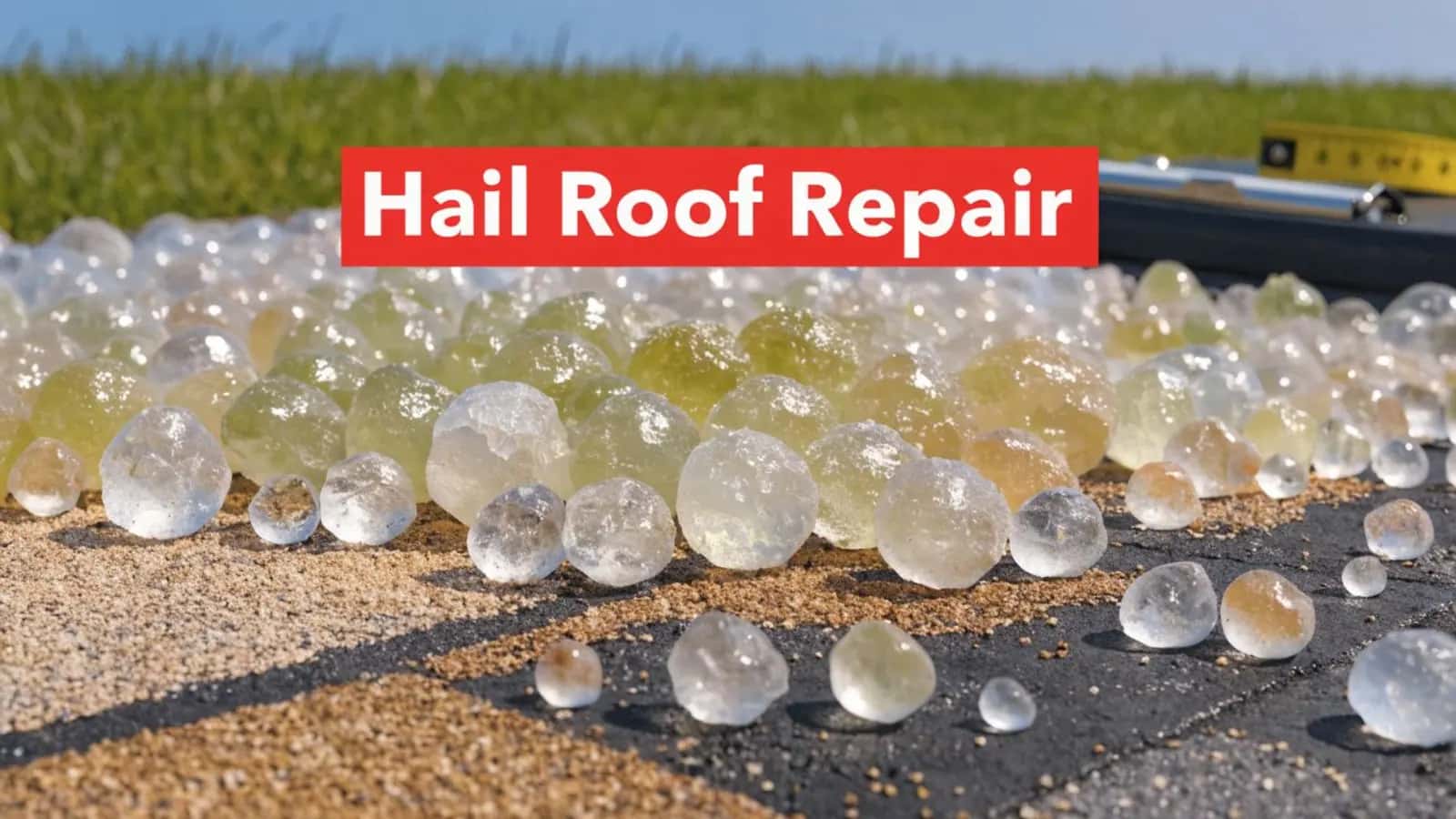
The storm is over, the parking lot is covered in leaves and broken branches, and your phone starts lighting up. A tenant reports a ceiling stain. Maintenance says the roof looks scuffed but not torn. The question lands on your desk fast. Did the hail damage the modified bitumen roof, or are you looking at old wear that the storm made easier to notice?
On a mod-bit roof, that is the right question.
I have seen plenty of DFW buildings where the membrane looked serviceable from the ground, the metal showed dents, and there were no active leaks that week. Then the core cuts, moisture scan, and close membrane review told a different story. I have also seen the reverse. A roof gets labeled as hail-damaged during a claim, but the marks that raised concern turn out to be age, foot traffic, past patchwork, or a defect that was built into the system long before the storm hit.
That distinction affects money, scope, and the claim file.
Modified bitumen does not always fail in a way that is easy to spot. Some hail impacts leave obvious evidence, such as fractures, punctures, or displaced surfacing. Others bruise the membrane or weaken it below the top layer, and the roof keeps shedding water until heat, movement, and normal weather finish the job months later. In Texas, that delayed pattern causes real confusion because owners expect storm damage to announce itself right away.
The part generic hail guides usually miss is the forensic side. A mark in a mod-bit roof is not automatically storm damage. One of the biggest traps is the interply mopping void. It can resemble impact-related distress and mislead adjusters, consultants, and contractors who do not spend much time diagnosing low-slope commercial systems. If that gets misread, the claim can go in the wrong direction, either overstating storm damage or missing it entirely.
That is why modified bitumen after a Texas hailstorm has to be evaluated as a roof system, not a collection of surface marks.
Your Guide to Modified Bitumen Roofs After a Texas Hailstorm
A North Texas hailstorm rolls through after dinner. By daylight, the RTUs are dinged up, the gutter aprons show impact marks, and the roof still is not leaking. That is the point where a lot of commercial property managers get bad advice. A modified bitumen roof can take a hard hit, keep water out for the moment, and still have membrane damage that changes repair scope, remaining service life, and the insurance discussion.
Drive-by opinions miss too much on mod-bit. The surface may show scattered granule loss, light scuffing, and a few suspect spots near traffic paths, while the underlying issue sits below the top layer. Hail damage and pre-existing conditions can look similar, especially on older roofs with repairs, wear, or installation irregularities already in the system.
That confusion costs owners money.
What catches experienced managers off guard is not just hidden distress. It is misidentified distress. I have seen impact marks blamed for problems that were already there, and I have seen legitimate hail bruising dismissed because the cap sheet did not split right away. One of the biggest trouble areas is the difference between true storm damage and conditions such as interply mopping voids, which can mimic hail-related blistering or localized membrane irregularities if the inspector does not know what to look for.
A proper assessment has to sort out cause, not just document marks.
Property managers usually want a simple answer after a storm. Repair it, replace it, or leave it alone. Modified bitumen rarely gives that answer on the first walk. The roof assembly, membrane type, surfacing, age, attachment, and recent weather exposure all affect what an impact means. A granulated cap sheet may hide distress that only shows up later under heat and movement. A smooth-surfaced area may reveal the pattern faster. Flashings, laps, and transitions often tell the story better than open field areas.
If you need a refresher on how the layers work together, this guide to modified bitumen roof systems helps frame what we are inspecting after a Texas storm.
The practical mistake is treating every circular mark as hail, or treating the absence of leaks as proof the roof is fine. Neither standard holds up on a commercial claim. The right inspection looks at impact distribution, membrane condition, metal accessories, soft spots, seam integrity, and signs that a suspect area started as a manufacturing or installation issue instead of storm damage.
That level of review matters in Texas, where hail claims move fast and early opinions tend to stick. If the first inspection gets the cause wrong, the rest of the claim usually follows it.
Understanding Your Modified Bitumen Roofing System
Understanding a modified bitumen roof is simpler when envisioned as a layered roadway. One layer gives you structure. Another adds reinforcement. The top layer takes the punishment from sun, heat, foot traffic, and weather. If the top takes a hit, the lower layers may still carry the problem even when the surface doesn’t look dramatic.
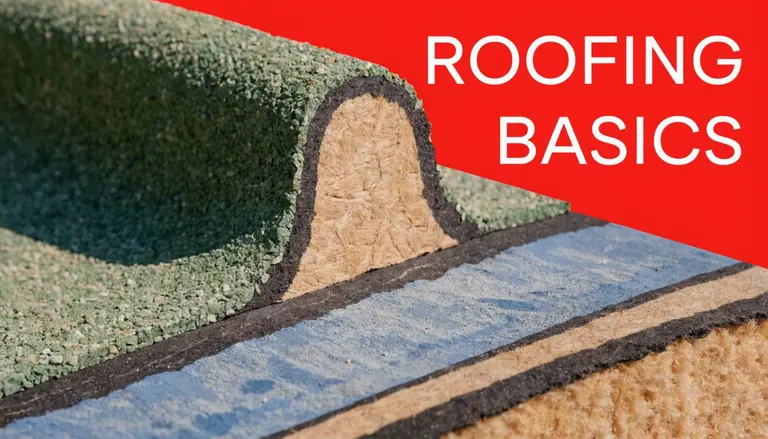
If you want a broader primer on assembly types, cap sheets, and installation methods, this overview of modified bitumen roof systems is a useful starting point.
What’s in the assembly
Most mod-bit roofs include these working parts:
- Insulation and substrate: These support the roof system and affect how impact energy transfers through the membrane.
- Base sheet or ply sheet: This creates part of the waterproofing build-up and ties the system together.
- Cap sheet: This is the exposed weathering surface. On granulated systems, it’s the layer you’ll usually inspect first after a storm.
- Flashings and transitions: These are often where movement and water exposure create trouble first.
That layered build is why hail can produce more than one kind of damage. The surface may lose granules. The asphalt below can bruise. Reinforcement can remain intact while the membrane still loses long-term durability.
SBS and APP don’t react the same way
Many inspections go off track when property managers hear “modified bitumen” and assume all mod-bit roofs react the same under hail. They don’t.
According to Professional Roofing’s discussion of hail performance in bituminous systems, SBS-modified membranes are more flexible and often show granule displacement under hail. That granule loss matters because it exposes the bitumen to UV degradation. APP-modified membranes are more rigid and more likely to fracture under hail impact because of that thermal rigidity.
If you don’t know whether your roof is SBS or APP, you’re already missing part of the diagnosis.
Why the surface matters
Not all surfacing gives you the same field performance. Granules absorb some impact and protect against UV. Gravel or ballast can help absorb impact energy differently. Smooth surfaces tell a different story and can make damage easier or harder to spot depending on what happened.
The practical takeaway is simple. Before anyone tells you the roof only needs a patch, or the whole thing must be torn off, they need to know the membrane type, surfacing, age, and how the roof was assembled. Without that, they’re guessing.
How to Identify Signs of Hail Damage on Mod-Bit
A proper roof inspection starts with pattern recognition. Hail damage to modified bitumen roofs usually shows up in clusters of clues, not one single smoking gun. You’re looking for what changed after the storm and whether that change affects waterproofing or service life.

Granule loss is often the first visible clue
On SBS-modified roofs, hail often doesn’t blow a clean hole through the membrane. It knocks granules loose. That seems minor until you remember what the granules are doing. They shield the bitumen from UV and take the first hit from weather.
Look for:
- Random bare spots: Not uniform wear. Hail hits create irregular, storm-related scatter.
- Fresh exposed asphalt: The color often contrasts with surrounding weathered surfacing.
- Related evidence at metal edges: Dented edge metal, HVAC caps, or vents can support the storm story.
- Granules collecting at drains: After a hail event, displaced surfacing can migrate with runoff.
When granules are gone, the roof doesn’t usually fail that day. The problem is what starts next. UV hits the exposed bitumen harder, the membrane ages faster, and weak areas become splits, blisters, or cracks later.
Bruising is the damage many people miss
Bruising is a compression injury. The hail impact can fracture or stress the brittle asphalt portion beneath the surface while leaving little or no obvious top-side evidence. On a walkover, that can feel like a soft spot, but not always.
In larger storms, adjusters and inexperienced inspectors can miss real damage. They’re waiting to see dramatic visual marks. Modified bitumen doesn’t always cooperate.
Here’s a useful visual explainer before going further:
APP fractures tend to look sharper
APP membranes generally tell on themselves more clearly when hail hits hard enough. Instead of softer surface disturbance, you may see sharper breaks, star-like cracking, or localized splits. These are the kinds of marks that make owners think the diagnosis is easy.
It still isn’t. A split from impact has to be distinguished from age hardening, thermal stress, seam movement, or old patchwork.
A roof can have hail damage and age-related wear at the same time. Good inspections separate those causes instead of forcing everything into one bucket.
Punctures, tears, and flashing damage
These are the obvious findings. If hail or hail-driven debris creates a puncture, you may see direct membrane penetration, torn surfacing, or split flashings at corners and transitions. Check areas around:
- Curbs and rooftop units
- Parapet transitions
- Pipe flashings
- Drain sumps and traffic paths
These areas already deal with movement and concentrated water flow. Storm impact can turn a marginal detail into an active leak point.
What not to overread
Not every blemish is hail. Foot traffic scuffs, old repairs, membrane wrinkles, installation artifacts, and weathering can all get misread after a storm. I’ve seen roofs where the owner was told every soft spot was storm damage, when the pattern didn’t support that at all.
That’s why visual evidence is only the first pass. It tells you where to investigate, not where to stop.
A Professional Inspection Checklist for Accurate Assessment
Most claim problems start with a weak inspection. Somebody takes a few phone photos, circles a couple of spots in chalk, and calls it done. That approach might work on a simple shingle roof. It won’t hold up well on mod-bit when the central issue is whether the membrane was damaged by hail or whether you’re looking at a pre-existing condition.

For a broader maintenance framework, a practical roof inspection checklist template can help your team organize records before the adjuster ever arrives.
What a serious mod-bit inspection should include
A field inspection needs more than a walk-through. It should document the roof in a way that supports repair planning and claim review.
Use this as a working checklist:
- Identify the roof type first. Confirm whether the membrane is SBS or APP, how many plies are present, and what surfacing is installed.
- Map impact distribution. Damage should be plotted by roof area, not described vaguely as “throughout.”
- Check the soft metals. Dents on metal flashings, vents, and rooftop components help confirm storm direction and intensity.
- Review seams and flashings separately. These fail differently than field membrane areas.
- Inspect drainage components. Drains, scuppers, and low spots can collect dislodged granules and reveal runoff paths.
- Photograph with scale. A marker, ruler, or other consistent reference gives context that a close-up alone won’t.
- Record location carefully. Every photo should tie back to a roof plan, grid, or named elevation.
The defect that gets mistaken for hail
This is the part generic guides usually skip. According to Nelson Forensics’ paper on interply mopping voids and hail evaluation, 51.5% of forensically evaluated bituminous samples contained interply mopping voids. Those are manufacturing or installation-related areas where asphalt between plies wasn’t fully bonded.
That matters because these voids can mimic hail damage.
How true bruises differ from mopping voids
A trained inspector looks for shape, pattern, and consistency.
| Indicator | More consistent with hail | More consistent with interply mopping voids |
|---|---|---|
| Shape | Circular, tapered | Larger, irregular |
| Distribution | Random storm pattern | Can appear as-built and unrelated to storm path |
| Shielded areas | Often inconsistent where roof elements block impact | Can still appear in protected zones |
| Confirmation method | Coring and lab review support impact diagnosis | Core sampling reveals subsurface void alignment |
If somebody says, “These soft spots are obviously hail,” but they haven’t cored suspect areas, be careful.
On modified bitumen, the difference between a paid claim and a denied claim often comes down to whether the inspector proved impact or just pointed at softness.
Documentation that actually helps your claim
Owners can strengthen the process before any formal dispute starts. Do these things right away:
- Take wide shots first: Show the whole roof area, rooftop equipment, and elevations so close-ups have context.
- Use directional labels: North, south, east, west matters when impact direction becomes part of the discussion.
- Photograph interior signs too: Ceiling stains, wet insulation evidence, and leak paths can support timing.
- Save storm-date records: Keep your maintenance logs, tenant reports, and date-stamped photos together.
A good report also explains what was inspected but not damaged. That kind of discipline makes the damaged areas more credible.
When core sampling becomes necessary
Visual review alone has limits. If the roof took large hail, if the membrane is older, or if the field evidence is mixed, cores can make the difference between assumption and proof. Core sampling helps determine whether the damage is limited to the surfacing, extends into the asphalt layers, or tracks back to non-storm defects.
That’s not overkill. On mod-bit, it’s often the only way to answer the question everybody is arguing about.
Comparing Your Repair and Replacement Options
A North Texas hailstorm hits on a Tuesday night. By Friday, one contractor is pushing a full tear-off, another is proposing a coating, and your adjuster is asking whether the marks on the cap sheet are storm-created or defects that were already there. That is the point where owners lose money. The right scope depends on what the hail changed, what was already wrong, and how much dependable service life the roof still has.
On modified bitumen, the repair decision is tied to performance, not emotion. A roof with isolated impact damage and dry insulation may justify targeted repairs. A roof with widespread membrane bruising, embedded moisture, repeated leaks, or pre-existing problems such as interply mopping voids is a different case entirely. If those conditions are not separated correctly, owners either overpay for replacement or fight a claim on a roof that was never a sound repair candidate.
Here is the practical comparison.
| Solution | Best For | Estimated Lifespan Extension | Relative Cost |
|---|---|---|---|
| Targeted patch and detail repair | Isolated punctures, split flashings, limited field damage | Qualitative extension, best when surrounding membrane is still sound | Lower |
| Reinforced coating or fluid-applied recovery | Broad surface wear, granule loss, aging but reusable membrane | Can add meaningful service life when the substrate is dry and the membrane remains bondable | Moderate |
| Partial replacement or sectional recovery | One area of the roof is compromised while adjacent sections remain serviceable | Moderate extension when tie-ins are done correctly | Moderate to higher |
| Full tear-off and replacement | Widespread hidden damage, saturation, repeated failures, or poor candidate for recovery | Full new service cycle based on selected system | Highest |
Targeted repairs work when the damage is truly isolated
Repairs make sense on mod-bit when the damaged area is defined, accessible, and surrounded by membrane that still has integrity. That usually means a puncture at a curb, a split at a flashing transition, or a small cluster of hail hits that fractured the membrane.
I have seen plenty of roofs in DFW where a few well-executed repairs bought years of additional service. I have also seen patching used to hide a bigger problem. If the field sheet is brittle, granule loss is widespread, or the insulation below has taken on water, patching only addresses the spots you can point to. It does not restore the rest of the roof.
The other trap is bad diagnosis. Soft spots are not always hail. Some are tied to manufacturing or installation defects, including interply voids. If a contractor cannot explain why a suspect area is storm damage instead of a pre-existing condition, the repair scope is being built on guesswork.
Coatings and recovery systems can be the right answer
A properly specified reinforced coating or fluid-applied recovery system is a legitimate option on some modified bitumen roofs. It can reduce tear-off costs, limit disruption to tenants, and extend service life when the existing assembly is still dry, stable, and well attached.
That option fails fast on the wrong roof. Coatings do not correct trapped moisture, unstable substrate, bad attachment, or major movement at transitions. They also do not erase the difference between hail impact and a pre-existing defect. If the membrane has concealed fractures or the roof has enough wet insulation to undermine adhesion, the coating becomes an expensive delay tactic.
Property managers often ask whether a recovery approach will satisfy the carrier. The answer depends on whether the proposed system restores function and expected service life in a way the documentation can support. If you need help understanding how repair scope and documentation fit together, this overview of the storm damage insurance claim process is a useful starting point.
Partial replacement is often the most defensible middle ground
Large commercial roofs rarely age evenly. The south and west exposures may be cooked by Texas sun while shaded sections still have usable life. Areas around drains, curbs, and high-traffic service paths often fail first. In those cases, sectional replacement can make more sense than either blanket patching or a full tear-off.
The tie-ins have to be right. Material compatibility matters. Drainage has to stay intact. Sequencing matters on occupied buildings, especially when the roof area serves retail tenants, office users, or climate-sensitive operations. A partial replacement done well can preserve value. Done poorly, it creates a chain of future leaks at every transition.
Full replacement is justified when the roof has lost dependable service life
Replacement is the right call when damage is widespread, moisture is established, prior repairs have stacked up, or the roof was already compromised before the storm. This is also where forensic judgment matters most. If hail marks are being mixed together with interply mopping voids, blisters, fishmouths, or other non-storm conditions, the scope can swing the wrong way.
That distinction matters for both budgeting and claims. Carriers pay for covered storm damage, not old defects that finally got noticed after a hail event. Owners need a scope that separates the two and explains why replacement is required anyway, or why only part of the roof qualifies.
If replacement is on the table, use the opportunity to improve impact resistance and detail performance for the next Texas hail cycle. Rebuilding the same weak points is expensive.
Occupied buildings add a second layer to the decision
Roofing scope is only part of the cost. The work also affects operations.
A warehouse may need staging that protects inventory and truck flow. A medical office may need odor control and tight scheduling. A multifamily property may need phased dry-in and resident communication. Buildings with rooftop solar need detach-and-reset coordination from day one. Owners who ignore those factors usually end up paying in change orders, delays, or tenant complaints.
Insurance questions also tend to expand once leaks start affecting interiors. Residential-focused resources like Will House Insurance Cover A Leaking Roof are not written for commercial mod-bit claims, but they do show why leak timing and cause matter so much once water gets inside the building.
The best option is the one that matches the roof’s actual condition, the building’s operating needs, and the evidence you can defend. On modified bitumen, that usually requires more than a quick walk and a few photos.
Navigating Your Roof Insurance Claim with Confidence
A North Texas hailstorm rolls through at 2 a.m. By lunch, the property manager has leak reports from two suites, a carrier asking for photos, and three roofing bids that do not agree with each other. On a modified bitumen roof, that is normal. The claim usually turns on one question. What did the storm damage, and what was already there?
Insurance carriers pay for physical loss they can tie to the storm. On mod-bit, that means the file has to show more than surface marks. It has to show how hail changed the membrane, surfacing, or underlying plies in a way that shortened service life, reduced watertight reliability, or made a proper repair impractical.
That is where weak claims fall apart. A report that treats every bruise, split, blister, and surface irregularity as hail gives the adjuster an easy opening. On these roofs, some conditions are storm-related. Others come from age, foot traffic, prior patching, installer error, or manufacturing issues such as interply mopping voids. If the inspection does not separate those conditions, the carrier will question the whole scope.
What carriers look for on mod-bit claims
The strongest claim packages I see are disciplined and specific. They tie the hail date to observable roof changes and rule out the usual alternative causes.
That usually includes:
- A roof-specific inspection report. It should identify the mod-bit system, membrane type, age if known, and where the roof was tested or opened.
- Damage mapping. Mark the affected areas by elevation and roof section, not just a handful of close-up photos.
- Correlation evidence. Dented metals, damaged soft metals, displaced granules, membrane fracturing, and interior leak timing should all make sense together.
- Repairability analysis. Show whether isolated repairs will restore service life or whether the damaged areas are too widespread, too fragile, or too inconsistent for a dependable patch program.
- Defect differentiation. If there are mopping voids, fishmouths, aging splits, alligatoring, or prior repairs, identify them for what they are and explain why they are not being misrepresented as hail.
That last point matters more on modified bitumen than many owners realize. I have been on plenty of DFW roofs where hail hit hard, but the main argument was not whether a storm happened. The argument was whether the membrane failures came from impact, trapped voids between plies, or old workmanship issues that only became visible after the storm. If your contractor cannot explain that difference clearly, your claim gets harder to defend.
For owners trying to understand how carriers separate sudden storm damage from wear and pre-existing conditions in general, Will House Insurance Cover A Leaking Roof is a useful companion read, even though commercial mod-bit claims require a more technical roof analysis.
Meet the adjuster with evidence, not opinions
A good adjuster meeting is not a sales pitch. It is a roof walk with a clear theory of damage, supporting photos, test cuts or core findings if needed, and someone on site who knows how modified bitumen fails in Texas heat and hail.
Keep the file tight. Include maintenance records, prior repair history, leak reports, date-stamped storm documentation, and photos that show the full field of damage instead of isolated close-ups. If laboratory testing, infrared, or moisture investigation was part of the assessment, include the results in plain language.
Owners also help themselves when they understand the broader storm damage insurance claim process before the carrier starts asking for documents and timelines.
Where claims usually go wrong
Under-documentation is one problem. Overstatement is another.
If the roof report ignores manufacturing defects, prior repairs, traffic wear, or mopping voids, the carrier will find those issues and use them to narrow the payment or deny the disputed areas. If the report is too cautious and never explains why hail changed the roof’s remaining life, the carrier may reduce everything to cosmetic disturbance.
Both mistakes cost owners money.
Do not close the file on the wrong scope
A quick payout can become an expensive decision if it funds minor patching on a roof that no longer has dependable service life. That is common on mod-bit after a hard Texas hail event, especially when the visible damage looks modest but the membrane has been fractured or bruised in multiple sections.
The practical question is simple. After the proposed repair, will this roof perform like a reliable commercial roof, or will you be back in the same argument after the next storm cycle or summer heat run? If nobody can answer that with specifics, the scope is not ready yet.
Your Next Steps for Protecting Your Texas Property
After a hail event, speed matters, but panic doesn’t help. A modified bitumen roof needs a careful read, especially when the actual issue may be hidden bruising or a defect that looks like hail. The right next move is to get facts before somebody locks you into the wrong repair or the wrong claim position.
Keep the action plan simple:
- Start from the ground. Look for obvious storm indicators like dented metal, displaced rooftop debris, or interior signs of water intrusion. Don’t send untrained staff onto a wet or questionable roof.
- Document what changed. Take date-stamped photos, note leak reports, and preserve storm timing while it’s fresh.
- Get a qualified flat-roof inspection. On mod-bit, that means somebody who can separate true impact damage from installation defects and age-related wear.
Texas property owners also do well when they think beyond the current storm. Seasonal readiness matters, especially when severe weather shifts from hail season into freezing conditions and back again. For teams updating their broader emergency planning, this Ultimate Winter Storm Preparedness Checklist is a useful reference for building operations and response planning.
The main takeaway is straightforward. Don’t let a modified bitumen roof be judged by surface appearance alone. If the building took hail, get the roof inspected like the asset it is.
If your property in Dallas-Fort Worth or East Texas took hail, Hail King Professionals can provide a same-day roof inspection and a clear, no-pressure assessment of your modified bitumen system. Their team has served Texas since 1991 and understands how to document storm damage, separate real hail impacts from look-alike defects, and outline practical repair or replacement options that protect your building for the long haul.