
So, you're wondering how long a new roof is really supposed to last? It's the million-dollar question for any homeowner. For a standard asphalt shingle roof—the kind you see on most homes around here—you're typically looking at a lifespan of 15 to 30 years.
But if you opt for premium materials like standing seam metal or classic tile, that number can easily jump to 50 years or even more. Some can truly last a lifetime.
Your Guide to Roof Lifespans in North and East Texas
Asking "how long does a new roof last?" is a lot like asking how long a new set of tires will last. The answer always starts with, "Well, it depends." A tire that only sees smooth highway miles will last far longer than one spinning through gravel and potholes every day.
It's the exact same story for your roof, especially here in North and East Texas. Our roofs are constantly under assault. In Dallas-Fort Worth, it’s the brutal summer sun and the notorious hail storms. Head east, and you add persistent, heavy humidity to the mix. These aren't minor details; they're the primary drivers of your roof's real-world performance.
An "architectural-30" shingle might have a 30-year warranty on the label, but if it gets pummeled by a few significant hail events, you might be lucky to get 18 years out of it. That’s why you have to look beyond the marketing and understand what truly makes a roof last.
It all boils down to three critical things:
- The materials you choose: Not all roofing is created equal, especially when it comes to handling Texas weather.
- The quality of the installation: A perfect installation is non-negotiable. It's the foundation for everything else.
- Your commitment to maintenance: A little proactive care goes a long way in adding years to your roof's life.
Think of it like a three-legged stool. The materials, the installation, and the maintenance are the legs. If even one is weak or cut short, the whole thing becomes unstable and is bound to fail sooner than it should.
Before we get into the nitty-gritty of what makes a roof stand up to the elements, let's start with a quick overview of the most common materials.
Quick Guide to Roof Material Lifespans in Texas
This table gives you a snapshot of what you can expect from different roofing systems in our unique Texas climate. While every roof is different, this provides a solid baseline for comparing your options.
| Roofing Material | Average Lifespan | Best For |
|---|---|---|
| Asphalt Shingles | 15-30 years | Most popular, balanced cost and performance. |
| Metal Roofing | 40-70+ years | Durability, energy efficiency, and storm resistance. |
| Clay & Concrete Tile | 50-100+ years | Longevity and classic style, great for hot climates. |
| Slate | 75-200+ years | Unmatched lifespan and premium, natural aesthetic. |
| Flat Roof Systems (TPO/EPDM) | 15-30 years | Commercial buildings and modern residential designs. |
This gives you a good starting point. If you want to explore the pros and cons of these materials in more detail, you can find everything you need in our guide to the different roofing system types.
Now, let's break down the other factors that have a massive impact on these numbers.
Comparing Lifespans of Common Texas Roofing Materials
When you ask, "how long does a new roof last," the answer always starts with the material. Choosing the right one for our tough Texas climate is a lot like picking tires for a truck—what works for a daily driver in the city just won't cut it on a rugged farm road.
Each roofing material has its own lifespan and handles the intense heat, hail, and humidity we get from Dallas to Tyler very differently. Let's walk through the most popular options so you can see why one roof might be done in 15 years while another could last for a century.
Asphalt Shingles: The Popular Choice
Walk through any neighborhood in Texas, and you'll see asphalt shingles everywhere. It's no surprise—they strike a great balance between cost, curb appeal, and solid performance. But not all asphalt shingles are created equal, and knowing the difference is crucial for understanding how long they'll actually last.
3-Tab Shingles: These are your basic, entry-level shingles. They’re made from a single, flat layer, which gives roofs a simple, uniform look. In a perfect world, a 3-tab roof might last 15 to 20 years, but here in DFW's "hail alley," their real-world lifespan is often much shorter. That single-layer design just doesn't hold up well against large hail and strong winds.
Architectural Shingles (Laminate): Now we're talking about a serious upgrade. Architectural shingles are built with multiple, fused layers, creating a thicker profile with a rich, dimensional appearance. This construction makes them far more durable, with a typical lifespan of 25 to 30 years. They stand up much better to wind and hail, making them a smarter investment for any Texas homeowner.
Keep in mind, these are just ballpark figures. What we're seeing on the ground is that increasingly severe weather is cutting those lifespans short. In some storm-heavy areas, homeowners are lucky to get 10-12 years out of a shingle roof that was once expected to last 20-25 years.
Metal Roofing: The Durable Investment
Metal roofing used to be something you'd only see on a barn, but now it's a top-tier choice for homeowners who want something that's built to last. While it costs more upfront than asphalt, its incredible longevity often makes it the cheaper option over the life of your home.
A professionally installed metal roof can last anywhere from 40 to 70 years, and premium materials like copper or zinc can easily top 100 years. They’re fireproof, wind-resistant, and insects can't touch them. Best of all for us here in Texas, they reflect the sun's heat, which can actually help lower your cooling bills during our brutal summers.
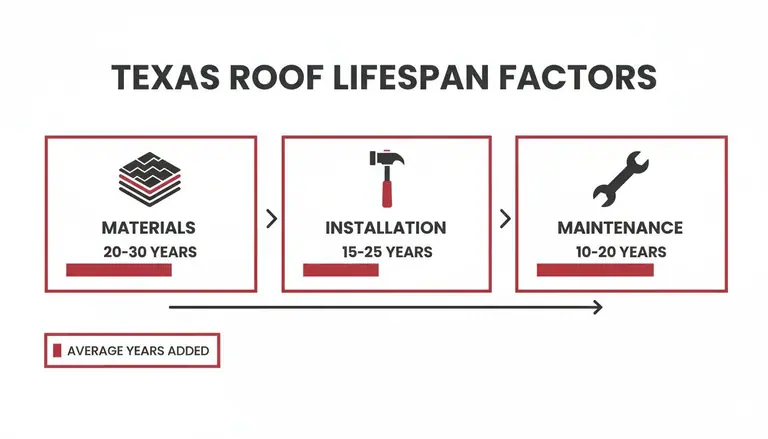
As you can see, the material sets the potential, but the quality of the installation and ongoing maintenance are what really determine if your roof reaches its full lifespan.
Tile and Slate: The Lifetime Options
If you’re looking for a roof that combines timeless beauty with unparalleled longevity, tile and slate are in a league of their own. These are heavy-duty materials that require a reinforced roof structure, but the payoff is a roof that will likely outlast everyone living in the house.
Clay and concrete tiles are a fantastic match for the Texas climate. Their sheer mass acts as a great insulator against intense heat, and they're incredibly durable against the sun and moisture. A tile roof isn't just a purchase; it's a true legacy investment in your property.
Here’s how these two premium options stack up:
Clay and Concrete Tiles: With a lifespan of 50 to 100+ years, tile roofs are made for the long haul. They won't burn, rot, or get eaten by insects. While a direct hit from softball-sized hail can crack a tile, they are generally very tough. The main thing to watch is the underlayment beneath the tiles, which might need replacing every 20 years or so to keep things watertight.
Slate: As a natural stone, slate is the undisputed king of roofing longevity. A slate roof can easily last 75 to 200 years—sometimes even longer. It’s completely fireproof, waterproof, and absolutely gorgeous. The trade-off? It's the most expensive and fragile material to work with, so you need a true craftsman with specialized experience to install it properly.
These materials are a significant investment, but their incredible durability and classic style can add serious value to your home. To see more options that can handle our weather, check out our guide on hail-resistant roofing materials that really stand up to Texas storms.
The Hidden Factors That Shorten a Roof's Life
Choosing a roofing material with a 30-year lifespan doesn't automatically mean you'll get 30 years out of it. The material itself is just one ingredient in a much bigger recipe. The real answer to "how long does a new roof last" is often decided by unseen forces that can dramatically cut its life short.
Think of it like building a high-performance engine. You can have the best parts money can buy, but if they aren't assembled with absolute precision, that engine is going to fail. Your roof is a complete system, and every single part has to work together perfectly to stand up to the relentless Texas weather.
Let's pull back the curtain on the critical factors that have the biggest impact on your roof's actual, real-world longevity.
The Make-or-Break Role of Installation Quality
If there’s one single thing that can slash a roof's lifespan in half, it’s a poor installation. A roofer's skill and attention to detail are far more important than the brand of shingles you choose. Honestly, even the most expensive, impact-resistant materials on the market will fail if they aren't installed by the book.
One of the most common—and destructive—mistakes we see is improper nailing.
- Under-driven nails: When nails aren't driven in far enough, they sit high. Over time, they can actually tear right through the shingle that's layered on top of them.
- Over-driven nails: If the roofer's nail gun pressure is set too high, the nail head will blow straight through the shingle’s protective matting. This creates a hole and provides almost no holding power against the wind.
- Crooked nails: Nails driven in at an angle won't sit flush against the shingle. This creates a weak point where water can sneak in and allows the wind to easily lift the shingle up.
- Incorrect placement: Every shingle has a specially designed "nailing strip." If a roofer misses this target—even by a small margin—it can void the manufacturer's wind warranty and lead to massive sections of shingles blowing off during a storm.
These might sound like tiny details, but they are the difference between a roof that performs exactly as it should and one that fails years ahead of schedule.
The Silent Killer: Attic Ventilation
Your roof needs to breathe. An attic without proper ventilation acts like a sealed oven during a Texas summer, with temperatures easily soaring to 150°F or even higher. This trapped, superheated air attacks your roof from the inside out, day after day.
This intense heat literally "cooks" your asphalt shingles from the underside. It makes the protective granules brittle, causing them to fall off much faster than they should. It also accelerates the aging of the wooden roof deck, making it weak and warped.
Trapped heat and moisture are the two biggest enemies of a long-lasting roof. Proper ventilation creates a constant flow of air, pulling hot, damp air out while drawing cooler, drier air in. It’s the single most effective way to regulate your attic's environment and protect your entire roofing system.
Good ventilation isn't just about sticking a vent or two on the roof. It requires a balanced system of intake vents (usually in the soffits under your eaves) and exhaust vents (near the peak of your roof). Without that balance, air can't circulate effectively, and your roof will pay the price.
The Impact of Texas Weather and Your Home's Surroundings
Even a perfectly installed roof has to deal with the world around it. Here in Dallas-Fort Worth and East Texas, our local climate puts an incredible amount of stress on every part of a roofing system.
Just consider these environmental factors:
- Tree Coverage: Those beautiful, large trees with branches hanging over your roof can be a problem. They constantly scrape against the shingles, wearing away the protective granules. They also drop leaves and acorns that clog gutters, causing water to back up and potentially rot the roof decking underneath.
- Sun Exposure: A roof that gets blasted by direct sun all day will age faster than one that gets some afternoon shade. The sun's constant UV radiation breaks down the asphalt in shingles, leaving them dry and brittle.
- Storms and Hail: This is the big one for our region. A single hailstorm can do more damage in 15 minutes than 15 years of normal wear and tear, turning a brand-new roof into an immediate liability.
At the end of the day, figuring out how long a new roof will really last means looking past the product label. It requires a focus on expert installation, a properly ventilated system, and an honest assessment of your home's unique environmental challenges.
Protecting Your Investment with Proactive Roof Maintenance
Knowing what can cut a roof's life short is one thing, but actively defending it is something else entirely. Proactive maintenance isn’t just another expense—it's the single best thing you can do to make sure your roof lives a long, full life. A roof left to fend for itself against our wild Texas weather is, frankly, a roof that's going to fail sooner than it should.
I like to compare it to owning a car. You wouldn’t drive 50,000 miles without an oil change or a tire check, right? Your roof needs that same kind of consistent attention to do its job year after year, protecting everything you own from water damage and bigger structural headaches.
This hands-on approach shifts your mindset from just having a roof to actively managing one of your home's most critical assets. It all comes down to simple, scheduled tasks that stop small, fixable issues from snowballing into budget-breaking disasters.
Seasonal Roof Maintenance Checklist for Texas Homeowners
A simple, repeatable maintenance plan is your best line of defense. By checking a few key things twice a year, you can add serious time to your roof's lifespan. The idea is to get ahead of the game in the spring and fall, bracing for the worst weather each season throws at us.
Here is a simple checklist we recommend to homeowners.
| Season | Key Maintenance Tasks | Why It's Important |
|---|---|---|
| Spring | Inspect for any hail or wind damage from winter storms, check the flashing around chimneys and vents, and trim back any overhanging tree limbs. | This gets your roof ready for the severe summer storm season and the brutal Texas sun. |
| Fall | Clean out all gutters and downspouts, clear off leaves and debris, and look for any cracked sealant around pipes or vents. | This ensures water can drain properly before the winter rains hit and prevents ice dams from forming, which can cause serious damage. |
That gutter cleaning task is more important than most people realize. When gutters get clogged, rainwater has nowhere to go but up and under the edge of your shingles. From there, it can slowly rot the underlying wood decking and fascia boards. It’s a simple chore that prevents thousands of dollars in hidden damage.
Upgrading Your Roof's Armor
Beyond the routine checkups, you can also make strategic upgrades that act like armor for your home, beefing it up against the specific threats we face here in DFW and East Texas. These aren't just cosmetic tweaks; they're functional improvements that boost durability and can even get you a nice discount on your insurance premium.
For our part of the country, one of the smartest upgrades you can make is installing impact-resistant Class 4 shingles.
A Class 4 rating is the highest grade a shingle can get for impact resistance. To pass the test, a shingle has to survive a 2-inch steel ball being dropped on it multiple times from 20 feet up without cracking or splitting. It's the ultimate defense against hail.
For any of us living in "hail alley," upgrading to Class 4 shingles is a true game-changer. While no roof is completely "hail-proof," these shingles make it far less likely that your roof will be totaled by the kind of moderate hail we see all the time. On top of that, many insurance companies offer significant discounts for homes with Class 4 roofs, which means the upgrade can often pay for itself over the years.
Another powerful option, especially if you have a flat or metal roof, is to apply a specialized coating.
- Reflective Coatings: These are typically white or light-colored coatings that reflect the sun's rays. They can lower the temperature on your roof's surface by as much as 60-70 degrees, which means less heat gets into your house. Your AC unit gets a break, and your energy bills go down.
- Protective Coatings: These create a seamless, waterproof barrier right over your existing roof. This is a great way to seal up tiny cracks and weak spots, stop leaks before they start, and add years of life to an aging metal or flat roofing system.
These are the kinds of proactive steps—from simply cleaning your gutters to investing in high-performance upgrades—that put you in control. They ensure that when you ask, "how long does a new roof last?" you'll get the best possible answer for your home.
Navigating Roof Warranties, Insurance, and Financing
Putting on a new roof is a serious investment, but the physical materials are only half the story. The paperwork that comes with it—warranties, insurance claims, and financing—is just as critical for protecting that investment for the long haul. Let's break down what you need to know.
Think of it this way: your roof has two layers of protection. First, you have the manufacturer's warranty, which covers the shingles or tiles themselves. Then you have the contractor's workmanship warranty, which covers the actual hands-on installation. Both are absolutely vital.
Understanding Your Warranty Coverage
A manufacturer's warranty is essentially the shingle company’s promise that its product won’t fail because of a defect. It's your safety net if the materials themselves turn out to be faulty, which is especially important when you’re investing in premium, long-lasting products.
But honestly, most roofing problems don't come from a bad shingle. They come from a bad installation. That’s where the workmanship warranty comes in. This is your roofer’s guarantee that they did the job right—no sloppy nailing, no leaky flashing. A roofer who truly stands behind their work will offer a solid warranty for several years, giving you confidence that your roof was built to last.
A great warranty is more than just a piece of paper—it’s a reflection of a manufacturer's confidence in their product and a contractor's commitment to quality. Always read the fine print to understand what is covered and what could void your protection.
Dealing with Insurance After a Storm
Here in Texas, we all know it’s not a matter of if a storm will hit, but when. When hail or high winds roll through, trying to handle an insurance claim on your own can be a real headache. This is where a good local roofer becomes your most valuable player.
They’ll get up on your roof, conduct a detailed inspection, take photos of everything, and write up a professional estimate that your insurance company will actually understand. Having an expert in your corner ensures all the real damage gets documented, maximizing your chances of getting the full amount you're owed. This is more important than ever, considering a recent survey found 23% of U.S. homes could have roofs at risk simply due to age. With 15% of homeowners reporting roofs over 20 years old and another 8% unsure of their roof's age, you can discover more insights about climate and insurance on Money.com to see why a professional assessment is so critical.
Financing Options for Your New Roof
The upfront cost of a new roof can feel daunting, but it should never be a reason to put off protecting your home. Thankfully, modern financing has made it much more manageable to get the work done now without wiping out your savings. Most reputable roofing companies have partnerships with lenders to offer straightforward plans.
These options typically include:
- Low interest rates that result in affordable monthly payments.
- No prepayment penalties, giving you the freedom to pay it off early.
- Simple application processes that often give you an answer in minutes.
This approach lets you get a high-quality, durable roof installed right away to prevent any further issues, while you spread the cost out over time. To dive deeper into the specifics, check out our guide on how to finance a new roof.
Finding the Right Texas Roofer for the Job
So, how long does a new roof really last? You won't find the true answer on a shingle wrapper or in a sales brochure. The real lifespan of your roof is determined by the skill, experience, and integrity of the team you hire to install it.
You can pick the best materials on the market, but they're only as good as the hands that put them on. A great roofer understands that they aren't just nailing down shingles; they are building a complete system designed to protect your home from the wild Texas weather. Every single component, from the underlayment you can't see to the vents on the ridge, has to work together perfectly.
Making the Right Choice
This is where your new knowledge pays off. You're no longer just a homeowner buying a roof; you're an informed consumer who understands the variables at play. You can now ask a contractor pointed questions and know if their answers make sense.
Your goal isn't just to find a roofer, but to find a partner. You want someone who sees your home as a long-term commitment, not just another stop on their daily schedule. They should be able to clearly explain why a certain material or installation method is the right call for your specific home.
Once you know what to look for, the next step is connecting with a qualified local company. It's worth reviewing tips for finding a roofing expert who can guarantee a job well done.
They can walk you through options that make sense for our area. For example, a metal roof, while more expensive upfront, can last an incredible 40-70 years—sometimes even longer. That's potentially triple the life of a standard asphalt roof, making it a very smart investment in hail-prone East Texas. You can see a great breakdown of how long different roof types last on This Old House.
Think of your new roof as an investment in your home's safety, security, and value. By choosing a skilled and reputable Texas roofer, you’re ensuring that investment pays off with peace of mind for decades.
Got Questions About Your Roof's Lifespan? We've Got Answers.
When it comes to your roof, a lot of questions can pop up. To help you sort through it all, we’ve gathered some of the most common things we hear from Texas homeowners who are trying to get a handle on how long their roof will actually last. Think of this as a quick-reference guide to reinforce the key ideas we've covered.
Our goal here is simple: to give you the confidence to make smart, informed decisions about protecting your home, whether you're looking at a small repair, a full replacement, or just planning for the future.
How Often Should I Get My Roof Checked Out in Texas?
For anyone living in the Dallas-Fort Worth or East Texas areas, we strongly recommend a professional roof inspection at least once every one to two years. But here's the most important part: you absolutely need to schedule one right after any major storm, especially if it involved hail or high winds.
The brutal Texas sun and our wild weather can cause damage that’s impossible to spot from the ground—things like cracked pipe collars, wind-lifted shingles, or tiny hail pocks. Catching these little problems early is the single best way to stop them from becoming massive leaks and expensive interior repairs later on.
Think of a roof inspection like a regular dental check-up. It's all about prevention. A professional eye can spot the tiny "cavities" in your roof before they turn into a full-blown root canal. A quick look can honestly save you thousands down the road.
Will a New Roof Lower My Homeowners Insurance?
There’s a very good chance it will. Many insurance companies offer discounts for new roofs, and they get even better if you upgrade to impact-resistant Class 4 shingles. These are specifically designed to stand up to the kind of hail we see all the time in North Texas. A new roof makes your home less of a risk for the insurer, and they're often happy to pass some of that savings back to you.
Once the work is done, make it a point to call your insurance agent. Let them know you've replaced the roof and be sure to ask about any available premium reductions. The savings can be surprisingly significant, helping to make back some of your investment over time.
Is a Metal Roof Really Worth the Extra Money in DFW?
For a lot of homeowners in a hail alley like DFW, a metal roof is a fantastic long-term play. Yes, the upfront cost is higher than traditional asphalt shingles, but modern metal roofing systems offer incredible durability against hail, wind, and even fire.
What does that mean for you? Far fewer repairs over the years, a much longer service life (40-70+ years compared to 20-30 for asphalt), and often, a nice discount on your homeowners insurance. When you look at the total cost over its lifetime, a metal roof can easily be cheaper than replacing an asphalt roof two or even three times.
At Hail King Professionals, we don't just put up new roofs—we build long-term solutions designed to protect your home from everything Texas weather can throw at it. If you have more questions or want a free, no-obligation inspection, our team is here to give you the clear, honest answers you deserve. Learn more and schedule your free inspection on our website.