
Asphalt Roof Shingles for Sale: A DFW Buyer’s Guide
You've probably already seen the warning signs. Granules in the gutters. A dark streak that wasn't there last summer. A neighbor getting a full replacement after the last hailstorm while you're still wondering whether your roof needs a repair, an upgrade, or a full tear-off.
If you're searching for asphalt roof shingles for sale, don't shop for shingles the way you'd shop for paint or patio furniture. In North Texas, that approach costs people money. The right shingle affects storm resistance, insurance conversations, attic heat, resale appeal, and whether your next hail claim turns into a headache.
Big-box product pages won't tell you what matters most in Dallas-Fort Worth and East Texas. They'll show color swatches and bundle pricing. They usually won't explain which shingles hold up better in hail corridors, when a Class 4 upgrade makes financial sense, or how reroofing changes when solar panels are bolted to your roof.
Your Guide to Choosing the Right Asphalt Shingles
The good news is that asphalt shingles are still the standard choice for most homes, and they're not going anywhere. Asphalt Roofing Manufacturers Association shipment data reported by Roofing Contractor showed U.S. asphalt shingle shipments fell 9.9% year over year in Q1 2026, but the same report also showed a 41% rebound from Q4 2025, which tells you two things: demand moves with the market, and asphalt shingles remain widely available and firmly established across North America.
That matters for homeowners because availability drives practicality. You can still get broad product selection, competitive bidding from contractors, and replacement options that don't force you into a specialty system.
Start with the real decision
Most homeowners think the first question is price. It isn't.
The first question is this: What kind of protection does your house need in your exact part of Texas? After that, you look at appearance, insurance implications, and budget.
Practical rule: Buy the roof for the weather you actually get, not the weather you hope for.
If your neighborhood sees repeated hail, strong spring wind, and long stretches of brutal summer heat, the cheapest shingle on the shelf usually becomes the most expensive decision over time.
What you should evaluate first
- Storm exposure: Recent hail history matters more than a showroom display.
- Roof complexity: Valleys, steep sections, chimneys, and penetrations raise the stakes on both product choice and installation quality.
- Long-term plans: If you're staying put, upgrading protection usually makes more sense than doing the bare minimum.
- Insurance posture: Some upgrades can change the financial picture enough to justify a better product.
A smart shingle purchase isn't about buying the fanciest package. It's about matching the product to Texas conditions and making sure the installation supports the rating you paid for.
Architectural vs 3-Tab vs Luxury Shingles
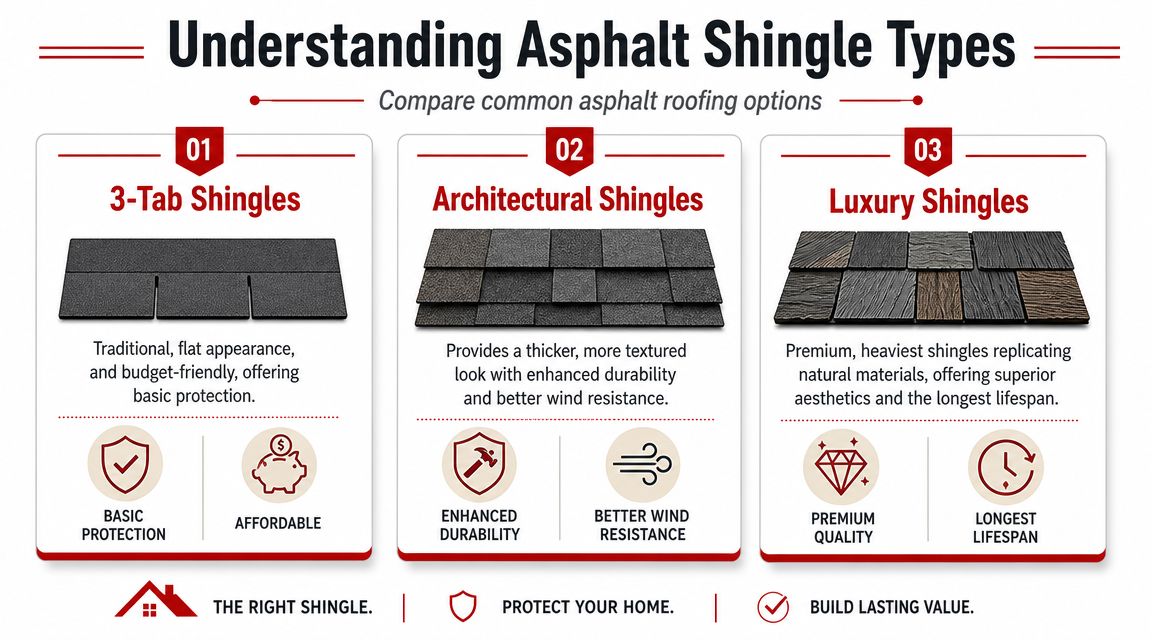
Most asphalt roof shingles for sale fall into three buckets: 3-tab, architectural, and luxury. Think of them like trim levels on a truck. One gets the job done. One gives you the best balance of value and capability. One is built for people who want the upgraded look and heavier-duty feel.
The one most homeowners end up choosing
Architectural shingles dominate for a reason. GM Insights' asphalt shingles market analysis valued the global asphalt shingles market at USD 8.8 billion in 2024, with architectural shingles alone accounting for about USD 4 billion. The same analysis said replacement reroofing represents 85% of roughly five million U.S. installations each year. That lines up with what roofers see every day. Most homeowners replacing an older roof want better durability and a better look without jumping all the way to a premium decorative product.
How the three categories compare
| Feature | 3-Tab Shingles | Architectural Shingles | Luxury Shingles |
|---|---|---|---|
| Typical role | Budget entry option | Most practical upgrade for most homes | Premium option for high-end appearance |
| Appearance | Flat and uniform | Layered and dimensional | Designed to mimic slate or wood shake |
| Durability feel | Basic | Stronger and thicker-feeling | Heaviest and most substantial |
| Best fit | Tight budgets, secondary structures, short-term ownership | Most DFW homes | Homes where curb appeal and upgraded protection matter most |
| Warranty range | More limited in practice | Often broader when installed correctly | Often the strongest manufacturer-backed package |
| My advice | Only choose it when budget leaves no real alternative | Best default choice | Choose it if you want premium aesthetics and added mass |
What each type really means
3-Tab shingles
These are the plain, flat shingles people picture when they think “basic asphalt roof.” They're simple and usually chosen because they lower the upfront bill.
That doesn't make them wrong. It makes them narrow. On a detached garage, rental property, or a house you don't plan to keep long, they can still make sense. On a primary residence in hail country, I usually see them as a compromise.
Architectural shingles
This is the category most DFW homeowners should start with. They're laminated, thicker, and visibly more dimensional from the street. They also tend to offer the best balance between appearance and performance.
If you want one recommendation without overthinking every SKU on the market, start here.
Luxury shingles
Luxury shingles are for homeowners who care about both curb appeal and a more substantial roof system. They're built to imitate higher-end materials while staying in the asphalt family.
When a homeowner wants the roof to look intentionally upgraded instead of merely replaced, luxury shingles are usually the right conversation.
Decoding Shingle Ratings for Texas Weather
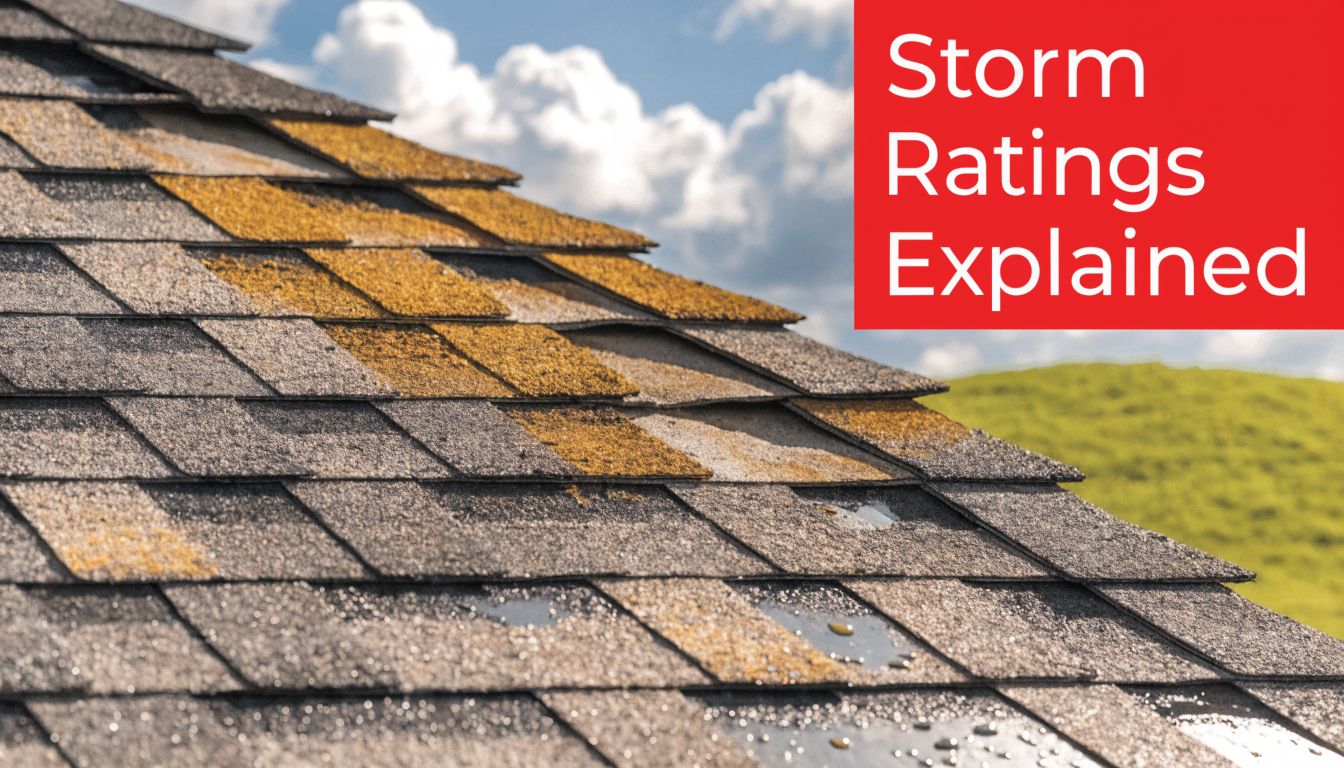
A shingle label means nothing if you don't know which ratings matter in Texas. In DFW, I care far less about marketing language and far more about impact resistance, wind rating, shingle weight, and whether the roof system is installed the way the manufacturer requires.
Why heavier shingles usually perform better
Laminated asphalt shingle guidance published by InterNACHI notes that shingles built for high-wind Texas conditions often weigh 250 to 300 pounds per square and are rated for up to 110 mph winds, while premium multi-layer options can reach nearly 500 pounds per square and withstand winds up to 130 mph. That same reference ties the extra mass to stronger tear resistance and better hail performance.
That's not just spec-sheet trivia. More weight usually means more material, more stiffness, and better resistance when wind tries to lift an edge or hail strikes with force.
The ratings I tell homeowners to look for
- Wind rating: In thunderstorm territory, this matters. A higher wind rating gives you more margin during severe weather.
- Impact rating: If you've dealt with hail before, this jumps to the front of the list.
- Construction style: Laminated and multi-layer shingles generally give you a stronger roof covering than flat entry-level products.
- Weight per square: Heavier usually means more durable, especially when comparing similar product families.
Class 4 is worth serious attention
If you live in a hail-prone neighborhood, Class 4 impact resistance isn't just a nice upgrade. It's often the smartest upgrade on the board.
A Class 4 shingle gives you an objective benchmark when you're comparing products that all claim to be “durable.” It also gives you something concrete to discuss with your insurer. If you want a deeper look at how that can affect premiums and claim strategy, read this breakdown on Class 4 shingles and insurance discounts.
Here's a useful visual overview before you compare product lines in person:
Don't confuse ratings with guaranteed field performance
A rated shingle gives you a better starting point. It does not rescue bad workmanship.
A lot of homeowners assume that buying a stronger shingle automatically gives them a stronger roof. It doesn't. The product matters. The nailing pattern, underlayment, flashing details, edge treatment, and installation discipline matter just as much.
The shingle is the armor. The installer decides whether the armor stays on when the storm hits.
Navigating Costs Insurance and Financing
If you're comparing asphalt roof shingles for sale, the sticker price is only one part of the decision. What matters is the full financial picture: product tier, labor complexity, storm exposure, potential insurance savings, and whether a better shingle lowers your risk of having to fight the same battle again after the next hail season.
Why the cheapest quote often isn't the lowest-cost choice
A lower bid can mean a lower-grade shingle, weaker accessory package, rushed labor, or all three. Homeowners often focus on line-item totals and miss what's been stripped out.
Ask what's included. Is the quote for 3-tab or architectural shingles? Does it account for problem areas like valleys and penetrations? Does it include the work needed to restore the roof system properly after storm damage, or only the visible surface layer?
The Texas insurance angle that retail pages miss
Big-box listings show product availability. They usually don't explain the insurance side well. That's a problem, because in Texas hail country, insurance can change the value equation fast.
The verified market gap data for impact-resistant shingles notes that adoption in high-risk corridors has risen 23% since 2023, driven in part by the financial value homeowners see in those upgrades, including potential premium savings and claim-related advantages, as discussed in this impact-resistant shingle market gap summary.
You shouldn't assume savings without checking your own policy. You should absolutely ask.
Questions to ask your insurer before you choose shingles
- Do you offer a discount for Class 4 impact-resistant shingles? Get the answer in writing if possible.
- What documentation do you need after installation? Some carriers want product details and contractor paperwork.
- Will the upgrade affect future claim handling? You want clarity before the next storm, not after it.
- Does my deductible structure change based on roofing material or endorsements? Don't guess.
A premium shingle upgrade makes more sense when it improves both protection and the insurance conversation.
Repairs, replacement, and financing
After a storm, homeowners often freeze because they don't know whether they're looking at a patch, a partial, or a full replacement. That decision should come from an inspection, not from panic and not from a door knock.
If you want a better framework for the money side, this guide to asphalt shingle roof replacement cost lays out what typically drives the final number.
Financing matters too. A lot of people need roof work before they're financially ready for it. That doesn't mean you should settle for a weak product. It means you should look for financing that keeps the project manageable without forcing a home-equity decision. Soft-credit-check options and plans without prepayment penalties can be useful when timing matters.
Maximizing Roof Lifespan in the Texas Climate
Texas heat ages roofs harder than many homeowners realize. Even a strong shingle can wear out early when attic heat builds up, ventilation is poor, and sun exposure pounds the same slopes day after day.
That's why the label on the bundle only tells part of the story. Real lifespan comes from product choice, ventilation, workmanship, and how quickly damage gets addressed after storms.
Heat changes the equation
In North Texas, summer isn't just hot. It's relentless. That constant exposure can dry out roofing components, stress sealants, and punish poorly ventilated attics.
If you're replacing a roof, ask about shingle lines designed with reflective granules or “cool roof” characteristics. Not every home needs that upgrade, but on the right house it can be a practical way to reduce heat load in the attic and take some stress off the roofing system.
What homeowners can actually do
- Keep gutters clear: When drainage backs up, roof edges and decking take the hit.
- Schedule inspections after hail: Small damage spreads when it's ignored through another storm cycle.
- Trim overhanging limbs: Branches scrape granules, trap debris, and create impact points in wind.
- Fix ventilation problems during reroofing: This is the right time to solve attic airflow issues instead of covering them up.
Solar panels change the roofing project
If your house has solar, reroofing gets more technical. The panels usually need a detach-and-reset process. That means the solar equipment is removed, the roofing work is completed, and the system is reinstalled in a way that protects both the roof and the solar investment.
Many projects go awry. A roofer who ignores the solar layout can create scheduling delays, wiring headaches, or warranty disputes. A solar company that treats the roof like an afterthought can do the same.
Homes with solar need a plan, not just a roofing crew.
What a proper solar reroof plan includes
| Item | Why it matters |
|---|---|
| Panel removal coordination | Keeps reroofing from stalling mid-project |
| Roof condition review under panel areas | Damage often hides where panels cover the surface |
| Reinstallation timing | Prevents the house from sitting exposed longer than necessary |
| Warranty documentation | Protects both roofing and solar records |
| Clear trade sequencing | Avoids finger-pointing between companies |
If you've got solar, don't hire a roofer first and ask solar questions later. Solve the coordination issue before material shows up.
How to Select the Right DFW Roofing Contractor
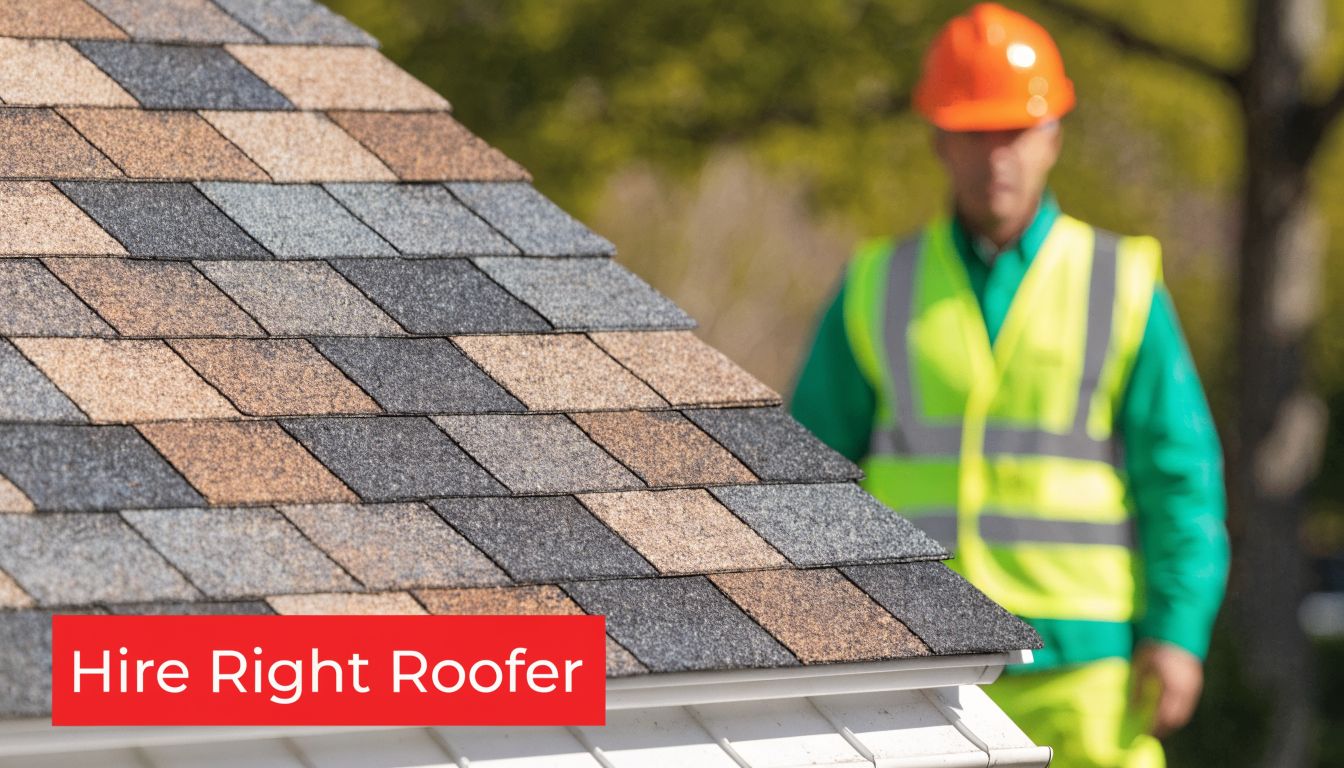
The product isn't the whole job. A premium shingle installed badly is still a bad roof.
That point matters more than most homeowners realize because ASTM D3462 standards evaluate shingles as manufactured, not as installed in the field. Real-world durability depends on proper application, code compliance, correct fasteners, suitable slope conditions, and manufacturer installation requirements. In plain English, the contractor matters as much as the shingle.
The non-negotiables
Here's what I'd require before signing anything:
- Local presence: You want a company that will still be around after storm season.
- Insurance and licensing compliance: Ask for proof, not promises.
- Written scope of work: If the contract is vague, expect problems.
- Clear warranty explanation: Material coverage and workmanship coverage are not the same thing.
- Inspection discipline: A real contractor documents decking, flashing, ventilation, and accessory conditions.
How to spot trouble early
Storm chasers usually tell on themselves. They pressure you to sign fast. They talk more about “working with your insurance” than about the roof assembly. They give broad promises and thin paperwork.
Good contractors do the opposite. They inspect carefully, explain what they found, tell you whether repair or replacement makes sense, and put the scope in writing. If you want a practical checklist, review this guide on how to choose a roofing contractor.
Ask these questions in the estimate meeting
- Who supervises the install?
- What happens if you find bad decking?
- How do you handle flashing details around penetrations and walls?
- Do you work on homes with solar detach-and-reset needs?
- What exactly could void the manufacturer warranty?
Those answers tell you more than a brochure ever will.
One local option and one useful industry signal
For homeowners in DFW and East Texas, Hail King Professionals has operated since 1991, offers free same-day inspections, handles roofing plus exterior items like gutters, siding, and solar detach-and-reset, and provides financing with soft credit checks and no home-equity requirement. That broad scope matters when the roof project touches more than shingles.
There's another signal homeowners can watch for when judging contractors: communication quality. Companies that invest in fast, organized customer response usually run tighter operations in the field too. If you're curious how modern roofing companies improve response time and qualification, this look at how contractors boost roofing leads with AI gives useful context.
The contractor you hire is the only part of the roof system that can either protect or waste every other choice you make.
Making Your Final Decision with Confidence
If you're looking at asphalt roof shingles for sale, keep the decision simple. First, choose the right category. Architectural shingles are the right starting point for most DFW homes, while luxury shingles make sense when appearance and heavier construction matter more. Second, buy for Texas weather. If hail is part of your reality, a Class 4 conversation belongs on the table. Third, don't separate product from installation. A good shingle on a sloppy install is still a bad investment.
Homeowners often spend too much time comparing colors and not enough time comparing protection, paperwork, and contractor discipline. The roof doesn't care what looked good in the sample board under showroom lights.
If you work in home services yourself, you've probably seen the same pattern in marketing. The companies that win locally usually communicate clearly, explain value well, and stay visible online. This guide to SEO for home service businesses is a solid example of that broader idea.
If you want a clear answer for your own home, schedule a no-pressure inspection with Hail King Professionals. You'll get a transparent assessment, practical options for repair or replacement, and guidance that fits Texas hail, heat, insurance concerns, and solar coordination if your home needs it.