


Roof Repair McKinney – Free Inspections for Storm Damage
A North Texas storm rolls through overnight, and the next morning you’re standing in the driveway staring up at the roof. Maybe you’ve noticed shingle grit near the downspout. Maybe a neighbor already has a tarp up. Maybe the insurance company says to “monitor it” and you’re not sure whether that means relax or panic.
That’s the moment most homeowners in McKinney start searching for roof repair mckinney. The hard part isn’t knowing your roof matters. The hard part is knowing whether you’re looking at a simple repair, hidden storm damage, or the start of a much bigger problem.
After decades working roofs in this area, one thing stays the same. The sooner you get clear answers, the cheaper and cleaner the solution usually is. The sections below will help you check what you can safely see, understand what a real inspection should include, and avoid two expensive mistakes I see all the time: accepting an inadequate insurance patch and reroofing a solar home without the right detach-and-reset plan.
How to Spot Roof Damage After a McKinney Storm
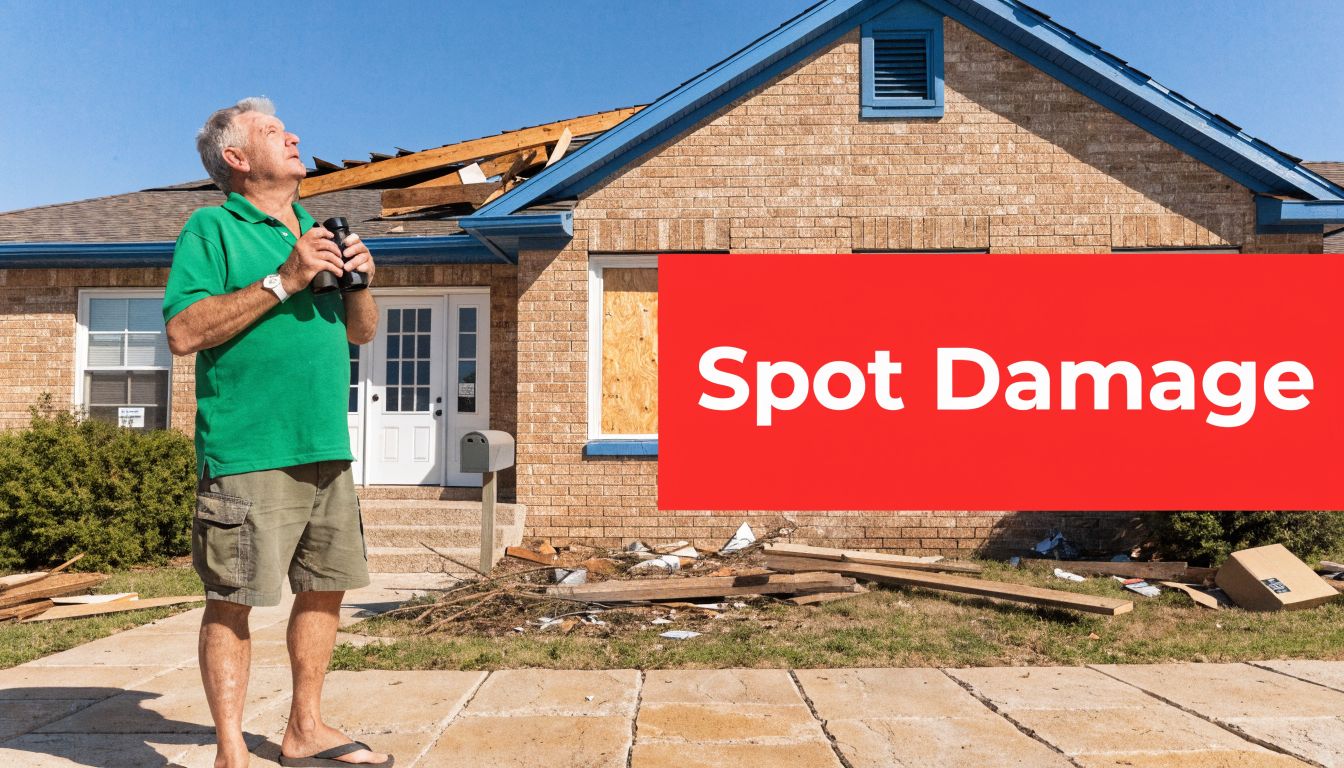
Start from the ground. Don’t climb the roof after a storm, and don’t trust a quick glance from the curb. Think like a detective. You’re looking for clues around the house that tell you what likely happened on top of it.
What to check from the yard
After hail or high wind, walk the perimeter and slow down at each elevation.
- Check metal surfaces first: Look at gutters, downspouts, roof vents, chimney caps, window screens, and the condenser top on your AC unit. Dents there often confirm storm impact before you ever see the shingles clearly.
- Look for shingle debris: Granule loss often shows up in downspout elbows, splash blocks, and along the driveway edge. If you see fresh, dark grit after a storm, pay attention.
- Scan roof lines with binoculars: You’re looking for creased tabs, lifted shingles, missing ridge pieces, exposed underlayment, or any area that doesn’t lie flat anymore.
- Notice the fence and soft metals: Hail strikes leave evidence on more than the roof. Dented mailbox tops, fence stain marks, and bruised patio covers can support what happened.
Hidden clues homeowners miss
A lot of storm damage doesn’t look dramatic at first. In McKinney, hail often knocks the protective granules off asphalt shingles before it tears anything open. That matters because the roof can still look “mostly fine” while the shingle surface has already started losing its weather resistance.
Inside the house, check ceilings, attic decking, and insulation for water staining or damp spots. If a storm caused window leaks, fascia damage, or interior moisture, it’s smart to think beyond roofing alone. In those situations, homeowners often benefit from broader storm and flood damage restoration guidance so they don’t overlook secondary damage.
Practical rule: Fresh storm damage usually leaves a pattern. If the vents, gutters, and one slope of the roof all show impact in the same direction, that’s stronger evidence than a single suspicious shingle.
When to stop self-checking and call for help
If you see missing shingles, bent flashing, active leaking, or hail marks across several exterior surfaces, you’ve learned enough from the ground. Don’t keep guessing. A homeowner check is useful for spotting signs, but it won’t tell you whether the damage is cosmetic, functional, or severe enough to justify a broader repair.
One more local point matters. Residential roof replacements in McKinney typically take one to three days depending on roof size and complexity, according to Texas Roofers’ McKinney roofing overview. That means acting quickly after a storm usually doesn’t turn into a drawn-out disruption. Waiting is what creates the bigger mess.
What a Professional Roof Inspection Actually Involves
The call usually sounds the same after a McKinney hailstorm. The roof is not leaking yet, the shingles still look decent from the driveway, and the insurance carrier is already hinting that a few spot repairs may be enough. That is exactly why the inspection has to be detailed. A proper inspection documents what failed, what is still serviceable, and whether you are looking at a repair, a full replacement, or a fight over scope with your carrier.
What gets checked on a pitched roof
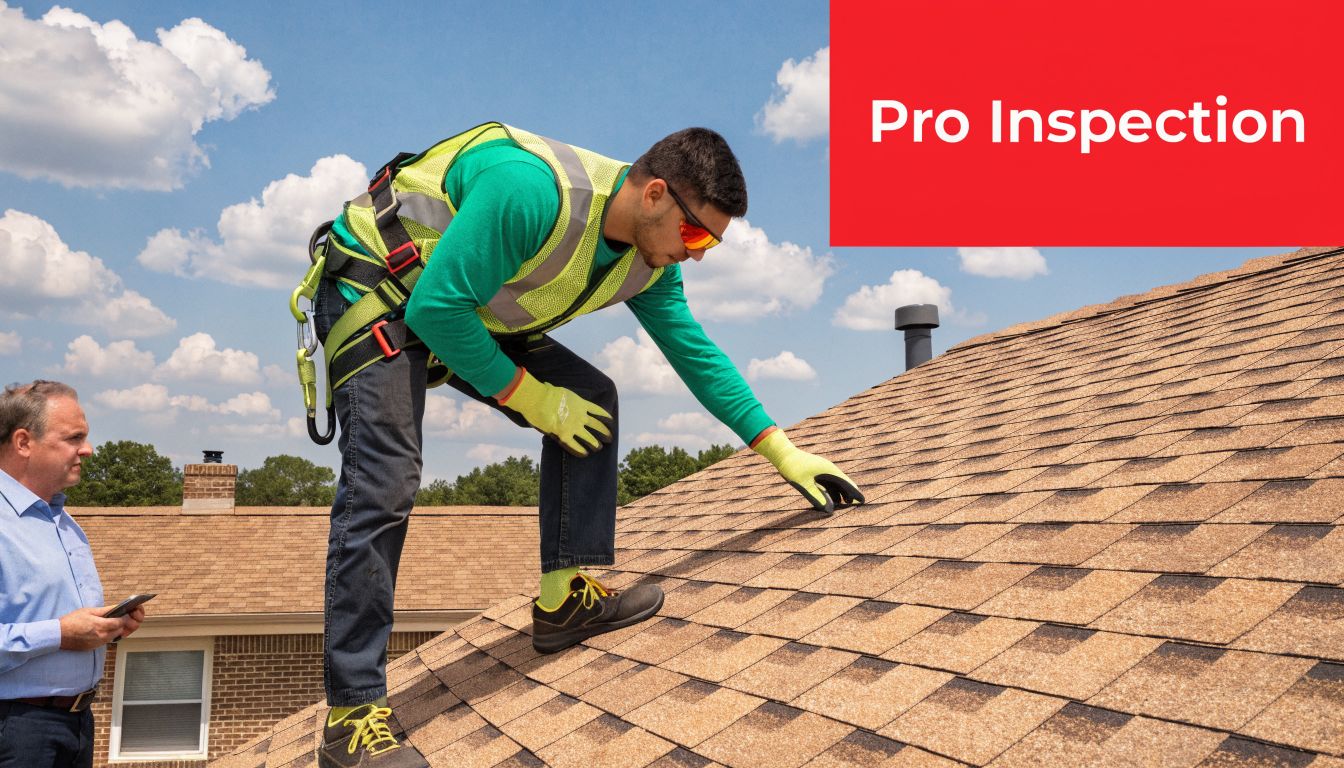
On an asphalt roof, the field shingles are only the starting point. A trained inspector checks for hail bruising, creased tabs, broken seal strips, lifted fasteners, exposed nails, damaged ridge caps, torn pipe boots, valley wear, and flashing separation at walls, chimneys, and dormers. Those details matter because leaks often start at transitions and penetrations, not in the middle of an open shingle run.
Inside the home, the inspection continues in the attic and around ceiling lines. We look for staining, damp insulation, dark decking, rusted nail tips, and signs that intake or exhaust ventilation is not doing its job. A roof can pass a quick exterior glance and still be failing from trapped moisture or heat buildup below the deck.
Documentation matters as much as observation. Good inspectors photograph each slope, mark test areas, note collateral damage on soft metals, gutters, screens, and vents, and tie those findings back to the repair recommendation. Homeowners who want to know what should be recorded during that visit can compare the report against this roof inspection checklist template.
That paper trail becomes especially important when an insurer pushes back on a full replacement. If the roof has discontinued shingles, widespread hail hits, or matching problems across multiple elevations, the inspection needs to show that clearly. A vague summary does not hold up well in a claim dispute.
Low-slope roofs and solar arrays need a different approach
Flat and low-slope sections hide problems in a different way. Water can travel under the membrane and show up far from the entry point, so the visible stain indoors may have little to do with the true failure point on the roof. On these systems, the inspection focuses on seams, laps, punctures, drain areas, edge metal, soft spots underfoot, and any sign that wet insulation has spread beyond the obvious area.
Solar adds another layer. On reroof projects with panels, the inspection should identify roof damage and also document the condition of mounts, flashings, attachment points, and the remaining life of the roofing under the array. I have seen homeowners approve a small repair on an aging roof, only to pay later to detach and reset panels because the underlying system could not reasonably carry another full service cycle.
If your roof has solar, the right question is not just, "Can this leak be patched?" It is, "Does this roof still justify the cost of panel removal and reinstallation if larger work is needed soon?"
Here’s a quick look at what a homeowner should expect to see explained during the inspection:
| Inspection area | What the contractor is looking for | Why it matters |
|---|---|---|
| Shingles or membrane | Bruising, punctures, cracks, seam failure | Confirms storm-related damage and repair scope |
| Flashing and penetrations | Separation, rust, lifted edges | Common leak entry points |
| Decking and substrate | Soft spots, rot, moisture intrusion | Shows whether new materials will hold properly |
| Attic, ventilation, and interior | Heat buildup, damp insulation, mold signs | Affects roof life, comfort, and indoor damage |
A short visual can help you understand the difference between a cursory look and a systematic inspection.
Permits and documentation matter too
An inspection should account for code requirements and permit scope before work is sold. In McKinney, permits are required for all but minor repairs under the city’s home repairs permit information. That affects how the job is written, what gets replaced, and whether the proposed fix matches local requirements.
A sound inspection ends with a clear answer in plain language. What was damaged. What can be repaired. What should be replaced. How confident the contractor is in that recommendation. If a roofer cannot explain those points and support them with photos and notes, you did not get an inspection. You got a sales pitch.
Common Roof Repair Solutions for Texas Homes
A McKinney storm leaves behind more than a few loose shingles. I often get called after a homeowner sees a water stain on the ceiling, only to find the failure originated at a pipe boot, a sidewall, or a hail-hit slope that no longer seals as it should. The right repair depends on where the roof failed, how the material ages in Texas heat, and whether the damage is isolated or spread across the system.
Asphalt shingle repairs
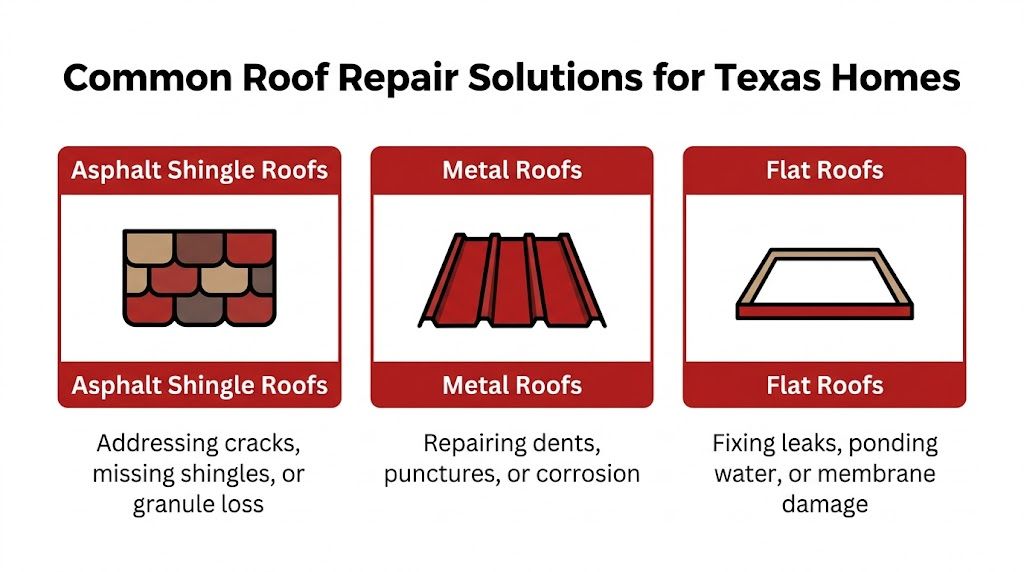
Asphalt shingles are still the roof I repair most in McKinney. Some problems are straightforward. A few missing tabs after a wind event, a torn starter course, or a failed pipe boot can often be repaired without disturbing the rest of the roof.
Hail damage is where homeowners get pushed into bad decisions. A roof can look patchable from the driveway and still have bruised mat, broken seal strips, and shortened life across an entire slope. That matters later, especially if an insurer tries to pay for a small repair when the surrounding shingles are already compromised.
Typical asphalt repair options include:
- Single-area shingle replacement: Works for a limited number of wind-damaged shingles when nearby tabs still bond properly.
- Flashing repair at walls and chimneys: Used when water is getting in at transitions rather than through the field shingles.
- Pipe boot replacement: A common leak source around bathroom vents, furnace vents, and other penetrations.
- Targeted valley repair: Used when concentrated water flow exposes weak metal, worn underlayment, or poor prior workmanship.
Homeowners comparing proposals can review these residential roof repair services to see how contractors usually separate minor repairs from broader corrective work.
Matching shingles is another trade-off. On an older roof, the new repair may seal correctly and still stand out in color or texture. That does not always mean the repair was done wrong. It does mean appearance, remaining roof life, and insurance position all need to be weighed together.
Metal roof repairs
Metal roofs fail in a different pattern. Cosmetic hail dents may not leak at all, while loose fasteners, split neoprene washers, punctures, and failed sealant at penetrations are the issues that usually let water in.
Good metal roof repair usually includes:
- Replacing backed-out or corroded fasteners
- Resealing penetrations, laps, and transitions with the right product
- Replacing damaged panels if the metal is punctured or badly distorted
- Correcting movement or separation at ridge, eave, and sidewall flashing
Smearing mastic over a leaking joint is a temporary cover-up, not a repair. On metal, surface prep and product selection matter. If the panel is dirty, oxidized, or still moving, the new sealant will not hold for long.
That becomes an even bigger issue on homes with solar. If a reroof or major panel replacement is likely, the roof should be evaluated with the solar mounting points and detach-reset cost in mind before anyone starts approving isolated fixes.
Flat roof repairs
Flat and low-slope roofs need a methodical repair plan. Leaks can come from open seams, punctures, ponding areas, failed edge details, or wet insulation hidden below the membrane. A patch may solve one opening and miss the saturated section next to it.
Common solutions include localized membrane patches, seam reinforcement, flashing rebuilds, wet insulation removal, or partial section replacement. Roof coatings can also make sense after damaged materials are removed and the underlying roof is still a good candidate for restoration. As noted earlier, some McKinney contractors cite coatings as a lower-cost way to add service life on suitable low-slope systems, but only after trapped moisture and active failures are addressed first.
A coating is not a shortcut around bad substrate. If insulation is wet or seams are failing across the roof, coating over those conditions just delays proper repair and can make future replacement harder.
Which repair path fits which roof
| Roof type | Problem | Usually repairable | Usually a warning sign |
|---|---|---|---|
| Asphalt shingle | A few missing shingles | Yes, if surrounding shingles still seal well | Widespread granule loss, hail bruising, or many creased tabs |
| Metal | Loose fasteners or failed sealant | Often | Panel punctures, repeated movement, or widespread flashing failure |
| Flat | Small puncture or open seam | Often | Saturated insulation, chronic ponding, blistering, or recurring leaks |
The right repair restores water shedding, wind performance, and service life. If a proposal only covers the obvious scar and ignores the surrounding system, it is probably too small.
Navigating Your Hail Damage Insurance Claim
Many homeowners lose money, not because the damage isn’t real, but because the first insurance position often frames the issue too narrowly. The company may agree something happened, then offer a patch when the roof really needs broader correction.

Why patch-only settlements are risky
A common tactic in storm-prone Texas areas is for insurers to push temporary patching over full replacement. But Elite Roofing and Consulting’s McKinney hail claim discussion states that Roofing Contractors Association of Texas data shows patched roofs fail 2-3 times faster under repeat hail, often leading to denied later claims and conflicts with TDI standards for functional damage.
That lines up with what contractors see in the field. A patched slope may stop leaking today, but if hail has compromised the surrounding mat, seal strips, or decking condition, the roof is still vulnerable the next time McKinney gets hit.
What to do before the adjuster arrives
Don’t go into the claim with just a general complaint that “the roof looks bad.” Build a file.
- Photograph all exterior evidence: Get pictures of dented vents, gutters, soft metals, screens, and any interior staining.
- Write down the storm timing: Note the date and what you observed immediately after.
- Keep repair history handy: Prior invoices and warranty paperwork help explain whether this is new storm damage or an old issue.
- Ask for itemized scope language: You need to see exactly what the carrier is paying for, not just a summary number.
A helpful starting point is this guide to the storm damage insurance claim process, especially if this is your first claim.
Don’t argue emotion with an adjuster. Argue scope, materials, code, and functional damage.
What to say when patching doesn’t solve the problem
Be direct and specific. Ask whether the proposed repair restores the roof to pre-loss function. Ask whether matching materials are available. Ask whether the inspected damage includes flashing, underlayment concerns, and decking condition where relevant. If the answer stays narrow, request reinspection with supporting documentation from your contractor.
The key trade-off is simple. A smaller initial approval feels easier, but it can leave you paying twice. Once for the patch, and again when the patched area and the surrounding damaged roof fail in separate events.
Homeowners in McKinney don’t need to be combative. They do need to be prepared. The insurance company has a process. You should have one too.
Signs You Need a Full Roof Replacement
Some roofs are good repair candidates. Some aren’t. The challenge is being honest about which one you have.
A full replacement usually makes more sense when multiple parts of the system are failing at once. That can mean repeated leaks, storm damage across several slopes, brittle shingles that won’t reseal, or decking issues that no surface repair can correct.
A practical replacement checklist
Use this as a decision guide if you’re weighing repair against replacement.
- Leaks keep coming back: If the same interior area leaks after prior repair attempts, the problem often extends beyond the visible entry point.
- Damage is spread across the roof: Isolated repair works best when the rest of the system is stable. Once deterioration is widespread, spot work starts chasing symptoms.
- Shingles are breaking down during service: When shingles are too brittle to lift, unseal, and relay without more damage, repair quality drops fast.
- The roof deck is compromised: Soft decking, rot, or long-term moisture below the shingles changes the job from surface repair to structural correction.
- Previous patching has created a patchwork roof: Mixed materials, repeated sealant bands, and older repairs stacked on top of each other are signs the system is at the end of its practical repair life.
When upgrading makes sense
If replacement is on the table, this is the time to think beyond “same as before.” In McKinney’s hail exposure, Class 4 impact-resistant shingles are worth a serious look. Elite Roofing’s McKinney roofing page notes these shingles are tested against drops of 2-inch steel balls from 12 feet without substrate exposure. The same source says they can reduce insurance premiums by 20-35% and extend service life to 40+ years.
That doesn’t mean every house needs the same shingle. It means replacement is your one clean opportunity to improve storm resilience instead of reinstalling the same vulnerability.
Replacing a roof isn’t just about stopping current leaks. It’s about choosing how much trouble you want to inherit in the next hail season.
A useful outside check
If you want another homeowner-focused reference while you’re evaluating the condition of your roof, this breakdown of 10 critical signs you need a new roof is a practical companion to an on-site inspection.
One thing I’d stress from experience: don’t let age alone make the decision, and don’t ignore age either. The right answer comes from condition, repairability, and whether the next repair buys you meaningful life.
The Hail King Advantage for Your McKinney Project
By the time most homeowners call, they’re not looking for roofing theory. They need somebody to sort out the underlying issue, tell them whether repair will hold, and keep the job from turning into three separate projects with three separate headaches.
That’s where process matters.
A contractor working in McKinney has to do more than replace shingles. They need to document storm damage clearly, understand local permit requirements, distinguish between repairable and non-repairable conditions, and coordinate the work so the house stays protected through the whole project. Since 1991, Hail King Professionals has handled that kind of storm-driven roofing work across Dallas-Fort Worth and East Texas, with free same-day inspections, code-compliant scopes, and a 100% satisfaction guarantee as part of its standard service approach.
Why the solar piece changes the job
Solar-equipped homes need a different plan from day one. The roofing part is only half the issue. The detach-and-reset process has to protect the panels, mounting points, wiring paths, and warranty status while still allowing the roof system underneath to be repaired or replaced correctly.
This is one of the biggest blind spots in local reroofing conversations. Homeowners often get a roofing quote and a separate solar conversation later, when the sequencing should have been addressed upfront. If panel removal isn’t coordinated properly, the roofing schedule slips, the reinstall gets messy, and warranty disputes become much more likely.
Good solar reroofing work includes:
- Documenting panel layout before removal
- Protecting penetrations and flashing details during reset
- Coordinating roof scope and solar scope as one project
- Scheduling around weather so the home isn’t left exposed
That kind of planning is especially important after storm damage, when both the roof covering and the solar array may need attention.
Why financing and scope control matter too
A lot of families can handle a roof project more comfortably if they aren’t forced into a home-equity product. Financing with soft credit checks and no home-equity requirement can make it easier to choose the correct repair or replacement scope instead of delaying needed work.
The same goes for related exterior items. Storm events don’t limit themselves to shingles. Gutters, downspouts, siding lines, screens, and fencing often need review at the same time, and coordinating those trades under one project plan usually reduces confusion for the homeowner.
Here’s what a solid McKinney roofing partner should be able to manage in one workflow:
| Project issue | What competent handling looks like |
|---|---|
| Storm diagnosis | Clear inspection notes, photos, and repair or replacement reasoning |
| Permits and code | Scope that fits local requirements and inspection standards |
| Insurance support | Documentation that addresses functional damage, not just appearance |
| Solar detach and reset | Coordinated removal and reinstall tied to the roofing timeline |
| Budget concerns | Financing paths that don’t require tapping home equity |
A key advantage isn’t a slogan. It’s reducing failure points. One team, one scope, one schedule, and one standard for how the work gets documented and completed.
If you’re dealing with roof damage in McKinney right now, don’t settle for vague answers. Get the roof inspected thoroughly. Get the claim scope reviewed carefully. And if your home has solar, make sure the roofing plan accounts for it before a single panel comes off.
If you want a clear answer on whether your roof needs a repair, a larger storm restoration scope, or a full replacement, contact Hail King Professionals. They provide free same-day inspections, explain what they find in plain language, and can help coordinate code-compliant roofing work for standard homes, storm-damaged properties, and solar-equipped reroof projects.