


Siding Contractor Dallas TX: Experts For Your Home
You’re probably reading this after spotting cracked panels, faded color, loose trim, or dents after a North Texas storm. Maybe an adjuster already looked at the roof and barely mentioned the walls. That’s where a lot of Dallas homeowners get burned.
Siding isn’t just curb appeal. It’s a weather barrier, a moisture control layer, and part of your insurance claim if hail hit more than the shingles. If you hire a siding contractor dallas tx homeowners can trust, that contractor should know how to inspect, document, and build the siding scope alongside the roofing scope. If they can’t do that, keep shopping.
Dallas is crowded with contractors. As of October 2025, there are 234 siding contractors operating in Dallas, and 183 have 5-star reviews according to this Dallas siding contractor market report. That sounds good until you realize reviews alone don’t tell you who understands hail claims, code compliance, and proper wall assembly. You need more than a nice website and a sales pitch.
Is It Time for New Siding? Key Warning Signs for Dallas Homeowners
Most siding problems in Dallas don’t start with a giant hole in the wall. They start small. The sun bakes the finish. Heat cycles make panels move. Humidity gets into weak joints. Then hail shows up and finishes the job.
Walk your house slowly. Don’t inspect it like a shopper. Inspect it like someone trying to stop water before it gets into framing, insulation, and drywall.
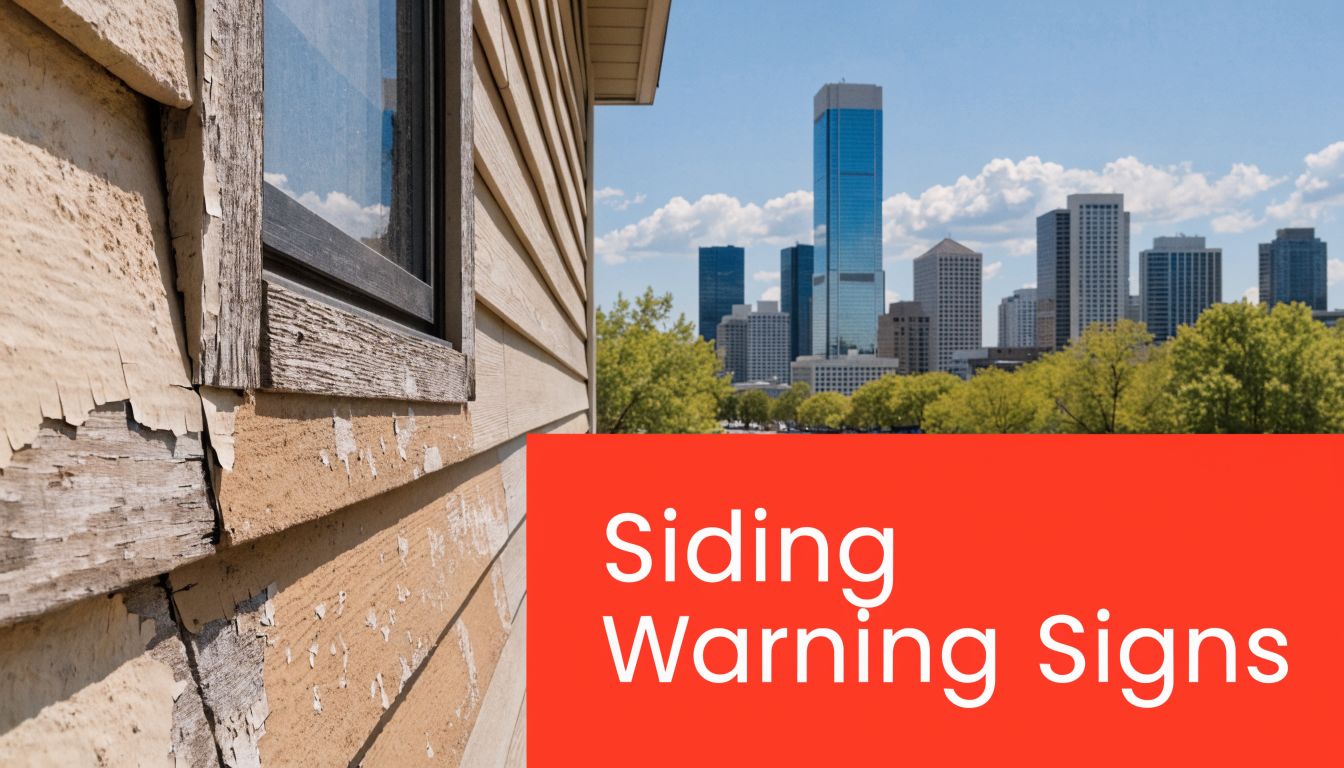
Start with the easy-to-miss signs
A lot of homeowners dismiss early siding failure as “just cosmetic.” That’s a mistake. Cosmetic issues often point to deeper movement, moisture entry, or impact damage.
Look for these first:
- Chalky residue on your hand: Rub the siding. If color comes off like powder, UV exposure has started breaking down the surface.
- Warping or buckling: Heat expansion can distort weaker materials, especially on long sun-exposed walls.
- Loose corners and trim gaps: Wind-driven rain gets in at edges long before you see interior damage.
- Cracks, chips, and dents: Hail usually leaves clues around laps, edges, corners, and softer trim pieces.
- Peeling paint or recurring repaint needs: That often means the substrate is taking on moisture or the surface is failing.
If you’re not sure whether you’re looking at dirt, mildew, or surface wear, it helps to understand the difference before calling for a full replacement quote. A practical homeowner guide on how to clean the exterior of a house can help you rule out grime so you can see the actual condition underneath.
Practical rule: If cleaning improves the look but not the texture, alignment, or cracks, you don’t have a dirt problem. You have a siding problem.
Move from cosmetic to structural clues
Once the outside starts failing, the house usually gives you signs inside too. Homeowners often miss that connection.
Watch for:
Higher cooling bills
If the wall system is leaking air or moisture, your HVAC works harder. Siding isn’t your only insulation layer, but when the assembly is compromised, comfort drops fast.Stains on interior walls
Brown marks, bubbling paint, or damp drywall near exterior walls usually mean water has already moved past the outer layer.Soft spots around windows and doors
Press gently on trim and lower wall areas. If it feels spongy, stop guessing and get it opened up.Moldy smell after rain
You may not see the moisture path, but you can smell it.
Dallas weather changes the urgency
In a mild climate, you might get away with patching and waiting. In Dallas, that’s a gamble. Heat, heavy rain, and hail punish weak materials fast. One bad storm can turn a manageable repair into a sheathing, trim, and insulation project.
The right question isn’t “Can this wait?” The right question is “What happens if the next storm hits before I fix this?”
If you see isolated damage on one elevation, repair may make sense. If you see repeated cracking, broad fading, impact marks, trim separation, and signs of moisture, stop sinking money into temporary fixes. Start planning replacement.
Choosing Your Armor Siding Materials and Costs in Dallas
Dallas homes need siding that can take heat, humidity, and hail without turning into a maintenance headache. A lot of sales reps push whatever they sell most. That’s not how you should buy siding. You buy based on weather exposure, wall condition, budget, and how long you plan to stay in the home.
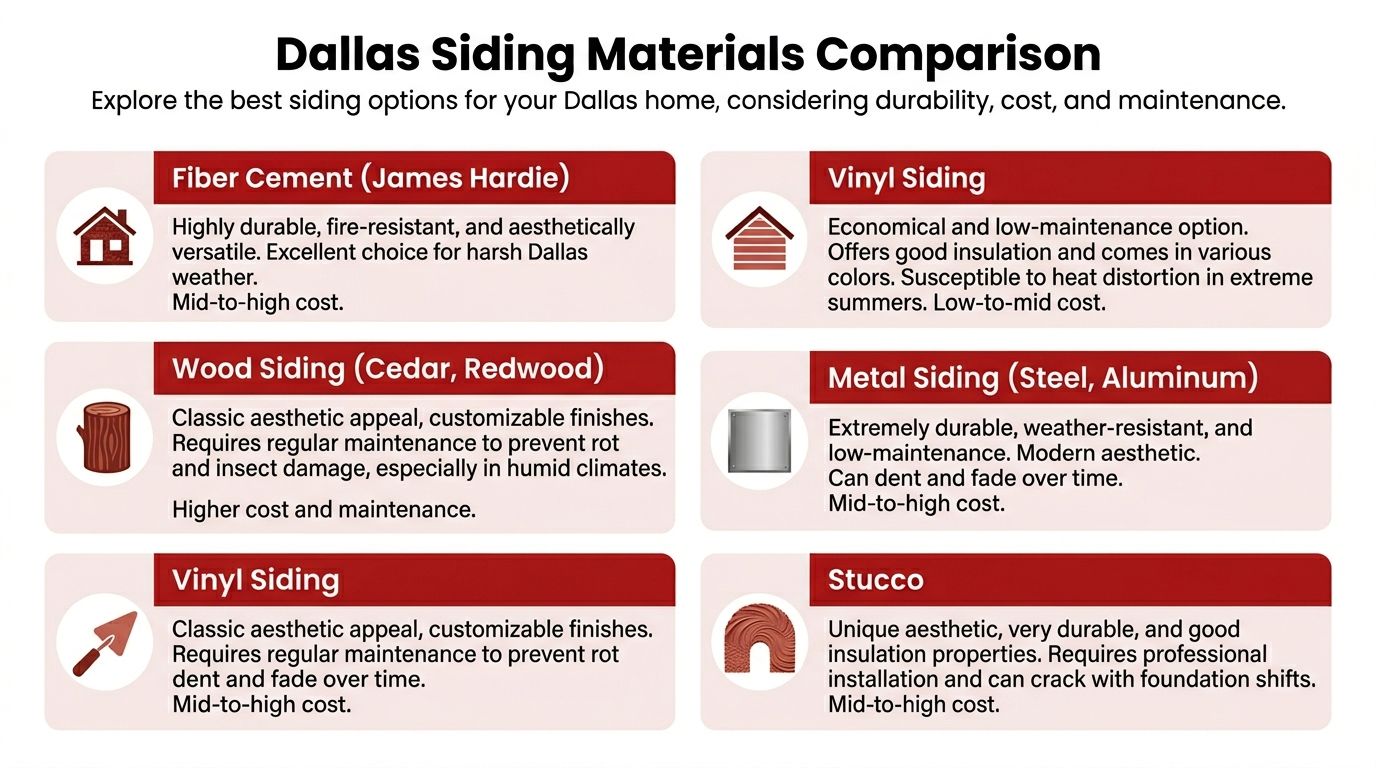
If you want my blunt opinion, fiber cement belongs on the shortlist for most Dallas homeowners. Vinyl has a place when budget drives the job. Metal works well in certain designs. Engineered wood can be a smart option when installed correctly. Stucco looks good on the right house, but foundation movement can make it a high-attention system.
What the Dallas numbers tell you
For repair work, Dallas siding repair averages $1,020, with most homeowners paying between $456 and $1,623 based on damage extent, material, and square footage, according to Dallas siding repair cost data from Angi. That same source shows how much material choice matters: vinyl repairs run $2 to $4 per square foot, fiber cement repairs run $7 to $11, and brick repairs run $15 to $18.
Those repair costs matter because they tell you something bigger. Cheap siding is often cheaper to patch, but that doesn’t automatically make it the best long-term choice in Dallas weather.
The materials I’d actually compare
Here’s the no-nonsense version.
| Material | Avg. Installed Cost (per sq. ft.) | Lifespan | Hail/Heat Resistance | Maintenance Needs |
|---|---|---|---|---|
| Fiber cement | Costs vary by contractor and scope | Long-lasting | Strong choice for Dallas heat and hail | Low to moderate |
| Vinyl | Costs vary by contractor and scope | Varies by product and exposure | Budget-friendly, but can distort in extreme heat | Low |
| Engineered wood | Costs vary by contractor and scope | Long-lasting when installed right | Good impact performance and better dimensional stability than traditional wood | Moderate |
| Metal | Costs vary by contractor and scope | Long-lasting | Strong weather resistance, but can dent from impact | Low |
| Stucco | Costs vary by contractor and scope | Long-lasting with proper upkeep | Durable, but movement can lead to cracking | Moderate |
I’m not filling that table with made-up installation prices or fake lifespan claims. A lot of online articles do that. They shouldn’t.
Fiber cement sets the standard
In Dallas heat and humidity, fiber cement is usually the safest recommendation. The material is built to resist moisture, insects, warping, and fire better than common alternatives. It’s also a strong fit for neighborhoods where homeowners want a painted wood-look finish without the maintenance burden of real wood.
A detailed Dallas material overview from Amazing Exteriors on fiber cement siding in Dallas describes why James Hardie products are popular here, especially in hot, humid, hail-prone conditions. If you want a deeper side-by-side breakdown before narrowing your options, this guide to the best siding materials for Texas homes is worth reviewing.
Fiber cement costs more to repair than vinyl, but Dallas homeowners don’t live in a market where the cheapest panel is always the smartest panel.
Vinyl, engineered wood, metal, and stucco
Vinyl earns attention because repair costs are low and upkeep is simple. The downside is obvious in Texas. Long, hot exposures can stress lower-end vinyl products, especially on west-facing walls.
Engineered wood deserves more respect than it gets. It gives you a warmer look than fiber cement and can be a solid middle-ground choice when installed over a proper drainage plane with the right detailing. If you’re comparing that category, this explainer on What is LP Smart Siding gives useful background on what engineered wood is and why homeowners consider it.
Metal siding works well for modern elevations, detached structures, and homeowners who want a durable exterior with minimal upkeep. It can dent, so don’t assume “metal” means “hail-proof.”
Stucco performs well in the right assembly, but Dallas soil movement can make cracking a recurring issue. If the house already has movement history, I’d be cautious.
My recommendation by homeowner type
- You want the safest all-around choice: Fiber cement.
- You need to control upfront cost: Vinyl, but only with realistic expectations about heat and impact.
- You want texture and a more traditional look: Engineered wood or fiber cement.
- You like a cleaner, modern exterior: Metal.
- You already have a stucco home: Repair carefully and make sure movement and drainage are addressed, not just the finish.
The wrong way to choose siding is by color board alone. The right way is to ask how the wall system will perform after the next Dallas hail season.
Navigating Dallas Siding Permits Insurance and Local Codes
A siding job isn’t just a material decision. It’s a code decision, a moisture-management decision, and sometimes an insurance decision. Homeowners usually pay attention to color and price. They should be paying equal attention to wall assembly details and documentation.
Dallas-area code requirements matter because our soil moves, our weather shifts fast, and water always finds the weak spot.
Code details that actually matter
The Texas Minimum Construction Standards require siding systems to include positive drainage planes and proper detailing such as control joints in the right conditions, according to the Texas Minimum Construction Standards guidance. That same guidance is tied to a critical practical point. Proper installation can prevent 70% of common siding failures related to water intrusion.
That’s not a minor detail. It means a lot of siding failures blamed on “bad material” are really installation failures.
Ask your contractor how they handle:
- House wrap integration
- Window and door flashing
- Kick-out and edge transitions
- Ground clearance
- Expansion and control details where required
- Repair profile matching if only part of the wall is being replaced
If they answer with broad sales language instead of jobsite specifics, move on.
Water doesn’t care what brand name is stamped on the siding. It goes after the cut edge, the missed flashing, and the lazy joint.
Insurance is where most siding contractors separate themselves
In Dallas-Fort Worth, a contractor who knows siding installation but doesn’t know claims is only doing half the job. If hail damaged the roof and the siding, those scopes need to be documented together and argued correctly.
Homeowners also need to understand coverage language. Cosmetic damage and functional damage don’t get treated the same way. The adjuster may focus on the roof first. That doesn’t mean the siding damage isn’t claim-worthy. It means somebody has to document it properly.
If you need a clear overview of storm coverage before talking to a contractor or adjuster, this article on whether homeowners insurance covers storm damage lays out the basics in plain English.
Permits protect you
A permit isn’t just paperwork. It creates accountability. It gives the project a compliance path, and it helps keep corners from getting cut when wall conditions change after tear-off.
I’ve seen plenty of jobs where siding came off and exposed rotten sheathing, failed flashing, or hidden moisture damage around windows. If your contractor works like those discoveries are a nuisance instead of a normal part of exterior work, that’s a problem.
The best hire is the contractor who can explain code, spot claim issues, and document field conditions without drama.
Your Step-By-Step Guide to Hiring a Siding Contractor in Dallas
Hiring the wrong contractor can cost you twice. First on the install. Then again when the first hard rain, heat wave, or hailstorm proves the job was junk.
The search for a siding contractor dallas tx homeowners can rely on is a critical task. Don’t hire based on a yard sign, a door knock, or a “today only” discount. Hire the contractor who can protect the house and handle the paper trail.
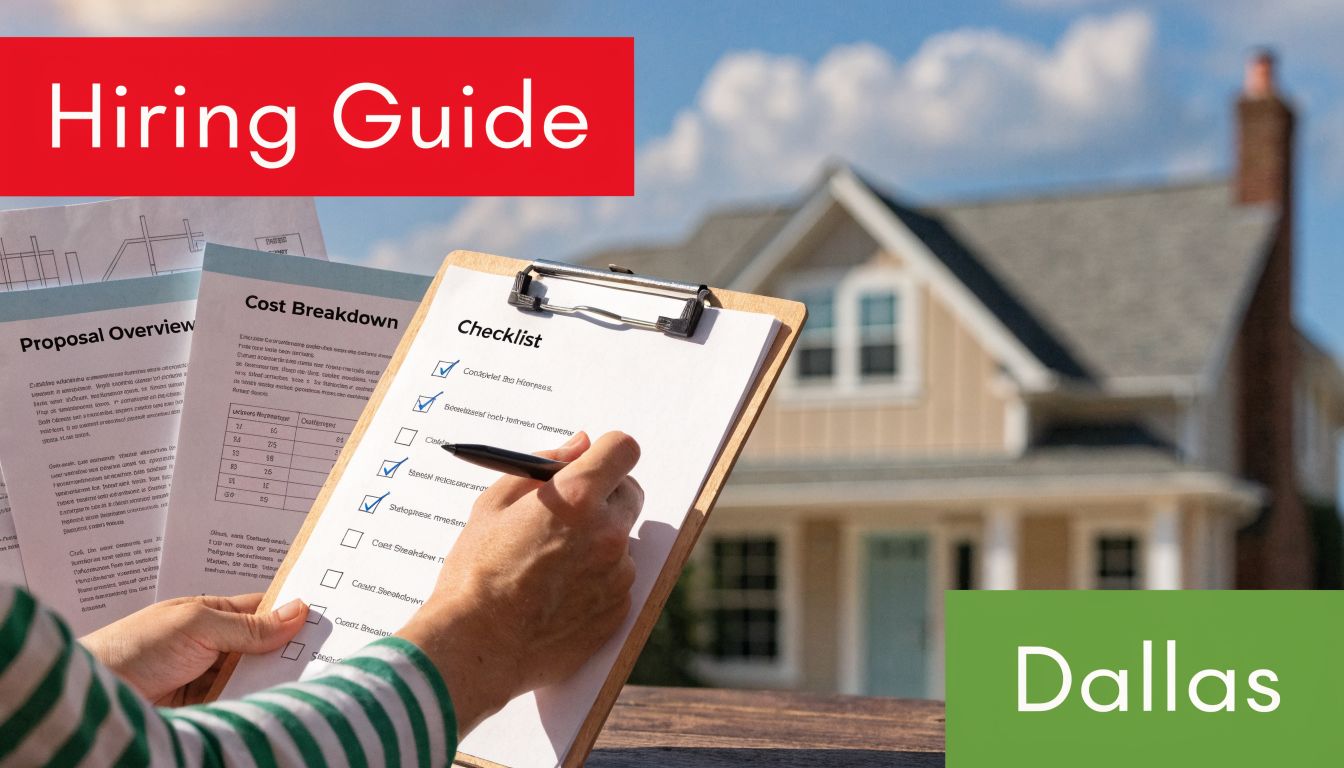
The shortlist should get tougher fast
Start with basic screening. Then get specific.
Verify insurance first
If they can’t show current coverage, the conversation is over.Ask what they install most often
A contractor who “does everything” may not do siding especially well. You want wall-system experience, not generic exterior sales.Request a written scope
The proposal should identify what’s being removed, what’s being replaced, how trim is handled, and what happens if hidden damage is found.Ask who supervises the crew
Salesperson promises don’t install siding. Crew leads do.
Hail claim experience is not optional in DFW
This is the overlooked filter that matters most. In Dallas-Fort Worth, major hail storms occur 4 to 6 times annually, and homeowners can often file dual claims when both roofing and siding are damaged, according to this DFW siding and hail claim overview. That same source notes the importance of documenting siding hail impact, including dents greater than 1 inch, when working with insurers.
That means your hiring questions need to change. Don’t just ask, “How much do you charge?” Ask these instead:
- Can you document siding hail damage for an insurance file?
- Have you handled combined roof and siding claims before?
- How do you separate cosmetic marks from functional damage in your inspection notes?
- Will you meet the adjuster and walk the elevations?
- Can you explain what gets replaced versus what gets spot repaired?
If the contractor acts annoyed by those questions, that tells you plenty.
What I’d ask first: “When hail hits both my roof and my siding, how do you build the claim file so the siding doesn’t get ignored?”
Compare bids the right way
Three bids are useful only if they describe the same job. Most don’t. One contractor includes trim. Another excludes wrap repairs. Another leaves out debris hauling. Then the cheapest number looks attractive until change orders start piling up.
Read every line for these items:
- Material identification: Brand, profile, and color line.
- Prep work: Removal, substrate inspection, flashing adjustments.
- Trim scope: Corners, fascia tie-ins, window and door trim.
- Sealants and finish work: Caulk, touch-up, paint coordination if needed.
- Cleanup: Magnet sweep, dumpster handling, daily debris control.
A good walkthrough on what homeowners should look for in contractor communication and scope can help too. This video is worth watching before you sign anything.
Red flags that should end the conversation
Some warning signs aren’t subtle.
- Big upfront payment demands: That’s not how strong contractors run jobs.
- Vague contracts: If the scope is fuzzy, the billing will get very creative later.
- Pressure to sign immediately: Good contractors don’t need panic tactics.
- No inspection notes or photo documentation: Especially a problem after storm damage.
- They only talk about the roof: If your siding took hits too, that’s a missed opportunity and a risk.
The best contractor is rarely the cheapest and never the slickest. It’s the one who can inspect hard, document clearly, install to code, and defend the siding portion of the project when insurance is involved.
What to Expect The Siding Replacement Process from Start to Finish
Most homeowners are less stressed when they know what’s coming. Siding replacement isn’t mysterious when the crew runs it properly. It’s a sequence.
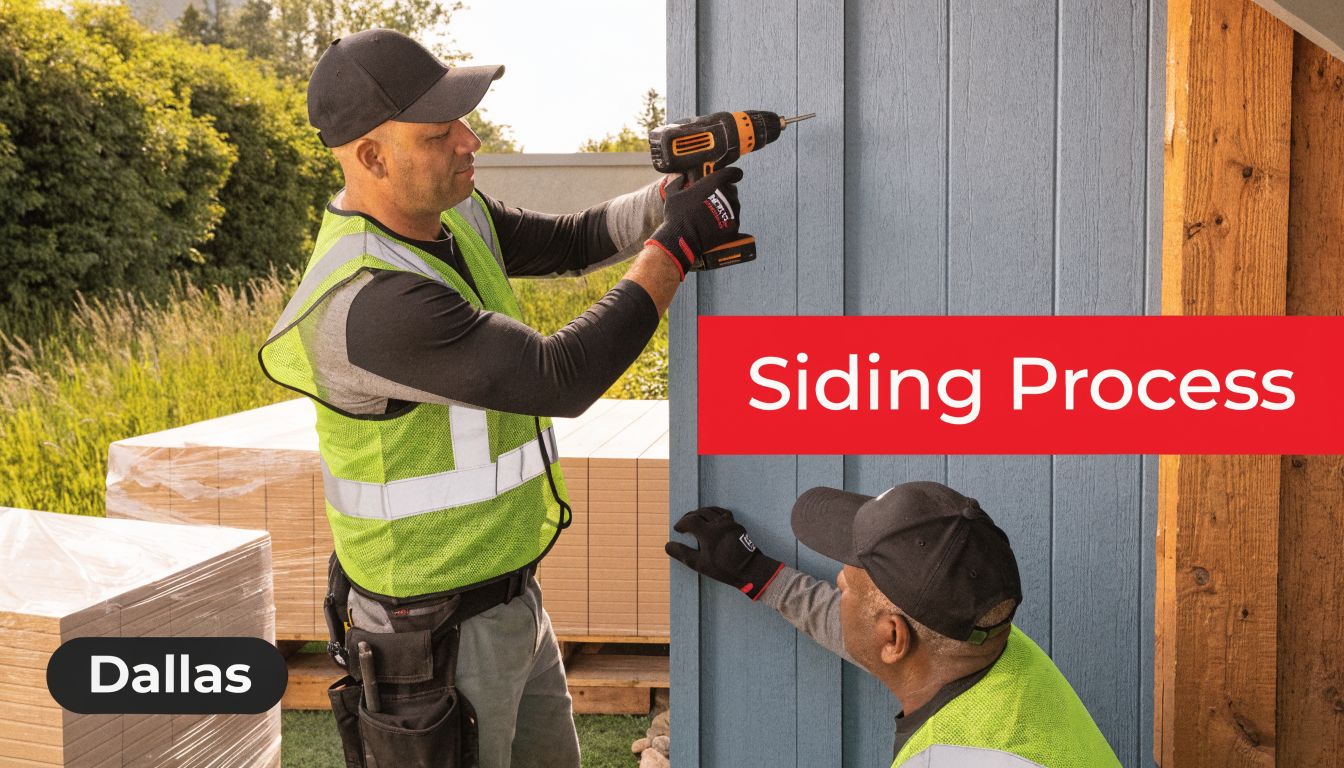
The first thing you’ll notice is staging. Materials arrive. A dumpster or haul-off setup gets placed where access is easiest and disruption is lowest. The contractor should protect landscaping, note fragile areas, and tell you where crews will start.
Tear-off and inspection
Once old siding comes off, the actual condition of the house becomes visible. This is the stage homeowners need to pay attention to. If the crew finds damaged sheathing, old moisture staining, failed flashing, or insect damage, they should show you and document it.
That’s also when trim transitions, soffits, and fascia details get reviewed. If you’re not clear on how those pieces tie into a proper exterior assembly, this quick guide on what soffit and fascia do on a house helps make sense of why these areas matter so much during siding work.
Weather barrier and install day rhythm
After inspection and repairs, crews install or correct the weather-resistive barrier, flashing, and critical transitions around penetrations and openings. This is the part homeowners rarely see once the job is done, but it’s the part that protects the home.
You should expect noise, saw cutting, ladders moving, and steady crew traffic around the perimeter. Inside the house, it helps to remove wall hangings on exterior walls and keep pets away from active work zones.
If the install looks rushed at the corners, windows, and lower wall edges, it probably is. Those are the places that usually fail first.
Finish work and cleanup
Once the panels are up, the crew handles trim details, caulking, and finish corrections. Then comes cleanup. A professional crew doesn’t leave nails, scraps, and packaging all over the yard until the final day. They manage debris as they go.
Before final payment, walk the house with the contractor. Look at butt joints, outside corners, caulk lines, and transitions at doors, brick, stone, and rooflines. Open and close exterior doors. Check that vents, lights, and hose bibs sit cleanly against the new finish.
The job should end with the house tighter, cleaner, and better protected than when it started. If it feels sloppy at the end, it was probably sloppy in the middle too.
Protecting Your Investment Financing Warranties and Your Next Steps
A siding project is a big check. That doesn’t mean it should be a rushed decision or a deferred one. If the house needs protection now, financing can keep you from making the worse choice, which is waiting while moisture and storm damage spread.
The smart approach is simple. Use financing to solve timing, not to justify a bad contractor or the wrong material. If terms are clear and there’s no penalty for paying early, financing can help you fix the exterior before the next storm season instead of after it.
Demand two warranties, not one
A lot of homeowners hear “warranty” and assume they’re covered. Covered by who? For what? That’s the question.
You want:
- A manufacturer warranty covering the siding product itself
- A workmanship warranty covering the contractor’s installation
If a contractor leans only on the manufacturer warranty, be careful. Material warranties don’t fix bad flashing, poor fastening, sloppy cuts, or failed detailing at openings.
What to do next
Don’t start with color samples. Start with an inspection. Confirm whether you need repair, partial replacement, or full replacement. Confirm whether hail damage belongs in an insurance conversation. Confirm whether the existing wall assembly was installed correctly in the first place.
Then compare scope, documentation quality, and contractor discipline. That’s how you protect the house and your money.
Frequently Asked Questions About Dallas Siding Projects
Can I replace only one side of my house?
Yes, sometimes. It depends on whether the damage is isolated, whether the existing profile can be matched, and whether the remaining elevations are still sound. Partial replacement works best when the wall system around the damaged area is still in good shape.
Will my new siding color match perfectly if I do a repair?
Maybe, maybe not. Sun exposure changes existing siding over time. Even if the product line is close, age and fading can make repaired areas stand out.
Should I call a roofer or a siding contractor after hail?
Call the contractor who understands both scopes or works in close coordination across both. In DFW storm claims, siding often gets missed when everyone focuses only on the roof.
How long should I keep project paperwork?
Keep the contract, change orders, warranty documents, inspection photos, and final invoice for as long as you own the house. Those records matter for warranty service, resale questions, and future claims.
Is maintenance still necessary after replacement?
Yes. New siding lowers problems, but it doesn’t eliminate maintenance. You still need periodic inspections, sealant checks, and basic exterior cleaning to catch issues before they grow.
If your home took hail, shows signs of siding failure, or you want a straight answer before spending money, talk to Hail King Professionals. They’ve served Dallas-Fort Worth and East Texas since 1991, provide free same-day inspections, and handle the kind of exterior work that has to stand up to Texas weather, insurance scrutiny, and real-world jobsite conditions.