

So, what are the best roofing shingles for Texas? After years in the field, I can tell you the clear winner is Class 4 impact-resistant architectural shingles. They're specifically built to handle the triple threat of Texas weather: brutal hail, punishing winds, and scorching sun. When you look at long-term value and protection, they simply outperform the standard options.
Choosing Your Roof's First Line of Defense in Texas
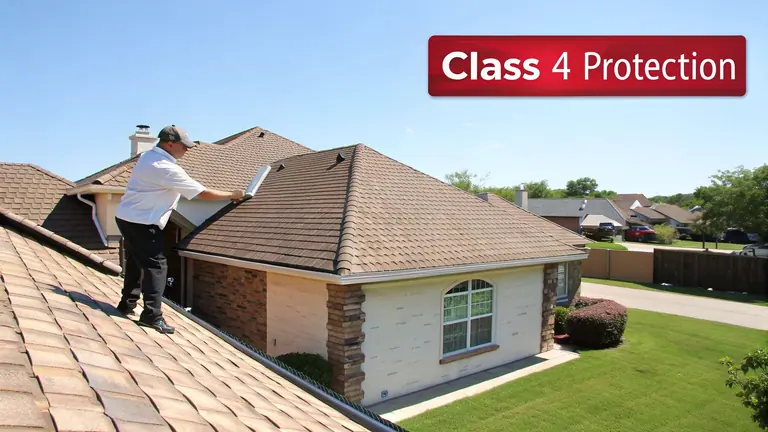
Your roof is the single most important shield protecting your home from Texas’s notoriously wild weather. Think about it—from the golf-ball-sized hail that batters Dallas-Fort Worth's "Hail Alley" to the hurricane-force winds that threaten the Gulf Coast, your roof takes a beating. It’s not just a cover; it’s your home’s armor.
Choosing the right shingle isn’t just about curb appeal. It's a critical investment in your home’s safety and structural integrity. This guide cuts through the noise to give you clear, practical advice on making the best choice for your Texas home, explaining why some shingles stand up to the pressure while others fail.
The Makings of a Texas-Tough Shingle
To pick the right shingle, you have to match its features to the biggest threats in our state. It's like buying tires for a truck you know will be driving through mud, sand, and over rocky trails—you wouldn't settle for standard highway treads. A Texas roof demands that same specialized approach.
Here are the three non-negotiables to focus on:
- Impact Resistance: This is the big one, especially in North and Central Texas. A shingle's toughness against hail is measured by its impact rating. Class 4 is the gold standard, offering the highest level of protection available.
- Wind Resistance: Strong winds can get underneath shingles, lifting and tearing them right off your roof. A shingle’s wind rating, like the Class H rating for winds up to 150 mph, tells you how well it will hold on when a major storm blows through.
- Heat Tolerance: That relentless Texas sun can literally bake standard shingles, making them brittle and shortening their lifespan. Reflective or "cool roof" shingles are designed to bounce back solar radiation, keeping your attic cooler and even lowering your energy bills.
Choosing a shingle is all about matching the product's strengths to your environment's biggest challenges. Here in Texas, that means putting durability against hail and wind first, with heat resistance as a very close second.
For most Texas homeowners, the sweet spot is found in Class 4 architectural shingles. They deliver the toughness needed for hailstorms, the staying power for severe thunderstorms, and the resilience to survive summer after summer. It’s a smart, secure investment that truly protects your property.
Why Your Average Shingle Just Can't Cut It in Texas
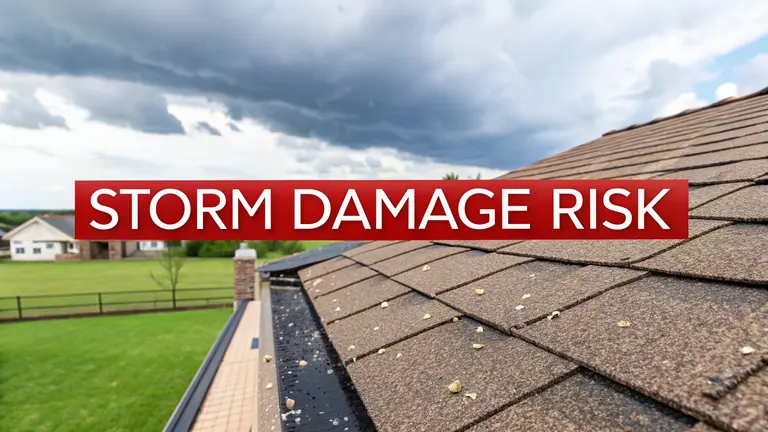
To really get why some shingles are the best roofing shingles for Texas, we have to first talk about the absolute beating our roofs take year after year. The simple truth is that most standard, builder-grade shingles you find on new homes just aren't designed for our climate. They’re built for somewhere much, much milder.
Think of it like this: putting a standard shingle on a Texas roof is like showing up to a hurricane with a cheap convenience store umbrella. It might hold up in a light sprinkle, but the moment a real storm rolls in, that thing is going to flip inside out and leave you soaked. A Texas roof faces that kind of "hurricane" over and over, which is why a basic shingle is usually just a recipe for disaster.
The Triple Threat to Your Roof
Texas weather doesn't just knock politely. It's an all-out assault from three different directions, often in the very same season.
First, you’ve got our most infamous problem: hail. Texas is the hail capital of the country, especially here in the Dallas-Fort Worth "Hail Alley." A standard asphalt shingle is pretty brittle. When heavy, wind-driven hailstones start smacking down, they do a lot more than just leave a few dents.
That impact fractures the shingle's internal fiberglass mat and blasts off the protective mineral granules. Without those granules, the raw asphalt is left exposed to the sun, and it starts to break down fast, leading to leaks. A single bad hailstorm can literally age a standard roof by a decade.
Next up is the relentless wind. From the violent gusts in a spring supercell to the sustained power of a tropical system rolling in from the coast, Texas winds put incredible stress on a roof. They create an uplift force that sneaks under the edge of shingles and tries to peel them right off.
Once the wind lifts a single shingle, it creates an opening, and the whole system starts to unzip. That’s why you see shingles scattered all over the neighborhood after a big storm. The adhesives and nailing on a basic shingle just weren't meant to fight back against the 100+ mph winds we see in severe storms.
For folks on the coast, this is an even bigger deal. The Texas Department of Insurance actually requires a special WPI-8 windstorm certification for roofs in certain "catastrophe zones." It's a tough standard that many basic shingles simply can't meet without very specific, upgraded installation.
Finally, there’s the brutal, unforgiving summer heat. Your roof can easily hit 150-170°F on a scorching July afternoon. This constant, extreme heat causes a cycle of expanding during the day and shrinking at night. Over time, that thermal shock makes the shingle's structure weak and brittle, priming it to crack. The heat also cooks the life right out of the asphalt, drying it out until it loses its flexibility.
It's a Vicious Cycle
The scary part is that these three forces work together. A roof that’s been baked and weakened by the summer sun is far more likely to crack and shatter during the next hailstorm. Shingles that have been fractured by hail are much easier for high winds to grab and tear away.
It's a cascading failure, where each element of our weather makes the roof more vulnerable to the next.
This is the fundamental reason ordinary shingles fail here. They’re a single-layer defense designed to handle one problem at a time. The best roofing shingles for Texas, on the other hand, are engineered from the ground up to be a complete system, built to withstand a multifaceted, year-round attack. Since you can't predict when the next storm will hit, understanding how to prepare for natural disasters is a critical part of protecting your home—and that preparation starts right at the top with a resilient roof.
Understanding Shingle Ratings and What They Mean for You
Stepping into the world of roofing can feel like learning a new language. You'll hear terms like "UL 2218" and "ASTM D7158" thrown around, and it's easy to tune out. But these aren't just technical jargon—they're the clearest signs of how a shingle will actually perform when a Texas storm rolls through.
Think of these ratings like the spec sheet on a new truck. You wouldn't buy one without knowing its towing capacity or horsepower, right? Same idea here. Understanding these numbers empowers you to look at a product and know exactly what kind of protection you're buying for your home.
The Heavyweight Champion of Hail Protection: UL 2218 Class 4
For any Texas roof, the single most important rating is its impact resistance. The gold standard for testing this is UL 2218, and it’s a straightforward but brutal evaluation. In a controlled lab, they drop steel balls of different sizes from various heights to mimic hail.
To give you a real sense of the test:
- Class 1: A 1.25-inch steel ball dropped from 12 feet.
- Class 2: A 1.5-inch steel ball dropped from 14 feet.
- Class 3: A 1.75-inch steel ball dropped from 17 feet.
- Class 4: A 2-inch steel ball dropped from a height of 20 feet.
To pass, the shingle can't crack or show any structural damage on the front or back. Class 4 is the highest rating a shingle can earn, proving it can handle the kind of severe impact that turns weaker roofs into a costly mess.
Here in Texas, where hail is a constant threat, installing anything less than a Class 4 shingle is a huge gamble. For homeowners in hail-prone areas like Dallas-Fort Worth, it’s not a luxury—it’s just common sense. These tougher shingles typically cost between $7.50–$10.00 per square foot installed, an investment that pays for itself when it shrugs off 2-inch hail hitting at 88 mph.
Holding Strong Against Howling Winds: ASTM D7158
After hail, wind is a Texas roof's greatest enemy. That's where the ASTM D7158 wind resistance test comes in. This test measures how well a shingle's sealant strip can hold it down against uplift forces. They basically blast shingles with high-speed winds for two straight hours to see if they lift, tear, or blow off entirely.
The ratings you’ll encounter most often are:
- Class F: Certified to withstand winds up to 110 mph.
- Class H: Certified to withstand winds up to 150 mph.
To put that into perspective, a Category 1 hurricane has winds starting at 74 mph, and a Category 4 storm starts at 130 mph. A Class H shingle gives you a powerful defense against the severe straight-line winds in our thunderstorms and even provides real protection against hurricane-force gusts.
This rating is obviously critical along the Gulf Coast, but even inland areas see supercells that can spawn tornadoes with destructive wind speeds. A Class H shingle has the adhesive strength to stay put when the weather gets truly violent.
Winning the Battle Against Ugly Black Streaks
Finally, let’s talk about something that affects your home's curb appeal: those ugly black streaks you see running down roofs. That's not dirt. It’s a type of blue-green algae called Gloeocapsa magma, and it loves to feed on the limestone filler used in many asphalt shingles. While it won't cause your roof to fail overnight, it looks terrible and can shorten a shingle's lifespan.
The solution is shingles with Algae Resistance (AR) technology. Top manufacturers mix copper-coated granules in with the standard colored ones. When it rains, the copper releases ions that are toxic to the algae, preventing those black streaks from ever getting a foothold. In the humid climates of East Texas and the Gulf Coast, an AR-rated shingle is a must-have to keep your roof looking clean for years to come.
Comparing the Top Shingle Materials for Texas Homes
Now that we know what Texas weather throws at a roof, it's time to look at the materials built to handle it. Choosing the right shingle isn't about picking a color; it's about investing in a defense system. For homeowners here, the real contenders are advanced asphalt shingles and modern metal roofing.
Each has its own playbook of pros and cons, and the best fit for your home will depend on your budget, how long you plan to stay, and the look you're after. Let's dig into the most practical choices and see how they really stack up.
The Evolution of Asphalt Shingles
Asphalt shingles cover most of the homes in America, but the shingles on the market today are a far cry from the old, basic stuff. For a Texas roof, the conversation has to start where the flimsy, flat "3-tab" shingles leave off.
- Architectural (or Dimensional) Shingles: Think of these as the modern standard. Unlike the old flat shingles, architectural shingles are made with multiple laminated layers. This gives them a thicker profile, a textured, high-definition look, and way more durability. They provide a major upgrade in wind and impact resistance, making them the absolute baseline for any quality Texas roof.
- Class 4 Impact-Resistant Shingles: This is the top dog in the asphalt world and, frankly, the smartest choice for hail alley. These are essentially architectural shingles on steroids, beefed up with a polymer-modified asphalt that makes them more flexible—almost "rubberized." This special blend allows them to absorb the shock of a hailstone instead of cracking, which is how they earn the coveted UL 2218 Class 4 rating.
Sure, Class 4 shingles cost more upfront, but they provide the best defense you can get against the state's most notorious roof-killer. That extra protection is also why they often earn homeowners a nice discount on their insurance premiums.
Metal Roofing: The Durable Alternative
Once reserved for barns and commercial buildings, metal roofing has made a huge comeback for homes, and it’s easy to see why. Standing seam metal roofs, with their clean lines and interlocking panels of steel or aluminum, are a beast when it comes to fighting off the elements.
The biggest draws for metal are its incredible lifespan and raw strength. A well-installed metal roof can last 50 years or more—often double what you’d get from an asphalt roof. It deflects hail, can be rated for hurricane-force winds over 150 mph, and won't catch fire.
A common myth is that metal roofs are noisy when it rains. That’s just not true anymore. Modern installations that go over a solid roof deck with the right underlayment make a metal roof just as quiet as any other.
Texas Shingle Showdown: Asphalt vs. Metal Roofing
Okay, let's put these two heavyweights side-by-side. Seeing how they perform on the metrics that matter most to a Texas homeowner makes the choice a lot clearer.
| Feature | Impact-Resistant Asphalt Shingles (Class 4) | Standard Architectural Shingles | Metal Roofing (Standing Seam) |
|---|---|---|---|
| Hail Resistance | Excellent (UL 2218 Class 4) | Fair to Good | Excellent (Resists denting/fracturing) |
| Wind Resistance | Up to 130-150 mph | Up to 110-130 mph | Up to 150+ mph |
| Typical Lifespan | 25-30 Years | 20-25 Years | 40-60+ Years |
| Energy Efficiency | Good (with cool roof options) | Fair | Excellent (Highly reflective) |
| Initial Cost | Higher | Moderate | Highest |
As you can see, both Class 4 asphalt and metal offer serious protection, but with different trade-offs in cost and longevity. Your roofer can help you weigh which one makes the most sense for your specific situation.
Metal roofing isn't just a fad; it's a direct answer to the wilder weather we've been seeing. While shingles are still the most common choice, metal is gaining ground fast, growing at 8.5% annually. Homeowners who make the switch often report saving 20-30% on their summer cooling bills thanks to metal's reflective surface, and it can even boost a home's resale value.
It's also smart to think ahead. If you're even considering solar panels down the line, your roofing material matters. It's important to understand the solar panel roof requirements, specifically mentioning compatible materials like asphalt shingles or metal before you make a decision. The good news is that both Class 4 shingles and metal roofing provide a fantastic, sturdy base for a future solar installation.
Why the Shingle Is Only One Part of the System
Picking a great shingle is a fantastic start, but it's really just one piece of the puzzle. It’s better to think of your roof not as a single layer of shingles, but as a complete team of components working together. Even your star player—a top-of-the-line Class 4 shingle—can’t win the game alone. Its performance is only as good as the supporting cast around it.
This whole setup is what we call a roofing system. Every single part, from the shingles you see to the hidden layers underneath, has a critical job to do. If just one of those parts fails, it compromises the entire system, leaving your home exposed and potentially voiding your shingle warranty.
This flowchart gives you a high-level look at the foundational material choices for your roof.
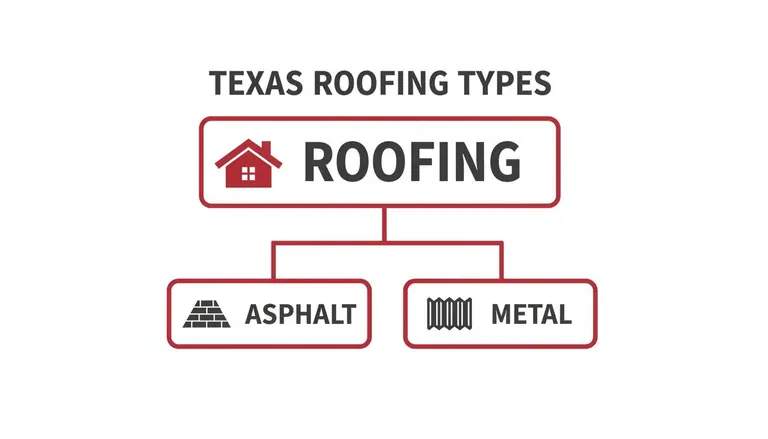
As you can see, asphalt shingles and metal roofing are the two main paths homeowners take, but the system built beneath them is what truly makes them work.
The Unsung Heroes of Your Roof
Let's talk about those supporting players. Several crucial components work behind the scenes to create a cohesive defense. Without them, even the best roofing shingles for Texas wouldn't stand a chance.
- Underlayment: This is your roof's last line of defense. It's a water-resistant barrier that goes directly onto the wood decking before any shingles are laid. Its job is to catch any water that a fierce, wind-driven rain might push past your shingles. Modern synthetic underlayments are a huge upgrade over old-school felt paper, offering far better tear resistance and durability.
- Starter Strips: These aren't just regular shingles. They're specifically designed for the edges of your roof (the eaves and rakes). They have a powerful adhesive strip that seals the first row of shingles down tight, which is essential for preventing wind from getting underneath and lifting them off.
- Ventilation: In the Texas heat, a properly ventilated attic is non-negotiable. Intake and exhaust vents work together to create airflow that pulls hot, moist air out. This prevents heat from baking your shingles from below and keeps your cooling costs from skyrocketing.
- Flashing: You’ll find these pieces of metal around chimneys, pipes, vents, and skylights—anywhere something penetrates the roof deck. Flashing is custom-fit to channel water away from these naturally vulnerable spots, which are prime real estate for leaks. And don't forget, your gutters and downspouts are also a key part of this water management system. You can learn more about why a house needs gutters right here on our blog.
A roofer who cuts corners on underlayment or uses the wrong nails on starter strips can completely undermine a $20,000 roof replacement. The system is only ever as strong as its weakest link.
The Value of a System-Based Approach
This is exactly why professional installation matters so much. A good contractor knows they aren't just nailing down shingles; they are building a complete, integrated system designed to take a beating from Texas weather. They make sure every component is compatible and installed precisely as the manufacturer intended.
From using the right nailing pattern to withstand 130 mph winds to meticulously placing flashing, every single detail counts. One small mistake can create a weak spot that hail or wind will eventually find and exploit.
Ultimately, hiring a contractor who builds a complete system is the only way to guarantee your investment will protect your home for years to come.
Making the Right Choice for Your Texas Roof
Navigating the world of roofing can feel like a lot, but you're almost there. We've walked through the triple threat of Texas weather, decoded all those technical ratings, and seen how a roof is much more than just a layer of shingles. Now it’s time to put all that knowledge to work and make a confident decision for your home.
When it comes down to it, the best roofing shingles for Texas are the ones built to fight back against our state’s harshest conditions. That means prioritizing a Class 4 impact rating to stand up to hail and a Class H wind rating to handle severe storms. Features like algae resistance are also key to keeping your home looking great for years.
Choosing an impact-resistant shingle isn't just another line item on a quote; it's a strategic investment in your home's long-term safety and value. This upfront investment often prevents costly emergency repairs down the road and can even earn you some serious discounts on your homeowner's insurance premiums. The peace of mind that comes with knowing your roof is truly built for Texas weather? That’s priceless.
Partnering with Storm Damage Experts
Of course, choosing the right materials is only half the battle. You need a team that knows exactly how to install them so they perform as promised. At Hail King Professionals, we're more than just roofers—we're storm damage experts who live and breathe this stuff. Our deep experience with Class 4 shingles means we know precisely how to build a roof for maximum resilience.
We make the entire process seamless from start to finish:
- Free, Same-Day Inspections: We'll get on your roof quickly to give you a clear, honest evaluation of its condition.
- Insurance Claim Navigation: Dealing with insurance companies can be a headache. We'll guide you through the entire process and provide the detailed documentation needed to make sure your claim is solid.
- Code-Compliant Installations: Our licensed and insured crews are masters of their craft, following all local building codes to the letter. Your roof won't just be tough; it'll be 100% compliant.
Your All-In-One Exterior Solution
A major storm can affect more than just your shingles. That's why we offer comprehensive services to handle every part of the project, so you only have to make one call.
Your home is a complete system, and we treat it that way. From the initial inspection to the final nail, our goal is to restore and enhance your property with a focus on durability, quality, and your total satisfaction.
Our expertise also covers solar panel detach-and-reset services, which is a critical step for homeowners with existing solar arrays. We can also manage everything from gutters and siding to painting and even financing, making a huge project feel simple and straightforward. To get a better handle on the numbers, you can explore our guide on the cost of a new roof in Texas.
When you choose Hail King Professionals, you’re not just getting a new roof. You’re getting a dedicated partner committed to protecting your home with superior materials, expert workmanship, and a 100% satisfaction guarantee.
Your Texas Roofing Questions, Answered
Choosing a new roof is a big decision, and it’s completely normal to have some questions floating around. Getting the right answers is key to protecting your home—and your wallet. Let's clear up a few of the most common things Texas homeowners ask.
Our aim here is to give you straight-up, practical answers so you can feel 100% confident about your next steps.
Are Class 4 Shingles Really Worth the Extra Cost in Texas?
In a word: yes. The upfront cost for Class 4 shingles is higher, but they can save you a mountain of money and headaches down the road. Think of it like this: you wouldn't take a standard sedan tire off-roading. You'd get heavy-duty tires built for rough terrain. A Class 4 shingle is that heavy-duty tire for your roof, designed to stand up to the hail we get here.
On top of preventing constant repairs or a full replacement after a storm, there's another financial perk. Many Texas insurance carriers offer some hefty discounts on your homeowner's premium for installing a Class 4 roof. Over a few years, those savings can go a long way toward paying back the initial investment.
How Can I Tell If My Roof Has Hail Damage?
Hail damage can be tricky. It's often invisible from your yard and doesn't always cause an immediate leak. The first clues are usually off the roof—look for dings and dents on your gutters, metal vents, or even the fins of your A/C unit.
On the shingles themselves, you're looking for:
- Dark, bruised-looking spots where the protective granules have been knocked off.
- Subtle circular cracks or impacts on the shingle's surface.
The only surefire way to know is to have a professional get up there and take a look. We offer free, same-day inspections where our team provides a detailed photo report, so you see exactly what we see. No guesswork involved.
What Is a Solar Panel Detach and Reset for a Reroof?
If you have solar panels, you can't just roof around them. A "detach and reset" is the industry term for the careful, professional process of removing your solar panels and their mounting hardware before the new roof goes on.
Once the reroof is finished, our specialized crew comes back to reinstall the entire solar array correctly. This is absolutely critical. Doing it right protects your new roof's warranty and ensures your solar system functions perfectly. We handle all the coordination, making it a smooth, hassle-free part of the roofing project.
How Long Does a Full Roof Replacement Typically Take?
For a typical single-family home here in Texas, a full asphalt shingle roof replacement usually takes one to three days. Of course, this can shift a bit depending on factors like the roof's size, its steepness and complexity, and naturally, the weather.
The team at Hail King Professionals prides itself on running a tight ship. We manage the project efficiently to keep the disruption to your life at a minimum, and we maintain a clean, safe job site from the moment we arrive until the last nail is picked up.
Ready to choose a contractor for your shingle roof? Meet Hail King's asphalt roofing contractors to learn about our installation process, project scope, and limited lifetime workmanship warranty, or request a free roof inspection.