

Asphalt Shingle Roof Pitch: A Texas Homeowner’s Guide
After a North Texas storm, most homeowners do the same walk outside. They look for missing shingles, dented gutters, bruised vents, and the neighbor's roof that somehow seems to have come through it better. Then the questions start. Why does one house have a steeper roof and another looks almost flat? Does that matter for hail? Is a lower slope cheaper but riskier? If your roof is due for repair or replacement, those questions aren't cosmetic. They affect how well your roof handles the next round of wind-driven rain.
A lot of roofing advice stops at code. That's where homeowners get tripped up. A roof can meet the minimum requirement and still not be the setup I'd choose for long-term performance in Dallas-Fort Worth or East Texas. Around here, storm-ready and code-compliant are not always the same thing.
Your Roof's Slope Is More Than Just a Number
Walk through any DFW neighborhood after a hailstorm and you'll notice it fast. One home has a sharp roofline that throws water off quickly. The next has a front porch or rear addition with a much flatter section that stays damp longer, catches leaves, and seems to develop trouble spots sooner. Homeowners usually focus on the shingles themselves. The bigger issue is often the asphalt shingle roof pitch under them.
Roof pitch controls how the whole system behaves when weather turns rough. It affects how fast rain leaves the surface, how much chance wind-driven water has to work under the shingle edges, and how forgiving the roof is when debris collects in valleys or around penetrations. In Texas, that matters because storms don't arrive gently. Rain often comes sideways, hail can hit hard, and roofs don't get much grace from repeated weather cycles.
Practical rule: A roof doesn't need to be failing to be a poor match for its pitch. Some roofs leak because of storm damage. Others leak because the slope and the roofing system were never a great fit to begin with.
That's why I tell homeowners to quit thinking of pitch as a framing detail only. It's a performance detail. If you're deciding between repair and replacement, or trying to understand why one section of your roof keeps causing headaches, slope is usually part of the answer.
There's also a financial side to it. A minimum-standard roof may save money upfront on design or installation, but flatter shingle sections tend to demand tighter workmanship, better waterproofing details, and more attention over time. A steeper roof often gives shingles more help from gravity, and that changes the long-term picture.
Understanding Roof Pitch and Why It's Critical
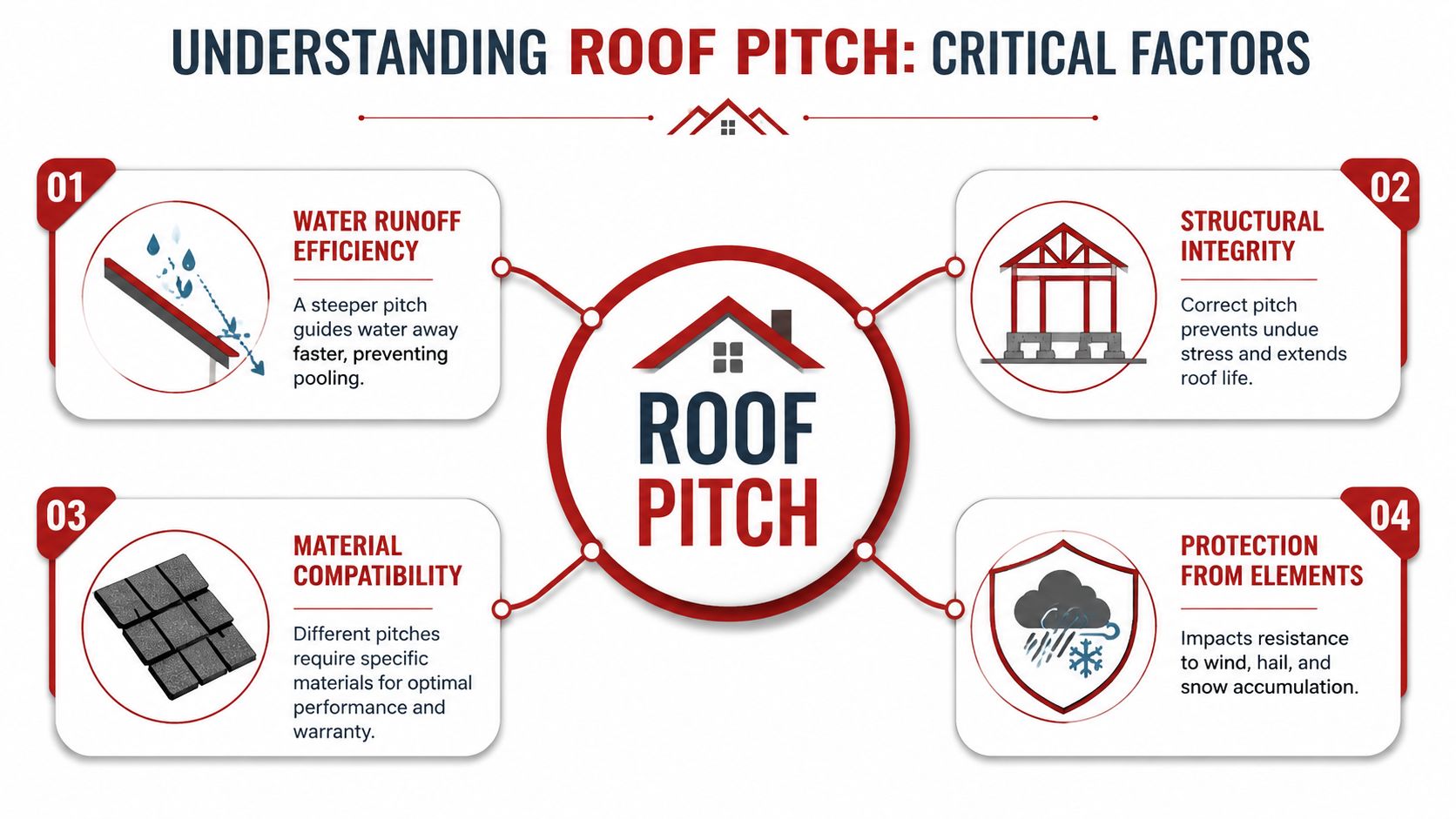
Roof pitch is the angle of your roof, but the easiest way to think about it is like a ramp. A steeper ramp moves water off faster. A flatter ramp slows everything down. Asphalt shingles are built to shed water, not hold it back like a membrane roof.
When roofers talk about pitch, they describe it as rise over run. The run is always 12 inches horizontally. The rise is how many inches the roof goes up over that 12 inches. So a 4:12 roof rises 4 inches for every 12 inches of horizontal run. A 6:12 roof rises 6 inches over the same distance.
The cutoffs that matter
For shingles, the first major line is 2:12. The modern rule-of-thumb for asphalt shingle roof pitch is anchored by the International Residential Code minimum slope of 2:12, and industry guidance treats 2:12 to 4:12 as a low-slope zone that needs extra protection, while many manufacturers prefer 4:12 as the safer threshold for standard installation, as outlined in GAF's guidance on minimum slope for shingles.
That short sentence carries a lot of practical meaning for a homeowner.
- Below the minimum: Standard asphalt shingles aren't the right choice.
- Low-slope shingle range: Shingles may be allowed, but the roof needs extra underlayment protection and tighter installation control.
- Conventional range: Once the roof gets steeper, the system sheds water more naturally and the shingles can do their job with fewer built-in disadvantages.
Why the number changes performance
A flatter shingle roof gives water more time on the surface. It also gives wind more opportunity to push water where it doesn't belong. On a steeper roof, runoff is quicker, debris tends to clear better, and the roof spends less time wet after a storm.
That doesn't mean steep solves everything. It means the roof is working with gravity instead of fighting it.
Homeowners often hear “it meets code” and assume that means “it will perform well for years.” Those are not the same promise.
Pitch also affects how installers approach valleys, penetrations, underlayment choices, and sealing details. If two homes have the same shingle brand but different slopes, they should not be roofed exactly the same way. That's where good contractors separate themselves from crews that treat every roof like a copy-paste job.
How to Safely Measure Your Roof Pitch
You don't need to walk a roof to get a good idea of its pitch. In many homes, you can measure it from a ladder at the eave, from inside the attic, or by asking a roofer to verify it during an inspection. For most homeowners, the safest options are the ladder-edge method or the attic method. If the roof is wet, high, steep, or storm-damaged, stay off it.
The simple level-and-tape method
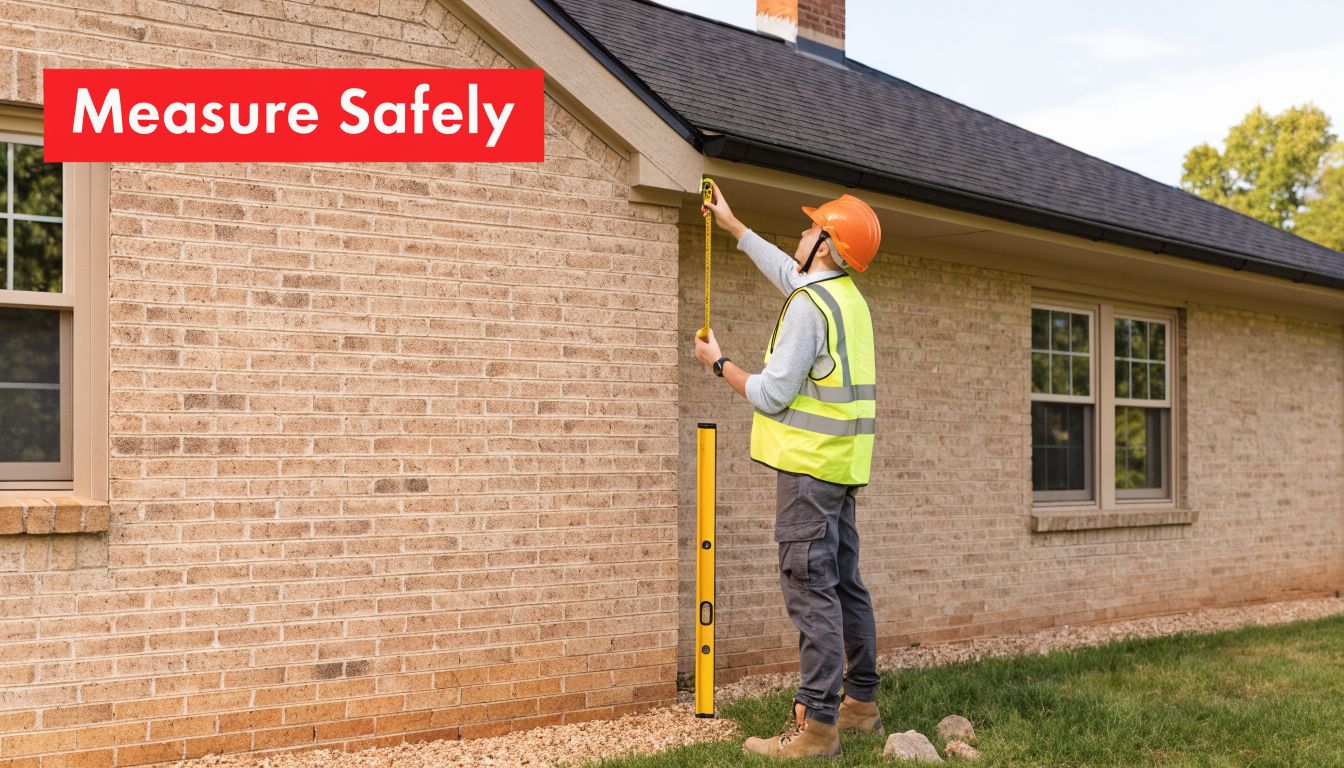
Use a sturdy level, a tape measure, and a pencil or piece of tape for marking. A 12-inch mark works fine because pitch is expressed over 12 inches of horizontal run.
Set the level perfectly horizontal.
Hold one end against the underside of a rafter in the attic, or against the roof surface at the edge if you can do so safely from a stable ladder position.Mark 12 inches on the level.
Measure from the point where the level meets the roof line and mark 12 inches out along the level.Measure straight up to the roof surface or rafter.
At that 12-inch mark, measure vertically until you touch the roof framing or roof plane.Read the rise.
If the vertical measurement is 4 inches, your pitch is 4:12. If it's 6 inches, your pitch is 6:12.
The attic method is often the safer choice
If your attic is accessible and the framing is visible, measuring the underside of a rafter is usually easier and safer than trying to work from outside. You still need good footing, a flashlight, and some common sense. Don't step between joists or move around in a tight attic if you aren't comfortable doing it.
A professional can also measure pitch without guessing from the curb. Some use digital pitch gauges, aerial measurement tools, or drones to inspect difficult sections. If you're curious how that side of the industry is evolving, this roundup of top roof inspection drones gives a useful look at the equipment contractors use to inspect steep and hard-to-reach roofs.
For a visual walkthrough, this video shows the basic process clearly.
When not to measure it yourself
Some roofs aren't DIY jobs, even for a quick check.
- Storm damage is visible: Loose shingles, soft decking, or bent flashing can make a roof edge unsafe.
- The roof is steep or tall: Fall risk climbs fast, especially on multi-story homes.
- You have a low-slope section over a porch or addition: These areas often need more than a pitch reading. They need a system check.
- You're unsure what you're looking at: Complex roof lines can fool people. One section may be a different pitch than the main roof.
If you need the pitch for a repair quote, insurance conversation, or replacement decision, it usually makes more sense to get it documented by a roofer than to measure it yourself once and hope it's right.
Installation Requirements for Different Pitches
A 3:12 roof and a 6:12 roof may both wear asphalt shingles, but they should not be installed as if they were the same roof. Slope changes the margin for error. It tells the installer how much the assembly can rely on water-shedding and how much it must rely on added protection underneath.
Major industry sources and code-aligned guidance identify 2:12 as the absolute minimum acceptable pitch for asphalt shingles, and below that point shingles are generally not permitted because the assembly depends more on waterproofing than on shedding water, as explained in this review of minimum roof pitch for shingles.
What changes as pitch changes
On lower slopes, underlayment matters more because water moves slower. Details around valleys, wall lines, chimneys, vents, and transitions become less forgiving. On standard slopes, the shingles have more help from gravity. On very steep roofs, runoff is excellent, but fastening and control become more demanding.
Here's a practical way to look at it.
Asphalt Shingle Installation Requirements by Roof Pitch
| Roof Pitch (Rise:Run) | Category | Required Underlayment | Ice & Water Shield | Special Considerations |
|---|---|---|---|---|
| Below 2:12 | Too low for standard asphalt shingles | Shingles generally are not the right system | Commonly part of alternative low-slope assemblies | Use a roofing system designed for waterproofing rather than water-shedding |
| 2:12 to 4:12 | Low-slope shingle application | Enhanced protection such as double-layer underlayment | Often used for added protection at vulnerable areas | Slower runoff, tighter flashing work, and stricter installation control |
| 4:12 to 9:12 | Standard residential range | Conventional underlayment per system requirements | Used where needed by design and local conditions | Stronger drainage and fewer low-slope disadvantages |
| Greater than standard residential slopes | Steep-slope application | Follow manufacturer requirements for the roof and shingle type | Used based on roof design details | Additional fastening discipline and anti-slip measures may be needed |
A homeowner doesn't need to memorize every detail. What matters is understanding that a quality estimate should reflect the roof you have. If a contractor gives the same installation plan for a low rear addition and a steeper main roof, that's a red flag.
For a closer look at low-slope decision points, this guide on asphalt shingle roof slope minimum is worth reading before you approve a replacement scope.
What to ask your roofer
Ask direct questions. Good roofers won't dodge them.
- What underlayment are you using on the low-slope sections? If the answer is vague, keep pressing.
- Will the porch roof be handled the same as the main roof? It shouldn't be unless the slopes are the same and the details support it.
- How are you detailing valleys and penetrations? These are the spots where poor pitch decisions usually show up first.
- Are you following the shingle manufacturer's requirements for this slope? That matters for performance and warranty alignment.
The best installation isn't the one that looks good on day one. It's the one that still sheds water the way it should after years of Texas heat, debris, hail, and hard rain.
Steep Slopes and Low-Slope Roofing Alternatives
Roof pitch creates problems at both ends of the spectrum. Very low slopes don't let standard shingles shed water the way they're meant to. Very steep slopes can still use shingles, but gravity starts working against the installer instead of helping.
That's why a smart roofing plan doesn't start with the material. It starts with the slope.
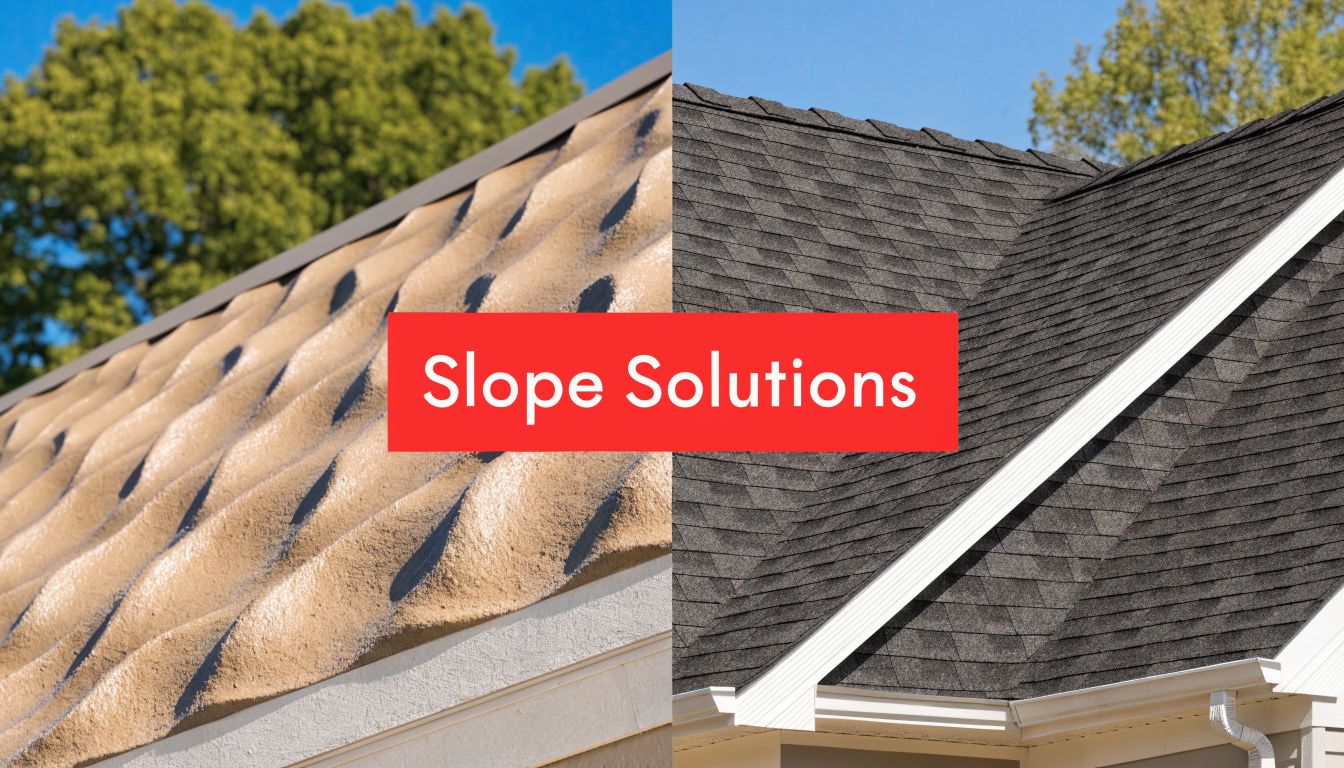
When the roof is too flat for shingles
On roof areas below the accepted shingle minimum, the issue isn't that shingles are lower quality. The issue is that they are the wrong type of system. Shingles are layered water-shedding materials. Very low-slope roofs need systems built more around continuous waterproofing.
That's where alternatives make more technical sense:
- Modified bitumen: Common on low-slope residential sections and additions.
- TPO or similar membrane systems: Often used where a sealed surface is the priority.
- Standing seam metal: In the right design, it can be a strong option for lower-slope applications.
If your house has a flat porch cover, a near-flat patio extension, or a low-slope addition, matching it to the main shingle roof for appearance can be tempting. It isn't always the durable choice. A mixed-material roof is often the better answer because each section gets the system that fits its slope.
If that's the kind of roofline you have, this overview of flat and sloped roof considerations helps clarify why one home can legitimately need more than one roofing approach.
When the roof is very steep
At the other extreme, shingles can still work on steep roofs. ARMA notes that slopes greater than 21:12 are suitable for asphalt shingle application, but special methods are required, including increased fastening discipline and manufacturer-recommended asphalt roof cement beneath the tabs, as detailed in ARMA's technical bulletin on shingles for slopes greater than 21:12.
That matters on tall gables, A-frame sections, and dramatic front elevations. These roofs shed water fast, but the installer has to control shingle slippage and attachment carefully. Wind exposure can also become more of a concern depending on the structure and surrounding terrain.
A roof can be “good for drainage” and still demand specialized installation. Steep doesn't mean simple.
The practical takeaway
Low-slope roofs need the right waterproofing strategy. Very steep roofs need the right mechanical attachment strategy. The middle range is where standard shingle roofing is generally most forgiving. Homeowners usually get into trouble when someone tries to force one material and one installation style across every roof section without respecting those differences.
Roof Pitch for DFW Storms and Hail Protection
In North Texas, roof pitch isn't just a building detail. It's a storm performance issue. A roof that drains slowly stays under stress longer during hard rain. A roof that gives wind-driven water more time to work under the shingle edge is asking more from the system.
That's why I look at pitch differently in DFW than I would in a milder climate. If a roof is at the minimum allowed slope, I don't automatically call that wrong. I call it less forgiving. And in hail country, forgiving matters.
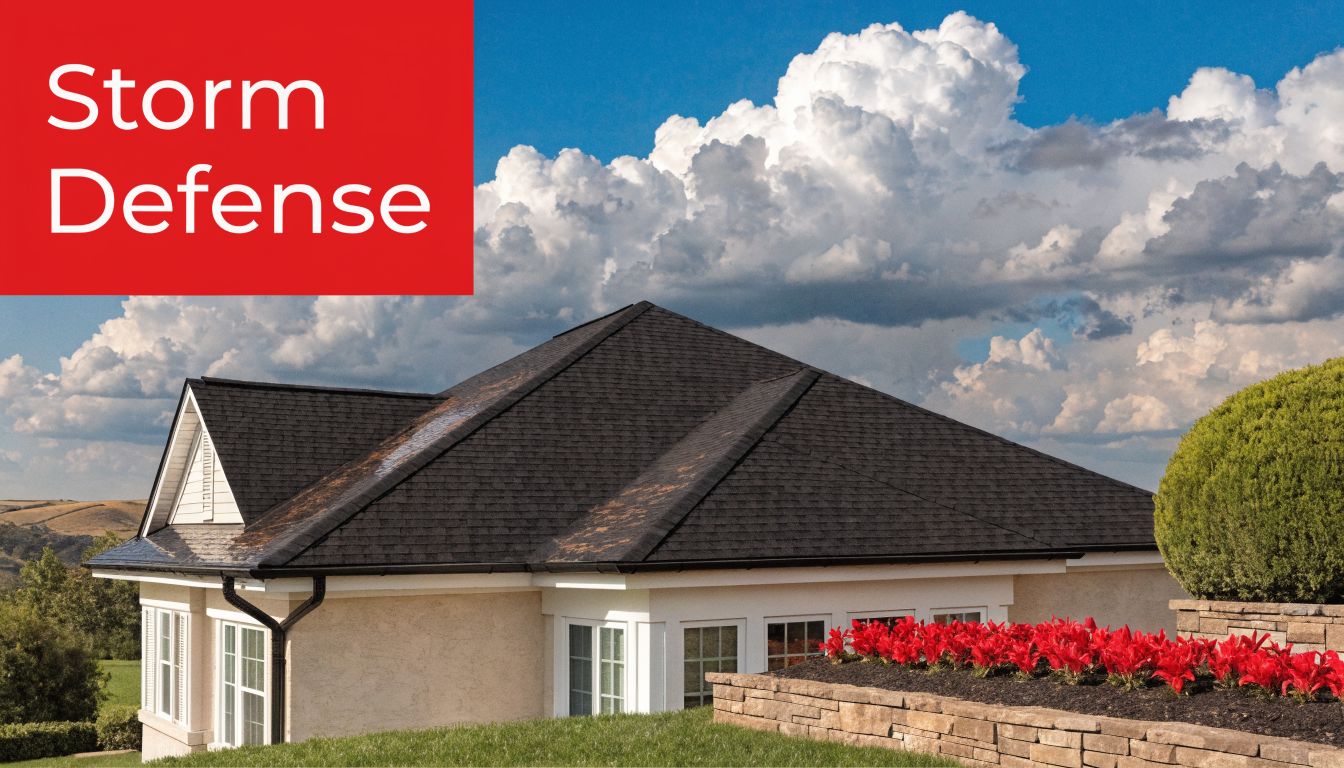
Why steeper is often the smarter choice here
While code allows a 2:12 slope, many experienced roofers note that residential asphalt shingle roofs are more commonly 4:12 to 9:12 for better drainage and durability, and homeowners often mistake code compliance for the best long-term design, as discussed by Bill Ragan Roofing on minimum roof pitch for shingles.
That tracks with what works in Texas. A roof in that more conventional range usually has an easier time clearing water, drying out after storms, and reducing the odds that minor installation imperfections turn into interior leaks. When hail and wind hit together, that extra drainage efficiency matters more than people think.
What pitch changes during real storms
Here's what a stronger slope does in practical terms:
- Moves rain off faster: Less dwell time means fewer chances for water to exploit edges and flashings.
- Helps debris clear more naturally: Leaves and grit don't sit as long in drainage paths.
- Improves the roof's margin for error: No roof should rely on luck, but steeper shingle roofs usually tolerate weather stress better than flatter ones.
- Pairs better with impact-resistant upgrades: If you're investing in tougher shingles, it makes sense to put them on a slope that helps the whole assembly perform.
That last point matters. Class 4 impact-resistant shingles can be a smart upgrade in hail-prone neighborhoods, but they still need a roof design and installation approach that supports them. If you're comparing materials, this guide to hail-resistant roofing materials gives a solid starting point.
For homeowners recovering after a storm, it also helps to understand the bigger process, not just the roof mechanics. This article from AMPM Restoration Services covers practical recovery steps that fit well alongside a roofing inspection.
In DFW, “minimum allowed” is not the same as “what I'd want over my living room during the next hailstorm.”
Code minimum versus Texas-durable
This is the distinction most online guides miss. Code tells you the lowest line you can cross and still be allowed to install shingles. It does not promise that line is the best long-term target for a storm-prone region. If you're building, remodeling, or replacing a low-slope section, the better question isn't just “Can shingles go there?” It's “Will shingles there make sense after years of hail, heat, and hard rain?”
That's the decision that saves money later.
When to Call a Pro and What Happens Next
A lot of homeowners call after the second leak, not the first. That pattern is common on low-slope porch roofs, additions, and sections that were built to meet minimum code but never handled Texas weather especially well. If water keeps showing up in the same spot, or a hailstorm left bruised shingles and exposed weak points, it is time for a professional inspection.
A proper inspection should answer a few specific questions. What is the actual pitch on each roof section? Does the roofing material match that slope? Are the trouble spots tied to transitions, valleys, vents, wall tie-ins, drainage, or past repair work? In DFW, a good inspector also looks at whether the roof is merely allowed by code or whether it has a setup that can hold up better through hail, hard rain, and summer heat.
Signs it's worth making the call
- You do not know the pitch on part of the roof: That happens often on covered patios, dormers, and room additions.
- Leaks keep returning to the same area: Repeated patching usually points to a slope, flashing, or material problem.
- The roof has different slopes on different sections: One roofing system may not be the right choice everywhere.
- You are planning a replacement: That is the right time to decide whether a section should stay shingled or switch to a low-slope product.
The inspection itself should be straightforward. A solid contractor checks the roof safely, documents the condition with photos, and explains the findings in plain language. If one section is a poor candidate for shingles, you should hear that clearly. If the better answer is repair on one plane and replacement on another, that should be spelled out too.
Budget also matters at this stage. The best scope on paper is not helpful if it ignores insurance limits, financing, or other exterior work tied into the roof, such as gutters, siding, or solar removal and reset. Hail King Professionals is one example of a contractor that inspects roof condition, slope, ventilation, and shingle suitability before recommending repair or replacement.
The next step is simple. Get the roof measured, get the weak points identified, and find out whether your current system is just code-compliant or built to take a DFW storm.