Hail Damage TPO Roof Guide for DFW Property Owners
The morning after a North Texas hailstorm usually starts the same way. Parking lot littered with leaves, metal downspouts dinged up, HVAC screens rattled loose, and somebody on your team asking, “Do we need to worry about the roof?”
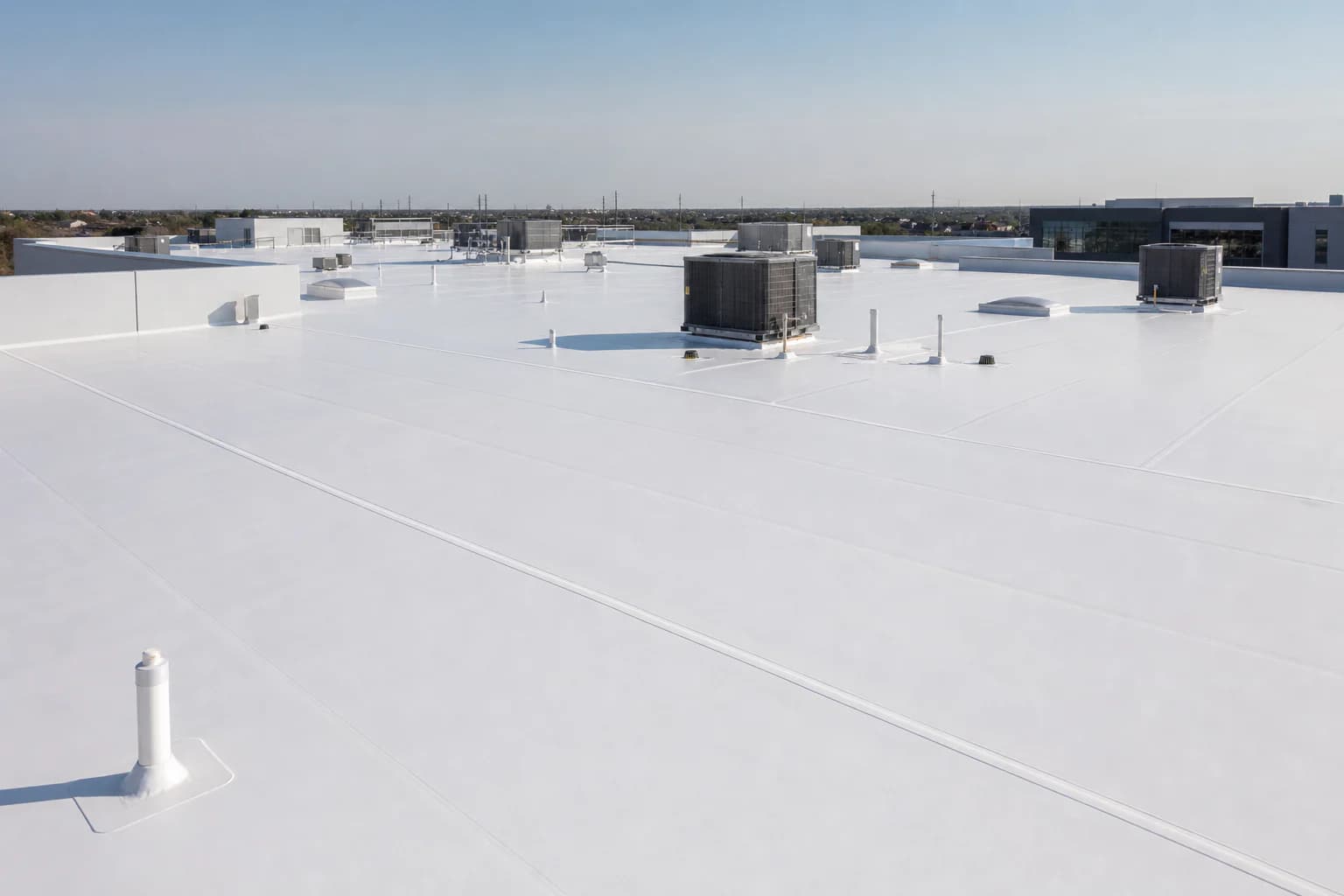
If your building has a TPO system, that's the right question. TPO is common on commercial properties across DFW because it's efficient, clean-looking, and practical for low-slope roofs. But after hail, the problem usually isn't the dramatic damage everyone expects. It's the subtle damage that gets missed during a quick walkthrough, then shows up later as seam failure, trapped moisture, or a leak that seems to come out of nowhere.
Most property managers don't need more storm panic. They need a way to separate cosmetic hits from functional roof damage, and they need to know when a repair is enough and when it's just buying time.
Your First Steps After a Texas Hailstorm
You're probably not climbing a ladder right after a storm, and you shouldn't. Start at ground level and work outward. Look at everything the storm touched. Dented metal edge, damaged condenser fins, broken skylight lenses, and splatter marks on rooftop units all help tell the story of what likely hit the roof.
Texas stays at the center of this conversation for a reason. In the United States, wind and hail damage accounted for 34.3% of property damage claims nationwide in 2019, and hail-storm occurrence rose 15% in 2022, with Texas listed among the states with the most hail events, according to Policygenius hail damage statistics. If you manage property in DFW, repeated storm exposure isn't a one-off problem. It's an operating reality.
That means your first move should be controlled, not rushed.
What to do in the first few hours
- Document the site conditions. Photograph dents in soft metals, damaged signage, clogged drains, fallen branches, and any water intrusion inside the building.
- Check for immediate safety issues. Loose sheet metal, hanging electrical components, and standing water near access points matter more than guessing about membrane damage from the parking lot.
- Log the storm date and rough time. That simple note helps later if you need to line up weather history, maintenance records, or an insurance timeline.
- Protect access areas. If trees or limbs are blocking entries or threatening the building envelope, a practical resource for cleanup planning is Phoenix storm damage tree removal, especially if you manage sites across multiple storm-prone markets and need a clear benchmark for emergency response.
Practical rule: Don't let the absence of an interior leak on day one convince you the roof escaped damage.
A TPO roof can take hits that don't produce a visible hole right away. That's what makes post-storm decisions tricky. You're not just asking whether the membrane was punctured. You're asking whether the roof system was weakened.
How to Identify Hail Damage on a TPO Roof
On TPO, obvious damage is the easy part. Tears, punctures, split flashing, and open seams don't need much interpretation. The harder part is recognizing impact damage that looks minor but changes how the roof performs.
A good way to think about it is this. A puncture is like a tire blowout. You know you have a problem immediately. A bruise or seam hit is more like a car door ding that bent the panel under the paint. The surface may still look mostly intact, but the material underneath took stress.
Early in the inspection, use this hierarchy.
What visible TPO hail damage looks like
TPO membranes can resist hailstones up to about 1 3/4 inches, but older membranes become more vulnerable as components migrate out of the sheet. Damage can show up as semicircular patterns or cracks, and impact can also create cone-shaped cracking in the underlying gypsum cover board even at low impact energies, as described in Kirberg's guidance on flat roof hail damage.
Look for these signs during a safe roof walk:
- Direct punctures or tears. These are clean breaches in the membrane and usually support a straightforward repair discussion.
- Semicircular cracks. On TPO, hail strikes often leave curved fracture patterns instead of a clean round hole.
- Bruised or softened spots. The surface may not split, but the impact point can feel different under foot pressure or hand pressure.
- Surface discoloration. Chalky patches, scuffing, or areas that don't match the surrounding membrane can mark impact stress.
- Damage at transitions. Parapet tie-ins, drain bowls, penetration flashings, and corners often show stress before open field membrane does.
Where quick walkthroughs fail
Seams deserve more attention than they usually get. Hail doesn't always blow a seam apart on contact. Sometimes it stresses a welded area just enough that heat, movement, and ponding finish the job later.
A useful next step after the visual pass is thermal imaging for roof inspection, especially when you suspect hidden wet insulation or localized assembly damage that doesn't show clearly on the surface.
This video gives a good visual reference for what inspectors look for on low-slope roofs after a storm:
On a hail damage TPO roof, the strike mark is only part of the story. The better question is what happened below that mark.
Items managers should photograph
Before anyone starts marking damage with chalk or discussing repairs, get clean photos of:
- Field membrane hits from multiple angles
- All seams near impact clusters
- Flashings around curbs and penetrations
- Drains and low spots where water may collect after the storm
- Mechanical equipment damage that helps confirm hail size and direction
That photo set makes later conversations more precise. It also helps separate actual roof damage from general storm mess.
Assessing Damage Severity Is It Cosmetic or Critical
A lot of property owners hear “cosmetic” and think “safe to ignore.” On a TPO roof, that can be an expensive mistake.
The dividing line isn't whether the roof looks ugly. It's whether the hail changed how the roof assembly sheds water, resists movement, and protects the layers underneath. Some impressions in insulation may look severe and still not materially reduce thermal performance. At the same time, a roof with very little obvious visual damage can have weakened seams, shrinkage stress, or membrane changes that lead to future leaks, as discussed in this analysis of functional versus cosmetic hail damage on TPO.
What cosmetic damage actually means
Cosmetic damage usually means the roof still performs its basic job. No breach. No seam compromise. No failure at flashing details. No moisture entry path created by the storm.
Examples can include:
- Shallow impressions that don't alter the membrane integrity
- Minor visual marks with no associated cracking
- Surface dents in underlying insulation that don't translate into membrane failure
That kind of damage may still matter for documentation and claim review, but it doesn't always justify invasive work.
What turns it into critical damage
Functional damage shows up when the impact changed the system, even if the change is subtle.
A TPO roof moves every day. It expands in heat, contracts at night, and flexes around penetrations and fastener lines. If hail stressed the membrane or seam welds, the problem may stay quiet until the next hard rain or the next stretch of summer heat.
Here's where I'd treat the roof as compromised:
| Condition | Why it matters |
|---|---|
| Repeated strikes along seams | Welded joints may have lost strength |
| Cracks near penetrations | Movement will widen these areas first |
| Soft spots over cover board | Underlying board may be fractured |
| Localized shrinkage or tension | Membrane may pull away at details later |
| Early interior staining after storm | Water path may already exist |
A roof can be watertight today and still be storm-damaged.
The practical test
Don't ask only, “Is there a hole?” Ask four better questions:
- Did hail change the seam condition?
- Did impact transfer into the cover board or insulation?
- Is the damage isolated, or repeated across the field?
- Would you trust this same area through another Texas summer?
That's the distinction that matters with a hail damage TPO roof. Cosmetic damage affects appearance. Critical damage affects service life.
Proactive Upgrades to Fortify Your TPO Roof
If you're replacing a storm-damaged roof or budgeting for a new one in a hail-prone area, the wrong way to buy TPO is by looking at membrane thickness alone. The right way is to look at the full assembly.
Hail resistance in code and FM-based guidance is tied to standardized testing. In areas with very severe hail exposure, defined as hail diameters of less than 2.0 inches over a 15-year mean recurrence interval, roof systems are often expected to meet ANSI/FM 4473 or UL 2218 Class 4 criteria. The important part is that the requirement applies to the full roof assembly, not just the top sheet, as outlined in IIBEC's discussion of hail-resistance classifications.
What actually improves hail performance
A stronger TPO package usually comes from layering decisions, not marketing language.
- Heavier membrane option. Moving from a thinner sheet to an 80-mil membrane can provide more wear margin, especially on buildings that see service traffic and repeated storm exposure.
- High-density cover board. This is one of the smartest upgrades on a hail-prone low-slope roof because it helps absorb and distribute impact.
- Detail work that matches the field. Strong field membrane with weak flashing details is a bad trade.
- Assembly testing. Ask whether the specified system, not just the membrane brand, aligns with the hail exposure expected for the site.
Where coatings fit
Coatings aren't a cure for structural storm damage, but they can play a role on an aging TPO roof that's still serviceable. A properly selected coating can add a sacrificial wear layer and help with long-term weathering if the membrane is sound first. If you're comparing options, this guide on best roof coatings for flat roofs is a useful place to sort through where coatings make sense and where they don't.
Field advice: Don't spend money hardening only the membrane if the cover board and details remain the weak link.
The financial trade-off
Property managers usually feel pressure to cut the upgrade package after a loss. I get it. But in North Texas, skipping impact-focused upgrades often means buying the same roof problem twice. You save at installation, then pay again in disruption, patching, leak response, and claim friction after the next storm.
The best upgrade choices are the ones that reduce uncertainty. Stronger assembly. Better impact path. Better documentation. Fewer gray areas when hail hits again.
TPO Roof Repair vs Full Replacement After a Storm
The repair-versus-replace call gets oversimplified all the time. It isn't just about the size of the estimate. It's about whether the roof still has a dependable future after the damaged areas are addressed.
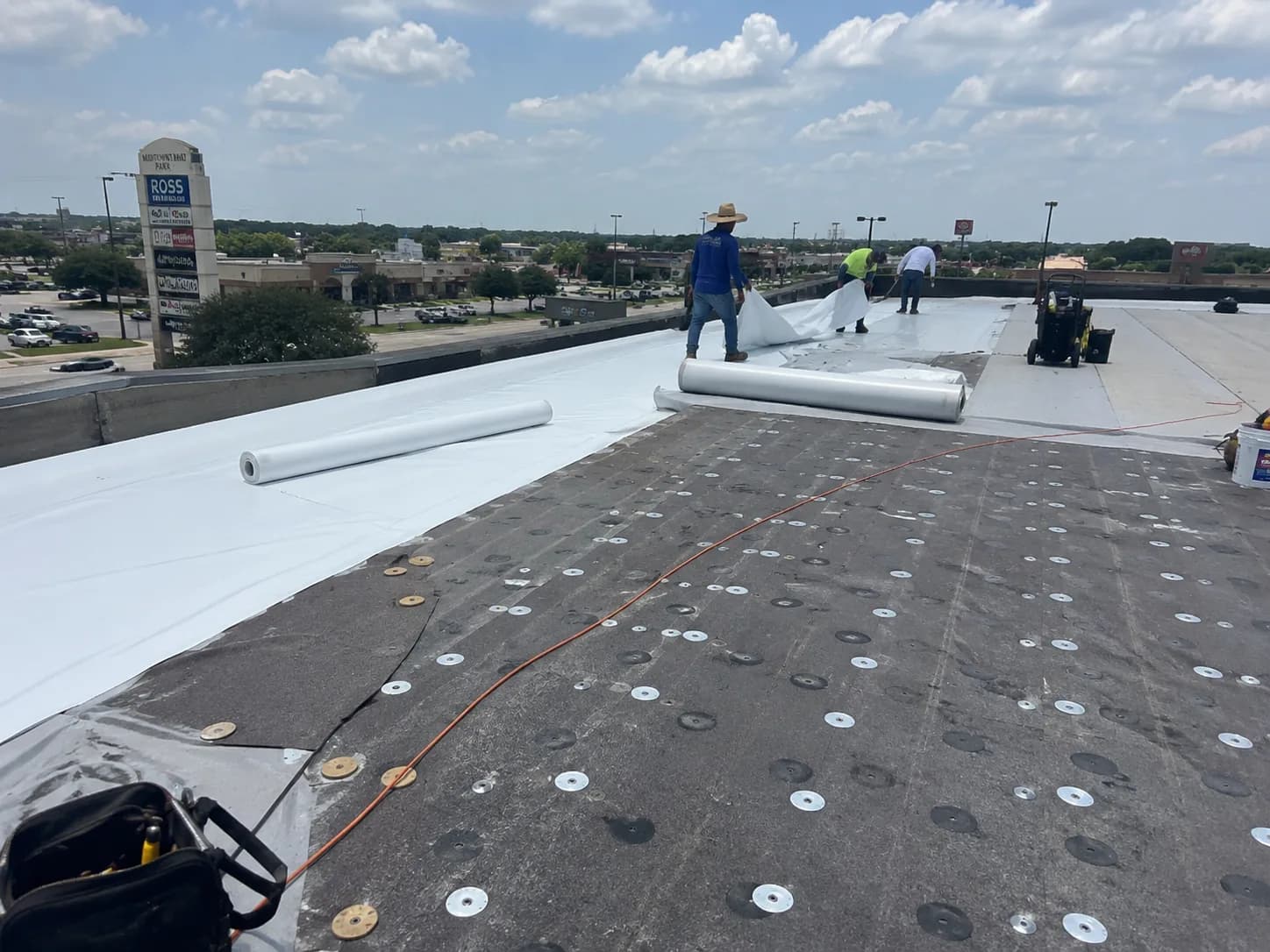
A newer TPO roof with a few localized punctures is one conversation. An older roof with repeated impact marks, stressed seams, and damaged cover board is a different one. Same storm. Very different decisions.
This side-by-side view helps frame it:
When repair makes sense
Repair is usually the better move when the damage is limited and the roof still has service life left.
Good candidates for repair often share these traits:
- Damage is isolated. A few punctures, a torn flashing, or a small impacted area around a curb.
- Seams remain sound. If the welded system is still intact, targeted repairs can hold.
- The roof is relatively young. Newer TPO systems generally justify preserving the assembly if damage isn't widespread.
- Underlying components are dry and stable. If the cover board and insulation still support the membrane properly, repairs stay meaningful.
When replacement is the honest answer
Replacement becomes the better decision when patching starts solving symptoms instead of the system problem.
Look hard at replacement when:
| Factor | Repair leans this way | Replacement leans this way |
|---|---|---|
| Damage spread | Tight, isolated areas | Repeated hits across the roof |
| Seam condition | Stable and consistent | Multiple stressed or questionable seams |
| Substrate condition | No sign of board failure | Soft spots or fractured support layers |
| Roof age | Early or mid-life | Nearing the end of useful life |
| Future risk | Predictable after repair | Likely to keep generating call-backs |
Questions to ask your contractor
The best conversations aren't “Can you patch it?” They're more specific.
Ask:
- Is the damage confined to the membrane, or did it transfer into the cover board?
- How many seams are compromised or questionable?
- Will a repair preserve manufacturer intent and serviceability, or just close visible openings?
- If this roof takes another hail event next season, where do you expect failure first?
One practical option for owners who need a documented inspection and scope before making that decision is Hail King Professionals, which provides roof inspections and repair or replacement recommendations for storm-damaged systems.
A good repair extends roof life. A bad repair delays a replacement you already need.
Navigating the TPO Roof Insurance Claim Process
Insurance claims get harder when the roof damage is subtle. Adjusters can spot punctures fast. They need more support when the issue is seam stress, membrane fracturing, or substrate damage that doesn't jump off the roof at first glance.
That's why documentation quality matters so much in Texas. In Texas alone, hail-related insurance claims exceeded $500 million in 2022, and hail-loss claims in the state reached 192,988 in 2019, according to NICB reporting on rising roof claim losses. With that volume, vague roof notes usually don't move a claim forward.
The workflow that helps
Follow a clean sequence. It reduces confusion later.
- Photograph first, disturb later. Get wide shots, close-ups, interior signs, and rooftop mechanical damage before temporary work changes the evidence.
- Notify the carrier promptly. Don't wait for a leak to worsen before opening the file.
- Get an independent roof assessment. A detailed inspection report often explains damage better than a short adjuster walk.
- Organize building records. Prior repair invoices, roof age information, and maintenance logs help establish pre-storm condition.
- Attend the adjuster visit. Have your roofing representative there if possible so subtle damage points are discussed.
- Review scope, not just price. A lower settlement can still look adequate if key assembly items were omitted.
What strengthens a claim on TPO
The strongest claims usually include more than pictures of the membrane.
- Correlation evidence. Damage to metal edge, vents, condenser fins, or other site components supports the roof narrative.
- Marked roof plan. Showing where the impacts are concentrated helps explain pattern and severity.
- Seam-specific notes. This matters on TPO because functional damage often hides there.
- Substrate findings. If cover board damage is suspected, that needs to be stated clearly.
A lot of owners also learn after the fact that coverage language matters almost as much as roof condition. If you're reviewing broader storm exposure issues across properties, it's worth understanding how wind, hurricane, and flood policies differ, because the structure of coverage can shape how losses are handled in severe weather regions.
For a cleaner overview of the paperwork and timing side, this guide to the storm damage insurance claim process is useful.
Don't hand in a claim package that says “hail damage present” and expect that to be enough on a commercial TPO roof.
What doesn't work
Three things cause avoidable problems:
- Late reporting when the storm date can no longer be tied cleanly to the damage
- Generic contractor summaries that don't distinguish membrane damage from assembly damage
- Premature patching that removes evidence before it's documented
A claim gets stronger when the roof story is specific, visual, and tied to actual functional risk.
When to Call a TPO Roofing Professional
If the storm was strong enough to leave visible evidence around the property, it's strong enough to justify a professional roof inspection. That's especially true on TPO, where the expensive problems often sit below a surface that still looks mostly serviceable.
Call a roofer when you see cracked flashing, impact clusters near seams, fresh interior staining, soft spots, drain-area issues, or rooftop equipment damage that suggests the membrane took similar hits. Call one when you don't see much, but the storm was severe and the roof is older. And call one before the adjuster visit if you want a useful roof-specific explanation of what matters and what doesn't.
A proper inspection on a hail damage TPO roof should include more than a walk and a guess. It should sort visible damage from hidden assembly damage, identify repairable areas versus suspect sections, and produce documentation you can use for maintenance planning or a claim.
For DFW and East Texas properties, that timing matters. Small membrane issues don't stay small for long once heat, UV, and the next round of storms get involved.
If you're relying on a quick visual check from the ladder edge, you're not really evaluating hail damage. You're just checking whether the roof already failed.
If you need a documented next step, Hail King Professionals provides free, same-day roof inspections for DFW and East Texas properties, with clear repair-or-replacement findings for storm-damaged roofing systems.