

You hear the wind push against the house. Rain starts hitting harder. In Dallas, Fort Worth, Austin, and the rest of Texas, that sound can make any property owner look up at the ceiling and wonder if the roof is about to hold or fail.
That worry is understandable. Texas roofs take a beating from hail, severe thunderstorms, high winds, heavy rain, and long stretches of heat that dry out sealants and stress roofing materials. But most leaks don't start with a dramatic hole in the roof. They usually start with a small weakness that got ignored until the next storm exposed it.
That's the good news. If you want to know how to prevent roof leaks, the answer is rarely a mystery. It comes down to inspections, seasonal upkeep, smarter material choices, and knowing when a temporary fix is all you should attempt. For homeowners, landlords, and commercial property managers across places like Frisco, McKinney, Tyler, Longview, San Antonio, and Round Rock, prevention is a strategy, not a guess.
Proactive Roof Care Starts Before the First Drip
A lot of leaks begin long before anyone sees a stain on drywall. A spring hailstorm in Arlington might bruise shingles. Summer heat in San Antonio can dry out sealants around vents. Wind-driven rain in Plano can test every flashing joint at once. The leak shows up later, but the failure started earlier.
That's why good roof care is less about reacting to water and more about reducing weak points before the next storm arrives. On Texas properties, the roof isn't working alone either. Gutters, drainage paths, attic airflow, and flashing details all matter. If one piece fails, water usually finds a route in.
What Texas weather changes
Texas weather speeds up the normal aging process. The same roof can deal with hail impact, ultraviolet exposure, sudden temperature swings, and high winds in a short span of time. Residential roofing and commercial roofing both suffer when those stressors pile up.
A practical prevention plan usually includes:
- Regular inspections: Catching loose shingles, lifted flashing, punctures, and worn sealant before a storm does.
- Drainage management: Keeping gutters, downspouts, and roof drainage paths open so water exits fast.
- Targeted upgrades: Improving vulnerable areas like valleys, flashing transitions, and flat-roof drainage design.
- Fast response after storms: Looking for hail damage roof repair needs or storm damage roof repair needs before small damage spreads.
Roof leaks feel sudden to owners, but on the roof itself, they usually develop in stages.
If you're also comparing general maintenance costs for related exterior work, a resource on Flagstaff roof cleaning costs can help frame how cleaning and upkeep fit into broader property maintenance planning. The pricing isn't Texas-specific, but the budgeting mindset is useful.
Prevention beats emergency repair
Emergency roof repair has its place. Nobody should ignore active water entry. Still, the cheapest leak is the one that never starts. That matters whether you're searching for a roofing contractor near me after a storm or trying to avoid needing roof repair near me during the next round of bad weather.
Texas property owners do best when they stop thinking of leak prevention as a one-time task. It works better as a recurring routine tied to the weather your roof faces.
The Foundation of Prevention Routine Roof Inspections
The strongest prevention habit is simple. Schedule professional roof inspections twice a year.
Regular professional roof inspections every 6 months are the most effective statistical preventive measure against roof leaks, with industry data showing that 85% of all roof leaks originate from unaddressed minor damage detectable only during routine inspections. Investing $200–$400 annually in biannual professional inspections saves homeowners an average of $8,500 over 10 years according to this roof leak prevention data.
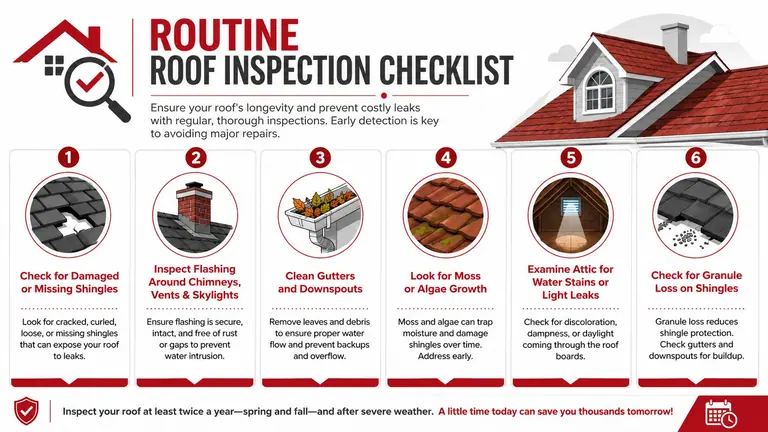
That tracks with what Texas roofs deal with in real life. Small issues don't stay small when hail, heat, and wind keep revisiting the same weak spot.
What you can check from the ground
A property owner can do a useful visual review without climbing the roof. That's the safe line. Ground-level checks help you spot obvious trouble, especially after storms.
Use this quick scan:
- Look for shingle movement: Missing tabs, lifted edges, or patches that don't sit flat.
- Check metal details: Flashing that looks bent, separated, or out of place around chimneys and wall lines.
- Watch the gutters: Overflow marks, sagging sections, and granules collecting at downspout exits.
- Scan roof penetrations: Vent pipes, skylights, and exhaust caps often show problems first.
- Inspect inside the attic: Damp insulation, staining, mildew smell, or daylight where it shouldn't be.
What a professional inspection catches
A trained roofer goes beyond the visible. The critical difference is that a professional inspection is looking for failure patterns, not just obvious damage. That matters for residential roofing and flat roofing alike.
Professionals typically focus on:
- Flashing transitions: Chimneys, step flashing, valley metal, and wall intersections.
- Pipe boots and seals: Rubber boots crack and shrink in Texas heat.
- Hail impact points: Bruising and punctures that don't stand out from the yard.
- Fastener issues: Backed-out nails and exposed fasteners on metal roofing or accessories.
- Drainage defects: Areas where water slows, backs up, or ponds.
For commercial roofing contractor near me searches, this is even more important. Large low-slope systems can hide trouble until insulation gets saturated or interior damage starts appearing.
Practical rule: A homeowner's visual check is for awareness. A professional inspection is for diagnosis.
If you want a framework to follow between visits, this roof inspection checklist template is a useful way to organize what you see from season to season.
When inspections matter most in Texas
Timing matters almost as much as frequency.
The best windows are typically after winter weather and again before or after peak storm season. If a hailstorm, severe thunderstorm, or wind event hits your neighborhood in Garland, Irving, Mesquite, or Georgetown, don't wait for a ceiling stain to decide whether the roof needs attention. Leak prevention starts with finding the damage before water tracks into insulation, decking, and interior finishes.
Your Texas Seasonal Maintenance Checklist
Routine inspections are the foundation. Seasonal maintenance is the follow-through. Texas roofs don't fail the same way in every month, so your upkeep shouldn't be the same year-round either.
A homeowner in Fort Worth has different timing concerns than a commercial property manager in Austin, but the pattern holds. Spring brings hail and wind. Summer bakes sealants and shingles. Fall fills gutters. Winter rains expose drainage mistakes.
Texas Seasonal Roof Maintenance
| Season | Primary Task | Why It Matters for Texas Roofs |
|---|---|---|
| Spring | Check for storm damage and clear debris | Hail, wind, and heavy rain can loosen shingles, dent metal, and scatter branches across the roof |
| Summer | Review seals, flashing, and attic ventilation | Long heat exposure can dry out sealants and increase thermal movement at roof penetrations and transitions |
| Fall | Clean gutters and downspouts, trim back limbs | Leaves and debris slow drainage and can force water back toward roof edges during rain |
| Winter | Monitor interior warning signs during rain events | Cold-season storms often reveal weaknesses at valleys, wall lines, and low-slope drainage areas |
Spring and summer priorities
Spring is when many Texas property owners learn their roof took more storm stress than they realized. Start with the obvious. Remove branches, check gutters for impact debris, and look for displaced shingles from the ground.
In summer, heat becomes the main enemy. Sealants around penetrations and flashing joints often show wear after repeated expansion and contraction. Attic ventilation also matters because trapped heat increases stress on roofing materials from below.
Focus on these items:
- Storm review: After hail or high winds, inspect for dents on vents, displaced ridge caps, and debris impact.
- Ventilation check: Hot attics can shorten material life and increase stress at fasteners and seals.
- Edge condition: Drip edge, eaves, and rake edges often show early signs of wind-related movement.
Fall and winter priorities
Fall is drainage season. If gutters are packed with leaves, water can back up along the roof edge and into fascia, soffit, or wall assemblies. That's why gutter replacement and gutter installation are more than cosmetic upgrades. They're part of water management.
Winter in Texas doesn't always mean ice, but it does mean rain and repeated moisture exposure. That's when older leaks often become active again. Watch ceilings, attic insulation, and wall corners during storms.
A few tasks matter more than most:
- Clean water paths: Gutters, downspouts, and roof drains need to move water fast.
- Trim branches: Limbs scraping shingles in high winds create wear at the surface.
- Check attic signs: Staining, damp insulation, and musty odors often show up before major interior damage.
- Watch flat roof drainage: Commercial properties should pay close attention to scuppers, drains, and any places where water lingers after rain.
If your roof sheds water slowly, it's already telling you something.
For homeowners searching roof repair near me or roofing company near me after repeated seasonal issues, the pattern often points to maintenance that was delayed too long. Preventive work costs less stress than recurring leak calls.
Fortifying Your Roof with Smart Material Upgrades
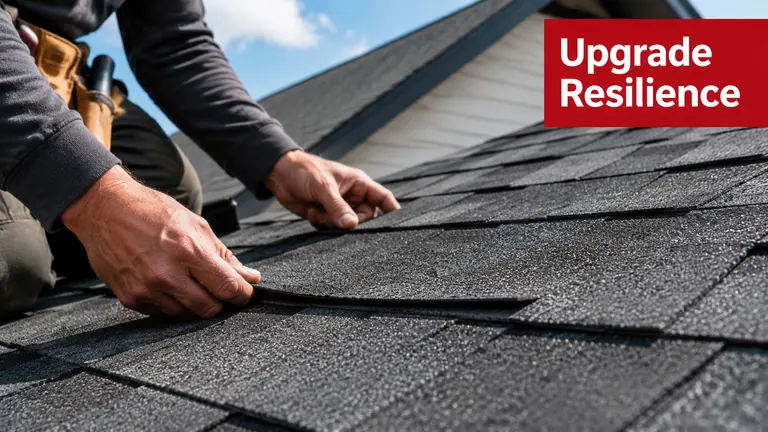
Maintenance keeps a roof in fighting shape. Material upgrades change how well it handles Texas weather in the first place.
That matters most when a roof is older, has repeated leak history, or sits in an area that sees regular hail and wind. In those cases, patching the same vulnerable detail again doesn't always make sense. Better assemblies and stronger waterproofing details create longer-term value.
Where upgrades matter most
On Texas homes, the weak spots are usually predictable. Valleys, flashing transitions, pipe penetrations, and roof-to-wall intersections take more punishment than broad field areas. On commercial buildings, low-slope drainage design often determines whether a roof stays dry.
One upgrade that deserves attention is better flashing design. Properly detailed flashing does more than cover a joint. It creates a water-shedding path that still works when wind pushes rain sideways. If you want a plain-language breakdown, this guide on what flashing on a roof does explains why so many leaks start there.
For complex valleys, especially around dormers and multi-angle roof lines, experienced builders often rely on continuous peel-and-stick ice and water shield extending up the wall and under step flashing, then use custom-bent aluminum pans with roofing adhesive instead of nails. That detail is more reliable than a generic “add flashing” approach and is especially useful when Texas storms drive water hard into roof transitions.
Flat roofs need drainage and membrane strategy
Commercial properties in Plano, Irving, and Dallas often have a different leak profile. The issue isn't always age alone. Drainage layout can be the primary problem.
A recent industry analysis on flat roofs reports that 68% of flat roof leaks stem from improper drainage placement, with crickets or cradles used to redirect water toward drains and scuppers rather than toward parapet walls, as discussed in this flat roof drainage analysis. On low-slope roofs, that's the kind of design issue that keeps causing trouble until it's corrected.
For flat and concrete roofs, polyurethane waterproofing is highly recommended because it forms a flexible, continuous, and UV-resistant barrier. Premium systems using high-performance PU, Polyurea, and torch-on membranes cost between $8 and $25 per square foot and provide 10 to 20+ years of durability, according to this roof waterproofing overview.
Worth the investment for Texas properties
Smarter upgrades make the most sense when:
- Storm exposure is constant: North Texas hail and high wind events keep revisiting the same roof.
- Repairs are repeating: If the same area keeps leaking, the detail likely needs redesign, not another surface patch.
- The roof type is demanding: Flat roofing, metal roofing transitions, and complex residential valleys need higher precision.
- You're already planning roof replacement: That's the best time to upgrade impact resistance, flashing details, and drainage layout.
Better roofing materials help, but better details are often what stop leaks.
Active Leaks What to Do and When to Call for Help
When water is actively entering the building, the first job is damage control. Not hero work. Not climbing a slick roof in a thunderstorm. Just keeping water from ruining more of the structure while you arrange a proper repair.
What you can do safely inside
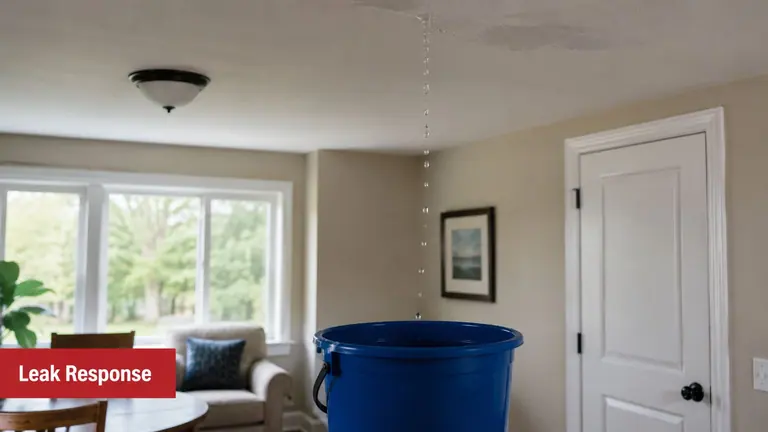
Start inside the house or building. Move furniture and electronics out of the area. Catch drips with a bucket or container. If water is bulging a ceiling, that situation can worsen quickly, so keep people clear of the area.
One of the best interior containment methods is simple. Plastic sheeting should be taped or stapled around surrounding rafters and insulation so water runs along the plastic directly into a bucket, which helps prevent soaked insulation and secondary structural damage, as explained in this temporary roof leak response guide.
Here's the line on DIY:
- Acceptable DIY: Interior water capture, moving belongings, documenting damage, and a ground-level visual check when weather clears.
- Not acceptable DIY: Walking a wet roof, guessing at the leak source, spraying random products on shingles, or doing emergency patching during active storms.
That same guide also notes that aerosol sprays like Flex Seal don't bond properly to shingles and aren't recommended for roof leak repairs. For larger exterior patch areas, self-adhering modified bitumen membranes are more effective, but exterior application still needs the right conditions and judgment.
Why leak location is harder than it looks
Most owners look where the stain appears and assume that's the entry point. That's usually wrong.
A professional 3-step repair methodology achieves a 90% success rate in preventing recurrence, whereas DIY sealant-only approaches fail in 60–70% of cases due to inadequate substrate preparation. Water stains inside an attic can mislead homeowners on the true entry point 80% of the time, according to this roof leak cause determination resource.
That difference matters because water travels. It can enter high on the roof, run along framing, and show up somewhere completely different inside.
Professionals typically work through the problem in a controlled order:
- Locate the true entry point: A controlled water test starts below the suspected area and moves upward in sections.
- Open the assembly where needed: Compromised shingles, flashing, or underlayment need removal, not just surface coverage.
- Rebuild the detail correctly: High-grade sealant, proper overlaps, and sound substrate preparation create the permanent repair.
Later in the process, this kind of visual walkthrough can help owners understand what a careful response looks like:
When professional help is non-negotiable
Call a professional right away if any of these apply:
- Storm damage is involved: Hail damage repair and wind damage repair often include hidden failures.
- The roof is steep or high: Safety risk alone makes DIY a bad decision.
- The leak is near electrical components: Water and wiring don't give second chances.
- The building has a flat roof: Low-slope leak tracing is often more technical than owners expect.
- Warranty concerns matter: Improper work can create bigger repair bills and warranty problems later.
When considering roof replacement near me, emergency roof repair, or storm damage roof repair after a Texas storm, the crucial decision is whether you want a temporary patch or a lasting fix. Those are not the same thing.
Your Partner in Protecting Your Texas Property
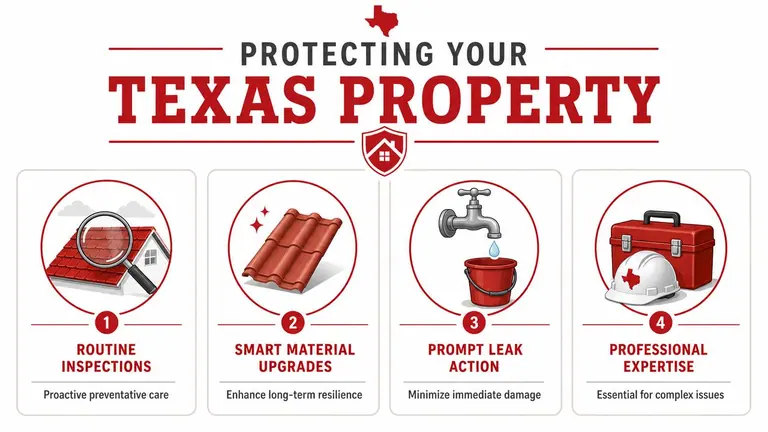
Roof leak prevention works best when you treat it as a system. Inspections find problems early. Seasonal maintenance keeps drainage and roof components working. Smarter upgrades strengthen the areas Texas weather hits hardest. Fast action during a leak limits interior damage until the permanent repair is done.
That approach applies whether you own a shingle roof in McKinney, a metal roof in Boerne, or a commercial flat roof in San Marcos. The details change, but the principle stays the same. Water gets in where design, wear, or delayed maintenance leaves an opening.
What long-term protection actually looks like
Property owners usually get the best results when they stay ahead of three things:
- Weather exposure: Hail storms, severe thunderstorms, and high winds don't wait for convenient timing.
- Aging details: Flashing, pipe boots, sealants, and drainage components often fail before the whole roof does.
- Delayed decisions: Small repairs are manageable. Repeated postponement turns them into interior repairs, insulation replacement, and larger restoration work.
If you're trying to sort out whether moisture is coming from the roof or elsewhere in the structure, it also helps to understand other building leak sources. For example, Piper Plumbing slab leak services offers a useful reference on how slab leak symptoms can overlap with interior moisture concerns. That distinction can matter when stains or damp flooring don't line up neatly with roof symptoms.
Why local expertise matters in Texas
Texas roofs don't just need generic advice. They need decisions shaped by local weather patterns and real installation experience. Hail, heat, and wind expose weak workmanship fast. So do poor drainage design, cheap flashing details, and rushed repairs that only address the symptom.
That's why many homeowners and property managers eventually stop searching for roofing contractor near me based on price alone. They start looking for dependable diagnosis, clear repair options, insurance claim assistance when storm damage is involved, and workmanship that holds up across seasons.
The best leak prevention plan is the one that matches the roof, the building, and the weather it actually faces.
If your property has gone through recent storms, if you've seen signs of water entry, or if it's been too long since the last inspection, now is the right time to act. Waiting for the next heavy rain rarely improves the outcome.
If you want a clear answer on your roof's condition, contact Hail King Professionals for a free, no-obligation roof inspection. They serve homeowners and commercial property owners across Dallas, Fort Worth, Arlington, Plano, Frisco, McKinney, Garland, Irving, Mesquite, Tyler, Longview, Marshall, San Antonio, Austin, New Braunfels, San Marcos, Boerne, Round Rock, and Georgetown with practical inspections, storm damage assessments, repair recommendations, and roof replacement guidance built for Texas weather.