Hiring Gutter Installation Companies: A TX Homeowner’s Guide

Hiring Gutter Installation Companies: A TX Homeowner’s Guide

A hard Texas rain will tell you the truth about your gutters fast. You can stand in the driveway in Dallas, Fort Worth, Tyler, or Longview and watch the whole story unfold in a few minutes. Water should move cleanly off the roof, into the gutter, down the downspouts, and away from the house. When it doesn't, you'll see spillover at the corners, water running down the siding, and mud splashing back against the foundation beds.

That's usually the moment homeowners start searching for gutter installation companies. Not because gutters suddenly became interesting, but because they've become urgent. In Texas, that urgency gets sharper after hail, wind, and pounding thunderstorms expose every weak seam, sagging run, and undersized downspout.

A lot of people think of gutters as trim. They're not. They're part of your drainage system, and drainage protects roofing, fascia, soffit, siding, windows, landscaping, and the area around your slab. If you've ever looked up the likely cost of interior cleanup after water gets where it shouldn't, resources like these 2026 water damage repair prices make it clear why stopping runoff at the roofline matters.

The market reflects that need. The U.S. gutter services industry generated $778.4 million in revenue in 2025 across 4,929 businesses, and gutter installation is the largest revenue segment in the category, according to IBISWorld's gutter services industry profile. That tells you two things. This is an established trade, and there are enough companies out there that choosing the right one takes some care.

Why Your Gutters Are Your Home's First Line of Defense

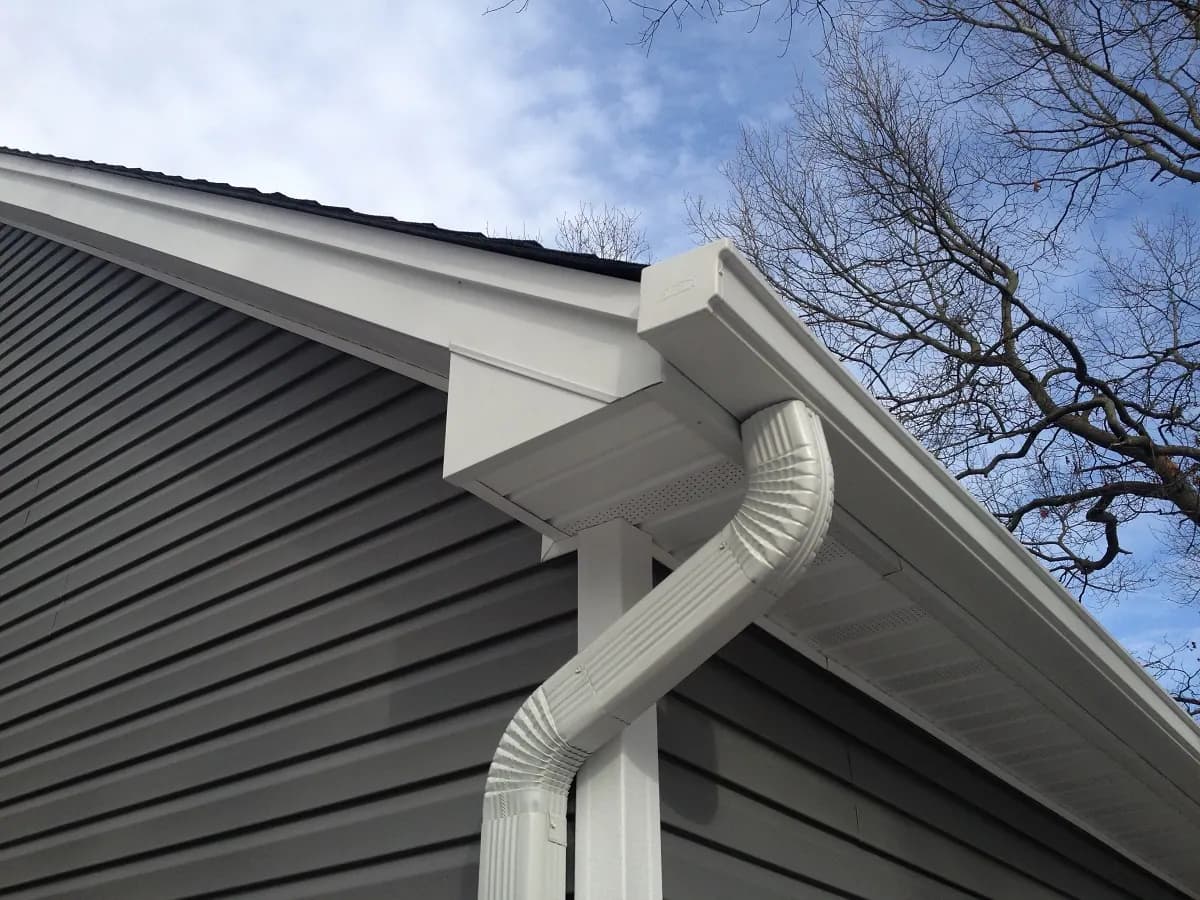
When a thunderstorm rolls through Arlington or McKinney, the first job your home has to do is shed water in a controlled way. Roofing materials push water downhill. Gutters catch it at the edge. Downspouts move it away from the structure before it can soak fascia boards, stain brick, or collect around the foundation.

That's why failed gutters create problems that seem unrelated at first. Homeowners notice peeling paint, dark streaks on siding, mulch washed out of beds, and puddling near walkways. The gutter may look like a small component, but once runoff starts missing its path, the whole exterior pays for it.

What working gutters actually protect

A good gutter system helps protect:

  • The roof edge: Water that backs up at the edge can affect trim, decking edges, and roof transitions.
  • Fascia and soffit: These areas often show the first visible signs of chronic overflow.
  • Siding and masonry: Repeated splashback leaves stains and can hold moisture where it doesn't belong.
  • The foundation zone: Poor drainage near the house is where bigger repair conversations often begin.
  • Entry points and patios: Concentrated runoff can turn one corner of the house into a constant wet spot.

Practical rule: If water is pouring over the front lip of the gutter during a normal storm, the system isn't doing its job, even if the gutter itself hasn't fallen off.

Texas weather makes the margin for error small. Heavy rain tests capacity. Wind tests attachment. Hail tests material strength. Heat tests sealants and expansion points. A system that might limp along in a mild climate often shows its weaknesses quickly here.

That's also why hiring from the long list of gutter installation companies shouldn't be a price-only decision. Availability matters. Material choice matters. Proper slope matters. In storm-prone areas, impact resistance matters too.

Assessing Your Home's Current Gutter Needs

Start with a simple walk-around after a rain. You're not trying to diagnose every technical issue from the ground. You're looking for clues that tell you whether the system is draining correctly, sized correctly, and still attached the way it should be.

A dirty, clogged rain gutter on a house roof with debris needing a gutter health check

What to look for from the ground

Some warning signs are obvious. Others are easy to miss until the damage spreads.

  • Sagging sections: A gutter run that bows between fasteners usually means poor support, standing water, or both.
  • Stains on fascia or soffit: Water may be slipping behind the gutter instead of entering it.
  • Peeling paint near the roofline: That often points to repeated moisture exposure rather than one isolated storm.
  • Mildew or algae on siding: Water may be overflowing at the same spot again and again.
  • Pooling near the foundation: If one corner stays wet, the downspout discharge may be too close to the home or the system may be overloaded.
  • Separated joints or leaking seams: Seams are common failure points, especially after years of heat and storm movement.

If you can safely see inside the gutter from a ladder, look for debris buildup, standing water, and loose hangers. If you can't inspect it safely, leave that part to a contractor. Gutters aren't worth a fall.

How pros determine the right size and layout

A proper installation isn't guesswork. Industry guidance calls for a minimum pitch of 1/4 inch per 10 feet toward the downspout, and standard residential gutter sizes are typically 5 to 6 inches, selected based on roof area and local rainfall intensity, as outlined in this gutter installation guidance from C&G.

That means a contractor should be doing more than measuring the roof edge.

They should be asking:

  • Where does the roof shed the most water?
  • Where can downspouts discharge effectively?
  • Are there long runs that need careful pitch control?
  • Does the home need a larger profile because of roof area or local rain load?
  • Are corners, valleys, or high-volume sections likely to overwhelm a smaller system?

Flat spots don't just slow water down. They let water sit, and standing water is where sagging, staining, and premature joint failure start.

For homeowners, this matters because it changes the conversation. If a contractor only talks color and footage, that's incomplete. If they talk slope, runoff concentration, hanger placement, outlet location, and seam reduction, they're speaking the right language.

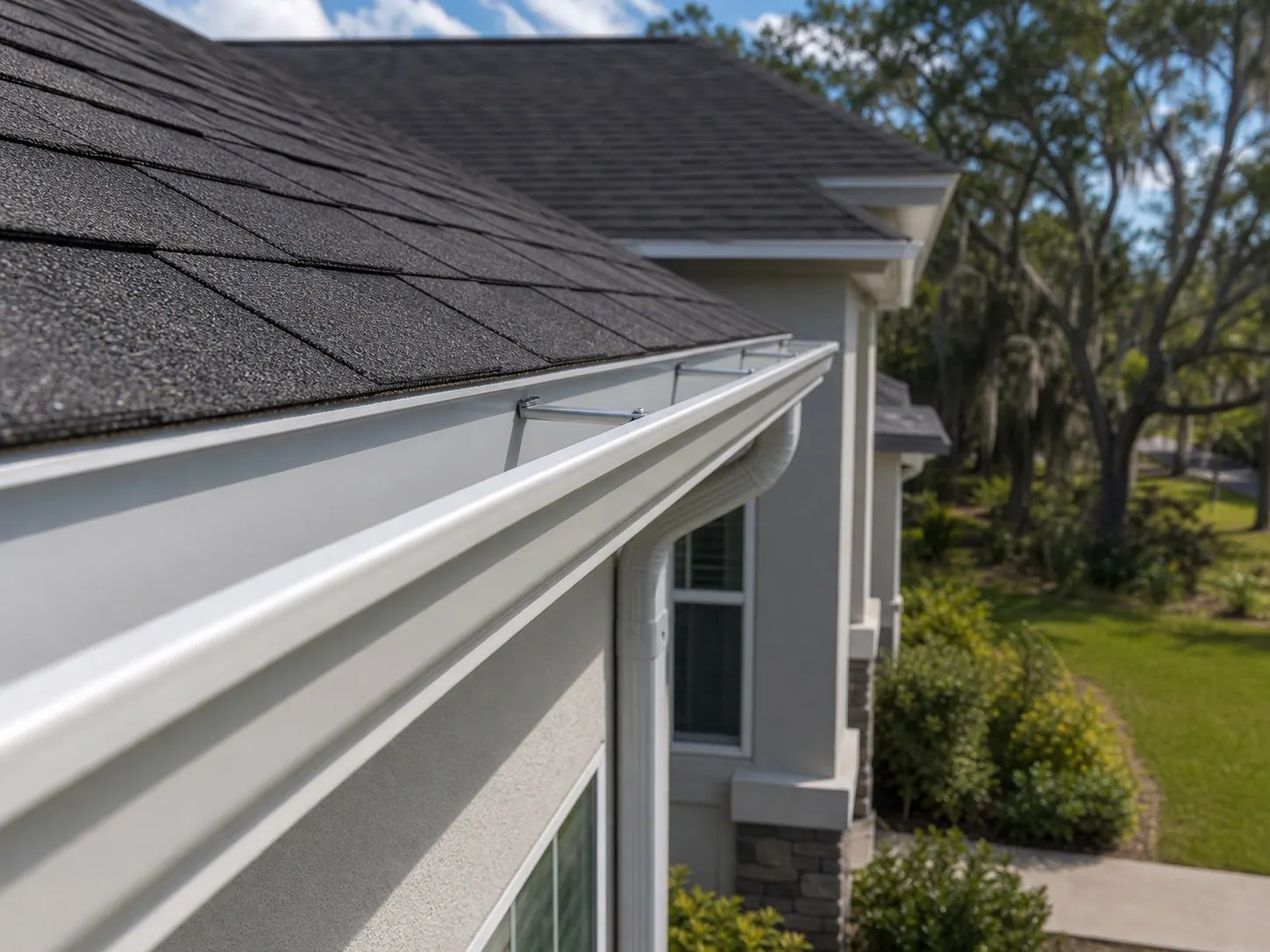
A quick visual example can help you know what a healthy system should look like in practice.

When replacement makes more sense than repair

Repairs make sense when the problem is limited. One loose downspout, one damaged corner, one section hit by a branch. Replacement usually makes more sense when problems show up across the whole perimeter.

A full replacement is often the better call if you're seeing widespread sagging, repeated seam leaks, chronic overflow, or storm damage on an aging system. It's also worth considering during roof replacement, because coordinating roof-edge work and drainage usually produces a cleaner result than patching one piece now and another later.

Choosing Gutter Materials for Texas Weather

Material choice is where many gutter installation companies separate themselves. Some sell what they stock. Better companies recommend what fits the house, the drainage load, and the local weather.

In Texas, you need to think beyond curb appeal. The questions are how the gutter handles hail, heat, wind, and repeated heavy rain, and what happens when the roof system changes later because of storm repairs or solar work.

An infographic comparing different gutter materials like aluminum, steel, copper, and vinyl for Texas weather conditions.

The common choices and their trade-offs

A quick comparison helps.

Material What it does well Where it can fall short in Texas
Aluminum Lightweight, common, rust-resistant, available in many colors Can dent more easily in hail-prone areas
Steel Stronger impact resistance, better suited for severe weather Heavier, and maintenance matters if finish protection is compromised
Copper Long service life and distinctive appearance Higher upfront cost, often chosen more for architecture than storm practicality
Vinyl Budget-friendly and simple for basic applications Less suited for extreme temperature swings and storm-heavy conditions

For many homes, aluminum is the standard choice because it balances cost, appearance, and corrosion resistance well. But standard doesn't always mean ideal, especially in North Texas and East Texas hail country.

Why hail resistance matters more here

In Texas, where hail events frequently exceed 2 inches in diameter, 19% of residential gutters are damaged in severe storms, which is why hail-resistant materials such as thick-gauge steel or reinforced polymers deserve serious consideration in storm-prone areas, based on the verified storm-damage summary provided for this topic.

That lines up with what contractors see on the ground. After a hard storm, standard aluminum often shows denting at the front edge, distortion around hangers, and impact damage near downspouts and corners. Even if the gutter still hangs, the profile can be compromised enough to affect flow and appearance.

The wrong material can survive the storm and still fail the job. A dented lip, twisted outlet, or loosened hanger changes how water exits the roofline.

For Texas homeowners, that makes hail-resistant gutter systems worth discussing upfront, especially if the roof is also being upgraded to impact-resistant materials. Heavy-gauge steel isn't right for every house, but for storm exposure in places like Frisco, Garland, and Marshall, it often belongs in the conversation.

Matching the gutter to the roof system

The best decisions happen when the gutter plan and roof plan work together. If a house has recurring hail claims, steep roof sections, big valleys, or long eave lines, the gutter material and attachment method should support the broader storm-protection strategy.

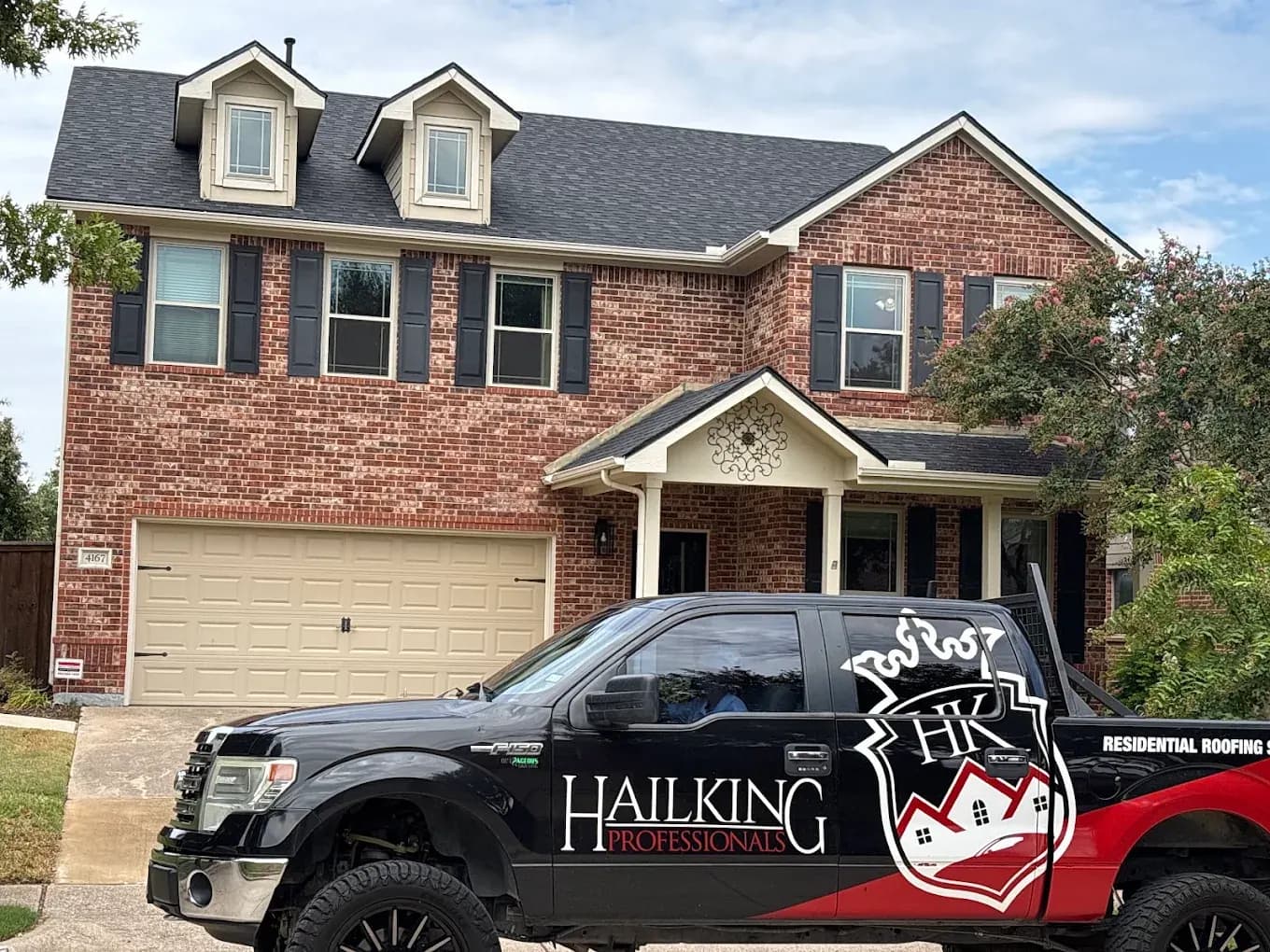
That's also where one practical option can stand out. Hail King Professionals handles gutters and downspouts alongside roofing work and also offers solar panel detach-and-reset, which matters when a gutter project overlaps with reroofing on solar-equipped homes.

Don't ignore solar integration

This issue gets missed more often than it should. Gutters and rooftop solar can interfere with each other if nobody plans the spacing, access, and drainage path together.

The verified background for this article notes an underserved issue around solar-integrated gutter installation, including 28% of U.S. homes with solar reporting water damage near roof edges due to improper gutter-to-panel spacing in the cited National Renewable Energy Laboratory survey. The practical takeaway isn't just the number. It's the coordination problem. If gutters sit wrong under panel edges or block maintenance access, water can pool where it shouldn't and service becomes harder later.

For homeowners, the lesson is simple. If your house has solar, ask gutter installation companies exactly how they'll coordinate placement with mounts, runoff paths, and future cleaning access. If they treat that as an afterthought, keep shopping.

How to Vet DFW and East Texas Gutter Companies

Once you know what your home needs, the next challenge is figuring out which gutter installation companies are equipped to deliver it. Homeowners can save themselves a lot of frustration by slowing down and checking the basics before signing anything.

A polished truck and a fast quote don't tell you much. What matters is whether the company measures properly, documents the scope clearly, carries the right insurance, and understands local storm conditions.

A professional infographic titled Your Gutter Contractor Vetting Checklist providing six essential steps for hiring reliable contractors.

The first screening pass

Use a short filter before you ever compare pricing.

  • Insurance first: Ask for proof of general liability and workers' compensation coverage. If something goes wrong on your property, you don't want fuzzy answers.
  • Written scope: The estimate should spell out materials, color, downspout count, removal, disposal, and warranty terms.
  • Local project history: Ask whether they've handled homes like yours in Dallas, Plano, Tyler, or surrounding areas with similar rooflines and drainage issues.
  • Storm experience: In Texas, a contractor should be comfortable discussing hail damage, fascia condition, and coordination with roof repairs.
  • Communication quality: If they're hard to reach before the job, they won't be easier to reach after it.

One useful habit is to compare how service companies explain their process in different trades. For example, this guide on how to choose a commercial landscaping company is about landscaping, but the hiring logic applies well here too. Clear scope, proof of coverage, references, and written expectations matter in any exterior project.

Questions that reveal whether they know the trade

Good questions tend to expose weak bidders quickly.

Ask things like:

  1. How are you determining gutter size for this roof?
    A real answer should mention roof area, runoff concentration, and drainage layout.

  2. Where will the downspouts go, and why?
    Placement affects performance as much as gutter material does.

  3. How will you reduce seams on long runs?
    More seams usually mean more potential leak points.

  4. What attachment method are you using?
    In storm country, fastening details matter.

  5. How will you handle hail-prone conditions?
    If they never mention material strength or support, they may be selling a default package.

A contractor who can explain why the system is being built a certain way is usually safer than one who only repeats the price.

Red flags that deserve a hard pass

Some warning signs aren't subtle.

Red flag Why it matters
Verbal-only pricing You have nothing solid to compare or enforce
No insurance documentation That shifts risk back to the property owner
Very vague material description “New gutters” is not a scope
Pressure to sign immediately Good contractors don't need panic to close a job
No mention of slope or drainage plan That suggests they're selling footage, not performance

Reviews and gallery photos help, but they shouldn't carry the whole decision. A clean-looking install can still be undersized or pitched badly. Look for companies that show they understand water movement, not just finished trim.

If you're in Fort Worth, Mesquite, Longview, or nearby areas, narrowing your list this way usually gets you from a dozen names to two or three serious candidates pretty quickly.

Comparing Estimates Contracts and Insurance Claims

The cheapest estimate can easily become the most expensive job. Gutters are one of those categories where a low number may hide thinner material, fewer downspouts, incomplete removal, weak warranties, or no real plan for roof-edge conditions.

That's why estimates need to be read line by line, not just compared at the bottom.

A close-up view of a person using a pen to review a detailed gutter installation estimate document.

What a solid estimate should include

A proper proposal should describe the work clearly enough that another contractor could understand what is being built.

Look for these items:

  • Material specification: Not just “metal gutters,” but the actual material and profile being installed.
  • Scope of removal: Old gutters, damaged components, and debris handling should be spelled out.
  • Downspout details: Count, location, and discharge plan matter.
  • Attachment and accessory notes: Hangers, outlets, elbows, and any guard components should be identified.
  • Warranty language: Separate material coverage from workmanship coverage.
  • Payment schedule: It should be clear, simple, and tied to real job milestones.

If you want to understand how contractors structure numbers behind the scenes, tools like Exayard roofing estimating software are useful context because they show how line-item estimating can create more consistent scopes and cleaner proposals.

How to compare bids without getting fooled

The easiest way to compare estimates is to strip them down to scope, material, and accountability.

Compare this item What you want to see
Scope clarity Exact work described in writing
Material detail Specific product type, not vague labels
Drainage plan Downspout placement and runoff path addressed
Warranty terms Clear explanation of what is and isn't covered
Payment terms Reasonable schedule, no confusion

A low bid often leaves out one of those items. Sometimes it leaves out several. Homeowners then discover mid-job that disposal costs extra, fascia repairs are “not included,” or the original number assumed a different gutter profile than the one needed.

If two estimates aren't describing the same system, they are not competing prices. They are different jobs.

For a local benchmark on pricing factors, Hail King's page on gutter installation cost is a helpful reference because it shows the kinds of project variables that can change the final number.

Where insurance claims fit in

This is especially important after hail. Gutters may be damaged as part of the same storm event that affected the roof, vents, flashing, or other exterior components. When that happens, gutter replacement may need to be evaluated as part of a broader storm claim rather than treated as a separate retail project.

Homeowners should pay attention to three things:

  • Documentation: Take photos of dents, bent sections, detached runs, and overflow points after the storm if it's safe to do so.
  • Consistency: The gutter story should line up with the roof and exterior damage pattern.
  • Scope coordination: If roof replacement is underway, the gutter scope should reflect any edge, flashing, or fascia conditions uncovered during that work.

A contractor who works in storm restoration will usually be better at documenting visible damage, discussing scope with adjusters, and keeping the gutter work aligned with the roofing portion of the project. That doesn't guarantee coverage, but it does make the process cleaner and easier to follow.

What to Expect During and After Your Gutter Installation

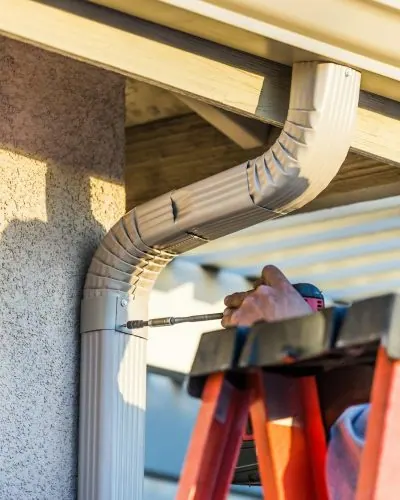
On installation day, most homeowners are surprised by how straightforward the process feels when the crew is organized. There will be ladder noise, cutting and fastening sounds, and some movement around the perimeter of the house, but it shouldn't feel chaotic.

A typical project starts with a walkthrough, confirmation of the scope, and protection of the work area. Crews usually remove the old gutters first, inspect the attachment surfaces, and then begin fitting the new system. If the job includes fabrication of continuous gutters, sections may be formed to fit the house rather than pieced together from shorter stock lengths.

What the crew should be doing

As the work moves along, the important things are usually the least flashy.

  • Checking fascia condition: Rotten or compromised attachment points need to be addressed before new gutters go up.
  • Setting downspout locations: Water has to exit where it can move away from the house effectively.
  • Controlling pitch carefully: The run should carry water continuously with no reverse pitch.
  • Securing the system evenly: Support should feel solid, especially on longer runs and corners.
  • Testing flow before leaving: A final water check helps catch alignment issues before the next storm does.

If you want a homeowner-focused overview of the overall process, this gutter installation guide gives a useful picture of what the sequence generally looks like.

What happens after installation

The final walkthrough matters. You should know where water exits, how to monitor problem spots, and what normal maintenance looks like for your system. This is also the right time to ask about storm checks after hail and how future roof work could affect the gutters.

Cleanup should leave the property in good shape. Old material, fasteners, and metal scraps shouldn't be left in beds or along the driveway. A professional crew also won't leave you guessing about warranty paperwork or next steps.

The payoff comes later, during the next hard rain. Water moves where it should. The roof edge stays cleaner. The beds don't wash out. You stop watching one corner of the house every time a storm cell moves in. That peace of mind is what a properly built gutter system is supposed to buy you.


If your gutters are sagging, overflowing, or showing hail damage, Hail King Professionals can inspect the roofline, drainage layout, and storm-related issues together so you can make a clear repair or replacement decision for your Texas home.