

Drone Roof Inspection Services: Texas Hail Damage Guide
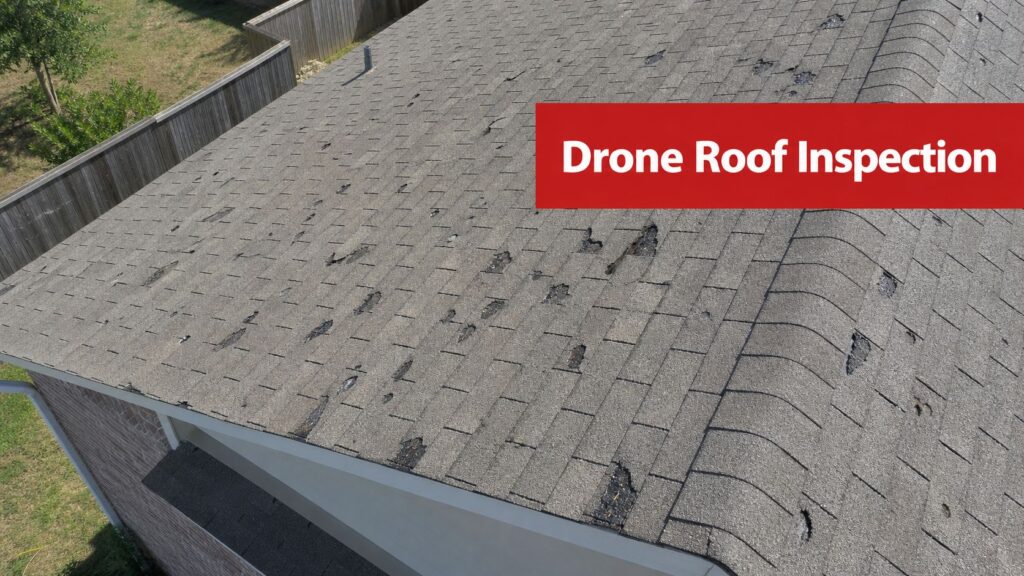
After a Texas hailstorm, most property owners do the same thing. They step outside, look up, and try to judge roof damage from the driveway. That rarely tells the full story.
A shingle can look fine from the ground and still carry impact damage, granule loss, punctures around soft spots, or moisture issues that only show up under better imaging. On commercial roofs, the problem gets worse. Flat systems hide trouble well, especially after wind-driven rain, ponding, or repeated heat exposure.
That's why drone roof inspection services have become a key consideration for homeowners, property managers, and insurance-driven storm assessments across Dallas, Fort Worth, Tyler, Austin, and other Texas markets. Used correctly, they give you fast visual documentation without putting a person on a steep or storm-damaged roof. Used poorly, they give you pretty pictures and not much else.
The difference matters.
A New View on Roof Damage After Texas Storms
In Texas, roof damage often shows up all at once. A hailstorm moves through at night. By morning, neighbors are checking gutters, screens, downspouts, and shingle edges. Phones start ringing. Insurance questions start immediately.
The old approach was simple but slow. Someone brought a ladder, climbed the roof, walked the slopes, took a handful of photos, and wrote up a judgment call. That still has its place in some situations, but it isn't always the smartest first move after hail, high winds, or heavy rain.
What property owners actually need after a storm
Most people don't need drama. They need documentation, a clear read on visible damage, and a practical next step.
A professional drone inspection works well in that first stage because it can document the roof quickly, capture the overall condition, and flag areas that may need closer verification. For large homes, steep roofs, fragile surfaces, and commercial buildings with broad roof areas, that's a major advantage.
After storms, the first priority is usually not “Can someone walk this roof today?” It's “Can someone document this roof correctly and safely?”
That shift explains why adoption keeps growing. The global market for drone roof inspection services is projected to grow from USD 0.2 billion in 2025 to USD 1.2 billion by 2036, and the U.S. market is projected to grow at a 15.9% compound annual rate by 2036, reflecting demand for safer and more efficient inspection methods, according to the market data summarized in Source 2. That projection matches what Texas property owners already understand on the ground. Faster documentation matters when storm season stacks up job after job.
Why this matters in Texas
Texas roofs take a beating. Hail in Plano doesn't always look the same as hail in Longview. A wind-driven storm in Arlington can damage ridge lines, flashing, and soft metal differently than a heat-stressed flat roof in San Antonio.
Drone roof inspection services help because they create a visual record early, before repairs, foot traffic, or more weather complicate the story.
That doesn't mean a drone replaces every other inspection method. It means the right drone workflow gives you a cleaner starting point for roof repair, roof replacement, storm damage restoration, and insurance claim discussions.
What a Drone Roof Inspection Really Involves
A real drone inspection is not a hobby flight over your house. The operator isn't just taking a few overhead photos and emailing them later.
A proper job collects usable roof data. That includes surface imagery, pattern coverage, defect review, and in many cases a measurable digital model that helps a roofing contractor or property owner understand what's visible and what still needs hands-on confirmation.
The data collection side
The flight itself is only one part of the work. The useful part is what gets captured and how that information gets processed.
Professional drone roof inspection services may use:
- High-resolution imagery for surface detail, shingle conditions, flashing lines, punctures, ponding signs, and storm-related impacts
- Thermal imaging to detect temperature differences that can point to moisture intrusion or insulation issues
- AI-assisted review to flag visible anomalies
- 3D modeling and orthomosaic mapping so the roof can be measured and reviewed as a complete system instead of a loose folder of photos
The technical advantage is that thermal imaging can detect issues a standard camera can't see. Verified industry data states that drone roof inspection services use thermal imaging with 0.1°C sensitivity and LiDAR-enabled workflows to detect defects such as moisture intrusion and membrane delamination, while AI-powered detection reaches 95% accuracy for cracks and leaks compared with 70% accuracy for manual visual inspections. The same data notes that 3D modeling with orthomosaic mapping can support material measurements within a 2% margin of error. These points come from the verified data set for Source 3.
Why that matters for actual roof decisions
Those tools matter because roof problems don't always sit out in the open.
On Texas homes, hail can bruise shingles in ways that are hard to confirm from casual ground photos. On commercial roofs, drainage problems, seam issues, and heat stress can spread across wide surfaces where isolated snapshots miss context. Thermal review can also help identify suspicious areas that deserve further testing.
Practical rule: Better imagery doesn't automatically mean complete diagnosis. It means you have stronger evidence about what is visible and where a roofer should investigate further.
That distinction gets missed all the time. A drone can reveal a lot, but it can't directly confirm every hidden issue under shingles, underlayment, flashing overlaps, roof coatings, or solar mounts. Good operators say that up front.
What separates useful reports from photo dumps
If you're hiring drone roof inspection services, ask what you'll receive at the end. The answer should be more than “pictures.”
A useful deliverable usually includes:
- A roof-wide visual record with organized image sets
- Marked areas of concern tied to slopes, penetrations, edges, valleys, drains, or rooftop units
- Measured outputs such as roof models or mapped layouts
- Clear next-step guidance on whether the roof needs repair, replacement discussion, maintenance, or on-roof verification
That's the point of the technology. It should reduce guessing, not just change the camera angle.
Drone Inspections vs Traditional Methods
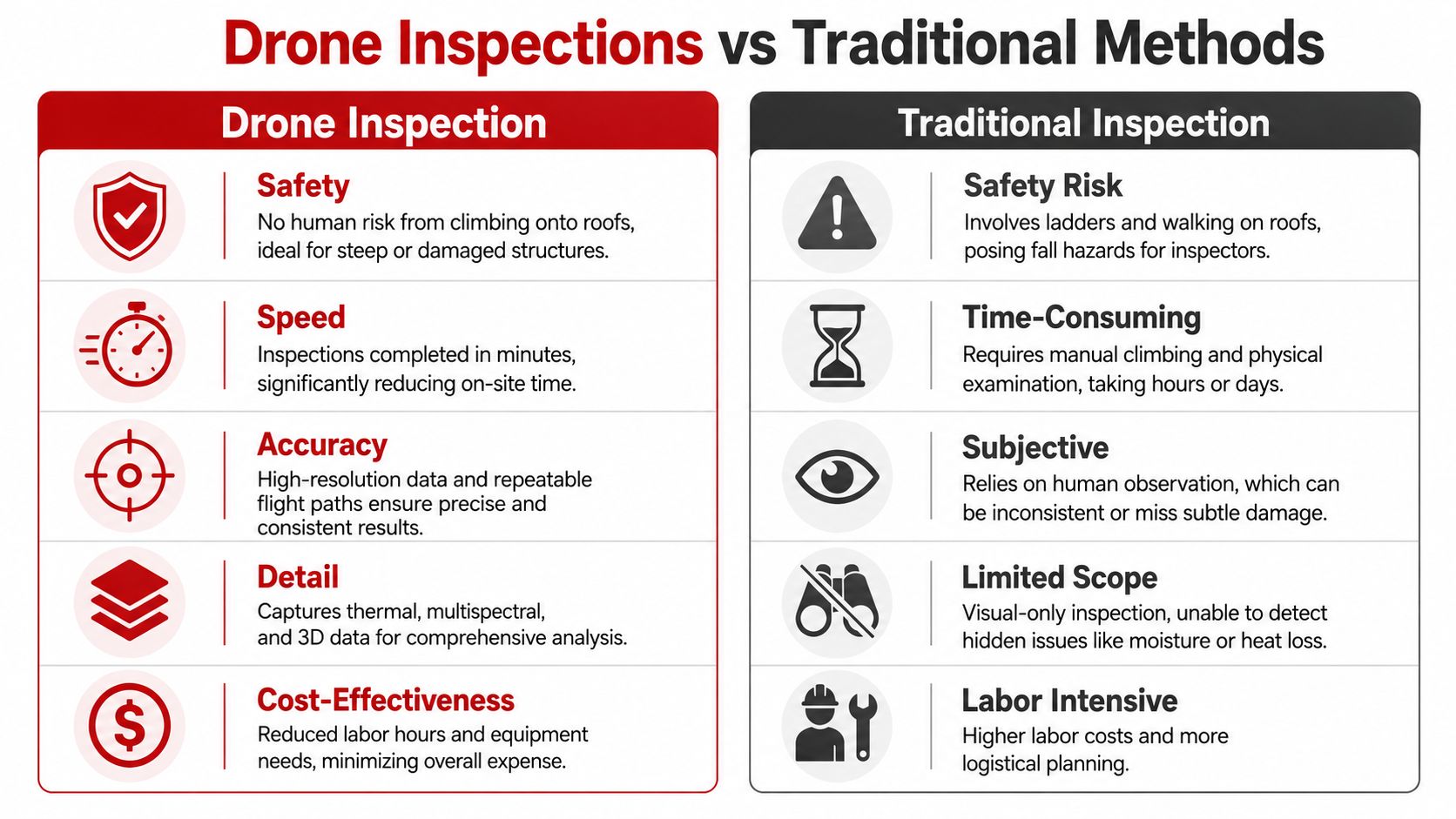
A traditional roof inspection still has value. Some conditions can only be confirmed by touch, close-up probing, or limited invasive verification. But for initial storm documentation, large roof areas, steep pitches, and safety-sensitive access, drones are often the more practical first move.
The comparison gets clearer when you break it down by safety, speed, and cost.
Side-by-side comparison
| Inspection factor | Drone inspection | Traditional on-roof inspection |
|---|---|---|
| Safety | Keeps inspectors off steep or damaged roof surfaces | Requires climbing ladders and walking the roof |
| On-site time | A standard residential inspection typically takes 20 to 45 minutes, based on verified industry data in Source 1 | Manual inspections often take several hours on site, according to the same verified data |
| Cost | Residential drone inspections typically cost $150 to $400 per flight, based on Source 1 | Traditional inspections typically range from $300 to $600, according to the same source |
| Efficiency | Drone inspections can be up to 85% faster, based on Source 1 | Slower because access setup and physical movement take time |
| Liability exposure | Reduces fall risk tied to ladder and roof access | Higher physical risk for inspectors |
That pricing and time gap is a big reason drone roof inspection services are getting attention from homeowners and property managers. Verified data also states that the savings can amount to roughly 30% to 50% compared with traditional methods, with added value from fewer callbacks and fewer reinspection cycles in workflows that use drone-generated models, as summarized in Source 1.
Where traditional methods still win
This isn't a technology-only argument. There are jobs where the old-school method is still necessary.
Manual inspection is still important when someone needs to:
- Test questionable soft spots underfoot
- Open or verify concealed conditions in a targeted area
- Evaluate flashing or underlayment details that sit beneath overlaps or mounted equipment
- Confirm sealant or attachment conditions around complex penetrations
A smart roofing contractor uses both methods when the roof calls for it.
The best inspections don't force one method onto every roof. They use the fastest safe method to document visible conditions, then use hands-on verification where the roof system demands it.
For homeowners preparing a property for sale, a broader home inspection checklist can also help put the roof review in context with gutters, drainage, and other exterior concerns. If you want a closer look at heat-based diagnostics specifically, this overview of thermal imaging roof inspection is useful because it shows where imaging adds value and where it doesn't replace physical roofing judgment.
The Hail King Inspection Process Step by Step
Most roof inspections feel stressful because owners don't know what's happening, what gets checked, or what comes next. A better process keeps the work simple and the findings easy to follow.
For Texas storm calls, the workflow usually needs to do three things well. It has to document the roof quickly, avoid unnecessary disruption, and give the owner something useful enough to make a repair or insurance decision.
What the appointment looks like
The process starts with scheduling and a short discussion about the property. That includes the roof type, recent storm activity, access concerns, and whether the building has features like solar panels, steep elevations, fragile tile, or a large flat commercial surface.
When the crew arrives, the first task isn't flying. It's site review.
That means checking the surrounding space, identifying obstacles, confirming the flight area, and deciding whether the roof needs drone-only documentation or a mixed approach with later physical verification.
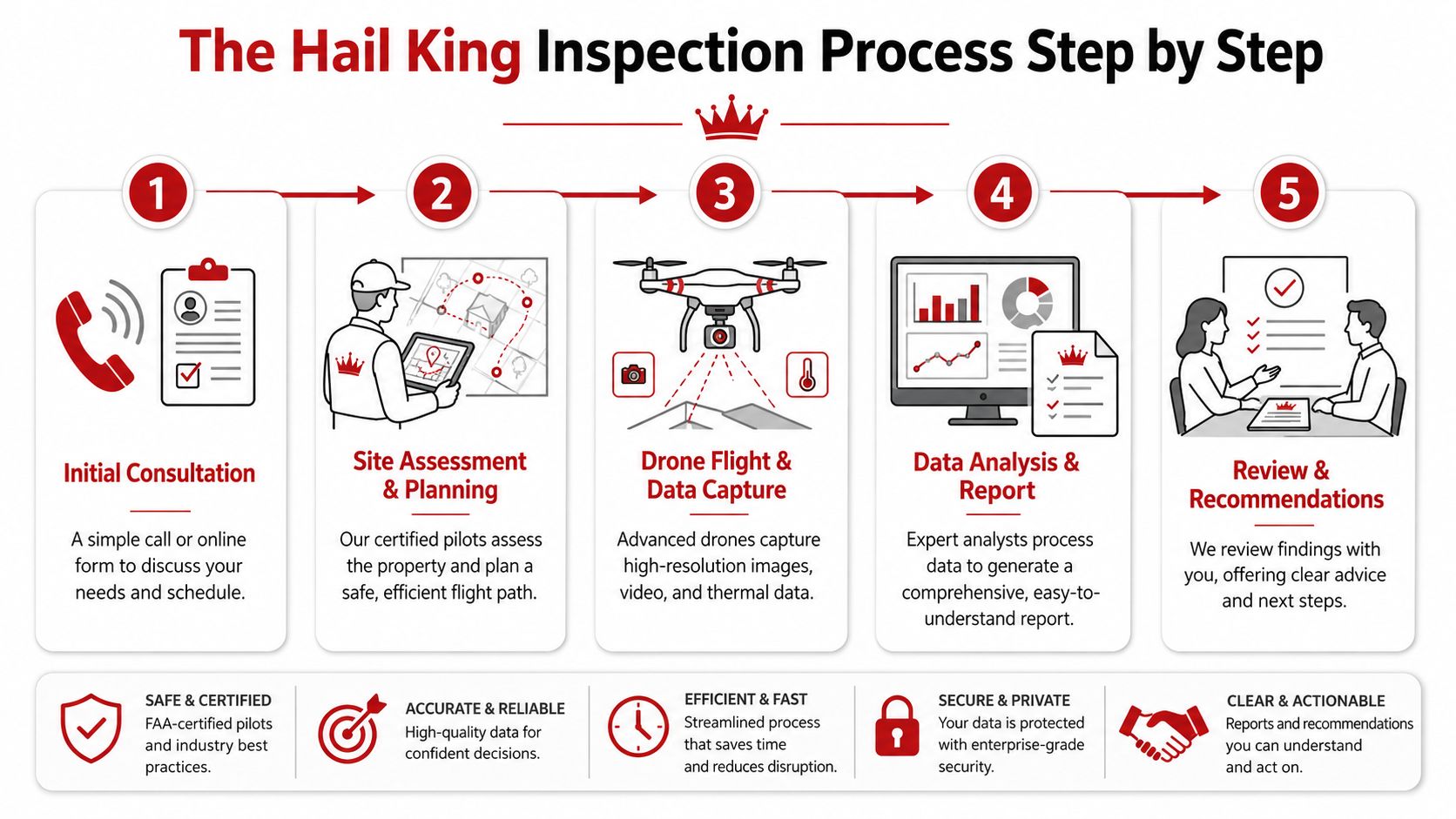
The five working stages
Initial contact
The property owner explains the issue. Common reasons are hail damage concerns, active leaks, visible shingle loss, or a need for pre-claim documentation after severe weather.Site planning
The operator reviews trees, power lines, neighboring structures, roof height, and access limits. This is also where complex systems get flagged, especially flat roofs with multiple penetrations or homes with solar equipment.Flight and image capture
The drone documents the roof surface from multiple angles. The goal is complete visual coverage, not random overhead pictures.Processing and review
Images and scan data are organized into a usable report format. Areas of concern are identified so the owner can understand what's visible, what appears storm-related, and what may need closer confirmation.Recommendations
The final discussion focuses on action. That could mean no repair needed, minor roof repair, maintenance planning, storm claim support, or a full roof replacement conversation.
Where complex roofs change the process
Solar-equipped homes need special handling. A drone can document the roof around the array, but it cannot directly answer every question beneath mounted hardware. If reroofing is needed, detach-and-reset planning becomes part of the job, not an afterthought.
The same applies to coated systems and many commercial flat roofs. Drone imagery can show surface conditions and trouble zones well, but some assemblies still require boots-on-roof verification before final repair scope is written.
One practical option in Texas is Hail King Professionals, which offers free same-day roof inspections and uses drone or aerial inspection methods for situations where commercial roofs are expansive, access is difficult, or fast storm documentation is needed across larger sites. That kind of workflow is useful when a property owner needs quick visual records before deciding on repair scope.
Understanding Costs and Insurance Claim Assistance
Most owners ask two questions first. What will this cost, and will the report help with insurance?
The cost side is straightforward. Verified pricing data shows that residential drone inspections typically run $150 to $400 per flight, while traditional on-roof inspections generally run $300 to $600, as summarized in Source 1. Some workflows also include software-generated deliverables such as roof models or maps, and verified market data notes that processing fees for those outputs can add $99 to $199, based on the verified data tied to Source 2.
What insurers actually care about
Insurance carriers don't care that a drone looks modern. They care whether the inspection produced reviewable documentation.
That means organized imagery, date-specific visual evidence, and a report that helps distinguish observed roof conditions from assumptions. Drone documentation can be very helpful in hail and wind claims because it preserves roof-wide conditions before more traffic or temporary repairs change the evidence.
What it does not do is act as magic proof on its own. A drone survey, an insurance inspection artifact, and a code-compliance diagnosis are not the same thing. If a contractor blurs those lines, that's a problem.
A strong drone report supports a claim because it gives adjusters a clearer record. It doesn't replace professional roofing judgment or policy terms.
Liability, documentation, and contractor credibility
The other overlooked issue is liability. If a contractor is flying commercially, roof owners should care whether the operator is qualified and insured. This isn't just a paperwork issue. It affects risk, professionalism, and how seriously the resulting documentation will be taken.
If you want a plain-language overview of why contractor coverage matters, this guide to liability insurance for roofing contractors is worth reviewing before you authorize any inspection or repair work.
For storm claims, it also helps to understand where coverage questions begin and end. This article on whether insurance covers hail damage to a roof gives a practical overview of what owners should review before they assume a claim will be approved.
A practical way to use the report
Use the drone report to do three things:
- Document current roof condition before more weather hits
- Support repair or replacement scope discussions with actual visuals
- Prepare for adjuster conversations with something more organized than cell phone photos
That's where drone roof inspection services earn their keep in Texas. They create structure around a situation that usually feels rushed and uncertain.
How to Choose a Drone Inspection Provider in Texas
Not every company offering drone roof inspection services should be hired. Some are roofers with a compliant flight process and real reporting discipline. Some are drone operators who know cameras but not roofing. Some are hobbyists trying to turn weekend gear into a business.
That gap matters most after hailstorms, when owners are under pressure to move fast.
The first filter is legal compliance
Commercial drone roof inspections in the U.S. generally require an FAA Part 107 remote pilot certificate, and owners should verify that because it affects whether the inspection data was legally obtained and how credible it may be in insurance or dispute settings, as noted in the verified regulatory guidance summarized from EagleView's drone roof inspection guide for insurance.
That's the baseline. It's not the whole qualification list.
The provider also needs to understand airspace restrictions, visual-line-of-sight limits, site safety constraints, and how to document a roof in a way that's useful to a roofing decision, not just visually impressive.
Questions worth asking before you hire anyone
Ask these directly:
Are you FAA Part 107 certified for commercial flights?
If the answer gets vague, move on.Do you inspect roofs, or do you only fly drones?
A roof report is only useful if the person reviewing it understands shingles, flashing, flat roof seams, drains, coatings, and storm damage patterns.What do you deliver?
You want an organized report, not a download folder full of random files.What can't your drone confirm?
Serious professionals will tell you where on-roof verification is still needed.How do you handle solar panels, coatings, and flat-roof assemblies?
Those are common weak spots for oversimplified drone sales pitches.
If a provider promises that a drone can diagnose everything without limits, that's a red flag.
Watch how they talk about complex roofs
This matters in Texas because many properties aren't simple gable roofs with clean access. Solar arrays, steep cut-up rooflines, low-slope commercial sections, and previous patchwork repairs all change the inspection strategy.
A provider should explain the tradeoffs plainly. Drones are excellent for visible surface review and broad documentation. They are not direct proof of underlayment condition, hidden decking rot, flashing failures beneath overlaps, or sealant breakdown under mounted solar hardware.
Here's a short video that helps show the kind of professional roofing context owners should look for when evaluating a contractor's process.
Don't confuse marketing polish with inspection quality
Some companies are very good at online visibility and lead flow. That's fine. Strong systems help homeowners find contractors faster. If you're curious how roofing businesses build that side of the pipeline, this overview of how to generate predictable roofing leads shows the marketing side of the trade.
But lead generation and inspection quality are not the same thing.
Choose the company that can explain compliance, roof system limits, insurance documentation, and next steps without overselling what the drone can do.
Protect Your Property with a Smarter Roof Inspection
Texas weather doesn't give roof systems much grace. Hail, high winds, heavy rain, and long heat cycles expose weak spots fast. By the time water shows up inside, the roof problem has usually been developing longer than the owner realized.
That's why drone roof inspection services make sense when they're used the right way. They give property owners a safer way to document visible conditions, a faster way to inspect large or difficult roofs, and a better visual record for repair planning or storm claim support.
The key is realism.
A compliant drone inspection can be extremely useful. It can also be incomplete if the provider doesn't understand roofing systems, insurance documentation, or the limits of aerial imaging. The right contractor will tell you both sides. They'll use drone data to tighten up the decision-making process, then recommend on-roof verification when the roof assembly calls for it.
For homeowners and property managers in Dallas, Fort Worth, Arlington, Plano, Frisco, McKinney, Garland, Irving, Mesquite, Tyler, Longview, Marshall, Austin, Round Rock, Georgetown, San Antonio, New Braunfels, San Marcos, and Boerne, that balanced approach is the one that holds up best after storms.
If you suspect hail damage, wind damage, drainage issues, or aging roof failure, don't wait for a leak to settle the question for you. Get the roof documented while the condition is still clear.
If you need a practical next step, Hail King Professionals provides roof inspections, storm damage assessment, repair recommendations, replacement guidance, and insurance claim support for residential and commercial properties across Texas service areas. Reach out to schedule an inspection and get a clear read on your roof before minor damage turns into a larger repair.