
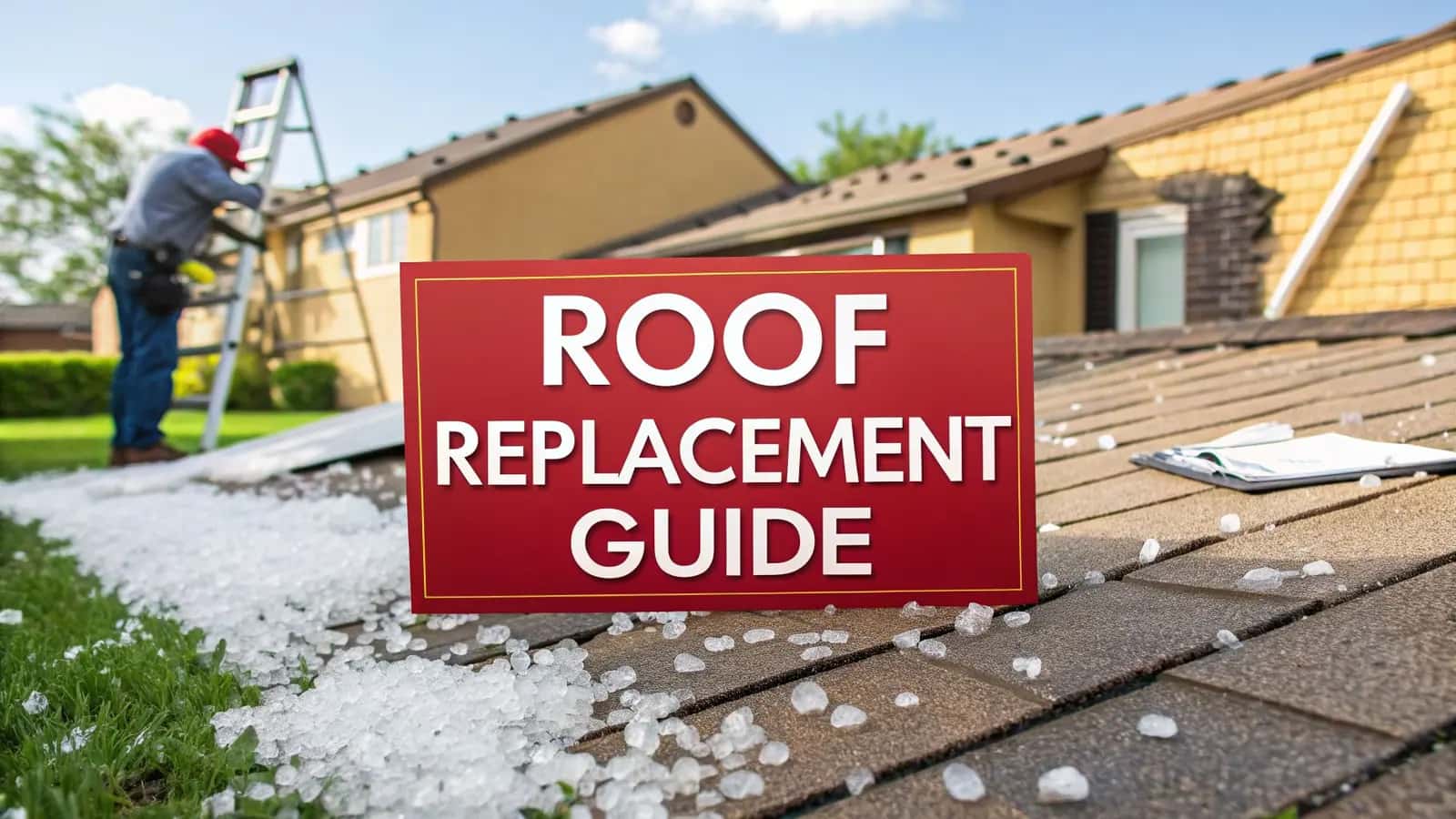
When a hailstorm barrels through, the aftermath can feel overwhelming. But before you even think about picking up the phone to call your insurance agent, your first move is simple and crucial: a walk around your property. What you're doing is gathering the first pieces of evidence, starting from the safety of the ground. This initial assessment is the foundation for a successful hail damage roof replacement.
What Hail Damage Looks Like from the Ground
After a big storm, it's easy to spot the dings on your car hood. But the clues that point to serious roof damage are often more subtle and scattered across your entire property. Whatever you do, resist the temptation to grab a ladder. A proper, and more importantly, safe, inspection starts with both feet on solid ground.
Think of yourself as a detective building a case. You're looking for what we in the industry call "collateral damage." Walk the perimeter of your home and look for signs that tell the story of the storm's intensity. If your air conditioning unit's delicate fins are smashed flat or your fence stain is peppered with impact marks, there's a very good chance your roof took a similar beating.
Start with the Small Details
Your first clue might be right under your feet. Take a look at the area where your downspouts drain. Do you see a collection of what looks like black sand? Those are shingle granules. Hailstones knock these protective granules loose, leaving the underlying mat exposed to the sun. It’s like a nasty sunburn for your roof, drastically shortening its lifespan.
Here is a quick reference guide for what to look for during your walk-around.
Ground-Level Hail Damage Checklist
| Area to Inspect | What to Look For (Signs of Damage) | Why It Matters for Your Claim |
|---|---|---|
| Gutters & Downspouts | Dents, dings, and dimples on the soft metal. | Acts as a "hail gauge," showing the size and force of the hail that hit your home. |
| Window Screens & Beading | Tears or holes in screens; cracks, chips, or dents in the vinyl or wood trim (beading). | Damage here proves the hail was forceful enough to damage more than just the roof. |
| A/C Unit | Dented or flattened metal fins on the condenser unit. | This is a classic sign of hail impact that adjusters are trained to look for. |
| Siding & Paint | Circular impact marks, chips, or cracks on vinyl, wood, or fiber cement siding. | Creates a consistent "pattern of damage" across the entire property. |
| Fences & Decks | Chipped stain or paint, and small dents or splits in the wood. | Further evidence that the storm was severe enough to damage multiple surfaces. |
| Mailbox & Light Fixtures | Dents or cracks on metal or plastic fixtures. | These are often overlooked but provide easy-to-photograph proof of hail. |
Taking clear photos of everything you find—from dented gutters to granule loss—is non-negotiable. This portfolio of evidence becomes incredibly powerful when you file your claim. It’s particularly vital here in North Texas, where hailstorms are a fact of life. In 2022 alone, Texas storms racked up over $1.5 billion in insured losses, with a huge portion of those claims coming from the Dallas-Fort Worth area.
A mistake I see all the time is homeowners focusing only on the shingles. Insurance adjusters are trained to look for a consistent pattern of damage. If your gutters, AC unit, and window screens are beat up, it validates the fact that your roof couldn't have escaped the same fate.
Of course, from the ground, you can't see everything. For tall, two-story homes or complex rooflines, getting a full picture is tough. This is where professionals bring in more advanced tools. Using specialized drone roofing inspection software, a trained expert can safely capture a high-resolution overview of every square inch of your roof.
It’s a perfect example of how technology helps us get the detailed, undeniable proof needed for a claim. To get a better idea of what a professional looks for once they’re actually on the roof, you can read our deep dive into the Dallas roof inspection process.
Getting Your Insurance Claim Right
It might sound backward, but the single most important thing you can do after a hailstorm is call a roofer you trust before you call your insurance company. I've seen it play out hundreds of times across Dallas–Fort Worth and East Texas—this one move puts you in control.
Why? A good roofer gives you a free, thorough inspection and documents everything. They'll hand you a detailed report that becomes your roadmap for the entire claim.
With that report in hand, you can confidently make the call to your insurance provider. Your job is to state the facts, plain and simple: "My property was in the middle of the hailstorm on [Date], and I've had a professional confirm there's significant damage to the roof and other areas." Don't guess, don't downplay it, and don't offer opinions. Just stick to the facts outlined in your roofer's assessment.
This report is your baseline. It's the standard against which you'll measure everything the insurance company does next.
The Adjuster Meeting: Where Claims Are Won or Lost
Now for the most critical part of the whole process: the adjuster's inspection. This is where having your roofer involved is non-negotiable. In fact, a 2021 study showed that homeowners who had their roofer present for the inspection were 72% more likely to get their full replacement approved on the first go.
Your roofer should meet the adjuster on-site. They’ll walk the roof together, pointing out damage the adjuster—who might be from out-of-state and managing dozens of claims—could easily miss. They speak the same language, using industry terms to make sure your claim is accurately documented.
Here’s what that looks like on the ground:
- Catching the "Hidden" Damage: They'll point out hail bruises on shingles that don't look cracked but have been internally shattered, compromising their integrity.
- Ensuring Code Compliance: A local roofer knows the specific building codes for DFW and East Texas municipalities. They ensure the adjuster includes funds for required upgrades, like new drip edge flashing or proper attic ventilation.
- Confirming Collateral Damage: They'll make sure the adjuster sees the dented A/C unit fins, the chipped window beading, and the torn window screens you spotted earlier.
This prevents a common headache: the adjuster does a quick 15-minute walkaround, misses half the damage, and files a report that only covers a minor repair.
I’ve seen adjusters initially offer to pay for a handful of shingles. Having a roofer on-site to demonstrate how the damage pattern covers every slope is often all it takes to turn that "repair" into the "full replacement" you actually need.
After the meeting, the adjuster provides their own report, often called a scope of work. These documents can be dense and confusing. Your roofer will sit down with you and compare it to their original findings, line by line, to find anything that was missed.
Getting It All Covered with Supplements
It’s almost guaranteed that the insurance adjuster's first estimate will be incomplete. They might forget to include the cost of painting a scratched gutter, miss a required code item, or leave out the labor for a complex part of the job.
When that happens, your contractor files a "supplement." Think of it as an add-on request to the insurance company for the funds to cover legitimate costs that were left out of the original scope. A properly submitted Hail Damage Supplement is essential to ensuring you're not left paying out-of-pocket for a portion of the work.
This is a completely normal part of the process, not a red flag.
For instance, an adjuster can't see the condition of the wood decking underneath your shingles. If your roofer tears off the old roof and finds rotten or damaged decking, they'll document it with photos and submit a supplement to cover the cost of replacement. A great contractor handles this for you from start to finish. If a claim becomes particularly difficult or gets unfairly denied, there are other experts who can step in. You can learn more about if you should hire a public adjuster for your roof claim in our detailed guide on the topic.
Following this expert-guided process takes the guesswork and stress out of the insurance claim, turning a potential nightmare into a straightforward project. It's the surest way to get the fair settlement you need to put your home back together the right way.
Choosing Your Roofing Contractor and Materials
With your insurance claim approved, you've reached a critical turning point. The focus now shifts from dealing with the immediate damage to making a smart, long-term investment in your home. The two biggest decisions you'll face are picking the right contractor and the best materials for your hail damage roof replacement.
Choosing your contractor is easily the most important step. Here in Texas, especially after a major storm rolls through, the market is flooded with what we call "storm chasers." These are often out-of-state companies that show up, nail on a bunch of roofs as fast as they can, and then vanish, leaving homeowners with shoddy work and warranties that aren't worth the paper they're written on.
Finding a Reputable Local Roofer
A true local Texas contractor is a part of your community. They have a physical office you can actually drive to, local phone numbers, and a long history of serving your neighbors. Their reputation is their livelihood, so they have every reason to do the job right the first time.
Here are the absolute must-haves when you're vetting a roofer:
- Properly Insured: They need to carry both general liability insurance and, just as importantly, workers' compensation. Always ask to see the certificate of insurance, then call the provider to confirm the policy is active. This is what protects you from any liability if a worker gets hurt on your property.
- Local and Established: Look for a company with a permanent address in the area—not just a P.O. Box, which is a massive red flag. They should have years of experience working specifically in the Dallas–Fort Worth or East Texas region.
- A Proven Track Record: Don't just glance at a 5-star rating. Dig into the reviews on multiple sites and see what people are saying. Look for consistent praise for their communication, professionalism, and how well they cleaned up the site afterward. A long history of positive feedback is far more telling than a handful of perfect reviews.
A common scam you'll hear is the offer to "eat your deductible" or give you a "free roof." This isn't just a shady sales tactic; it's insurance fraud and it's illegal in Texas. Any contractor who suggests this is showing you exactly who they are—someone willing to break the law and cut corners on your home.
Once you’ve found a few local contractors you trust, the conversation turns to the materials that will actually be protecting your family and your home from the next Texas storm.
Upgrading Your Shingles for Texas Weather
Your insurance company's settlement is designed to replace your roof with materials of "like kind and quality." For most homeowners, this means standard architectural shingles. But here’s the thing: this is the perfect opportunity to make a powerful upgrade.
For a relatively small additional investment, you can move up to Class 4 impact-resistant shingles. It's like choosing an OtterBox for your phone instead of a flimsy decorative case—one is built to withstand real-world impacts.
To help you decide if this upgrade is the right move for your home, take a look at how these two shingle types compare.
Standard Shingles vs Class 4 Impact-Resistant Shingles
| Feature | Standard Architectural Shingles | Class 4 Impact-Resistant Shingles |
|---|---|---|
| Hail Resistance | Vulnerable to cracking and granule loss from moderate to large hail. | Designed and tested to withstand impacts from hailstones up to 2 inches in diameter without damage. |
| Material Composition | A standard mix of asphalt and fiberglass. | Includes a rubberizing polymer (like styrene-butadiene-styrene) that gives it flexibility to absorb impact. |
| Long-Term Cost | Lower initial cost, but you run a higher risk of needing another replacement after the next big hailstorm. | Higher upfront cost, but it dramatically lowers the chance of future claims and replacements. |
| Insurance Impact | Standard home insurance premiums. | Many insurance carriers offer annual premium discounts of up to 30% for installing a Class 4 roof. |
Deciding to install a Class 4 shingle is one of the wisest financial decisions a Texas homeowner can make. The higher initial cost is often offset in just a few years by the significant insurance savings, not to mention the invaluable peace of mind you get. A good contractor will walk you through the different brands and exact costs, helping you find the perfect fit for your budget.
What to Expect During Your Roof Replacement
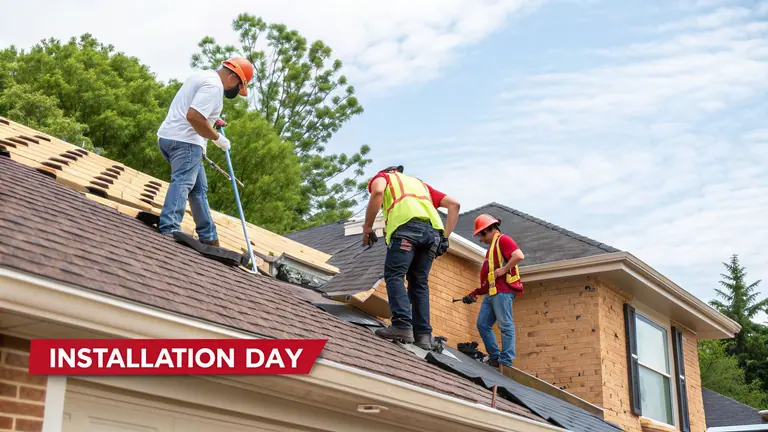
Build day is when all the phone calls, inspections, and paperwork finally come together. A professional hail damage roof replacement is a sight to see, but knowing the play-by-play can definitely ease your mind about the noise and activity. It’s far more than just nailing down shingles; it’s a coordinated effort to protect your home while installing a tough, long-lasting roofing system.
A good crew’s work starts long before a single shingle comes off. Their first job is to meticulously protect your property. This means laying out heavy-duty tarps to shield your landscaping, driveway, and flower beds from falling debris. They’ll also move any vulnerable items like patio furniture, grills, or potted plants to a safe spot.
The Tear-Off and Decking Inspection
Once your home is prepped and protected, the tear-off begins. This is where the old, damaged roof is completely removed. Your crew will systematically strip away every old shingle, the underlying felt paper, and old flashing. It's easily the loudest and messiest part of the process, but it is absolutely critical.
You might hear about some contractors offering to just roof over the old shingles. This is a huge red flag and a shortcut that can hide serious, costly problems underneath.
With the old roof gone, the crew can finally inspect the bare roof decking—the sheets of wood that form the foundation of your roof. This is the moment of truth. They're looking for any soft spots, rot, water stains, or delaminated plywood that were impossible to see before.
I’ve seen it hundreds of times here in North Texas: a small, hidden leak has slowly rotted a section of decking. A reputable roofer will stop work immediately, show you detailed photos of the damage, and explain the necessary repairs. This isn't an upsell; it's a non-negotiable step for a roof that meets code and will be covered by a warranty.
Any rotted or compromised decking has to be replaced. This gives your new shingles a solid, secure base to anchor to and prevents major headaches down the road.
Building Your New Roofing System
Now for the main event: building your new roof. This isn’t just about the shingles you see from the street; it’s about installing an entire integrated system designed to work together to keep water out. The process looks like this:
- Ice and Water Shield: A sticky, waterproof membrane is installed in the most vulnerable spots, like in valleys, along eaves, and around chimneys and vent pipes.
- New Underlayment: Next, a layer of high-quality synthetic underlayment is rolled out across the entire roof deck. This acts as a crucial secondary barrier against moisture.
- Flashing and Ventilation: New metal flashing is custom-fit into valleys and around anything that penetrates the roof. This is also when proper attic ventilation is installed, which is key to regulating temperature and moisture to make your new roof last.
- Shingle Installation: Finally, the crew installs your new shingles. They follow the manufacturer’s exact specifications, especially the required nailing pattern, to guarantee wind resistance and lock in that warranty. For a detailed breakdown of scheduling, see our guide on the typical roof replacement timeline.
Solar Panels and the Final Cleanup
Have solar panels? The process has one extra, specialized step. Before any work on the roof begins, a dedicated solar team performs a solar detach-and-reset. They carefully disconnect and remove the panels and their racking system. According to the National Renewable Energy Laboratory (NREL), using a qualified solar technician is essential for protecting your solar system's warranty and performance. You can read more about their research on reroofing with solar here.
Once the new roof is fully installed, that same solar team returns to reinstall the panels, check all connections, and confirm the system is back online and producing power.
The very last step is one of the most important in my book: the cleanup. A truly professional crew will leave your property looking even better than they found it. This always includes meticulously rolling a magnetic sweeper through your yard, driveway, and garden beds to find every last stray nail. It's a critical safety step for your kids, pets, and tires. After hauling away every bit of debris, all you’re left with is a beautiful new roof and complete peace of mind.
Restoring More Than Just Your Roof
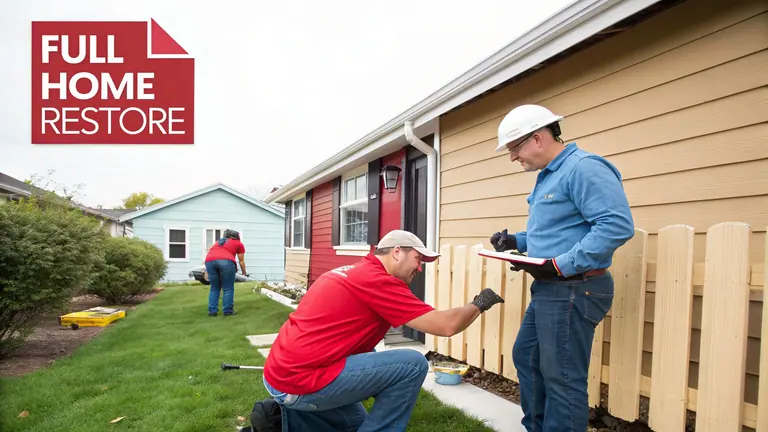
When a nasty hailstorm rolls through, it’s not just your roof that takes a beating. The reality is that hail is an equal-opportunity destroyer. Once the storm clears and your hail damage roof replacement is approved, take a walk around your property. You’ll see the rest of the story.
Look closely at the dented gutters, shredded window screens, and chipped paint on your siding. Even your fence stain will likely be pockmarked. Now, imagine trying to coordinate a roofer, a gutter crew, a painter, and a fence company all on your own. It's a full-time job you don't need, and this is exactly why a full-service storm restoration contractor is the only way to go.
A Single Expert for a Complete Restoration
Handing the entire project over to one qualified team just makes sense. Instead of juggling different crews, contracts, and timelines, you have a single project manager who handles everything. This ensures the work is done right and that the new gutters actually match the new trim paint.
Your insurance adjuster’s report is the blueprint. It should detail all this "collateral" damage, and a good restoration contractor will work directly from that approved scope of work to fix it all.
This typically includes:
- Gutters and Downspouts: Replacing dented sections that can't properly channel water away from your foundation.
- Window Screens: Repairing or replacing screens that were torn or punctured by hail.
- Fence Staining and Repair: Sanding and re-staining fences to erase the tell-tale signs of hail impacts.
- Exterior Painting: Applying fresh paint to siding and trim that hail has chipped and scarred.
Working with one company isn't just about convenience—it's also smarter financially. For example, a study from Consumer Reports found that bundling home exterior projects with one contractor can save an average of 10-15% versus hiring specialists for each job. You can discover more insights about hiring contractors on ConsumerReports.org to see how the numbers break down.
Covering the Cost of Upgrades and Extras
Let's be practical. The insurance check might cover a standard shingle, but you’ve been thinking about upgrading to those tough Class 4 impact-resistant shingles. Or maybe, since the painters are coming anyway, you want to go ahead and paint the whole house, not just the two damaged walls.
When your entire property has been impacted by a storm, restoring it piece by piece just doesn't make sense. A coordinated restoration ensures that your new roof, gutters, and paint all look like they belong together, instantly boosting your home’s curb appeal and overall value.
This is where the out-of-pocket costs come in, and good financing can bridge that gap. Most experienced contractors have relationships with lenders who specialize in home improvement loans, making it easy to fund those valuable upgrades.
These programs are usually designed with homeowners in mind:
- Soft Credit Checks: You can find out how much you’re approved for without it dinging your credit score.
- No Prepayment Penalties: If you want to pay the loan off early, you won’t get hit with extra fees.
- No Home-Equity Requirement: Unlike a HELOC, these loans aren't secured by your home, which means a simpler and less intimidating application process.
Financing gives you the power to turn a necessary repair into a smart home investment, getting the full restoration you want without draining your savings.
Answering Your Top Questions About Hail Damage & Your Roof
After a big hailstorm rolls through, your head is probably spinning with questions. Even once you’ve called a roofer and started thinking about insurance, the uncertainty doesn't just vanish. That’s perfectly normal.
With our decades of experience helping homeowners across Dallas–Fort Worth and East Texas, we’ve pretty much heard it all. We’ve pulled together the most common questions we get right here, so you can get straightforward answers and feel more confident about your next steps.
Will My Insurance Premiums Increase After a Hail Claim?
This is the number one question we hear, and the answer usually comes as a relief. In Texas, an insurance company can't single you out for a rate hike just because you filed a claim for an “Act of God.” Hailstorms, wind, and tornadoes fall into this category. You didn't cause the storm, so you can't be penalized for its aftermath.
Now, here’s the important part to understand. If a storm causes widespread damage across your entire zip code or region, your insurance carrier might raise rates for everyone in that area to offset their massive losses. It’s a regional adjustment, not a personal penalty.
So, if your rates do go up, your neighbor’s probably will too—whether they filed a claim or not.
The bottom line is this: Not filing a necessary claim won’t protect you from a regional rate increase. It just means you'll be stuck paying for a damaged roof out of your own pocket down the road.
How Long Do I Have to File a Claim?
Don’t wait. Most insurance policies in Texas give you just one year from the "date of loss" (the day the storm hit) to file a claim. Waiting is one of the costliest mistakes we see homeowners make.
Acting quickly is critical for a few key reasons:
- Evidence disappears. The proof of hail damage—like subtle bruises and granule loss on your shingles—can wash away with the next rain, making it much harder to build a strong claim.
- Small problems get bigger. A tiny, hidden leak can silently rot the wood decking of your roof. Before you know it, you’ve got a serious mold problem and a much more expensive project on your hands.
- Deadlines are firm. Once that one-year window slams shut, your opportunity to have insurance cover your new roof is gone. For good.
The best thing you can do is call a roofer you trust for an inspection right after a storm. Don't wait until you see a leak in your ceiling.
Does My Insurance Company Choose My Roofer?
Absolutely not. This is a huge point of confusion, but the law is on your side. In Texas, you have the legal right to choose your own contractor.
Your insurance company might offer a list of their "preferred" roofers, but you are never obligated to use them. In fact, you should be wary of these programs. The Texas Department of Insurance makes it clear that homeowners have the right to hire any contractor they want. You can even read about your rights on the TDI website.
This is a vital consumer protection law. It ensures you can hire a local, reputable roofer whose primary interest is protecting your home, not saving the insurance company money.
Can My Roofer Waive My Deductible?
No. Unequivocally, no. It is illegal in Texas for a contractor to "waive," "absorb," or "cover" your insurance deductible. This practice is insurance fraud, plain and simple, and it's the biggest red flag you can encounter.
Think about it: if a roofer is willing to give up that money, they have to be making it up somewhere else. That usually means they’re using shoddy, cheap materials, hiring unskilled labor, or skipping crucial installation steps.
Be on the lookout for these warning signs:
- Any mention of a "free roof" or "no-cost replacement."
- Yard signs advertising "Deductible Covered."
- A contractor suggesting they create a second, inflated invoice to trick the insurance company.
If anyone makes you this offer, run the other way. Working with them puts you at legal risk and is a surefire sign you're dealing with a dishonest operator.
What Is the Difference Between a Repair and a Replacement?
This is often the main point of negotiation with an insurance adjuster. A roof repair is for isolated damage—like replacing a handful of shingles that blew off in a windstorm. It's a patch-up job.
A full roof replacement, on the other hand, is a complete overhaul. We tear off every layer down to the bare wood decking and install a brand-new, integrated roofing system.
After a major hailstorm, the damage is rarely isolated. The impacts cause widespread bruising and knock off the protective granules across the entire roof surface. Even if it doesn't look terrible from the ground, the integrity of your entire roof has been compromised. Patching a few spots won't fix that underlying weakness and often leaves your roof looking mismatched. A thorough, professional inspection is the only way to determine if the damage is extensive enough to warrant a full replacement, which is what it takes to truly protect your home for the long haul.
Navigating a hail damage roof replacement can feel complex, but you don't have to do it alone. The expert team at Hail King Professionals has been guiding Texas homeowners through this process since 1991. From the initial inspection and insurance claim assistance to the final cleanup, we handle every detail. If you suspect you have hail damage, contact us today for a free, no-obligation inspection and get the peace of mind you deserve. Visit us at https://hailkingpros.com to get started.