


What Size Hail Damages Roofs? a Texas Homeowner’s Guide
Hail about 1 inch in diameter can start damaging many roofs, and 1.5-inch hail is more likely to cause significant damage. But that number is only a starting point, because the actual impact depends on your roof's material, age, condition, and how the storm hit it.
If you're reading this after hearing hail hammer your roof in Dallas-Fort Worth or East Texas, you're probably asking the same question most homeowners ask the minute the storm passes. Was that enough to hurt my roof, or am I worrying over nothing?
That's a fair question. It's also where a lot of online advice falls short. Homeowners get object comparisons like pea, quarter, or golf ball, but that still doesn't tell you whether your roof suffered functional damage or whether you've got enough evidence to support an insurance claim.
A roof can take a storm and look fine from the driveway, yet still have bruised shingles, fractured matting, damaged flashing, or collateral hits on metal components. On the other hand, a roof can show a few cosmetic marks that look alarming but don't justify replacement. The difference matters, especially in Texas where storms move fast and claim decisions often come down to what a trained inspector can document, not just the hail size reported on the weather app.
That Sound on the Roof What Happens During a Hail Storm
A Texas hailstorm has a way of getting your attention fast. First comes the wind, then the pounding on the roof, the gutters, the vent caps, maybe the skylight if you have one. Once it stops, a common reaction is to step outside, look around the yard, and try to judge the storm by the ice left on the ground.
That's understandable, but it's not enough.
The common benchmark people hear is quarter-size hail, about 1 inch, because that's widely treated as the point where many roofs can begin to suffer damage. Hail around 1.5 inches raises the risk of more serious damage. Even then, hail size by itself doesn't settle the question. Roofing material, roof age, impact angle, and storm velocity all change the outcome.
Why the same storm damages one roof and misses another
A newer, thicker roof system may handle a storm that leaves an older three-tab shingle roof with bruises and fractures. Wind also changes the strike pattern. A stone hitting squarely is different from one driven sideways across a slope, edge, ridge, valley, vent, or flashing transition.
Practical rule: The sound of hail tells you a storm was strong enough to inspect for damage. It does not tell you whether your roof needs a repair, a claim, or a full replacement.
Density matters too. Some hailstones are hard and compact. Others break apart more easily on impact. From a homeowner's perspective, the practical takeaway is simple. Don't try to judge roof condition from yard debris alone.
What homeowners usually miss right after the storm
From the ground, people usually look for obvious failures like missing shingles or active leaks. Those are late-stage signs. Hail damage often starts as smaller impact problems that weaken the roof before water ever shows up inside.
Watch for clues you can safely see without climbing up:
- Metal dents: Check gutters, downspouts, box vents, turbine caps, mailbox tops, and fence caps.
- Window screen marks: Bent or torn screens can support the storm story.
- Softened shingle appearance: Some impact zones look dark, scuffed, or slightly irregular from certain angles.
- Scattered granules: If you notice excess granules washing out after the storm, that can be a clue worth documenting.
If your roof took a hard storm, the question usually isn't just what size hail damages roofs. The better question is whether the storm caused documented, functional loss that changes how the roof sheds water and survives the next storm season.
Decoding Hail Size From Peas to Golf Balls
A homeowner in North Texas hears quarter-size hail on the roof and wants a simple answer. Did the roof get damaged or not? In the field, the answer depends on more than the object comparison. Hail size starts the conversation. Functional damage is what decides whether a repair or claim makes sense.
The National Weather Service classifies hail by diameter, from pea-size up through larger stones like golf balls and beyond, and it treats 1 inch hail as severe thunderstorm criteria according to the National Weather Service hail hazard definition. That severe label matters, but it does not mean every roof in the storm path qualifies for insurance coverage. Carriers and inspectors look for documented impact damage that shortens the roof's service life or changes how it protects the home.
A practical size guide homeowners can use
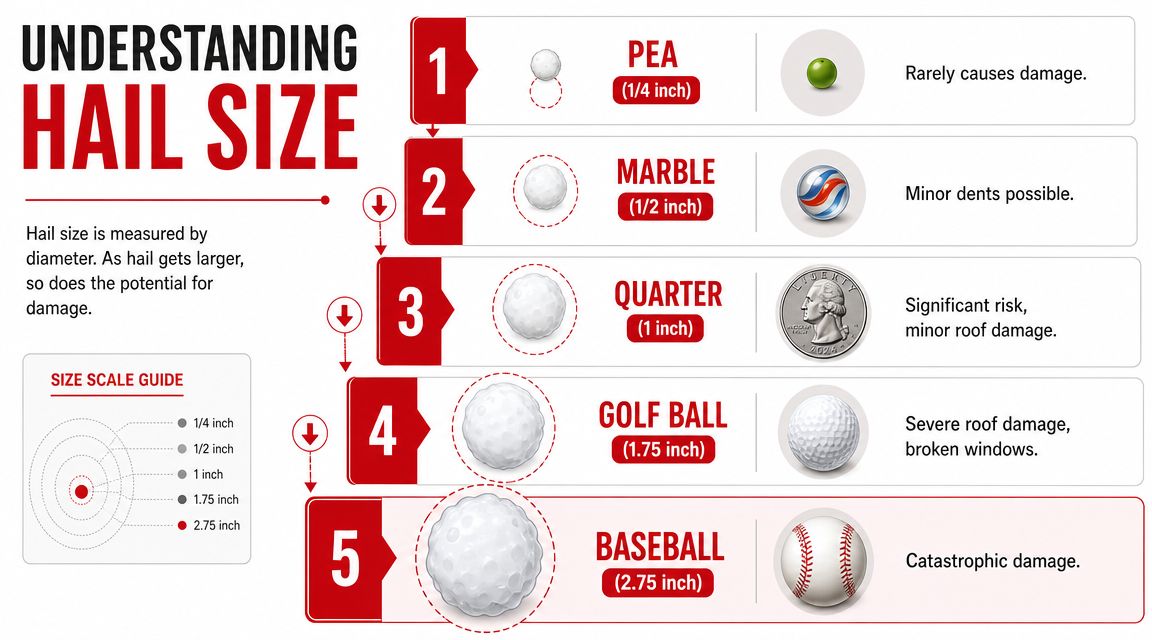
The chart below is useful for setting expectations. It is not a claim checklist. A newer impact-rated shingle may come through a storm with little more than granule disturbance, while an older three-tab roof on the next block can show clear bruising from the same hail. If you want to compare how different systems are built to hold up, review these hail-resistant roofing materials.
| Hail Size (Diameter) | Common Object | What It Often Means on Asphalt Shingles | What It Often Means on Metal Roofs | What It Often Means on Tile Roofs |
|---|---|---|---|---|
| 1/4 inch | Pea | Usually no functional damage | Usually no functional damage | Usually no functional damage |
| 1/2 inch | Marble | Light surface marking is possible on worn roofs | Minor cosmetic denting is possible on softer metals | Limited visible effect in many cases |
| 1 inch | Quarter | First size where functional damage can begin on vulnerable shingles | Cosmetic denting becomes more common, especially on vents and accessories | Damage is less common, but brittle or aged tiles still need inspection |
| 1.5 inches | Ping pong ball | Meaningful risk of bruising, fractured mat, and granule loss | Obvious denting is common, with higher risk to accessories and seams | Cracks and breakage become more likely depending on tile profile and age |
| 1.75 inches | Golf ball | High chance of significant damage on many asphalt roofs | Heavy denting and accessory damage are common | Strong risk of cracked or broken tiles |
Why quarter-size hail gets so much attention
Quarter-size hail is the point where roof inspections start getting serious in Texas. Not because every quarter-size storm destroys a roof, but because that is the range where many asphalt systems can begin to show functional impact damage. Age, heat exposure, previous storm wear, slope, and the direction of the storm all affect the result.
That gap between hail size and real roof damage is where homeowners get tripped up.
I have inspected roofs after storms that produced obvious dents on soft metals and almost no meaningful shingle damage. I have also seen older laminate roofs with clear bruising and fractured matting from hail that homeowners assumed was “too small” to matter. Insurance adjusters know this too. They do not approve a roof because the weather report said golf balls. They look for a pattern of hits, collateral evidence, and actual damage to the roofing system.
For a homeowner, the practical rule is simple. Use hail size as a trigger to inspect, not as proof by itself. If you want a second reference point before scheduling an inspection, Two States Exteriors' hail damage tips give a helpful homeowner-level overview of what visible storm damage can look like from the ground.
How Hail Damage Looks on Different Roofs
The way hail shows up on a roof depends on what got hit. That's why two homes on the same street can have very different inspection results after the same storm. The impact energy may be similar, but asphalt, metal, and tile fail in different ways.
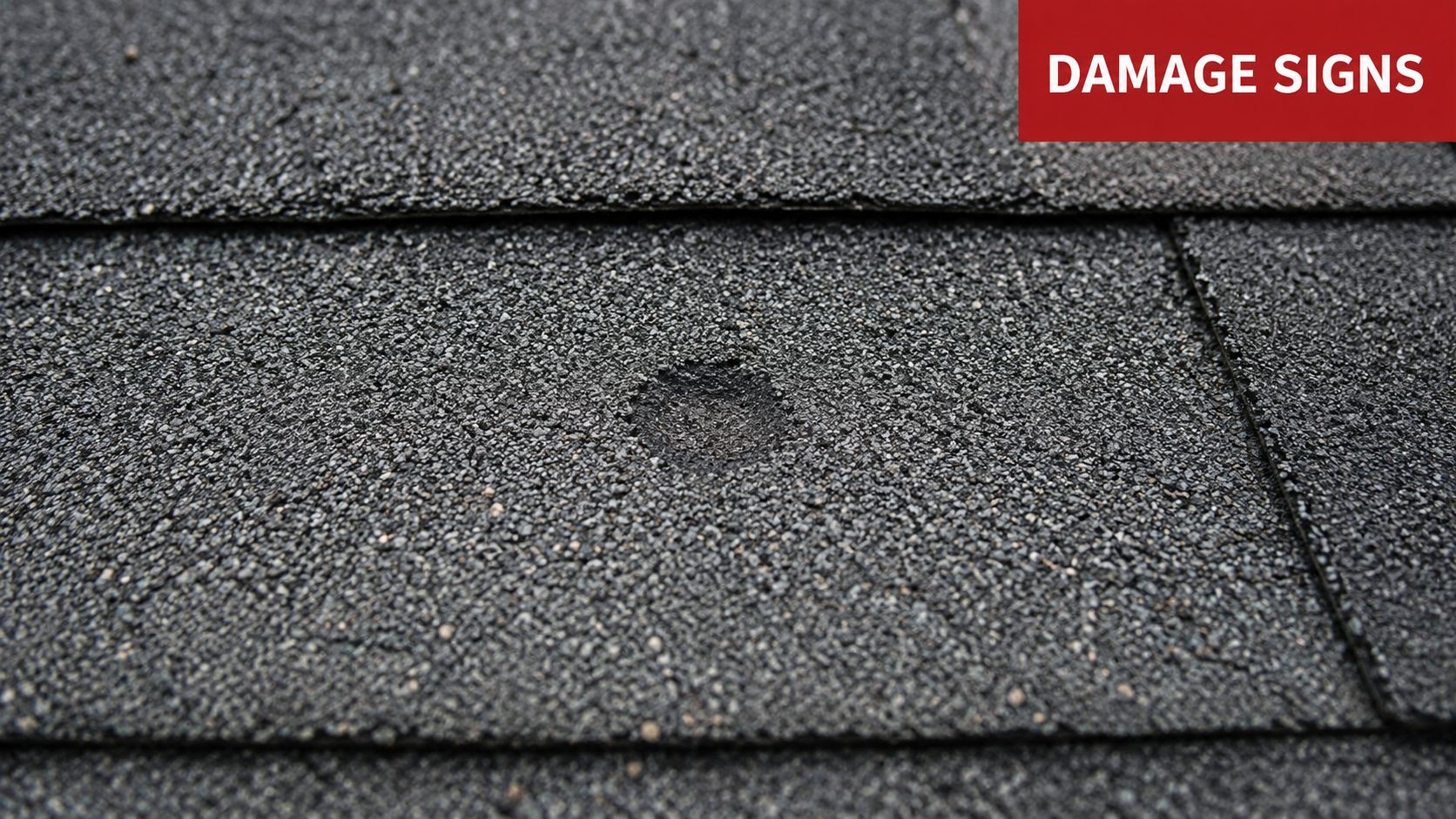
Impact testing on common roof coverings found that damage thresholds vary by material. Older, thinner asphalt shingles could be damaged at about 1 inch, thick laminated shingles at about 1.5 inches, concrete S-tiles at about 2 inches, and built-up gravel roofs at about 2.5 inches. The same testing found that lighter, thinner, and older roof products generally had lower damage thresholds, while gravel-protected built-up roofs on hard decks were among the most hail-resistant systems tested, according to impact testing published through the American Meteorological Society conference archive.
Asphalt shingles bruise before they fail
Asphalt roofs often don't show dramatic holes after a hailstorm. Instead, a trained inspector looks for bruising, displaced granules, fractured shingle matting, or impact points that feel soft under light pressure. Those spots may still shed water today, but they're weaker than they were before the storm.
A homeowner looking from the lawn may just see a normal roof. Up close, a roofer may see circular impact zones where the protective surface was compromised.
Metal roofs often separate cosmetic from functional issues
Metal usually tells the storm story clearly because dents show up well on vents, flashing, ridge caps, and exposed accessories. The main question is whether the damage is only cosmetic or whether impacts affected seams, locks, fastener areas, coatings, or water-shedding details.
That distinction matters in insurance conversations. A dented panel isn't always the same as a functionally damaged roof system.
Tile roofs can hide cracked units
Tile is durable, but impacts can crack individual tiles in ways that aren't obvious from the ground. A hairline crack can later turn into a leak path, especially when the next round of wind-driven rain arrives.
If you want a homeowner-friendly visual guide to compare notes before scheduling an inspection, Two States Exteriors' hail damage tips give a useful overview of the signs people often spot on shingles, gutters, flashing, and related exterior components.
For homeowners thinking beyond this storm, it also helps to compare hail-resistant roofing materials before the next replacement cycle. Material choice doesn't make a roof hail-proof, but it can change how the next storm shows up on your inspection report.
What a Professional Roof Inspector Actually Looks For
Most homeowners inspect a storm from the driveway. A professional inspector works backward from evidence. The goal isn't to confirm that hail fell. The goal is to document whether the roof lost function.
The key gap is this. Homeowners usually ask about hail size. Carriers and adjusters focus on functional loss indicators. That includes findings like soft bruises, hidden mat fractures, and collateral metal dents, because visible hail size alone doesn't determine claim viability or the need for replacement according to Alpine Intel's discussion of asphalt shingle hail evaluation.
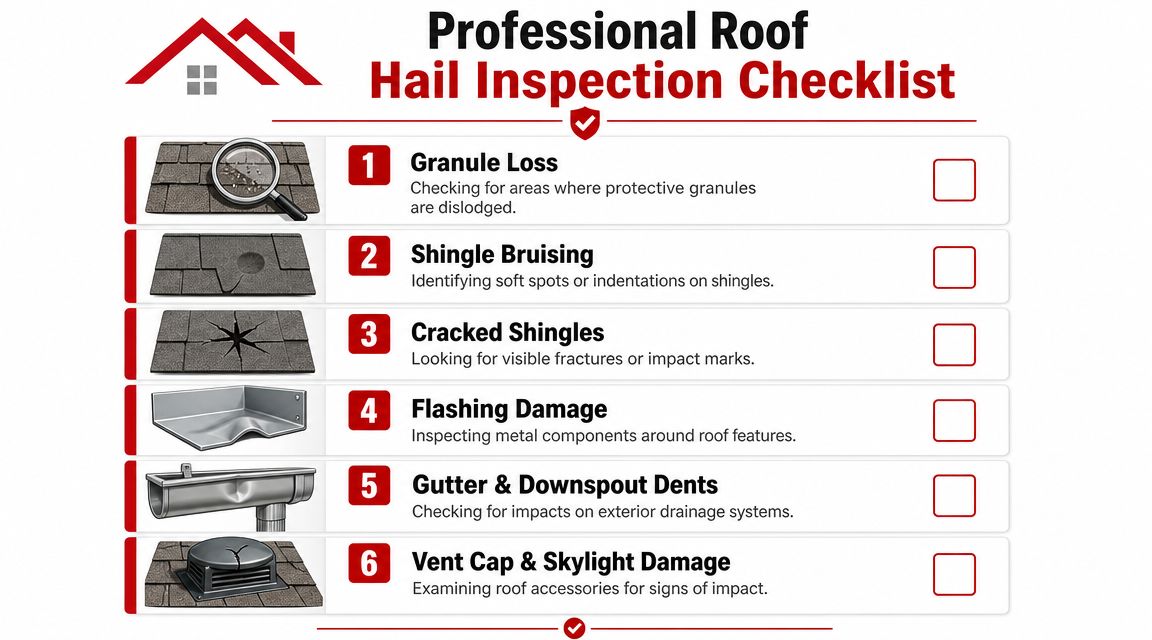
To see the inspection points in one place, this checklist is a good reference:
What gets checked on the roof surface
An inspector usually starts by looking for repeatable impact patterns, not random blemishes.
- Test areas: Roofers often examine representative areas on different slopes to see whether impacts are isolated or consistent.
- Shingle response: On asphalt, they look for bruises, fractures, granule displacement, torn edges, and weak spots that indicate the shingle absorbed a real strike.
- Direction of hits: Storm angle matters. One slope may show clear evidence while another doesn't.
Why collateral damage matters
The roof doesn't exist by itself. A good inspection also checks the metal around it.
Metal dents on vents, flashing, gutters, and other accessories can support the storm narrative when the shingle damage is harder to see from the ground.
Collateral hits matter because they help establish storm severity at the property itself, not just in the broader area. If a vent cap, gutter apron, or downspout shows fresh impact marks, that gives context to softer or less visible roof-surface findings.
A homeowner can learn a lot from a careful exterior review, but there's still a limit to what you can safely confirm without getting on the roof. If you want a more complete walkthrough of what to do after bad weather, Hail King Professionals offers a practical guide on roof inspection after storm.
Later in the process, many homeowners find it helpful to watch a live inspection example instead of just reading about it. This video gives that kind of visual context.
Cosmetic marks versus functional loss
Claims often differentiate between damage types. Cosmetic damage affects appearance. Functional damage affects performance, water shedding, longevity, or the integrity of the roofing system.
A few examples help:
- Cosmetic-only possibility: Light denting on some metal components where coatings, seams, and drainage function remain intact.
- Functional concern on asphalt: Bruised spots where the mat is fractured under the surface.
- Functional concern on tile: Cracked units that can admit water even if the break is hard to spot from below.
That's why the right inspection doesn't stop at “yes, hail hit the roof.” It answers the more important question. Did the storm leave enough documented functional damage to justify repair, partial replacement, or a claim?
Navigating Hail Claims in Dallas-Fort Worth and East Texas
A North Texas storm can hit one side of the street hard and leave the other with little more than runoff in the gutters. I see that every hail season. That is why claim decisions in Dallas-Fort Worth and East Texas cannot rest on hail size alone.
What matters to the carrier is whether the storm caused documented functional damage to your roof system and related components. A storm with obvious collateral hits on soft metals may support the case. So can fractured shingles, broken tile, compromised ridge caps, or damaged vents. The key question is not “Was the hail big?” It is “What did it do?”
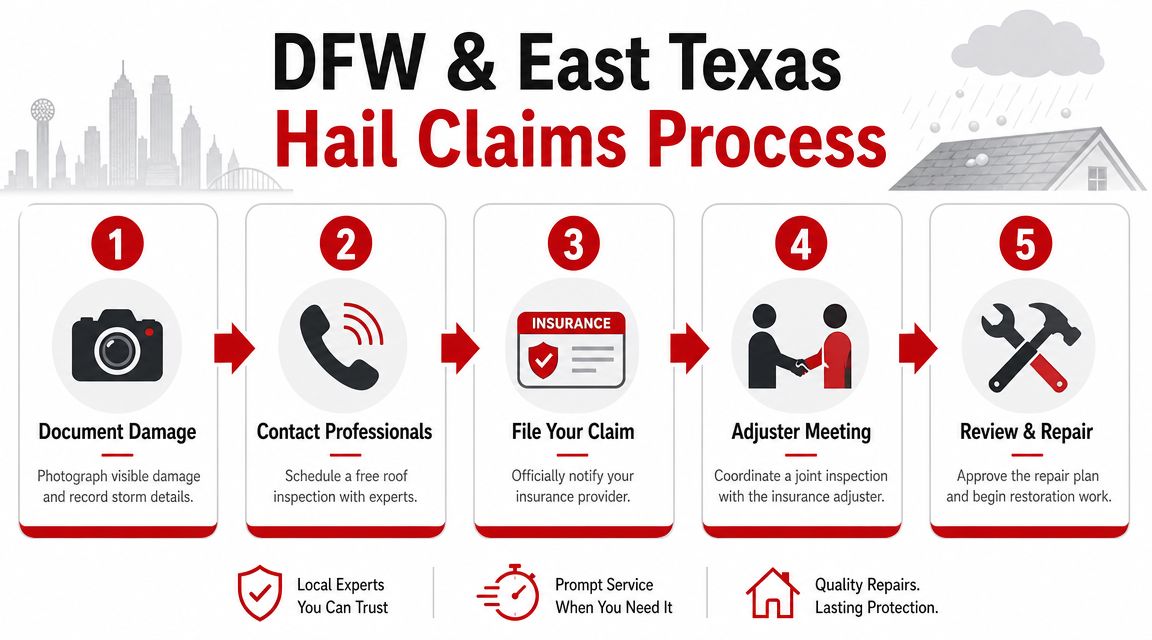
What to do right after the storm
The first few steps matter because they shape the paper trail.
- Photograph what you can safely see. Get clear shots of hailstones if any remain, plus fresh dents on gutters, downspouts, roof vents, window screens, mailbox tops, AC fins, and fence staining.
- Write down the date and rough time. That helps tie the damage to a specific storm event if the carrier asks for support later.
- Keep off the roof. Post-storm surfaces are slick, and many hail hits are subtle enough that an untrained eye can miss them anyway.
- Set up a local inspection before making claim decisions. Homeowners often either file too fast with weak documentation or wait too long and lose good evidence.
Where claims usually get messy
In Texas, claim problems usually start with poor documentation, not with the storm itself.
- The inspection is too shallow: A quick glance from the driveway does not answer whether the roof has functional loss.
- The contractor cannot separate cosmetic from functional damage: That distinction affects whether repairs are justified and how the carrier responds.
- The homeowner waits for a leak: By then, the argument may shift from fresh storm damage to delayed maintenance.
- The crew is storm-chasing and gone next month: If supplements, reinspection, or repair questions come up, you need someone who will still answer the phone.
A clean claim file gives the adjuster something concrete to review. Photos, marked test areas, collateral damage, material identification, and a written explanation of what was damaged carry more weight than “we had golf ball hail in the neighborhood.”
If your home has rooftop solar, repairs can get more complicated. Detach and reset work, roof access, and warranty questions need to be sorted out early, so Solar Energy Management LLC roof insights are worth reviewing if panels are part of your setup.
The roofer's role in the claim
A good roofer does not decide coverage. The roofer documents conditions, shows where functional damage exists, explains what repair scope matches those findings, and helps keep the conversation tied to the roof instead of guesswork.
That matters in Dallas-Fort Worth and East Texas because carriers often ask the same practical questions. Which slopes were hit. What collateral supports the date of loss. Are the shingle marks superficial or mat-fracturing. Is repair reasonable, or does the pattern and extent point to replacement.
If you want to sort out the policy side before you file, review whether homeowners insurance covers storm damage. It gives useful context for deductibles, exclusions, and how roof findings fit into the claim process.
Handled correctly, a hail claim becomes much simpler. You go from uncertainty to a documented answer about whether the roof took functional damage and whether a claim is worth pursuing.
Your Next Steps to Protect Your Home
If you've been trying to pin everything on hail size alone, here's the main takeaway. What size hail damages roofs is the right starting question, but it's not the final one. The better question is whether the storm caused functional damage to your specific roof system.
That's why homeowners get mixed answers after a storm. A quarter-size storm may leave one roof with bruised shingles and collateral dents, while a newer or heavier system nearby comes through with little more than cosmetic marking. From the ground, those two homes can look almost identical.
A simple post-storm plan that works
Use this checklist after any Texas hail event:
- Record the storm details: Save the date and anything you know about the time and intensity.
- Look from the ground only: Check gutters, downspouts, vents, screens, and other exterior metal for fresh impact marks.
- Take photos early: Clear photos taken soon after the storm are often more useful than trying to recreate the condition later.
- Stay off the roof: Slopes can be slick, and subtle damage is easy to miss without training.
- Get a professional inspection: You need a documented answer about functional damage, not just a guess based on hail size.
What works and what doesn't
What works is a methodical inspection, clear photos, and a contractor who understands how storm evidence translates into repair scope and insurance discussion.
What doesn't work is judging the roof from your driveway, waiting for an active leak before acting, or assuming that “not seeing damage” means the roof is fine. Hail damage often starts subtly. The claim conversation starts with evidence.
If you want a direct answer about your roof, schedule an inspection while the storm date is still fresh and the evidence is easier to document.
If your home in Dallas-Fort Worth or East Texas took a hailstorm and you want a clear assessment, Hail King Professionals provides roof inspections for storm-damaged properties, along with documented findings that can help you understand whether you're dealing with cosmetic marks, functional damage, repairable areas, or a roof that needs to be discussed with your carrier.