
A Dallas homeowner can go from no visible roof problem at breakfast to water in the attic by dinner after one spring hailstorm. In this part of Texas, roofs age under constant stress. Summer heat bakes shingles, sudden wind lifts edges and flashing, hail bruises surfaces that still look fine from the ground, and heavy rain finds every weak point fast.
That climate changes the way smart owners should manage a roof. Waiting for a ceiling stain or a blown-off shingle usually means the problem has already spread past the outer surface. By then, you may be dealing with wet insulation, stained drywall, damaged decking, downtime in a commercial space, or a harder insurance conversation because the damage was not documented early.
Good roofing practice in Dallas-Fort Worth, East Texas, and Central Texas is not just about repairs. It is about making better decisions before storm season, choosing materials that match local risk, and keeping records that help with warranties, claims, and budgeting. I tell owners the same thing every week. The best roof plan balances three things: weather exposure, building design, and how long you expect the property to perform before a major reinvestment.
Some upgrades pay off quickly in Texas. Class 4 impact-resistant shingles can make sense in hail-prone areas. Better ventilation can reduce heat buildup that shortens roof life. Fast leak response and clean drainage can prevent small defects from turning into structural repairs. Just as important, owners need a plan for the money side. That includes understanding what insurance carriers often look for after a storm and when financing or phased work makes more sense than waiting for a full failure.
The fundamentals below give Texas homeowners, property managers, and commercial owners a practical framework for protecting residential and commercial roof systems over the long term.
1. Schedule Regular Professional Roof Inspections
A Dallas owner comes out after a spring hailstorm, sees no shingles in the yard, and assumes the roof made it through fine. Two months later, a ceiling stain shows up after a hard rain. By then, the repair may involve more than shingles. Wet decking, compromised underlayment, attic moisture, and a tougher insurance discussion can all be in play.
That is why routine professional inspections matter in Texas. Heat, hail, high wind, and fast weather swings in Dallas-Fort Worth, East Texas, and Central Texas can age a roof unevenly. Two roofs installed the same year can be in very different shape based on exposure, attic conditions, drainage, and the quality of past repairs.
A real inspection is more than a quick walk-around. It should document the roof's current condition with photos, note active problems and early warning signs, and give the owner a clear repair priority list. That paper trail helps with warranty questions, maintenance planning, resale disclosure, and storm claims if damage shows up later.
What a Texas inspection should include
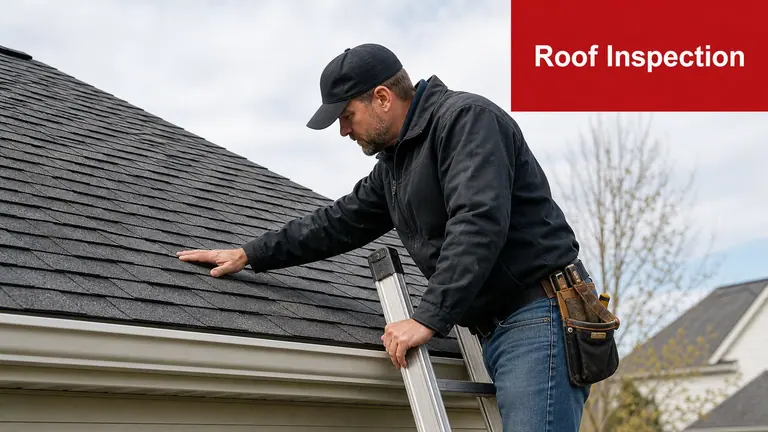
On a home in Dallas or McKinney, the inspection should cover shingle surfaces, ridge caps, flashing, valleys, pipe boots, soffits, gutters, and attic airflow. On commercial properties in Arlington or Tyler, the checklist usually shifts to membrane seams, penetrations, drains, parapet walls, coating wear, and any area holding water longer than it should.
The report should also separate cosmetic wear from conditions that need action now. That distinction matters. I have seen owners spend money on visible surface aging while missing the loose flashing or failed sealant joint that lets water in.
Ask for a written report with photos every time. If a Fort Worth homeowner catches wind-damaged flashing in an inspection before peak storm season, the fix is usually straightforward and affordable. If that same issue sits through a few heavy rains, the repair bill can spread inside the house.
Use a simple inspection schedule:
- Schedule routine inspections in spring and fall: Spring checks for winter wear and storm damage. Fall checks help you go into cooler months with fewer surprises.
- Order an inspection after major hail or wind events: Ground-level views miss a lot, especially bruising, lifted tabs, and flashing movement.
- Keep reports, photos, and invoices together: Good records make claim conversations cleaner and help you track whether a problem is new or ongoing.
Practical rule: In Texas, inspect every roof on a schedule and after major storms. Waiting for interior water marks usually means you are already behind.
2. Install Impact-Resistant Class 4 Shingles on Vulnerable Properties
If your property sits in a hail-prone part of Dallas-Fort Worth, impact resistance isn't a luxury upgrade. It's often one of the smartest material choices you can make.
Standard asphalt shingles still dominate the residential market, but the market is shifting in storm-prone areas. In the U.S. residential roofing market, asphalt shingles account for about 73% of market share in 2024, and Class 4 impact-resistant shingles are becoming standard in hail-prone regions like Texas, according to RoofLink's roofing industry statistics overview. That trend lines up with what many Texas owners already know from experience. Hail doesn't care what your deductible is.
Where Class 4 makes the most sense
A Plano homeowner replacing a storm-hit roof should at least compare standard architectural shingles against a Class 4 option. The same goes for homes in Frisco, Garland, and Mesquite that see repeated hail activity. If you own rental property, the case can be even stronger because fewer storm-related repairs can mean less turnover disruption and fewer emergency calls.
Class 4 products aren't automatically the right answer for every roof. They cost more up front, and the value depends on your neighborhood's storm exposure, your insurer's rules, and how long you plan to hold the property. But on vulnerable Texas properties, they often make more sense than replacing standard shingles over and over.
- Check insurer treatment first: Before signing a contract, ask your carrier how it handles impact-resistant roofing and whether it changes your premium or claim terms.
- Match the full system: Better shingles still need proper ventilation, correct fastening, and solid underlayment to perform the way they should.
- Think curb appeal too: Many Class 4 options are available in dimensional profiles that don't force you into an industrial look.
For owners comparing asphalt shingle roofing against metal roofing, it's worth noting that metal has grown from 3% to 17% market share between 2020 and 2024, and that source lists a 40 to 70 year lifespan for metal roofing as part of the reason for its adoption in long-term ownership plans.
3. Ensure Proper Roof Ventilation and Attic Airflow
A roof can be perfectly shingled and still wear out too fast if the attic can't breathe. In Texas heat, trapped attic air cooks materials from below, drives up cooling strain, and creates the kind of moisture buildup that insidiously damages decking and insulation.
Balanced ventilation matters more than most owners realize. The National Roofing Contractors Association recommends that a balanced attic ventilation system place about 50% of total ventilation area at or near the ridge and the other 50% at the eaves or soffits for nearly equivalent airflow, according to NRCA ventilation guidance. That balance is the difference between a system that effectively moves air and one that only looks ventilated on paper.
A Dallas attic with blocked soffits and too much exhaust can short-cycle airflow. A Fort Worth home with gable vents but poor intake can still trap heat. In both cases, shingles age faster and indoor comfort suffers.
Here's a helpful visual on how attic airflow works in practice:
What proper ventilation looks like
The goal is simple. Cool air enters low. Hot, moist air exits high. That sounds basic, but bad installs are common. I've seen roofs with ridge vents added while soffit vents were blocked by insulation, which leaves the system fighting itself.
Check these points during a roof inspection:
- Verify intake paths: Soffit vents need to stay open and clear of insulation or stored items.
- Confirm balanced exhaust: Ridge vents usually perform best when paired with adequate intake instead of random mixing with other exhaust types.
- Review attic conditions: Staining, mold odor, or extreme heat buildup often points to airflow problems, not just roofing material issues.
Good ventilation protects more than comfort. It helps protect shingles, decking, insulation, and warranty life.
4. Apply Roof Coatings to Extend System Life and Improve Energy Efficiency
For many commercial roofing systems, a full tear-off isn't the first move. A properly selected roof coating can buy time, improve reflectivity, and help a building perform better through Texas heat.
This is especially relevant on low-slope roofs in places like Irving, San Antonio, Austin, and Round Rock. If the membrane is still a good candidate, a coating can restore weather resistance without the cost and disruption of immediate replacement. The key is matching the coating to the roof's condition and drainage pattern. Silicone often makes sense where standing water is a recurring issue. Acrylic is often chosen where reflectivity is a priority and drainage is already decent.
Drainage comes before coating
Some projects encounter issues. Owners often hear “coat it and extend the life,” yet the fundamental issue is water that won't leave the roof. On low-slope systems, drainage design directly affects longevity. One source focused on flat roofing reports that 40% of premature flat roof failures are traced to inadequate tapered insulation rather than material defects, and for roofs under 2:12 slope, positive drainage should achieve a minimum 1/4-inch rise per foot with backup overflow drains sized 20% larger than code minimum to limit standing water and membrane degradation, according to MBA Roofing's low-slope drainage discussion.
That's highly relevant for commercial roof replacement decisions in Texas. If an Arlington office building has coating wear but also chronic ponding, coating alone may only hide the problem for a while. If an Austin warehouse has sound substrate and properly moving water, coating can be a very smart life-extension tool.
- Start with a condition assessment: Don't coat over saturated areas, open seams, or failing substrate and expect good results.
- Choose by roof behavior: Silicone, acrylic, polyurethane, and elastomeric products all have different strengths.
- Document the system: Keep records of coating type, installation date, and repaired areas for future maintenance and warranty review.
5. Address Roof Leaks and Water Intrusion Immediately
A small leak is rarely a small repair for long. Once water gets inside, it moves. It can travel along rafters, soak insulation, stain ceilings far from the entry point, and rot wood before the source is obvious.
That's why immediate roof leak repair matters on both homes and commercial properties. In Garland or Mesquite, a ceiling stain after heavy rain may come from flashing, a vent penetration, lifted shingles, or a valley issue. On a flat roof in Arlington, the leak may show up far away from the actual membrane opening. Guessing usually wastes time and money.
Repair fast, diagnose correctly
The first job is controlling water. The second is finding the true entry point. Those aren't always the same thing. Temporary tarping can help after storm damage roof repair is scheduled but delayed by weather or material lead time. The permanent fix needs proper diagnosis.
If you're dealing with an active leak, this guide on how to prevent roof leaks explains the problem areas owners should watch most closely.
Hail also changes the repair decision. Functional damage isn't just visible marks. The recognized definition is damage that reduces water-shedding capability or expected service life, according to the HAAG protocol for assessment of hail-damaged roofing. That distinction matters because cosmetic spotting and real performance damage are not the same thing.
- Photograph first: Take clear images of interior staining and exterior conditions before repairs begin, if it's safe to do so.
- Protect the opening: Tarping and temporary sealing can limit additional damage while permanent work is scheduled.
- Don't rely on surface appearance alone: A few visible marks may not explain the full water path, especially after wind-driven rain.
A leak never stays in its lane. The longer it sits, the more parts of the property it reaches.
6. Maintain Clean Gutters and Proper Water Drainage Away from Foundation
Gutters aren't a side issue. They're part of the roof system. If they clog, pull loose, or dump water next to the structure, the roof edge, fascia, soffits, siding, and foundation all start taking unnecessary abuse.
Texas storms make this worse. A gutter that seems “mostly fine” during light rain can overflow hard during a severe thunderstorm in Plano or Longview. Then the owner blames the roof, even though the drainage path failed first.
What clean drainage should do
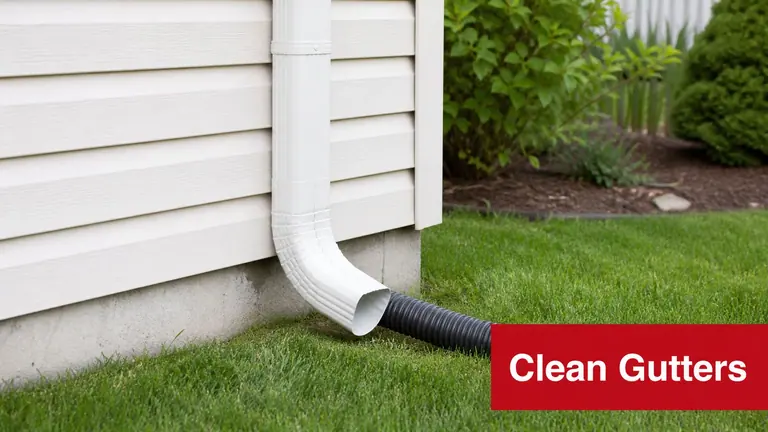
Water should move off the roof, through the gutter, down the downspout, and away from the foundation without spilling over the edge or backing up under shingles. On homes with mature trees in Dallas, McKinney, or Georgetown, routine cleaning matters even more because debris loads build quickly.
A lot of owners focus on the inside of the gutter and ignore the rest. Appearance isn't the main issue, but buildup on the exterior can hide overflow patterns, joint separation, and maintenance neglect. If your system looks rough from the curb, it's worth understanding the basics of addressing dirty gutter exteriors along with routine functional cleaning.
- Clear seasonal debris: Leaves, seed pods, and roofing granules should be removed before they block flow.
- Watch the roof edge: Overflow marks, fascia staining, and erosion below downspouts point to drainage failure.
- Extend discharge away from the structure: Water should not dump right at the foundation line.
A McKinney owner who extends short downspouts and corrects gutter pitch often avoids the kind of recurring splashback and edge rot that gets mistaken for a roof leak.
7. Use High-Quality Underlayment and Protective Barriers During Installation
A North Texas roof can look perfect from the street and still be one hard rain away from trouble if the layers under the shingles were downgraded or rushed. In Dallas, Fort Worth, Temple, and Tyler, I pay close attention to what sits on the deck because heat, hail, wind-driven rain, and fast-moving storm seasons test those hidden materials first.
Underlayment is the roof's secondary water-shedding layer. It helps protect the deck when shingles blow off, flashing gets stressed, or a storm hits before the roof is fully dried in. In Texas, that backup matters. A summer install can face extreme deck temperatures, and a spring install can get interrupted by afternoon storms with little warning.
Synthetic underlayment usually outperforms basic felt on reroofs across DFW and Central Texas because it holds up better during installation, resists wrinkling, and gives crews more stable footing. Self-adhered ice and water barrier, or similar peel-and-stick membrane, makes sense in the spots that fail first: valleys, low-slope transitions, eaves with drainage concentration, chimneys, skylights, and plumbing penetrations. Those materials cost more up front, but they are cheaper than replacing wet decking, insulation, and interior drywall after the first leak.
Details decide whether a roofing system lasts.
I see problems start where contractors write “standard underlayment” into the proposal and leave the rest vague. That is how owners end up with thin protection in critical areas, minimal valley treatment, or flashing tie-ins that look clean on day one and leak by the next storm cycle. The same owners are often dealing with overflow patterns and fascia staining outside the roof edge too, which is why it helps to understand basics like addressing dirty gutter exteriors while reviewing the full water-management plan.
Before signing a contract, ask for three things:
- The exact underlayment type: Brand, product line, and whether it is synthetic, felt, or self-adhered membrane.
- A written detail scope: Valleys, penetrations, wall intersections, drip edge, and transition areas should be listed clearly.
- Deck and flashing procedures: The proposal should explain what happens if damaged decking is found and how new flashing integrates with the rest of the roof system.
A good contractor does not sell shingles alone. They specify the full assembly and explain why each layer fits the Texas climate.
8. Document Damage and Address Storm Damage Quickly, Work with Insurance Companies Strategically
After a hail storm or high-wind event, time matters. So does documentation. If you're trying to support a storm damage restoration claim in Frisco, Irving, Marshall, or Dallas, the strongest files usually start with clear photos, notes, and a prompt inspection.
The first mistake owners make is waiting. The second is assuming every ding or scuff means full replacement. Hail damage roof repair decisions should be tied to function, not panic. The National Weather Service classifies hail as severe at 0.75 inches or larger, and one roofing damage reference notes that functional damage typically begins around that threshold, while impacts exceeding 1.75 inches often bruise shingles across large surfaces and can push replacement decisions, according to this hail damage explanation.
Replacement versus spot repair
Not every storm leads to a full reroof. According to guidelines for assessing hail damage to shingle roofs, complete replacement solely for hail damage is not recommended when damage is below 10% of shingles in the sample areas. But when multiple slopes are affected or bruising is widespread, spot repairs become less practical.
That's where an experienced storm restoration contractor helps. A good contractor documents slope-by-slope conditions, separates cosmetic from functional damage, and communicates clearly with the adjuster. That keeps the conversation grounded in roofing facts instead of guesswork.
- Take wide and close photos: Show the full slope and the specific impact areas.
- Record timing: Note the date of the storm and when damage was first observed.
- Keep every claim document: Save emails, claim numbers, adjuster notes, and contractor findings.
“The best insurance file is organized before the adjuster arrives.”
9. Plan Preventative Maintenance and Budget for Long-Term Roof Management
An August heat wave in Dallas can push an aging roof from manageable wear into a leak call fast. By the time water shows up on drywall, the owner has already lost options.
Long-term roof management means treating the roof like a scheduled capital item, not a surprise expense. In Texas, that matters even more because roofs take repeated stress from UV exposure, hail, thermal movement, and sudden wind-driven rain. A plan should cover inspections, minor repairs, drainage maintenance, sealant review, and a realistic replacement window based on the actual roof system on the building.
Material life is only part of the equation. Metal can last for decades, and asphalt, modified bitumen, TPO, and tile can all perform well too, but Texas heat and storm frequency shorten the margin for neglect. A roof in Fort Worth or Waco that looks acceptable from the ground may already be losing granules, drying out around penetrations, or opening up at flashing details.
Budget before the roof forces the decision
Owners in Dallas-Fort Worth, East Texas, and Central Texas get better results when they separate routine maintenance from replacement reserves. Maintenance covers the work that keeps small issues small. Replacement reserves prepare you for the point where repairs stop making financial sense.
That approach helps in a real storm year. If a roof gets hit by hail and the insurance scope does not cover every age-related weakness already in place, reserve money gives you room to make a better decision instead of patching the roof one more time and hoping for another season.
A simple tracking system is enough.
- Record roof age and system type: Note when each section was installed, what material was used, and whether any slope has different exposure or repair history.
- Review the roof before major weather seasons: In Texas, that usually means checking condition before spring hail season and again after summer heat.
- Budget for small work every year: Pipe boot replacement, sealant touch-ups, drainage cleanup, and minor flashing repairs cost far less than interior repairs and emergency labor.
- Flag roofs entering decision range: Older roofs should be evaluated for repair versus replacement before active leaking starts.
- Vet financing and contractor options early: If replacement may be coming, review how to choose a roofing contractor before a storm puts every crew in the region on a waiting list.
The goal is control. Planned work usually gives owners better pricing, better scheduling, and better material choices than a rushed replacement after a bad storm or a long-deferred leak.
10. Hire Licensed, Insured, and Experienced Roofing Contractors
The quality of your contractor shows up long after the crew leaves. It shows up in how the flashing is tied in, whether the ventilation was balanced correctly, whether the underlayment was what you were promised, and whether someone answers the phone if there's a problem later.
Texas property owners deal with a lot of roofers after storms. Some are good. Some are sales-driven but weak on execution. Some disappear as soon as the final check clears. That's why contractor selection is one of the most important roofing best practices on this list.
What to verify before you sign
Start with insurance, scope clarity, and local experience. A contractor working regularly in Dallas, Fort Worth, Plano, Austin, and San Antonio should understand Texas hail patterns, heat exposure, storm claim documentation, and the practical differences between residential and commercial roof replacement projects.
Roofing is also hazardous work. Roofers earned a median annual wage of $45,000 in May 2023, and the trade records more than 150 fatal incidents annually, primarily tied to inadequate fall protection and improper ladder usage, according to the Purdue-linked safety and employment research summary. That's one reason proper insurance coverage and professional safety practices matter so much when you hire a contractor.
If you're comparing companies, this article on how to choose a roofing contractor is a good place to start.
Ask for these items up front:
- Proof of insurance: Liability and workers' compensation should be current and verifiable.
- Detailed written scope: Materials, underlayment, flashing work, ventilation, cleanup, and warranty terms should be spelled out.
- Storm claim experience: If the project involves hail damage repair or wind damage repair, the contractor should know how to support the claim process without making unrealistic promises.
A low bid can become a very expensive roof if the workmanship doesn't hold.
Top 10 Roofing Best Practices Comparison
| Item | Implementation Complexity | Resource Requirements | Expected Outcomes | Ideal Use Cases | Key Advantages |
|---|---|---|---|---|---|
| Schedule Regular Professional Roof Inspections | Low, simple scheduling; coordinate twice yearly and after storms | Low–moderate: inspection fee and contractor time | Early detection of damage; documentation for claims; extended roof life | All properties, especially hail/wind-prone regions and post-storm checks | Prevents costly repairs; supports insurance claims; peace of mind |
| Install Impact-Resistant Class 4 Shingles on Vulnerable Properties | Moderate, reroofing with manufacturer-compliant installation | High upfront cost for materials and installation | Significantly reduced hail/wind damage; longer roof lifespan | Hail-prone areas, high-value homes, long-term protection plans | Durable protection; possible insurance discounts; improved resale value |
| Ensure Proper Roof Ventilation and Attic Airflow | Moderate, assessment and possible retrofit; correct sizing required | Moderate: vents, labor, and potential insulation upgrades | Lower attic temps, reduced shingle stress, less moisture and mold | Hot/humid climates, high attic temperatures, energy-efficiency goals | Energy savings; longer shingle life; moisture control |
| Apply Roof Coatings to Extend System Life and Improve Energy Efficiency | Moderate, surface prep and professional liquid application | Moderate: coating materials, professional labor, periodic recoats | Cooler roof surface, added waterproofing, 5–10 years extended service | Commercial flat roofs and large surfaces seeking cost-effective extension | Lowers cooling costs; extends roof life; waterproofing benefit |
| Address Roof Leaks and Water Intrusion Immediately | Variable, from simple patch to complex repair; rapid response needed | Low–high: detection tools, contractor repair costs depending on severity | Prevents structural and interior damage; avoids mold and expensive repairs | Active leaks, water stains, after heavy rain events | Minimizes catastrophic damage; preserves property value |
| Maintain Clean Gutters and Proper Water Drainage Away from Foundation | Low, routine cleaning and occasional repairs | Low: cleaning tools or professional service; gutter repairs/guards | Proper water diversion; reduced roof and foundation water damage | Tree-lined properties and regions with heavy seasonal rain | Inexpensive prevention; protects foundation and landscaping |
| Use High-Quality Underlayment and Protective Barriers During Installation | Moderate, must be specified and correctly installed during reroof | Moderate: higher material cost and skilled installation time | Secondary moisture barrier; protection during installation; improved durability | New installations and reroofs in severe-weather areas | Better leak protection; longer system life; code/warranty benefits |
| Document Damage and Address Storm Damage Quickly; Work with Insurance Companies Strategically | Low–moderate, immediate documentation and claim coordination | Low: camera/phone, records management, contractor/adjuster time | Faster claims processing, better settlements, timely repairs | Post-storm properties and insurance claim situations | Maximizes claim outcomes; protects financial recovery |
| Plan Preventative Maintenance and Budget for Long-Term Roof Management | Low, establish schedule and budget discipline | Moderate: recurring inspection/maintenance costs and reserve funds | Extended roof lifespan, fewer emergencies, predictable replacement timing | Property owners seeking long-term cost control and reliability | Reduces lifetime costs; avoids emergency replacements |
| Hire Licensed, Insured, and Experienced Roofing Contractors | Low, vetting process before hiring | Low time investment to verify; may increase project cost | Higher-quality work, warranty protection, code compliance | Any roofing project, repairs, replacements, or insurance work | Lowers risk; ensures warranties and proper insurance handling |
Partner with Hail King Professionals for Your Texas Roofing Needs
A North Texas storm can hit at dinner and leave you dealing with bruised shingles, bent gutters, and an adjuster call the next morning. In Dallas-Fort Worth, I see roofs that look fine from the driveway but show clear impact loss once you get on the slope. In East Texas, repeated rain finds every exposed fastener, weak flashing line, and aging penetration. In Central Texas, long heat cycles dry out sealants, stress shingles, and shorten the service life of roof systems that were never matched to the climate in the first place.
That is why roof decisions in Texas need to be practical, regional, and tied to failure points on the property.
A good contractor does more than sell a replacement. The job is to sort out what makes sense for your roof, your neighborhood, and your budget. Sometimes that means a targeted repair and documentation for insurance. Sometimes it means upgrading to Class 4 shingles because the property sits in a hail-prone corridor and the numbers support the higher upfront cost. On commercial buildings, it may mean extending service life with coatings in one area while planning replacement in another. Owners need that kind of straight answer, especially after a storm.
Hail King Professionals has served Texas property owners since 1991, with work shaped around code requirements, insurance documentation, and weather patterns across Dallas-Fort Worth, East Texas, and Central Texas. That experience matters when the choice is not just repair versus replacement, but how to sequence the work, what materials fit the building, and how to avoid spending money twice.
Property owners also need speed. After hail or wind, the roof condition, interior signs, and exterior damage should be documented before temporary fixes, cleanup, and time make the record less clear. The team offers free, same-day storm damage inspections, clear assessments, repair and replacement options, Class 4 shingle upgrades, and guidance that reflects how Texas roofs wear out.
Whether the issue is a leak in Tyler, storm damage in Fort Worth, a coating project in Austin, or full replacement in San Antonio, the goal stays the same. Give the owner a clear scope, realistic trade-offs, and a plan that holds up in Texas weather.
If your roof has been through hail, high winds, heavy rain, or extended heat, Hail King Professionals can help you decide the next step with confidence. Schedule a free, no-obligation inspection for residential roofing, commercial roofing, storm damage roof repair, hail damage repair, roof coatings, gutters, or full roof replacement anywhere in Dallas-Fort Worth, East Texas, or Central Texas.