What Is Modified Bitumen Roofing? Your 2026 Guide

What Is Modified Bitumen Roofing? Your 2026 Guide

A lot of Texas property owners start asking what is modified bitumen roofing after the same kind of headache. The building has a flat or low-slope roof. Summer heat is beating on it all day. A thunderstorm rolls through Dallas, Fort Worth, Austin, or San Antonio. Then the calls start because water showed up where it shouldn't.

That's usually when modified bitumen moves from “something I've heard of” to “I need to understand whether this system makes sense for my property.”

Modified bitumen is one of the most practical low-slope roofing systems for Texas conditions when it's chosen and installed correctly. It was developed as a modern asphalt-based membrane system that evolved from built-up roofing, and built-up roofing has been used on low-slope roofs for over 100 years. Modified bitumen made its commercial debut in Europe in the mid-1960s, and with proper installation and maintenance, its service life is commonly around 20 years and can reach 20 to 30 years, according to Polyglass's overview of modified bitumen roofing.

An Introduction to Modified Bitumen Roofing for Texans

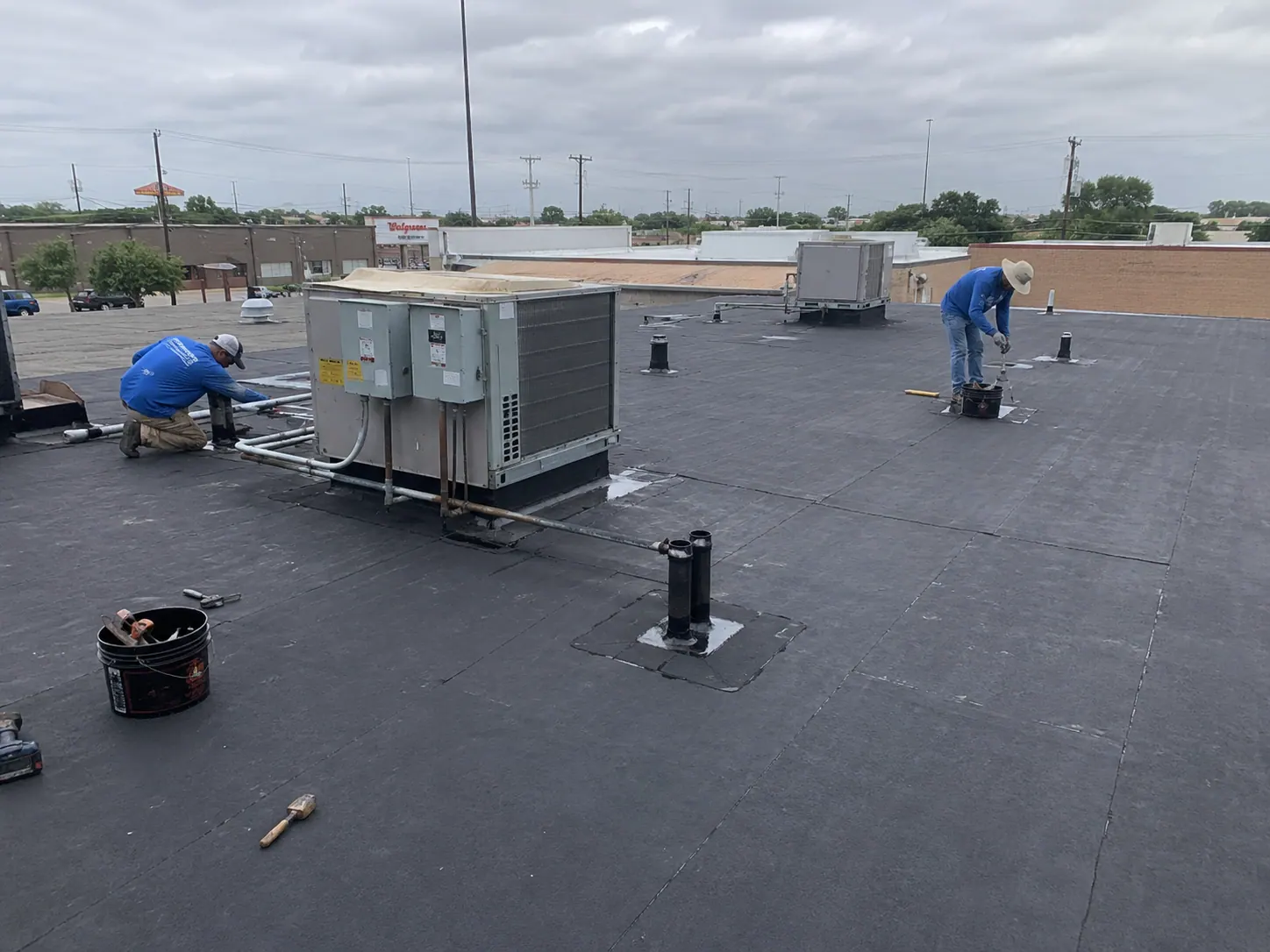
If you manage a retail strip in Arlington, own a warehouse in Garland, or have a low-slope roof section on a home in Plano, your roof has a different job than a steep-slope shingle roof. It has to handle slower drainage, more standing exposure to sun, and more stress around penetrations, HVAC units, curbs, and flashing details.

That's where modified bitumen often fits well. It's an asphalt-based membrane roof built for low-slope applications, and it's commonly used on commercial buildings, though some residential roofs use it too. In plain terms, it's a layered roofing system designed to stay watertight while handling movement, weather, and day-to-night temperature swings.

In Texas, that matters. Roof surfaces in this state deal with high heat, intense UV exposure, heavy rain, hail, and strong wind events. A roof system that looks fine on paper can still perform poorly here if it gets brittle, splits at seams, or fails around roof details.

Why Texans keep coming back to this system

Modified bitumen tends to stay in the conversation for a few practical reasons:

  • Low-slope compatibility: It's made for flat and low-slope assemblies where water management has to be taken seriously.
  • Multi-layer protection: The system can provide redundancy, which matters when one vulnerable detail gets stressed by weather.
  • Repair familiarity: Many commercial roof crews know how to diagnose and repair these systems.
  • Storm-minded performance: Some versions handle movement and impact better than older asphalt roofs.

Practical rule: On a Texas low-slope roof, the membrane is only as good as the seams, flashing, drainage, and installation discipline behind it.

Property owners searching for a commercial roofing contractor near me, roof repair near me, or storm damage roof repair usually aren't looking for roofing theory. They want to know what works. Modified bitumen can work very well here, but the right membrane type and installation method make all the difference.

What Exactly Is a Modified Bitumen Roof System

Modified bitumen is an asphalt-based membrane system built for low-slope roofs, but the key difference is in how the asphalt is improved. Manufacturers blend the bitumen with polymers and bond it to a reinforcement sheet, then finish it with a protective surface. The result is a membrane that handles stress better than plain asphalt roofing.

On a Texas roof, that distinction matters fast. A membrane may sit through months of hard sun, then take a pounding from hail and wind-driven rain in one spring storm. If the material cannot flex, resist tearing, and stay sealed at details, problems usually show up at seams, penetrations, and edge conditions first.

A diagram illustrating the four key components of a modified bitumen roof system including bitumen, modifiers, reinforcement, and surfacing.

The four parts that matter

A modified bitumen roof system usually includes these core elements:

  • Asphalt bitumen: The waterproofing portion of the membrane.
  • Polymer modifiers: Commonly SBS or APP, used to change how the membrane handles heat, movement, and aging.
  • Reinforcement layer: Often polyester or fiberglass, which adds strength and helps the sheet keep its shape.
  • Surfacing material: Granules, smooth coatings, foil, or similar finishes that protect the membrane from UV exposure and weathering.

Each layer has a job. The asphalt sheds water. The modifier changes performance. The reinforcement helps the sheet resist splitting and distortion. The surfacing takes the beating from sunlight and weather so the membrane below lasts longer.

How it differs from older built-up roofing

Built-up roofing and modified bitumen come from the same general asphalt roofing family, but they are not assembled the same way. Traditional built-up roofing relies on multiple plies installed in the field with asphalt between layers. Modified bitumen uses factory-made sheets with more controlled composition and thickness.

That gives contractors a more consistent membrane to work with, and it gives owners a system that often handles building movement better than older unmodified asphalt assemblies. On properties in Dallas-Fort Worth, Austin, and San Antonio, that movement is not a small issue. Steel decks expand. Roof penetrations shift. Curbs and walls move at different rates. HVAC units add vibration.

Long roof life usually comes from controlling stress at seams, flashings, drains, and penetrations, not from how heavy the membrane looks from the ground.

Where it's commonly used

Modified bitumen is most common on:

Property type Typical fit
Small commercial buildings Good for low-slope roof sections with regular service access
Warehouses and industrial properties Useful where durability and repairability matter
Multifamily buildings Often chosen for flat roof areas and covered walkways
Residential low-slope sections Sometimes used over porches, additions, or modern home designs

For Texas owners, the short definition is simple. Modified bitumen is a reinforced asphalt membrane system designed for low-slope roofing where waterproofing, service access, heat exposure, and storm resistance all need to be taken seriously.

Understanding the Types SBS versus APP

Not all modified bitumen is the same. The two main categories are SBS and APP, and the difference affects how the roof behaves in Texas weather.

If you want the simple version, SBS leans toward flexibility. APP leans toward stiffness and surface toughness. Both can be effective, but they solve slightly different problems.

A comparison chart outlining key performance differences between SBS and APP modified bitumen roofing materials.

SBS in practical terms

SBS stands for styrene-butadiene-styrene. In the field, many roofers describe it as a rubberized asphalt membrane because it tends to be more elastic and forgiving.

That matters on buildings exposed to repeated expansion and contraction. According to GAF technical specifications for SBS modified bitumen, SBS polymer modification improves elongation and recovery, which is why SBS systems are widely used on commercial and industrial roofs exposed to thermal movement and weather cycling. Those specifications also note that SBS cap sheets commonly comply with ASTM D6163 and D6164, and that this movement capability helps reduce cracking risk at seams and penetrations when the system is installed as a multi-ply assembly on flat or low-slope roofs.

For Texas, that's a meaningful advantage. Roof movement is constant here.

APP in practical terms

APP is another polymer-modified bitumen option. Property owners will often hear it described as more plastic-like in behavior. In broad practical terms, APP membranes are often selected when surface toughness and heat-related stability are part of the discussion.

That doesn't automatically make APP the right answer for every building in Dallas, Fort Worth, or San Antonio. It just means the choice should be made based on the building, the deck, the slope, the amount of foot traffic, and how the assembly will be installed.

A side-by-side view

Factor SBS APP
Feel in service More flexible More rigid
Strengths Handles movement well Often favored for surface toughness
Good fit Roofs with thermal cycling and detail stress Roofs where heat and surface exposure drive the decision
Texas takeaway Often a strong choice Can still be appropriate in the right assembly

Which one usually makes more sense in Texas

For many Texas properties, SBS is the safer recommendation when movement is the main concern. That's especially true in hail-prone and temperature-swing-heavy areas such as Dallas, Frisco, McKinney, and surrounding North Texas markets.

Here's why that matters in practice:

  • Thermal cycling: Roof components expand and contract constantly.
  • Detail stress: Curbs, drains, walls, and penetrations are where rigid materials often show trouble first.
  • Storm resilience: A membrane with better elongation generally gives you more tolerance before visible cracking starts.

APP still has its place. But if a property manager asks which type I'd look at first for many Texas low-slope roofs, I'd start with SBS and work outward from there.

Common Installation Methods for Modified Bitumen

A good membrane can still fail if the installation method doesn't fit the building. That's why modified bitumen roofing has to be discussed as both a material and a process.

The three methods most owners will hear about are torch-applied, self-adhered, and cold-applied systems. Each has real advantages. Each also has trade-offs.

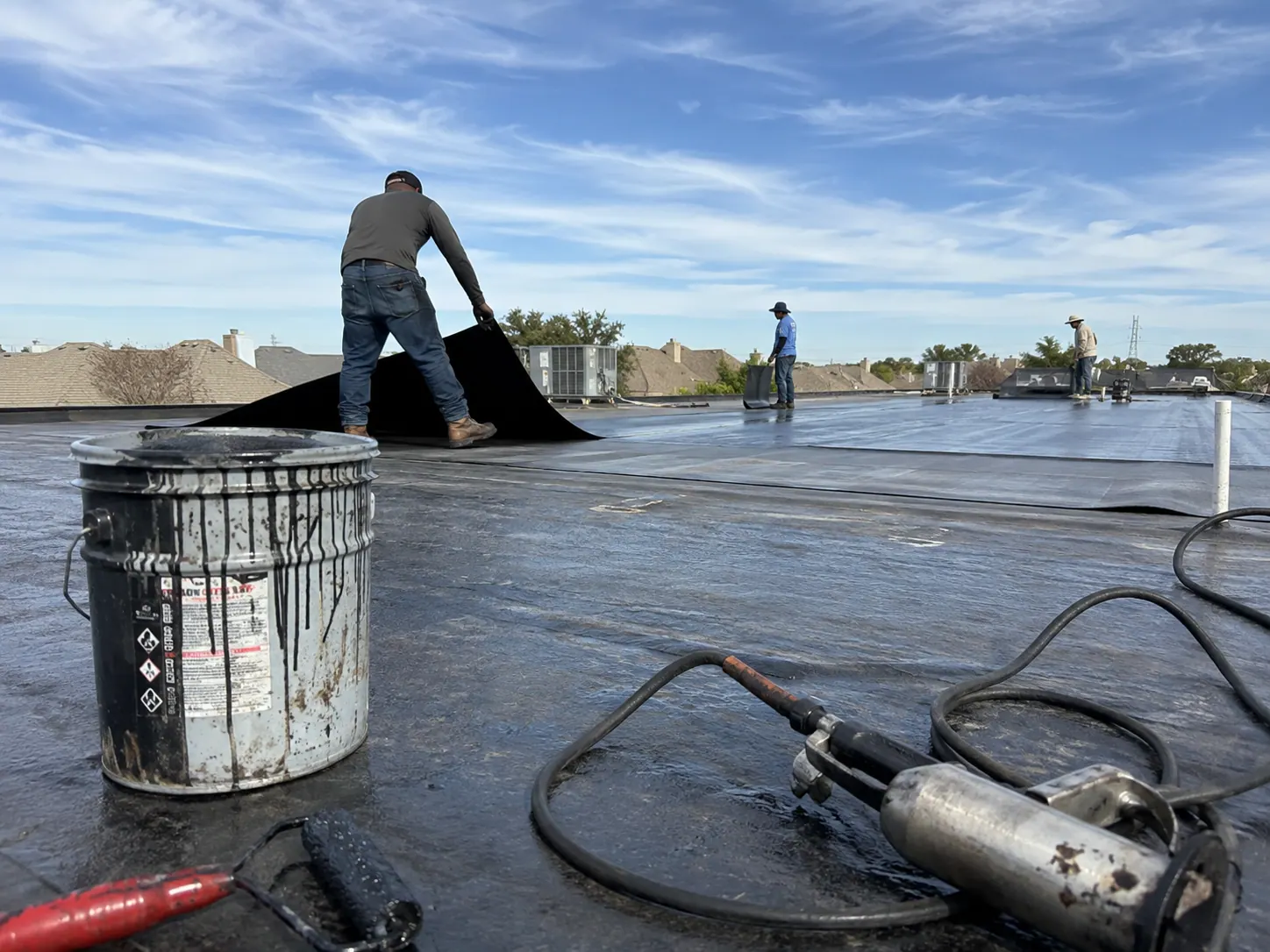
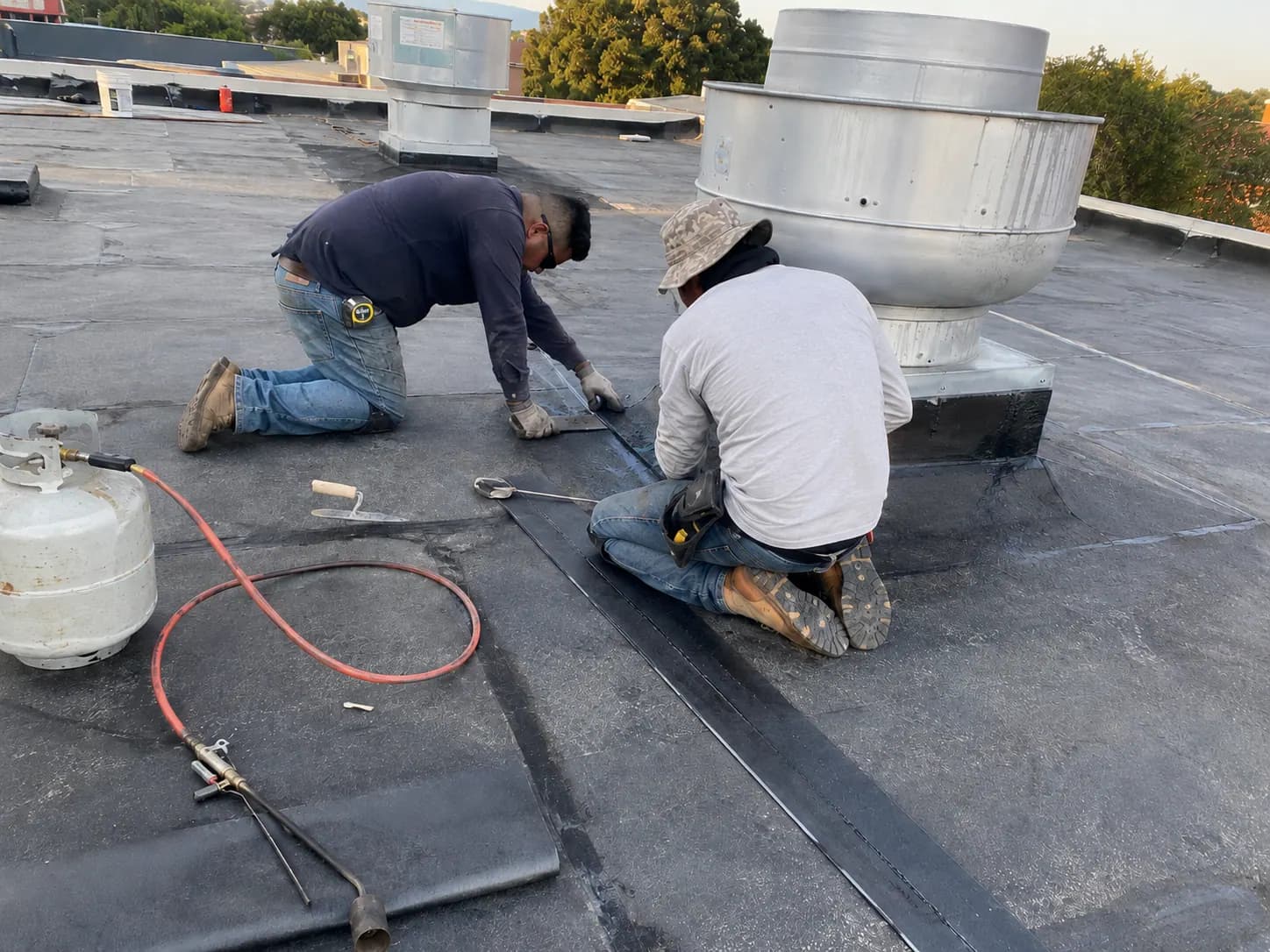
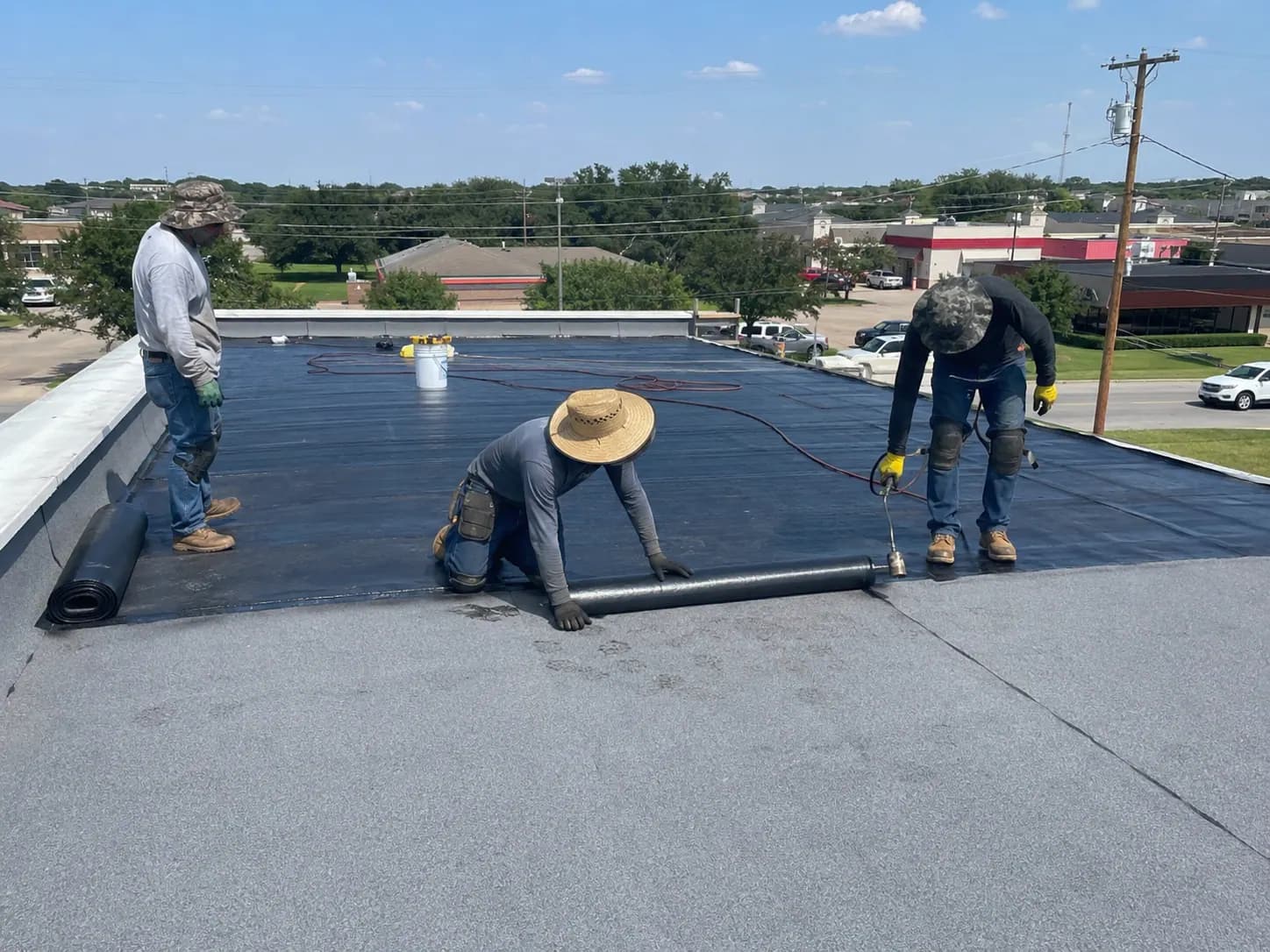
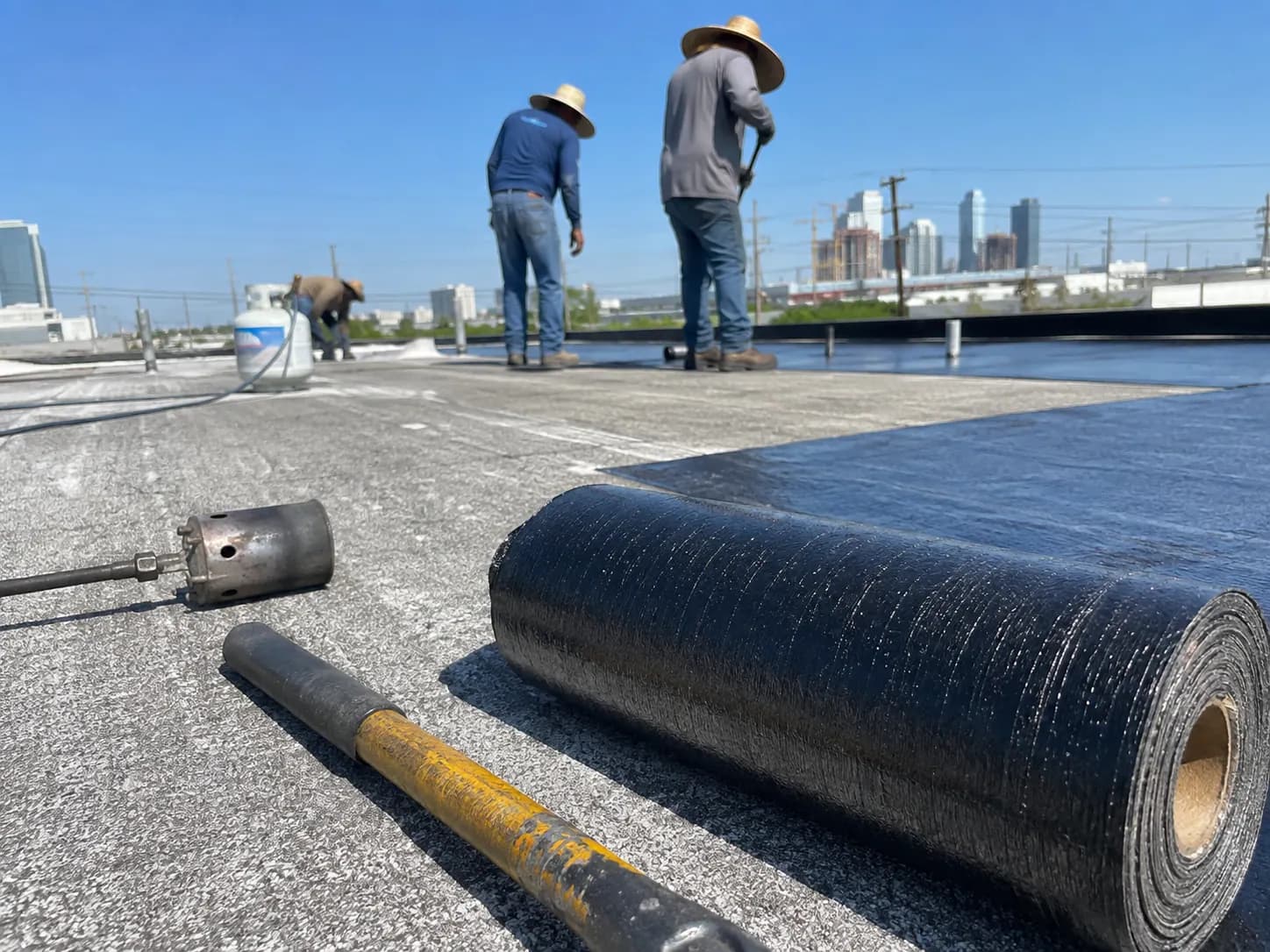
A professional roofer installing modified bitumen roofing material on a flat roof using a gas torch.

Torch-applied systems

Torch-down installation uses heat to bond the membrane. When done correctly, it creates strong, well-fused seams and a reliable weatherproof layer.

Torch work is also where inexperience becomes dangerous. Open flame on a roof isn't a minor jobsite issue. It affects fire safety, crew training, building operations, and insurance exposure.

Torch-applied systems can make sense on the right project, but only when the crew knows exactly how to handle details, transitions, and safety controls.

Field note: A torch-down roof isn't a weekend project and it isn't a shortcut. One bad detail can turn a durable membrane into an expensive leak path.

Self-adhered systems

Self-adhered modified bitumen has become more attractive to owners who want less disruption and less jobsite risk. These membranes use factory-applied adhesive layers, so the installer peels, places, aligns, and rolls the sheet into position.

The upside is obvious. No open flame. Cleaner application. Better fit for occupied buildings or properties where torch use is restricted.

The downside is just as practical. Surface prep, temperature conditions, alignment, and rolling pressure all matter. If the substrate isn't ready or the sheet isn't properly set, adhesion problems can show up later.

Cold-applied systems

Cold-applied systems use adhesive rather than flame. They can be a strong option where open flame isn't desirable and where the assembly design calls for a different application approach.

These systems can be useful for some reroof work, repairs, and occupied buildings where odor and access have to be managed carefully. They still demand skill. Adhesive coverage, cure conditions, and sheet handling affect the final result.

How a contractor should choose

The right installation method depends on the building, not on habit. A contractor should evaluate:

  • Occupancy: Hospitals, schools, retail, and multifamily properties often need lower-disruption planning.
  • Fire sensitivity: Some sites are poor candidates for open-flame application.
  • Access and staging: Tight sites in urban areas like Dallas or Austin can limit equipment and material flow.
  • Detail complexity: Lots of penetrations or vertical transitions can change the preferred method.

A quick installation overview helps visualize the process:

The main point is simple. The membrane type, the attachment method, and the installer's precision all have to line up. That's why owners looking for a roofing contractor near me or commercial roofing contractor near me should ask not just “Do you install modified bitumen?” but “Which method are you recommending for this building, and why?”

Weighing the Pros and Cons for Your Property

Modified bitumen has earned its place in low-slope roofing, but it isn't automatic right for every property. The practical answer depends on how the building is used, how much traffic the roof sees, how much sun it absorbs, and how disciplined the installation will be.

An infographic comparing the pros and cons of modified bitumen roofing for flat or low-slope roofs.

Where modified bitumen performs well

  • Durability under service traffic: Commercial roofs often get walked on by HVAC techs and maintenance crews. Modified bitumen generally handles that reality better than owners expect.
  • Strong waterproofing profile: Multi-ply assemblies and reinforced sheets make it a practical option for low-slope roofs where water exposure is constant.
  • Repair-friendly behavior: When damage is localized, contractors can often isolate details and make targeted repairs rather than jumping straight to full replacement.
  • Long service potential: With correct installation and upkeep, modified bitumen commonly lasts around 20 years and can reach 20 to 30 years, as noted earlier from the Polyglass reference.

Where owners get disappointed

Some of the frustrations aren't with the material itself. They come from poor design choices or mismatched expectations.

  • Heat absorption: Traditional dark membranes can run hot in Texas summers.
  • Installation sensitivity: Seams, laps, flashing, and substrate prep have to be done right.
  • Torch safety concerns: Torch-applied assemblies bring a real fire risk if a crew lacks experience.
  • Weight and assembly limits: Some buildings need a closer structural look before adding layers or recovering over an older system.

The energy question matters more than it used to

A lot of older conversations about modified bitumen stop at durability. That's incomplete today. According to Sika's discussion of modified bitumen and cool roof features, some membranes can include surfacing layers such as granules or foil that provide “cool roof” features, and the market has shifted toward energy-conscious specifications and lower-disruption, self-adhered systems.

That doesn't mean every modified bitumen roof is automatically energy-efficient. It means the top surface matters. In Texas, that's a big deal.

A black membrane and a reflective-surfaced membrane can behave very differently on the same building in August.

A practical decision filter

Ask these questions before choosing modified bitumen:

  1. How much rooftop traffic will this roof get
  2. Does the building need a lower-disruption installation
  3. Is heat gain a major concern for this property
  4. Are there lots of penetrations, curbs, and flashing details
  5. Is the goal repairability, replacement, or a phased roofing strategy

When those answers line up, modified bitumen can be a very solid roof system. When they don't, another low-slope system may fit better.

Performance in Texas Hail Storms and High Winds

Texas property owners don't evaluate roofs in a vacuum. They evaluate them after hail season, after a wind event, or after a hard rain exposed an old weak spot.

That's one reason modified bitumen keeps showing up in commercial roofing decisions. The global modified bitumen roofing market was valued at USD 9.57 billion in 2024 and is projected to reach USD 15.6 billion by 2033, reflecting sustained demand driven by waterproofing and weatherproofing for commercial and industrial buildings, according to Business Research Insights' modified bitumen market report.

Why this system fits Texas weather logic

On a Texas low-slope roof, weather resistance isn't just about surviving one storm. It's about how the membrane deals with repeated exposure to hail, heat, wind-driven rain, and movement around details.

SBS-based modified bitumen often makes more sense in this setting because flexibility helps the roof absorb stress instead of telegraphing every impact into a crack. That doesn't mean the roof becomes damage-proof. Nothing does. But it can mean the difference between surface wear and a more serious membrane breach.

In North Texas, that distinction matters after hail. In Central Texas, it matters after heat and storm cycling. In East Texas, it matters when heavy rain tests every seam and flashing edge.

What to inspect after a storm

After a hailstorm or severe thunderstorm, look for these conditions on a modified bitumen roof:

  • Granule loss: Scattered loss can be cosmetic, but concentrated areas deserve closer review.
  • Bruising or impact marks: Soft spots or damaged surfacing can indicate underlying stress.
  • Splits at laps or penetrations: Wind and movement often expose these first.
  • Displaced flashing: High winds can loosen edge details and transitions.
  • Interior leak signs: Ceiling stains, damp insulation, or wall moisture usually mean the roof system needs immediate inspection.

Owners who want a deeper look at storm-related damage on this specific roof type can review this hail damage to modified bitumen roofs guide.

What works and what doesn't

What works:

  • Prompt post-storm inspections
  • Documentation of visible impacts and roof details
  • Repairs that address flashing, seams, and punctures, not just obvious surface marks
  • Contractors who understand both low-slope roofing and insurance claim documentation

What doesn't work:

  • Assuming “no leak today” means “no damage”
  • Letting ponding, punctures, or open laps sit until the next storm
  • Treating every hail mark as cosmetic without checking the membrane condition underneath

For property managers in Dallas, Fort Worth, Frisco, Tyler, and Longview, modified bitumen is often a sensible storm-focused choice. But the roof still needs inspection discipline after severe weather. That's where storm damage restoration, hail damage roof repair, and clear roof documentation become part of the roofing system, not an afterthought.

Cost Lifespan and Hiring a Roofing Contractor

A modified bitumen roof can be a good value in Texas, but only if the bid matches the building and the weather exposure. A clean, simple roof in Austin will price differently than a busy low-slope roof in Dallas-Fort Worth with multiple penetrations, past patchwork, edge metal problems, and hail wear. Tear-off requirements, insulation damage, membrane type, number of plies, access, and installation method all change the number. Any contractor willing to price it from satellite images alone is guessing.

Service life depends less on the brochure and more on the assembly details. As noted earlier, modified bitumen often gives owners about 20 years of service when it is installed correctly and maintained on schedule, with some systems lasting longer. In Texas, that range gets affected by UV exposure, thermal movement, ponding water, foot traffic from HVAC service, and how well the seams and flashings were built in the first place.

Cheap work shows up fast on low-slope roofs.

What to ask before hiring a contractor

If you are comparing proposals for a replacement, ask questions that get past the sales pitch:

  • How much low-slope work do you do: Modified bitumen is a different system from shingles, especially at drains, curbs, walls, and edge details.
  • Which membrane are you specifying and why: The answer should fit the building, the budget, and the local weather pattern, not just what the crew had in stock.
  • What installation method are you using: Torch-applied, cold-applied, and self-adhered systems each have different labor demands, odor concerns, fire risk, and adhesion trade-offs.
  • Are you tearing off to the deck or recovering over the existing roof: Owners need to know what is being covered up and what is being corrected.
  • How are you documenting existing storm damage or moisture issues: That matters on Texas roofs where hail history, wet insulation, and prior repairs can affect both scope and insurance discussions.
  • Who will supervise the job and inspect the seams: Crew experience matters, but so does field supervision.

A careful owner should also know what a proper inspection looks like before signing anything. This guide on roof inspection for homeowners gives a useful outside perspective on inspection scope, warning signs, and contractor evaluation.

How to read the quote

A usable quote should be specific enough that two contractors can be compared line by line. If one estimate says "new mod bit roof" and another spells out membrane type, insulation work, flashing replacement, edge metal, drain details, tear-off areas, and warranty terms, the second contractor is giving you something you can evaluate.

Look for these items:

  • proposed roof assembly and membrane type
  • tear-off versus recover scope
  • insulation replacement or taper work
  • flashing, curb, drain, and edge detail work
  • deck repairs or substrate preparation
  • treatment of existing storm damage
  • manufacturer and workmanship warranty terms
  • maintenance requirements after installation

If you are trying to budget before requesting bids, this flat roof replacement cost guide for low-slope properties can help frame the factors that usually push pricing up or down.

For owners in Dallas, Fort Worth, Arlington, Plano, Frisco, McKinney, Tyler, Longview, Austin, San Antonio, New Braunfels, San Marcos, Boerne, Round Rock, and Georgetown, contractor selection often matters as much as membrane selection. In practice, companies such as Hail King Professionals handle roof inspections, repair estimates, storm damage assessments, and replacement planning for Texas properties with low-slope roofing needs.

If you need help deciding whether modified bitumen is the right fit for your roof, contact Hail King Professionals for a roof inspection, storm damage assessment, or replacement consultation. A clear inspection can show whether the roof needs repair, restoration, or full replacement before the next round of Texas heat, hail, and wind tests the system again.