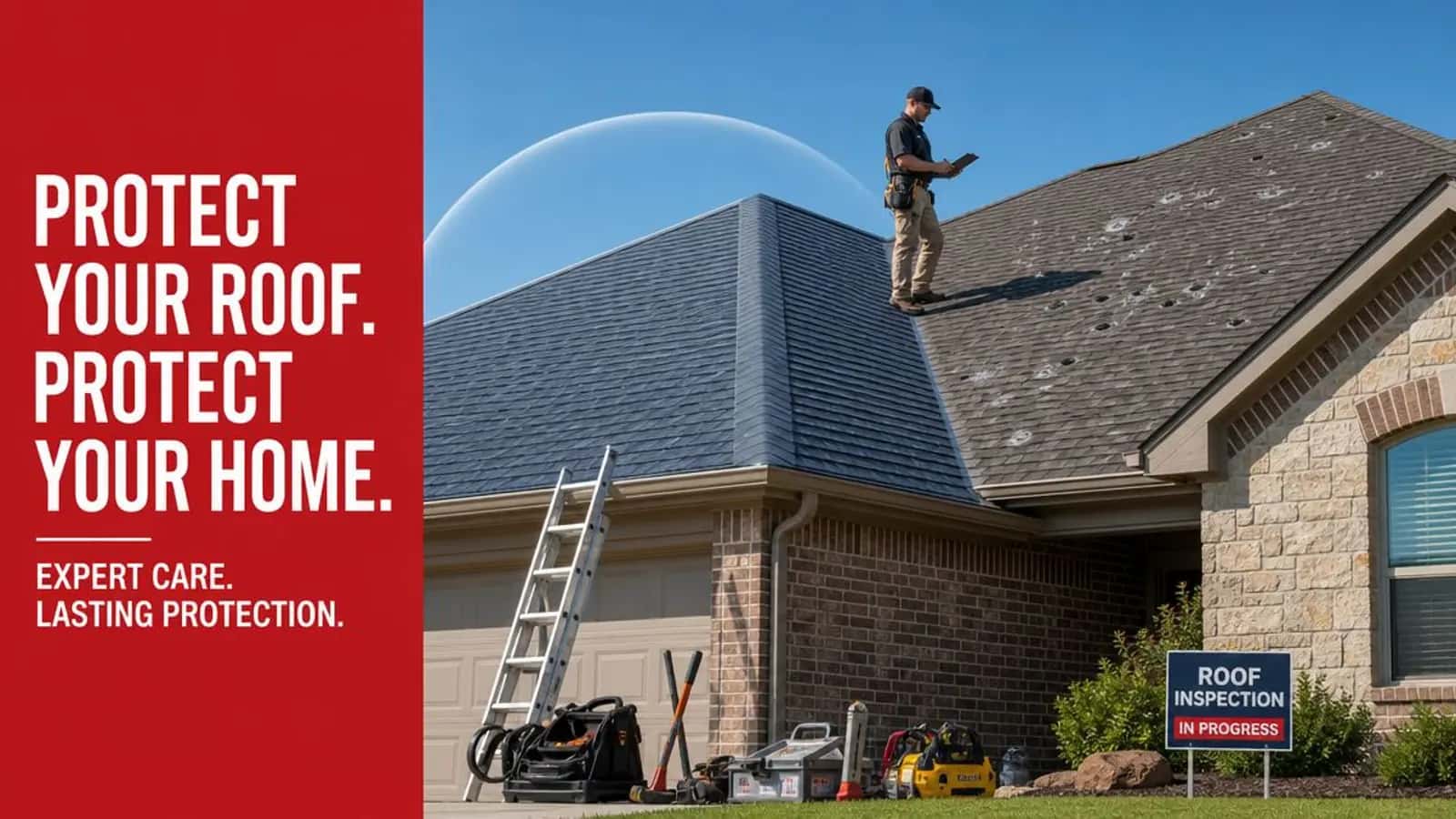
A lot of Texas property owners make the same call a little too late. A storm rolls through at night, the wind drives rain sideways, and the next morning there's a stain on the ceiling that wasn't there before. By then, the problem isn't just roofing. It's insulation, drywall, paint, tenant complaints, interrupted business, and an insurance file that starts with one uncomfortable question: was this storm damage, or was the roof already failing?
That's why I don't treat roof maintenance as a cosmetic service. I treat it as asset protection. A roof usually gives warnings before it gives out. The issue is that most owners don't see those warnings from the ground, and in Texas weather, small weaknesses don't stay small for long.
There's a financial lesson in that. If you've ever looked at how sudden uninsured events can spiral into bigger money problems, the same logic shows up in property care. The broader point behind this piece on the impact of medical emergencies on finances applies here too. Delayed action turns a manageable issue into a much more expensive one. Roofs work the same way.
The Cost of Waiting vs The Value of Planning
A common Texas scenario starts with something minor. A bit of lifted flashing. A clogged drain on a low-slope section. Sealant around a vent that has dried out from heat and UV exposure. Nothing dramatic. No bucket in the hallway. No active leak during normal weather.
Then a strong storm tests every weak point at once.
What was a minor maintenance item becomes water intrusion. Water travels. It gets under membrane laps, follows decking, stains ceilings far from the entry point, and makes diagnosis harder than most owners expect. By the time you see interior damage, the roof issue has usually been there longer than you think.
Small roof defects rarely stay isolated in North Texas. Wind, heat, hail, and standing water expose them fast.
Reactive repairs feel cheaper right up until the day they aren't. Emergency service usually happens on the roof's schedule, not yours. Crews get called out when weather is bad, materials may need to be sourced quickly, and interior work often gets added to the bill. You also lose control of timing. Tenants, staff, inventory, and daily operations all get pulled into a problem that could have been handled during a routine visit.
Preventative maintenance changes that equation. Instead of waiting for visible failure, you inspect on purpose, document conditions, correct weak points early, and budget for known work before it turns into surprise work.
What planning actually buys you
A maintenance plan does more than reduce repairs. It gives you control in four practical ways:
- Better timing: Work gets done before storm season or before a defect opens up.
- Clear documentation: You have dated inspection notes and photos instead of guesses.
- Smaller scopes: Early fixes usually involve details and seals, not widespread tear-out.
- Less disruption: Planned work is easier to schedule around tenants, staff, and weather windows.
That's value. You're not just buying roof service. You're buying fewer bad surprises.
What is Roof Preventative Maintenance Exactly
Preventative maintenance is the roof version of changing your oil before the engine locks up. You're servicing a working system on a schedule so wear, weathering, and small defects don't turn into structural problems.
For a roof, that means planned inspection, cleaning, minor repairs, and documentation. It does not mean waiting until water is inside the building and then calling that maintenance. That's emergency repair.

A useful rule of thumb comes from Fiix. It cites a long-standing finding that every $1 spent on preventive care can save about $4 to $5 in deferred failure or rehabilitation costs, and it notes that regular preventative maintenance can extend equipment life by 20% to 40% (Fiix on preventative maintenance). Roofing isn't identical to industrial equipment, but the logic carries over well. Planned upkeep usually costs less than failure.
What happens during a real maintenance visit
A proper visit should be systematic. Not a quick glance from the ladder. On most roofs, the work includes:
- Drainage review: Gutters, downspouts, scuppers, drains, and valleys get checked and cleared so water can move off the roof.
- Detail inspection: Flashing, pipe boots, vent penetrations, skylight curbs, edge metal, and wall transitions get inspected because leaks often begin at roof details, not in the wide open field.
- Surface condition check: On shingles, that means looking for cracking, loss, displacement, exposed fasteners, and granule wear. On metal, it means checking fasteners, seams, coating wear, and movement points. On flat roofs, it means looking at seams, punctures, ponding areas, open laps, and membrane stress.
- Sealant review: Sealants around penetrations and terminations don't last forever in Texas sun. Brittle or separated sealant is an early warning sign.
- Photo documentation: Good maintenance includes records. If conditions change after a storm, those records matter.
Preventative work versus emergency work
The simplest way to separate the two is this table:
| Type | When it happens | What it addresses | Typical result |
|---|---|---|---|
| Preventative maintenance | On a schedule | Early wear, drainage issues, loose details, failing sealant | Lower risk, better records, smaller repairs |
| Emergency repair | After failure | Active leaks, storm openings, wet insulation, interior damage | Higher urgency, more disruption, more uncertainty |
Practical rule: If the roof only gets attention after a leak call, you don't have a maintenance program. You have a reaction pattern.
If you manage a commercial building and want another operator-focused perspective, explore Facility Management Insights' guide for a broader look at recurring roof care and facility coordination.
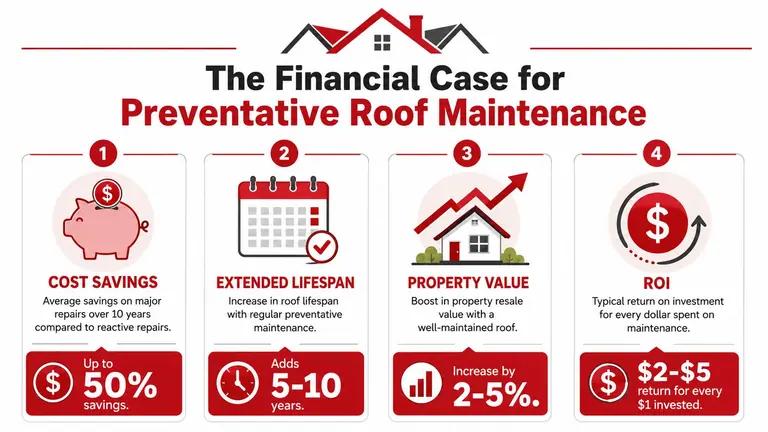
The Financial Case for Preventative Maintenance
The strongest argument for maintenance isn't philosophical. It's economic. Roof systems are expensive to replace, disruptive to repair under pressure, and tied to other building components that can also be damaged once water gets in.
The U.S. Department of Energy's Operations & Maintenance Best Practices Guide reports that effective maintenance programs can deliver a 10x return on investment, reduce maintenance costs by 25% to 30%, and eliminate 70% to 75% of breakdowns (U.S. Department of Energy guide). That guidance is rooted in predictive maintenance programs, but the reason it matters here is straightforward. Planned servicing and early intervention tend to outperform run-to-failure behavior.
Where owners actually save money
Most savings show up in places owners don't always count at first.
- Emergency labor gets avoided: Planned repairs are easier to scope and schedule than urgent leak response.
- Interior damage gets limited: A roof defect caught early is less likely to become wet insulation, stained ceilings, damaged flooring, or tenant disruption.
- Replacement gets pushed out: Extending a serviceable roof's life changes capital planning in a meaningful way.
- Operations stay steadier: For commercial owners, fewer leak incidents usually means fewer interruptions to tenants, staff, and equipment.
That last point gets overlooked. The roof isn't just a shell. It protects the continuity of everything under it.
Maintenance also protects warranty value
A roof warranty only helps if the roof has been maintained and the problem falls within the warranty terms. Missed upkeep, unauthorized penetrations, poor drainage, and unaddressed defects can complicate that quickly. If you're sorting through those risks, it helps to review what voids a roof warranty before deciding to postpone service.
This short video gives a practical overview of why routine roof care pays off over time.
The budget question owners usually ask
A key budgeting advantage is predictability.
A maintenance plan turns roof spending into something you can forecast. You know when inspections happen. You know what minor corrections are needed. You can prioritize work before weather forces your hand. That's a very different financial position than scrambling after a storm, approving rush repairs, and hoping there isn't hidden moisture or decking damage underneath.
In practice, preventative maintenance benefits are strongest when the roof is still serviceable. If the system is already at the end of its useful life, maintenance won't magically create a healthy roof. It can still help you manage risk and timing, but it won't substitute for replacement when the assembly is spent.
Beyond Cost Savings The Hidden Benefits of a Healthy Roof
Money gets attention first, but cost isn't the only reason to maintain a roof. A neglected roof changes how a property looks, how safe it feels, and how much uncertainty an owner carries every time the forecast turns ugly.
A clean, intact roofline affects first impressions. On a house, that shows up as curb appeal. On a commercial property, it shows up in tenant perception, buyer diligence, and how seriously the building appears to be managed. People notice streaking, edge damage, sagging gutters, staining at walls, and patched-over leak areas even if they can't name the roofing problem behind them.
Safety starts before the leak
Roof maintenance also reduces avoidable hazards. Loose metal, weakened flashing, backed-up drainage, and repeated moisture intrusion can create safety issues for both occupants and crews. Some of those hazards are obvious. Others show up later as soft decking, mold concerns, damaged ceiling materials, or electrical risk around water intrusion paths.
Here's the practical part. Owners often think of maintenance as “roof-only” work. It isn't. A healthy roof protects insulation, framing, finishes, and whatever business or family life sits below it.
A roof in good condition does more than keep rain out. It keeps small building problems from multiplying into several trades' worth of repairs.
Peace of mind has real value
There's also the confidence factor. If a roof has been inspected, photographed, cleaned, and tuned up, you go into storm season with better information. You're not guessing whether that old stain is active. You're not wondering whether the last hailstorm loosened anything critical. You're not trying to remember when someone last looked at the flashing around the HVAC curb.
That matters in Texas because weather changes fast, and roof stress here isn't theoretical. Heat cycles, UV exposure, wind uplift, driving rain, and hail all work the same weak points over and over.
A maintained roof doesn't guarantee zero problems. It gives you a roof that's more likely to perform as intended and an owner file that's easier to act on when conditions change.
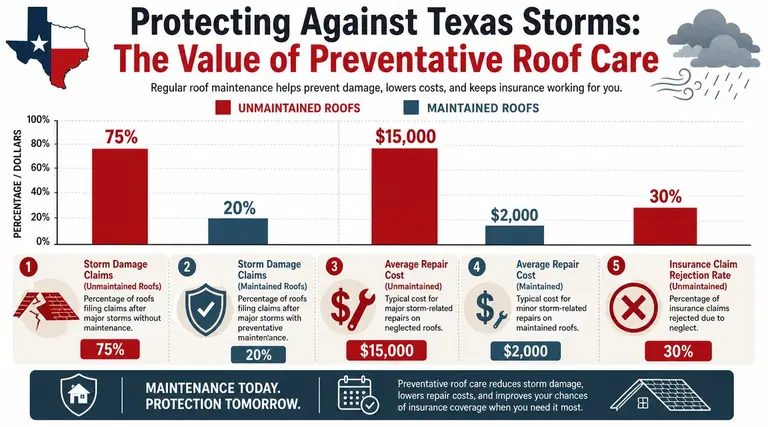
Your Roofs Shield Against Texas Storms and Insurance Headaches
Texas owners don't need a lecture on severe weather. They need a process that helps before the storm and after it. That's where roof maintenance becomes more than building upkeep. It becomes risk management.
Storm damage claims are easier to sort out when you can show what the roof looked like before the event. That means dated photos, inspection notes, documented repairs, and proof that known issues weren't ignored. Without those records, insurers may ask whether the problem came from a recent storm or from long-term deterioration. That question can slow everything down.
NOAA confirmed 28 separate billion-dollar weather disasters in the U.S. in 2023, which underscores how important pre-loss condition records have become in a more volatile weather environment (storm-loss context from Limble citing NOAA). For Texas property owners, that aligns with what we see on the ground. The weather risk is real, and documentation matters.
Why maintenance helps before a claim is filed
Maintenance improves storm resilience in practical ways:
- Seams and flashing stay tighter: These are common failure points under wind-driven rain.
- Drainage stays open: Flat and low-slope roofs need water to exit quickly during heavy storms.
- Minor defects get corrected in calm weather: It's easier to handle exposed fasteners, dried sealant, and loose trim before wind and hail test them.
- Photo logs establish condition: If a storm damages the roof later, you have a cleaner timeline.
That last point is the one many generic articles miss. Preventative maintenance benefits aren't limited to fewer leaks. They also include stronger evidence.
Where insurance friction usually starts
Claims often get messy when owners can't show the roof's prior condition or maintenance history. An adjuster may see old patching, weathered sealants, clogged drainage, or long-standing wear and argue that at least part of the problem predated the storm.
That doesn't mean a claim won't be valid. It means you're in a weaker position if your file is just a phone camera picture taken after the event.
If you want a plain-English look at the paperwork side, HomeProBadge's verification steps are useful for understanding how insurance verification and documentation review typically work around property claims and contractor coordination.
The roof inspection that feels unnecessary on a sunny day is often the record that matters most after a hailstorm.
It also helps to understand the baseline coverage question before damage happens. This guide on whether homeowners insurance covers storm damage is a practical starting point if you're reviewing your exposure.
What works in Texas and what doesn't
What works is selective, high-value maintenance. Focus on drainage, flashing, penetrations, seams, edge conditions, and areas exposed to repeated storm stress. What doesn't work is assuming a roof is fine because it isn't leaking today.
It also doesn't work to rely on memory. If maintenance isn't documented, it's harder to prove later.
For owners in DFW and East Texas, a roof plan should include both condition care and record keeping. Those two together give you a better chance of limiting damage, supporting claims, and recovering faster after severe weather.
Your Recommended Roof Maintenance Schedule and Checklist
A maintenance plan needs rhythm. If it's vague, it usually gets delayed. For most Texas properties, the easiest pattern is a spring check, a fall check, and an extra inspection after a significant hail or wind event.
That schedule is practical because it matches when roofs usually take stress. Spring checks catch what winter and early storms exposed. Fall checks prepare the roof for colder weather, leaf buildup, and the next storm cycle.
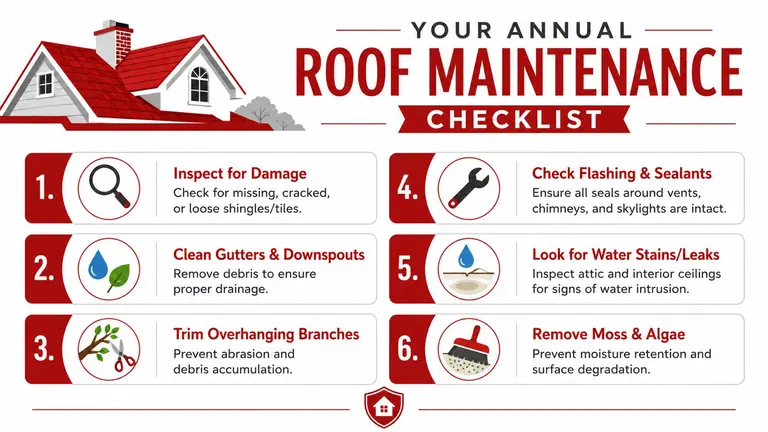
Spring priorities
After winter and early spring storms, look for items that can worsen through the hotter months.
- Clear drainage paths: Clean gutters, downspouts, roof drains, and valleys so spring rains can move off the roof.
- Check for displaced materials: On shingle roofs, look for missing or creased tabs. On metal, check panels and exposed fasteners. On flat roofs, inspect seams and penetrations.
- Review sealants and flashing: Temperature swings can expose brittle sealant or loose detail work around vents, curbs, skylights, and walls.
- Inspect the attic or ceiling line: Water stains, damp insulation, and musty areas may reveal leaks before they become visible inside living or occupied space.
Fall priorities
Fall work is about cleanup and storm readiness.
| Area | What to check | Why it matters |
|---|---|---|
| Gutters and downspouts | Leaves, sediment, nesting debris | Backup at the edge can force water where it shouldn't go |
| Flashing and penetrations | Cracks, separation, lifted edges | Detail failures are common leak entry points |
| Tree contact | Branches rubbing or overhanging | Branches can scrape surfaces and drop debris into drainage paths |
| Interior signs | New stains, peeling paint, odor | Early leak evidence often appears inside first |
After-storm checklist
After hail or strong wind, don't just look for obvious holes.
- Scan the roofline from the ground for displaced shingles, bent metal, lifted trim, or debris impact.
- Check ceilings and attic spaces for fresh stains or moisture.
- Document what you see with date-stamped photos.
- Arrange a professional inspection if anything looks changed, especially on steep, metal, or low-slope roofs.
For owners who want a more structured worksheet, this roof inspection checklist template helps organize what to review and document.
What not to do
Don't pressure wash roofing materials. Don't walk a damaged or steep roof casually. Don't smear caulk over every suspect area and assume the issue is solved. Quick fixes often hide the actual entry point and make later repair work harder.
A good checklist is useful. A trained inspection is still better when the roof has age, storm exposure, or low-slope details that need closer evaluation.
Next Steps and Answers to Your Top Questions
The best maintenance plan is the one that fits the roof you have. Not every roof needs the same frequency or the same scope. A 2023 NIST-related discussion highlighted a point owners should hear more often. Preventative maintenance is valuable, but its ROI depends on asset criticality. For roofing, that means the smartest approach targets high-risk components like seams, flashing, and drainage instead of over-maintaining low-risk areas (Marsden on the ROI trade-off).
That's how experienced contractors approach it in the field. You focus on the details most likely to fail first, the areas most exposed to storm stress, and the conditions most likely to create insurance disputes later.
If you're deciding what to do next, keep it simple:
- Get the roof inspected while it's still serviceable
- Fix small defects before the next storm cycle
- Keep photo records and service notes
- Use a schedule, not memory
For owners who want outside help with inspections and ongoing roof care, Hail King Professionals offers same-day roof inspections, repair recommendations, and maintenance-oriented evaluations for asphalt, metal, and flat roofs in DFW and East Texas.
Frequently Asked Questions About Roof Maintenance
| Question | Answer |
|---|---|
| Do all roofs need preventative maintenance? | Most do. The exact scope depends on roof type, age, exposure, drainage design, and nearby trees or equipment. |
| Is maintenance worth it on an older roof? | Usually, yes, if the roof is still fundamentally serviceable. Maintenance can help manage risk and timing. If the system is failing broadly, replacement may be the smarter spend. |
| How often should a roof be inspected in Texas? | A practical schedule is spring, fall, and after significant hail or wind events. Some properties need closer monitoring because of tree cover, flat roof drainage, or prior repair history. |
| What should I keep for insurance purposes? | Keep inspection reports, date-stamped photos, invoices, repair records, and notes on storm-related changes. Good records make claim discussions cleaner. |
| Can maintenance stop all leaks and storm damage? | No. It lowers risk and helps catch weak points early, but no roof is immune to severe weather or age-related wear. |
| What parts of the roof deserve the most attention? | Focus first on seams, flashing, penetrations, drainage paths, edge details, and any area with prior leak history. |
| Should I handle it myself? | Ground-level checks and interior observations are fine. Walking roofs, diagnosing leak paths, and assessing storm damage are better left to trained professionals, especially on steep, metal, or low-slope systems. |
A skeptical owner usually asks the right question: when does maintenance pay off? It pays off when it keeps a repair small, preserves a claim file, avoids an emergency call, or gives you time to replace the roof on your terms instead of the weather's.
That's the point. Control.
If you want a clear read on your roof before the next storm season, schedule an inspection with Hail King Professionals. You'll get a documented assessment, straightforward repair or maintenance recommendations, and a practical plan for protecting the roof you already have.