


Exterior Painting Cost in 2026 a Complete DFW Guide
Exterior painting usually runs $1.50 to $4.50 per square foot, and a typical home often falls around $3,000 to $10,000 depending on size, height, prep, and materials. If you're pricing a house in DFW, that national range is a solid starting point, but Texas-specific issues like sun exposure, storm damage, siding repairs, reroof timing, and solar equipment can push the actual cost up or down.
A lot of homeowners start this process the same way. They pull into the driveway, notice the trim looks chalky, the siding has a few peeling spots, and the front elevation doesn't look as sharp as it did a few years ago. Then the obvious question hits: is this a straightforward paint job, or is it turning into one of those projects where hidden repairs double the scope?
That question matters more in North Texas than it does in a lot of markets. Here, an exterior paint job often isn't just about color. It can overlap with hail damage, fascia repairs, siding movement during reroofing, and detached utility lines or solar components that change access around the house. If you understand what drives exterior painting cost, you can budget realistically and avoid comparing bids that aren't even pricing the same work.
How to Budget for Your Home's New Look
Exterior painting is often not planned for until the house makes the decision. The paint starts fading on the west side first. Caulk opens up around trim. A few boards swell, crack, or hold moisture longer than they should. Then one day the home looks tired all at once.
In DFW, I'd treat exterior painting like a protection job first and a curb appeal job second. If you budget only for paint, you can get caught off guard when the crew finds failed caulk, loose fascia, storm-damaged siding, or trim that needs repair before any coating should go on. That's why two homes that look similar from the street can price very differently once someone walks the property.
Start with the house you actually have
A homeowner with a simple one-story home in decent shape is budgeting for a different project than someone with a two-story brick-and-siding mix, dormers, sun-baked trim, and hard-to-reach gables. The second house doesn't just need more paint. It needs more setup, more masking, more ladder work, and usually more prep.
If you're still sorting out cladding choices or trying to understand how material affects upkeep, this guide to best siding materials for Texas homes is worth reviewing before you commit to a painting plan.
Practical rule: Budget for prep first. A cheap coating over bad substrate doesn't save money. It just delays a better repair.
Budget in layers, not one lump sum
A realistic exterior painting budget usually has three buckets:
- Core painting scope: Siding, trim, doors, soffits, fascia, and standard masking.
- Condition-related work: Scraping, sanding, caulking, spot priming, and minor repairs.
- Texas overlap items: Storm-related fixes, reroof coordination, access around solar, and cleanup after other exterior trades.
That approach keeps you from treating every estimate like a paint-only number. It also helps you ask the right follow-up question: what work has to happen before paint can even start?
Typical Exterior Painting Price Ranges
A homeowner in DFW might hear one neighbor say they paid a few thousand dollars to repaint, then get a bid that is much higher for a house that looks about the same size. That gap usually comes down to scope, access, and what else is happening on the exterior at the same time.
As noted earlier, national pricing gives a useful baseline. In the field, exterior repainting often starts near the lower end for a simple one-story home in good condition and climbs fast for two-story layouts, heavy trim, difficult access, or repair-driven prep. In North Texas, those cost swings get wider after hail season, after a reroof, or when solar equipment changes how crews can reach the work safely.
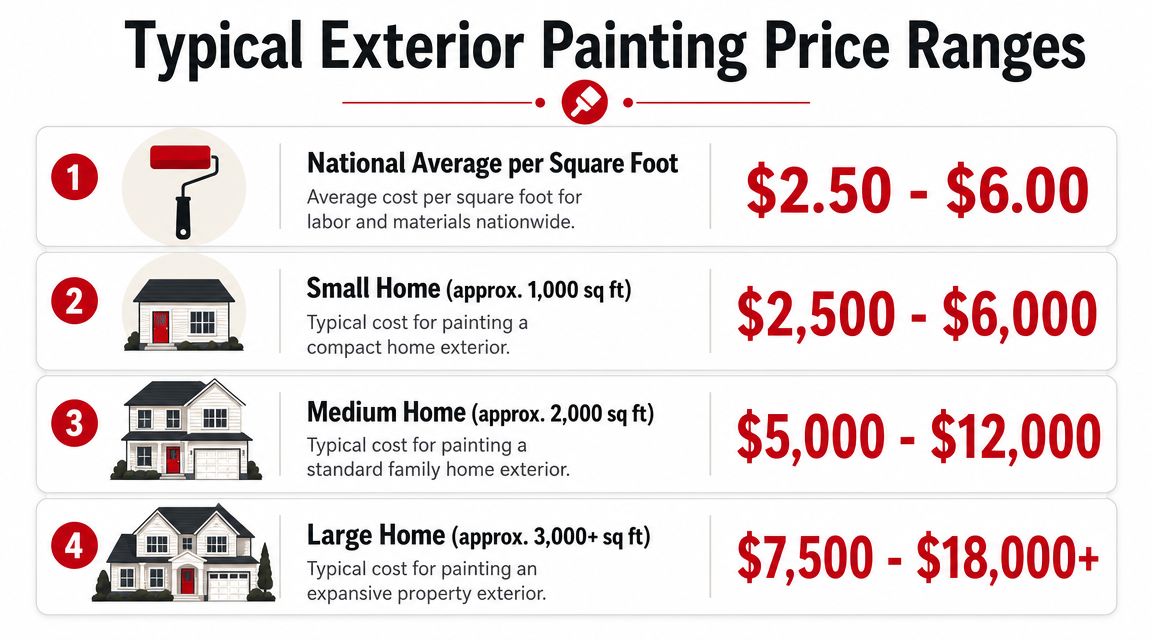
What those ranges really mean on a house
Floor-plan square footage is only a starting reference. Painters price the outside shell, not the livable area inside. A 2,400-square-foot one-story ranch with open access can be simpler than a 1,900-square-foot two-story home with tall gables, deep eaves, chimney detail, and fragile landscaping below every ladder point.
The parts that usually push price are easy to spot once you know where to look. Fascia runs, soffit sections, dormers, shutters, garage doors, and long trim lines all add labor. If you are not sure which components are included around the roof edge, this guide to soffit and fascia on a house helps clarify what painters and repair crews are talking about.
| Home type | What usually drives the number | Cost direction |
|---|---|---|
| Small one-story with clean access | Limited setup, less ladder work, lighter trim detail | Usually at the lower end of common market pricing |
| Mid-size home with multiple materials | More masking, more cut-in work, more transitions between surfaces | Often lands in the middle |
| Two-story or high-detail home | Safety setup, longer production time, harder prep, more difficult reach | Often near the upper end or above baseline pricing |
Why Texas jobs drift away from the baseline
North Texas houses rarely stay in a paint-only box. A hail claim may leave behind dented gutters, loosened trim, chipped siding edges, or sealant failure around penetrations. If the roof is being replaced too, code-related updates or flashing changes can affect paint sequencing around fascia, chimney trim, and other exposed areas. Solar adds another layer. Panels limit access, and crews have to protect wiring, mounts, and roof-adjacent surfaces while they work.
That is one reason a single-source contractor can save money even when the paint line item is not the cheapest on paper. If one company is handling exterior repairs, roofing coordination, and paint, the schedule is tighter and the chances of repainting a surface twice are lower.
A practical way to compare price ranges
Use ranges to set expectations, then compare bids by job type.
| Situation | What a homeowner should expect |
|---|---|
| Straight repaint on sound surfaces | Pricing stays closer to a standard repaint range |
| Repaint with visible caulk failure, wood damage, or peeling | Price rises because prep and repairs increase labor |
| Paint scheduled with reroofing, gutter replacement, or solar work | Price may change based on sequencing, access, and protection requirements |
Good contractors also price work in a way that keeps crews busy, overhead covered, and callbacks under control. Homeowners who want to understand why one company bids differently from another can get useful context from this article on optimizing contractor pricing.
The short version is simple. A fair exterior painting price reflects the house, its condition, and the other trades touching the same envelope. In DFW, that often matters more than any national average.
Anatomy of an Estimate What You Are Paying For
A homeowner gets three painting bids after a spring hailstorm. One number looks cheap, one looks high, and one sits in the middle. The main difference usually is not the paint brand. It is how each contractor handles prep, repairs, access, and coordination with the other work happening on the house.
That matters a lot in North Texas. Exterior paint often gets priced at the same time as gutter replacement, fascia repair, reroofing, or solar-related access restrictions. A useful estimate spells out that scope clearly so you know whether you are paying for a repaint only, or for the labor it takes to put damaged exterior surfaces back in paintable condition.
What should be on a real estimate
A real proposal reads like a job scope. If it just says "paint exterior house," expect change orders, gray areas, or skipped prep.
A solid estimate usually includes:
- Washing and cleaning: Removal of dirt, chalk, mildew, and loose debris so coatings can bond.
- Scraping and sanding: Stabilizing peeling edges and failed areas before primer goes on.
- Caulking and sealing: Reworking failed joints around trim, penetrations, windows, and transitions.
- Repairs: Replacing or repairing rotten wood, split trim, loose siding, damaged fascia, and similar problem areas.
- Priming: Spot prime or full prime, based on substrate condition and exposure.
- Finish coats: Clear identification of what gets painted, such as siding, trim, doors, soffits, fascia, shutters, and gutters.
- Protection and masking: Covering windows, fixtures, brick, concrete, landscaping, roofing, and nearby surfaces.
- Cleanup and punch work: Debris pickup, tape removal, touch-ups, and final walkthrough.
If the house also needs roof work or has solar panels, the estimate should say who handles protection, sequencing, and access. That is where homeowners get surprised. A painter may assume the roofer removes and resets certain items, while the roofer assumes the painter works around them. A single-source contractor can prevent that gap.
Sample Exterior Painting Cost Breakdown
Use this as a planning tool, not a fixed formula. On one house, prep may be light and materials carry more of the total. On another, labor climbs because trim is failing, windows need detailed masking, or roof-adjacent sections are hard to reach safely.
| Expense Item | Percentage of Total Cost | Description |
|---|---|---|
| Surface prep and cleaning | Varies by condition | Washing, scraping, sanding, and removing failing material |
| Repairs and caulking | Varies by substrate | Wood repair, crack filling, replacing failed sealant |
| Primer and paint materials | Varies by coating system | Primer, finish paint, sundries, masking materials |
| Labor and access setup | Varies by house design | Ladders, staging, detail work, application time |
| Protection and cleanup | Varies by site conditions | Covering non-painted areas and final site cleanup |
Why labor usually drives the price
Most repaint jobs are won or lost before the finish coat starts. Clean walls go fast. Failed caulk, swollen trim, checked wood, and sun-beaten fascia do not.
That is why labor usually decides the number. Crews spend time on ladders, around landscaping, under eaves, and along rooflines where access is slower and mistakes are expensive. Homes with a lot of trim also carry more handwork than homeowners expect, especially on upper-story sections and on parts like soffit and fascia on a house, where heat, moisture, and failed joints show up first.
In DFW, the estimate also needs to reflect what happened before the painter arrived. Hail can loosen metal, crack sealants, and expose wood. Reroofing may trigger updated code items or change the schedule for painting gutters, flashing-adjacent trim, and roofline details. Solar adds another layer because crews have to protect panels, wiring, and mounts while still getting proper access to paintable surfaces.
That is one reason line-item clarity matters more than a low total. If one company handles repairs, roofing coordination, and painting under a single scope, there is less chance of repainting an area twice or finding out mid-job that another trade caused the delay. Homeowners who want a plain-English look at how contractors build pricing can get useful context from this article on optimizing contractor pricing.
Key Factors That Raise or Lower Painting Costs
Two houses can have similar square footage and completely different pricing. The reason is simple. Exterior painting cost follows complexity more than floor-plan size.
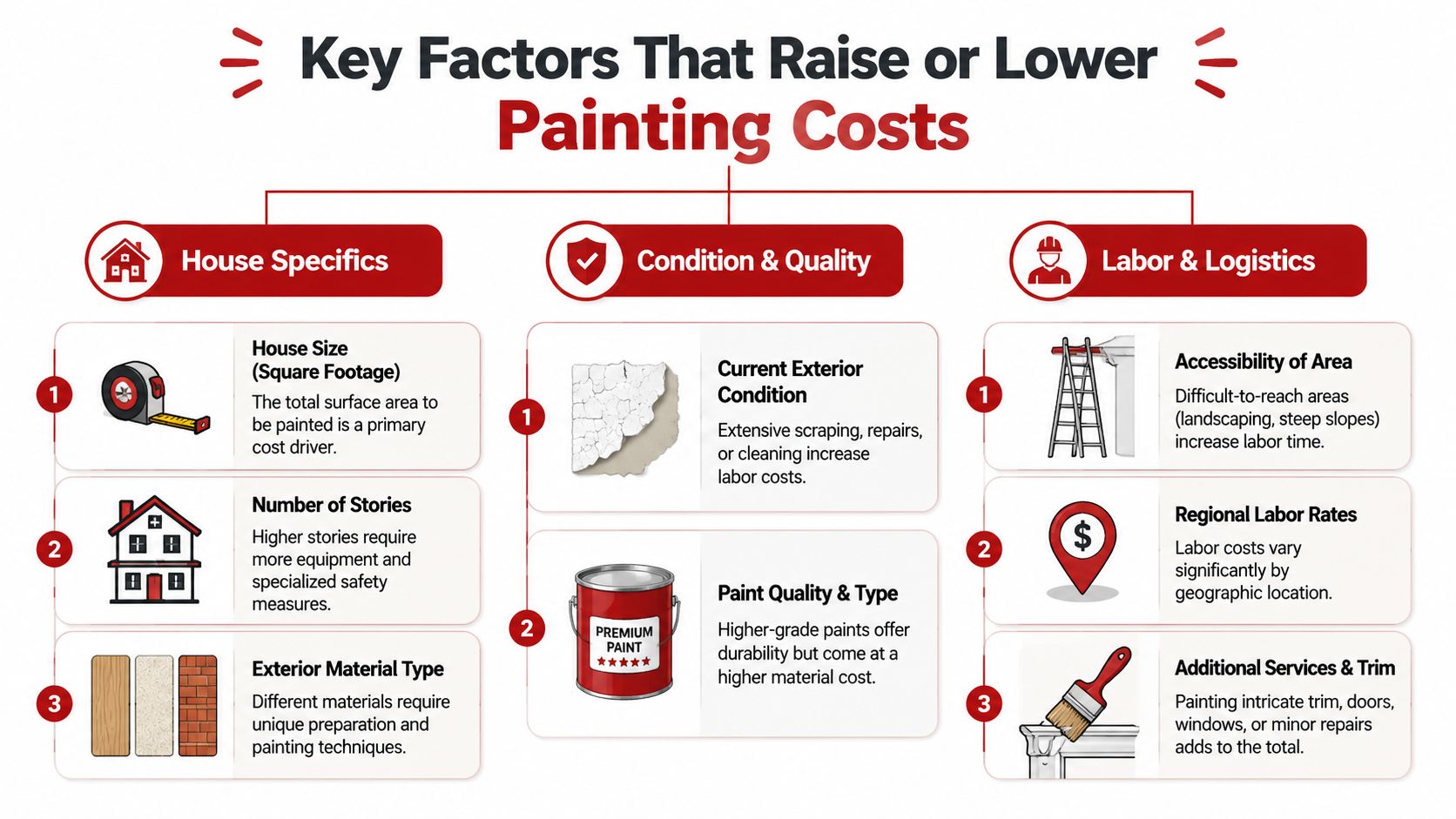
Material changes everything
Think of siding materials like different kinds of roads. A smooth vinyl surface is one kind of drive. Stucco, old wood, or painted brick is another. They don't move at the same speed and they don't require the same handling.
- Wood: Usually needs the most close-up prep. Bad caulk lines, nail pops, and edge failure show up quickly.
- Vinyl and metal: Often clean up faster, but adhesion still depends on proper surface prep and coating selection.
- Stucco and brick: Texture and porosity slow the job down. Crevices hold dust, cracks need filling, and product choice matters more.
- Concrete and masonry features: These can be durable substrates, but they still need the right primer and breathable finish system.
A smooth wall is cheaper to repaint than a damaged textured wall, even when the measured area looks similar on paper.
Height and architecture add labor fast
A tall two-story section isn't just "more house." It changes access, safety, masking, and production speed. Crews have to reposition ladders more often, protect more surfaces below, and spend more time on detail work around peaks, gables, and upper trim.
This short walkthrough gives homeowners a useful visual sense of what drives complexity on exterior jobs:
Architectural detail also matters in ways homeowners don't always expect. A broad wall with minimal trim can move quickly. A smaller wall broken up by windows, shutters, decorative trim, light fixtures, and utility penetrations can take longer because crews stop and start constantly.
Condition is the multiplier
Condition is where estimates separate. A house that only needs cleaning and a maintenance coat is one job. A house with peeling fascia, open joints, chalking, nail-head rust, and failed previous paint is another.
When I review homes in North Texas, the biggest cost jumps usually come from these issues:
- Failed caulk joints: Water gets behind trim and starts softening adjacent material.
- Peeling and flaking areas: These require scraping and feather-sanding, not just covering.
- Storm impact: Hail and wind can damage surfaces that need repair before painting.
- Landscaping and access limits: Dense shrubs, slopes, fences, and tight side yards slow setup.
What lowers cost
Lower pricing usually comes from a simpler house, easier access, sound existing paint, and fewer repairs. It doesn't come from skipping prep and hoping a thicker coat will hide problems. That approach almost always shows up later as early failure, uneven sheen, or visible edge lines.
Painting Costs Tied to Storms Roofing and Solar
A common DFW scenario goes like this. A hail claim starts with the roof, then the estimate grows once someone gets close enough to see dented gutters, bruised trim, exposed fascia, and siding repairs that will need paint at the end. What looked like a paint project often turns into a building-envelope project.
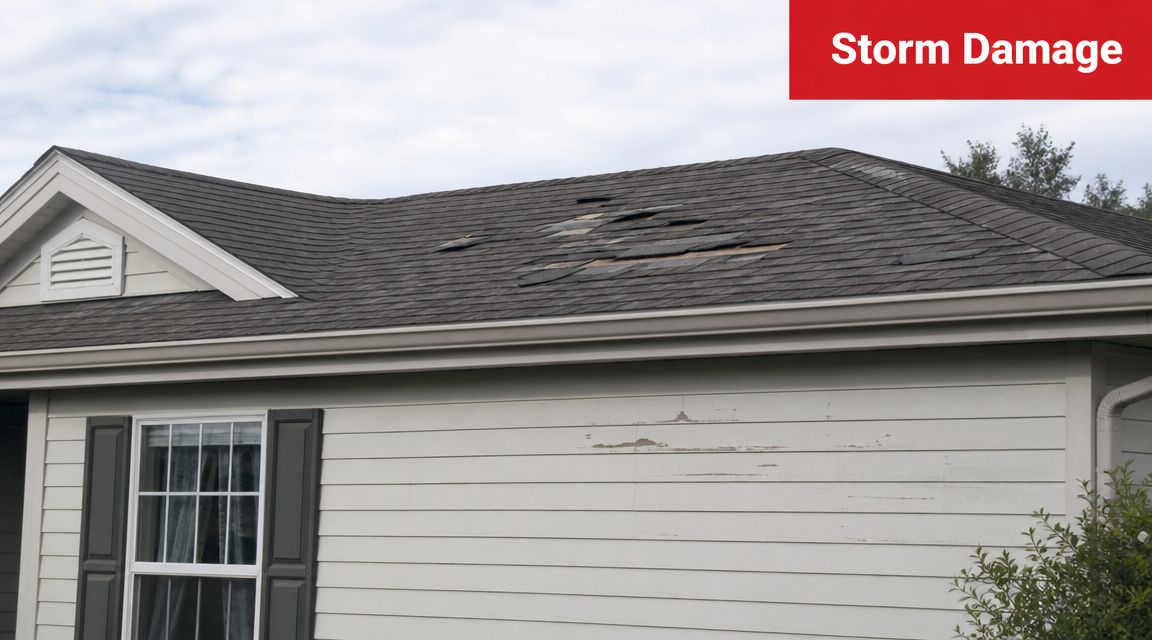
After a storm, paint is usually the final layer, not the first decision
Storm work changes painting costs because paint only looks right when the repair sequence is right. New fascia, patched siding, replaced trim, and older sun-faded surfaces all take primer and finish coats differently. If that gets handled as piecemeal work, the house can end up with flashing, uneven sheen, or touch-up patches that stand out from the street.
Homeowners run into trouble when the trades are split up and nobody owns the full schedule. The roofer finishes. The gutter crew comes later. The siding repair gets pushed a week. Then the painter finds bare replacement material, missing downspouts, or areas that still need sealant before coating can start. The cost problem is not just labor. It is rework, return trips, and small delays that stack up.
Reroofing often changes what needs to be painted
Roof replacement affects more painted surfaces than homeowners expect. Drip edge, flashing, gutters, roof-to-wall lines, soffits, fascia wraps, chimney trim, and siding edges all meet at the same transitions. Once those areas are opened up, detached, or reset, paint work usually needs to expand beyond the original allowance.
That matters even more on insurance and code-driven reroof jobs in Texas. Once crews start bringing the roof back into current requirements, they may uncover trim movement, water entry around penetrations, or aged wood at the eaves that did not show up from the ground. At that point, a small touch-up allowance rarely produces a clean finish. Full repainting of the affected elevations often makes more sense than chasing patches.
If the roof, paint, and trim are wearing out at about the same time, planning them together usually lowers waste, even if they are billed as separate line items.
Solar changes access, timing, and labor
Solar adds a coordination issue that homeowners should price in early. If panels need to come off for reroofing, upper-wall and roof-edge work changes in stages. Painting before detach-and-reset is complete can leave crews working around temporary conditions, and that usually means extra masking, missed areas, or another trip back.
For a closer look at that sequence, this guide to solar panel roof replacement coordination shows why scheduling matters before paint crews are booked.
This is one reason a single-source contractor can save money without having the lowest paint number on paper. Hail King Professionals handles roofing, exterior painting, siding, gutters, and solar panel detach-and-reset under one scope. The practical benefit is simple. Fewer handoffs, fewer scheduling gaps, and clearer responsibility when paint depends on storm repair or reroofing being finished first.
Evaluating Contractor Bids and Financing Your Project
The biggest mistake homeowners make isn't paying too much. It's accepting a low bid that excludes the work the house needs.
A cheap exterior painting proposal can look fine until the crew arrives and starts adding change orders for scraping, caulking, wood repair, masking, or second-story access. Then the "deal" disappears. Worse, some painters don't add the work at all. They spray over weak surfaces and leave you with a finish that looks acceptable for a short time and ages badly.
Compare bids line by line
If you're reviewing multiple proposals, put them side by side and ask whether they include the same scope. If they don't, the totals aren't comparable.
Use this checklist:
- Prep scope: Does the estimate specify washing, scraping, sanding, and caulking?
- Repair scope: Are wood rot, trim replacement, or fascia issues excluded or included?
- Surface list: Does it name siding, trim, soffits, fascia, doors, shutters, gutters, and garage doors?
- Materials: Does it identify primer needs and the type of exterior coating system?
- Access details: Does it account for two-story sections, steep areas, or tight side yards?
- Protection and cleanup: Are landscaping protection, masking, and final cleanup spelled out?
- Insurance and credentials: Can the contractor show current coverage and explain who is doing the work?
DIY vs professional work
DIY can make sense for a shed, a small fence section, or isolated trim repairs if you know what you're doing. For a full house exterior in Texas, the risk isn't just appearance. It's safety, weather timing, substrate prep, and coating compatibility.
Common DIY failures usually come from:
- Under-prep: Loose paint gets coated instead of removed.
- Wrong product choice: Masonry, wood, metal, and previously painted surfaces don't all take the same system.
- Inconsistent application: Lap marks, flashing, and weak coverage show up after the first hard weather cycle.
- Missed sealing details: Water intrusion keeps working behind the new finish.
The paint job you don't want is the one that looks good for a season and starts failing where the prep was skipped.
Financing without forcing the wrong decision
A larger exterior project can hit at the same time as roof work, gutters, fencing, or siding repairs. That's when financing matters less as a sales tool and more as a scheduling tool. It lets homeowners handle the exterior as one coordinated job instead of patching it in stages that don't line up well.
When you look at financing, keep the questions simple:
- Is there a soft credit check upfront?
- Are there prepayment penalties?
- Do you need home equity to qualify?
- Can roof, paint, and related exterior work be combined under one project scope?
Good financing should give you room to make the right repair decision, not pressure you into the cheapest short-term option.
Frequently Asked Questions About Exterior Painting
Can exterior painting be included in a hail damage claim
Yes, if paint is part of restoring covered storm damage. In practice, that usually means damaged siding, fascia, trim, or other exterior components that need coating after repair or replacement. Carriers typically care about whether the paint is part of a proper repair scope, color match, or material continuity. They do not approve repainting a whole house just because a storm gave you a reason to update the look.
How long should a professional exterior paint job last in Texas
Texas exposure is hard on paint. In DFW, the sides that take the strongest afternoon sun usually wear first, and areas that hold moisture around soffits, trim joints, and lower siding can fail early if prep was weak.
A job with sound prep, the right primer, and a coating matched to the surface will hold up much better than a fast repaint. That matters even more after hail events or roof work, because fresh repairs often create small transitions and patch areas that need to be sealed and coated correctly.
What paint sheen works best outside
The right sheen depends on the surface and what you need it to do. Flatter finishes hide waviness and old surface defects better on broad walls. Trim and doors often benefit from a finish that cleans up easier and holds edges better.
There is no one-sheen answer for every house.
Should I paint before or after a new roof
Usually after the roof, or with both scopes planned together from the start. Roof replacement affects access, debris control, fascia details, flashing lines, and gutter removal or reset. In Texas, code-driven reroofing changes and storm repairs can also change parts of the exterior that painters touch later.
If solar is involved, timing matters even more. Panel detach and reset, roof staging, and repaint access all need to line up, or you end up paying for duplicate labor.
Is brick worth painting
Sometimes. Sometimes it creates more maintenance than homeowners expect.
Painted brick changes the way the house sheds and shows moisture, so the condition of the masonry matters before color ever enters the conversation. If the brick has cracking, trapped moisture, or previous coating failure, those issues need to be addressed first. I usually tell homeowners to treat painted brick as a long-term maintenance decision, not a quick cosmetic fix.
What's the smartest first step if I'm not sure whether I need paint or repair
Start with an on-site inspection from a contractor who can tell the difference between worn paint and failing materials. That is especially useful after hail, before a reroof, or when solar equipment and exterior access are part of the same project.
If you are in Dallas-Fort Worth or East Texas, Hail King Professionals handles coordinated exterior work that can affect painting cost, including roofing, siding, gutters, exterior painting, and solar detach-and-reset. That helps you price the full scope before you approve work in the wrong order.