

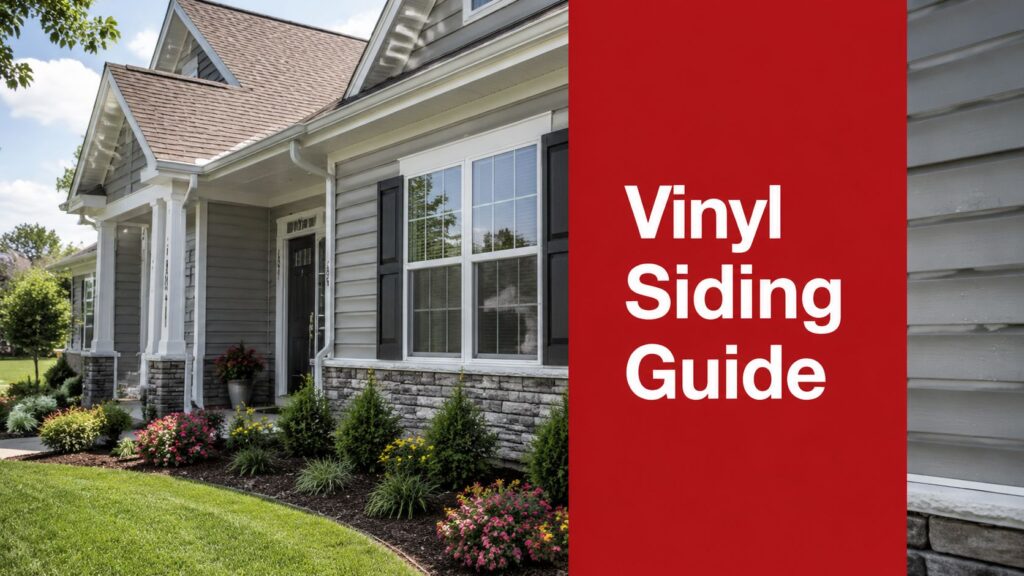
What Is Vinyl Siding? Your Texas Home Guide
Your siding looks tired. Maybe the color has chalked out, maybe a few boards are swelling, or maybe the last hailstorm made you pay attention to the whole exterior in a way you hadn't before. If you're in Dallas-Fort Worth or East Texas, that's usually when the main question shows up. Not just “what looks good,” but “what's going to hold up here?”
That's where vinyl siding enters the conversation. A lot of homeowners know it as the lower-maintenance option, and that part is true. What gets missed is that vinyl is not just a product you pick from a color card. It's a moving cladding system. In Texas heat, storm season, and sharp temperature swings, the install matters almost as much as the panel itself.
If you've been searching what is vinyl siding, this is the practical version of the answer. Not the showroom version. Not the generic national article that assumes every climate is the same. This is the Texas homeowner version, where heat load, hail exposure, sun orientation, and installer skill all affect whether vinyl turns out to be a smart buy or a regret.
Is Vinyl Siding the Right Choice for Your Texas Home?
Vinyl siding is common for a reason. It's familiar, widely available, and it can give a house a clean finished look without the repaint cycle that comes with wood. It's also far from a niche material. U.S. Census Bureau data cited by industry sources shows vinyl siding was used on 26% of new single-family homes started in 2022, making it the second-most common principal exterior material nationwide after stucco at 28%, according to Eye on Housing's market summary.
That popularity doesn't automatically make it right for your house.
In North Texas and East Texas, the better question is this: will the product grade and the installation method match the climate stress on your home? A shaded wall in a quieter neighborhood has very different demands than a west-facing elevation that gets baked all afternoon and takes wind-driven rain during spring storms.
What usually makes vinyl a good fit
- Lower upkeep: You're not signing up for regular scraping and repainting.
- Clean appearance: It works well on many suburban home styles, especially when trim, soffit, and fascia are updated at the same time.
- Budget control: For many homeowners, vinyl stays in the conversation because it can be a practical middle ground between appearance and cost.
Where homeowners get into trouble
The trouble starts when vinyl gets treated like a one-size-fits-all package. It isn't. Lower-grade panels, poor wall prep, rushed fastening, and weak detail work around windows and corners can turn a decent product into a problem job.
What matters most in Texas: A vinyl siding job should be evaluated as a system, not just a material choice.
If you want low maintenance and you choose the right installer, vinyl can make sense. If you want the thinnest panel and the cheapest bid on a house that takes full afternoon sun and frequent hail exposure, you're taking on risk whether the salesperson says so or not.
The Anatomy of Vinyl Siding More Than Just Plastic
When homeowners hear vinyl, they often think “plastic panels.” That's too simple to be useful. Vinyl siding is a rigid PVC cladding system, and its real-world behavior depends on how that material is engineered and installed.
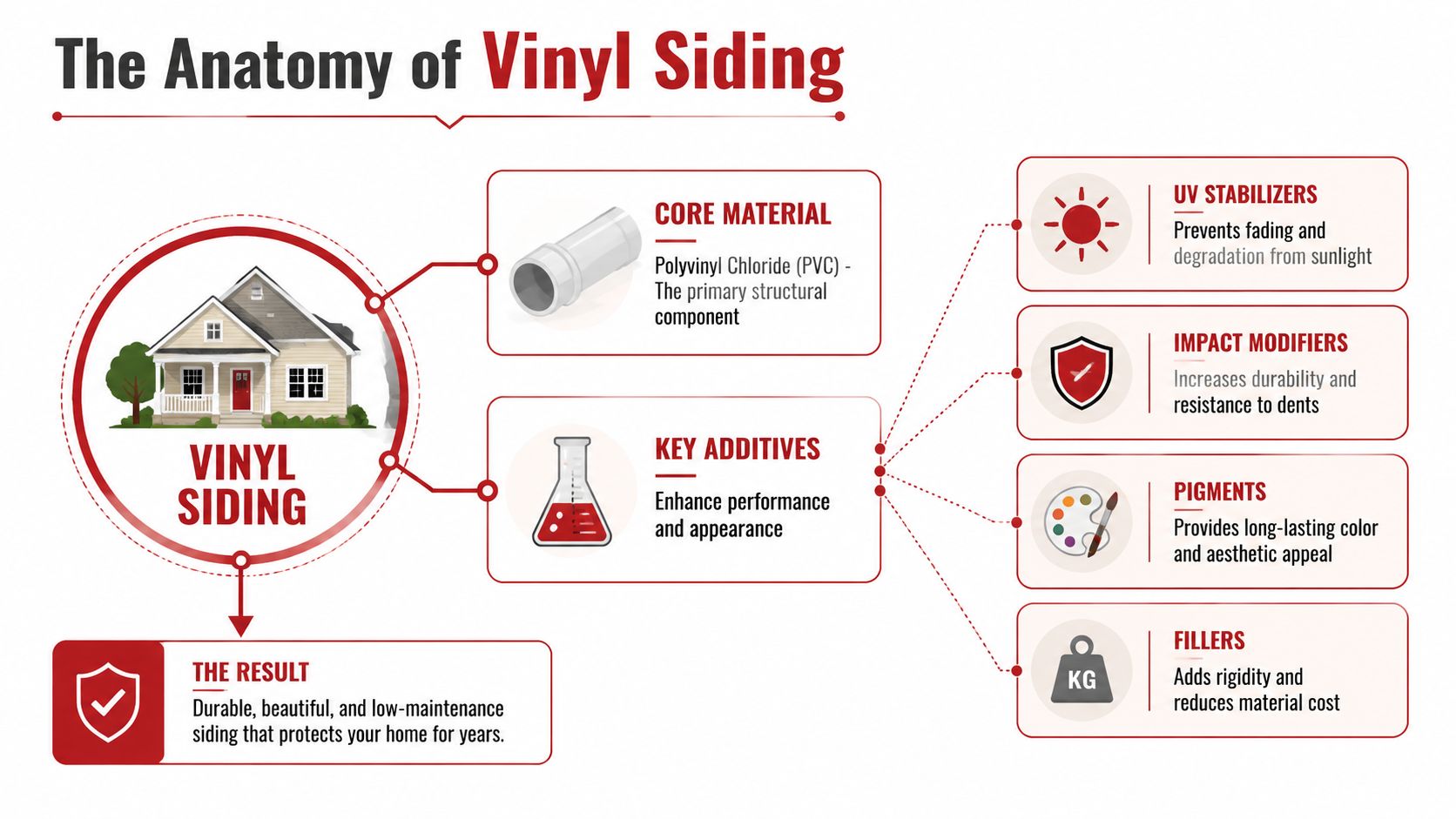
The base material is polyvinyl chloride, or PVC. Think of PVC as the structural body of the panel, not the full recipe. What makes one vinyl product hold color better, move more predictably, or resist jobsite damage better than another is the full blend and how the panel is manufactured.
Why the material mix matters
A good way to think about vinyl siding is like an engineered exterior component rather than a raw sheet material. The PVC provides the body. Other ingredients affect how that body performs once it's hanging on your house through summer heat, UV exposure, and occasional storm impact.
In practical terms, homeowners should care about:
- Color stability: Some panels hold their appearance better over time than others.
- Impact behavior: Not all vinyl responds the same way when hit by hail or struck by a ladder.
- Rigidity and shape retention: Better panel design usually installs cleaner and stays straighter.
Those differences won't always be obvious from a sample board in your hand. They show up later, after seasons of sun and weather.
How vinyl siding got here
Vinyl siding didn't start as the polished product known today. It was first introduced in the late 1950s and commercially launched in the early 1960s as a lower-cost replacement for aluminum siding, with early production from companies including Crane Plastics in Columbus, Ohio. The industry then spent much of the 1970s improving durability, impact resistance, and color consistency, which helped drive broader use in the following decade, as described in the vinyl siding history overview.
That history matters because it explains why older opinions about vinyl are often outdated. Some homeowners still picture the brittle, uneven-looking versions from decades ago. Modern products are better, but they still have design limits, especially in hot climates.
Vinyl is only one part of the wall assembly
Siding never works alone. Corners, trim channels, flashing, soffit, fascia, and ventilation all affect how clean the job looks and how long it stays trouble-free. If you're sorting out those related parts, this breakdown of soffit and fascia on a house helps connect the pieces.
A straight siding line can fool homeowners. The real quality is often in the trim details, movement allowance, and water management behind it.
Decoding Vinyl Siding Grades and Styles
Most quotes make vinyl sound simpler than it is. They'll say “vinyl siding replacement” and stop there. That's not enough detail for a Texas homeowner trying to compare bids. The grade of panel and the profile you choose both affect how the house looks and how the siding behaves.
What grades really mean
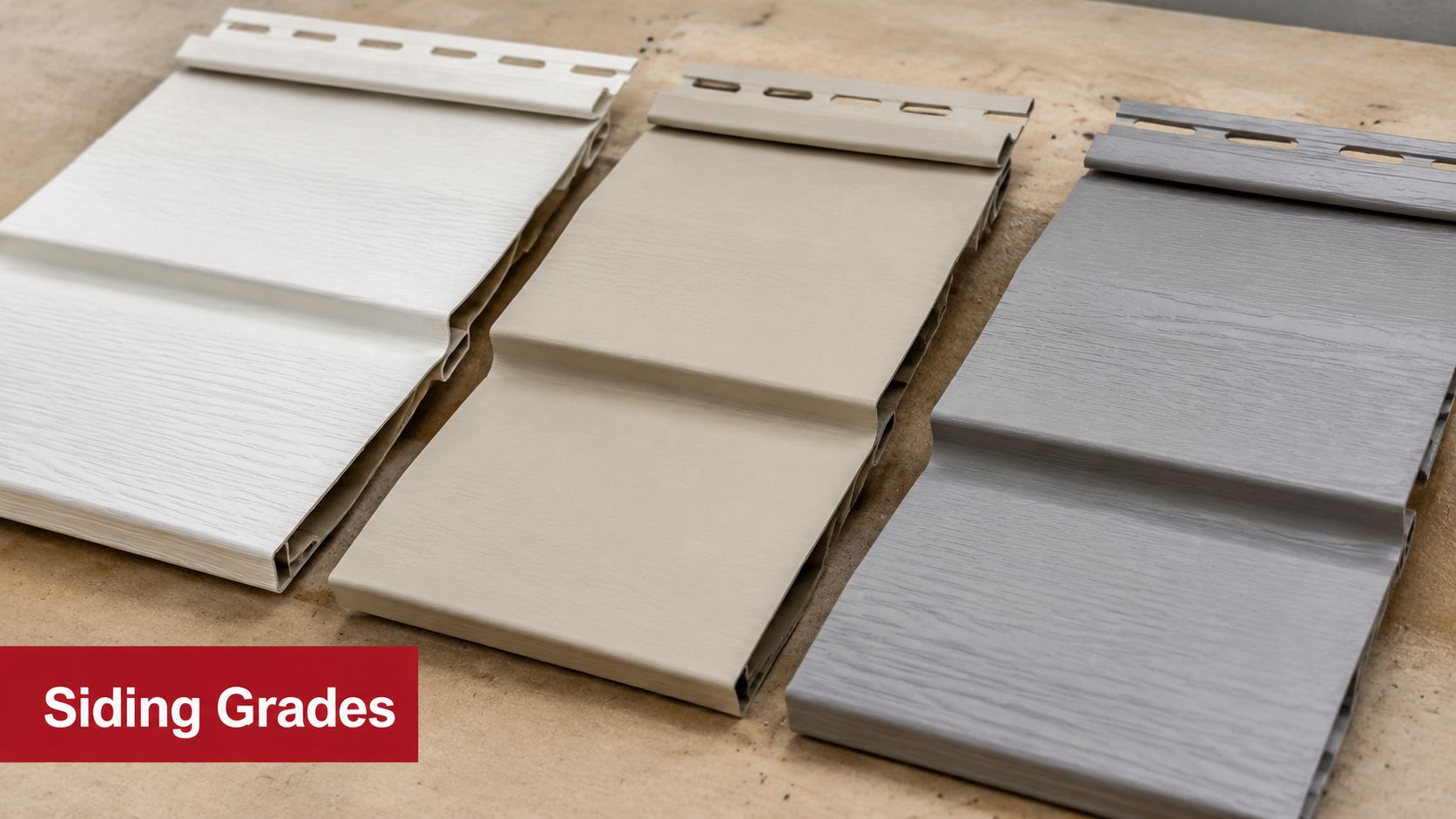
In contractor language, homeowners will usually hear terms like builder-grade, standard, and premium. Those labels aren't helpful by themselves. What you want is the actual product specification and warranty language, plus a look at the panel profile in person.
Here's the practical difference:
- Builder-grade usually aims at price first. It may be fine on a lower-stress elevation or a tighter-budget project, but it leaves less margin for mistakes.
- Standard-grade is often where many homeowners land. It balances appearance, rigidity, and cost without pushing into specialty products.
- Premium vinyl is where you typically look if your house gets heavy sun exposure, you care about a more substantial look, or you want a panel that feels less flimsy during installation.
A thicker, more rigid panel usually hangs straighter and feels less cheap. It can also give the installer a little more forgiveness on minor wall irregularities, though it doesn't fix poor prep.
Common styles you'll see on homes
Most homeowners choose style before they realize they're doing it. They react to the look first.
The profiles you'll run into most often include:
| Style | Look on the house | Where it fits well | Watch for |
|---|---|---|---|
| Clapboard | Traditional horizontal lines | Ranch homes, colonials, many suburban exteriors | Can look flat if trim package is weak |
| Dutch lap | More shadow line and dimension | Homes that need a little visual depth | Too much profile can look busy on small walls |
| Board and batten | Vertical emphasis | Farmhouse-inspired or accent walls | Needs good proportioning to avoid a forced look |
Texture and finish matter too
Two siding jobs can use the same profile and still look completely different. That often comes down to finish. Some panels have a smoother, more uniform look. Others mimic wood grain. Neither is automatically better. It depends on the architecture of the home and how honest the texture looks from the street.
Buyer rule: Don't approve vinyl from a brochure alone. Look at a full sample outside in daylight, not just under showroom lighting.
The best approach is simple. Ask every contractor the exact product line, the panel profile, the trim package, and where they plan to use starter strips, corner posts, J-channel, and utility trim. If they can't explain those details clearly, the quote probably isn't detailed enough.
The Real Benefits and Drawbacks of Vinyl Siding
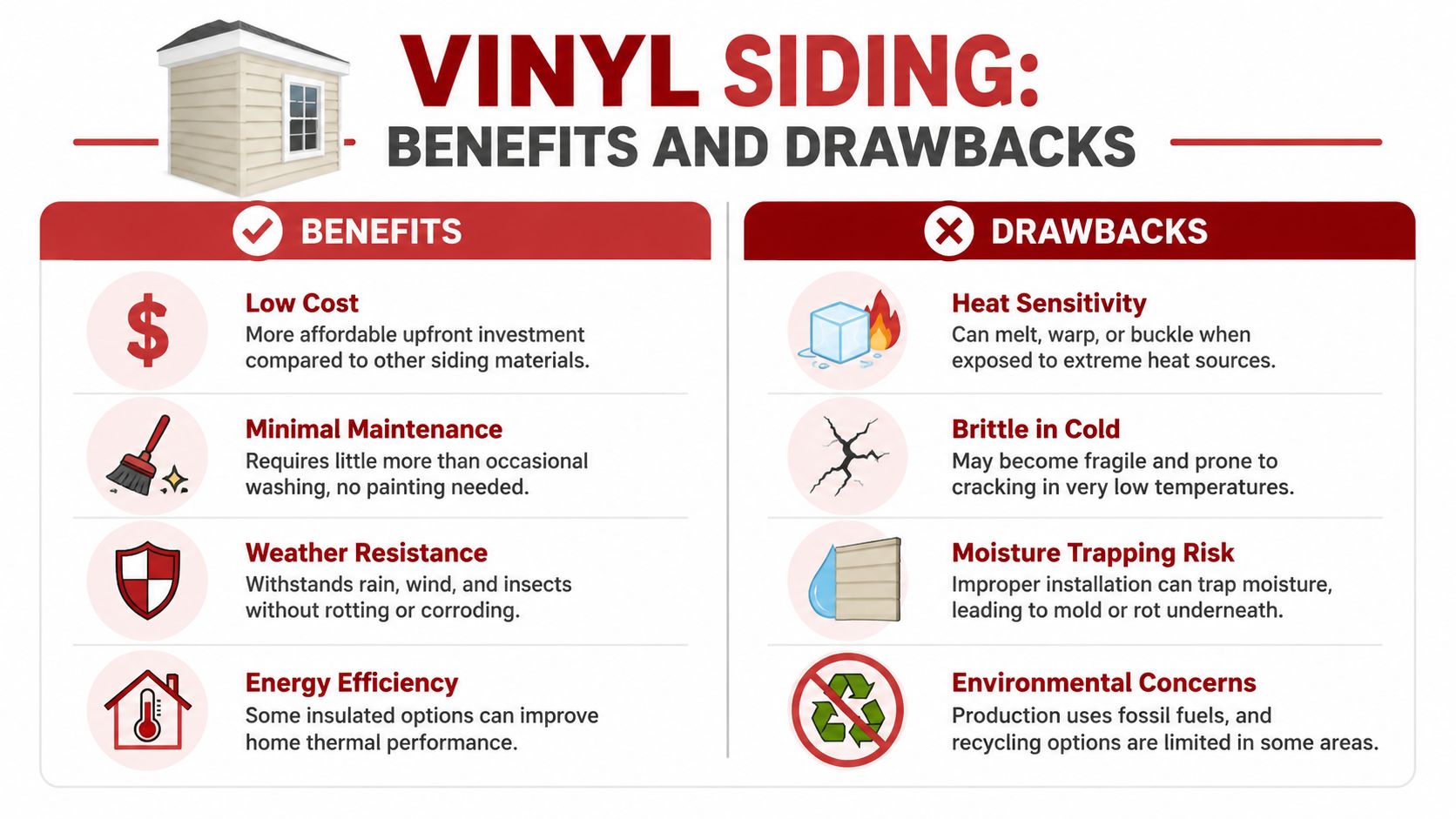
Vinyl siding has real strengths. It also has real limits. Homeowners usually hear the strengths first because they're easy to sell. The smarter way to evaluate vinyl is to look at what it does well, where it falls short, and which problems are material problems versus installation problems.
Where vinyl delivers
For a lot of homes, vinyl earns its place because it reduces routine upkeep. You don't have to repaint it the way you would with wood. It also isn't attractive to pests in the same way wood can be, and it won't rot the way a neglected wood exterior can.
For homeowners trying to plan a project budget, vinyl also tends to stay in the mix because the upfront path is often easier than premium cladding options. If you're comparing bids and trying to understand what drives price up or down, this overview of factors impacting siding costs is useful because it frames the discussion around labor, material choice, and project complexity instead of just the base panel.
Where the problems show up
The weak points usually aren't a mystery. Lower-quality panels can look less substantial. Sharp impact can crack a panel. Heat exposure can exaggerate any shortcuts in fastening or wall prep. And if the trim details are sloppy, the whole job looks cheaper than it should.
A lot of homeowner frustration comes from one mistake: blaming the material for an installer-created failure.
Lowe's consumer installation guidance warns that improper installation techniques, such as incorrect underlayment or nailing too tightly, can cause vinyl siding panels to bulge, ripple, or fail, which reinforces that system design is as critical as the material itself, as noted in Lowe's vinyl siding installation guidance.
Here's a quick visual summary before the details go deeper:
The drawback most generic guides skip
If I had to name the issue that matters most in Texas, it's this: vinyl is very unforgiving of bad installation habits.
That means problems often begin with choices like:
- Pinned fasteners: Nails driven too tight stop the panel from moving as intended.
- Weak substrate prep: Uneven walls telegraph through the siding.
- Bad underlayment decisions: The wall assembly underneath can contribute to visible distortion.
- Rushed trim work: Cheap-looking corners and loose details age badly.
If a contractor talks only about color and price, but not movement, flashing, and fastening, you're not hearing the important part of the job.
Vinyl can be a smart, practical exterior. It can also become a callback machine when someone treats it like static material instead of a system that has to move.
How Vinyl Siding Compares to Other Popular Options
Homeowners usually narrow the field to vinyl, fiber cement, and wood. Each can work. Each has a different maintenance burden, a different look, and a different tolerance for homeowner neglect.
The right choice depends on what you care about most. If your top priority is less upkeep, vinyl usually stays strong in the conversation. If your top priority is a more solid, paintable product with a different visual character, fiber cement often enters the lead. If you want the natural warmth of real wood and you're willing to maintain it, wood still has a place.
Siding Showdown Vinyl vs. Fiber Cement vs. Wood
| Material | Average Cost (per sq ft) | Lifespan | Maintenance Level | Pros | Cons |
|---|---|---|---|---|---|
| Vinyl | Varies by product grade, trim package, wall prep, and labor | Varies by climate, installation quality, and exposure | Low to moderate | Lower upkeep, broad style range, generally easier on budget | Heat movement, visible distortion if installed poorly, impact vulnerability |
| Fiber cement | Typically higher than vinyl in many markets | Long-lasting when installed and maintained correctly | Moderate | More solid feel, strong appearance, handles paint well | Heavier system, more labor-intensive, repainting may be needed over time |
| Wood | Often varies widely by species, finish, and detail level | Depends heavily on maintenance | High | Natural look, classic detail possibilities | Rot risk, pest risk, repainting or refinishing cycle |
Which homeowner usually picks what
Vinyl often fits homeowners who want a clean exterior update without committing to regular repainting. It's also appealing when a house needs broad exterior work and the budget has to cover roofing, gutters, paint, or window trim at the same time.
Fiber cement tends to attract homeowners who want a more rigid, substantial exterior and are willing to spend more for that look. In Dallas-area comparisons, a focused Dallas siding guide can be helpful because it frames the common local trade-offs between vinyl and fiber cement in a way that's more relevant than generic national advice.
Wood is usually a style-first decision. Some houses look right in wood and a little off in anything else. But wood asks for attention. If you know you won't stay on top of caulking, painting, and repairs, wood can punish neglect faster than homeowners expect.
A Texas-specific filter
For DFW and East Texas, I'd narrow the decision using three filters:
- Sun exposure on the hottest walls
- Your tolerance for future maintenance
- The skill level of the installer you can hire
If you're still comparing categories, this guide to best siding materials is a useful next read because it looks at siding choices through a broader exterior-performance lens instead of treating every house the same.
The best siding on paper still loses to the material your contractor actually knows how to install well.
Vinyl Siding in Texas Heat Hail and Installation
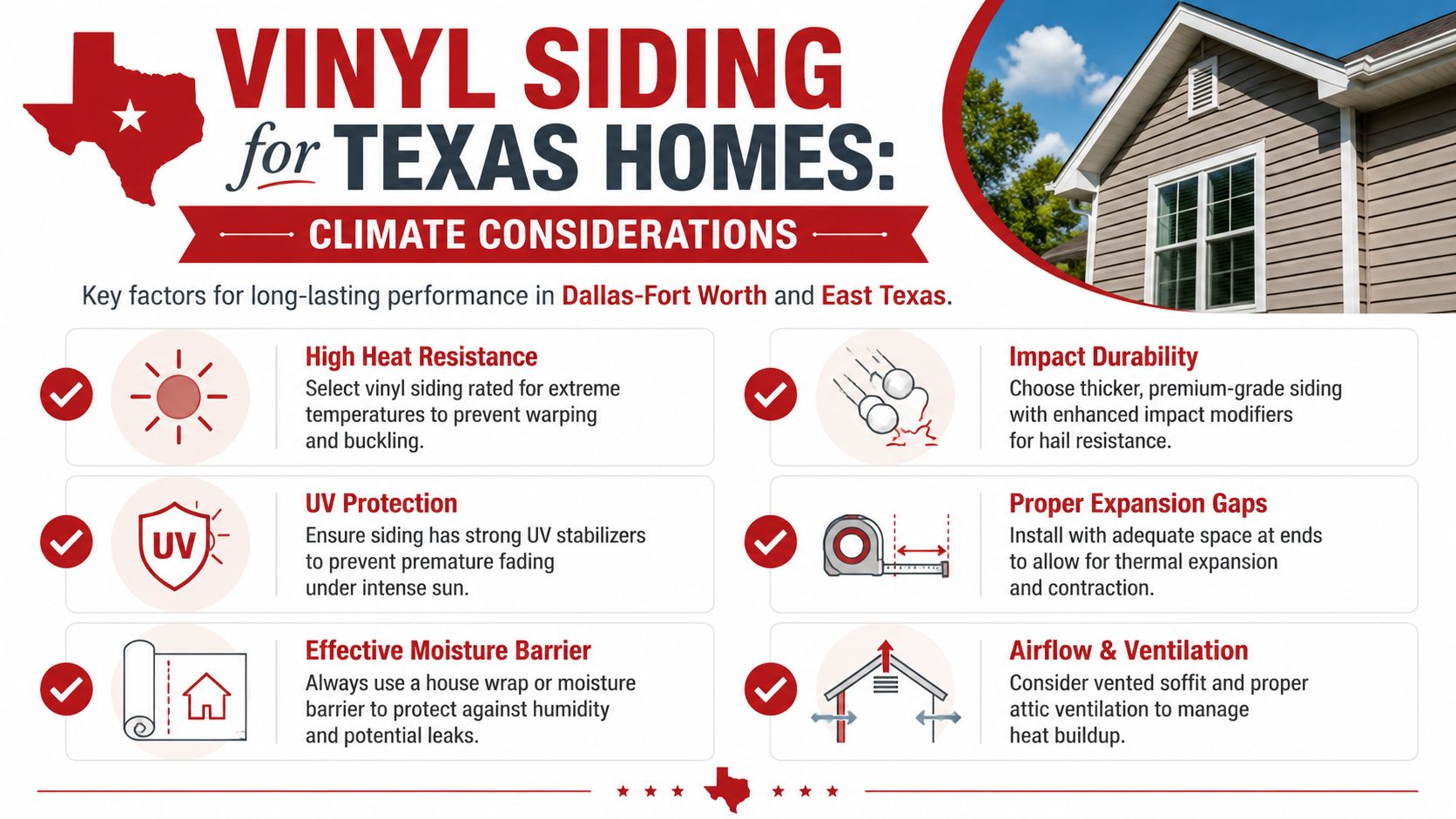
The practical challenges for Dallas-Fort Worth and East Texas come into sharp focus. A vinyl siding job can look fine at install day and still be set up to fail if it wasn't detailed for heat movement. Texas exposes that mistake fast.
Vinyl doesn't stay perfectly still. It's designed to move.
Why heat changes the whole job
Technical guidance shows that vinyl siding can expand and contract about 1/2 inch over a 12-foot panel during normal seasonal temperature changes, and if fasteners are installed too tightly, that movement can lead to buckling, rippling, and panel distortion, according to ARCAT's vinyl siding specification information.
That single fact explains a lot of failed siding jobs in hot climates.
A crew that installs vinyl like they're hanging rigid boards can create visible problems even if the material itself is decent. In Texas, where exterior walls can take intense sun and major temperature shifts, the panel needs room to move. That means loose fastening in the proper slot area, correct clearances at ends, and careful planning on long wall runs.
What works on Texas homes
The safer approach in DFW and East Texas usually includes:
- Better panel selection: Premium or more substantial product lines often make more sense on high-exposure walls.
- Attention to wall orientation: West-facing and south-facing elevations usually deserve extra scrutiny.
- Clean substrate preparation: A wavy wall underneath creates a wavy finish outside.
- Strong trim execution: Corners, window channels, and transitions have to be neat and movement-aware.
- Moisture control behind the siding: Water management is still part of the job even when the face material is low maintenance.
Hail performance is a trade-off discussion
No siding material is immune to storm exposure. In hail-prone parts of Texas, vinyl needs an honest discussion. Hail can leave one house untouched and damage another on the same street, depending on storm angle, tree cover, wall direction, and panel quality.
That doesn't mean vinyl is a bad option. It means you should match the product to the risk. Thicker, more substantial panels generally deserve a closer look if your area sees frequent storm activity. So do contractors who can explain how they detail impact-prone walls and how they inspect for hidden movement or fastening problems after a storm.
On a Texas house, the question isn't just “Will vinyl survive?” It's “Was this specific vinyl system selected and installed for this specific exposure?”
What a Texas-proof vinyl job looks like
A solid vinyl installation should leave you with panels that hang straight but still have freedom to move, trim details that look deliberate, and a wall assembly that manages water instead of trapping it. If a bid skips those details, the low number may be buying shortcuts.
This is one place where local exterior experience matters. A company like Hail King Professionals handles siding work alongside storm-related exterior repairs in DFW and East Texas, which is relevant when your siding decision is tied to hail exposure, insurance questions, or broader exterior restoration after bad weather.
Choosing a Vinyl Siding Contractor in DFW and East Texas
The wrong contractor can make a decent vinyl product look cheap and fail early. The right contractor usually sounds different before the work even starts. They ask about sun exposure, storm history, and the condition of the walls underneath. They don't just hand you a color chart and a price.
Questions worth asking before you sign
Bring these up in every estimate meeting:
- How do you fasten vinyl for Texas heat? If they can't explain loose fastening and movement allowance in plain language, keep looking.
- What product line are you quoting? “Vinyl siding” is not enough detail.
- How do you handle uneven walls and damaged sheathing? Siding shouldn't hide substrate problems. It should start after those problems are addressed.
- What do you install around windows, corners, and roof-to-wall transitions? This tells you whether they're thinking like installers or just salespeople.
- Can you show local projects? Nearby work matters more than a gallery from another climate.
Look for local proof, not generic promises
A good contractor should be able to show homes in DFW or East Texas where their vinyl work has already gone through real weather. That matters more than polished marketing. Texas heat exposes bad fastening. Storm season exposes weak trim details. Local examples tell you a lot.
Also verify insurance, written scope, cleanup expectations, and who is doing the installation. Some companies sell the project and then hand it to crews with little oversight.
One more check before you decide
Read the estimate line by line. If one quote is dramatically lower, find out what got removed. It may be wall prep, trim replacement, moisture barrier work, or a better product line. Cheap siding bids often become expensive lessons.
If you want a baseline for what to ask and how to compare local companies, this page on choosing a siding contractor in Dallas TX is a practical reference.
A vinyl siding job should be sold with details. If the contractor stays vague, expect surprises later.
If you're weighing vinyl siding for a home in Dallas-Fort Worth or East Texas, Hail King Professionals can inspect the exterior, explain whether vinyl makes sense for your exposure and budget, and outline repair or replacement options in plain language. The goal should be a siding system that fits your house, your climate, and the way you want to maintain the property.