
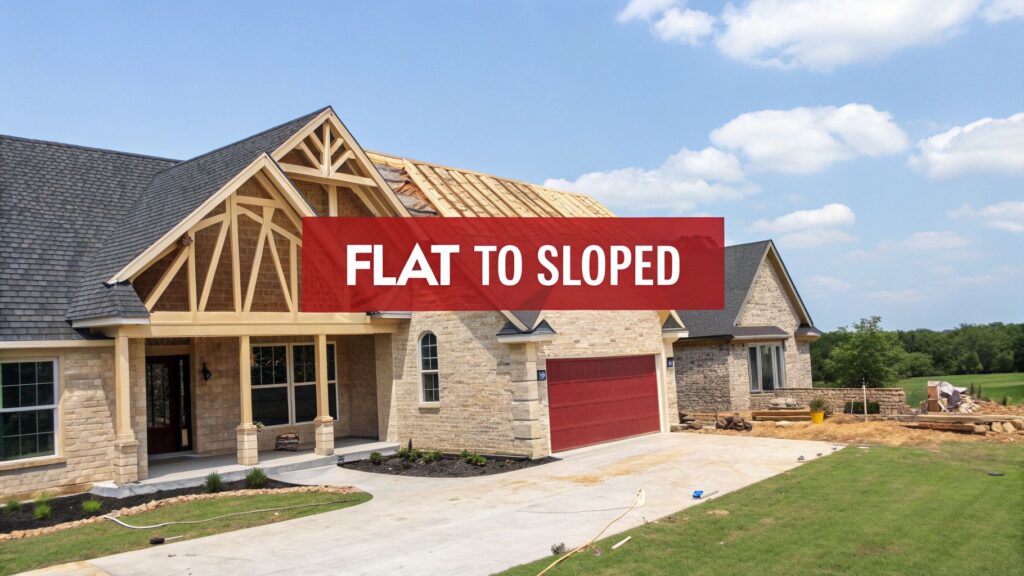
Flat Roof to Sloped Roof A Texas Homeowner’s Guide
If you're a homeowner in the Dallas-Fort Worth area with a flat roof, you know that feeling of dread when the sky turns dark. You’re all too familiar with the constant worry over pooling water, the mystery leaks that show up after a heavy downpour, and the costly repairs that follow a hailstorm. I’ve been in this business a long time, and I’ve seen countless homeowners get worn down by these exact problems.
That’s why converting a flat roof to a sloped one is more than just a renovation project; for many, it’s a necessary upgrade for peace of mind. It’s about trading a high-maintenance liability for a durable, reliable roofing system built to handle Texas weather.
Why Convert a Flat Roof to a Sloped Roof in Texas?

The decision to make this change usually comes down to one thing: water. Our intense rain and severe storms put flat roofs at a serious disadvantage. The design just isn't cut out for the kind of weather we get here.
Superior Drainage and Storm Resistance
Let’s be honest, the biggest reason to switch is to get water off your roof—fast. A sloped roof does this naturally, using gravity to channel every drop of rain into your gutters. This simple change in design is a game-changer. It gets rid of standing water, which is the root cause of most leaks and structural issues on flat roofs.
This isn't just a local trend; it reflects a broader shift in the roofing industry. Pitched roofs are dominant because they’re simply better at managing water. In regions like DFW that see heavy rainfall, a sloped design can cut the risk of leaks by as much as 70%. That’s a huge number, especially when you consider that Texas contractors like Hail King Professionals have been protecting homes from our notorious hail since 1991, often using impact-resistant Class 4 shingles. You can find more details in these roofing market trends reports.
Expert Insight: I’ve walked countless roofs after a big hailstorm. The flat roofs often look like they’ve been through a war, with damage across the whole surface. But a well-built sloped roof with Class 4 shingles? It can take the same beating and come out with little to no damage, saving the homeowner a fortune in repairs and a whole lot of stress.
The Bigger Picture: Long-Term Value
Moving from a flat roof to a sloped roof does more than just fix your drainage issues. It brings a whole host of other benefits that add real, lasting value to your home.
Here’s a side-by-side summary of the key performance differences between flat and sloped roofs in the context of the Dallas-Fort Worth climate.
Flat Roof vs Sloped Roof Quick Comparison for Texas Homes
| Feature | Flat Roof | Sloped Roof Conversion |
|---|---|---|
| Water Drainage | Prone to ponding; requires perfect seals. | Excellent; gravity sheds water quickly. |
| Storm Resistance | Vulnerable to hail and wind uplift. | Superior resistance with proper materials. |
| Maintenance | Frequent inspections and repairs needed. | Minimal; much lower long-term costs. |
| Energy Efficiency | Limited insulation space; absorbs heat. | Creates attic for better insulation/ventilation. |
| Property Value | Can be a negative for potential buyers. | Significant boost to curb appeal and value. |
| Lifespan | 10-20 years on average. | 30-50+ years depending on materials. |
This table makes it clear that while the initial investment is higher, the long-term benefits of a conversion are substantial.
More Than Just a Roof
When you convert your roof, you’re also unlocking a few key advantages:
- Boosted Property Value: A brand-new, attractive sloped roof makes a huge difference in your home's curb appeal and what it’s worth on the market.
- Better Energy Efficiency: The new roof frame creates an attic space. This is a massive win for ventilation and insulation, which helps slash those brutal Texas cooling bills in the summer.
- Lower Maintenance Costs: Sloped roofs are tougher and have fewer weak points. That means you’ll spend far less time and money on maintenance and repairs over the years.
In the end, this project is an investment in your home's future. You’re building a roof that’s not just a cover, but a true shield designed to handle everything our unpredictable climate can throw at it.
Exploring Your Roof Conversion Options
So, you’ve decided to move on from your flat roof. Good call. Now comes the interesting part: figuring out how to actually build the slope. This isn't just a simple cover-up; it's a real construction project with a couple of distinct paths you can take.
The right choice really boils down to your end goal and what your home’s structure can handle. Are you just trying to solve a persistent drainage problem for good? Or are you aiming for a complete facelift that ramps up your curb appeal? Let's walk through the two main ways we tackle these conversions.
Building a New Roof Structure with Trusses
The first, and most dramatic, option is to build an entirely new, conventionally framed roof right on top of your existing one. In the business, we often call this a "truss conversion" or a "stick-built" overlay.
Here’s how it works: we design and assemble a new frame using engineered wood trusses. Think of these as pre-fabricated triangular frames that create the new pitch and shape of your roof, whether it's a simple A-frame gable or a more complex hip roof. This new structure is anchored securely to your home’s load-bearing walls, creating a permanent, truly sloped system.
This approach brings some major benefits to the table:
- A Total Aesthetic Overhaul: You're not just getting a slope; you're getting a brand-new roofline that can completely change your home's architectural style and visual appeal.
- Unmatched Durability: An engineered truss system is incredibly robust. It’s designed from the ground up to handle the high winds we see in Texas and whatever else nature throws at it.
- A New Attic Space: This method creates a void between the old flat roof deck and the new pitched roof. This is a golden opportunity to pack in more insulation and add proper ventilation, which can make a huge difference in your energy bills.
Of course, this is the more intensive—and expensive—route. It absolutely requires a professional structural assessment to confirm your home's foundation and walls can safely carry the additional weight.
A Real-World Example: I remember a project on a home in Fort Worth where the owners were just fed up with constant leaks and hated the "boxy" look of their house. We went with a full truss conversion. It was a game-changer. The new roofline added classic architectural character and shot up their property value. The investment was higher, but the result was exactly the high-impact transformation they were hoping for.
Creating a Slope with Tapered Insulation
If a full structural rebuild sounds like overkill, there's a more streamlined and budget-conscious method: using tapered insulation panels to create the slope. This technique doesn't add a new frame; instead, it modifies the existing flat surface to ensure water has a clear path to get off the roof.
We use rigid foam panels that are manufactured with a slight, built-in slope. A roofer designs a custom layout, almost like a puzzle, placing the thinnest panels near the drains or scuppers and progressively thicker panels further away to build up a gentle, effective incline.
After the insulation panels are secured, a new roofing membrane is installed over the entire surface, giving you a seamless, waterproof, and properly sloped roof. This is a fantastic solution for buildings where adding a lot of structural weight is a non-starter.
The benefits here are pretty clear:
- More Affordable: This route almost always has a lower price tag because it requires less labor and fewer raw materials than a full truss system.
- Minimal Structural Impact: The weight of foam insulation is negligible, which often means you can skip major structural reinforcements.
- Better Energy Efficiency: That rigid foam does double duty. On top of creating a slope, it dramatically increases your roof's R-value, helping keep your home cooler in the summer and warmer in the winter.
Just keep in mind, this is primarily a functional fix. It solves drainage issues brilliantly, but it won’t drastically change how your home looks from the street. The roofline stays essentially flat, just with a smart, hidden slope doing its job.
Making the Right Choice for Your Property
So, which way should you go? The best approach for your flat roof to sloped roof conversion really depends on your budget, your home, and your priorities. Before you talk to a contractor, it helps to have a good handle on the language. A great starting point is understanding roof pitch, as the steepness you choose will affect everything from materials to cost.
To help you weigh your options, here’s a quick comparison:
| Consideration | Truss Conversion (New Frame) | Tapered Insulation System |
|---|---|---|
| Primary Goal | Major aesthetic upgrade & functional fix | Cost-effective drainage solution |
| Cost | Higher initial investment | More budget-friendly |
| Structural Impact | Significant; requires structural assessment | Minimal; adds very little weight |
| Curb Appeal | High impact; creates a new roofline | Low impact; maintains a flat profile |
| Project Timeline | Longer construction period | Faster installation |
Ultimately, a full truss system is an investment in your home's future value and appearance. A tapered system is an efficient, intelligent solution for chronic water problems. For more information on different roofing materials that pair with these systems, feel free to learn more about our different roofing system types.
Getting the Bones Right: Structure, Drainage, and Permits
Swapping a flat roof for a sloped one is a major construction project, not just a cosmetic upgrade. Before a single shingle is laid, we have to talk about what’s holding it all up. Your home's very foundation and frame are at stake.
The absolute first step is a professional structural assessment. You need a qualified engineer to come out and determine if the existing structure can even handle the new load. It’s not something you can eyeball. A new pitched roof, especially one built with trusses, adds a tremendous amount of weight that your home was never designed to carry.
Think of it this way: all that new weight gets channeled directly down your load-bearing walls and into the foundation. Skip the engineering assessment, and you’re gambling with catastrophic failure. I'm talking about cracked walls, sagging ceilings, or even foundation damage down the road. It’s a non-negotiable part of the process.
Designing a Bulletproof Drainage System
Once the engineer gives us the green light on the structure, our next obsession is water. A sloped roof is fantastic at shedding rain, but where does all that water go? Here in the Dallas-Fort Worth metroplex, we know what a real gully-washer looks like, and your new roof needs a plan to handle it.
A proper drainage system is far more than just slapping on some gutters. It’s a calculated system designed to manage the massive volume of water your new, larger roof surface will collect.
Here’s what a truly effective system looks like:
- Properly Sized Gutters: We do the math based on your roof's square footage and pitch to select the right size. For most homes in our area, that means 5-inch or even 6-inch K-style gutters are necessary.
- Sufficient Downspouts: The number and placement of downspouts are critical. If you don't have enough, water will pour over the sides, rotting your fascia and soaking the ground right next to your foundation—a recipe for disaster.
- Smart Water Diversion: We make sure downspouts discharge water well away from your home. This prevents pooling, which is a primary cause of the expensive foundation issues so common in North Texas.
This diagram shows the two main ways we can build that slope—either with a new truss frame or by using tapered insulation.

As you can see, both methods achieve the same crucial goal: creating a definitive slope that forces water off the roof and away from your home.
Mastering Local Building Codes and Permits
Any project that changes the shape of your roof requires a building permit. Period. Trying to navigate the permitting process in DFW cities like Dallas, Fort Worth, or Plano can be a real headache. Each has its own set of rules and specific interpretations of the International Residential Code (IRC).
A reputable contractor will handle all of this for you. They’ll prepare and submit the whole package, which usually includes:
- Engineered drawings detailing the new roof structure.
- A complete site plan showing property lines.
- Specifications on all materials and how they'll be fastened.
Trying to do this kind of work "off the books" is a huge mistake. You risk getting hit with a stop-work order, paying hefty fines, and creating major problems when it's time to sell your house. A properly permitted and inspected job is your proof that the work was done right.
The long-term financial benefits often justify the upfront investment in a flat roof to sloped roof conversion. For those considering a flat roof deck in conjunction with their project, check out our guide on designing flat roof decks.
The investment really pays off over the life of the roof. In a place like North Texas, where hail and high winds are a fact of life, converting to a pitched roof can be 15-25% cheaper over a 30-year span than constantly repairing and eventually replacing a flat roof. When you factor in that many modern sloped roofing systems have lifespans exceeding 50 years and can lower insurance claims by up to 30% with impact-resistant materials, the value becomes crystal clear.
Getting the structure, drainage, and permits right is the foundational work that guarantees your new roof is not just beautiful, but safe, durable, and built to last.
Choosing Materials to Maximize Durability and Efficiency

Once your new roof structure is framed, you're ready to pick its armor. Here in North Texas, a roof's main job is to be a shield against everything from brutal hailstorms to relentless sun. Choosing the right materials is about more than just picking a color; it’s a critical decision that will dictate how well your investment holds up for the next few decades.
Your new sloped roof has to be tough. The choice you make here defines its lifespan, how much maintenance it will need, and its overall ability to protect your home.
Selecting the Right Armor for Texas Weather
When it comes to materials for a flat roof to sloped roof conversion in the DFW area, two options are head and shoulders above the rest: impact-resistant asphalt shingles and standing seam metal.
- Impact-Resistant (Class 4) Shingles: These are the gold standard for asphalt roofing around here. They’re specifically engineered to withstand impacts from hail up to 2 inches in diameter. A lot of insurance companies even offer premium discounts for installing them, which makes the upgrade a no-brainer.
- Standing Seam Metal Roofing: For the absolute best in durability, nothing beats a well-installed metal roof. They are incredibly resistant to hail, can handle winds over 140 mph, and often last 50 years or more. As a bonus, their reflective surfaces do an excellent job of keeping your home cooler in the summer.
My Two Cents: I’ve seen countless roofs after a big hailstorm. The standard shingles are often shredded to pieces, while the homes next door with Class 4 shingles or metal roofing have little to no damage. Yes, the upfront cost is higher, but it pays for itself by helping you avoid future insurance deductibles and the headache of a full roof replacement.
A Golden Opportunity for Energy Efficiency
A roof conversion is the single best time to make a massive improvement in your home's energy performance. The new structure creates a vented attic space—something your flat-roofed home never had. This is a complete game-changer for managing heat.
This new space allows for two crucial upgrades: better insulation and proper ventilation. By adding a thick layer of insulation (we often recommend R-38 or higher) and installing a balanced system of soffit and ridge vents, you create a buffer that keeps that intense Texas summer heat from baking your living space.
This isn't a small tweak; it's a fundamental upgrade. The combination of a sloped design and modern insulation directly solves the ponding water and heat absorption problems that plague flat roofs. These improvements can lead to real savings on your energy bills, with some homeowners reporting that sloped roofs can cut heating and cooling costs by 20-30%. You can discover more insights about roofing resilience on butlersroofing.com. Beyond the materials themselves, getting the proper roof ventilation right is absolutely crucial for the long-term health of your home.
Integrating Solar Power for the Future
With a brand-new sloped roof, you have the perfect platform to start generating your own power. Unlike a flat roof where solar panels often need bulky, heavy systems to tilt them at the right angle, a sloped roof is already perfectly angled for solar.
Why is this the perfect time to go solar?
- Optimal Orientation: Your roofer can place the panels on the roof plane that gets the most direct southern sun, maximizing your energy production from day one.
- Streamlined Installation: The panels can be mounted securely and directly onto the new roof deck and framing, which is a much cleaner and more integrated process.
- Long-Term Synergy: You’re pairing a new 30- to 50-year roof with a 25-year solar energy system. This means you won’t have to worry about the costly process of removing panels just to replace an old roof a few years down the road.
If you already have solar panels, a contractor like Hail King can perform a professional "detach-and-reset," seamlessly moving your existing system onto the new roof. Making your home more energy-independent is a powerful way to add lasting value.
Budgeting for Your Conversion and Finding the Right DFW Contractor
Alright, let's talk about what it really takes to turn your flat roof into a durable, sloped system. It really boils down to two critical things: a solid budget and an experienced contractor you can trust. A flat roof to sloped roof conversion is a major home improvement project, and getting a handle on the numbers from the very beginning is the secret to a stress-free experience.
The final cost can swing quite a bit, but it’s never just a random figure. Any quote you get should be a direct reflection of your roof's unique size, the new design, and the materials you pick.
What Drives the Cost of a Conversion?
A few key factors will always have the biggest impact on your budget. Think of these as the main cost drivers: the sheer size of your roof, how complicated the new design is, and the quality of the materials going on top.
- Roof Size and Complexity: It's simple math. A straightforward gable roof on a smaller home is going to be far less expensive than a sprawling hip roof with multiple dormers and valleys. More angles and complex features mean more skilled labor, more custom-cut materials, and more detailed structural work.
- Your Choice of Materials: This is where you have a lot of control over the budget. Good-quality architectural shingles are a solid baseline. But if you decide to upgrade to something like a Class 4 impact-resistant shingle (a smart move in North Texas) or a beautiful standing seam metal roof, your upfront investment will be higher.
- Structural Needs: This one is non-negotiable. If the engineer’s assessment shows your home’s framing needs to be beefed up to handle the new roof's weight and design, that cost gets added to the project. It’s a crucial step for the long-term safety and stability of your home.
While I can't give you a magic number, a truly professional contractor will hand you a detailed, line-by-line estimate. Transparency is key.
A word of caution: it's tempting to jump at the lowest bid, but that's often a red flag. An unusually low price can signal shortcuts, uninsured workers, or cheap materials that will end up costing you a fortune in repairs down the road.
How to Vet Your DFW Roofing Contractor
Finding the right team for this job is single-handedly the most important decision you'll make. Here in the Dallas-Fort Worth metroplex, you don't just need a roofer; you need a specialist with proven experience in these specific conversion projects.
Before you even think about signing a contract, it's time to do some serious homework. A real pro will welcome your questions and have all their credentials ready. For an even more detailed breakdown, our guide on how to choose a roofing contractor is a great resource.
Here’s a practical checklist to run through when you’re meeting with potential contractors:
- Verify Their Insurance and Licensing: Ask to see their certificates for general liability insurance and workers' compensation. While Texas doesn't have a statewide roofing license, reputable contractors will be licensed in cities that require it, like Dallas and Fort Worth. This is your shield against liability.
- Ask for a Conversion-Specific Portfolio: Don't settle for photos of standard roof replacements. You need to see before-and-after pictures of flat-to-sloped conversions they’ve actually completed right here in North Texas. This is the ultimate proof of their expertise.
- Check Local References: A contractor who is proud of their work will have a list of past clients ready for you to call. Ask specifically for homeowners who had a conversion done.
- Confirm They Manage the Permitting Process: This isn't something you should have to worry about. A qualified contractor will handle everything, from submitting the stamped engineering plans to the city to scheduling all the necessary inspections.
- Get the Warranty in Writing: You should receive two warranties: one from the material manufacturer and another for workmanship from the contractor. Make sure you understand what each one covers and for how long.
Hiring the right company isn't just about buying a new roof. It's about investing in a professional partnership that guarantees the job is done right, to code, and built to last.
Common Questions About Roof Conversions in Texas
When you're thinking about a big project like converting a flat roof to a sloped one, you're going to have questions. I get it. As a roofer who's been guiding Dallas-Fort Worth homeowners through this for years, I’ve heard just about everything. Let's run through some of the most common ones I hear to help clear things up for you.
This is a major investment in your home, so it’s only natural to want all the facts before you dive in.
How Long Does a Roof Conversion Take?
This is almost always the first thing people ask, and for good reason—you need to know how long your life will be in flux. The honest answer is, it depends. The timeline can swing quite a bit based on the complexity of the job, the size of your roof, and, of course, the ever-unpredictable Texas weather.
For a smaller, more straightforward conversion, say one using tapered insulation, we might be in and out in a week or two. But for a larger project that requires building out a full truss system, dealing with complex rooflines, and maybe even some structural reinforcement, you're likely looking at three to six weeks from start to finish. That timeline covers everything—tear-off, framing, sheathing, underlayment, installing the new roofing, and the final cleanup.
Will I Need to Move Out During the Project?
For the overwhelming majority of conversions, the answer is no. You can absolutely stay in your home while we work. Any professional roofing crew worth their salt knows how to work on an occupied home and will do everything possible to minimize the disruption.
That said, be prepared for noise. There's no getting around the sounds of a construction site—hammering, sawing, and general activity will be happening from morning until late afternoon. We're meticulous about keeping the site clean and safe, but it is an active work zone.
What Happens to My Existing Solar Panels?
This is a fantastic question, and one I'm hearing more and more as DFW homeowners go solar. If you have panels, the process is pretty seamless when you're working with an experienced contractor. We handle what’s called a "detach-and-reset."
Here’s a quick breakdown of how that works:
- Professional Detach: Before we touch the roof, a specialized solar team carefully disconnects and removes your panels and the racking they sit on.
- Roof Conversion: We get to work and complete the entire flat-to-sloped roof conversion, building the new structure and installing the new roofing system.
- Secure Reset: Once the new roof is on and ready, the solar team comes back to reinstall your panels on the new, perfectly angled surface.
A roof conversion is actually the ideal time to think about solar. Flat roofs often require heavy, ballasted systems just to tilt the panels toward the sun. A brand-new sloped roof, on the other hand, is already built at the perfect angle for maximum sun exposure, giving you a cleaner, more efficient, and more secure solar setup from day one.
How Does This Conversion Affect My Home Insurance?
This is a critical financial point to consider. The good news is that insurance companies generally love this upgrade, especially here in hail-prone North Texas.
When you switch to a sloped design and use materials like Class 4 impact-resistant shingles or metal, you’re drastically reducing the odds of them having to pay out a future storm damage claim. Many insurers reward this by offering some pretty hefty discounts on homeowner's insurance premiums. I always recommend calling your agent before the project starts. Ask them about the potential savings and what paperwork they’ll need when we're done. A quick phone call can lead to some serious long-term savings.
Ready to stop worrying about leaks and start enjoying the peace of mind that comes with a durable, expertly installed sloped roof? The team at Hail King Professionals has been protecting Texas homes since 1991. Schedule your free, no-obligation roof inspection today!