



A Homeowner’s Guide To Solar Panel Roof Replacement
When you have solar panels, replacing your roof isn't just a standard roofing job anymore. It becomes a specialized project that involves carefully removing your solar array, installing the new roof, and then putting the solar system back in place. This isn't a task for just any roofer; it demands the coordinated skills of both certified solar technicians and professional roofers to make sure both of your major investments—the roof and the panels—are protected.
Why Solar Panels Change Your Roofing Project
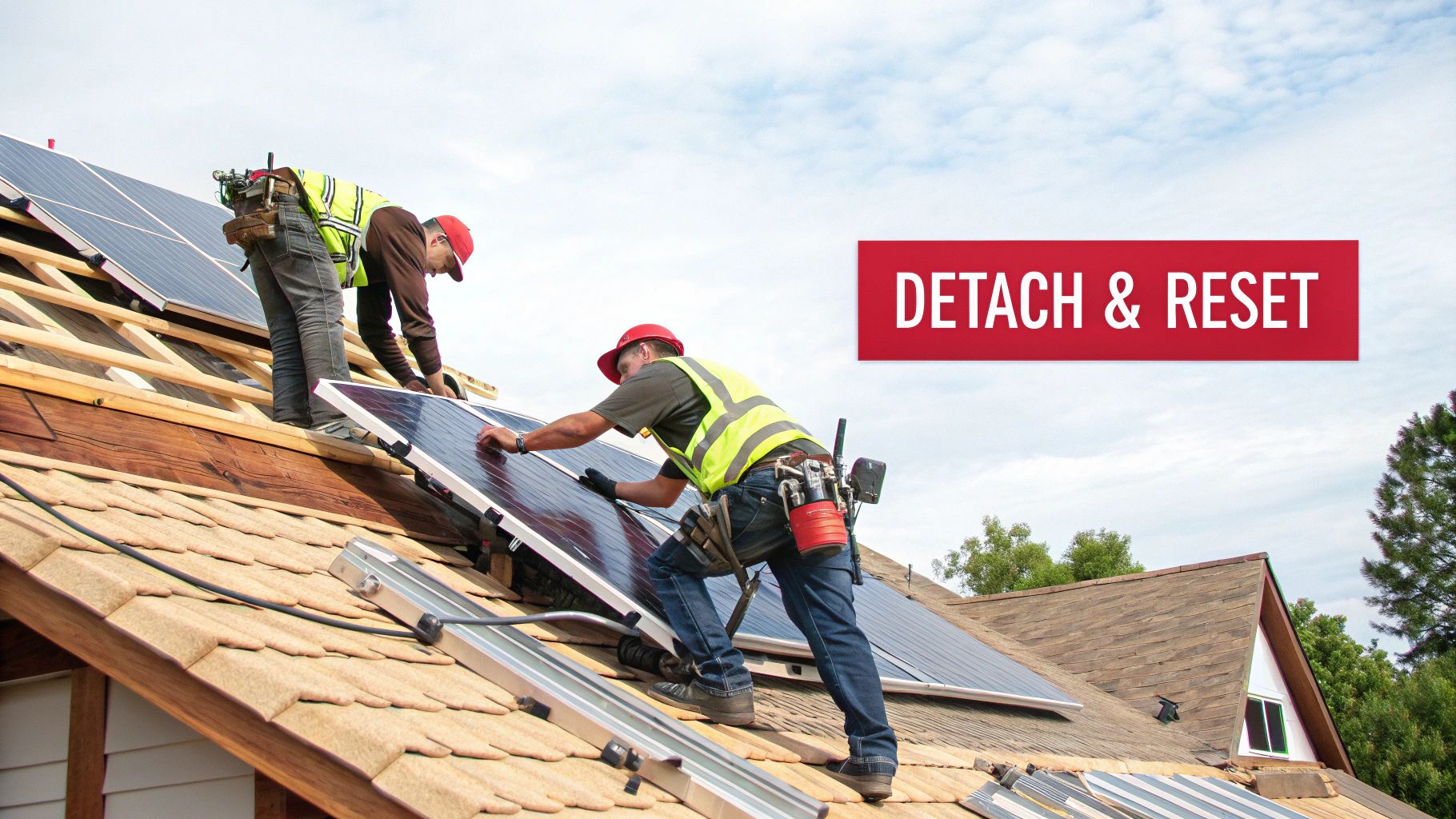
Normally, replacing a roof is a pretty straightforward process. But adding solar panels to the mix turns it into a completely different ballgame. The level of coordination and technical skill required goes far beyond a simple repair.
Think of it like this: a regular re-roof is like changing the tires on your car. It's routine. But a solar panel roof replacement is more like rebuilding the engine while making sure a custom, high-performance turbocharger is handled with extreme care. Every part is valuable and needs a specialist's touch.
Understanding the Detach and Reset Process
In the industry, we call this process a "detach and reset." It's the proper, professional way to do things. This means a qualified solar crew carefully powers down and disconnects your entire system, then removes every panel, the mounting racks, and all the wiring before a single shingle is touched.
Some contractors might suggest working around the panels to save time. This is a massive red flag. Taking that shortcut can lead to some seriously expensive problems down the road:
- Voided Warranties: One wrong move can easily void both your solar manufacturer's warranty and your roofer's workmanship guarantee.
- Hidden Roof Damage: It's impossible for roofers to properly inspect the decking or install the new underlayment and shingles under the existing solar mounts. This creates weak spots that are guaranteed to fail.
- Leaks and Structural Issues: The points where solar mounts penetrate the roof are common sources of leaks if not sealed perfectly. Trying to work around them just compounds the risk.
A professional detach-and-reset is the only way to guarantee the long-term health of both your roof and your solar energy system. It's about protecting two of the biggest investments you've made in your home.
Why This Matters in Texas
Here in Dallas-Fort Worth and across East Texas, this is a conversation we have all the time. Our notorious hail and severe storms mean even newer roofs often need replacing. If a storm damages your roof, a solar panel roof replacement becomes a critical part of your insurance claim and getting your home back in order. You can learn more about how different roof designs handle weather in our guide comparing flat vs pitched roofs.
Whether you're facing storm damage or your roof is just hitting the end of its natural lifespan—typically around 20 years for standard asphalt shingles—getting this process right from the start is crucial. It all begins with hiring a contractor who truly understands how to manage both sides of the job, ensuring your home stays protected and your power stays on for years to come.
Understanding Detach-and-Reset Versus Leave-in-Place
When your roof needs replacing and you have solar panels, you’ve hit a critical fork in the road. You can take the professional, industry-standard detach-and-reset route, or you can gamble on the risky "leave-in-place" shortcut. The path you choose will have a direct impact on your home's safety, your warranties, and your long-term energy savings.
Think of it like a surgeon performing a complex operation. They wouldn't try to work around a vital organ—they would carefully prepare the entire area to ensure a perfect, sterile outcome. A roof replacement with solar panels demands that same meticulous approach.
The Professional Method: Detach-and-Reset
A detach-and-reset is the gold standard, period. This process involves a certified solar technician safely powering down and decommissioning your entire solar array. Every single component—the panels, mounting hardware, and racking system—is carefully removed and stored before a single shingle is touched.
Once the solar gear is out of the way, the roofing crew can finally do their job right. They get unobstructed access to tear off the old roof, inspect the underlying deck for hidden damage, and install the new roofing system with total integrity. After the new roof is on and has passed inspection, the solar technicians return to reinstall, reconnect, and recommission your system, making sure it performs exactly as it did before.
The High-Risk Shortcut: Leave-in-Place
The alternative, leaving the panels in place, is a gamble that no reputable contractor will ever take. This method involves roofers trying to rip out old shingles and nail in new ones around the existing solar panel mounts. It's like trying to paint a wall without taking the picture frames down—the result is sloppy, incomplete, and guaranteed to cause problems.
This shortcut creates multiple points of failure. The areas under the mounts are never properly flashed or sealed, creating a wide-open invitation for water to get in. It’s also impossible for roofers to stand behind that kind of work, which is why this approach will almost always void both your roofing and solar panel warranties. The structural integrity of your expensive solar array is also put in jeopardy, as the racking can easily be damaged during the chaos of a reroof.
A proper roof replacement protects two of your home's most valuable assets. The leave-in-place method puts both at risk for a short-term "savings" that often turns into long-term financial pain.
This decision is more important than ever. The global market for rooftop solar panels has exploded to an estimated $63.4 billion, with no signs of slowing down thanks to rising energy costs. For homeowners here in hail-prone North Texas, where specialists like Hail King Professionals are constantly managing storm-related insurance claims, a proper detach-and-reset is just standard procedure. You can dig into the market trends and what they mean for homeowners over at Market Report Analytics.
Comparing Detach-and-Reset vs. Leave-in-Place Methods
To make the choice crystal clear, we've put together a simple table that breaks down the critical differences between these two approaches. It really highlights the long-term risks you take by cutting corners.
| Factor | Detach-and-Reset (Recommended) | Leave-in-Place (Not Recommended) |
|---|---|---|
| Warranty Protection | Preserves both your solar and roofing manufacturer warranties, ensuring long-term peace of mind. | Almost certain to void both warranties, leaving you on the hook for any and all failures. |
| Roof Integrity | Guarantees a seamless, fully sealed roofing system with no weak points or compromised areas. | Creates unsealed gaps under panel mounts, leading to a very high risk of leaks and water damage. |
| System Safety | Ensures the solar array is handled by certified technicians, protecting its delicate components. | Risks serious damage to panels, wiring, and racking from roofing tools, falling debris, and foot traffic. |
| Long-Term Cost | Involves a higher upfront cost but prevents massively expensive future repairs and warranty claims. | Appears cheaper initially but often leads to costly leak repairs, system failures, and even a full re-do. |
Ultimately, the choice is pretty straightforward. While the leave-in-place method might look like a way to save a few dollars now, the potential for catastrophic leaks, voided warranties, and expensive future repairs makes it an unacceptable risk. You can get a deeper dive into the technical side of things in our guide on solar panel removal for roof repair.
The detach-and-reset procedure is the only responsible way to ensure your home stays protected and your solar investment continues to deliver clean, reliable energy for decades.
The Solar Panel Roof Replacement Process Step By Step
So, you've got solar panels and a roof that needs replacing. It’s natural to wonder how it all works. This isn't your average roofing job; it’s more like a carefully choreographed performance with specialized teams working in perfect sync. Getting a handle on this roadmap helps you understand what’s happening on your property at every stage and appreciate why having one expert contractor managing the whole show is a game-changer.
The project doesn't just start when a crew shows up with a ladder. It begins with meticulous planning to make sure everything unfolds smoothly, from the first inspection to the moment your solar system powers back on.
This flowchart breaks down the right way to do things versus the risky shortcut some might try to sell you on.
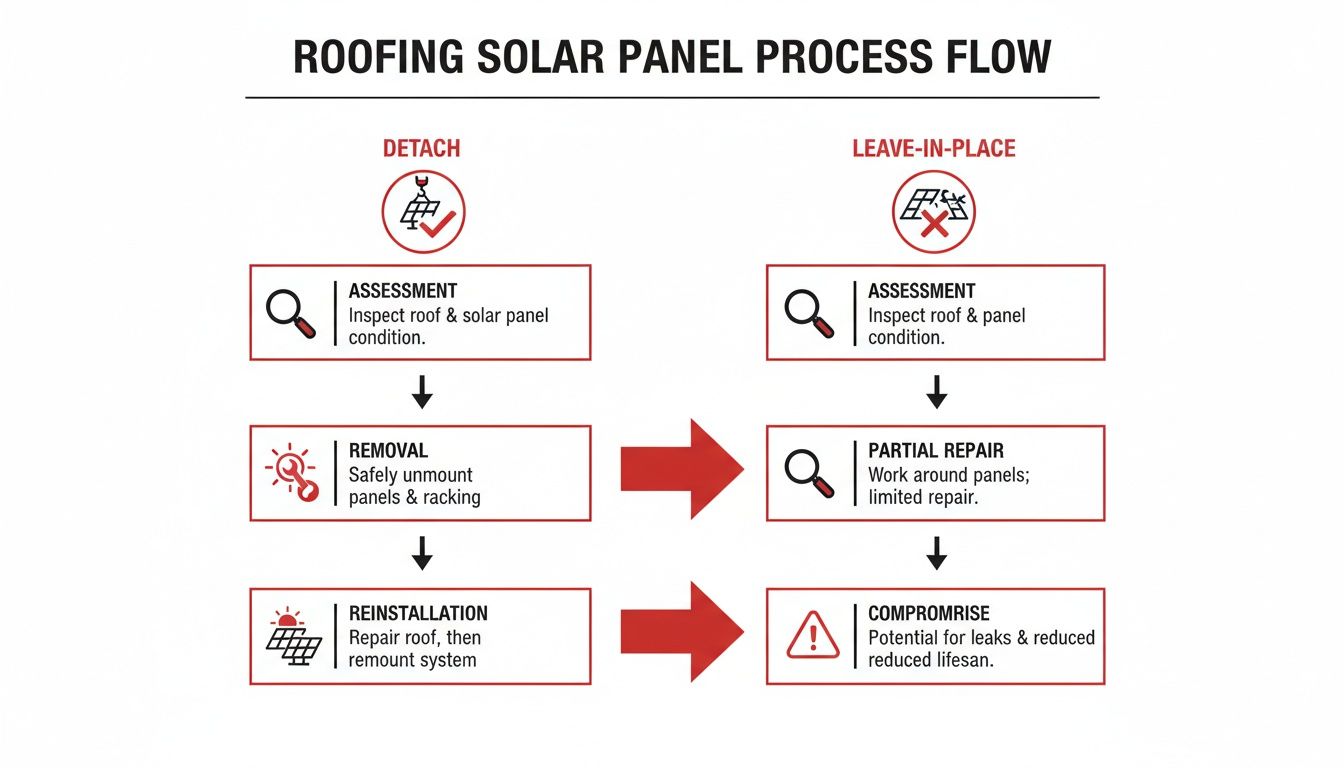
As you can see, the detach-and-reset method is the only professionally sound approach. It protects both your roof and your solar investment. Trying to work around the panels—the "leave-in-place" method—is just asking for leaks, structural problems, and voided warranties.
Phase 1: Initial Inspection and Planning
Everything kicks off with a thorough inspection. This is way more than a quick glance from the street. An expert needs to get up there and assess the health of your existing roof and the condition of your solar array. They're hunting for signs of storm damage, simple wear-and-tear, and any red flags with the panels or their mounting hardware.
Once the inspection is done, the project manager gets all the ducks in a row. If a storm is the culprit, this means working directly with your insurance company to get a claim opened and approved. They also handle the bureaucratic stuff, like pulling all the necessary city permits for both the roofing and the electrical work. It's a critical step for code compliance that less experienced contractors often miss.
Phase 2: The Solar Detachment
With the paperwork sorted, the first team to arrive will be the certified solar technicians. This is a job that demands precision and a strict safety protocol.
- System Decommissioning: First things first, they safely power down the entire solar system. This means flipping breakers and disconnecting the array from your home's grid to remove any risk of electric shock.
- Panel and Racking Removal: Next, they carefully unbolt and remove each solar panel. These things typically weigh 40-50 pounds apiece and are more fragile than you'd think. The crew will meticulously stack and store them in a safe spot on your property. Then, they'll disassemble the metal racking system that held them in place.
- Sealing Penetrations: As a final step, they temporarily seal all the penetration points where the mounting hardware went through the old roof. This is a crucial little detail that prevents any water from getting in while you're waiting for the roofers.
The solar detachment is a delicate operation. Rushing this or using unqualified labor is how panels get damaged and warranties get voided. It absolutely requires a team that lives and breathes solar systems.
Phase 3: The Roof Replacement
Now that the solar array is safely out of the picture, the roofing team has a clean slate to work with. This is key, as it allows them to do a proper, high-quality installation without having to cut corners or work around obstacles.
The crew starts by tearing off every last bit of the old roofing material, all the way down to the bare wooden decking. This step is non-negotiable because it's the only way to find and fix any hidden rot or damage to the foundation of your roof. Once the deck is prepped, they'll install the new underlayment, flashing, and finally, your new shingles.
This is also the perfect time to think about an upgrade. Here in Texas, swapping your old shingles for Class 4 impact-resistant shingles gives you far better protection against the next hailstorm. It can even land you a nice discount on your homeowner's insurance premium.
Phase 4: The Solar Reset and Final Commissioning
Once the new roof is on and has passed inspection, the solar technicians make their return trip to finish the job. This "reset" phase is every bit as important as the initial detachment.
The crew carefully measures and lays out the racking system on the brand-new roof, ensuring every single penetration is flawlessly sealed with high-grade, waterproof flashing. They then reinstall the panels, connect all the wiring, and run a full set of diagnostic tests.
The grand finale is recommissioning the system. They'll power everything back up, test the inverters, and verify that the array is generating electricity exactly as it should be. The last step is for your contractor to schedule a final inspection with the city to close out the permits. With that, your solar-powered roof replacement is officially complete, and your home is back to producing its own clean energy.
Navigating Costs and Insurance Claims
When you're staring down a roof replacement with solar panels, the first question on your mind is always the same: "What's this going to cost me?" It's a fair question, and the answer isn't as simple as a standard roof job. You're really looking at two separate, highly specialized projects happening back-to-back—the roof replacement and the solar panel "detach and reset."
The solar part of the job alone will typically run you between $2,000 to $6,000. This can shift depending on how big your system is, how complex the wiring is, and what kind of mounts are holding it all down. This price tag is directly tied to the overall cost of solar panels and battery system you've invested in.
Think of it as a specialized service fee to protect your power-generating asset. This cost covers the certified pros needed to safely power down, remove, store, and then perfectly reinstall your solar array. Trying to cut corners here with a crew that isn't solar-certified is just asking for cracked panels, voided warranties, and a system that never performs the same way again.
Understanding Your Insurance Coverage
For those of us in storm-prone areas like East Texas, your homeowner's insurance policy can be your best friend. After a nasty hail or wind storm, the big question is whether your policy will cover the solar detach-and-reset as part of the roofing claim.
Most of the time, the answer is yes. If the roof damage is from a covered event (like hail), then the costs necessary to complete that repair—including taking the solar panels off and putting them back on—should also be covered. But "most of the time" isn't a guarantee. Policies can be tricky.
You absolutely need to pull out your policy or call your agent to confirm your specific coverage for solar equipment. A roofing contractor who eats, sleeps, and breathes insurance claims can be an incredible ally in this fight.
Key Takeaway: Never assume you're covered. Always double-check if your policy includes "remove and reset" costs for solar panels. A seasoned contractor can help you read the fine print and talk turkey with your insurance adjuster.
The single best thing you can do to help your claim is to document everything. As soon as it's safe, get outside and take clear, well-lit photos of any damage to your roof, gutters, and the solar panels themselves. This is the hard evidence your adjuster needs to see to approve a full replacement.
The Financial Landscape of Solar and Roofing
The solar market is always on the move, especially here in Texas. While high financing rates caused a dip in residential solar installations nationwide one recent year, commercial solar is expected to jump 8%, and the industry is still growing at an average of 4% annually. Texas is leading the charge, adding a massive 5.5 GW of solar in the first half of a recent year alone as people look for stability from volatile energy prices.
For East Texas homeowners, this makes handling a roof replacement correctly even more critical. Each of those panels weighs 40-50 lbs, and if they're mishandled during the shingle swap, you risk cracking the delicate solar cells and kissing that 25-year warranty goodbye.
Smart Financing Options for Your Project
Even with a solid insurance check, you might have out-of-pocket costs. There's your deductible, and you might also want to pay for upgrades, like switching to truly hail-proof Class 4 impact-resistant shingles. Thankfully, good contractors offer financing options that make these costs manageable without having to empty your savings account.
Here’s what to look for in a good financing plan:
- Soft Credit Checks: You can see what you qualify for without dinging your credit score.
- No Prepayment Penalties: Gives you the freedom to pay off the loan ahead of schedule.
- No Home-Equity Requirements: Many modern financing plans are straightforward personal loans, so you don't have to put your house up as collateral.
These options let you get a necessary solar panel roof replacement done right away, protecting your home from more damage while spreading the cost out in a way that works for your budget. For a deep dive into the costs for the roofing part of the job, take a look at our guide on how much a new roof costs.
How To Choose The Right Contractor

When it's time for a roof replacement with solar panels involved, picking the right contractor is the single most important decision you'll make. This isn't just a standard roofing gig. It's a specialized, high-stakes project that lives at the intersection of two completely different trades: roofing and electrical.
Getting this choice wrong can be a nightmare. We’re talking voided warranties, permanent damage to your expensive solar array, and a brand-new roof that starts leaking years ahead of its time.
A lot of general roofers just aren't prepared for the delicate work of a solar detach-and-reset. They might try to patch around the panels (a terrible idea) or, more commonly, they’ll subcontract the solar work to the cheapest third party they can find. This leaves you, the homeowner, caught in the middle if anything goes wrong. You need one expert team, one point of contact, one company accountable for the whole job.
The Dangers Of An Unqualified Contractor
An inexperienced crew can create a domino effect of costly problems. Botching the solar panel removal can easily crack the delicate photovoltaic cells or damage the complex wiring, slashing your system's energy output.
Even worse is a clumsy reinstallation. If they don't seal the mounting hardware perfectly, they can turn your beautiful new roof into a sieve, creating dozens of tiny entry points for water.
These mistakes often don't show up for months—long after the checks have been cashed. When they do, you're left with a mess and two different companies blaming each other. That’s why you absolutely must vet a contractor’s specific, hands-on experience with solar roof projects. It's non-negotiable.
Your Essential Contractor Vetting Checklist
Before you even think about signing a contract, you need to ask the right questions. A true pro will have no problem giving you clear, confident answers to everything on this list.
- Do you handle the solar detach-and-reset in-house? This is the big one. The best companies use their own trained and certified solar technicians, not a random subcontractor. This means total accountability.
- Can you provide proof of insurance for both roofing and solar work? Don't just take their word for it. Ask to see their General Liability and Worker's Comp certificates and check that their policy specifically covers electrical and solar jobs.
- Are your solar technicians certified? Look for credentials from respected organizations like the North American Board of Certified Energy Practitioners (NABCEP). This is the gold standard for solar professionals.
- How many of these projects have you actually done? Experience is everything. Ask them for references from homeowners who had the exact same type of work done.
If a contractor gets defensive or gives you vague, roundabout answers to these questions, that's a massive red flag. Experts are proud of their qualifications and will gladly show you the paperwork to prove it.
The residential solar market is growing fast, with forecasts showing 6% yearly growth for the next five years. Since solar panels are built to last 25 years—often outliving the roof they sit on—the demand for contractors who can expertly handle a solar panel roof replacement is only going to increase. You can read more about this explosive industry growth from the analysts at Research Nester.
Look For A Partner, Not Just A Roofer
At the end of the day, you're not just hiring a roofer. You’re looking for a partner who understands how to protect the two most valuable systems on your home: your roof and your solar array.
This partner should be an expert in navigating insurance claims, pulling the correct permits for both trades, and standing behind their work with a solid, all-inclusive warranty. Choosing an integrated company that manages everything under one roof is the only way to get real peace of mind and a flawless, long-lasting result.
Your Top Questions About Solar Roof Replacements, Answered
Juggling a roof replacement when you have solar panels can feel overwhelming. After all, you're dealing with two of your home's biggest and most important assets. It's completely normal to have a lot of questions.
We've been through this process with countless homeowners, and we've heard it all. To give you some peace of mind, here are the straight-up answers to the questions that come up most often.
Does My Homeowners Insurance Cover The Solar Detach and Reset?
This is usually the first thing homeowners ask, especially here in North Texas where storm season is a way of life. For the most part, the answer is yes. If a covered event like a hailstorm or high winds damages your roof and necessitates a replacement, your insurance policy should also cover the costs required to make that repair happen—including detaching and resetting your solar panels.
Now, "should be" isn't a guarantee. Insurance policies are notoriously tricky, and some have specific exclusions. It's absolutely crucial to pull out your policy or call your agent to confirm exactly what's covered. Working with a contractor who genuinely understands storm damage claims is a huge advantage here. They can help you navigate the fine print and talk to the adjuster in their own language.
Will A New Roof Mess Up My Solar Panel Warranty?
Not if it's done right. In fact, a professional detach-and-reset is the only way to protect your solar panel warranty during a roof replacement. Panel manufacturers have very specific rules about how their equipment can be handled, and they don't take kindly to shortcuts.
Your warranty could be voided if:
- Someone who isn't certified or qualified touches your panels.
- The panels get damaged from being removed, stored, or reinstalled improperly.
- The mounting system is put back incorrectly, which can put a dangerous amount of stress on the panels.
This is exactly why you can't compromise on hiring a contractor with a dedicated, certified solar team. They’re trained to follow the manufacturer's playbook to the letter, which keeps your warranty safe and sound.
The biggest threat to your warranty is a roofer who claims they can just "work around" the panels. That's a massive red flag that will almost certainly void both your roofing and solar warranties.
How Long Does This Whole Process Actually Take?
A solar roof replacement is a bit more of a production than a standard re-roof, so you can expect it to take a little longer. Every project is different depending on the size of your system and the complexity of your roof, but a typical job is usually spread out over a week or two.
Here’s a realistic timeline:
- Solar Detach: It takes a certified crew about 1 full day to safely power down the system, disconnect everything, and remove the panels and racking.
- Roof Replacement: The new roof installation itself usually takes 1-3 days, depending on how big and steep your roof is.
- Solar Reset: Putting it all back together takes another 1 full day. This involves reinstalling the mounting hardware, panels, and getting the system fired back up.
Good coordination is everything. Things can get held up waiting on insurance approvals or city inspections. A company that manages the entire project under one roof can keep things moving smoothly and minimize the time your system is offline.
Can I Upgrade My Solar System While We're At It?
You bet. This is actually the perfect time to make improvements. Since the whole system is already on the ground, it’s the most efficient and affordable opportunity you'll have to upgrade.
Here are a few popular upgrades homeowners go for:
- Adding More Panels: If your family has grown or you got an electric vehicle, now is the time to boost your power production.
- Installing a Battery: Want to keep the lights on during a power outage? Adding a battery storage system gives you true energy independence.
- Upgrading to Microinverters: If you have trees that cast shadows on your roof, microinverters can significantly improve your system's overall efficiency.
Just talk to your contractor about your goals before the project starts. They can walk you through the costs and benefits and build any upgrades right into the master plan.
What If My Original Solar Company Went Out Of Business?
Unfortunately, this happens more than you'd think. We've seen a lot of solar installers close up shop, leaving their customers in a tough spot. If your original company is gone, you’ll need to find a contractor who is an expert in both roofing and solar, specifically one that services these "orphan" systems.
An experienced company will have certified techs who know how to work on all kinds of solar equipment, no matter who put it in. They can handle the detach-and-reset, make any needed repairs, and become your trusted partner for any future maintenance. Speaking of upkeep, you might also have questions about long-term care. Professional solar panel cleaning services are a great way to keep your panels working at peak performance for years to come.
A solar roof replacement has a lot of moving parts, and you need a team that's an expert in all of them. At Hail King Professionals, we handle the entire project with our own in-house, certified technicians. You get one point of contact and total accountability from start to finish. If you're in the Dallas-Fort Worth or East Texas area and need a new roof, contact us today for a free, no-obligation inspection and a clear plan to protect your home and your solar investment.