


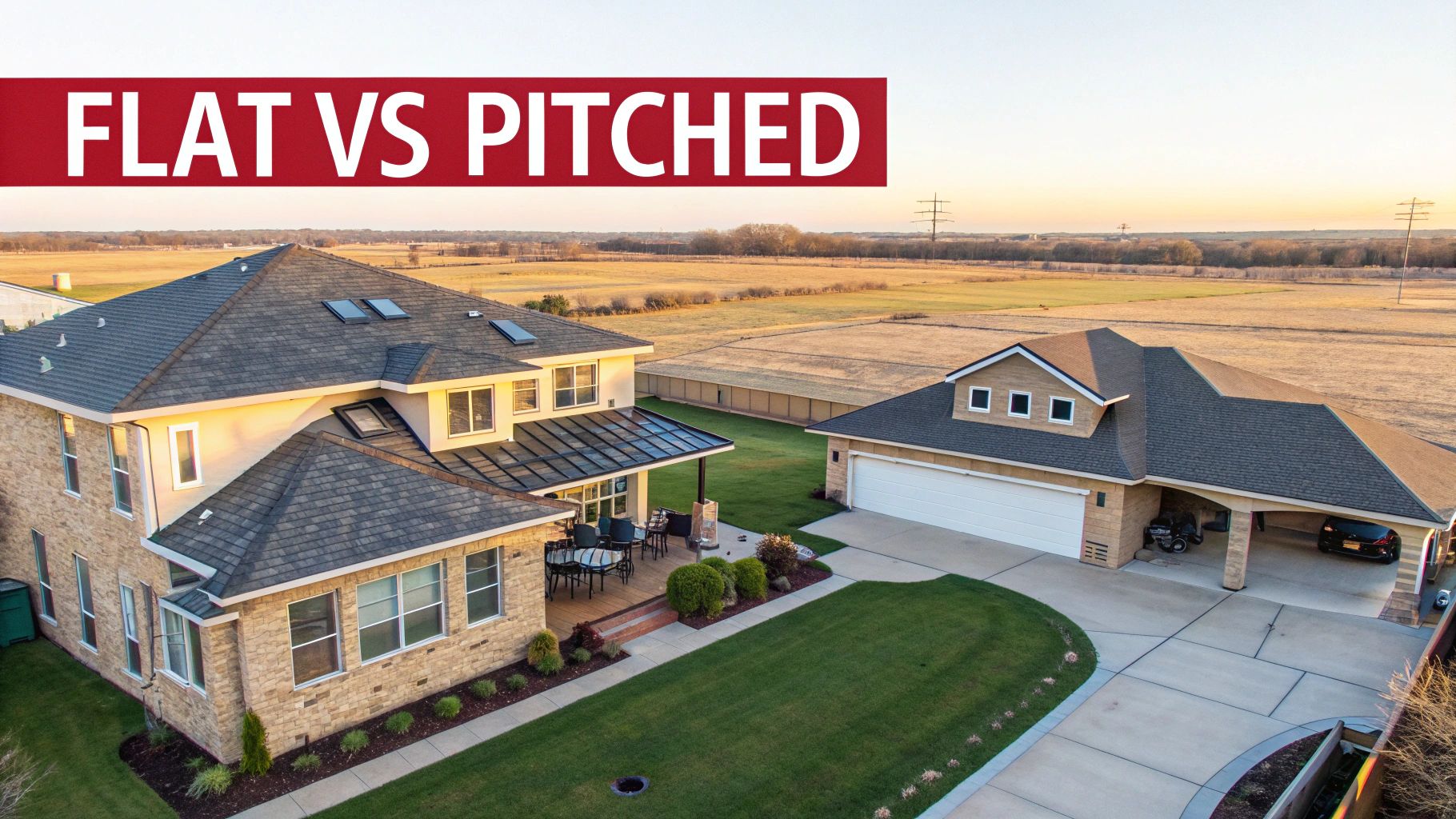
Flat Roof Vs Pitched Roof A Definitive Guide For Texas Homes
At its core, the choice between a flat and pitched roof comes down to a simple trade-off. Pitched roofs have been the go-to for centuries because they masterfully use gravity to shed water, which translates to incredible longevity. On the other hand, flat roofs are all about maximizing usable space, offering a clean, modern look that’s become a staple for commercial buildings and contemporary homes.
Ultimately, your decision hinges on what you value more: the classic, time-tested resilience of a sloped design or the functional, stylish appeal of a flat surface.
Choosing The Right Roof For Your Texas Property
Here in Texas, the flat vs. pitched roof debate isn't just about looks—it's a critical decision driven by our one-of-a-kind climate. For anyone with property in Dallas-Fort Worth or out in East Texas, you know exactly what that means: intense sun, torrential downpours, and the constant threat of severe storms. How your roof handles those conditions is everything.
This guide is designed to give you a straight-up comparison, cutting past the surface-level aesthetics to get into the practical realities of owning each type of roof in our area. We’ll break down the real differences in materials, installation costs, long-term value, and what it actually takes to maintain them. Most importantly, we'll look at how each one holds up when the hail and high winds inevitably roll through.
To get us started, here’s a quick overview of the main distinctions. Think of this table as a cheat sheet to frame the conversation before we get into the nitty-gritty for your home or commercial building.
Quick Look Flat Vs Pitched Roof Key Differences
| Feature | Flat Roof | Pitched Roof |
|---|---|---|
| Primary Advantage | Usable space and modern look | Superior water drainage |
| Common Use Cases | Commercial buildings, modern homes | Most residential properties |
| Initial Cost | Generally lower | Typically higher |
| Typical Lifespan | 15-30 years | 20-50+ years |
| Maintenance Needs | Regular drain checks, seam inspections | Gutter cleaning, shingle inspection |
| Storm Resilience | Vulnerable to ponding water and uplift | Excellent at shedding hail and rain |
| Usable Space | Ideal for HVAC, patios, solar panels | Limited to attic or storage space |
With that baseline established, let's dig a little deeper into what truly sets these two styles apart.
Understanding The Foundational Differences
The most fundamental difference is how each roof deals with the elements—especially water. Pitched roofs have been the standard in residential building for a reason: their ability to shed water is unmatched. In fact, pitched roofs are found on over 85% of single-family homes built since 1950, a testament to how effectively their slopes drain rainwater and prevent the standing water issues that can plague flat roofs. Industry experts have documented the history and benefits of various roof slopes for decades.
A pitched roof is designed to be a shield. Its angle deflects rain, hail, and debris, actively moving them away from your home. A flat roof, however, is engineered more like a basin; it depends entirely on a complex drainage system to manage water. This one design difference dictates everything else, from the materials you can use to the maintenance you'll have to perform.
Comparing Installation Costs And Long-Term Value
When you're trying to decide between a flat or pitched roof, it's easy to get fixated on the initial price tag. But honestly, that upfront number is just the beginning of the story. A truly smart decision means looking at the bigger financial picture—the total cost to own that roof over its entire lifetime.
Right out of the gate, a flat roof usually looks like the more affordable option. This makes sense when you think about it: the framing is less complex, installation is generally faster, and materials like TPO or EPDM membranes are pretty cost-effective. For anyone building a modern home or a commercial property, those upfront savings can be a huge win.
On the other hand, a pitched roof will almost always cost more to install. You're paying for a more intricate truss system, more labor hours on the job, and simply a larger volume of materials, whether you choose asphalt shingles or metal panels. The trade-off, however, is that this higher initial spend is often an investment in long-term resilience and fewer headaches down the road.
Beyond The Initial Quote: Long-Term Financials
The real worth of any roof reveals itself over decades. That lower initial cost for a flat roof can start to look different when you factor in more frequent or specialized maintenance. For instance, keeping the drains completely clear to prevent water from ponding is non-negotiable. That task alone comes with a cost, whether it's your own time or paying a pro to handle it.
Pitched roofs have a natural advantage here. Gravity is your best friend, doing the heavy lifting of shedding water and debris away from your home. This simple design feature drastically cuts down the risk of leaks and the kind of water damage that can lead to some of the most expensive repairs a homeowner will ever face.
The core financial trade-off is clear: A flat roof saves you money on day one, but a pitched roof is engineered to save you from costly water-related problems over its lifetime. Your long-term budget and risk tolerance will guide which path makes more sense for your Texas property.
Data backs this up. A 2022 RSMeans report found that in major markets like we have here in Texas, the initial construction for flat roofs can be 30-50% lower than for pitched systems. But that gap can shrink. In areas that see a lot of rain, the necessary upgrades to a flat roof's drainage system can easily add thousands to the initial quote.
Factoring In Repairs And Replacement Cycles
How long your roof lasts has a direct impact on your wallet. A well-installed pitched roof with quality architectural shingles can easily give you 25-30 years of service. Step up to a standing seam metal roof, and you could be looking at 50 years or more. That extended lifespan means you might only have to budget for one full roof replacement in your lifetime.
Flat roofing systems generally have a shorter run, typically lasting somewhere in the 15-25 year range. While modern materials like TPO are incredibly tough, they're just more vulnerable to punctures and seam failures over time, especially under our intense Texas sun. This means you could be looking at paying for two flat roof replacements in the same time you'd have one pitched roof.
To give you a clearer picture of what these costs look like over the long haul, we've put together a breakdown for a typical Texas property over a 30-year period.
Roofing Cost Breakdown: Initial Vs. Lifetime Investment
This table compares not just the upfront installation expense but also the anticipated repair and total lifecycle costs for common flat and pitched roofing systems.
| Cost Factor | Flat Roof (TPO/EPDM) | Pitched Roof (Asphalt Shingle) | Pitched Roof (Metal) |
|---|---|---|---|
| Initial Installation | $12,000 – $18,000 | $15,000 – $25,000 | $25,000 – $45,000 |
| Typical Repairs | Seam/Flashing Repair ($400 – $1,200), Drain Cleaning ($200 – $500/yr) | Shingle Replacement ($300 – $1,000), Gutter Maintenance ($150 – $400/yr) | Panel/Sealant Repair ($500 – $1,500) |
| Projected 30-Year Cost | $25,000 – $40,000+ (Includes potential replacement) | $18,000 – $30,000 | $26,000 – $48,000 |
As you can see, the story changes dramatically over time. The long-term value really comes down to choosing the right system for your specific property and, most importantly, committing to professional maintenance. A cheap, poorly done installation on any roof is a surefire recipe for expensive problems later on.
For a deeper dive into what goes into these figures, check out our guide on how much a new roof costs.
Analyzing Durability And Maintenance In Texas Weather
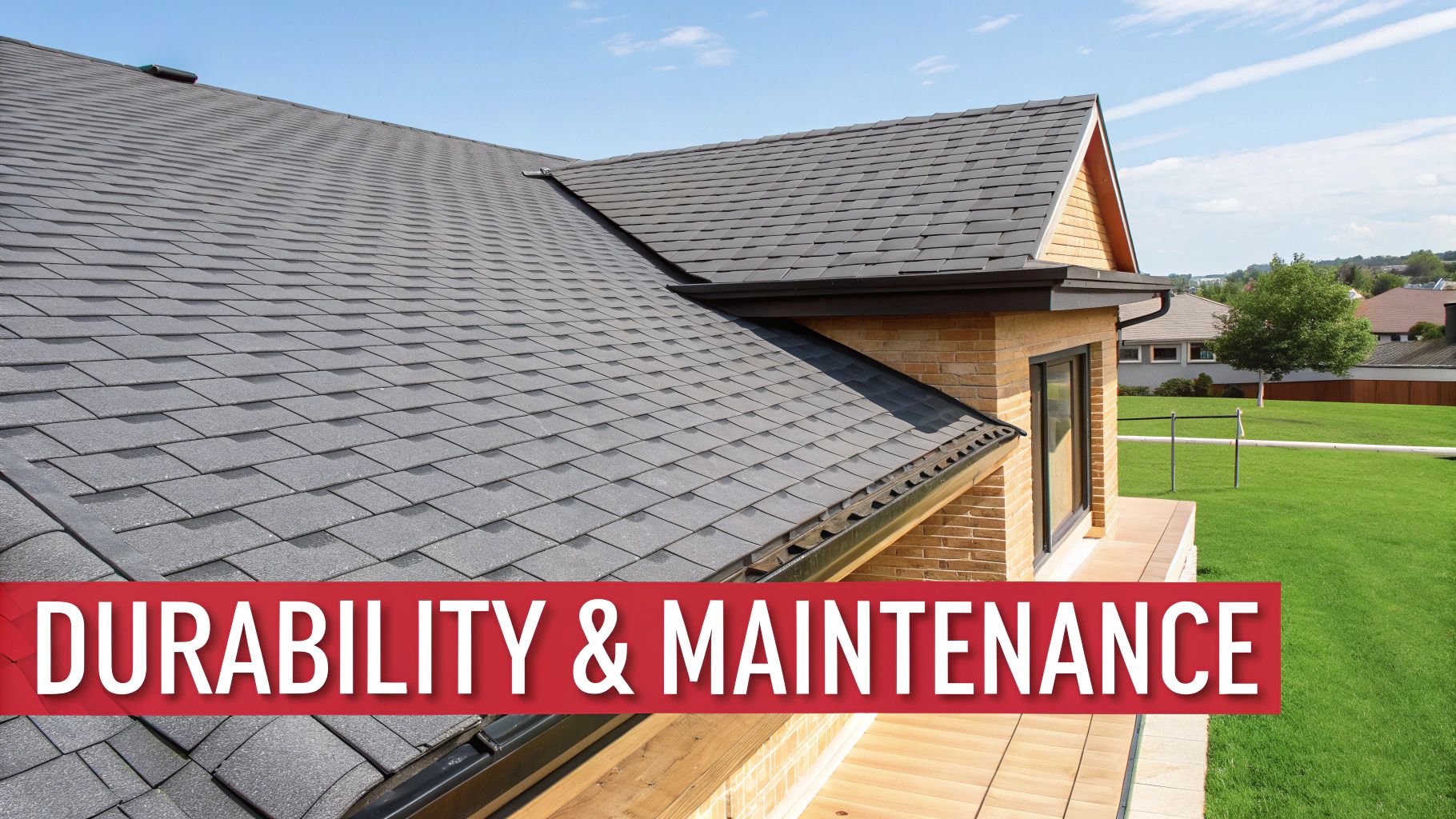
In Texas, we don't measure a roof's performance over a calm, predictable year. It proves its worth during violent thunderstorms, under a blistering sun, and against punishing hail. This is where the real-world durability and maintenance needs in the flat roof vs pitched roof debate become critical for any property owner. How well your roof stands up to our demanding climate directly impacts its lifespan, how often you’ll be calling for repairs, and what it will ultimately cost you.
Pitched roofs come with a built-in defense mechanism against Texas weather: gravity. That slope isn't just for looks; it's engineered to shed water, hail, and debris quickly and efficiently. This simple design feature drastically cuts down the risk of water intrusion, which is the root cause of most catastrophic roofing failures I see.
On the other hand, a flat roof is completely reliant on its membrane and drainage system to do the job. While modern materials like TPO (Thermoplastic Olefin) are incredibly durable and great at reflecting heat, they're much more vulnerable to standing water. Just one clogged drain during a Dallas downpour can lead to ponding, putting immense stress on seams and accelerating material breakdown under the intense UV exposure that always follows the rain.
Lifespan Expectations And Material Performance
When you're thinking about longevity, the materials you choose are just as important as the roof's design. A well-installed pitched roof with high-quality architectural shingles can easily last 20 to 30 years. If you upgrade to a premium material like a Class 4 impact-resistant shingle or a standing seam metal system, you could be looking at a lifespan of 40, 50, or even 70 years.
Flat roofing systems, while tough, generally have a shorter operational life. Here’s what we typically see:
- TPO Membranes: These usually last 15 to 30 years. They're popular for their energy efficiency and strong, welded seams.
- EPDM (Rubber) Membranes: You can get 20 to 35 years out of these. They're known for durability but can absorb a lot of heat if they aren't coated.
- Modified Bitumen: This is an older, reliable technology that often gives you 10 to 20 years of service.
The core difference in durability comes down to managing stress. A pitched roof deflects environmental stressors like hail and rain, while a flat roof must endure them head-on. This constant exposure is why seam integrity and membrane durability are paramount for flat systems.
Looking at long-term maintenance and durability, pitched roofs have a clear edge, showing 35% lower lifetime repair costs in one global study. In a hail-prone area like DFW, which can get over 20 storm days a year, a pitched roof's ability to shed debris faster can lower mold risks by 50% and reduce insurance claims by as much as 28%. These aren't just guesses; they're insights based on extensive data.
Comparing Routine Maintenance Demands
The kind of upkeep each roof type needs is fundamentally different because their weak points are different. Both require a proactive approach to stay in top shape, but where you focus your efforts varies quite a bit.
Pitched Roof Maintenance Checklist:
- Gutter Cleaning: Do this at least twice a year. Clogged gutters are a leading cause of fascia rot and water damage because they stop water from being channeled away from your foundation.
- Shingle Inspection: Give your roof a once-over annually, and always after a big storm. Look for cracked, curling, or missing shingles.
- Flashing and Sealant Checks: Pay close attention to the areas around chimneys, vents, and valleys. These are common spots for wear and tear that can lead to leaks.
Flat Roof Maintenance Checklist:
- Drainage System Inspection: Check your scuppers and internal drains quarterly. They must be completely clear of leaves, dirt, and other debris to prevent ponding.
- Membrane Surface Scan: Walk the roof regularly to look for punctures, blisters, or tears in the membrane. These can be caused by anything from falling branches to foot traffic.
- Seam and Flashing Integrity: Be meticulous about inspecting all seams. In my experience, these are the most common points of failure and leaks. If you think you have a problem, knowing what you should do if your roof is leaking can save you a lot of trouble.
Ultimately, maintaining a pitched roof is about preserving a system designed for resilience. Maintaining a flat roof is about preventing failures in a system that demands flawless performance to stay watertight. The right choice for you depends on your tolerance for proactive maintenance and the specific risks your Texas property faces every year.
Navigating Storm Resilience, Insurance, And Building Codes
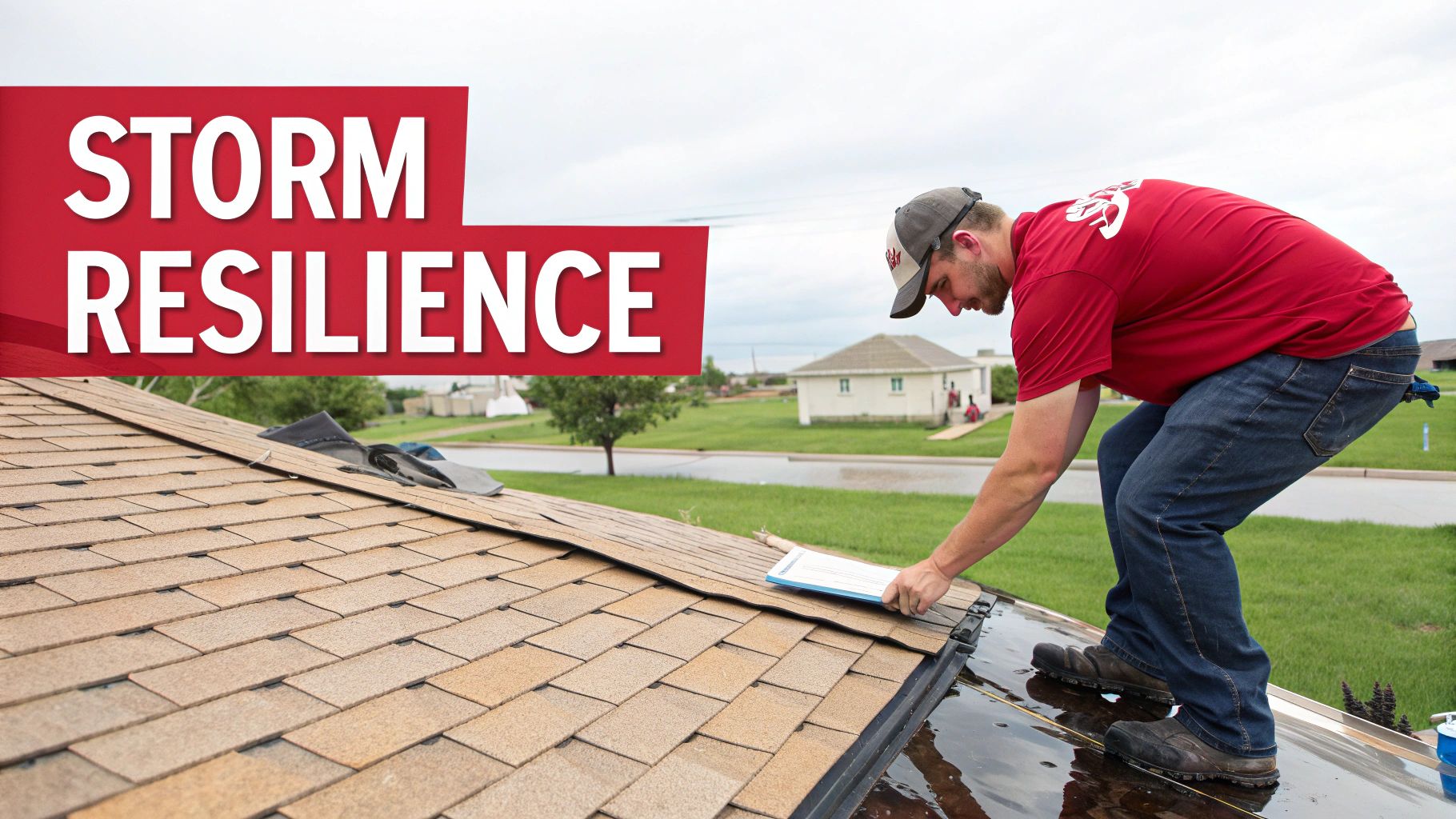
In Texas, a roof is far more than just a cover; it’s your building's primary shield against some of the most punishing weather in the country. How a roof handles a severe hail or wind storm has a direct ripple effect on your insurance premiums and whether you’re compliant with local building codes. This is where the flat roof vs pitched roof debate gets serious, with real money on the line.
Pitched roofs have a built-in advantage. Their slope helps deflect hail and shed high winds naturally. Hailstones almost never strike a sloped roof at a direct 90-degree angle, which dramatically lessens the impact and the potential for damage. This is precisely why materials like Class 4 impact-resistant shingles perform so well on pitched designs—you can often hear the hail just bounce right off.
Flat roofs, on the other hand, take the full brunt of a hailstorm head-on. Every single hailstone is a direct hit. This can lead to bruising, punctures, or cracks in the roofing membrane, creating weak spots that water will eventually find. High winds also pose a unique threat by creating uplift pressure along the edges and corners, which can peel the membrane back if it isn't perfectly sealed and secured.
Insurance Implications: A Texas Reality
Insurance companies in high-risk zones like North Texas know these performance differences inside and out. The type of roof you choose can directly influence your premiums, your eligibility for coverage, and how smoothly a claim gets processed.
Carriers are more than willing to offer significant discounts for properties that demonstrate superior storm resilience. A pitched roof with Class 4 shingles is the gold standard here. Because these systems are proven to handle major hail events, they lower the insurer's risk—and you see the benefit in the form of lower annual premiums.
Conversely, some flat roofing systems can be seen as a greater liability, particularly older ones or those with a spotty maintenance record. The risk of widespread water damage from a single undetected puncture or a clogged drain during a downpour makes insurers wary. This can translate to higher premiums or even make it tough to get coverage for certain flat roof materials.
Your roof's design and material are a direct negotiation with your insurance provider. Investing in a system proven to withstand Texas weather, like a pitched roof with Class 4 shingles, is one of the most effective ways to lower your long-term cost of homeownership.
Adhering To Local Building Codes
Beyond storms and insurance, every new roof has to meet strict local building codes. These aren't just suggestions; they are legal standards put in place to ensure safety and structural integrity. Codes across DFW and East Texas govern everything from the specific fasteners we can use to the roof's required wind uplift resistance.
For instance, codes dictate exactly how a roof system must be anchored to the building to handle the wind speeds we see in this region. For pitched roofs, that means following a precise nailing pattern. For flat roofs, it involves specific adhesion techniques and mechanical fastening patterns to fight wind uplift.
Our crew ensures every single installation, flat or pitched, is 100% code-compliant. We take care of pulling all the necessary permits and scheduling inspections, so you can be confident your new roof is not only built to last but is also fully approved. This commitment to code is non-negotiable—it guarantees the safety, longevity, and insurability of your property. Choosing a contractor who knows these local rules is just as critical as choosing the right material.
Beyond Shelter: How Roof Design Impacts Your Lifestyle and Solar Potential
When you're weighing a flat roof against a pitched one, it's easy to get bogged down in technical details like drainage and materials. But the choice you make has a much bigger impact on your property's day-to-day use, its look, and even its ability to harness solar energy. Your roof's design isn't just about keeping the rain out; it dictates how you can use the space and defines your home's entire architectural character.
For anyone with a commercial building or a modern home, a flat roof presents a massive opportunity: more usable space. It’s not just a roof; it’s a platform. Think of it as adding an extra outdoor floor to your property.
This opens up a world of possibilities that you just don't get with a traditional sloped design.
- Rooftop Patios and Gardens: In tight urban spots where a backyard is a luxury, a flat roof can become a private outdoor oasis.
- HVAC and Equipment Housing: On commercial buildings, flat roofs are the go-to place for stashing bulky HVAC units and other equipment, keeping them hidden and freeing up valuable ground space.
- Green Roof Systems: These surfaces are ideal for installing "living roofs," which do wonders for insulation, help manage stormwater runoff, and can even create a small habitat for local wildlife.
A pitched roof, on the other hand, is all about creating that classic, traditional look. Its familiar, sloping lines are a huge part of what gives a house curb appeal. While you can't host a party up there, a pitched roof creates a different kind of valuable space on the inside—the attic. This area is perfect for storage or can even be finished out to add more living space to your home's interior.
What About Solar? A Critical Consideration
As more Texas property owners go solar, the roof's design has become a make-or-break factor for both the efficiency and cost of the installation. Both roof types can accommodate solar panels, but how they do it—and how well—is a different story.
A flat roof is essentially a blank slate. Solar installers can use ballasted mounting systems that don't even have to penetrate the roof membrane. This gives them the freedom to tilt and orient the panels at the perfect angle to capture the maximum amount of sunlight all day long, no matter which way your building faces. That flexibility is a huge win for energy production.
Mounting solar panels on a pitched roof is a bit more rigid. The panels have to follow the existing slope and direction of the roof itself. If you're lucky enough to have a south-facing roof, this works out great. But if your roof faces east or west, your production will be less than optimal. The installation also involves drilling dozens of holes through your roofing material to bolt down the racks, and every single one of those penetrations is a potential future leak if it's not sealed flawlessly.
When it comes to solar, a flat roof gives you total control to optimize panel placement for maximum energy output. A pitched roof is simpler to install on but locks you into its existing angle and direction, which might not be the best for solar efficiency.
Dealing with Solar When It's Time for a New Roof
If you already have solar panels, replacing your roof adds a crucial step to the process. You can't just work around the panels. The whole system has to be professionally taken down and then put back up after the new roof is on. This process is known in the industry as a solar detach-and-reset.
Trying to DIY this or hiring a roofer who isn't an expert is asking for trouble. You could easily void the warranties on your expensive solar panels and your brand-new roof. Worse, if the system is reinstalled incorrectly, you could be looking at serious electrical hazards or major roof leaks down the road.
We're pros at handling the solar detach-and-reset process seamlessly. Our trained teams carefully disconnect and remove your solar array, work in sync with our roofers during the replacement, and then reinstall your panels exactly to the manufacturer's specs. This keeps all your warranties intact and ensures your system works just as it should, giving you complete peace of mind. For any solar-powered home, finding a contractor who truly understands this process is a critical part of the flat roof vs pitched roof decision.
How To Make The Right Choice For Your Property
Choosing between a flat and a pitched roof really boils down to what you need your property to do. It's a classic trade-off: do you want to maximize usable space, or do you need the proven, weather-shedding performance of a traditional roof? There’s no single right answer—it all depends on your goals, your budget, and the realities of our Texas climate.
For Commercial Vs. Residential Properties
If you're managing a commercial building, the choice is often pretty clear. A flat roof is a workhorse, giving you a perfect, out-of-the-way spot for bulky HVAC units and other equipment. This frees up valuable ground space and keeps things tidy. The lower initial installation cost is also a huge plus for large buildings where every dollar counts.
For a homeowner in the DFW suburbs, the math is completely different. A flat roof can be a stunning architectural statement on a modern home, giving it that sleek, minimalist vibe and maybe even opening up the possibility of a rooftop deck. But for the vast majority of traditional homes around here, a pitched roof is still the champion. Its ability to shrug off our torrential rains and fend off hail is second to none, which often translates to better long-term value and even lower insurance premiums.
A Framework For Your Decision
To help you cut through the noise, this guide can help you visualize the best path forward based on what matters most to you—whether that's extra space, a certain look, or solar panel efficiency.
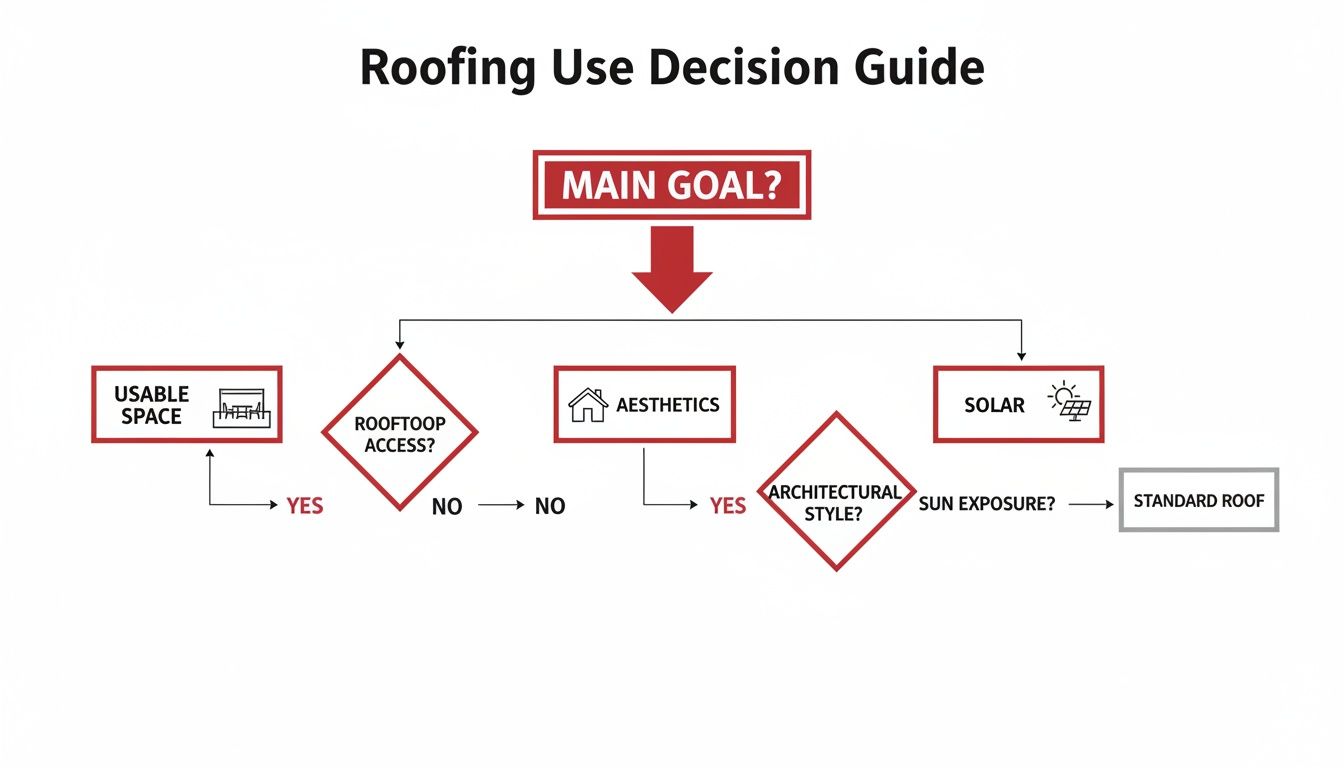
As you can see, if usable rooftop space is your number one priority, a flat roof is the obvious pick. On the other hand, if you're focused on classic curb appeal and maximum storm resilience, a pitched roof is almost always the way to go.
Ultimately, the best roof isn't just about the style—it's about a quality installation with the right materials. A professional inspection is the final, crucial step to get a real handle on your property's specific needs, from its underlying structure to its drainage plan. Part of that is figuring out the scope of the work, too. You can learn more about deciding between roof replacement or repair in our guide.
Get in touch for a free, no-nonsense inspection. We'll give you a clear, expert recommendation designed to protect your investment for years to come.
Frequently Asked Questions
When you're trying to decide between a flat or pitched roof, a lot of questions pop up, especially with Texas weather in the mix. Here are some straight answers to the questions we hear most often from property owners, designed to help you nail down those final details.
Which Roof Type Is Better for Heavy Rain in East Texas?
Hands down, pitched roofs are better built to handle the kind of heavy rainfall we see in East Texas. The slope is designed to use gravity to its advantage, channeling water off your roof quickly and efficiently. This simple design drastically cuts down the risk of pooling water that can lead to leaks.
Modern flat roofs do have good drainage systems, like scuppers and internal drains, but they need you to stay on top of maintenance. If just one drain gets clogged, you can end up with a massive puddle sitting on your roof, stressing the membrane and begging for a leak. For true peace of mind during a Texas downpour, a well-built pitched roof is the most reliable choice.
Can I Install Solar Panels on Any Roof Type?
Yep, you can put solar panels on either a flat or a pitched roof, but how it's done—and how well it works—is a different story. Flat roofs actually give you more control. Installers can angle and position the panels perfectly to catch the most sun throughout the day.
On a pitched roof, the panels have to follow the existing slope. If your roof doesn't happen to face south, you might not get the best energy production. Even more important: if you already have solar and your roof needs replacing, you'll need a specialized solar detach-and-reset service. It's the only way to make sure both your roofing and solar warranties stay intact.
A Quick Note on Insurance: Your roof's design has a direct line to your insurance premiums. In hail-heavy zones like DFW, insurers often give big discounts for roofs that can prove their storm-readiness. A pitched roof with Class 4 impact-resistant shingles is a perfect example, as it dramatically lowers the chances of an expensive hail damage claim.
How Does My Roof Choice Affect Property Insurance Rates in DFW?
Your insurance agent is definitely looking at your roof type. Some flat roof systems can be seen as higher risk due to potential issues like ponding water or vulnerability to wind uplift, and that can sometimes nudge your rates up.
That's why we always tell clients to talk to their insurance agent about material choices, especially any Class 4 options. They can help you figure out which combination of roof style and material will give you the best protection for the best price.
Is a Flat Roof Cheaper Than a Pitched Roof in the Long Run?
A flat roof almost always costs less to install upfront, but that’s not the whole story. To get a real sense of the cost, you have to look at the total cost of ownership—that means factoring in every repair, all the maintenance, and the eventual replacement.
A pitched roof, especially one built with lasting materials like metal or high-end asphalt shingles, requires a bigger investment at the start. But its longer lifespan and minimal maintenance needs often make it the more economical option when you look at the cost over 20 or 30 years. It really all comes down to the quality of the materials you choose and the skill of the crew putting it on.
Ready to get a clear answer for your property? The team at Hail King Professionals provides free, expert inspections to help you make a confident, informed decision. Get your free, same-day inspection and quote today!