
A Guide to the Top 10 Roofing System Types for DFW Homes in 2026
Choosing a new roof in Dallas-Fort Worth or East Texas is a significant investment, driven by intense heat, hailstorms, and the need for long-term value. With countless roofing system types available, it's easy to feel overwhelmed. This guide cuts through the noise, offering a comprehensive roundup of the top residential and commercial options, from budget-friendly asphalt shingles to 100-year slate roofs.
We'll break down the pros, cons, costs, and critical Texas-specific considerations for each system, providing the clarity you need to protect your home or business. Whether you're dealing with a hail damage claim or planning a proactive upgrade, this is your starting point for making an informed, confident decision.
This exhaustive listicle provides a clear, practical roadmap to understanding the materials that will protect your property for decades. You will learn about the distinct advantages of various systems, including:
- Cost-Effectiveness vs. Longevity: Compare the upfront cost of asphalt shingles against the multi-generational lifespan of materials like slate and metal.
- Storm Resilience: Discover why Class 4 impact-resistant shingles are a vital consideration in "Hail Alley" and how certain metal roofs withstand high winds.
- Energy Efficiency: Understand how reflective TPO membranes and advanced roof coatings can lower your energy bills during brutal Texas summers.
- Maintenance Needs: Learn the upkeep requirements for each system, from the minimal care needed for metal to the specialized attention required for wood shakes.
- Insurance and Resale Value: Gain insights into how your choice impacts insurance premiums, claims, and your property's overall market value.
By the end of this guide, you will have the detailed information necessary to select the ideal roofing system for your specific needs, budget, and local climate challenges.
1. Asphalt Shingle Roofing (Fiberglass Base, Laminated/Architectural)
Asphalt shingles are the most dominant of all roofing system types in North America, particularly for residential properties. This system consists of a fiberglass mat core coated with waterproof asphalt and topped with a layer of ceramic granules that protect against UV radiation and add color. Their widespread adoption is due to an accessible price point, ease of installation, and a versatile aesthetic that complements various architectural styles.
Modern asphalt shingles come in two primary designs: traditional 3-tab shingles and the increasingly popular laminated (or architectural) shingles. While 3-tab shingles offer a flat, uniform appearance and are cost-effective for new construction, architectural shingles feature multiple layers bonded together, creating a dimensional, textured look that often mimics more expensive materials like wood shake or slate.
Why It's a Top Choice in Texas
For homeowners in Dallas-Fort Worth and East Texas, asphalt shingles provide a reliable and tested solution against regional weather challenges. The fiberglass base offers excellent fire resistance, a crucial benefit in hot, dry climates. Furthermore, the development of specialized shingles makes them highly adaptable to local conditions.
- Impact Resistance: Many leading manufacturers, such as GAF, CertainTeed, and Owens Corning, offer Class 4 impact-resistant shingles. These are specifically engineered to withstand hail, a frequent threat in North Texas. Installing these can often lead to significant discounts on homeowner's insurance premiums.
- Algae Resistance: The high humidity in East Texas can promote the growth of blue-green algae, leaving unsightly black streaks. Shingles infused with copper granules are designed to inhibit this growth, preserving your home's curb appeal.
Pro Tip: Proper attic ventilation is non-negotiable in Texas. Without it, heat buildup can bake shingles from below, drastically shortening their lifespan from an expected 20-25 years to as little as 10-15 years. Ensure your roofing contractor performs a ventilation calculation to guarantee adequate airflow.
2. Metal Roofing (Standing Seam and Exposed Fastener, Aluminum/Steel)
Metal roofing has surged in popularity beyond agricultural and commercial buildings, becoming a premium choice for residential properties due to its exceptional durability and energy efficiency. This system uses panels made from aluminum, galvanized steel, or galvalume, offering a lightweight yet incredibly strong barrier against the elements. Its ability to reflect solar radiant heat makes it one of the most energy-efficient roofing system types available.
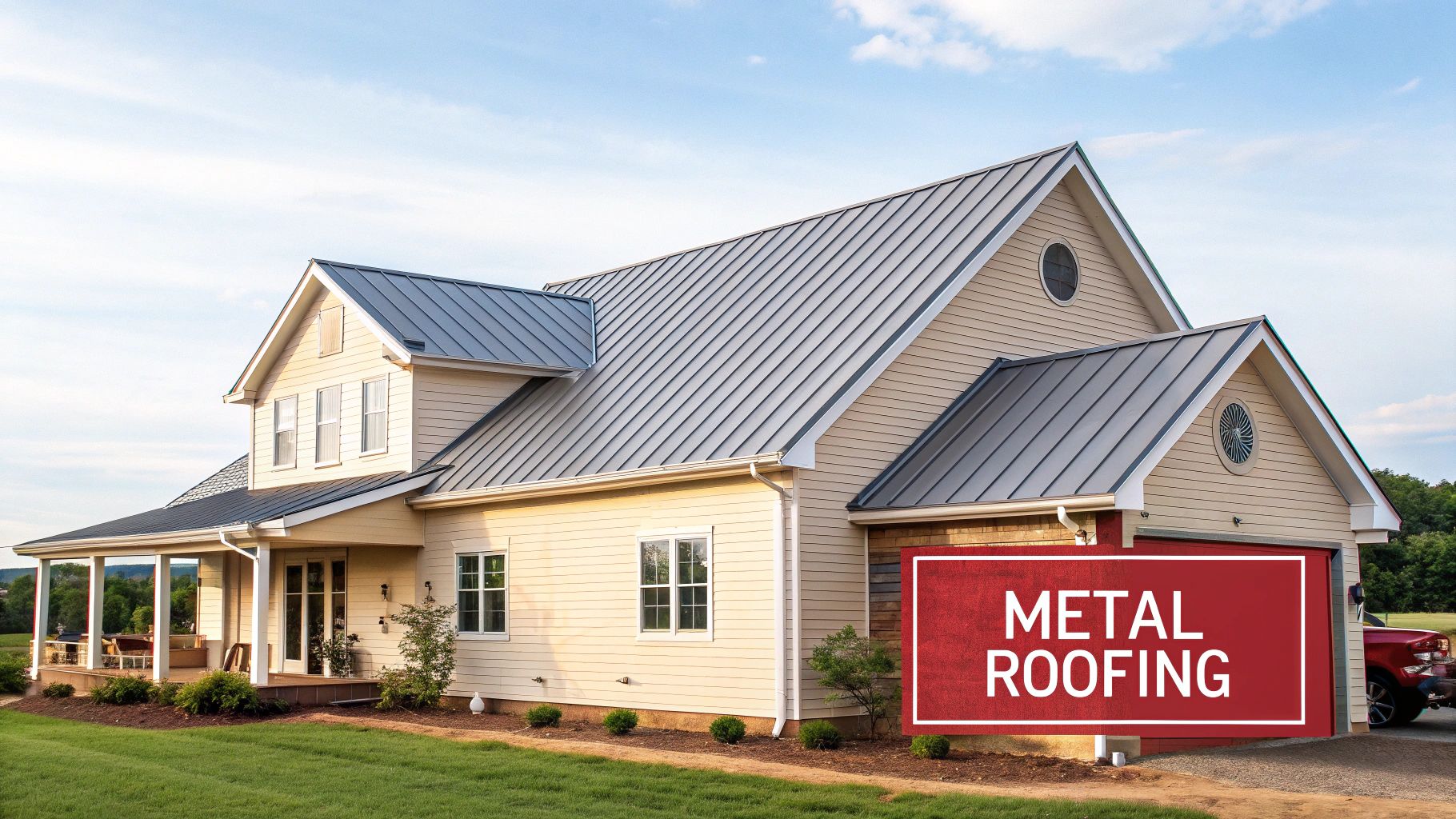
Metal systems are primarily installed in two distinct styles: exposed fastener and standing seam. Exposed fastener systems, where screws penetrate the panel face, are more economical and common on warehouses. Standing seam systems feature raised, interlocking seams with concealed fasteners, providing superior water shedding and a sleek, modern aesthetic popular on Texas ranch homes and modern farmhouses.
Why It's a Top Choice in Texas
For Texas property owners, metal roofing offers an unparalleled defense against the state’s most severe weather, from intense summer sun to severe hail storms. Its longevity and low maintenance profile provide significant long-term value, justifying its higher initial investment compared to traditional shingles. The system’s performance is a key reason for its adoption across both residential and commercial sectors in DFW.
- Superior Hail Resistance: Standing seam metal roofs often achieve a Class 4 UL 2218 impact rating, the highest classification for hail resistance. This resilience can prevent catastrophic damage during North Texas hailstorms and may qualify property owners for lower insurance premiums.
- Energy Efficiency: Metal roofing, especially when finished with a light-colored Kynar 500 or similar PVDF coating, reflects significant solar radiation. This reduces the heat load on the building, lowering attic temperatures and cutting air conditioning costs by as much as 25%, a critical advantage during brutal Texas summers.
Pro Tip: For residential applications, always invest in a standing seam system over an exposed fastener one. The concealed fasteners eliminate thousands of potential leak points created by thermal expansion and contraction around the screws, justifying the cost premium for long-term peace of mind.
3. Flat Roofing (TPO, EPDM, PVC Membrane Systems)
Primarily found on commercial, industrial, and multi-family properties, flat roofing systems are designed for low-slope or completely flat structures. These systems utilize single-ply synthetic membranes to create a seamless, waterproof barrier. The three most common types of these roofing system types are TPO (Thermoplastic Polyolefin), EPDM (Ethylene Propylene Diene Monomer), and PVC (Polyvinyl Chloride), each offering unique performance characteristics. Membranes are either mechanically attached, fully adhered with adhesive, or heat-welded at the seams to form a continuous, durable surface.
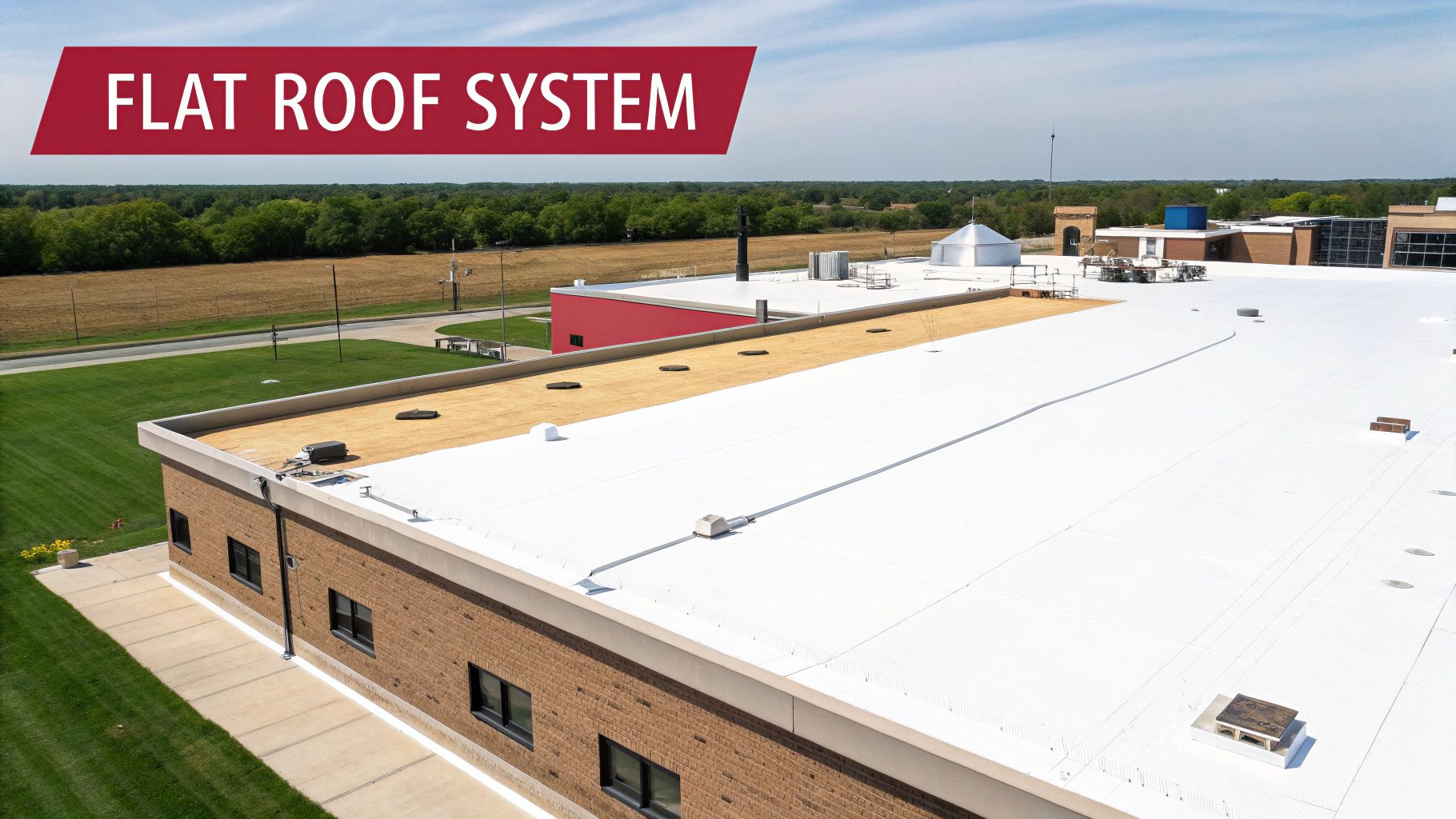
These systems are the standard for large-scale buildings like Dallas office parks, industrial warehouses, and retail centers due to their cost-effective coverage over vast areas. Unlike pitched roofs that rely on gravity to shed water, flat roofs require meticulous installation and a slight slope to ensure proper drainage. You can learn more about the critical differences in our guide comparing a flat roof vs. a pitched roof.
Why It's a Top Choice in Texas
For commercial property owners in Dallas-Fort Worth and across Texas, single-ply membrane roofing offers a powerful combination of durability, energy efficiency, and weather resilience. The state's intense sun and powerful thunderstorms demand a robust solution that can handle both thermal stress and significant water volume. Leaders in this space, such as Carlisle SynTec, GAF, and Firestone, have engineered products specifically for these challenges.
- Energy Efficiency: White TPO and PVC membranes are highly reflective, a feature known as "cool roofing." This reflectivity can significantly lower a building's surface temperature, reducing cooling costs by up to 20% during punishing Texas summers.
- Storm Resilience: When properly installed, these membranes provide excellent resistance to high winds and hail. Fully adhered systems are particularly effective against the wind uplift common in DFW-area thunderstorms, while the flexibility of EPDM offers proven durability against impact.
Pro Tip: Regular maintenance is crucial for flat roofs. Conduct quarterly inspections to check for ponding water, clogged drains, and vegetation growth, as improper drainage is the leading cause of premature membrane failure. Also, establish clear protocols for any HVAC or other contractors working on the roof to prevent accidental punctures.
4. Class 4 Impact-Resistant Shingles (Dimensional/Architectural, SBS/APP Modified)
Class 4 impact-resistant shingles are not a different material but an elite classification of asphalt shingles. These systems are specifically engineered to withstand severe hail impact without cracking or losing a significant amount of protective granules. To earn the UL 2218 Class 4 rating, the industry's highest, a shingle must endure having a two-inch steel ball dropped on it multiple times from a height of 20 feet without sustaining damage.
This superior durability comes from advanced manufacturing processes. Most Class 4 shingles feature a reinforced fiberglass mat and a specialized, rubber-like asphalt formulation, often SBS (Styrene-Butadiene-Styrene) or APP (Atactic Polypropylene) modified. This polymer modification makes the shingle more flexible and elastic, allowing it to absorb the energy from a hailstone impact rather than fracturing, which is common with standard shingles.
Why It's a Top Choice in Texas
For any property owner in the Dallas-Fort Worth "Hail Alley" or storm-prone East Texas, Class 4 shingles are a premier investment in resilience. They are designed as a direct countermeasure to the region's most destructive weather threat, providing a robust first line of defense that standard asphalt shingles cannot match. This makes them one of the most practical roofing system types for minimizing storm damage and frequent claims.
- Insurance Premium Discounts: Installing a certified Class 4 roof can lead to substantial discounts on homeowner's insurance premiums, often between 15-30%. Many carriers in Texas incentivize this upgrade because it reduces their risk of paying out large claims after a hail event.
- Enhanced Durability and Value: Beyond hail, the polymer-modified asphalt also offers better resistance to cracking from thermal shock and granule loss from high winds. This resilience adds significant long-term value and curb appeal, a key selling point for new construction in areas like Frisco, McKinney, and Arlington. After any severe storm, understanding the steps in a property damage assessment is crucial, and having a Class 4 roof can significantly simplify that process.
Pro Tip: Not all products advertised as "hail-resistant" meet the UL 2218 Class 4 standard. Always verify the certification on the product packaging or technical data sheet. Proper installation is just as critical; incorrect nailing can void the impact-resistant warranty and compromise the shingle’s performance.
5. Roof Coatings (Acrylic, Silicone, Polyurethane, Elastomeric)
Roof coatings are monolithic, fluid-applied membranes that restore and extend the life of an existing roof. Instead of a costly and disruptive full replacement, this roofing system type is applied over an aged but structurally sound roof, creating a seamless, waterproof, and reflective barrier. This method is particularly popular for commercial properties seeking to defer capital expenditures while enhancing building performance.
Coatings come in several chemical formulations, each with unique properties. Acrylic coatings are cost-effective and highly reflective, while silicone offers superior water resistance, making it ideal for flat roofs prone to ponding water. Polyurethane coatings provide excellent durability and impact resistance for high-traffic areas, and elastomeric coatings offer exceptional flexibility. For a deeper understanding of flexible and durable coatings, explore Titan Coatings Elastomer.
Why It's a Top Choice in Texas
For commercial property owners in Dallas-Fort Worth and East Texas, roof coatings are a strategic tool for asset management. Applying a reflective coating to an aging 20-year-old flat roof on a Dallas office building can add another 10-15 years of service life while significantly lowering cooling costs. Similarly, coating metal warehouse roofs in humid East Texas protects against rust and UV degradation.
- Cooling Cost Reduction: Highly reflective "cool roof" coatings can reduce roof surface temperatures by up to 50-60°F. This drastically lowers the heat transferred into the building, potentially cutting peak cooling energy demand by 15% or more, a significant saving during Texas summers.
- Seamless Waterproofing: Texas weather cycles between intense sun and torrential downpours, which can exploit seams and fasteners on traditional roofs. A liquid-applied coating creates a single, continuous membrane with no seams, eliminating the most common points of failure and water intrusion.
Pro Tip: Substrate preparation is everything. Before committing to a coating, ensure the existing roof is professionally pressure washed and chemically cleaned to remove all dirt, algae, and loose material. Improper prep is the leading cause of coating delamination and failure. The system is only as good as the surface it adheres to.
6. Wood Shake and Shingle Roofing (Cedar/Redwood, Hand-Split or Sawn)
Wood shake and shingle roofing systems offer a timeless, rustic aesthetic that few other materials can replicate. This premium option uses cedar, redwood, or other resilient softwoods to create a roof with distinctive character and natural beauty. The key difference lies in the manufacturing: shingles are machine-sawn for a uniform, smooth appearance, while shakes are hand-split, resulting in a thicker, more textured, and rustic finish.
This roofing system type is often chosen for its authentic charm, making it a perfect fit for historic homes, upscale custom residences, and boutique commercial properties aiming for a premium, natural look. Beyond its appearance, wood offers inherent insulating properties, helping to keep homes cooler in the summer and warmer in the winter. Its unique appeal makes it a standout choice for properties where curb appeal and architectural integrity are paramount.
Why It's a Top Choice in Texas
For property owners in Dallas-Fort Worth and East Texas seeking to make a significant architectural statement, wood roofing is an unparalleled choice. It is frequently seen on historic preservation projects in Dallas and on luxury homes in Frisco and Arlington. However, succeeding with a wood roof in the Texas climate requires specific considerations and a commitment to maintenance.
- Fire Resistance: Given Texas's susceptibility to dry conditions, it is crucial to invest in pressure-treated, fire-retardant shakes. Many insurance carriers mandate this for coverage and may offer premium discounts for Class A fire-rated wood roofing systems.
- Durability and Maintenance: The intense sun and humidity in East Texas can be harsh on natural wood. Proper installation with adequate spacing between shakes is essential to allow the wood to breathe and dry out, preventing rot. Sourcing high-quality cedar from reputable manufacturers like Maibec or Shakertown ensures the material can withstand the local climate.
Pro Tip: A wood roof is a long-term investment that demands professional care. Establish an annual maintenance contract with an experienced wood roofing specialist. Regular inspections, cleaning to remove debris, and periodic application of stains or sealants every 5-10 years are non-negotiable to protect against UV degradation, moisture, and insects, ensuring the roof reaches its full lifespan.
7. Slate Roofing (Natural Stone, Vermont/Pennsylvania/Spanish Slate)
Slate is the epitome of luxury and permanence in roofing, representing the most durable of all roofing system types. This system uses thin, flat sheets of natural stone, quarried and split into tiles, which are then meticulously installed with non-corrosive fasteners like copper or stainless steel. With a documented lifespan that can exceed 100-200 years, slate is the unparalleled choice for historic preservation, high-end residential estates, and institutional buildings where longevity and prestige are paramount.
The origin of the stone often dictates its characteristics. Vermont and Pennsylvania slate are renowned in North America for their superior density, color consistency, and proven performance over centuries. Spanish slate is also popular, offering a wider variety of colors and textures. In Dallas neighborhoods like Highland Park and historic districts in Fort Worth, many grand homes showcase original or masterfully restored slate roofs that have protected them for generations.
Why It's a Top Choice in Texas
For property owners in DFW pursuing a truly permanent roofing solution, slate offers unmatched resilience and timeless beauty. Its natural density makes it inherently fireproof, waterproof, and resistant to the temperature extremes common in Texas. When correctly installed, a slate roof is a generational investment that significantly enhances property value.
- Structural Considerations: Slate is exceptionally heavy, weighing between 600 to 1,200 pounds per square (100 sq ft). Before installation, a structural engineer must verify that the building's framing can support this immense load; reinforcement is often required.
- Specialized Installation: General roofing contractors lack the specific skills to install slate. Proper installation demands specialists who understand the material's unique properties, including correct headlap, fastener techniques, and flashing details to prevent premature failure.
Pro Tip: When commissioning a slate roof, document the quarry source and specific color blend. Keeping this information on file is critical for future repairs or additions, ensuring any replacement tiles match the original installation perfectly and maintain the roof's aesthetic integrity.
8. Green Roofing (Extensive and Intensive Living Roof Systems with Vegetation)
Green roofing systems, also known as living or vegetated roofs, transform a standard roof into a vibrant, functional ecosystem. This innovative approach involves a multi-layered assembly including a high-performance waterproofing membrane, a root barrier, drainage systems, growing medium (soil), and live vegetation. These systems are designed to absorb rainwater, provide natural insulation, and extend the life of the underlying roof membrane by protecting it from UV radiation and extreme temperature fluctuations.
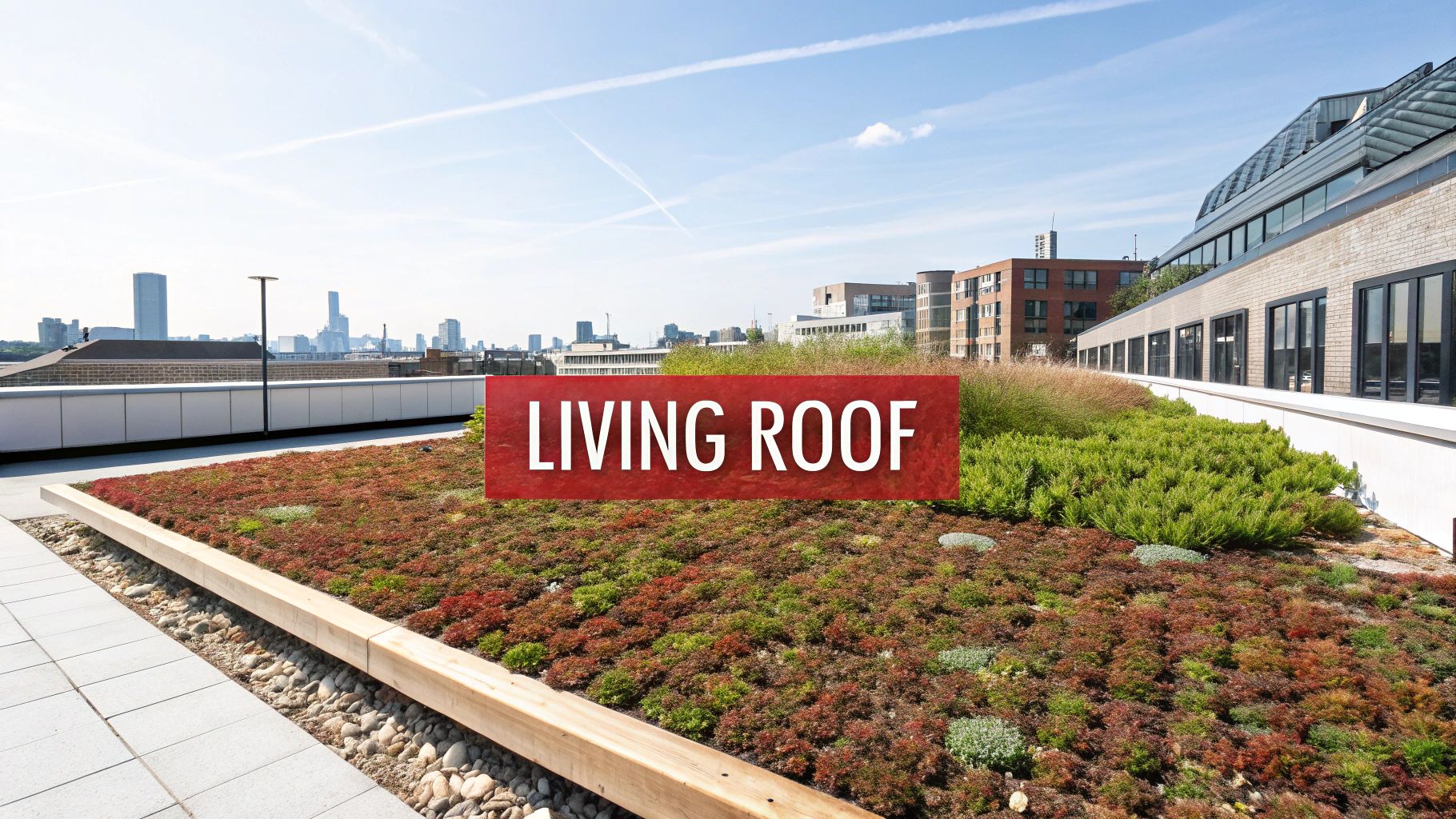
Green roofs are categorized into two primary types. Extensive systems are lightweight, with a shallow soil depth (2-6 inches) and are typically planted with low-maintenance, drought-tolerant plants like sedums. Intensive systems are more akin to a traditional park, with deeper soil (6+ inches) that can support a diverse range of plants, shrubs, and even small trees, but they require a much stronger structural support system.
Why It's a Top Choice in Texas
For property owners in Dallas-Fort Worth and East Texas focused on sustainability, energy efficiency, and stormwater management, green roofing offers unparalleled benefits. While less common in residential applications, they are increasingly specified for commercial buildings, municipal projects, and high-end properties seeking LEED certification or a distinct aesthetic advantage. They provide a powerful solution to the urban heat island effect, a significant issue in dense metropolitan areas like DFW.
- Stormwater Management: Green roofs excel at absorbing and filtering rainwater, reducing runoff into municipal storm systems. This is a key advantage for new developments in Dallas and Fort Worth facing strict stormwater management regulations.
- Superior Insulation: The layers of soil and vegetation provide exceptional thermal insulation, significantly lowering cooling costs during brutal Texas summers and reducing heating expenses in the winter. This natural barrier helps maintain a more consistent indoor temperature.
Pro Tip: A structural engineering assessment is the critical first step before considering a green roof. These systems add substantial weight (from 15 lbs/sq. ft. for a saturated extensive system to over 100 lbs/sq. ft. for an intensive one), and most existing structures cannot support this load without significant reinforcement. They are best integrated into new construction projects.
9. Spray-Applied Polyurethane Foam (SPF) Roofing with Elastomeric Coating
Spray Polyurethane Foam (SPF) is a unique roofing system where a two-component liquid is sprayed onto a roof deck, expanding to form a seamless, monolithic, and highly insulating layer. This system adheres directly to the substrate, eliminating the need for fasteners and creating a fully waterproof barrier. Because it's spray-applied, SPF perfectly conforms to irregular shapes, vents, and pipes, making it ideal for complex roof geometries.
The foam itself comes in two primary types: open-cell and closed-cell. Closed-cell SPF is the standard for roofing applications due to its dense structure, high R-value (typically R-6.5 or more per inch), and superior water resistance. After application, the foam is always protected with a durable elastomeric topcoat, such as silicone or acrylic, which provides UV resistance, weather protection, and a finished walking surface.
Why It's a Top Choice in Texas
For commercial and industrial buildings in Dallas-Fort Worth and across Texas, SPF roofing offers an unparalleled combination of insulation and waterproofing. Its seamless nature eliminates leaks at joints, the most common failure point in other roofing systems. This makes it an excellent choice for retrofitting older flat roofs, often without the need for a costly tear-off.
- Superior Energy Efficiency: The high R-value of closed-cell foam drastically reduces thermal transfer, leading to significant savings on HVAC costs, a critical advantage during scorching Texas summers.
- Drainage Correction: SPF can be applied in varying thicknesses to create a positive slope on flat or low-slope roofs. This effectively eliminates ponding water, a major cause of roof degradation and leaks in the region.
- Durability and Longevity: When properly maintained with periodic recoating, an SPF roof can last for decades. The robust, closed-cell structure also provides excellent resistance to wind uplift during severe Texas storms.
Pro Tip: The success of an SPF roof is almost entirely dependent on the installer's skill. Always require proof of certifications and extensive references. Ensure the contract specifies the exact foam thickness, target R-value, and the type and warranty of the protective topcoat.
10. Regional Buying Guide and Decision-Making Tips (DFW / Texas Focus)
Selecting from the many roofing system types can be overwhelming, but a strategic approach simplifies the process. This synthesized guide provides practical advice for Dallas-Fort Worth and East Texas property owners, focusing on factors beyond just the roofing material itself. It's about making a holistic, long-term investment tailored to the unique demands of the Texas climate, your specific building, and your financial goals.
This decision-making framework helps you compare options apples-to-apples and account for critical variables that determine a roof's true performance and value. From navigating insurance claims to coordinating with other contractors, a thoughtful plan ensures your new roof is a durable, integrated asset rather than just a basic covering.
Why It's a Top Choice in Texas
For property owners in a region battered by hail, extreme heat, and high humidity, making an informed choice is a crucial defensive strategy. This approach moves beyond simply picking a shingle color and instead focuses on creating a high-performance system resilient to local threats. It ensures you maximize value, energy efficiency, and protection against storm damage.
- Factor in Lifecycle Cost: Don't just look at the initial price. A cheaper roof that needs replacement in 15 years may be more expensive over time than a durable system lasting 30 years or more. To learn more about how different materials affect pricing, explore our detailed guide on new roof costs.
- Coordinate System Integration: A roof is more than just shingles or panels. Ensure your roofer coordinates with HVAC, solar, and gutter contractors. Improperly installed satellite dishes or solar panel mounts can void your roof's warranty and create leak points.
- Leverage Financial Incentives: Check for municipal rebates, utility company credits, and insurance premium discounts. Installing Class 4 impact-resistant products or energy-efficient "cool roofs" often qualifies for significant savings that can offset the upfront investment.
Pro Tip: Always request multiple, detailed bids that specify the exact same materials, underlayment, ventilation plan, and warranty terms. Vague proposals make it impossible to compare fairly and often hide shortcuts. A professional will provide a comprehensive, itemized scope of work.
10 Roofing Systems: Side-by-Side Comparison
| System | Implementation complexity | Resource requirements (cost & materials) | Expected outcomes (lifespan & performance) | Ideal use cases | Key advantages |
|---|---|---|---|---|---|
| Asphalt Shingle Roofing (Fiberglass, Architectural) | Low — common installation; many contractors | Low upfront cost; lightweight; standard materials | 20–30 years; moderate durability; possible granule loss | Budget-conscious residential; varied roof shapes | Cost-effective; quick install; easy repairs; wide color choices |
| Metal Roofing (Standing Seam / Exposed Fastener) | Medium–High — specialized installers, standing seam more complex | High upfront cost; lightweight panels; may need sound/thermal treatments | 40–70 years; excellent wind, hail, and reflectivity performance | Durable residential, commercial, solar-ready, hail-prone areas | Long life; energy efficient; recyclable; low maintenance |
| Flat Roofing (TPO / EPDM / PVC membranes) | Medium — membrane welding/adhesion skills; drainage critical | Moderate cost for large areas; single-ply membranes; good substrate prep | 20–40 years depending on membrane; TPO offers high reflectivity | Commercial low-slope, multi-family, rooftop equipment zones | Cost-effective for large roofs; reflective options; straightforward repairs |
| Class 4 Impact-Resistant Shingles (SBS/APP modified) | Low — installed like architectural shingles; verify certification | Moderate premium (≈20–40% over standard asphalt); same lightweight profile | 25–30 years typical; superior hail resistance (UL 2218 Class 4) | Hail-prone residential neighborhoods; insurance-driven replacements | Hail protection; insurance discounts; familiar installation and appearance |
| Roof Coatings (Acrylic / Silicone / Polyurethane / Elastomeric) | Low–Medium — surface prep critical; fast application | Low–Moderate cost vs replacement; periodic recoats/maintenance needed | Extends roof life 10–20 years; improves reflectivity and leak resistance if substrate sound | Mid-life flat or metal roofs, energy retrofits, commercial buildings | Cost-effective life extension; energy savings; minimal disruption |
| Wood Shake and Shingle (Cedar/Redwood) | High — specialized installation and ongoing maintenance | High upfront cost; fire-retardant treatment often required; regular upkeep | 40–70 years with meticulous maintenance; vulnerable without treatment | Historic, high-end residential, boutique properties | Distinctive aesthetic; natural insulation; high curb appeal/value |
| Slate Roofing (Natural Stone) | Very high — slate specialists; labor-intensive; structural reinforcement | Very high cost; heavy material requiring structural upgrade | 100–200+ years; exceptional durability and fire resistance | Luxury homes, historic preservation, institutional buildings | Unmatched longevity; prestige; maintenance-free for decades |
| Green Roofing (Extensive / Intensive living roofs) | High — requires engineering, waterproofing and vegetation expertise | High installation and maintenance cost; possible structural upgrades; irrigation for intensive | Extends membrane life 2–3×; reduces runoff; cooling and biodiversity benefits | LEED/municipal projects, urban buildings, rooftop amenity spaces | Stormwater mitigation; heat-island reduction; ecological and energy benefits |
| Spray-Applied Polyurethane Foam (SPF) with coating | High — certified applicators; weather-sensitive installation | Moderate–High cost; requires protective topcoat and scheduled recoats | 20–30 years when maintained; high R-value; seamless waterproofing; slope creation | Retrofits, irregular geometries, ponding-prone roofs, insulation upgrades | Excellent insulation; seamless coverage; eliminates ponding |
| Regional Buying Guide (DFW / Texas focus) | Low — advisory resource to guide decisions | N/A (planning tool) | Better-informed choices; optimized lifecycle and climate fit | DFW/East Texas homeowners and building owners selecting systems | Localized recommendations; balances hail, heat, budget, and warranties |
Partner with Experts to Select the Right Roofing System
Navigating the diverse world of roofing system types can feel overwhelming, but this guide has equipped you with the foundational knowledge to make an informed decision. We’ve explored the classic appeal and affordability of asphalt shingles, the unmatched durability of metal and slate, and the innovative efficiency of modern flat roofing membranes like TPO and PVC. Each system offers a unique combination of benefits, from the storm-ready resilience of Class 4 impact-resistant shingles to the restorative power of advanced roof coatings.
Making the right choice is more than just picking a material; it’s about aligning your selection with your specific property needs, long-term financial goals, and the unique environmental challenges of the Dallas-Fort Worth and East Texas region. Your roof is your property’s first line of defense, a critical asset that protects everything underneath it while significantly influencing its curb appeal and market value.
Key Takeaways: Matching the Material to the Mission
Your journey to a new roof should be guided by a clear understanding of your priorities. Let’s distill the most important takeaways from our deep dive into the various roofing system types available today.
- For Residential Durability and Value: Homeowners in storm-prone areas should strongly consider Class 4 impact-resistant shingles. The potential for significant insurance premium discounts, combined with superior protection against hail, often makes the upfront investment a financially sound decision.
- For Commercial Efficiency and Longevity: Business owners with low-slope or flat roofs can achieve remarkable energy savings and extend their roof's life with TPO or PVC membranes or by applying a silicone or acrylic roof coating. These systems provide a seamless, reflective barrier against intense Texas heat and UV radiation.
- For Ultimate Longevity and Aesthetic Appeal: If your budget allows and you’re building a “forever home,” nothing compares to the timeless beauty and multi-generational lifespan of natural slate or a professionally installed standing seam metal roof. These are premium investments that pay dividends in durability and property value.
- For Sustainability and Innovation: Property owners looking to reduce their environmental footprint can explore green (living) roofs to manage stormwater and improve insulation, or prepare for the future with a solar-ready roofing system designed to support photovoltaic panel installation without compromising the roof’s integrity.
Your Actionable Next Steps
Armed with this information, your next step is to move from research to action. The theoretical knowledge of different roofing system types becomes most powerful when applied to your specific property. A professional inspection is the critical bridge between understanding your options and selecting the perfect one.
An experienced roofing contractor will not just look at your existing roof; they will assess the entire system, including the decking, underlayment, ventilation, and flashing. They can identify subtle issues that could impact the performance of a new roof and provide a tailored recommendation that balances your budget with your performance needs. This expert assessment is the single most important step in ensuring a successful, long-lasting roof installation that complies with all local building codes and manufacturer warranty requirements.
Choosing the right roofing system is a decision that will impact your life for decades. It influences your monthly energy bills, your peace of mind during a storm, and the overall value of your property. By investing the time to understand your options and partnering with a trusted professional, you are not just buying a roof; you are securing a vital component of your home or business’s future.
Is your property in Dallas-Fort Worth or East Texas in need of a professional roof assessment? The experts at Hail King Professionals specialize in diagnosing issues and recommending the ideal roofing system types for our unique climate, from storm-proof residential solutions to high-performance commercial systems. Contact Hail King Professionals today for a free, no-obligation inspection and a transparent quote tailored to your property’s needs.