



Cost of New Roof Texas: A Homeowner’s Guide to Smart Budgeting
So, you're trying to figure out the cost of a new roof in Texas. The honest answer is, it varies. For a typical home, you're generally looking at a range of $7,000 to $15,000. But that number can swing quite a bit depending on what your home needs.
Your Quick Guide to Texas Roof Replacement Costs
Think about it like buying a new truck. Your basic, reliable F-150 gets the job done and is a fantastic choice for most people—that's your standard asphalt shingle roof. It's popular for a reason.
But if you’re hauling heavy equipment through the backroads or need something that can take a serious beating, you might upgrade to an F-350 with all the bells and whistles. That’s your heavy-duty metal roof or top-of-the-line Class 4 impact-resistant shingles, built to handle the absolute worst that Texas weather throws at it.
Knowing that initial price range gives you a good starting point. Now, let's break down what actually goes into that final number.
Setting a Realistic Budget
A roofer’s estimate isn't just one big number; it's a combination of several critical parts. When you get a quote, you should see a breakdown that includes:
- Materials: This is the biggest variable. Your choice between standard asphalt shingles and something like standing seam metal will have the biggest impact on the price.
- Labor: You're not just paying for shingles; you're paying for the skill and sweat of the crew who will tear off your old roof and install the new one correctly. This is a huge chunk of the total cost.
- Permits & Disposal: There's always some administrative legwork. This covers the fees for pulling city permits and the cost of hauling away and properly disposing of all the old material.
- Surprises Underneath: Sometimes, you don’t know what you’re dealing with until the old roof is gone. If the crew finds soft or rotted wood decking, it will need to be replaced, which can add to the final bill.
A new roof is far more than just a repair—it's one of the most important investments you'll make in your home. Especially here in Texas, where we get everything from blistering heat to hail the size of softballs, the right roof and the right installer are your best defense.
The table below gives you a clearer picture of how much the material you choose really matters.
Estimated New Roof Costs in Texas by Material
Here’s a look at the average cost for a new roof on a typical 2,000 sq. ft. home in Texas, broken down by the most common materials. Keep in mind that "per square" in roofing lingo means a 100-square-foot area.
| Roofing Material | Price Per Square (100 sq. ft.) | Estimated Total Cost (2,000 sq. ft. Roof) |
|---|---|---|
| Architectural Asphalt Shingles | $350 – $700 | $7,000 – $14,000 |
| Class 4 Impact-Resistant Shingles | $500 – $900 | $10,000 – $18,000 |
| Standing Seam Metal | $700 – $2,000 | $14,000 – $40,000 |
| TPO/Flat Roofing | $500 – $1,200 | $10,000 – $24,000 |
As you can see, asphalt shingles are the go-to for affordability. But upgrading to a tougher material like metal can easily double the price—though it also brings serious long-term benefits. If you want to dive deeper, you can read more about Texas roofing material costs to see a more detailed breakdown.
Decoding Your Roofing Estimate Line by Line
Getting a roofing estimate can feel like trying to read a foreign language. You see the big number at the bottom, but what are you really paying for? A detailed, transparent quote is the mark of a pro, and knowing what to look for empowers you to make a smart decision about the cost of a new roof in Texas.
Let’s pull back the curtain and break down a typical estimate, line by line. Think of it as the recipe for your new roof; every single ingredient matters.
Material Costs: The Foundation of Your Quote
This is usually the biggest chunk of your estimate. It covers far more than just the shingles you see from the street—it’s the entire system working together to keep your home dry and protected.
- Shingles or Primary Material: This is the star of the show. Whether you choose asphalt, metal, or another option, the cost will vary dramatically based on what you select.
- Underlayment: Think of this as a critical backup plan. It's a water-resistant barrier that goes directly on the wood decking, right under the shingles, acting as a last line of defense against moisture.
- Starter Strips and Ridge Caps: These are specially designed shingles for the most vulnerable parts of your roof—the edges (eaves) and the peak (ridge). They provide crucial protection against wind uplift and driving rain.
- Flashing and Pipe Boots: These are the unsung heroes. They’re the custom-fit metal and rubber pieces that seal around chimneys, vents, and pipes, preventing leaks in these tricky areas.
The infographic below really drives home how much your primary material choice affects the bottom line.
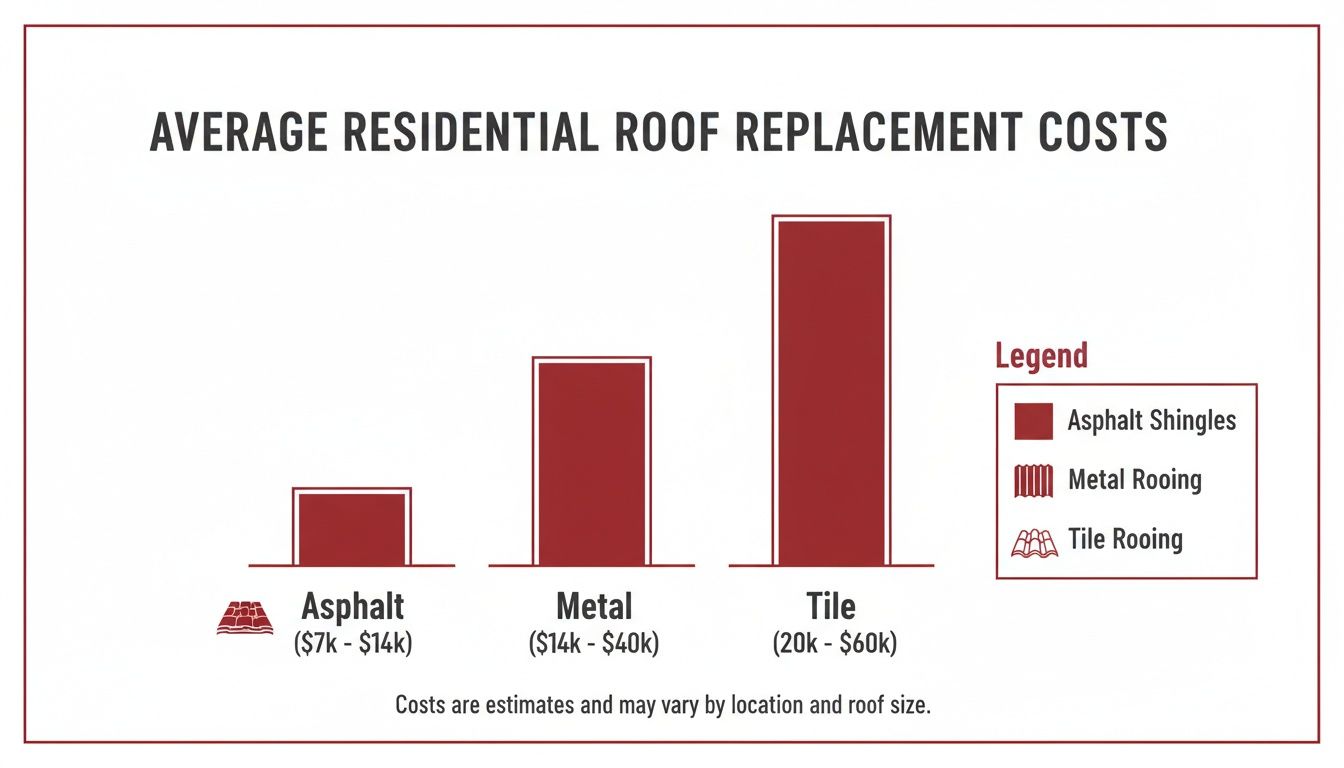
As you can see, the material itself is the single biggest driver of price. Upgrading from standard asphalt shingles to something like metal or tile is a significant investment.
Labor: The Skill Behind the Installation
A pile of the best materials in the world is worthless without a skilled crew to put it all together correctly. This is where a huge portion of your investment goes, and it’s one area you absolutely cannot afford to skimp on.
Labor costs are a major part of any Texas roof replacement, typically making up 40-60% of the total project price. Around Greater Houston and nearby areas, that translates to roughly $2-$6 per square foot just for the crew's time and expertise.
To put it in perspective, on a standard 2,000-square-foot Austin home, the materials might average $5 per square foot, but by the time you add in labor and other installation costs, the total job often lands around $10,000. Experienced, properly insured crews cost more, but they deliver the kind of craftsmanship that prevents leaks and protects your warranty down the road. Keep in mind, a complicated or steep roof can also increase labor charges by 10-25%. You can get more insights into Texas labor costs from local roofing experts.
A professional roofing crew isn't just nailing down shingles. They're building a complete, integrated system designed to withstand brutal Texas weather. Their expertise is what activates the manufacturer's warranty and truly protects your home.
Tear-Off and Disposal: The "Out With the Old" Phase
Before the new roof goes on, the old one has to come off completely. This line item covers the labor, equipment, and logistics of a messy but essential step.
It involves stripping every layer of old material right down to the bare wood decking. It also includes making sure all that debris is contained in a dumpster, hauled away from your property, and disposed of according to local regulations.
Potential Surprises: What Could Be Hiding Underneath?
Sometimes, you don't know the full story until the old roof is gone. A good contractor will always prepare you for potential issues that might pop up once the tear-off is complete.
The most common surprise is rotted or damaged decking. If slow, hidden leaks have weakened the underlying plywood over the years, it has to be replaced. You can't put a new roof on a spongy, compromised foundation. Any reputable roofer will stop, show you the damage, explain the necessity of the repair, and get your approval on a "change order" before moving forward.
Permits and Fees: The Administrative Side
Finally, every legitimate roofing project comes with a bit of paperwork and administrative costs. These line items ensure your new roof is 100% legal and up to code.
- Building Permits: Most Texas cities and counties require a permit for a full roof replacement. The fee goes to the local municipality to register the project and confirm it meets all safety standards.
- Inspections: In coastal zones, a special WPI-8 Certificate inspection is often required. This certifies that the roof meets strict windstorm codes, which is crucial for your homeowner's insurance.
- Warranty Fees: Some manufacturers charge a small fee to register their premium warranties, which your contractor will handle for you to ensure you’re fully covered.
By understanding these components, you can compare quotes apples-to-apples and feel confident you know exactly where your money is going.
Why a Texas Roof Is Built Differently
A roof in Dallas isn’t the same as a roof in Seattle, and for good reason. Here in Texas, a roof is far more than just a cover; it’s your home’s first and most important line of defense against some of the most punishing weather in the entire country.
To really understand the cost of a new roof in Texas, you first have to appreciate what we're asking these roofs to do. This isn't just about picking a shingle color that matches your siding. It’s about building a defense system engineered to withstand a relentless cycle of extreme heat, torrential rain, hurricane-force winds, and, of course, that notorious Texas hail.
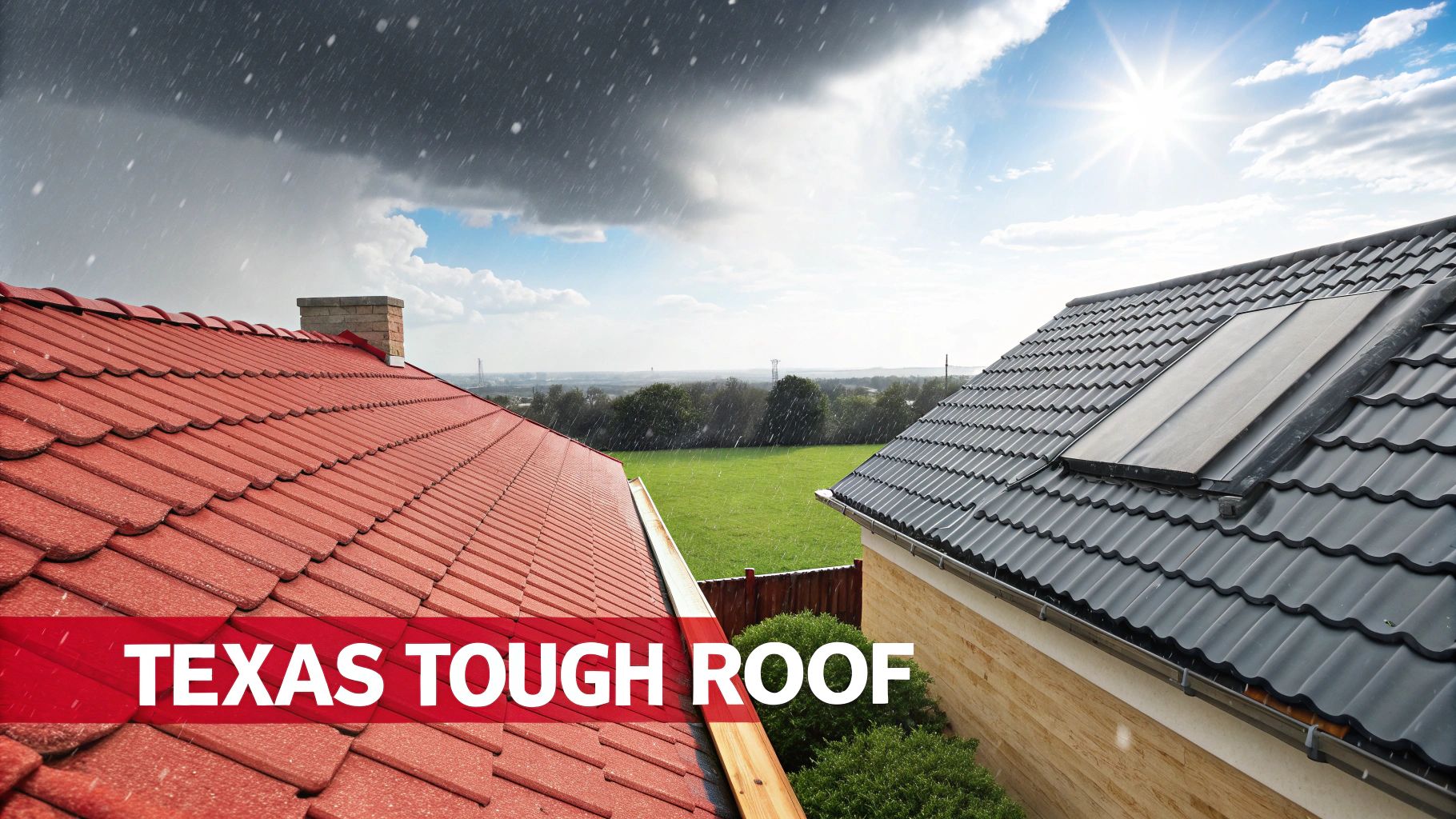
Surviving Hail Alley in DFW
North Texas, especially the Dallas-Fort Worth metroplex, sits smack in the middle of what meteorologists call "Hail Alley." Here, hailstorms aren't a rare "if"—they're a "when." A standard asphalt shingle might hold up against a light storm, but it stands little chance against the golf-ball or even softball-sized hail we see all too often.
This is exactly why Class 4 impact-resistant shingles are less of an upsell and more of a strategic necessity. Think of them as the armor plating for your roof. To earn that Class 4 rating, these shingles have to pass a brutal test: a two-inch steel ball is dropped on them from 20 feet up, and they can't crack.
Upgrading to a Class 4 shingle might add 10% to 20% to your upfront cost, but it can save you thousands in future repairs and deductibles. Many Texas insurance carriers even offer significant premium discounts for this upgrade, which can help offset the initial investment over time.
This regional reality dramatically shapes the cost and material choices for homeowners. While someone in a calmer climate might focus on aesthetics, a DFW resident has to put resilience first.
Battling the Blistering Texas Sun
Even when it's not hailing, the Texas sun is a silent destroyer of roofs. That constant, intense UV radiation and those triple-digit temperatures can wreak havoc on lesser materials.
- UV Degradation: Ultraviolet rays literally break down the asphalt in standard shingles, making them brittle and causing them to shed their protective granules.
- Thermal Shock: The wild temperature swings from a blazing hot afternoon to a cooler night force roofing materials to expand and contract constantly. Over time, this leads to cracks and warping.
- Color Fading: The sun can bleach your shingles, which doesn't just hurt your home's curb appeal. Faded, dark shingles absorb more heat, driving up your energy bills.
To fight back, many savvy Texas homeowners are choosing materials with high solar reflectivity, often called "cool roofs." These include options like specially coated metal or lighter-colored shingles with reflective granules that can keep your attic cooler and take some of the load off your HVAC system.
Coastal Winds and Code Compliance
The challenges don't stop inland, either. Texas is a huge state with diverse climate zones, which means roofing needs and costs can change drastically depending on where you live. If you're down on the coast, you're facing the constant threat of hurricanes, which brings a whole new set of building codes into play.
In these designated windstorm areas, a new roof requires a special WPI-8 Certificate of Compliance. This is a non-negotiable certification proving your roof meets the state’s strict windstorm building codes—something most insurance policies demand. Getting one often means using specific nailing patterns, reinforced decking, and wind-rated materials, all of which can increase the project’s cost. You can dive deeper into the various types of roofing systems that are built to meet these demanding standards.
At the end of the day, the best roof for a home in Houston is very different from the best choice in Dallas. These regional factors are one of the biggest drivers behind the final price tag you'll see.
Navigating Storm Damage and Insurance Claims
When a Texas hailstorm barrels through your neighborhood, the need for a new roof can go from a distant "someday" project to a sudden, stressful emergency. All at once, you’re not just a homeowner—you’re managing a complicated insurance claim.
It's a daunting process, for sure. But armed with the right information, you can walk into it confidently and make sure you get every penny you're entitled to.
The journey always starts with a professional inspection. After a storm, a trained roofer sees things you simply can't from the ground. A reputable contractor, like us at Hail King Professionals, will give you a free, no-obligation inspection, documenting every dented vent, cracked shingle, and damaged gutter with photos and detailed notes. This report becomes the bedrock of your claim.
Cracking the Code of Your Insurance Policy
Before you even dial your insurance agent, it’s a good idea to get familiar with a few key terms. They might sound like industry jargon, but they directly control how much money you’ll get for your roof.
- Deductible: This is your share of the cost. It's the amount you have to pay before your insurance policy starts paying. If your deductible is $2,500 and the roof replacement is $15,000, your insurer covers the remaining $12,500.
- Depreciation: Think of this as the value your old roof lost over the years from normal wear and tear. Insurance companies calculate this to figure out what the roof was actually worth right before the storm hit.
- Actual Cash Value (ACV): This is what your roof is worth today—its original cost minus all that depreciation. The first check you get from your insurer is almost always the ACV, minus your deductible.
- Replacement Cost Value (RCV): This is the big one. It's the total amount it costs to replace your roof with brand-new, similar materials at today's prices, with no deduction for age.
Here's a simple way to think about it: ACV pays for the roof you had, while RCV pays for the brand-new roof you need. Most modern policies are RCV, but you have to actually get the work done to collect the full amount.
The Claims Process, Step by Step
Once you have your inspection report in hand, the process follows a pretty predictable path. Knowing what's coming next helps you stay in the driver's seat.
- File the Claim: Your first call is to your insurance provider to officially open a claim. They’ll give you a claim number and assign an adjuster to your case.
- Meet the Adjuster: The insurance adjuster will schedule a visit to inspect the damage themselves. You absolutely want your roofer there for this meeting. Your contractor acts as your advocate, pointing out specific damage the adjuster might otherwise miss.
- Review the Settlement: After the inspection, the adjuster will send over a scope of work and a settlement offer. This is where your roofer's initial estimate is gold—you can compare them side-by-side to make sure nothing was left out.
- Get the First Check (ACV): An initial payment for the Actual Cash Value of the damage (less your deductible) will arrive. This gets the project started.
- Replace Your Roof: Now, your contractor gets to work. This is also the time to consider upgrading your materials. If you're curious about stronger options, check out our guide on hail-resistant roofing materials.
- Recover Your Depreciation: Once the job is finished, your roofer sends the final invoice to your insurance company. This proves the work is complete, and the insurer releases the final payment—the depreciation funds that bring you up to the full Replacement Cost Value.
Dealing with insurance companies is a common hurdle for homeowners after a storm. While every situation is unique, a solid foundation in understanding insurance claims can make all the difference.
Having an expert partner like Hail King Professionals in your corner means you have an advocate from the initial inspection to the final check, turning a potentially overwhelming situation into a manageable process.
Making Your New Roof More Affordable
Let's be honest—a new roof is a serious investment. But that big number you might be imagining isn't necessarily the final price. With some smart planning, you can tackle the cost of a new roof in Texas without having to compromise on quality. It's all about making a solid financial decision that protects your home and your wallet.

Many homeowners are relieved to find out they don't have to pay for the whole thing in one lump sum. Modern financing has made getting a top-notch roof more accessible than ever, letting you secure your home now and spread the cost out over time with predictable monthly payments.
Exploring Smart Financing Options
Putting off a roof replacement can be a costly mistake. A failing roof can quickly lead to much bigger, more expensive headaches like water damage, structural rot, and mold. Financing helps bridge that gap, breaking down a massive one-time expense into something you can actually manage.
Here at Hail King Professionals, we've set up flexible financing solutions specifically for Texas homeowners. These plans often come with great features, like:
- Soft Credit Checks: You can explore your options without it dinging your credit score.
- No Prepayment Penalties: If you come into some extra cash and want to pay the loan off early, go for it! There are no extra fees.
- No Home Equity Required: Unlike a home equity loan (HELOC), these are personal loans that aren't secured by your house.
If a less-than-perfect credit score is holding you back from getting good financing terms, it might be worth paying for credit repair in Texas. A better score can unlock lower interest rates, which could save you a ton of money over the life of the loan. We get into all the details in our guide on how to finance a new roof.
Practical Tips for Saving Money
Beyond financing, there are other common-sense ways to trim the total cost and get the most bang for your buck. A lot of it comes down to being strategic about your timing and your materials.
One of the best tricks in the book is to schedule your roof replacement during a contractor's off-season. Things get crazy right after big storms in the spring and summer, and again in the fall before winter sets in. If you can book your project during a slower time, like late winter, you might find more competitive pricing as companies look to keep their crews working.
A new roof isn't just an expense—it's an asset that adds tangible value to your property. National data shows that a new asphalt shingle roof can increase a home's value by 60% to 70% of its installation cost, boosting curb appeal and buyer confidence.
Thinking Long-Term for a Better Return
Finally, try to think about your new roof as a long-term play. Sure, a cheaper material might save you some cash today, but choosing a more durable or energy-efficient option can deliver a much better return over the years.
- Energy-Efficient Materials: "Cool roof" shingles are designed with high solar reflectivity. They can actually lower the temperature in your attic, which means your AC doesn't have to work as hard, cutting your summer energy bills.
- Impact-Resistant Shingles: Upgrading to Class 4 shingles might cost more upfront, but it can lead to some pretty hefty discounts on your homeowner's insurance premiums every single year.
- Durability and Longevity: Investing in something like a metal roof, which has a lifespan of 40-70 years, means you probably won't have to think about this expense ever again.
When you combine smart financing with strategic savings and a long-term mindset, a new roof becomes a smart, affordable, and valuable upgrade for your Texas home.
Got Questions About Texas Roof Costs? We've Got Answers.
Even after crunching the numbers, you're bound to have a few more questions pop up. It's completely normal. We hear the same handful of great questions from homeowners all over DFW, so we’ve put together some straight-to-the-point answers to help you feel confident about your project.
Think of this as the final piece of the puzzle, clarifying those last-minute details before you move forward.
How Long Will My DFW Roof Replacement Actually Take?
Believe it or not, for a standard-sized home, a seasoned crew can knock out a full roof replacement in just 1 to 3 days. The exact timing really boils down to three things: the sheer size of your roof, how complex its design is (think steep pitches and lots of angles), and, of course, unpredictable Texas weather.
If we pull back the old shingles and find a bunch of rotten decking, that’ll add a little extra time to the job. But rest assured, we always work to get things done quickly and cleanly so you can get back to your life with minimal hassle.
Will Installing Class 4 Shingles Lower My Homeowners Insurance?
There's a very good chance it will. Most insurance companies here in Texas are happy to offer some pretty hefty discounts when you install Class 4 impact-resistant shingles. Why? Because it means they're far less likely to be paying out a massive hail claim on your home down the road.
It's true they cost more upfront, but when you factor in the annual premium savings and the peace of mind of not having to pay another deductible after the next big hailstorm, they often end up being the smartest financial move you can make for a North Texas home. We'll even handle all the documentation your insurance agent needs to apply the discount.
What If You Find Rotted Wood Under My Old Shingles?
Finding some rotten decking is actually pretty common, especially on older roofs where small, undetected leaks have been doing their dirty work for years. When we find it, our process is simple and transparent.
We immediately pause work in that area, take clear photos to show you exactly what we're seeing, and talk through the options with you. We'll then write up a clear change order that outlines the cost for replacing the damaged wood. Building your brand-new roof on a compromised foundation is a non-starter; we make sure the base is solid to protect your investment for decades.
Ready to get a clear, honest look at your roof's condition? The experts at Hail King Professionals offer free, no-pressure inspections to give you the answers you need. Schedule your free inspection today!