



Why Does a House Need Gutters? A Texas Homeowner’s Guide
So, what's the big deal about gutters, anyway? Think of them as your home's personal water management system. They quietly collect the thousands of gallons of rainwater that hit your roof each year and channel it safely away from your house. Without them, all that water turns into an uncontrolled, destructive force, putting your foundation, siding, and landscaping at risk.
The Unsung Heroes Guarding Your Home
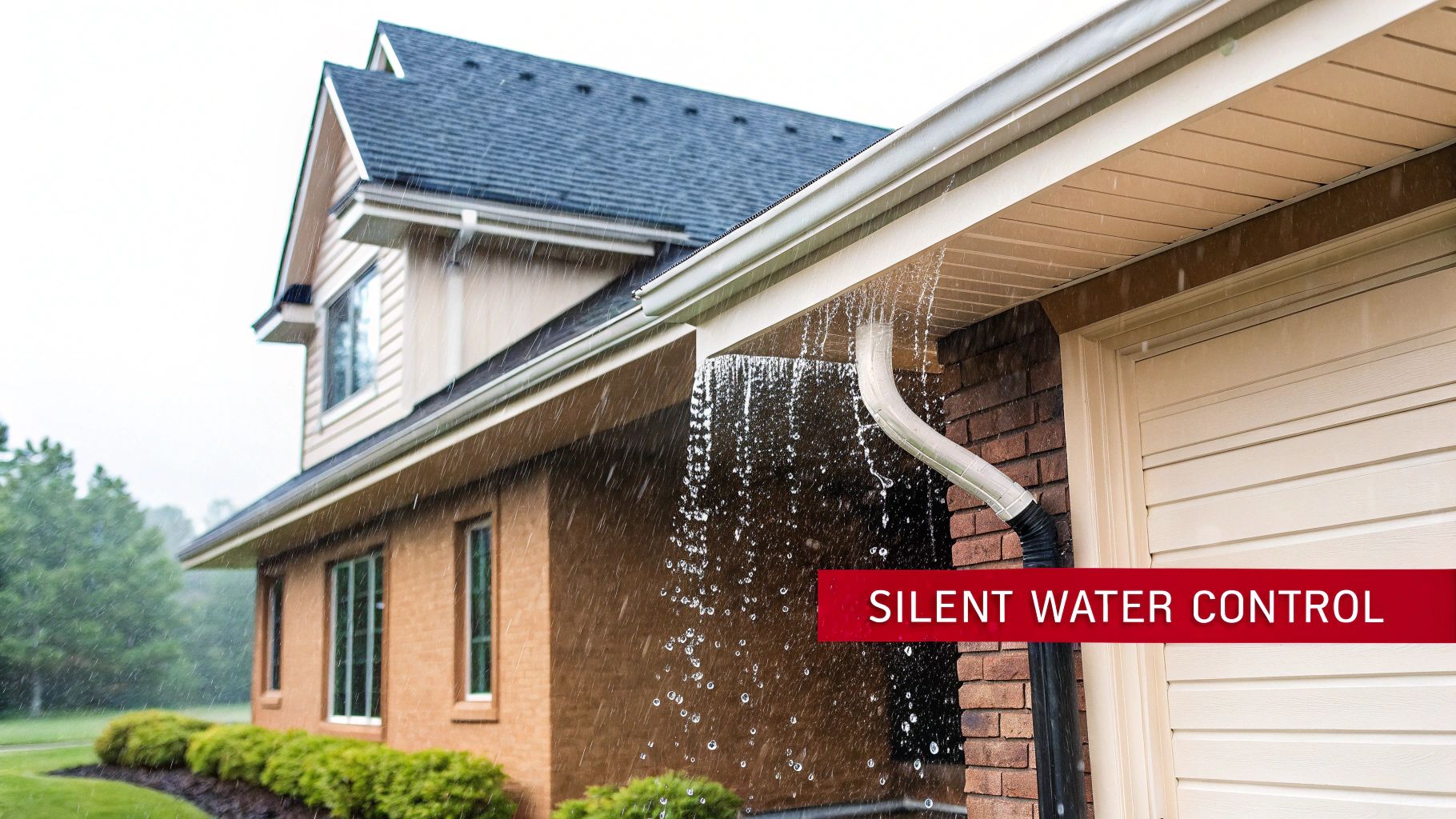
It’s easy to ignore the gutters running along your roofline, but they're doing one of the most important jobs in protecting your property. Your roof is basically a giant funnel. During a classic East Texas downpour, a 1,500-square-foot roof can collect almost 1,000 gallons of water for every single inch of rain. A good gutter system is the only thing standing between that deluge and total chaos.
This network of channels and downspouts acts like a purpose-built canal system. It methodically captures that immense volume of water and guides it to downspouts, which then direct it far away from the most critical—and vulnerable—part of your house: the foundation.
A Quick Look at Gutter Functions
A properly working gutter system is your first and best line of defense against some seriously expensive water damage. It's not just about avoiding a shower when you walk out the front door; it's about protecting your entire investment from the ground up.
Without a controlled path, rainwater just sheets off the roof, creating a "waterfall effect" all around your home. This constant cascade washes away soil, soaks the ground, and puts tremendous hydrostatic pressure on your foundation walls.
To really appreciate what gutters do, let's break down their core protective jobs. The table below gives you a quick snapshot of how they shield your home, which we'll dive into more deeply.
The Core Functions of a Gutter System
Here's a quick summary of the primary protective roles gutters play in safeguarding your home.
| Area of Protection | How Gutters Help | The High Cost of Neglect |
|---|---|---|
| Foundation | Redirects water away from the base of your home, preventing soil saturation and erosion. | Cracked slabs, basement flooding, and structural failure. |
| Siding & Windows | Stops water from sheeting down walls, preventing paint damage, wood rot, and staining. | Costly siding replacement and window frame repairs. |
| Landscaping | Prevents runoff from carving trenches in flowerbeds and washing away mulch and topsoil. | Destroyed gardens and expensive landscape restoration. |
| Roof & Fascia | Protects the roof's edge and the wooden fascia boards from constant moisture exposure and rot. | Compromised roof structure and entry points for pests. |
As you can see, a small investment in a functional gutter system pays huge dividends by preventing some of the most catastrophic and expensive home repairs imaginable.
Your Foundation's First Line of Defense
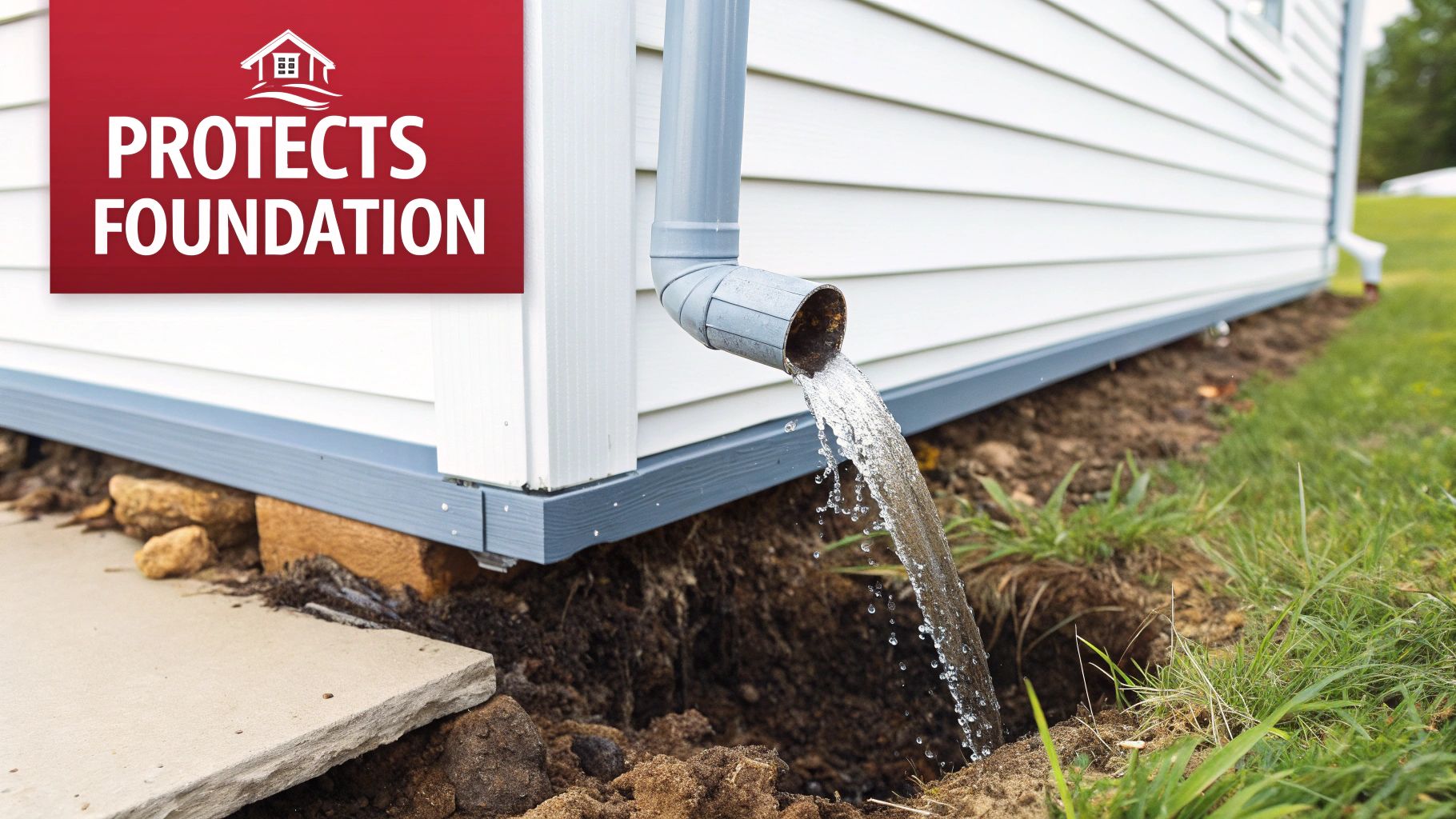
If you take away just one point from this entire guide, let it be this: gutters are absolutely essential for protecting your home’s foundation. Everything—your walls, floors, and roof—rests on that concrete slab. And its biggest threat, especially here in North and East Texas, is uncontrolled rainwater.
Much of our region sits on top of expansive clay soil. The best way to think of this soil is like a giant, powerful sponge wrapped around the base of your house. When it gets drenched by water pouring off a roof without gutters, it swells dramatically. Then, when the hot Texas sun bakes it dry, it shrinks and pulls away.
This endless cycle of swelling and shrinking puts an incredible amount of stress on your foundation. It's a slow, relentless force that can eventually cause the concrete to shift, settle unevenly, and crack. What might start as a tiny, hairline fracture can quickly grow into a major structural problem that threatens the safety and value of your entire home.
The Real Price of Unchecked Water
Without a gutter system, every single rainstorm sends a torrent of water straight down to the ground right next to your house. This constant soaking creates what’s called a "drip line," a super-saturated zone that’s the number one cause of foundation movement and leaky basements.
A home's foundation is its most critical structural element. Allowing uncontrolled water to saturate and destabilize the surrounding soil is one of the most significant and preventable risks a homeowner can take.
The fallout from this can be both severe and incredibly expensive. The first signs of foundation trouble often show up inside the house:
- Cracks in Walls: You might start seeing cracks spiderwebbing across interior drywall or zigzagging up your exterior brick.
- Sticking Doors: Doors that once closed perfectly now scrape the frame, a tell-tale sign that the house has shifted.
- Uneven Floors: You might notice a new slope in the floor or a bouncy spot that wasn't there before.
These aren't just cosmetic quirks. They're symptoms of a much deeper issue that can easily run into thousands of dollars to fix.
How Gutters Do the Heavy Lifting
This is where a properly installed gutter system proves its worth. It’s a simple but brilliant network designed to catch all that rainwater and channel it somewhere else before it can soak the ground around your foundation.
The amount of water we're talking about is staggering. For every inch of rain that falls on a 1,000-square-foot roof, a good gutter system will divert about 1,000 gallons of water. In East Texas, that can add up to 50,000 gallons a year. Redirecting that much water helps you avoid basement flooding repairs that cost an average of $4,300.
By carrying water safely away from your home, gutters keep the moisture level in the soil stable, taking all that expansion-and-contraction pressure off your foundation. Gutters handle the roof, but it’s also important to fix yard drainage to create a complete water management plan. Simply put, they are your first, best, and most affordable defense against a potential foundation catastrophe.
Shielding Your Siding, Landscaping, and Roof

While your foundation is priority number one, a house without gutters is fighting a losing battle against the elements from all sides. Rainwater that isn't properly channeled creates a "waterfall effect," with sheets of water pouring straight off the roof. This isn't just a nuisance; it's a destructive force that scours your home's exterior and everything below.
Imagine that relentless flow hammering your siding day after day. It pushes moisture behind the panels and seeps into the wood trim around your windows and doors. Soon, you’ll see paint bubbling, peeling, and chipping away. Over time, that constant dampness leads to wood rot, creating soft, weak spots that compromise your home's structure and leave behind ugly, persistent stains.
Preserving Your Curb Appeal and Landscaping
That same runoff wages war on your landscaping. The sheer volume of water coming off the roof is powerful enough to carve trenches right through your flower beds. It washes away expensive mulch, erodes nutrient-rich topsoil, and exposes plant roots, effectively drowning the very greenery you've worked so hard to maintain.
A good gutter system acts as a shield for your entire home exterior. It’s not just about managing water; it’s about preserving the value, beauty, and structural integrity of your siding, landscaping, and the roof itself.
Instead of a beautiful garden framing your home, you're left with a muddy, washed-out mess. This is another critical reason why a house needs gutters—they protect the time and money you've invested in your property’s curb appeal.
Protecting the Bones of Your Roof
The damage doesn't stop at ground level. When water constantly spills over the roof's edge, it soaks the wooden boards your gutters are attached to, known as the fascia and soffit. These aren't just decorative trim; they are vital to your roof’s structure.
When these boards are constantly wet, they begin to rot and decay, weakening the entire edge of your roof. This leads to a cascade of other problems:
- Pest Infestations: Rotted, soft wood is an open invitation for termites, carpenter ants, and rodents looking for an easy way in.
- Structural Failure: A decayed fascia can no longer support the weight of the gutters, causing them to sag, pull away, and eventually collapse.
- Attic and Interior Leaks: Moisture can wick from the rotted fascia directly into your attic, ruining insulation and causing stains to appear on your ceilings.
Keeping these vulnerable parts of your roof dry is essential, especially in a region known for severe weather. While installing hail-resistant roofing materials is a smart move, even the toughest roof is at risk if water isn't managed correctly. Gutters are the unsung heroes that complete your home's exterior protection system.
Preventing Basement Leaks, Mold, and Ice Dams
When water isn't properly channeled away from your house, the problems it creates aren't just cosmetic. Some of the most serious damage happens out of sight, in the dark, damp spaces of your home. Every time it rains without gutters, water soaks the ground right next to your foundation, building up what's known as hydrostatic pressure.
Think of it as the weight of all that waterlogged soil pushing relentlessly against your foundation walls. Over time, that pressure is strong enough to force water through even microscopic cracks, turning a dry basement or crawlspace into a damp, leaky problem. Good gutters stop this cycle before it starts, significantly reducing the chances you'll need to figure out how to find a water leak after the damage is already done.
The Hidden Threat of Mold
Once that moisture gets inside, it doesn’t take long for mold and mildew to show up. These fungi absolutely thrive in damp, dark environments. And they're more than just an ugly stain on the wall—the EPA confirms that indoor mold can cause a host of health issues, from triggering allergies and asthma attacks to other respiratory problems.
A constantly damp basement isn't just a structural issue; it's a potential health hazard. Dealing with a serious mold problem often requires professional remediation that can easily cost thousands. A simple, functioning gutter system is one of the best investments you can make to keep your home dry and prevent mold from getting a foothold in the first place.
A dry home is a healthy home. Stopping water at the source with a solid gutter system is the most proactive way to protect your family's health from the risks of mold and mildew.
The Winter Woe of Ice Dams
We don't get brutal winters here in Texas, but a sudden freeze can still cause big problems if your gutters are clogged. When gutters are packed with leaves, any melting snow or ice from a brief warm-up has nowhere to drain.
Then, when the temperatures plummet again, that trapped water freezes solid, creating a thick ridge of ice at the edge of your roof. This is called an ice dam.
This icy barrier prevents any new meltwater from escaping, forcing it to pool up and creep underneath your shingles. The results can be disastrous:
- Leaky Attics: Water starts dripping into your attic, soaking your insulation and making it useless.
- Damaged Ceilings: That moisture will eventually work its way down to your interior ceilings, leaving behind ugly water stains and ruining the drywall.
- Structural Rot: Persistent moisture can rot out the wooden roof deck and framing, leading to major, expensive repairs.
This is exactly why a house needs clean, functional gutters all year long. They’re not just for rain. They’re your home’s main defense against a whole range of moisture-related headaches. And if you're already seeing stains or drips, it might be time to look into a professional flat roof leak repair to get it fixed right.
Choosing The Right Gutter System For Your Texas Home
Picking the right gutters in Texas isn't just about what looks good. It's about finding a tough-as-nails defense against our wild weather. From scorching sun and biblical downpours to the hailstorms we all know and love, your gutters have to be ready for anything. The material you pick is probably the biggest factor in how well they’ll hold up.
Gutter Material Comparison For Texas Homes
When it comes to materials, you've got options. Each one comes with its own set of trade-offs in terms of cost, durability, and how it handles the Texas climate. Aluminum is a go-to for a reason—it’s rust-proof and won't break the bank. For folks worried about hail, steel is a fantastic upgrade, offering serious strength.
Here's a quick rundown to help you compare the most common choices:
| Material | Average Cost Per Foot | Lifespan | Pros | Cons |
|---|---|---|---|---|
| Aluminum | $6 – $12 | 20-30 Years | Rust-proof, lightweight, cost-effective, comes in many colors. | Can dent easily from hail or ladders. |
| Steel | $9 – $20 | 20-40 Years | Very strong, durable, great hail resistance. | Heavier, can rust if not properly coated (galvanized). |
| Vinyl | $3 – $6 | 10-20 Years | Cheapest option, DIY-friendly, won't rust or corrode. | Can become brittle and crack in extreme Texas heat/cold. |
| Copper | $25 – $40+ | 50+ Years | Extremely durable, beautiful patina over time, never rusts. | Most expensive material, requires professional installation. |
Ultimately, the best material depends on your budget and how much punishment you expect your gutters to take. Steel often hits the sweet spot for durability in hail-prone areas like North Texas.
Seamless Vs. Sectional Gutters
One of the biggest forks in the road is deciding between seamless and traditional sectional gutters. Sectional gutters are the kind you can buy in pieces at a big-box store. They come in pre-cut lengths that you link together, creating a seam every 10-20 feet. While the upfront cost is lower, every single one of those seams is a potential failure point waiting to leak.
Seamless gutters are a different beast entirely. A professional fabricates them on-site from one long, continuous piece of metal, cut to the exact measurements of your roofline. This custom-fit approach gets rid of all the seams, which means you virtually eliminate the risk of leaks. It's a cleaner look and a far more reliable system for handling the heavy rains we get in Dallas-Fort Worth and East Texas.
For Texas homeowners, a seamless gutter system is a smarter long-term investment. Its leak-resistant design provides greater peace of mind and better protection against the very water damage you’re trying to prevent.
This diagram really drives home the point, showing how something as simple as uncontrolled water can spiral into much bigger problems like leaks, mold, and even ice dams.
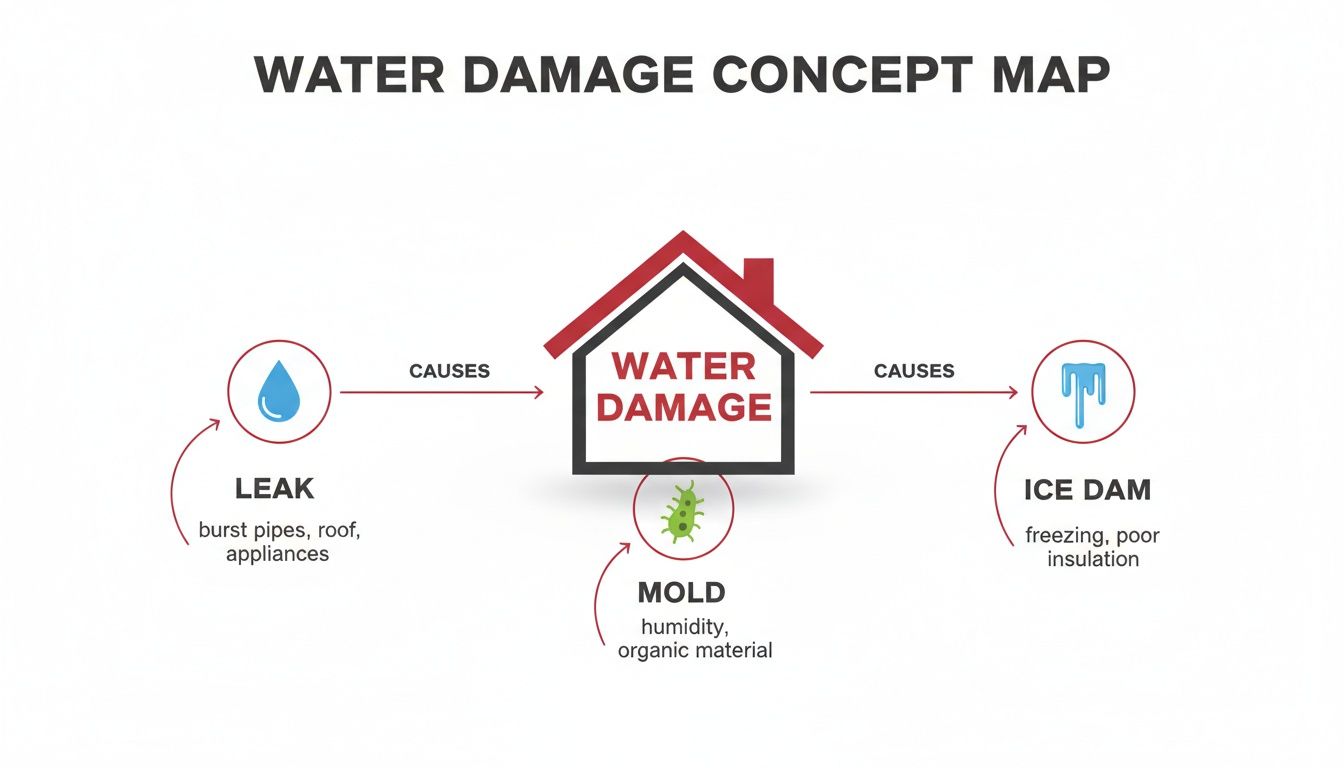
You can see how a single issue—poor water management—branches out into multiple costly and unhealthy situations inside your home.
Making A Smart Investment
A good gutter system is more than just a water diverter; it can be a smart, sustainable part of your home. By connecting rain barrels to your downspouts, some homeowners can cut their outdoor water usage by up to 40%. That can translate to around $180 back in your pocket annually from lower utility bills.
And when you invest in premium materials like copper, you're getting a system that can easily last over 50 years. It's a one-and-done upgrade. If you're interested in the bigger picture, you can learn more from this global industry report on market trends.
The right material and style also ensure your gutters work in harmony with the various roofing system types out there, giving you a cohesive and high-performing home exterior. It’s an investment that protects your foundation, boosts your home’s value, and adds resilience for decades to come.
Got Gutter Questions? We've Got Answers.
Even after seeing how crucial gutters are for protecting a home, most homeowners in our area still have a few practical questions. Let's tackle some of the most common ones we hear from folks around Dallas-Fort Worth and East Texas.
How Often Should Gutters Be Cleaned In Texas?
Here in Texas, you should plan on cleaning your gutters at least twice a year. A good routine is once in the late spring after all the pollen, seeds, and "tree helicopters" have dropped, and again in late fall once the trees are bare.
If your yard is full of big, beautiful oaks or pines, you'll probably want to do it more often. A clogged gutter is useless, and you don't want to find that out during one of our famous Texas downpours.
Are Gutter Guards Really Worth The Money?
In most cases, absolutely. Gutter guards are a smart investment, especially if you have mature trees that constantly dump leaves and debris onto your roof. They drastically cut down on how often you have to climb a ladder and ensure water can actually get in the gutter when it matters most.
Think of it this way: no gutter guard is 100% maintenance-free, but a good one stops the big, messy clogs that cause water to pour over the sides, damage your foundation, and rot the wood on your house. It’s proactive protection.
We can help you find a tough, reliable guard system built to handle our intense weather, giving you one less thing to worry about.
Can I Just Install Gutters Myself?
Tackling a DIY gutter installation can look like a great way to save a few bucks, but it's a tricky job with a high risk of getting it wrong. Getting the slope just right so the water flows, not pools, is harder than it looks. You also have to make sure every seam is perfectly sealed and that the whole system is securely attached to your fascia board.
A small mistake can cause the exact kind of water damage you were trying to avoid in the first place. For a system that’s guaranteed to work right and last for years, professional installation is always the best bet. A pro makes sure every single piece works together flawlessly to protect your home.
Your home's exterior is a single, connected system, and gutters play a starring role. If you're ready to safeguard your foundation and boost your home's defenses against the weather, it's time to talk.
Contact Hail King Professionals for a free, no-pressure inspection. We'll give you a straightforward quote on a high-performance gutter system designed for our Texas climate. Get started by visiting us at https://hailkingpros.com.