



What Is the Gutter and How Does It Protect Your Home
When you look at your roofline, it's easy to see gutters as just simple metal troughs. But that view misses the bigger picture entirely. A well-designed gutter system is actually your home's most important defense against water damage, a critical piece of its exterior drainage network.
Your Home's First Line of Defense Against Water Damage
Think of your gutter system as a custom-built storm drain, engineered perfectly for your house. During a typical Dallas-Fort Worth thunderstorm, hundreds of gallons of water can pour off your roof. Without gutters, all that water would hammer the ground below, pooling around your foundation and saturating the soil. Over time, this creates enormous pressure on your home’s structural base.
The job of a gutter is beautifully simple but absolutely essential. It catches all that rainwater, funnels it into downspouts, and directs it a safe distance away from your house. This controlled flow prevents a whole menu of expensive problems. It's no surprise that wind damage and water damage are leading causes of home insurance claims; a good gutter system is your best prevention.
The Core Mission of Your Gutter System
This one system is doing several critical jobs at once. It keeps your siding from getting stained and rotten, protects your flowerbeds and lawn from erosion, and—most importantly—keeps your foundation solid and dry. Letting your gutters fall into disrepair is one of the most common and costly mistakes a homeowner can make. To dig deeper into this, check out our guide on why a house needs gutters.
A functional gutter system isn't just a nice feature; it's a necessity. It’s what makes the difference between rainwater being a harmless part of nature and a destructive force attacking your home's very foundation.
To really understand the scale, consider this: just one inch of rain falling on a 1,000-square-foot roof creates over 600 gallons of runoff. Your gutters have to manage all of it, every single time it rains.
A Gutter System's Three Essential Jobs
Let's break down the primary functions your gutter system performs to keep your home safe from water. It's a simple, three-step process.
| Function | Key Component | Primary Goal |
|---|---|---|
| Collect | Horizontal Troughs | Capture all rainwater runoff from the roof's edge before it can fall to the ground. |
| Channel | Downspouts & Elbows | Transport the collected water vertically from the roofline down toward the ground. |
| Divert | Extensions & Splash Blocks | Direct water safely away from the home's foundation, preventing pooling and saturation. |
Each part plays a vital role in protecting your investment. When all three work in harmony, your home stays safe and dry, just as it should.
Deconstructing Your Gutter System: How Each Part Works
To really get what a gutter is, you need to see it as more than just a piece of metal on your roof. It's a whole system, a team of specialized parts all working together. I like to think of it as a custom-built water highway for your house. Each component has a specific job, and if even one part fails, you get a water traffic jam that can lead to overflows and serious damage.
Let's track a single raindrop during one of those classic Texas storms. It hits your roof, runs down the slope, and lands in the gutter troughs. These are the long, horizontal channels you see along the roof's edge, doing the heavy lifting of catching all that water. They’re attached to your home's fascia board, that flat trim right under the roofline.
This simple diagram breaks down how all the parts work together to collect, channel, and move water safely away.
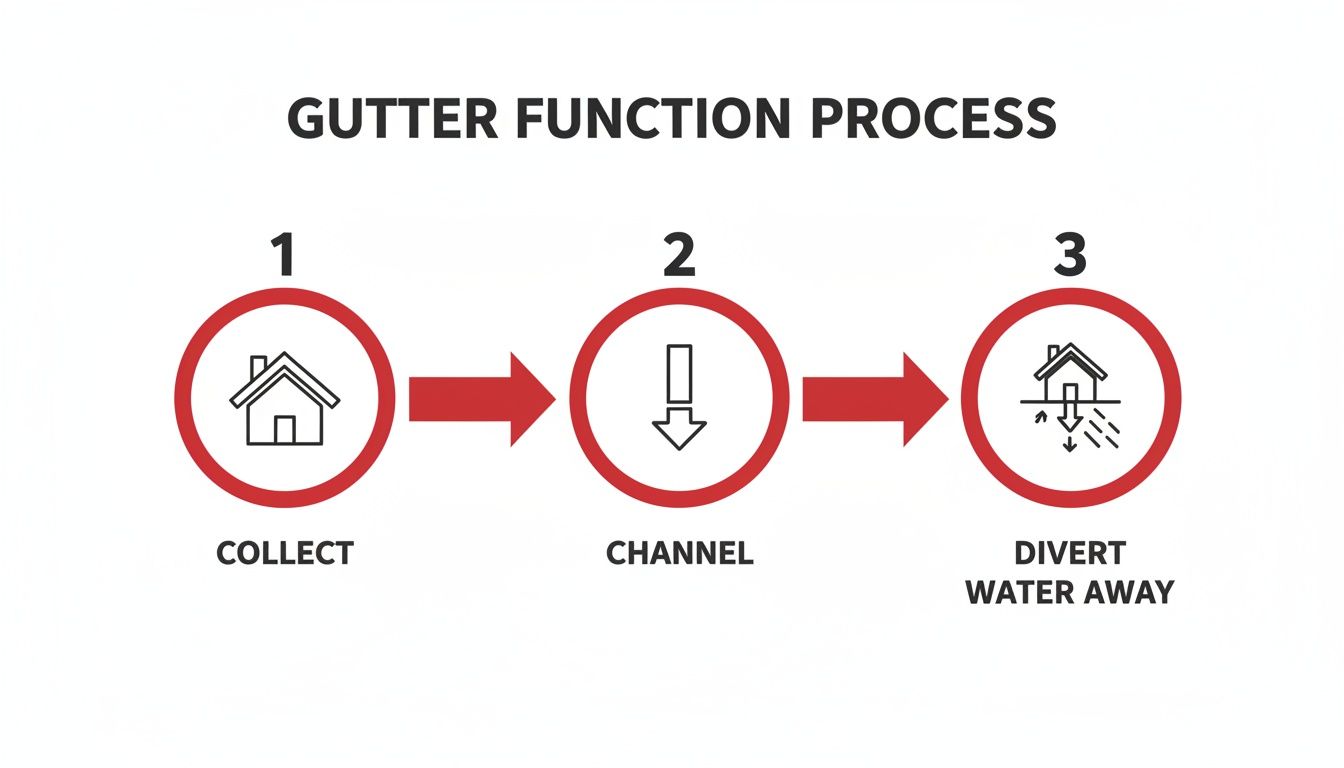
It’s a straightforward three-step process, but it’s absolutely critical for protecting your home’s foundation every time it rains.
From Collection to Diversion
The water doesn't just sit in the trough. The troughs are sealed off with end caps and installed at a very slight angle. You might not even notice it, but this pitch is what directs all the collected water toward the next stop: the downspout. That’s the vertical pipe that takes the water from the roof all the way down to the ground.
Downspouts rarely go straight down. They have to navigate around the eaves and other features of your house, which is where elbows come in. These angled connectors create a smooth, uninterrupted path for the water. Without them placed just right, you'd have water splashing all over your siding or pooling where you don't want it.
Each component, from the hidden hangers supporting the troughs to the final splash block on the ground, is a link in a chain. A professional installation ensures every link is strong, guaranteeing the system can handle the torrential downpours common in the Dallas-Fort Worth area.
Once the water exits the downspout, its journey still isn't over. You can't just dump all that water right next to your foundation—that's a recipe for disaster. It has to be directed even farther away.
- Downspout Extensions: These are simple attachments that clip onto the bottom of the downspout to carry water several more feet out into your yard.
- Splash Blocks: These are basic concrete or plastic blocks that sit under the downspout opening. Their job is to disperse the water and prevent it from carving a trench in your landscaping.
Grasping the importance of effective downspout drainage is the final piece of the puzzle. When every part, from the trough to the splash block, does its job, your home stays safe and dry.
Choosing the Right Gutter Material and Style for Your Home

Now that you know how gutters protect your home, it's time to dig into the fun part: picking the right system. Gutters are far from a one-size-fits-all solution. They come in different materials, shapes, and construction styles, and the best choice for your home depends on your budget, aesthetic preferences, and the kind of weather we get here in Texas.
Making a smart decision means finding that sweet spot between durability, cost, and curb appeal. Let's break down the options.
A Practical Comparison of Gutter Materials
The material you choose is the single biggest factor in your gutter system's strength and lifespan. It determines how well it will hold up to years of blistering sun, torrential downpours, and the occasional hailstorm. Below is a quick rundown of the most common options to help you see what might work best for your home.
| Material | Pros | Cons | Average Lifespan |
|---|---|---|---|
| Aluminum | Lightweight, rust-proof, cost-effective, wide color selection. | Can be dented by heavy hail or ladders. | 20+ years |
| Steel | Extremely strong and durable, dent-resistant, great for harsh climates. | Heavier, can rust if not properly maintained (galvanized) or coated. | 20-25 years |
| Copper | Unmatched longevity, stunning curb appeal, develops a unique patina. | The most expensive option, requires specialized installation. | 50-100+ years |
Each material has its place, but for most homeowners in our area, aluminum offers the best all-around value. It's also important to consider how your gutters will look alongside different roofing system types to ensure a cohesive, polished appearance for your home's exterior.
Seamless vs. Sectional Gutters: A Critical Distinction
How your gutters are put together is just as crucial as what they're made of. For years, the only option was sectional gutters, which are sold in 10 to 20-foot pieces and pieced together on-site. The problem is simple: every seam is a potential weak point where leaks can start.
This is why seamless gutters have become the industry standard. Instead of being pieced together, they're custom-fabricated right at your home from a single, continuous coil of metal. They are cut to the exact length of your roofline, completely eliminating the seams and the leaks that come with them.
Seamless aluminum gutters are hands-down the most popular choice for homeowners in Dallas-Fort Worth and East Texas. They offer the perfect balance of resilience against our weather, a clean and modern look, and reliable, long-term performance.
K-Style vs. Half-Round: Two Dominant Designs
Finally, you’ll choose a profile, or shape. While there are a few niche options out there, almost every home uses one of two primary styles.
- K-Style Gutters: This is what you see on the vast majority of modern homes. They have a flat back that mounts flush against the fascia and a decorative front that looks a bit like crown molding. Their angular shape allows them to carry more water than half-round gutters of the same width.
- Half-Round Gutters: True to their name, these look like a pipe that's been cut in half. This classic, semi-circular shape is often preferred for historic or custom homes to maintain a traditional aesthetic. They work perfectly well but generally hold a bit less water than a K-style gutter.
Getting the right combination of material, construction, and style is key. It ensures your gutters don't just work great—they look great, too.
The True Cost of Neglecting Your Gutters
It’s tempting to push gutter cleaning to the bottom of the to-do list. We all have a million things to do. But ignoring your gutters isn't like skipping a minor chore; it's like unplugging a critical safety system right before a major storm hits. The fallout isn't just a bit of a mess—it can be financially devastating, turning a simple maintenance task into a nightmare of expensive, complicated repairs.
When gutters get clogged with leaves, twigs, and shingle grit, they simply stop doing their job. Water has to go somewhere, so it spills over the sides. This waterfall pounds the ground right next to your house, soaking the soil and creating intense pressure against your foundation. This is how you get foundation cracks, one of the most serious and wallet-busting problems a homeowner can ever face.
The Domino Effect of Water Damage
And the damage doesn't stop there. That overflowing water streams down your siding, leading to ugly stains, peeling paint, and eventually, rot. It can sneak behind the fascia boards—the trim right under your roofline—causing the wood to decay and compromising the entire structure. We also see this happen when water pools on the roof itself, a common issue we encounter during flat roof leak repair inspections.
The problems can easily creep inside your home, too. Water-logged soil can lead to a flooded basement or crawlspace, destroying personal belongings and creating the perfect damp conditions for mold and mildew to take hold. Even the beautiful landscaping you've worked so hard on can be washed away by uncontrolled runoff.
Neglecting gutters isn't saving time or money; it's borrowing from your future at a very high interest rate. A few dollars spent on maintenance today can prevent tens of thousands of dollars in structural repairs tomorrow.
The Financial Reality of Neglect
Let's talk numbers, because they really tell the story. The ROI on keeping your gutters in good shape is huge. Annual professional maintenance might run you $100 to $300, which is pretty reasonable. Compare that to the average water damage claim from gutter neglect, which can skyrocket to between $11,605 and $14,000. If you want to dive deeper into these figures, you can review key industry data on businessresearchinsights.com. That massive gap makes routine gutter care one of the smartest investments you can make in your property.
Here are the most common (and costly) results of clogged gutters:
- Foundation Cracks and Damage: The absolute worst-case scenario, caused by long-term water saturation.
- Roof and Fascia Rot: When water has nowhere to go, it backs up and eats away at the wood structures of your roof.
- Basement Flooding: This means lost property, expensive water removal, and potential mold remediation costs.
- Pest Infestations: Standing water and soggy debris are a welcome mat for mosquitoes, termites, and rodents.
At the end of the day, keeping your gutters clear and functional is about more than just checking a box. It’s about protecting the structural integrity and long-term value of your biggest investment: your home.
Red Flags That Signal Your Gutters Need Help
Knowing how to spot the early warning signs of gutter failure can save you from a world of hurt—and thousands of dollars in repairs. Your gutter system has its own way of telling you when something is wrong, long before a complete disaster strikes. You just have to know how to listen.
Honestly, a simple walk around your property is often all it takes. You don't need to be a roofing pro to see the obvious red flags that your system is struggling. Catching these issues early is the absolute key to stopping a small problem from snowballing into major structural damage.
Visual Clues You Cannot Ignore
The most obvious signs of trouble are often visible right from your yard. The best time to do a quick inspection? During or right after a good rain.
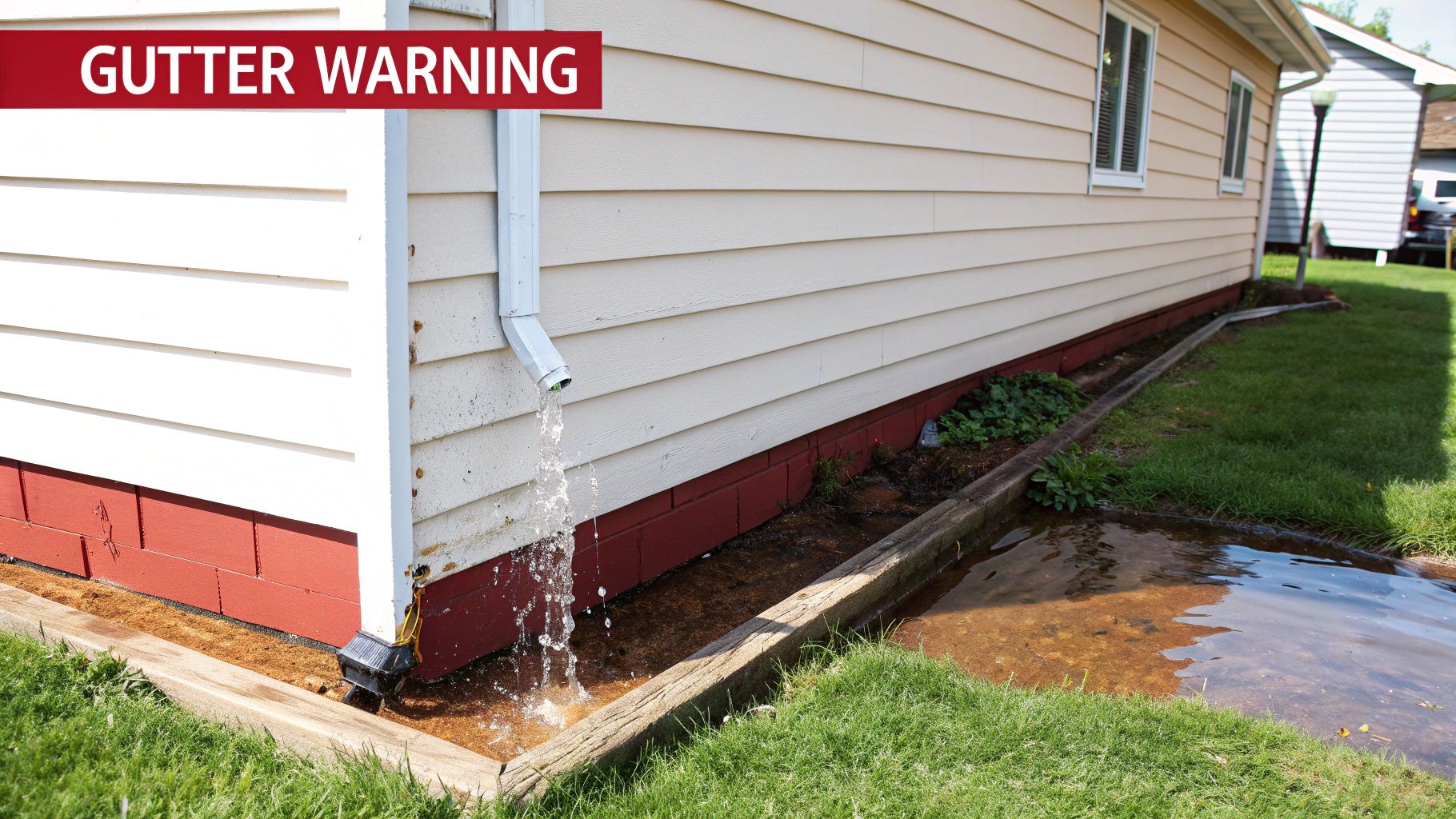
- Overflowing Water: If your gutters look more like a waterfall during a storm, that’s a dead giveaway. They are almost certainly clogged with leaves, twigs, and other gunk. This is the number one sign of a system that just isn't working.
- Sagging or Pulling Away: Look up at your roofline. Gutters should be straight and tight against the fascia. If you see them sagging in the middle or pulling away from the house, the hangers have likely failed from the sheer weight of trapped water and debris.
- Peeling Paint or Stains: See those ugly streaks of dirt, mildew, or peeling paint running down your siding? That's a classic calling card of water constantly spilling over the edge instead of being channeled away.
These aren't just cosmetic issues. They are clear indicators that water is going where it shouldn't, actively damaging your home's exterior and setting the stage for wood rot.
Ground-Level Evidence of Gutter Failure
Sometimes, the most telling clues aren't up on the roof but right at your feet. What you see on the ground tells the true story of where all that water is ending up.
Keep an eye out for these warnings on the ground:
- Water Pooling Around Your Foundation: After a storm, check for puddles or perpetually soggy spots right next to your house. This is a huge red flag. It means water isn't being carried far enough away, putting your foundation under constant pressure.
- Eroded Landscaping: Are your flowerbeds getting washed out? Is mulch constantly scattered across the lawn? That erosion is caused by uncontrolled water pouring from clogged gutters, literally carving trenches into your yard.
- Visible Cracks in the Foundation: This is a more advanced sign of damage, but hairline cracks in your foundation can often be traced back to years of water saturation from failing gutters.
These signs are your home’s way of crying out for help. Paying attention and acting quickly can protect your property from the truly devastating consequences of water damage.
Considering an Upgrade? Let's Talk Gutter Guards
Even the best-installed gutter system eventually faces its biggest enemy: clogs. Leaves, pine needles, shingle grit—it all piles up, turning your gutters into a swampy mess that can't do its job. This is where a smart upgrade like gutter guards comes in, saving you from that dreaded seasonal chore.
Think of gutter guards as a bouncer for your gutter system. They sit over the top of the trough, letting rainwater in while keeping leaves, twigs, and other junk out. It’s a simple idea, but it’s incredibly effective at preventing the clogs that cause water to overflow and damage your home. No more climbing a wobbly ladder to scoop out gunk.
How Gutter Guards Protect Your Home and Your Wallet
By keeping debris out from the start, gutter guards ensure your system is always ready for the next downpour. They're a fantastic long-term investment that really extends the life of your gutters and protects your home.
Gutter guards essentially turn a high-maintenance headache into a self-sufficient system. You're not just buying a product; you're buying peace of mind and protecting your home's foundation, siding, and landscaping from water damage year after year.
It's no surprise they're becoming so popular. The U.S. gutter guards market was valued at $1.16 billion in 2026 and is expected to hit $1.43 billion by 2031. While basic mesh and screen products still make up the biggest slice of the market (41.23%), the real action is in advanced micro-mesh screens, which are the fastest-growing option for a reason. If you're curious, you can discover more insights about the gutter guard market on mordorintelligence.com.
There are a few main types out there, and each has its own strengths:
- Screens: These are the most basic, like a simple metal or plastic grid. They're great for stopping big leaves.
- Mesh: A step up, this is a tighter weave that can catch smaller debris like pine needles.
- Micro-Mesh: This is the top-tier option. The weave is so fine it can block even tiny particles like shingle grit, offering the best filtration.
- Reverse Curve: A totally different approach. These are solid covers designed to let water cling to the surface and curve into the gutter, while debris just slides right off the edge.
The right choice really depends on what kind of trees you have in your yard and what your budget looks like. But no matter which way you go, adding a quality guard is a major upgrade for your home's defense system.
Got Gutter Questions? We've Got Answers.
Even after you know the ins and outs of what gutters are and how they work, the real-world questions always pop up. Knowing the answers to these common homeowner dilemmas can save you a lot of headaches and help you make smart choices for your home's protection. Let’s dive into a few questions we hear all the time.
How Often Do My Gutters Really Need to Be Cleaned?
As a rule of thumb, plan on cleaning your gutters twice a year. A good spring cleaning gets rid of all the helicopters, seeds, and pollen that trees drop, and another session in late fall clears out the leaves before winter arrives.
But that's just a starting point. Take a look at your own yard. If your house is surrounded by big, beautiful trees—especially pines that seem to shed needles constantly—you’ll probably want to bump that up to 3 or even 4 times a year. The whole idea is to stop clogs from forming before a big Texas downpour turns them into a major problem.
Think of regular cleaning as preventative care. You're not just scooping out gunk; you're taking the weight off your gutter hangers and making sure water has a clear path away from your foundation.
Should I Repair a Small Problem or Just Replace the Whole System?
This really comes down to the scale of the damage. If you've just got one leaky corner or a couple of hangers that have come loose, a simple repair is usually the most sensible and affordable route. A pro can get a small section resealed or re-secured in no time.
But when you start seeing the same problems pop up all over the place, that's when you have to think about replacement. It's simply a better investment in the long run.
Here's when replacement makes more sense:
- Widespread Rust: Little orange spots showing up in multiple places? That means the gutter’s protective coating is failing.
- Lots of Cracks: If you're seeing multiple fractures and splits, the material itself is getting old and brittle.
- Sagging Sections: When long runs of your gutters are pulling away from the house, the entire system is losing its structural integrity.
- Leaks Everywhere: For older, sectional gutters, having leaks at seam after seam is a clear sign it's time for a seamless upgrade.
Can I Just Install New Gutters Myself?
Honestly, while it might seem like a manageable DIY project, this is one area where we strongly recommend calling in a professional. Gutter installation is a game of precision, and it's surprisingly easy to get wrong without the right tools and experience.
The single most important part is getting the pitch right—that almost invisible downward slope that channels water to the downspouts. If that angle is off by even a tiny fraction, you'll end up with standing water. That stagnant water then leads to rust, becomes a breeding ground for mosquitos, and eventually overflows, which is the very thing you're trying to prevent. A professional crew has the equipment and know-how to nail the installation perfectly the first time.
If you have more questions or you’re seeing some of the red flags we just talked about, don't wait for the problem to get worse. The team at Hail King Professionals is here to help with free, no-pressure inspections across Dallas-Fort Worth and East Texas. We’ll give you a straight, honest opinion on the health of your gutter system. Schedule your free inspection today!