


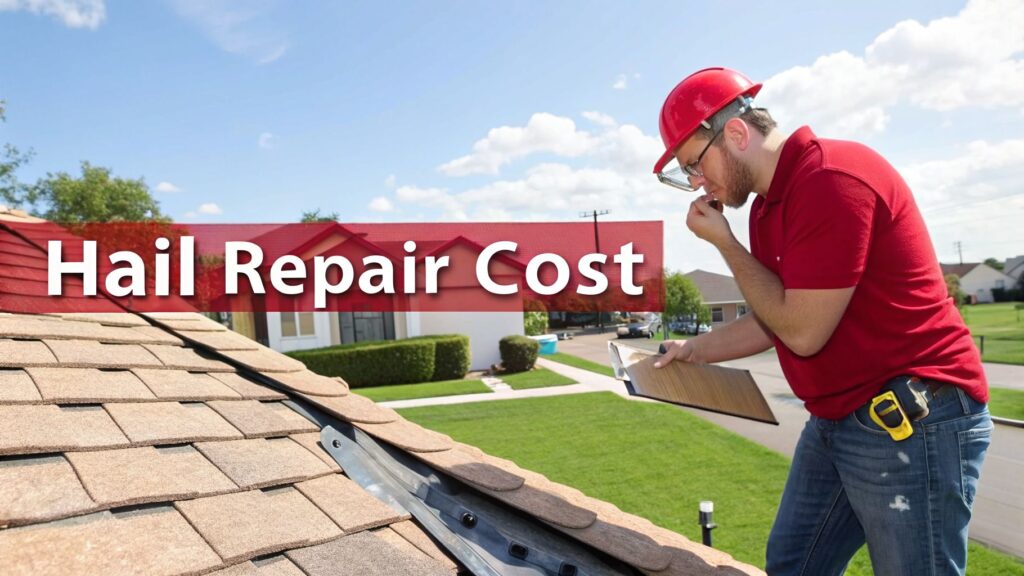
Roof Hail Damage Repair Cost A Texas Homeowner’s Guide
When a hailstorm rolls through, the first question on every homeowner's mind is always the same: "What's this going to cost me?" The truth is, roof hail damage repair costs can swing wildly, from around $600 for a few minor fixes to $6,500 or more if the damage is widespread. It’s a lot like a car repair—a few dings are one thing, but major bodywork is a completely different ballgame.
Answering Your Top Question: How Much Will Repairs Cost?

The uncertainty after a storm can be incredibly stressful. To give you a clear, realistic starting point, let’s break down the costs by how bad the damage is and what kind of roof you have. This will give you a solid baseline before we dig into the other factors that can move the final price up or down.
Hail damage claims are a huge part of residential roofing expenses, and the numbers tell the story. For smaller, localized issues, most homeowners find themselves paying somewhere between $600 and $1,400. But when the damage is more serious—covering multiple sections of your roof, requiring underlayment checks, or needing a ton of shingle replacement—those costs can quickly jump to the $2,500 to $6,500 range, and sometimes even higher. You can get a deeper dive into these figures by exploring some of the latest industry findings on roof repair costs.
A Snapshot of Potential Repair Costs
To help you get a quick handle on what you might be looking at, the table below gives a snapshot of potential costs. Think of it as a ballpark estimate for a standard-sized home, designed to help you gauge the scope of your situation.
Key Insight: The difference between a minor and a major repair isn't just about counting damaged shingles. It’s really about the integrity of what’s underneath, the complexity of your roof’s design, and the quality of materials needed to make your home safe and sound again.
Here's a look at what you can generally expect.
Estimated Roof Hail Damage Repair Costs by Severity and Material
This table provides a snapshot of potential repair costs for a standard-sized home, categorized by the level of hail damage and the type of roofing material.
| Damage Severity | Asphalt Shingles (Cost Range) | Metal Roofing (Cost Range) |
|---|---|---|
| Minor | $600 – $1,400 | $800 – $1,800 |
| Moderate | $1,400 – $2,500 | $1,800 – $3,500 |
| Severe | $2,500 – $6,500+ | $3,500 – $8,000+ |
So what do these categories actually mean for your roof?
- Minor Damage: This is your best-case scenario. We're talking a few dented or cracked shingles in one small spot, with no signs of leaking. The fix is usually quick and straightforward.
- Moderate Damage: Here, the damage is more noticeable. You might see widespread "bruising" or cracks across one or two sections of the roof, and maybe some damaged flashing around vents or the chimney.
- Severe Damage: This is the big one. The damage is extensive, covering most of the roof. You'll see significant granule loss, shingles that are actually punctured, and a high chance the underlayment is compromised. At this point, the conversation often shifts from repair to a full roof replacement.
Having these categories in your back pocket gives you a powerful way to frame the situation. Of course, only a professional inspection can give you a precise quote, but this breakdown provides a solid foundation for what to expect financially.
What Really Drives the Final Cost of Your Hail Damage Repair?
Ever wonder why your neighbor got a bill for a few hundred bucks for hail damage, but your estimate for what looks like the same problem is in the thousands? It's a common question, and the answer isn't always straightforward. The final price on a roofing estimate is a mix of several key factors, and it’s about a lot more than just swapping out a few busted shingles.
Think of it less like a single price tag and more like a detailed recipe. The materials, the shape of your roof, and even what’s hiding underneath all play a part. Let's pull back the curtain and look at what really determines your final bill.
It Starts with Your Roofing Material
The biggest piece of the pricing puzzle is what your roof is actually made of. Just like buying tires, you can get a basic set for a family sedan or high-performance ones for a sports car—they both do the same job, but the cost is worlds apart. Roofing is no different.
- Asphalt Shingles: This is what you see on most homes. They're the most common and typically the most affordable material to repair, which is good news for your wallet. The trade-off is they're also one of the most likely to get damaged by hail in the first place.
- Metal Roofing: Whether it's standing seam or metal shingles, these roofs are tough. But that durability comes with a higher price for both the materials and the specialized skills needed to work on them. Fixing a dented metal panel is a whole different ballgame than replacing an asphalt shingle.
- Specialty Materials: If you have a slate, tile, or wood shake roof, you've got a premium product. The materials themselves are expensive, and they demand a high level of craftsmanship to install and repair, pushing up both material and labor costs.
The Shape and Steepness of Your Roof
Not all roofs are created equal. A roofer can walk around easily on a simple, low-sloped gable roof, making the job quick and efficient. But a steep roof with multiple angles, dormers, and skylights? That’s a different story entirely.
The complexity and pitch (the steepness) of your roof have a direct line to your labor costs. Steeper roofs mean the crew needs extra safety gear like harnesses and roof jacks. It also means everything moves slower because materials have to be carefully hauled up and secured. That extra time and equipment will always be reflected in the labor line of your estimate—a roofer might spend 25-40% more time on a steep roof compared to a simple, walkable one.
A roofer once explained it to me this way: "Working on a steep roof is like trying to build a puzzle on a tilted table. Everything takes more time, more care, and more gear to make sure nothing—and no one—slips."
Hidden Problems Lurking Under the Shingles
Sometimes the real cost driver is the damage you can't see from the street. What’s going on underneath your shingles can quickly turn a straightforward repair into a much bigger project.
- Decking Damage: When a big piece of hail smacks your roof, it doesn't just damage the shingle; it can crack it and let water seep through to the wooden deck below. If your roofer finds soft, spongy, or rotted decking during the repair, it has to be cut out and replaced. That adds unexpected material and labor costs to the job.
- Permit Fees: Most towns and cities require a permit for any significant roofing work. It’s a standard administrative cost that varies by location, but it's a necessary part of the process and will be included in your estimate.
- Optional Upgrades: While making repairs, you might decide to make an improvement. A common one is upgrading to Class 4 impact-resistant shingles. While they cost more upfront, they can save you a bundle down the road with lower insurance premiums and far better protection against the next hailstorm.
Making Sense of Your Insurance Claim
Filing an insurance claim can feel like a bigger headache than the storm that caused the damage. But it doesn’t have to be that way. With a bit of know-how and a solid game plan, you can navigate the process without the stress and get the full settlement you’re entitled to.
Think of it this way: you wouldn't walk into a major negotiation unprepared. You’d get your facts straight and bring an expert. The same exact logic applies here. The key is to be organized, proactive, and have a professional on your side from day one.
Your First Steps After the Hail Stops
Before you even pick up the phone to call your insurance agent, your first priority is to safely document the damage. This evidence is your most valuable asset in the entire process.
- Safety First, Always: Only inspect your roof if you can do it safely from the ground. Your smartphone camera or a camera with a good zoom lens is perfect for getting clear, detailed pictures of damage to your shingles, gutters, siding, and even window screens.
- Document Everything: Seriously, you can't take too many photos. Capture the damage from different angles and in different lighting. Also, jot down the date and time the storm hit—you'll need it for your claim.
- Call a Professional Roofer: This is, without a doubt, the most important move you can make. Get a trusted, local roofing contractor to perform a full inspection before you file your claim. Their report is an independent, expert assessment that gives you a solid baseline to compare with what the insurance adjuster finds.
Getting that professional inspection first puts you in control. It gives you a detailed breakdown of every single issue—including subtle damage an adjuster might miss—and a clear picture of the true roof hail damage repair cost.
Talking the Talk: Insurance Terms You Need to Know
You're going to run into some specific terms during the claims process. Getting a handle on them now will save you a lot of confusion down the road.
- Deductible: This is simply the amount you have to pay out of your own pocket before your insurance coverage starts. If your deductible is $2,000 and the total approved repair cost is $10,000, you pay the first $2,000, and your insurance company covers the other $8,000.
- Depreciation: Insurance carriers often calculate your roof's value based on its age and current condition. They might first pay you the Actual Cash Value (ACV)—what your old, damaged roof was worth. Once you prove the repairs are complete (usually with an invoice from your roofer), they'll release the rest of the funds, which is called Recoverable Depreciation.
The cost of your new roof isn't just one number; it's a combination of materials, labor, and other factors, all of which need to be clearly listed for your insurance company.

As this shows, everything from the shingles you choose to the steepness of your roof and local permit fees gets factored into the final price. A good roofer’s estimate will itemize all of this for your claim.
Working with the Insurance Adjuster
When the insurance adjuster schedules their visit, make sure you’re there. Better yet, have your roofer there with you. Walking the property together allows your contractor to point out specific areas of damage and explain why certain repairs are necessary, making sure nothing gets overlooked.
Pro Tip: Keep things professional and cooperative with your adjuster. Give them all your photos and a copy of your roofer's detailed estimate. It’s not a battle; a collaborative approach almost always leads to a smoother, faster, and more successful claim.
It’s worth noting that the roofing industry is dealing with a historic number of storm claims. Across the U.S., roof repair and replacement costs recently hit nearly $31 billion—a massive 30% jump since 2022. Much of this is driven by hail and high winds, which now account for about 25% of all roof claims. You can read the full report on rising roofing costs to get the full picture.
In today's climate, coming prepared with professional documentation isn't just a good idea—it's essential. It’s the best way to ensure your claim covers the full extent of the damage so you can get your home restored the right way.
Repair or Replace? Making the Right Call for Your Hail Damaged Roof
After a bad hailstorm rolls through, you’re left with one big question: should you patch up the damage or go for a full roof replacement? It’s a major decision, and the right answer isn't always cut and dry. Think of it like a car with engine trouble—sometimes a quick fix gets you back on the road, but other times you’re just delaying the inevitable breakdown.
Figuring this out means taking a hard look at the actual damage, considering your roof's age, and understanding what your insurance will realistically cover. This choice is the single biggest factor in your final roof hail damage repair cost and determines how well your home will stand up to the next storm.
When a Roof Repair Makes the Most Sense
Choosing to repair is often the smart, budget-friendly move, but only when the damage is limited and the rest of your roof is in solid shape. A spot repair is probably your best bet if you're dealing with these situations.
- Localized Damage: If the hail impacts are isolated to just one section—maybe one slope or a handful of shingles near a chimney—a targeted repair is all you need.
- A Younger Roof: Is your roof less than 10-15 years old? If it’s been well-maintained, the shingles still have a lot of life left. Replacing just the damaged areas keeps the rest of your perfectly good roof system intact.
- No Underlying Issues: This is key. A professional inspection needs to confirm that the wood decking underneath is still strong and there are no hidden leaks or moisture problems.
Red Flags That Point to a Full Replacement
On the flip side, some signs clearly scream "replace me." Trying to patch a roof that’s on its last legs can lead to much bigger headaches down the road, like chronic leaks and even structural rot. A full replacement becomes the only real long-term solution when these red flags pop up.
An experienced roofer will tell you that patching an old, brittle roof is like putting a new tire on a car with a failing transmission. You’ve fixed one problem, but the bigger, more expensive issue is still waiting to happen. A full replacement addresses the entire system.
Here are the conditions that strongly suggest it's time for a brand-new roof:
- Widespread Damage: When hail has left its mark all over—bruises, cracks, or significant granule loss across multiple areas—a replacement is the only way to guarantee your home is fully protected.
- An Aging Roof: If your asphalt shingle roof is creeping up on the 20-year mark, it’s already nearing the end of its life. A major hailstorm is often the final blow that pushes an old roof over the edge.
- Previous or Failing Repairs: Can you spot mismatched shingles or old patches that are already curling up? That's a sign your roof has a history of issues, and another patch is just a temporary fix at best.
Repair vs. Replace: A Quick Decision Guide for Hail Damage
To make it even clearer, here’s a quick-glance table to help you weigh the factors. Use this to get a better sense of which direction your roof is leaning.
| Consider This Factor | Favors Repair | Favors Replacement |
|---|---|---|
| Extent of Damage | Isolated to one or two small areas. | Widespread across multiple roof slopes. |
| Roof Age | Under 10-15 years old. | Approaching or exceeding 20 years. |
| Underlying Condition | Decking is solid; no pre-existing leaks. | Decking is soft; signs of moisture or rot. |
| Previous Repairs | First time needing significant repairs. | Multiple old patches are visible or failing. |
| Insurance Assessment | Damage is below the threshold for full replacement. | Adjuster agrees damage is significant and widespread. |
Ultimately, this guide helps you ask the right questions, but a professional inspection is the only way to know for sure.
How Your Insurance Adjuster Sees It
At the end of the day, your insurance company has a massive say in this decision. The adjuster’s job is to determine if the damage is bad enough to justify paying for a whole new roof, and they have specific rules for this. They’ll often measure a 10×10 foot square on each slope and count the number of hail hits to gauge the severity.
If their count shows extensive damage that compromises the roof’s ability to shed water, they're much more likely to approve a full replacement. This is where having your own trusted roofer is so important. Their detailed report and photos give you a powerful professional opinion to make sure nothing gets missed.
If you do get approved for a new roof, it's the perfect time to think about an upgrade. Our guide on hail-resistant roofing materials is a great resource to bring to your discussion with the adjuster.
Managing Out-of-Pocket Costs and Financing Options
Even with a great insurance settlement, the out-of-pocket costs from a hail claim can feel like a financial gut punch. Your deductible alone can be a real hurdle, often running into thousands of dollars. That gap between what the insurance company pays and the final bill can force you to delay critical repairs, leaving your home exposed.
But that financial stress doesn't have to put your project on hold. Modern financing options are specifically designed to bridge this exact gap, making the full roof hail damage repair cost manageable right away. You don’t have to empty your savings account just to protect your biggest asset.
Straightforward Financing to Protect Your Home
Think of financing as a practical tool that gets the work started now, allowing you to pay over time in predictable monthly chunks. Many of the best roofing contractors offer programs specifically for homeowners dealing with storm damage, and they’re a world away from the old, complicated loan processes you might be dreading.
These options are built to ease the burden, not add to it. The most common benefits you'll find include:
- Soft Credit Checks: You can typically see what you qualify for without a "hard" credit pull that dings your score.
- Flexible Payment Plans: Terms are usually structured to fit your budget with clear, easy-to-understand monthly payments.
- No Prepayment Penalties: Got a bonus or tax refund? You can pay off the balance early without getting hit with extra fees.
This approach means you can afford the quality materials and craftsmanship your home deserves instead of cutting corners. As you look into financing for your repair, it's helpful to know the difference between a business loan versus personal loan to determine which path is right for your financial situation.
Key Takeaway: Financing isn’t just for a complete roof replacement. It’s a smart way to cover your insurance deductible, pay for premium upgrades like impact-resistant shingles, or handle any other out-of-pocket costs that come with your storm restoration.
Making the Process Simple and Accessible
The best financing solutions are designed for real life—meaning they’re simple and fast. You shouldn't have to jump through a dozen hoops just to get funds for an urgent repair. In most cases, the process is quick and straightforward, allowing the repair work to begin almost immediately.
Unlike a home equity loan, these specialized plans typically don't require you to use your house as collateral. This makes them a more accessible and lower-risk choice for many homeowners who just need to get the job done. By breaking down the total cost into manageable payments, you can restore your home’s safety and value without the immediate financial squeeze.
To get a clearer picture of how these programs work, take a look at our guide on how to finance a new roof.
What to Do Right After a Texas Hail Storm

The hail has stopped, the sky is clearing up, and now comes the unsettling quiet. It's that moment when you step outside and wonder, "Okay, what now?" Staring at potential damage can be overwhelming, but getting paralyzed by confusion is the last thing you need.
What you need is a simple, straightforward game plan. Taking a few smart, deliberate steps right away can protect your home from further issues, set you up for a smoother insurance process, and give you back a sense of control.
Your 5-Step Hail Recovery Checklist
Think of this as your immediate roadmap. Following these five steps will take you from post-storm chaos to a clear path forward.
Document Everything (Safely!): Your first job is to play detective. Grab your smartphone and, from the safety of the ground, start taking pictures and videos of everything. Look for dented gutters, cracked siding, torn window screens, and any obvious spots on your roof you can see from below. This initial evidence is gold for your insurance claim.
Call a Roofer Before Your Insurer: This might sound backward, but it’s the most important tip I can give you. Before you even dial your insurance agent, have a trusted local roofer perform a free, no-obligation inspection. They know exactly what to look for—including the subtle damage an adjuster might overlook—and their professional report gives you a powerful starting point for your claim.
Review Your Insurance Policy: It’s time to get familiar with your homeowner's policy. Find the section on wind and hail damage and, specifically, look for your deductible. This is the amount you’ll have to pay out of pocket, so knowing that number upfront is key to managing the final roof hail damage repair cost.
Pro Tip: Your deductible isn't a fee; it's simply the portion of the repair bill that's your responsibility before your insurance coverage starts paying. Getting a handle on this number early on prevents any financial surprises down the road.
Talk Through Repair vs. Replacement: Once the roofer finishes their inspection, they'll sit down with you and explain what they found. This is your chance to have a real conversation about the best path forward. Is a simple repair enough, or does a full replacement make more sense for the long-term health of your home? A good contractor will lay out the pros and cons of each option honestly.
Choose Your Partner and Schedule the Work: With a professional assessment in hand and a clear picture of your insurance situation, you’re ready to make a decision. Select a contractor you trust, sign an agreement that clearly details the work and costs, and get your project officially on the calendar.
Following this checklist empowers you to handle the situation like a pro. When you're ready to find the right team for the job, our guide on choosing a roofing contractor near me has some great pointers.
Got Questions? We've Got Answers
After a hailstorm, your mind is probably racing with questions. We get it. Here are some straight-talking answers to the most common things Texas homeowners ask us.
How Long Do I Have to File a Hail Damage Claim?
This one’s a big deal. Most insurance policies in Texas give you one year from the date the hail hit to file your claim. But honestly, waiting is one of the worst things you can do.
The sooner you call for an inspection and get the ball rolling, the easier it is to prove the damage came from that specific storm. If you let it slide, small issues you can't even see—like tiny cracks in shingles—can turn into huge problems like rotted decking or mold. By then, your insurance company might not cover the extra damage. Bottom line: act fast.
Will My Insurance Rates Go Up if I File a Claim?
It's the question on everyone's mind. The short answer is no, your individual claim shouldn't make your premium jump. Insurance companies classify hail as an "Act of God," which means it's a widespread disaster, not something you could have prevented. It's completely different from an at-fault claim, like if a fire started from a forgotten candle.
Here's the catch: While your claim won't single you out, if your entire area gets hammered by storms, the insurance carrier might raise rates for everyone in your zip code to offset their losses. So, don't ever let the fear of a rate hike stop you from filing a legitimate claim. You're paying for this coverage—use it when you need it.
Can a Roofer Just Cover My Deductible?
Absolutely not. If a roofer offers to "eat" your deductible or cover it for you, it's a massive red flag. In Texas, it's flat-out illegal and considered insurance fraud.
Here’s how it should work: A trustworthy roofer will give you a clear, detailed estimate for the total roof hail damage repair cost. You pay your deductible portion directly to the contractor, and your insurance company pays the rest of the amount they approved. Steer clear of anyone suggesting shady workarounds.
What if My Insurance Claim Gets Denied?
Don't panic—a denial is often just the first step in a negotiation. The first thing you should do is request a detailed explanation for the denial in writing. Sometimes it’s a simple issue, like not having enough photo evidence of the damage.
Once you have that, your next call should be to a reputable local roofer for a second opinion. A detailed inspection report from an experienced professional can provide the exact proof you need to go back to your insurance company and successfully appeal their decision.
Figuring all this out after a storm can feel overwhelming, but you're not in it alone. The team at Hail King Professionals offers free, same-day inspections to give you an honest look at what's going on with your roof. We'll walk you through your options and give you the expert documentation needed to make your insurance claim go smoothly.