


Stone Coated Steel Roofing A Guide for Texas Homes
Ever seen a roof that has the timeless look of Spanish tile or a rustic wood shake, but carries the powerhouse strength of commercial-grade steel? That’s the magic of stone-coated steel roofing. It’s the perfect blend of elegant design and raw durability, making it an increasingly popular choice for homeowners, especially here in storm-heavy areas like Dallas-Fort Worth.
How Stone-Coated Steel Roofing Is Made
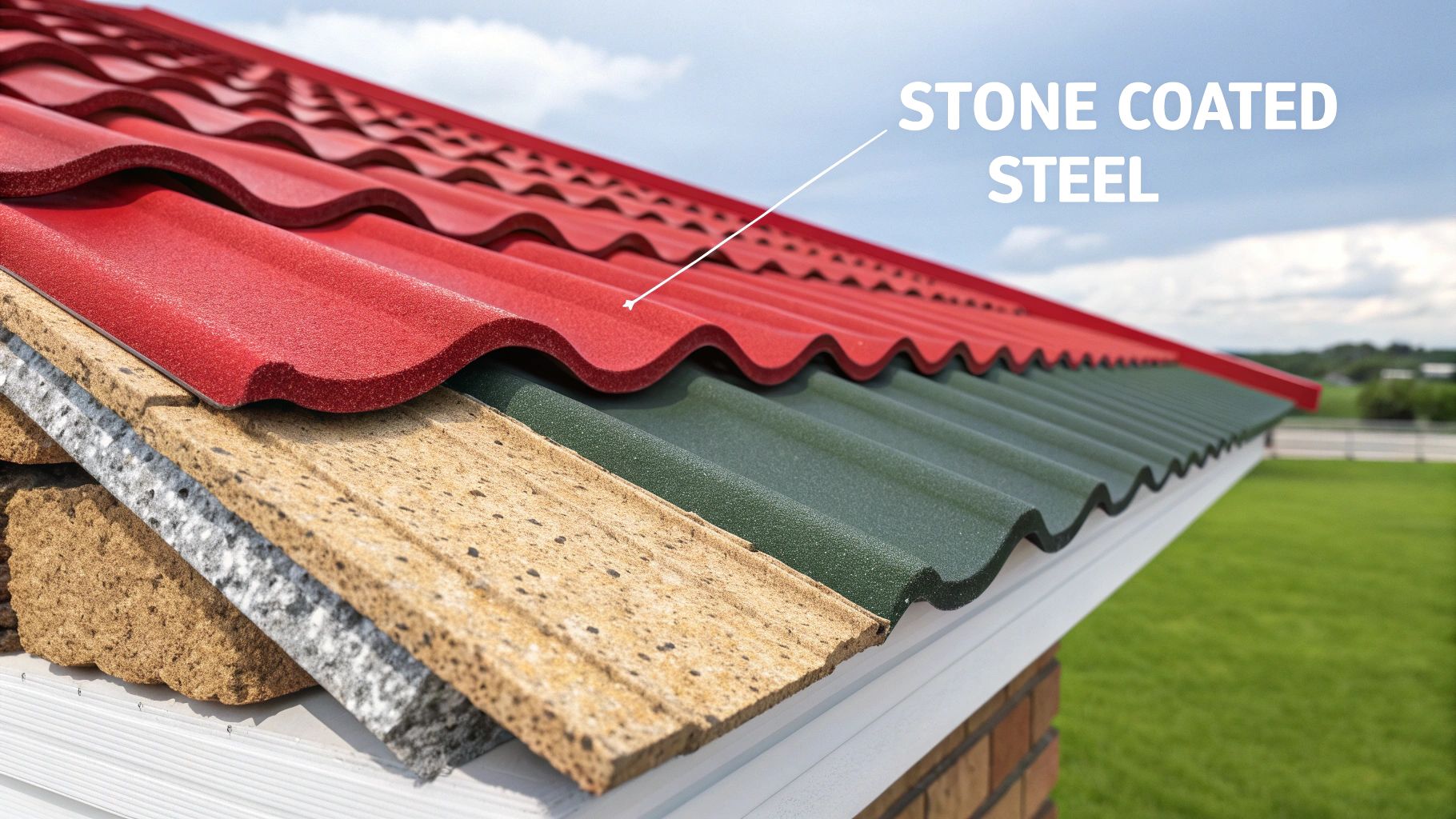
This isn't your average roofing material. Stone-coated steel is a highly engineered, multi-layered system designed to take a beating and still look fantastic. You can think of it as sophisticated body armor for your home, where each component has a specific job in providing protection, longevity, and style. It completely shatters the old image of a plain, industrial metal roof.
The concept actually got its start in Europe after World War II, born out of the need for a tough yet lightweight material for rebuilding efforts. Since then, decades of innovation have turned it into the premium, high-performance product we see today.
A Look at the Layers
At its core, a stone-coated steel panel is made of several layers fused together under intense pressure and heat. When you understand what goes into it, you'll see why it stands up so well to hail, high winds, and even fire.
- Structural Steel Core: The backbone of the system is a sheet of high-grade steel. This is where the roof gets its incredible strength and impact resistance, far surpassing materials like asphalt.
- Anti-Corrosion Coating: Next, the steel is coated with a special zinc-aluminum alloy. This layer is the primary defense against rust and corrosion, which is absolutely vital for surviving decades of Texas humidity and rain.
- Stone Granule Finish: Tiny granules of natural stone are then bonded to the surface. This layer does two important things: it creates the beautiful, textured appearance you see, and it adds a rugged barrier against brutal UV rays and weathering.
- Acrylic Overcoat: A final, clear acrylic glaze is applied over the top. This acts as a sealant, locking the stone granules in place, preventing sun-fading, and giving the roof a finish that helps shed water effortlessly.
When you put it all together, these layers create a shield that’s far greater than the sum of its parts. The steel provides the muscle, the coatings fight off decay, and the stone granules deliver both the curb appeal and a final buffer against the elements. It’s a truly complete roofing system.
Durability That Doesn't Compromise on Style
The end result of this advanced manufacturing process is a roofing material that beautifully mimics the look of classic shingles, clay tiles, or wood shakes, but without any of their well-known drawbacks. You get the exact architectural style you want, without ever having to worry about cracked tiles, rotting wood, or asphalt shingles blowing away in the next big storm.
This powerful combination of toughness and design flexibility is precisely why stone-coated steel roofing is surging in popularity. It gives homeowners a genuine long-term solution, ending the old compromise between a roof that looks good and one that’s built to last. You really can have the best of both worlds.
How Stone-Coated Steel Really Performs
A beautiful roof is nice, but in Texas, you need a roof that can go toe-to-toe with our wild weather. So, how does stone-coated steel actually hold up when the sky turns ugly and hail starts pounding? The secret is in its engineering—it provides a level of protection that your standard materials just can't touch. This isn't just a roof; it's a shield for your biggest investment.
This incredible resilience is exactly why you're seeing these roofs everywhere. The demand is exploding, with the global market for stone-coated steel roofing projected to jump from USD 77.79 billion to nearly USD 193.98 billion by 2033. That’s not just a trend; it's a massive shift driven by homeowners who are tired of dealing with storm damage and want a real, long-term solution. You can find more details about this market growth on giiresearch.com.
The Power of a Class 4 Impact Rating
Here in Texas, hail isn't an "if"—it's a "when." That’s where a Class 4 impact rating stops being a technical term on a brochure and becomes your home's most important line of defense. It's the highest possible rating for hail resistance.
So what does that actually mean? To get this rating, a roofing material has to survive a two-inch steel ball being dropped on it from 20 feet, over and over, without cracking. Now, picture that same force battering your roof during a serious hailstorm. A standard asphalt shingle roof gets shredded. A stone-coated steel roof, on the other hand, is built to take that hit and keep on going.
A Class 4 rating means your roof is built to handle the kind of hail that would total a normal asphalt roof. It's the difference between a few scuffs and a catastrophic failure that requires a full, expensive replacement.
Standing Strong Against Wind and Fire
Hail gets all the attention, but these roofs also offer top-tier protection against two other major threats we face: high winds and fire.
- Serious Wind Resistance: The interlocking design of the panels is the key. While shingles can peel up and fly off in strong gusts, these panels are locked down, creating a single, unified structure. Most systems are warrantied to handle winds up to 120 mph, which is Category 3 hurricane territory.
- Class A Fire Rating: This is as good as it gets. Stone-coated steel is non-combustible and carries a Class A fire rating, meaning it provides fantastic protection against flying embers from a wildfire or a neighbor's house fire. That’s some serious peace of mind, especially if you live in a more wooded part of East Texas.
It's More Than Just Tough—It's Smart
Durability is one thing, but a modern roof should also help your home run better. Stone-coated steel delivers here, too, with some impressive energy efficiency benefits that can actually lower your utility bills.
The stone granules aren't just for looks; they're designed to reflect the sun's radiant heat instead of soaking it up like a dark asphalt shingle does. This keeps your attic from turning into an oven during our brutal Texas summers, which means your AC unit doesn't have to work nearly as hard. Over the life of the roof, that adds up to real savings on your cooling costs.
A Lifespan That Changes the Game
Maybe the most compelling part of the whole story is how long these roofs last. A properly installed stone-coated steel roof has a realistic lifespan of 50 to 70 years. That’s often two or three times longer than a typical asphalt roof.
This completely reframes how you think about your roof. Instead of a recurring expense you have to deal with every 15-20 years, it becomes a one-time, long-term investment. When you combine that incredible durability with its resistance to just about everything Texas weather can throw at it, it’s a financially sound choice for any homeowner focused on true value. Of course, the roof panels are just one part of the system. For total protection, every component has to work together. Something as simple as a properly installed gutter apron plays a vital role in managing water and protecting the underlying structure, ensuring your whole system performs for decades to come.
Comparing Your Roofing Options Side By Side
Picking a new roof for your home is a huge decision, and with so many options out there, it's easy to feel overwhelmed. To really get a feel for what makes sense for your property, it helps to put the main contenders side-by-side. When you look at stone-coated steel roofing next to traditional asphalt shingles or even modern standing seam metal, its unique strengths really start to shine.
This decision goes way beyond just picking a color. You're choosing a complete system designed to protect your biggest investment. While every material has its pros and cons, the performance gaps become huge for Texas homeowners who constantly face brutal sun, hail, and wind.
Asphalt Shingles: The Familiar Standard
Asphalt shingles are everywhere, and for good reason: they're cheap upfront and most roofers know how to install them. If you're on a tight budget, they seem like a practical choice to get a roof over your head. But that initial savings often comes with a hefty long-term cost, especially around here.
With an average lifespan of just 15 to 20 years, asphalt shingles just don't hold up well to our weather. They're easily damaged by hail, can be ripped off by high winds, and break down under the relentless Texas sun. One bad hailstorm can mean you're right back where you started, paying for another full replacement.
Standing Seam Metal: Modern and Resilient
Standing seam metal is a big step up from asphalt in the durability department. It’s got a clean, modern look and offers fantastic resistance to wind and fire. Plus, the panels are lightweight, last a long time, and reflect heat, which can help with your energy bills.
The downside? Standing seam is known to dent easily from hail, which can ruin its clean appearance. Some people also find the look a bit too "industrial" or commercial for their home's architectural style. It's a tough roof, no doubt, but it doesn't offer the same textural beauty or design flexibility you get with stone-coated steel.
Stone-Coated Steel: The Best of Both Worlds
This is where stone-coated steel roofing really comes into its own. It perfectly marries the raw strength of a steel core with the timeless look of traditional roofing materials. By embedding a layer of stone granules onto the steel panels, you get elite performance without giving up an ounce of curb appeal.
This is the kind of protection we're talking about:
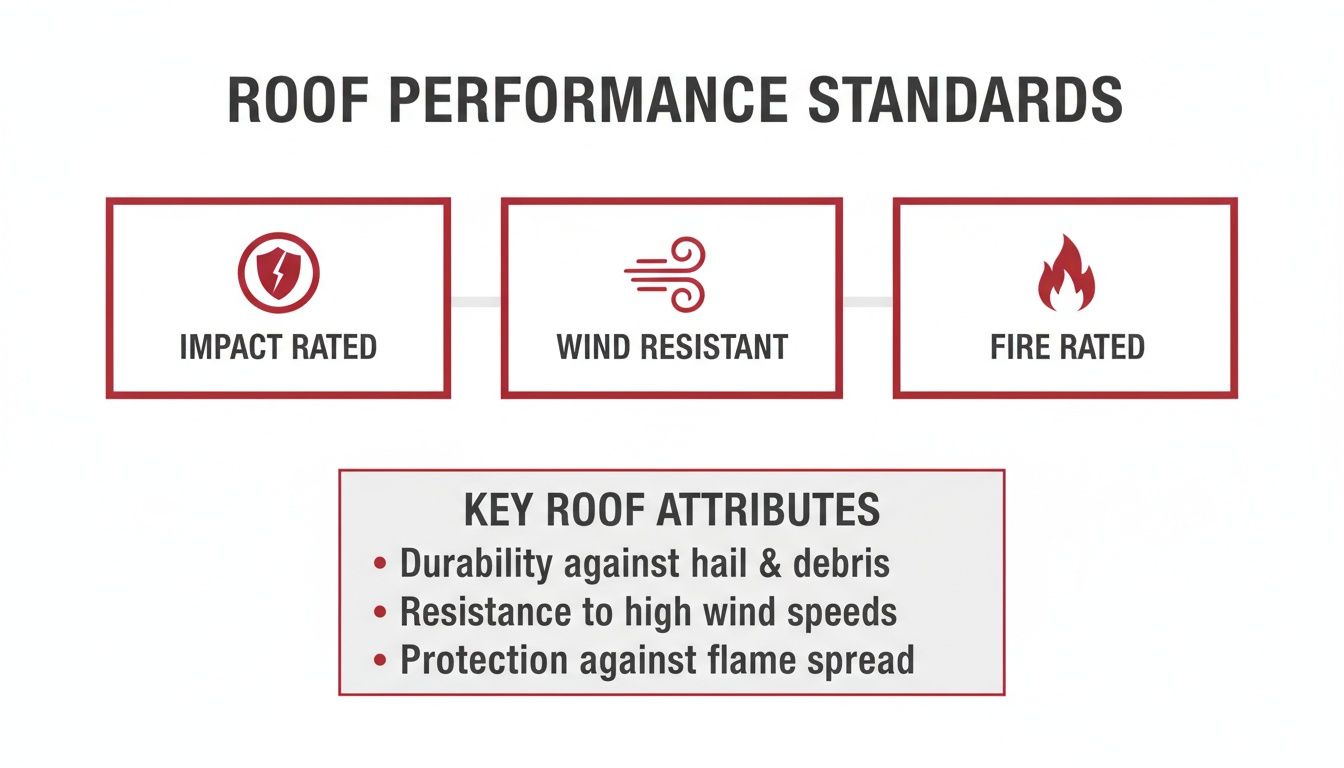
Those ratings—Class 4 impact, extreme wind resistance, and a Class A fire rating—aren't just numbers. They represent a complete shield for your home against whatever Texas weather throws at it.
Stone-coated steel isn’t just a roof covering; it's an engineered shield. It gives you the commercial-grade resilience of metal with the architectural grace of tile, shake, or shingles. It's truly an "invest once" solution.
We see this shift happening in real-time. Homeowners are tired of replacing their roofs after every big storm and are actively looking for better, permanent solutions. This has led to a surge in demand for stone-coated steel, which is growing much faster than the standard metal roofing market.
Roofing Material Comparison for Texas Homes
To make it even clearer, let's break down the key differences in a simple table. This gives you a quick snapshot of what you get with each option.
| Feature | Stone-Coated Steel | Asphalt Shingles | Standing Seam Metal |
|---|---|---|---|
| Lifespan | 50+ years (often a lifetime warranty) | 15-20 years | 40-70 years |
| Hail Resistance | Highest (Class 4), won't crack or dent | Poor, granules easily knocked off, can crack | Good, but prone to cosmetic denting |
| Wind Resistance | 120+ mph (interlocking panels) | 60-110 mph (vulnerable to uplift) | 140+ mph (excellent) |
| Curb Appeal | Excellent, mimics tile, shake, & shingle | Standard, limited styles | Modern/Industrial, clean lines |
| Energy Efficiency | Very Good, reflective and can be vented | Poor to Fair | Excellent, highly reflective |
| Upfront Cost | High (premium investment) | Low (most affordable option) | High |
| Long-Term Value | Excellent, reduces insurance & replacement costs | Poor, frequent replacements and repairs are common | Very Good, low maintenance and long lifespan |
Ultimately, your choice comes down to what you value most. If the absolute lowest upfront cost is your only priority, asphalt is still an option. But for homeowners who want to invest in peace of mind, unmatched storm protection, and lasting beauty, stone-coated steel is hands-down the smartest choice for the long haul.
You can dive even deeper into these materials by checking out our guide on different roofing system types to explore these options in more detail.
Understanding Your Investment and Long-Term Value
When it comes to a new roof, the first question on everyone's mind is, "How much is this going to cost?" Let's be upfront: a stone-coated steel roofing system is a bigger initial investment than traditional asphalt shingles. That price reflects the premium-grade materials, sophisticated manufacturing, and the skilled labor needed to create what is essentially a permanent shield for your home.
But looking only at the upfront cost is like comparing the price of a cheap pair of flip-flops to a solid pair of hiking boots. They might both be footwear, but they're engineered for completely different worlds and lifespans. It's time to shift the conversation from a short-term 'cost' to a long-term 'investment'—that's where the real financial genius of stone-coated steel shines through.
How a Premium Roof Pays for Itself
A stone-coated steel roof starts paying you back the day it's installed. This isn't just about dodging future headaches; it's about actively saving you money and boosting your home's equity for decades to come. The long-term value isn't some vague promise; it's a real, measurable benefit you'll see in a few key ways.
Here’s how the math starts to work in your favor over time:
- You Stop the Replacement Cycle: Here in Texas, a standard asphalt roof might give you 15-20 years if you're lucky. A stone-coated steel roof, on the other hand, is built to last 50 years or more. That means you're avoiding the massive expense of a full roof replacement two, or even three, times.
- Serious Insurance Savings: Many insurance companies know a Class 4 impact-rated roof is a much safer bet. They often reward homeowners with significant discounts on their annual premiums, which can add up to thousands of dollars in savings over the life of the roof.
- Boost Your Home's Value: A gorgeous, indestructible roof with a transferable lifetime warranty is a huge selling point. Real estate studies show that a high-quality metal roof can increase a home’s resale value by as much as 6%, letting you get a huge chunk of your investment back if you ever decide to sell.
The True Cost of a Cheaper Roof
The real price of a "cheaper" roof isn't what you pay on day one. It's the drip-drip-drip of constant repairs and the anxiety that spikes every time a storm rolls in. The cost of patching shingles, fixing leaks, and haggling with insurance adjusters after a hailstorm adds up fast—in both money and stress.
A stone-coated steel roof completely flips that script. It’s an "invest once" solution built to end the cycle of replacement. You’re not just buying a roof; you're buying decades of peace of mind and freedom from the recurring costs that plague lesser materials.
When you add up what you save on future replacements, repairs, and those potential insurance discounts, the higher initial investment starts to look a lot more reasonable. To get a better handle on the numbers, check out our detailed guide on how much a new roof costs, where we break down all the factors.
Ultimately, choosing stone-coated steel isn’t just about covering your house for the next few years—it's a strategic financial move to secure its future.
How a Stone-Coated Steel Roof Is Installed
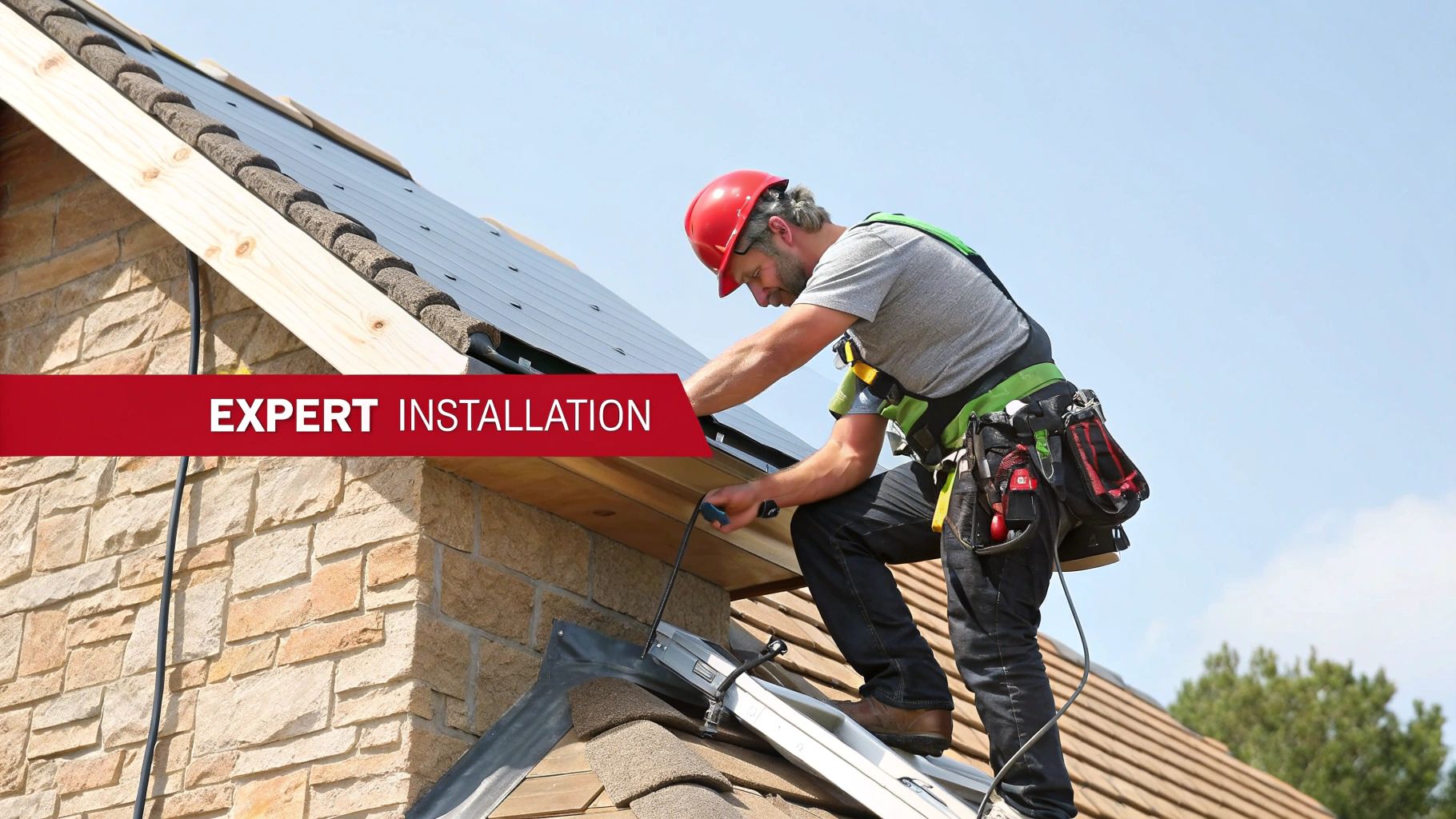
A top-tier roof like stone-coated steel demands a top-tier installation. This is definitely not a weekend DIY job. It’s a specialized craft that requires trained professionals who know how to make every single panel interlock perfectly, creating a seamless, watertight shield for your home. Getting the installation right is what unlocks the system’s 50+ year lifespan and incredible storm performance.
The whole process is far more intricate than just hammering down a few shingles. It all begins with carefully preparing the roof deck to make sure we have a solid, clean foundation to build on. This first step is absolutely critical for the long-term health of the entire roof.
From Deck Prep to Final Panel
Every installation we do follows a proven sequence, designed from the ground up for maximum weather resistance and durability. Because stone-coated steel roofing panels are designed to interlock, precision is everything—from the very first piece at the bottom edge all the way to the final ridge cap.
Here’s a look at what a professional installation really involves:
- Tear-Off and Deck Inspection: First things first, the old roofing material has to go. Once it's gone, we give the underlying wood deck a thorough inspection for any signs of rot or damage. Any weak spots are repaired to create a perfectly sound surface.
- Underlayment Application: Next, a high-quality, synthetic waterproof underlayment is laid across the entire roof deck. Think of this as a critical secondary barrier against any moisture that might try to sneak in.
- Batten System Installation (If Required): Some panel profiles work best with a batten system, which is a grid of wood strips installed on the deck. This elevates the panels slightly, creating an air gap that boosts insulation and ventilation.
- Panel Placement and Fastening: We start at the eaves and begin laying the interlocking panels. They're secured with special corrosion-resistant fasteners designed to withstand hurricane-force wind uplift.
- Trim and Flashing: The final touches involve installing custom trim pieces along ridges, valleys, and edges. Flashing is then meticulously fitted around chimneys, vents, and skylights to seal every last inch of the system.
The Solar Detach-and-Reset Process
Have solar panels? No problem. For homeowners who have already invested in solar, the installation process includes an extra, vital step. We handle a professional solar detach-and-reset, which is exactly what it sounds like. Our certified team carefully removes your solar array, we install your beautiful new stone-coated steel roof, and then we reinstall the panels, making sure every connection is secure and the system is running perfectly.
This is a highly specialized service that protects your solar investment during the reroofing project. Trying to do this without the right expertise can easily void warranties and cause serious damage to your panels.
Marrying solar panels with these incredibly durable roofs is a huge trend, particularly as North America continues to be a leading market for stone-coated steel. This growth is fueled by a strong construction industry and a push for more energy-efficient homes, meaning homeowners in Dallas-Fort Worth and East Texas have better access to certified installers and manufacturer support than ever.
When it comes down to it, choosing an installer with proven experience in both stone-coated steel roofing and solar systems isn't just a good idea—it's non-negotiable. The quality of the installation directly dictates how well your roof performs, ensuring your home is protected and your energy investment is secure for decades to come.
Choosing the Right Roofing Partner in Texas
Knowing that a stone-coated steel roofing system is the right choice for your home is just the first step. The second, and arguably more critical, is picking the right team to install it. Here in Texas, where intense weather is a fact of life, your roofer is every bit as important as the materials they use.
A high-performance roof like stone-coated steel requires a high-performance installation. Local knowledge isn't just a "nice-to-have"—it's everything. It’s not enough to know how to lay down a panel; a roofer needs to understand the unique challenges thrown at us by Dallas-Fort Worth and East Texas weather. They need to be experts in our specific building codes and have a long history of successfully dealing with local insurance carriers.
Why Local Expertise Matters Most
When a hailstorm blows through, you want a team that’s been there, done that. With over 30 years of experience right here in our community, we’ve pretty much seen it all. We know firsthand what a nasty Texas hailstorm does to a roof, and more importantly, we know exactly what insurance adjusters look for when they come out to assess the damage.
This deep local experience means we’re not just selling you a roof. We’re providing a complete, stress-free solution built on decades of trust. We manage the entire process, from that first free inspection all the way to the final nail and walkthrough, making sure every single detail is handled correctly.
When you choose a roofing partner, you’re looking for a team that will stand behind their work, come rain or shine. Our promise is simple: we’re not done until you are 100% satisfied with your new roof. That’s not a sales pitch; it’s our guarantee.
Our Commitment to You
We operate on a foundation of total transparency. A great project always starts with honest communication and a clear-eyed assessment of what you actually need. You won’t get any high-pressure sales talk from us—just straightforward information to help you make the best decision for your home and family.
Here’s what you can expect when you work with Hail King Professionals:
- A Free, No-Strings-Attached Inspection: We'll conduct a detailed evaluation of your current roof to see if a stone-coated steel roofing system is a practical and smart fit for your property.
- Clear, Honest Communication: We break down our findings in plain English and walk you through your options, so you understand the "why" behind every recommendation.
- Detailed Project Management: From scheduling the material drop-off to the final cleanup, we handle every phase of the job with the utmost respect for your time and your property.
Picking the right crew is a big deal. You can learn more about what makes a top-tier roofing company in Dallas stand out from the crowd in our in-depth guide.
Your home is your biggest investment. It deserves the best protection, installed by a team with a proven legacy of excellence right here in North and East Texas. If you're ready to explore how a permanent roofing solution can safeguard your home's future, get in touch with Hail King Professionals today to schedule your complimentary inspection.
Answering Your Questions About Stone-Coated Steel Roofing
Even after seeing how tough and beautiful these roofs are, most homeowners have a few practical questions. It’s a big investment, and you want to know what it’s actually like to live under one. Let's dig into some of the most common things people ask.
Is It Noisy in the Rain?
This is probably the number one myth about metal roofing. We all have that image of rain hammering on an old tin barn roof, but that couldn't be further from the truth with stone-coated steel.
The secret is the thick layer of stone granules bonded to each steel panel. This textured coating acts as a fantastic sound buffer, breaking up raindrops and absorbing the impact. Once you factor in your roof deck and attic insulation, the result is a roof that's just as quiet, if not quieter, than the asphalt shingles you're used to. No need to worry about those Texas thunderstorms keeping you up at night.
Can You Walk on a Stone-Coated Steel Roof?
Absolutely, but you need to know the right way to do it. Just like you wouldn't walk on the unsupported parts of any roof, there's a proper technique here to keep yourself safe and the roof pristine.
Here’s the simple approach:
- Walk in the Valleys: Always step on the lowest part of the panel, right where it sits flat against the roof deck. That’s where it has the most support.
- Stay Off the Peaks: Avoid stepping on the raised portions of the panel profile or the seams where the panels lock together. Putting weight there can cause dents.
- Wear the Right Shoes: Forget the heavy work boots. Soft-soled shoes, like a good pair of sneakers, are perfect for protecting the stone granule finish.
While it’s perfectly fine to walk on the roof for occasional maintenance, it's always smart to limit foot traffic. If you need to clean gutters or have a satellite dish adjusted, your best bet is to call a professional who works with these systems regularly.
Does It Mess with Cell Phone Signals?
It's a valid question in our connected world, but the answer is almost always no. A modern stone-coated steel roof won't turn your home into a signal black hole.
Think about it: your cell signal already has to get through walls, sheathing, insulation, and other building materials to reach you inside. In the context of a well-built modern home, the roof is just one more layer, and its impact is rarely, if ever, noticeable. The vast majority of homeowners report zero change in their cell reception.
How Long Does Installation Take?
Installing a stone-coated steel roof is a more precise process than slapping on asphalt shingles, so it takes a little bit longer. A lot depends on the size and complexity of your roof, the weather, and whether we need to tear off the old roof first.
For an average home, you can expect the installation to take anywhere from four to seven days. It’s a bit more time upfront, but it's a small trade-off for a roof that's built to last for 50 years or more.
Ready to find out if a permanent, storm-proof roof is the right move for your Texas home? The team at Hail King Professionals is here to help. We offer free, no-pressure inspections to give you straight answers and a clear, transparent quote.
Secure your home's future. Schedule your assessment with us today and get peace of mind.