



A Homeowner’s Guide to Slate Roof Longevity
When you're thinking about a new roof, one of the first questions on your mind is probably, "How long will it last?" With a top-quality, properly installed natural slate roof, the answer is staggering: anywhere from 75 to over 200 years. It’s not just a roof; it’s a permanent part of your home, earning its nickname as a true "forever roof."
This incredible lifespan is what truly sets slate apart from just about every other material out there.
What Makes a Slate Roof Last So Long?
Think of a slate roof like the stone walls of a European castle versus the siding on a suburban house. One was built to stand for centuries, the other for a few decades. That's the kind of generational durability slate offers. But hitting that 100- or 200-year mark isn't automatic—it's a team effort between the quality of the stone itself, the skill of the installer, and a little bit of upkeep.
At Hail King Professionals, we've seen firsthand what makes these roofs succeed in the tough climates of Dallas-Fort Worth and East Texas. The first step is understanding just how different slate is from the roofing materials most people are used to.
The Lifespan Difference is Huge
You really start to grasp the value of slate when you put it side-by-side with more common roofing options. Even though things like weather and installation always matter, the raw difference in how long these materials are designed to last is just massive.
This simple comparison shows you everything you need to know.
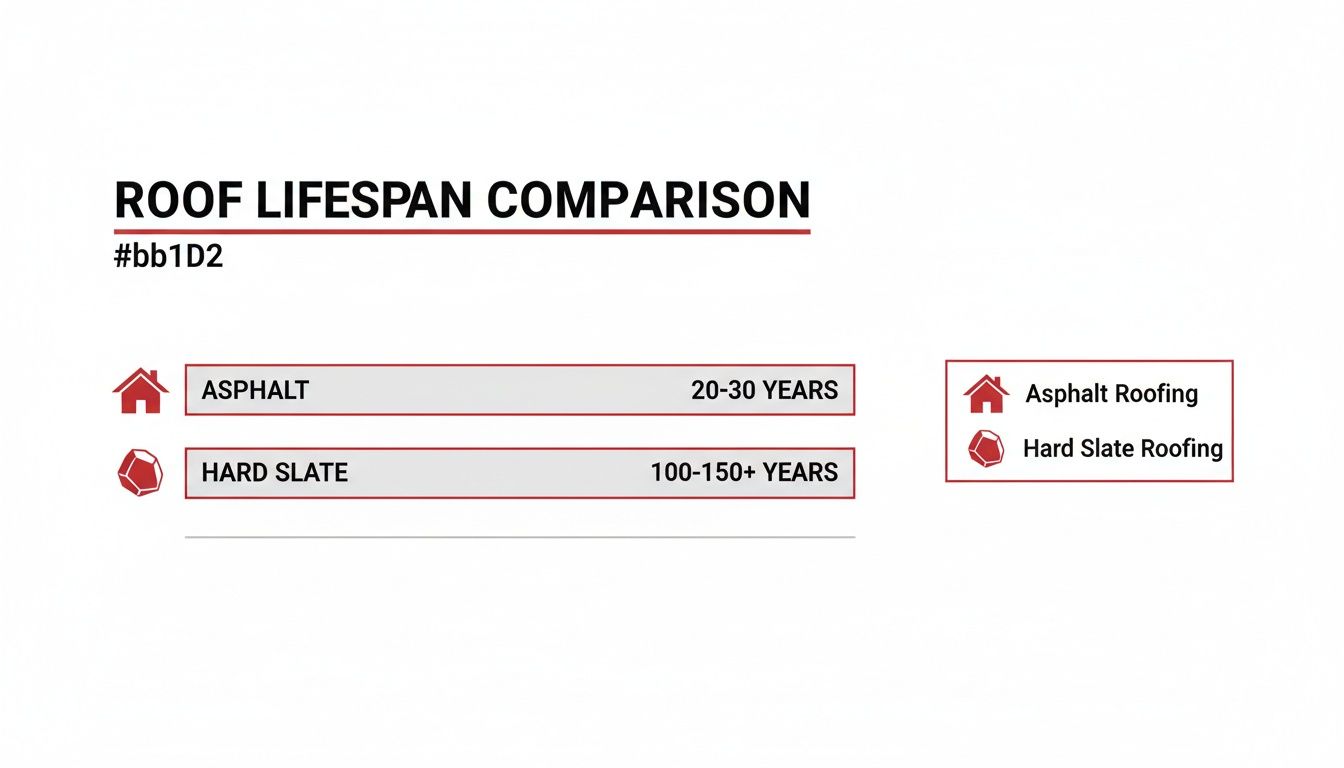
It's clear from a single glance: a slate roof is engineered to outlast an asphalt roof not just once, but many times over.
Roofing Material Lifespan Comparison
To really put these numbers in context, let's look at a few common roofing materials all in one place. You can see how slate, in its various forms, sits at the very top of the durability pyramid.
| Roofing Material | Typical Lifespan (Years) | Key Durability Factor |
|---|---|---|
| Hard Slate | 100 – 200+ | Extremely low water absorption and density. |
| Soft Slate | 50 – 125 | Higher porosity; more susceptible to freeze-thaw cycles. |
| Synthetic Slate | 40 – 60 | UV degradation and material composition. |
| Asphalt Shingles | 20 – 30 | Granule loss and weather exposure. |
| Wood Shake | 25 – 40 | Susceptibility to rot, insects, and fire. |
| Metal (Standing Seam) | 40 – 70 | Quality of the coating and panel gauge. |
As you can see, even the "soft" varieties of slate have a lifespan that rivals or exceeds the very best of other premium materials. Hard slate is simply in a class of its own.
The Real-World Impact of Longevity
Groups like the National Slate Association have documented historic slate roofs that are still going strong after more than 400 years. Now, compare that to asphalt shingles, which are on the vast majority of homes in North America. An asphalt roof typically needs to be torn off and replaced every 20 to 30 years.
Do the math: you might go through five, six, or even ten asphalt roofs in the time a single slate roof is just getting settled in.
This durability is the core of the conversation. Yes, slate is a bigger investment up front, but it pays you back over a lifetime with unmatched performance and peace of mind. To see how these different materials come together, you can explore our guide on various roofing system types. As we dig deeper, you’ll learn what it takes to make sure your slate roof reaches its full, century-spanning potential.
The Four Factors That Make or Break a Slate Roof
A slate roof’s incredible lifespan isn't magic; it's the outcome of a finely tuned system where every single piece does its job perfectly. When people talk about roofs lasting 100 or even 200 years, it's because these four critical factors are all in harmony. Get them right, and you have a roof for the ages. But if even one is off, you could easily slash that lifespan in half.
Think of these as the four legs of a table—if one is weak, the whole thing becomes unstable. Your investment needs all four to stand strong against decades of sun, rain, and punishing Texas storms.
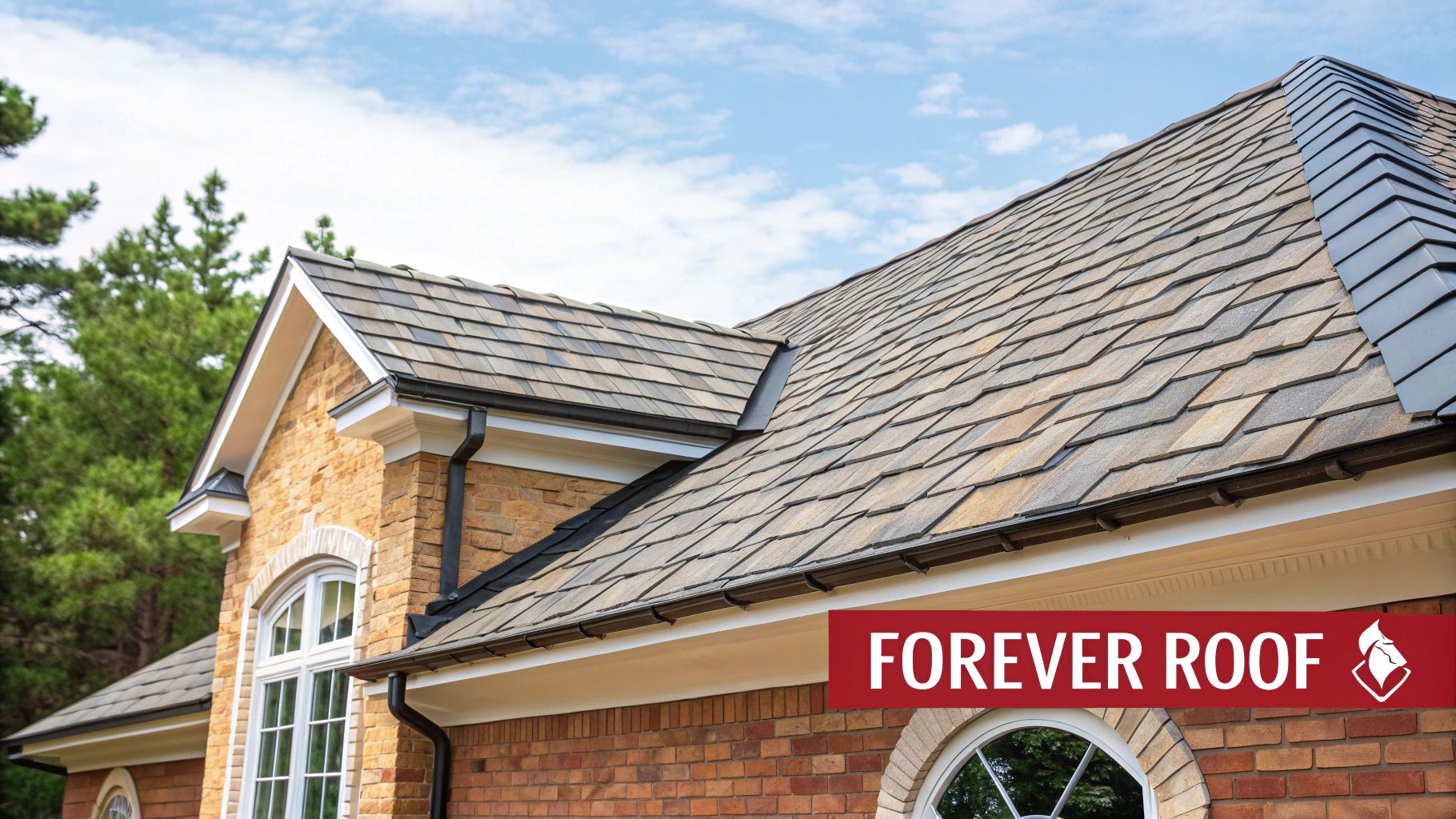
1. The Quality of the Slate Itself
Let's get one thing straight: not all slate is the same. The single most important factor in slate roof longevity is the stone's mineral makeup. Slate generally falls into two camps: hard slate and soft slate, and the performance gap between them is massive.
Hard slate is the champion. Think of it like granite—it's incredibly dense, heavy, and absorbs almost no water. This non-porous nature makes it nearly immune to the freeze-thaw cycles that can shatter lesser materials. This is the stuff of legends, the slate that can genuinely last 150 years or more.
Soft slate, on the other hand, is more like sandstone. It's more porous, which means it soaks up more water and is more likely to flake apart (a process called spalling) over the years. It's still a tough material, far outlasting asphalt, but its realistic lifespan is closer to the 50 to 125-year range. In a hail-prone region like Dallas-Fort Worth, choosing hard slate is a no-brainer.
2. The Skill of the Installer
A slate roof isn't something you pick up from a factory; it's a system that's built by hand, piece by piece, on your home. That means the roofer's skill is every bit as critical as the stone they're using. You can have the best slate in the world, but if the installation is botched, it’s destined to fail.
A few non-negotiable details separate the pros from the amateurs:
- Proper Nailing: Slates are meant to hang from their nails, not be pinned down tightly. If the nails are driven too far, the slate can't expand and contract with temperature changes and will eventually crack. Too loose, and the slates will chatter in the wind and break.
- Correct Overlap (Headlap): Every row of slate must overlap the one two rows below it by at least three inches. This "headlap" is the secret to a waterproof system. Get it wrong, and you're just inviting leaks.
- Walking the Roof: An experienced slater knows how to move on a slate roof without causing damage. An amateur can crack hundreds or thousands of dollars worth of tiles just by stepping in the wrong places.
"A slate roof is an assembly of individual pieces of stone. The roofer's art is not just covering a building, but building a single, cohesive stone shield that will function for a century or more."
The difference between a true slate craftsman and a general roofer is night and day. In fact, research shows that poor installation can shorten a roof's life by 50 to 100 years, even with the same type of slate. For a deeper dive into how different factors affect roofing timelines, Graduate Contracting offers some great insights on roofing life expectancies.
3. The Unsung Heroes: Underlayment and Flashings
The beautiful stone tiles get all the attention, but there’s a hidden support system underneath that’s just as vital. The slate acts as the armor, but the underlayment and flashings are what truly keep your home's structure dry and sound.
A high-quality underlayment, whether it’s a modern synthetic or traditional felt, provides a crucial secondary barrier against water. For a roof you expect to last a century, skimping here is a mistake. You need a premium, high-temperature underlayment that won't break down over time.
Flashings—the metal pieces that seal the gaps around chimneys, vents, and in roof valleys—are another classic point of failure. It's common for roofers to cut costs with aluminum or galvanized steel, but these materials will rust out and fail decades before the slate gives up. For a true lifetime roof system, copper flashings are the only real choice. They last just as long as the slate itself.
4. The Local Climate Gauntlet
Finally, your local environment has a huge say in your roof's future. Here in North Texas, a roof is subjected to a relentless assault of extreme weather, which makes every material and installation choice that much more important.
The main threats we face are:
- Severe Hail: This is the ultimate test for any roofing material. The sheer density of hard slate gives it an incredible advantage in impact resistance.
- Intense UV Radiation: The Texas sun is brutal, baking and breaking down materials like asphalt. Natural stone, however, is completely unfazed by UV rays.
- Thermal Shock: Those wild temperature swings—from a cool evening to a blazing afternoon—put immense stress on building materials. A properly installed slate roof is designed to allow for this expansion and contraction without being damaged.
When you bring these four elements together—top-quality slate, expert installation, a durable support system, and climate-specific resilience—you get a roof that doesn't just last a lifetime, but potentially several.
Protecting Your Slate Roof in Texas Weather
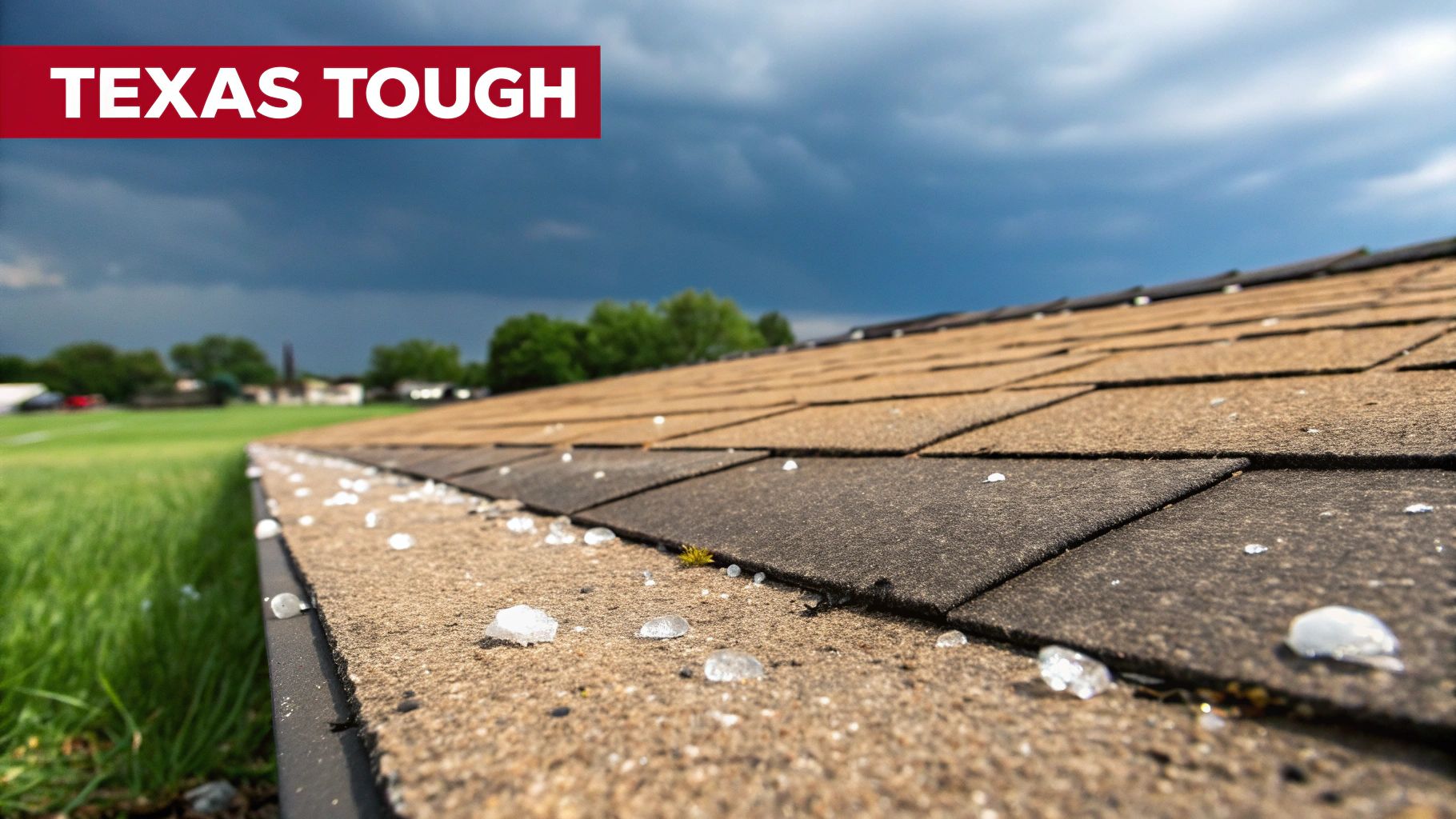
Talk about a trial by fire. The concepts of slate roof longevity get put to the ultimate test every single day here in Dallas-Fort Worth and East Texas. A roof in our neck of the woods has to do more than just sit there and age gracefully; it has to survive a relentless cycle of severe weather that can shred lesser materials in just one season.
Knowing how a slate system actually holds up under these specific, brutal conditions is the real secret to making sure it lives up to that century-spanning reputation. It's one thing for a roof to last forever in a mild, forgiving climate. It's a whole different ballgame for it to thrive under the Texas sun and sky.
The Triple Threat to Texas Roofs
In North Texas, a roof is in a constant three-front war. The good news is that a well-chosen and properly installed slate system is uniquely built to win, all thanks to the sheer strength forged by mother nature.
- Severe Hail: This is, without a doubt, public enemy number one for any roof in our region. The incredibly dense, layered structure of a hard slate tile offers fantastic impact resistance. Sure, a direct hit from a monster hailstone can still crack a tile, but the material's strength prevents the kind of widespread obliteration that turns an asphalt roof into a pile of granules.
- Relentless UV Radiation: The Texas sun is just brutal. It bakes roofing materials, making them brittle and weak over time. Natural stone, on the other hand, is completely immune to UV degradation. Slate simply won't dry out, curl up, or lose its protective integrity, no matter how intense the sun gets.
- Sudden Thermal Shock: We all know those wild DFW temperature swings—from a cool spring morning to a scorching afternoon in a matter of hours. This causes other materials to expand and contract violently. A correctly installed slate roof, where each tile is hung instead of pinned tightly, allows for this natural movement without putting stress on the system, which prevents cracks and failures down the road.
A slate roof's toughness in Texas isn't just about the stone. It's about building a complete system designed from the ground up for our specific weather challenges. That means picking the right type of slate and, just as importantly, partnering with a contractor who truly gets the local environment.
Why a Local DFW Contractor Matters
Look, for a project of this scale and importance, choosing a roofer with deep, local expertise isn't just a good idea—it's non-negotiable. An out-of-town crew simply won’t have the firsthand experience with the unique demands of our weather patterns, our soil, and our local building codes.
A local specialist like Hail King Professionals brings crucial advantages to the table. We know which hail-impact ratings actually matter here and we’re already familiar with the specific municipal codes that can impact your installation. That local knowledge ensures your roof isn't just built to last, but built right and built to comply.
Navigating Insurance in a Storm-Prone Region
In Texas, your roof and your insurance policy are practically joined at the hip. A top-tier slate roof is a huge asset, but you have to know how to navigate the insurance world correctly, especially after a storm rolls through.
When you install a new slate roof, especially one using high-impact "hard slate," make sure it's documented properly. This can sometimes lead to some nice discounts on your homeowner's insurance premiums. Insurers recognize that a more durable roof means less risk for them.
But if a storm does cause damage, handling the claim takes a special kind of expertise. Many insurance adjusters, frankly, don't see a lot of slate and may not know how to assess it properly. Having an expert contractor in your corner is vital to make sure you get a fair shake. We can meet with your adjuster on-site, point out the specific damage, and provide dead-on accurate estimates for the specialized repairs needed to bring your roof back to 100%.
While slate is incredibly tough, other materials like stone-coated steel also offer excellent hail resistance and are worth exploring as you consider your options. You can learn more about stone-coated steel roofing in our guide.
At the end of the day, protecting your investment in a slate roof means thinking locally. By matching the right materials to our climate and working with a seasoned Texas contractor, you can be confident your roof will stand up to the worst our weather can throw at it for generations to come.
How to Spot an Aging Slate Roof from the Ground
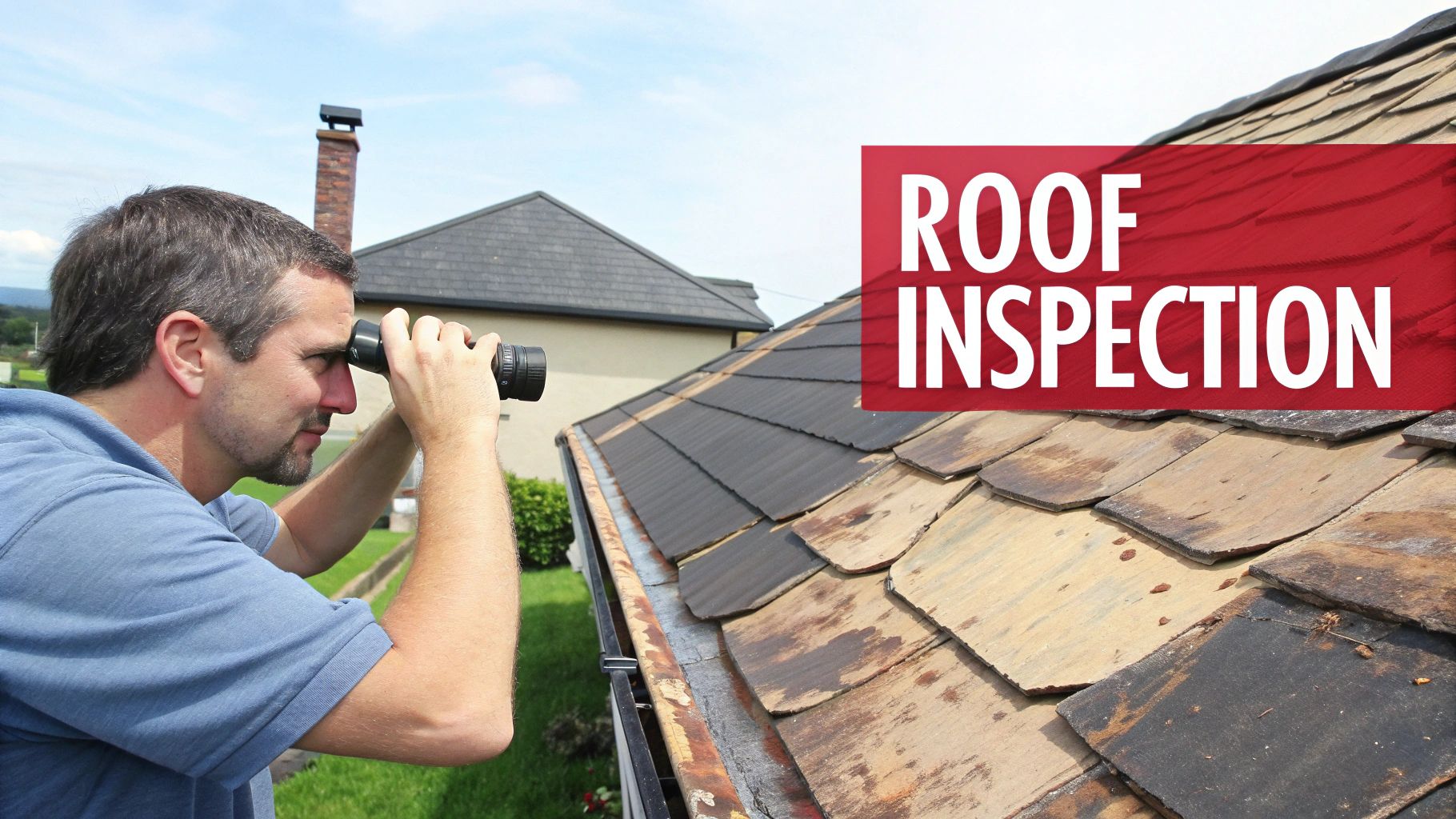
A slate roof speaks its own language, and thankfully, you don't need to climb a ladder to understand what it's saying. By learning to be a good observer from the safety of the ground, you can spot the first whispers of trouble long before they become a roar. All it really takes is a pair of binoculars and a little bit of know-how.
Think of this ground-level check-up as your first line of defense. It’s how you turn a potential catastrophe into a simple, manageable repair, preserving the legendary lifespan you invested in. Spotting these clues early means you can act before a small issue snowballs into major leaks or structural damage.
Identifying Surface Degradation
The most common sign of an aging slate, especially the softer varieties, is the slow decay of its surface. This doesn't happen overnight; it’s a process that unfolds over decades as the stone weathers the constant cycles of moisture and temperature change.
Look for spalling. This is when the surface of the stone looks like it's flaking or peeling away. You might see a shallow piece of the slate has chipped off, revealing a lighter, almost chalky-looking patch underneath. This process is slowly weakening the tile from the outside in.
Another key sign is delamination, which happens when the slate starts splitting along its natural layers. From the ground, it might look like a tile is puffing up or its edges are separating into thin sheets, almost like a deck of cards that's been left out in the rain.
A Ground-Level Inspection Checklist
Time to grab those binoculars. Scan your roof methodically, one section at a time, and keep a sharp eye out for these tell-tale signs that your roof is showing its age.
- Cracked or Broken Slates: Look for sharp, jagged lines or actual missing chunks from individual slates. A few random broken tiles aren't a five-alarm fire, but seeing a sudden increase—especially after a storm—is a clear signal that something's wrong.
- Slipped or Misaligned Slates: Your slate tiles should form crisp, perfect horizontal lines. If you see a slate that has slid down past its neighbors, its fastening nail has failed. That leaves a gaping hole in your roof's armor, and water will find it.
- Rust Streaks: Pay close attention to any reddish-brown streaks running down the roof. This is a dead giveaway that the wrong nails were used during installation—likely galvanized steel instead of copper or stainless steel. Those nails are rusting through, and when they fail completely, the slates they hold will start to slide.
Catching a single slipped slate or a few rusting nails early is the difference between a minor repair and a major system failure. These small clues are your roof's way of asking for a check-up before the problem gets worse.
When to Call in a Professional
A ground inspection is an excellent diagnostic tool, but it's not the final word. You're looking for patterns and clues that tell you it’s time for an expert to take a closer look. It’s time to call a specialist like Hail King Professionals when you notice any of these trends.
One cracked slate this year can easily become ten next year. If you see widespread spalling across large areas or rust streaks appearing on multiple sections of the roof, it points to a systemic problem, not just an isolated fluke. Spotting these trends from the ground gives you the power to know exactly when to bring in a pro for a safe, hands-on assessment, ensuring the continued slate roof longevity you paid for.
Keeping Your “Lifetime” Roof in Top Shape for a Lifetime
One of the biggest misconceptions about slate is that it's a "set it and forget it" roof. While it's incredibly durable, the idea that it's completely maintenance-free is a myth. To get that legendary 100+ year lifespan, it's better to think of it as proactive care rather than reactive repair.
This isn't about constant, expensive work. It’s about catching the small stuff—a slipped tile here, a clogged gutter there—before it has a chance to compromise the entire system. A simple, consistent routine is all it takes to make sure your roof outlasts just about everything else on your home.
Your Annual Care Routine
A regular inspection schedule is the bedrock of a long-lasting slate roof. The best approach combines your own quick visual checks with an annual visit from someone who truly knows slate.
- Your Part (Twice a Year): Every spring and fall, grab a pair of binoculars and take a slow walk around your house. You're looking for the obvious signs of trouble we've already covered: any slates that look out of place, visible cracks, or tell-tale rust streaks running down the roof. It’s a simple 10-minute habit that can save you a fortune.
- The Pro's Part (Once a Year): This is non-negotiable. Have a slate specialist get up on the roof for a hands-on look. They can spot subtle issues you'd never see from the ground, like hairline cracks or failing sealant around flashings.
This two-part strategy gives you total peace of mind, ensuring no problem can hide for long.
Think of your slate roof like a finely crafted watch. The slates are the strong face, but the underlayment, fasteners, and flashings are the delicate gears working behind the scenes. Regular, gentle tune-ups ensure every part works together perfectly for decades to come.
The Most Important Maintenance Jobs
Inspections are about finding problems; these next few tasks are about preventing them from ever starting. If you focus on just these three things, you’ll handle 90% of what can go wrong.
Keep Your Gutters Clean. This is, without a doubt, the most critical job. When gutters clog, water has nowhere to go but up and under the edges of your roof. It soaks the underlayment, rots the decking, and can cause serious structural damage over time. Clean them out every spring and fall, period.
Replace Damaged Slates Immediately. A single cracked or missing slate is an open door for water. Fixing it right away is a small, inexpensive repair. But if you let it go, you're inviting rot and widespread damage that can cost thousands. A good slater can swap out a single tile without disturbing its neighbors.
Check All the Flashings. The metal strips in valleys, around chimneys, and along walls are the most vulnerable parts of any roof. During the annual pro inspection, have them confirm the flashings are secure, sealed, and not rusting away. A failed piece of flashing is the #1 cause of leaks on a perfectly good slate roof.
The Golden Rule of Slate Roofs
If you remember nothing else, remember this: Never, ever let an untrained roofer walk on your slate.
Improper foot traffic is the fastest way to wreck a slate roof. Someone who doesn't know the craft can crack dozens of tiles in minutes without even knowing they've done it, turning a minor inspection into a major repair bill.
Slate roofing is a specialized trade. Its care requires a specialist's touch. Here at Hail King Professionals, our team is trained in the specific techniques needed to navigate a slate roof safely. We know how to protect your investment so it can stand up to Texas storms and the test of time.
Calculating the True Value of a Slate Roof
The initial price tag on a slate roof can certainly cause some sticker shock. But looking at that number as a one-time expense is the wrong way to think about it. It’s really a multi-generational investment in your property.
When you take a step back and consider the total cost over a lifetime, the real value of slate becomes crystal clear. You're not just buying a roof; you're buying a permanent solution that ends the expensive cycle of tear-off and replacement that comes with almost every other material. That high upfront cost, spread out over a century or more, suddenly looks like a very smart financial move.
Lifetime Cost vs. Upfront Expense
The easiest way to see the value is by comparing the life-cycle cost of one slate roof to the repeating expense of an asphalt shingle roof. A typical asphalt roof might need to be replaced four or even five times during the lifespan of a single, well-installed slate roof.
Each of those replacements brings its own bill for materials, tear-off, and labor. Those costs add up fast.
To really nail down the value proposition, you need a precise assessment of the roof in question. Modern tools like drone roofing inspection software are a huge help here, giving us detailed reports and 3D models to work with. This technology ensures every little detail is factored into its long-term worth.
This long-range perspective is crucial for anyone thinking about slate. For a detailed breakdown of the numbers, you can learn more about what goes into the cost of a new roof installation in our comprehensive guide.
Slate Roofs Increase Property Value
Beyond just saving money over the long haul, a slate roof adds immediate, tangible value to your home. Its natural beauty provides an unmatched boost to curb appeal and sends a clear signal to potential buyers: this home was built and cared for with the absolute best materials.
A home with a slate roof often appraises for more and can be a massive advantage in a competitive real estate market. Buyers understand the incredible value of a roof that won't need to be touched for decades, making it a powerful selling point.
Investing in slate is not just about avoiding future costs; it's about actively increasing your home's equity. A slate roof is a feature that pays for itself through enhanced property value, superior protection, and unparalleled longevity.
Lifetime Cost Analysis Slate vs. Asphalt Shingles
To really drive the point home, let's look at a simplified financial comparison over a 100-year period. The exact numbers can change based on your home and location, but the long-term math almost always tells the same story. A single investment in slate often ends up costing the same as, or even less than, a century of replacing a "cheaper" roof.
| Cost Factor | Premium Slate Roof (1 Installation) | Asphalt Shingle Roof (4 Replacements) |
|---|---|---|
| Initial Cost | High (e.g., $60,000) | Low (e.g., $15,000) |
| Replacements (100 Yrs) | 0 | 3-4 |
| Total Projected Cost | $60,000 | $60,000 – $75,000+ |
| Amortized Annual Cost | $600 | $600 – $750+ |
As you can see, the costs begin to even out over time. When you also consider the added property value, peace of mind, and potential insurance savings that come with superior slate roof longevity, the financial argument for slate becomes incredibly strong.
Your Slate Roof Questions, Answered
Even after getting the facts on what makes a slate roof last a lifetime (or two), you probably still have some practical questions. Let's dig into a few common concerns homeowners have about living with and caring for a slate roof.
Can I Just Repair My Slate Roof, or Do I Have to Replace the Whole Thing?
Absolutely, you can repair it. In fact, that's one of the biggest perks of having a real slate roof. Unlike an asphalt shingle roof where a single bad spot can mean trouble for the whole section, individual slate tiles can be swapped out.
A roofer who truly knows their craft can carefully remove a single cracked or broken slate and slide a new one right into place. This is exactly why getting your roof checked out regularly is so important—catching a couple of broken slates early is a simple, inexpensive fix that protects your massive investment for the long haul.
Does Synthetic Slate Last as Long as the Real Thing?
Not even close. While top-tier synthetic slate is a solid, long-lasting product (and often easier on the wallet), it simply can’t compete with the lifespan of natural stone. Most synthetic slates come with a 50-year warranty and are expected to last somewhere between 50 to 75 years.
Natural hard slate, on the other hand, has a proven track record of lasting 100 to 200 years, and sometimes even longer. Synthetics are great for looks and impact resistance, but at the end of the day, they're a manufactured product. Real slate is a piece of the earth that's already survived millions of years of geologic pressure. It’s the undisputed king of durability.
Think of it this way: Synthetic slate is a fantastic product designed to last for your lifetime. Natural slate is engineered to last for multiple lifetimes. It's a completely different way of thinking about value and performance.
Will Putting Solar Panels on My Slate Roof Ruin It?
Putting solar panels on a slate roof is definitely doable, but this is not a job for a general handyman. It demands a specialist to protect your investment. The mounting hardware has to be specifically designed for slate to prevent cracking the tiles under pressure.
Every single hole drilled for a mount must be perfectly flashed and sealed, or you're just asking for a leak. You need to find an installer who has deep experience with both slate roofing and solar systems. Many expert roofers even offer services to detach and reset solar panels, ensuring the project is done right without compromising the roof underneath. When budgeting for long-term care, a general roof cleaning cost guide can provide a baseline for maintenance costs across different roofing materials, helping you plan for the future.
Your home is your legacy, and it deserves a roof built to stand the test of time. Here at Hail King Professionals, we are experts in installing and maintaining roofing systems tough enough for Texas weather. If you're wondering about the true condition of your roof or need a professional opinion you can trust, our team is here for you. Contact Hail King Professionals today for a free, no-obligation inspection.