



Flat Roof Decks: Discover flat roof decks for a Rooftop Oasis
Ever looked at your flat roof and seen nothing but wasted space? You're not alone. A flat roof deck is a brilliant way to reclaim that area, turning it into a functional outdoor living space perfect for relaxing, gardening, or entertaining guests. It’s a game-changer for gaining valuable square footage, especially here in DFW where backyards can be at a premium.
What Is a Flat Roof Deck and Is It Right for Your Home
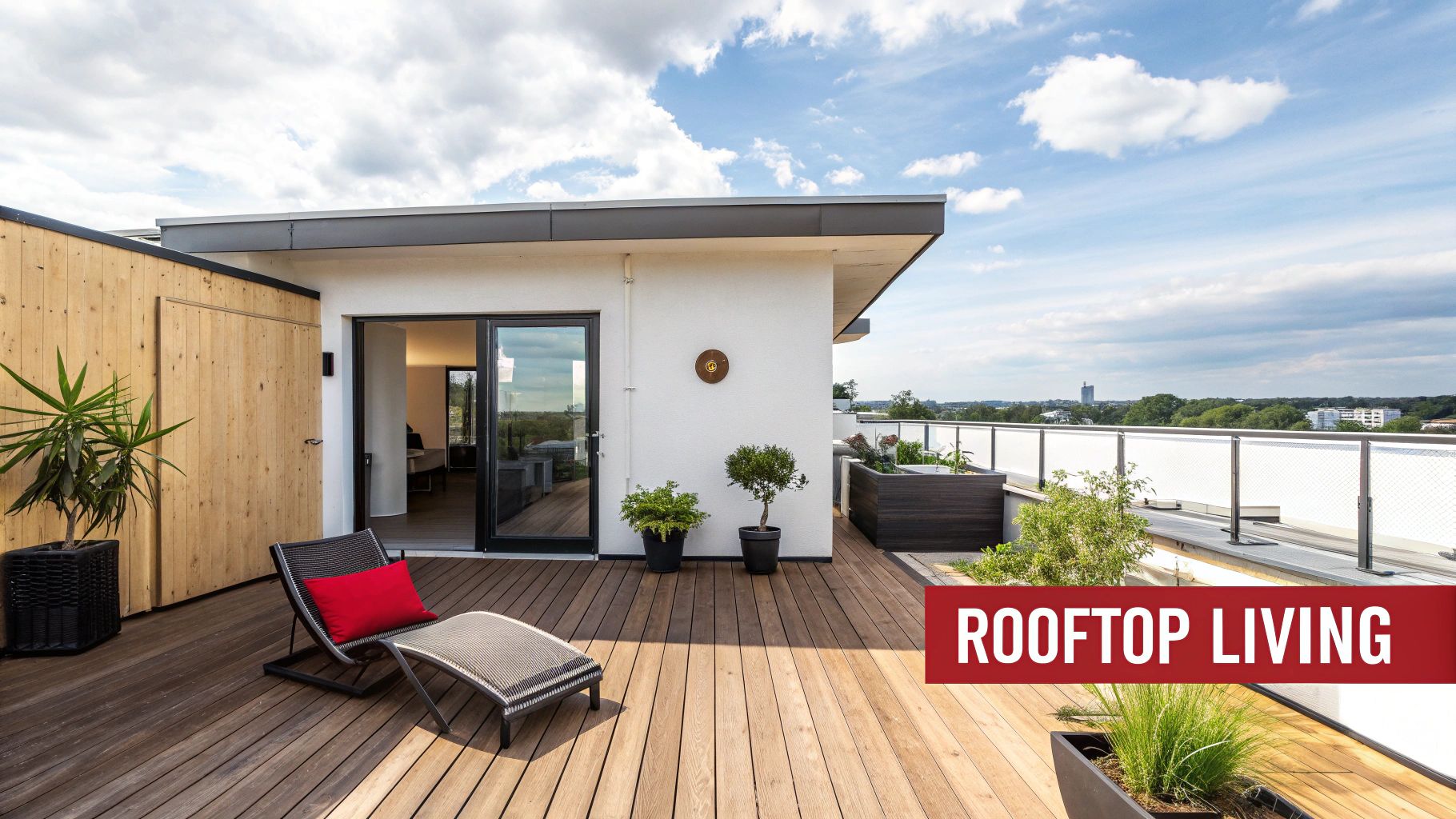
Think of it this way: your roof is like an unfinished attic. It has enormous potential just waiting to be tapped. Building a roof deck is like finishing that attic—transforming a purely structural element into a valuable, livable part of your home. It’s an investment that pays off in both lifestyle and property value.
But hold on, it's not as simple as just throwing down some deck boards. A standard roof is only built to keep water out and maybe hold a little snow. A roof deck needs to support people, furniture, and all sorts of activity, all while maintaining a flawless waterproof seal. This is where the real work begins, involving careful planning, structural upgrades, and specialized materials.
This is a major difference from a traditional pitched roof, which is all about shedding water. To get a better handle on the fundamentals, you can explore the differences between flat and pitched roofs in our detailed guide.
Exploring the Types of Flat Roof Decks
To figure out if a roof deck is the right move for your North Texas home, let's break down the main options. Each one serves a different purpose and has its own list of requirements.
- Pedestrian Deck: This is the most basic type, really just a durable, walkable surface. It's great for accessing rooftop HVAC units or creating a simple standing area to take in the view. It’s the most straightforward and budget-friendly choice.
- Roof Garden: For those with a green thumb, a roof garden is a literal oasis in the sky. We're talking soil, planters, and living vegetation. This type demands serious structural planning to handle the incredible weight of wet soil and plants, plus a super-robust waterproofing and drainage system to protect your home below.
- Occupiable Rooftop Terrace: This is the one most people dream of. It’s a full-blown outdoor living room, complete with decking, furniture, lighting, and maybe even a grill or outdoor kitchen. It’s built for entertaining and relaxing, which means it requires the highest level of structural support and finish work.
The key takeaway here is that converting a roof into a deck is a major structural project, not just a cosmetic update. Your roof was almost certainly not designed to support the "live loads" of people and furniture. A professional structural assessment isn't just a good idea—it's absolutely essential.
Thinking through how you want to use the space will help clarify which option makes the most sense for your goals and budget.
Comparing Flat Roof Deck Types
This table gives you a quick side-by-side look at the three main types of flat roof decks. It's a great starting point for figuring out which direction to go.
| Deck Type | Primary Use | Structural Requirement | Typical Cost |
|---|---|---|---|
| Pedestrian Deck | Service access, standing area | Moderate Reinforcement | Low to Moderate |
| Roof Garden | Green space, gardening | Very High Reinforcement | High |
| Occupiable Terrace | Entertaining, relaxation | High Reinforcement | Moderate to High |
As you can see, the more you want to do on your deck, the more you need to invest in its underlying structure and waterproofing. Each path offers a unique way to enhance your home, so choosing the right one is all about matching your vision with a realistic plan.
Understanding the Foundation of a Safe Roof Deck
Before you start picking out furniture and planning that first rooftop sunset party, we need to talk about the unsung hero of the whole project: its structural foundation. A flat roof deck is so much more than a cosmetic upgrade; it’s a serious structural addition.
Think of it this way—you wouldn't add a second story to your home without being absolutely certain the foundation and walls below could handle the immense new weight. The exact same principle applies here.
Most flat roofs are built for one job: keep the weather out. They’re designed to support their own weight, maybe a little snow, and a maintenance worker or two. They were never meant to host a party. This is where load-bearing capacity becomes the single most important factor in your project's safety and long-term success.
To build a deck that lasts, your home’s structure must be able to handle two very different kinds of weight.
Distinguishing Between Dead Loads and Live Loads
Getting a handle on the forces at play is the first step toward building with confidence. A structural engineer will look at your roof's ability to manage both permanent and temporary weight, which they break down into two key categories.
Dead Loads: This is the constant, unchanging weight of the deck structure itself. It includes everything from the underlying framework and decking material to heavy pavers, railings, and permanent fixtures like a built-in outdoor kitchen. Every single material choice adds to this static load.
Live Loads: This is all the temporary, movable weight the deck will be expected to support. We’re talking about you, your family, and all your guests. It also covers patio furniture, a portable grill, potted plants, and even the weight of rainwater that pools up during a sudden Texas downpour.
A structural engineer’s assessment is non-negotiable. They will calculate the existing load capacity of your roof joists and support walls, determining exactly what reinforcements are needed to safely handle the combined dead and live loads of your dream deck. This is a critical step that prevents catastrophic failures.
Skipping these calculations is a recipe for disaster. It can lead to severe structural damage, a roof collapse, and serious injury. It's simply not worth the risk.
Why a Structural Assessment Is Essential
A licensed structural engineer does a deep dive into your home's anatomy. They'll inspect the size, spacing, and condition of your existing roof joists and examine the support walls and foundation to make sure the entire structure can safely transfer the new weight all the way to the ground.
This professional assessment gives you the blueprint for any necessary reinforcements, like "sistering" joists (adding a new joist alongside an existing one) or installing new support beams.
This process ensures your deck meets local building codes, which have very strict requirements for load capacity to protect public safety. It’s this careful planning that separates a safe, permitted flat roof deck from a dangerous, uninsurable liability. And the demand for these well-built spaces is growing.
The global roof decking market, valued at about US$13.1 billion in 2025, is expected to climb to US$19.8 billion by 2033. This trend highlights a strong and growing demand for properly constructed roof deck systems that homeowners can actually trust. You can discover more insights about the roof decking market's growth and what it means for your project.
Ultimately, investing in a proper structural evaluation buys you priceless peace of mind. It’s the only way to be confident that your new rooftop oasis isn't just beautiful, but fundamentally sound and built for decades of safe enjoyment.
Creating an Impenetrable Waterproofing Shield
A flat roof deck is only as solid as its waterproofing. I like to tell clients to think of it like the hull of a ship—even the tiniest breach can eventually lead to a massive failure. A traditional pitched roof is designed to shed water in seconds. A flat roof, on the other hand, has to hold that water at bay until it can drain, making it a whole different ballgame when it comes to leak prevention.
This constant exposure means a single layer of protection just won't cut it. A successful flat roof deck needs a specialized, multi-layered system engineered to create a truly impenetrable barrier. Any mistake here doesn't just lead to a minor drip. It can cause widespread structural rot, destroy your insulation, and lead to thousands in interior damage. Getting the waterproofing right isn't just a step in the process; it is the process.
Understanding this challenge is the first step toward building a deck that gives you decades of enjoyment, not years of frustrating repairs. For a deeper look at what can go wrong, you might want to read our guide on common flat roof leak repairs.
Choosing the Right Membrane System for Texas
The waterproofing membrane is the heart of your roof's defense. Here in Dallas-Fort Worth, that membrane has to survive brutal UV rays, wild temperature swings, and the ever-present threat of hail. Three main systems have proven they can handle our tough Texas climate.
TPO (Thermoplastic Olefin): This single-ply membrane is a huge favorite for its energy efficiency. The standard white, reflective surface is fantastic at bouncing sunlight away, which helps keep the space below cooler and can make a real dent in your summer energy bills. TPO is also tough, with great resistance to punctures and tears—a big plus when hail starts falling.
PVC (Polyvinyl Chloride): Known for being incredibly durable, PVC is another top-tier single-ply option. It stands up remarkably well to chemicals, fire, and high winds. Its real superpower, though, is its heat-welded seams. Installers fuse the sheets together to form one continuous, monolithic layer, creating a waterproof shield that's practically seamless and excellent at handling ponding water.
Modified Bitumen: This is the classic, multi-layered asphalt system. While it's been around for a while, modern "mod-bit" roofs are incredibly tough. They are typically applied in overlapping layers, often with a torch, creating a thick, redundant, and highly waterproof surface that is extremely difficult to puncture.
These materials are the workhorses of modern roofing. A 2026 roofing industry report shows just how dominant they are: single-ply systems like TPO and PVC are used by roughly 80% of commercial contractors, while low-slope asphalt products like modified bitumen are used by 77%.
To help you decide, let's break down the best options for our local climate.
Top Waterproofing Membranes for Texas Flat Roof Decks
Choosing the right membrane is crucial for a long-lasting, leak-free deck in the DFW area. This table compares the top contenders to help you match the system to your specific needs.
| Membrane System | Key Benefit | Best For… | Average Lifespan |
|---|---|---|---|
| TPO | Energy Efficiency | Residential & commercial roofs where cooling costs are a concern. | 15-30 years |
| PVC | Extreme Durability | High-traffic decks, restaurants with grease vents, and areas prone to ponding water. | 20-30+ years |
| Modified Bitumen | Puncture Resistance | Decks with heavy furniture, planters, or significant foot traffic. | 15-25 years |
Each system has its place, but for most residential decks in Texas, TPO and PVC often provide the best balance of performance, longevity, and modern benefits.
The Critical Role of Flashing
While the membrane covers the wide-open expanse of your roof, the real trouble spots are almost always at the edges and penetrations. This is where flashing comes in. Flashing is the material—usually metal or specialized membrane components—that seals the gaps around anything interrupting the roof's surface.
Think of flashing as the detailed caulking around a bathtub. The tub itself is perfectly waterproof, but without a perfect seal at the seams and around the faucet, water will get behind the wall every time. On a roof, flashing seals these exact kinds of vulnerable points.
Properly installed flashing is non-negotiable for:
- Perimeters: Sealing the edges where the deck meets a parapet wall.
- Penetrations: Waterproofing around vents, pipes, and drains.
- Transitions: Creating a watertight seal where the roof joins a vertical wall.
- Doorways: Protecting the thresholds of doors leading out onto the deck.
Cutting corners on flashing is a guaranteed way to invite water right past your brand-new membrane. A true professional will spend a huge amount of time on these details, because they know that's the difference between a roof that lasts five years and one that lasts thirty. Your investment is only as strong as its weakest point, and without perfect flashing, you’ve already found it.
Designing for Texas Storms: Drainage and Hail Resilience
Anyone who’s lived in North Texas knows how quickly a sunny afternoon can turn into a torrential downpour. When you have a flat roof deck, managing that sudden deluge isn’t just a good idea—it's everything. Get it wrong, and you’re looking at leaks, structural damage, and a deck that fails years before it should.
Here’s the biggest secret about "flat" roofs: they aren't actually flat. A truly level roof would be a disaster waiting to happen, creating a permanent pond that would relentlessly search for a way into your home.
Instead, every properly built flat roof has a subtle, engineered slope. This gentle incline, usually a minimum of ¼ inch per vertical foot, is precisely calculated to guide every drop of water toward a planned exit. Think of it like a massive parking lot that looks flat but is designed to shed water methodically toward the storm drains.
Mastering Water Evacuation Systems
Once you have the slope right, the next challenge is getting the water completely off the roof and away from your home’s foundation. You have a few solid options, and the best choice often depends on your roof’s design and how much rain you need to handle.
- Scuppers: These are basically drainage portals built into the low side of a parapet wall, letting water flow out and usually into a downspout.
- Internal Drains: Just like the drain in your shower floor, these are set directly into the roof's surface and tie into your home’s plumbing, routing water away internally.
- Integrated Gutters: For some designs, a more traditional gutter and downspout system can be installed along the roof's edge to catch and redirect the runoff.
It’s absolutely critical to implement effective drainage solutions that can handle a true Texas gully-washer. An undersized system will get overwhelmed in minutes, leading to the exact ponding and pressure you’ve worked so hard to prevent.
The goal is simple: get water off the roof as fast as possible. A well-designed system doesn't just protect the waterproofing membrane from stress; it prevents heavy "live loads" from pooled water that could compromise the entire structure.
Your waterproofing membrane is your last line of defense, and different materials offer different strengths.
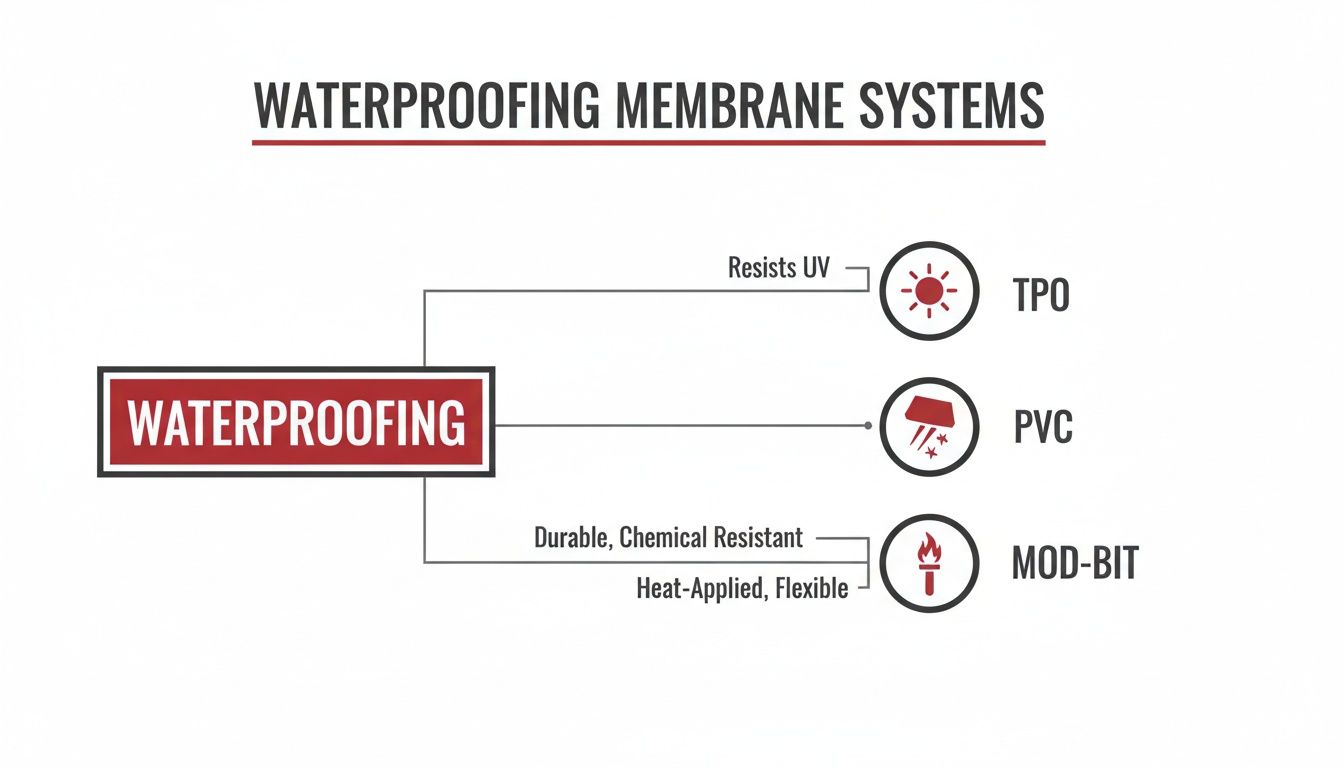
As the diagram shows, TPO is a champ against UV rays, PVC offers fantastic hail resistance, and Modified Bitumen provides tough, heat-welded durability.
Building for Hail Alley Resilience
Of course, it's not just the rain. North Texas is the heart of "Hail Alley," and your roof deck needs to be built to take a beating. This means choosing materials that can withstand serious impact without letting a single drop of water breach the membrane below.
Your first decision is the deck surface itself. You need something tough.
- High-Density Composite Decking: Modern composites aren't just for looks; many are engineered to resist dents and damage from hail.
- Thick Paver Systems: Concrete or porcelain pavers are brilliant for this. They can absorb a huge amount of impact, shielding the membrane. A pedestal paver system is even better, as you can easily replace one cracked paver without tearing up the whole deck.
- Impact-Rated PVC Membranes: If you're going with a walkable membrane surface, make sure it's a product specifically tested and rated for high impact. These are built to handle both hailstones and heavy foot traffic.
The substructure is just as important. A flimsy frame won't do you any favors. A robust, well-supported frame provides a solid base that helps distribute the force of an impact, making it much harder for a big hailstone to puncture the membrane. By pairing a durable surface with a strong frame and a top-tier waterproofing system like PVC or high-grade TPO, you create a multi-layered defense. It’s how you build a rooftop oasis that can stand up to the worst weather Texas has to offer.
Choosing the Right Materials for Your Deck Surface
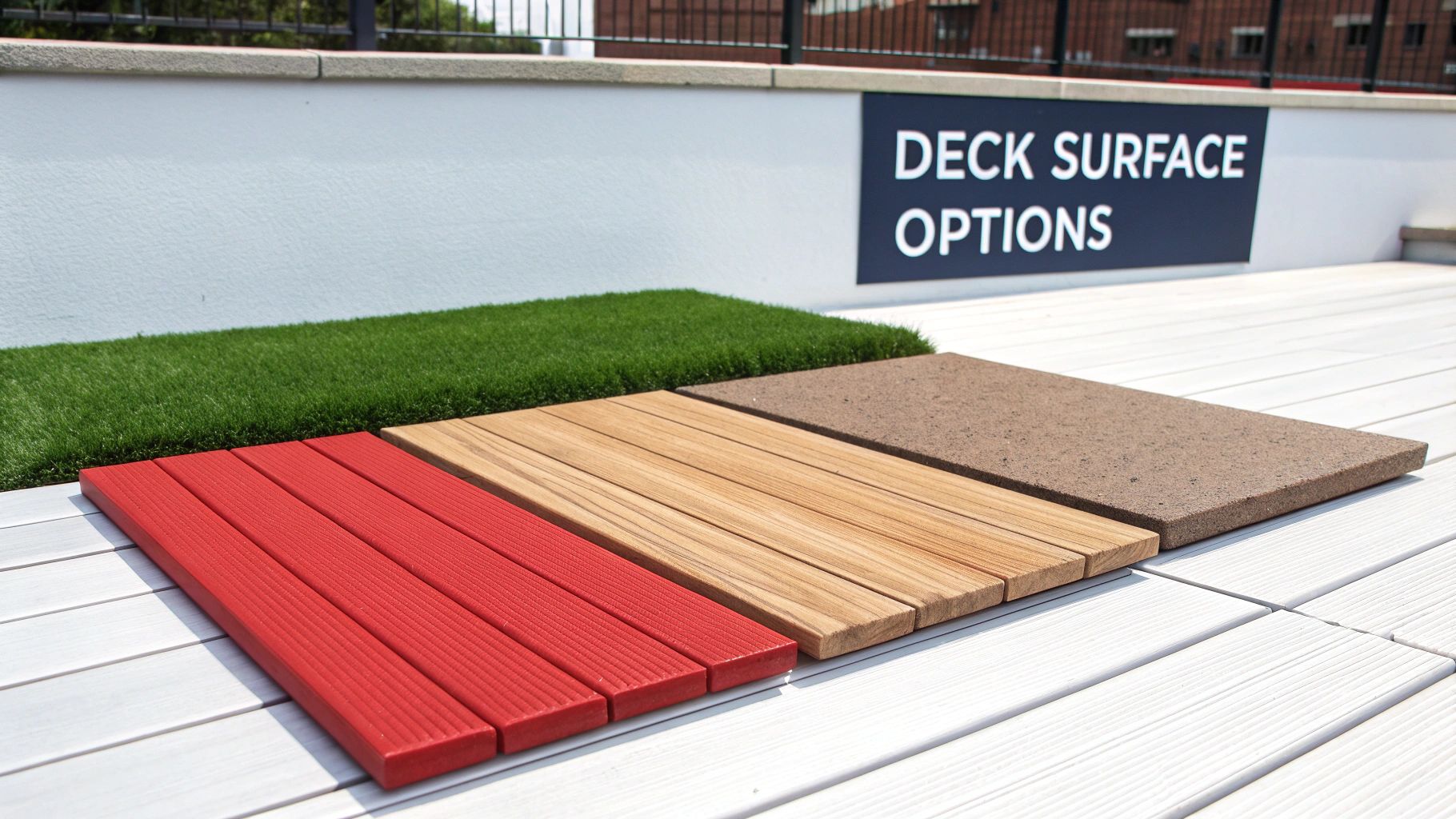
With the waterproofing system locked in, we get to the fun part: choosing the surface you’ll actually walk on and enjoy. This is where your personal style meets real-world performance. The material you pick will define the whole look and feel of your rooftop oasis, but it also determines how much time you’ll spend maintaining it under the harsh Texas sun.
Think of it like this: the membrane is your roof's impenetrable shield, and the deck surface is the beautiful, functional flooring you put on top. It has to be tough enough for parties and patio furniture but also something you love looking at every day. This decision is a big one, affecting everything from daily use to the long-term resilience of your investment.
Composite Decking: The Low-Maintenance Powerhouse
For anyone who loves the look of wood but not the weekend work that comes with it, composite decking is the hands-down winner. It’s made from a smart blend of wood fibers and recycled plastics, engineered specifically to fight off fading, stains, and splinters. Here in Texas, its biggest selling point is its incredible resistance to UV rays, which means it won't warp or crack after a few brutal summers.
Better yet, the top brands offer great slip resistance and a huge variety of colors and textures. You can get that high-end, premium wood look with little more than an occasional scrub with soap and water, giving you more time to actually kick back and enjoy your new space.
Choosing the right materials is more than just a design decision; it’s a commitment to a certain level of maintenance and performance. Your goal should be to find the perfect balance between the look you want, the durability you need, and the upkeep you’re willing to perform.
Natural Wood: The Timeless Classic
You just can't beat the authentic warmth and character of real wood. For a truly luxurious and long-lasting deck, dense hardwoods like Ipe or Tigerwood are in a class of their own. These tropical woods come with built-in, natural resistance to rot and insects, making them perfectly suited for the outdoors.
Of course, that classic beauty requires a bit of commitment. To keep that rich, deep color, you'll need to clean and seal the wood, usually once a year. If you let it go, it will naturally weather to a handsome silvery-gray patina, which many people actually prefer. It all comes down to the look you're going for and how hands-on you want to be.
Paver Systems: Modern and Modular
For a clean, contemporary look, paver systems are a fantastic and incredibly practical solution. These systems use adjustable pedestals that sit right on top of the waterproofing membrane, supporting concrete, porcelain, or natural stone pavers. The result is a sleek, durable surface that can easily handle heavy furniture and lots of foot traffic. You can even explore unique outdoor patio tiles like cement tile designs for a custom look.
The real genius of pavers is their serviceability. The pedestal system lets water drain away underneath, and if a paver ever gets damaged or you need to inspect the membrane, you just lift the tiles you need to. This modular design makes future maintenance or repairs far simpler and cheaper than with a fixed deck. Many of these systems sit atop multi-layered waterproofing like the ones we detail in our guide to modified bitumen roof systems.
This growing interest in creating beautiful, functional outdoor living areas is no surprise. The global market for flat roofing systems was valued at US$52.50 billion in 2021 and is expected to hit US$62.72 billion by 2026, which shows just how many homeowners are investing in projects like these.
Navigating DFW Building Codes and Permits
Let's get one thing straight: building a flat roof deck isn't a simple weekend DIY job. This is a serious structural project. Think of it less like putting together patio furniture and more like adding an actual room onto your house. Because you're fundamentally altering your home’s structure, you'll need to work with local building codes and get the right permits.
This process isn't just about jumping through bureaucratic hoops; it’s a critical safety net. Here in the Dallas-Fort Worth area, every city—from Dallas and Fort Worth to Plano and Arlington—has its own set of rules to make sure your deck is safe and built to last. Trying to skip this step is a recipe for disaster, potentially leading to hefty fines, stop-work orders, or even being forced to tear the whole thing down.
Core DFW Code Requirements to Know
While the fine print can differ from one city to the next, a few key safety standards are pretty much universal across the DFW Metroplex for any occupiable roof. Your contractor absolutely must design the project around these non-negotiables.
- Guardrail Height: To prevent dangerous falls, guardrails are mandatory. Most local codes insist on a height of at least 36 inches for residential projects, but don't be surprised if your city requires 42 inches.
- Safe Egress: There has to be a safe, clear path to get on and off the deck, which usually means a door that meets building codes. This is crucial for having a reliable escape route in an emergency.
- Structural Load Capacity: The deck’s structure must be engineered to handle a specific "live load." The standard is typically 40 pounds per square foot (PSF) to safely support the weight of people, furniture, and even a small party.
A huge mistake people make is just assuming their existing roof can take the weight. It can't. A licensed structural engineer has to run the calculations and certify that the roof structure—or the new reinforcements—can handle these loads. This certification is the bedrock of your permit application.
Demystifying the Permitting Process
Getting a permit can feel like a headache, but it’s actually a pretty logical process once you have your ducks in a row. A good, licensed contractor will usually take the lead on submitting everything, but understanding the steps helps you know what's going on with your own project.
The city's building department will need a full set of documents to review. This package almost always includes:
- Architectural Plans: These are the detailed blueprints showing the deck’s size, the materials being used, the guardrail design, and exactly how it connects to your house.
- Structural Engineering Report: This is the most important piece of paper in the whole stack. It’s the official report from the engineer with all the calculations and specs for the necessary framing and supports, proving the design is safe.
After the permit is issued, you can expect a city inspector to visit the site at key milestones. They'll typically come out after the framing is up and then again when the project is finished to make sure the work matches the approved plans.
Passing those final inspections is the city's official stamp of approval. It’s your proof that your beautiful new flat roof deck isn't just a great-looking addition, but a safe, legal one that protects your home's insurance coverage and future resale value.
Have More Questions? We’ve Got Answers.
Even after diving into the details, you probably have a few more things on your mind. That’s completely normal. Here are the straight answers to some of the most common questions we get from Dallas-Fort Worth homeowners thinking about a flat roof deck.
How Much Weight Can a Flat Roof Deck Actually Hold?
This is, without a doubt, the most important question, and the answer is always the same: it comes down to what a structural engineer says. Your home's original roof was only built to hold itself up, plus maybe some rainwater or a light dusting of snow. It was never meant for people.
To make it safe, the entire structure needs a thorough evaluation and, almost always, significant reinforcement. It has to support the "dead load"—the permanent weight of the decking materials—plus the "live load" from people, furniture, and heavy planters. For residential spaces, that live load requirement is typically a minimum of 40 pounds per square foot.
Can I Put a Deck on Top of Any Flat Roof?
I wish I could say yes, but unfortunately, not every flat roof is a good candidate for this kind of project. Whether it’s feasible depends on a few critical factors that a professional has to check out.
- Your Home's Bones: The size, spacing, and current condition of your roof joists are the starting point. This tells us what, if any, reinforcements are even possible.
- Getting In and Out: You need a safe, practical, and code-compliant way to access the deck. A standard window won't cut it; you’ll likely need a proper doorway.
- The Rulebook: Local zoning codes or even HOA rules can have restrictions on rooftop structures that could stop a project before it starts.
Getting a professional on-site is the only way to know for sure if your home can safely and legally support a new roof deck.
How Long Will My Flat Roof Deck Last?
When you have it installed correctly by a pro using top-tier materials, and you stick to a basic maintenance routine, you can expect your new flat roof deck system to last 20 to 30 years. Sometimes, they can go even longer.
The real lifespan of your deck boils down to two things: the quality of the waterproofing membrane underneath and the durability of the deck surface you walk on. If you're going to invest anywhere, put your money into a superior membrane. It's the single best thing you can do to protect your home and guarantee you'll be enjoying that rooftop space for decades.
Ready to unlock the potential sitting right on top of your house? The experts at Hail King Professionals have been building code-compliant, storm-resilient roofing solutions across DFW since 1991. Contact us for a free, no-obligation inspection to find out if a flat roof deck is the right move for your home.