
Discover synthetic wood shake roof options for your Texas home
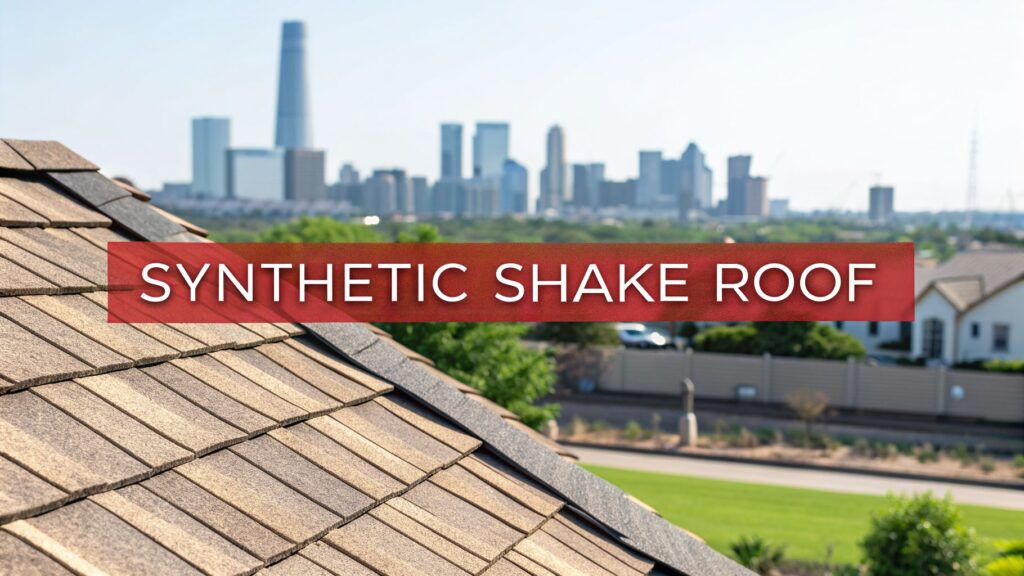
If you’re a Texas homeowner, you know the feeling. The constant worry about the next hailstorm, the high maintenance of a real wood roof, or just being uninspired by standard asphalt shingles—it’s a cycle that can feel endless. That’s why so many are turning to synthetic wood shake roofing. It delivers the timeless look of cedar without the vulnerability and constant upkeep that Texas weather demands.
Why Synthetic Shake Is Becoming the Go-To Roof in Texas
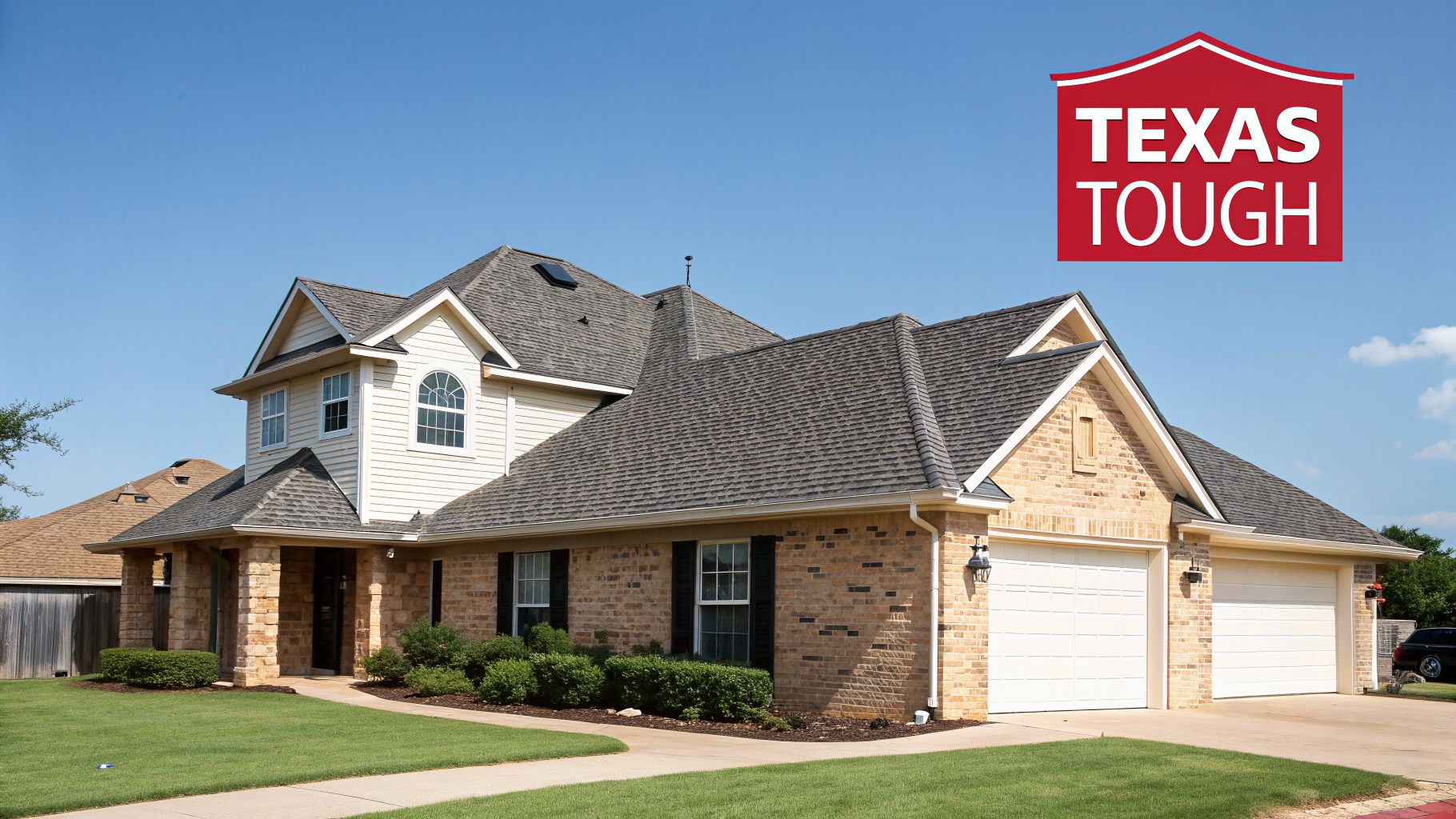
For homeowners across Dallas-Fort Worth and East Texas, the sound of hail is often followed by the all-too-familiar call to a roofing contractor. The truth is, most traditional roofing materials just weren't built for the kind of severe weather we see year after year. This is where synthetic wood shake completely changes the equation, giving you classic beauty backed by modern-day resilience.
Think of it as getting the best of both worlds. You get the authentic, rustic charm of a real cedar shake roof—the deep grains, the varied textures, and the undeniable curb appeal—but without any of the headaches. This isn't just a new material; it's a roofing system engineered from the ground up to solve the problems that have frustrated Texas homeowners for decades.
A Modern Solution for Timeless Problems
The appeal of a synthetic shake roof is about much more than just its good looks. It’s a practical, strategic upgrade that pays you back year after year, especially in our demanding climate. People are making the switch for a few very clear reasons:
- Unmatched Durability: Made from advanced polymer composites, these shakes are built to take a beating. They won't split, crack, or curl under the intense Texas sun, and they stand up to high winds and driving rain without a problem.
- Superior Safety: Natural wood is a fire risk, plain and simple. In contrast, most synthetic shake products earn a Class A fire rating—the highest level of fire resistance available. It's a layer of protection that brings incredible peace of mind.
- Hail-Proof Performance: For many of us in North Texas, this is the main event. A Class 4 impact rating means the roof is certified to withstand hail up to 2 inches in diameter, dramatically cutting your risk of storm damage.
This isn't just about picking a new shingle. It’s a move toward long-term security. When you invest in a roof that can actually handle severe weather, you’re looking at fewer claims, more stable insurance costs, and freedom from the hassle of constant replacements.
The Value of Lasting Peace of Mind
At the end of the day, choosing a synthetic wood shake roof is about investing in a permanent solution instead of another temporary fix. While a traditional wood roof needs regular, costly treatments to fend off rot, mold, and insects, synthetics are practically maintenance-free. They’re designed to hold their color and strength for 50 years or more.
That kind of longevity translates directly into real financial value. Yes, the initial investment is higher than for basic asphalt shingles. But when you factor in the savings on repairs, maintenance, and potential insurance discounts, it makes a compelling case over the life of your home. You can explore our complete guide on various hail resistant roofing materials to see how all the options stack up.
A synthetic shake roof isn’t just a shield for your house; it’s a smart, lasting asset that boosts its beauty and resilience for decades to come.
What Exactly Is a Synthetic Wood Shake Roof?
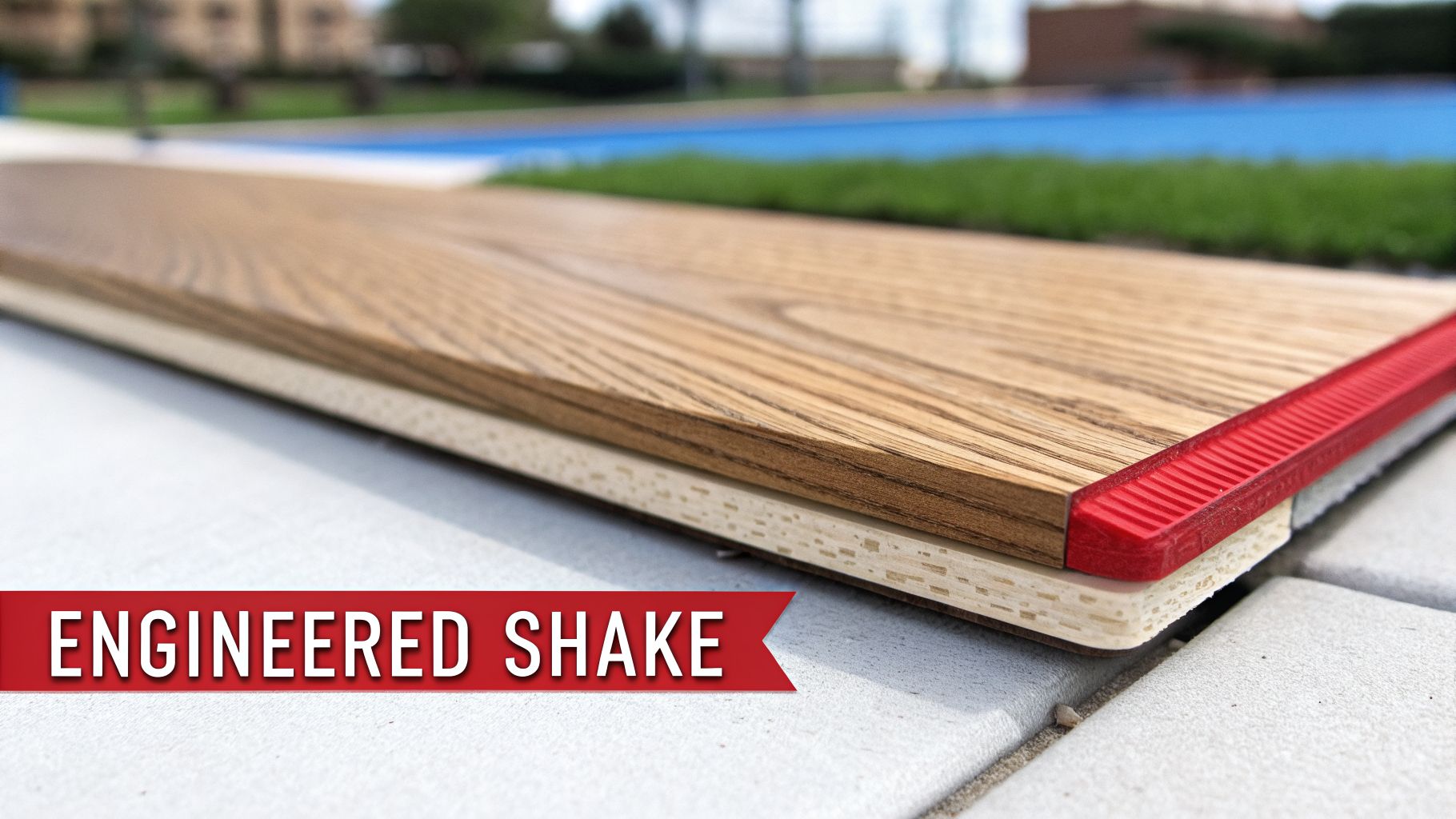
When homeowners hear the word "synthetic," they often picture a cheap, plastic-looking knockoff. Let's get that idea out of the way right now. A modern synthetic wood shake roof is a completely different animal—a high-performance roofing material engineered to give you the gorgeous, rustic look of cedar shake without any of its headaches.
Think of it as a specialized composite material, almost like a high-tech dough. Manufacturers blend advanced polymers, recycled materials, and critical additives like UV inhibitors and fire retardants. This isn’t just plastic; it's a carefully formulated composite designed for one purpose: to be the best roofing shake possible.
The real genius is in how they’re made. This composite material is injected into molds that were cast from real, hand-split cedar shakes. This process captures every groove, grain, and imperfection that makes natural wood so beautiful. The result? From the street, it's nearly impossible to tell the difference between a synthetic shake roof and the real thing.
The Science Behind the Authenticity
What separates a top-tier synthetic shake from a cheap imitation is the intentional variation. Instead of stamping out identical, cookie-cutter shingles, manufacturers produce them in different widths and thicknesses. This mimics the organic, random appearance of a true hand-split cedar roof and avoids that repetitive pattern that screams "fake."
This careful manufacturing delivers some serious advantages:
- Authentic Texture: Because the molds come from real cedar, you get a deep, convincing wood grain texture.
- Color-Through Technology: The color isn’t just a top coat; it runs all the way through the material. If a shingle gets scratched or hit by debris, you won’t see a different color underneath.
- Engineered Durability: The composite blend is formulated to completely resist cracking, splitting, and rot—the very things that cause a real wood roof to fail.
The roofing industry has taken notice. The market for composite plastic roof shingles, a core component of this category, was valued at $3.4 billion in 2026 and is expected to climb to $4.46 billion by 2030. For us roofers in storm-prone areas like Dallas-Fort Worth, this trend confirms what we already see in the field: people want roofing that looks great and can take a beating. You can see the full market projections for composite plastic roof shingles to understand this industry shift.
Key Takeaway: A synthetic wood shake roof isn't 'fake wood.' It's a precisely engineered composite system that delivers the timeless aesthetic of cedar with modern performance that natural materials simply can't match.
More Than Just a Pretty Surface
The real value of a synthetic wood shake roof goes much deeper than just its good looks. The materials are specifically chosen to solve the biggest problems that traditional roofs face, especially in our tough Texas climate. The polymer blend is naturally waterproof, which means it will never absorb moisture, grow algae, or become a five-star meal for termites.
This is the fundamental reason it lasts so long. A natural cedar roof needs constant upkeep and will eventually surrender to sun, rain, and rot. A synthetic shake roof, on the other hand, is built to perform for 50 years or more with almost no maintenance. It’s a complete system designed for beauty, durability, and a whole lot of peace of mind.
How Synthetics Outperform Traditional Roofing in Texas
If you own a home in Texas, you know our weather is no joke. Between the hail storms that barrel through DFW and the intense sun that beats down everywhere else, a roof takes a serious beating. For years, the choice was between traditional options, and honestly, none were perfect for our climate.
Real wood shake looks fantastic, but it's a magnet for rot, pests, and fire risk. And while standard architectural shingles are everywhere, a single hailstorm can leave them battered and bruised, triggering a frustrating insurance claim and a full replacement.
A synthetic wood shake roof is different. It’s not just another material; it’s an engineered solution built from the ground up to solve the exact problems Texas homeowners face. Let's dig into why these modern roofs provide the long-term performance and peace of mind you really need.
Unbeatable Hail and Impact Resistance
Anyone in North Texas knows the sound of hail—it’s the sound of potential damage. This is precisely where synthetic shakes shine and offer their biggest advantage.
Most high-quality synthetic shake products earn a Class 4 impact resistance rating. This is the highest certification given by Underwriters Laboratories (UL), and the test is intense. To pass, the material has to withstand a 2-inch steel ball dropped from 20 feet without cracking or splitting. Think of it as a lab-proven simulation of a severe hailstorm.
Picture This: A classic Texas thunderstorm rolls through. Your neighbor's standard asphalt roof is left with dents, cracks, and granules all over the lawn, meaning they're on the phone with their insurance company. Your home, protected by a Class 4 synthetic shake roof, comes through without a scratch. The roof did its job, and you can just go on with your day.
This level of durability isn't just about avoiding repairs; it’s about saving money. Many insurance carriers in Texas offer significant discounts on homeowner's premiums for installing a Class 4 roof. Why? Because it dramatically lowers their risk of paying out a massive claim after the next big storm.
Top-Tier Fire Safety for Your Home
Fire risk is a real concern, especially in drier areas or neighborhoods with lots of mature trees. This is one of the biggest knocks against natural cedar shake—it's naturally flammable. A real wood roof often has a Class C or even an unrated fire classification, making it a significant liability.
Synthetic wood shakes are in a completely different league. They are manufactured from an advanced polymer composite blended with fire-retardant additives. This allows most synthetic products to achieve a Class A fire rating, the best possible rating for any roofing system. A Class A roof is proven effective against severe fire exposure, giving your home and family a critical layer of protection. For many homeowners, that added security is priceless.
Built to Last and Look Great for Decades
A new roof is a major investment, so you want it to last. Synthetic shakes deliver a return that older materials simply can't promise.
A natural wood roof, even with diligent care, might give you 20-25 years. But that lifespan comes with a lot of expensive maintenance—fighting off rot, mold, and insects. An asphalt shingle roof generally lasts about 20-30 years before it's time for a replacement.
A synthetic shake roof, on the other hand, is engineered to last 50 years or more. The composite material is simply immune to the problems that plague other roofs:
- No Rot or Bugs: It doesn't absorb water, so it can't grow mold or algae. It also offers nothing for termites or other pests to eat.
- Stays Looking New: Built-in UV inhibitors protect the material from the relentless Texas sun, preventing the cracking, curling, or fading you see with other materials.
- Almost No Maintenance: You can forget about the constant cycle of chemical treatments, repairs, and worrying.
This kind of performance is why the industry is shifting. The global market for synthetic shingles was valued at $2.3 billion in 2023 and is expected to climb to $3.8 billion by 2032. As you can see in these synthetic shingle market insights on dataintelo.com, more and more homeowners are choosing the long-term value of engineered materials.
When you invest in a synthetic wood shake roof, you're getting more than just the authentic beauty of wood shake. You're getting decades of worry-free performance that's built to handle the absolute worst that Texas weather can throw at it.
Synthetic Shake vs. Traditional Roofing Materials
Choosing a roofing material involves weighing durability, aesthetics, and cost. Here's a straightforward comparison to help you see where synthetic shake stands against the most common options in our area.
| Feature | Synthetic Wood Shake | Natural Wood Shake | Architectural Asphalt |
|---|---|---|---|
| Typical Lifespan | 50+ years | 20–25 years | 20–30 years |
| Hail Resistance | Class 4 (Highest) | Poor; easily splits or cracks | Fair to Poor; prone to bruising and granule loss |
| Fire Rating | Class A (Highest) | Class C or Unrated (Highly Flammable) | Class A |
| Maintenance | Virtually none | High; needs regular treatments for rot, mold & pests | Low; occasional cleaning for algae streaks |
| Insurance Savings | High (Significant premium discounts common) | None; may increase premiums in some areas | Minimal to none |
| Long-Term Value | Excellent; high upfront cost offset by longevity & savings | Poor; high maintenance and replacement costs | Fair; lower upfront cost but shorter lifespan |
As the table shows, while synthetic shake has a higher initial investment, its superior performance in every key category—from durability to safety—delivers unmatched long-term value.
To get a better sense of how synthetics fit into the broader landscape, take a look at our complete guide on the different types of roofing systems.
Breaking Down the Cost and Long-Term Value
Let's get right to it: when we talk about a premium roof like synthetic wood shake, the first thing on everyone's mind is the price. There’s no sugarcoating it—the upfront cost for a synthetic shake roof is higher than what you'd pay for standard architectural asphalt shingles. But if you stop there, you’re only seeing a tiny part of the financial story.
The real conversation isn't about the initial invoice, but the total cost of ownership over the next half-century. It's a shift from thinking of a roof as just an expense to seeing it as a long-term investment in your home. This is where synthetic shake completely changes the game for your finances and, frankly, your peace of mind.
What It Really Costs Over 50 Years
A roof’s true cost is what you pay for it from the day it’s installed to the day it’s torn off. The beauty of synthetic shake is how it systematically eliminates the hidden and recurring costs that plague other roofing materials.
When you add it all up, the savings are significant:
- Serious Insurance Discounts: Here in Texas, a roof with a Class 4 impact rating is a big deal to insurance companies. Many carriers offer major premium discounts for installing a roof that can handle severe hail because it saves them from paying out claims. Those savings pile up year after year, often totaling thousands of dollars over the roof's life.
- No Maintenance Budget Needed: Natural wood shakes look great, but they require a constant stream of money for chemical treatments to prevent mold, rot, and pests. A synthetic wood shake roof needs virtually nothing. That’s money that stays in your pocket, every single year.
- You Only Pay for It Once: With a lifespan of 50+ years, this is a one-and-done installation. In that same timeframe, you might have to replace an asphalt roof two, sometimes even three times. Each replacement means paying for a full tear-off, new materials, and labor all over again.
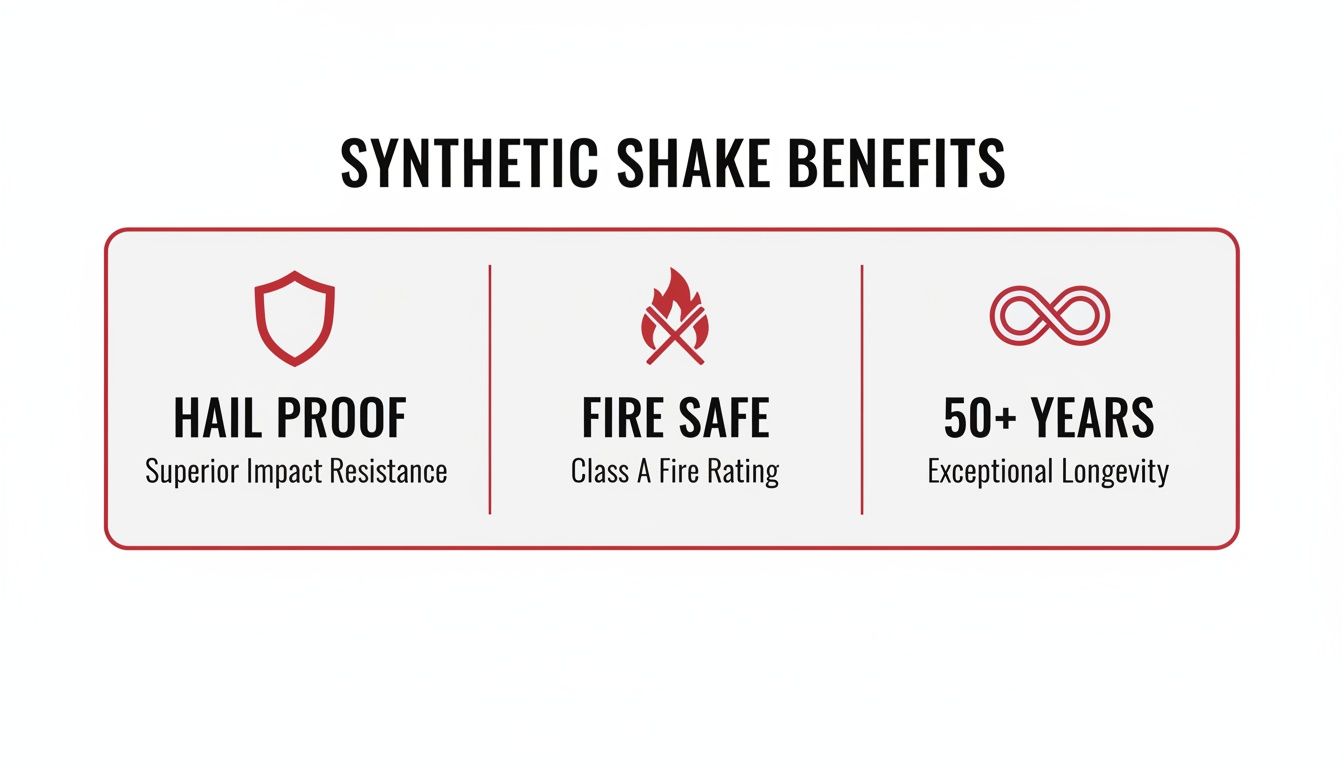
These three benefits—being hail-proof, fire-safe, and lasting for decades—are the foundation of its incredible long-term financial value.
An Investment That Grows With the Market
Putting a high-performance roof on your home isn’t just about defending against the next storm; it’s about actively increasing your property's value. There’s a clear trend in the housing market toward more resilient, durable building materials, and roofing is leading the charge. The global roofing market, valued at $143.87 billion in 2025, is expected to climb to $199.55 billion by 2034. You can see the full roofing materials market analysis from Fortunebusinessinsights.com for a deeper dive.
By choosing a synthetic wood shake roof, you’re not just buying a temporary shield. You’re adding a true asset that boosts curb appeal, improves resale value, and offers a level of durability that today’s homebuyers are looking for, especially in a place with weather as unpredictable as Texas.
The Roof That Pays for Itself
So, when you factor in the insurance discounts, the money saved on maintenance, and the fact that you won’t be paying for another roof replacement in 15-20 years, the math becomes crystal clear. The higher initial investment is often completely balanced out by decades of savings, making it one of the smartest, most cost-effective decisions you can make for your home.
This "long game" perspective is why so many homeowners in Dallas-Fort Worth and East Texas are making the switch. It's the ultimate "set it and forget it" roof that protects both your house and your bank account. To see how these factors play into a quote, take a look at our guide on the cost of a new roof in Texas.
The Expert Installation Process Your New Roof Deserves
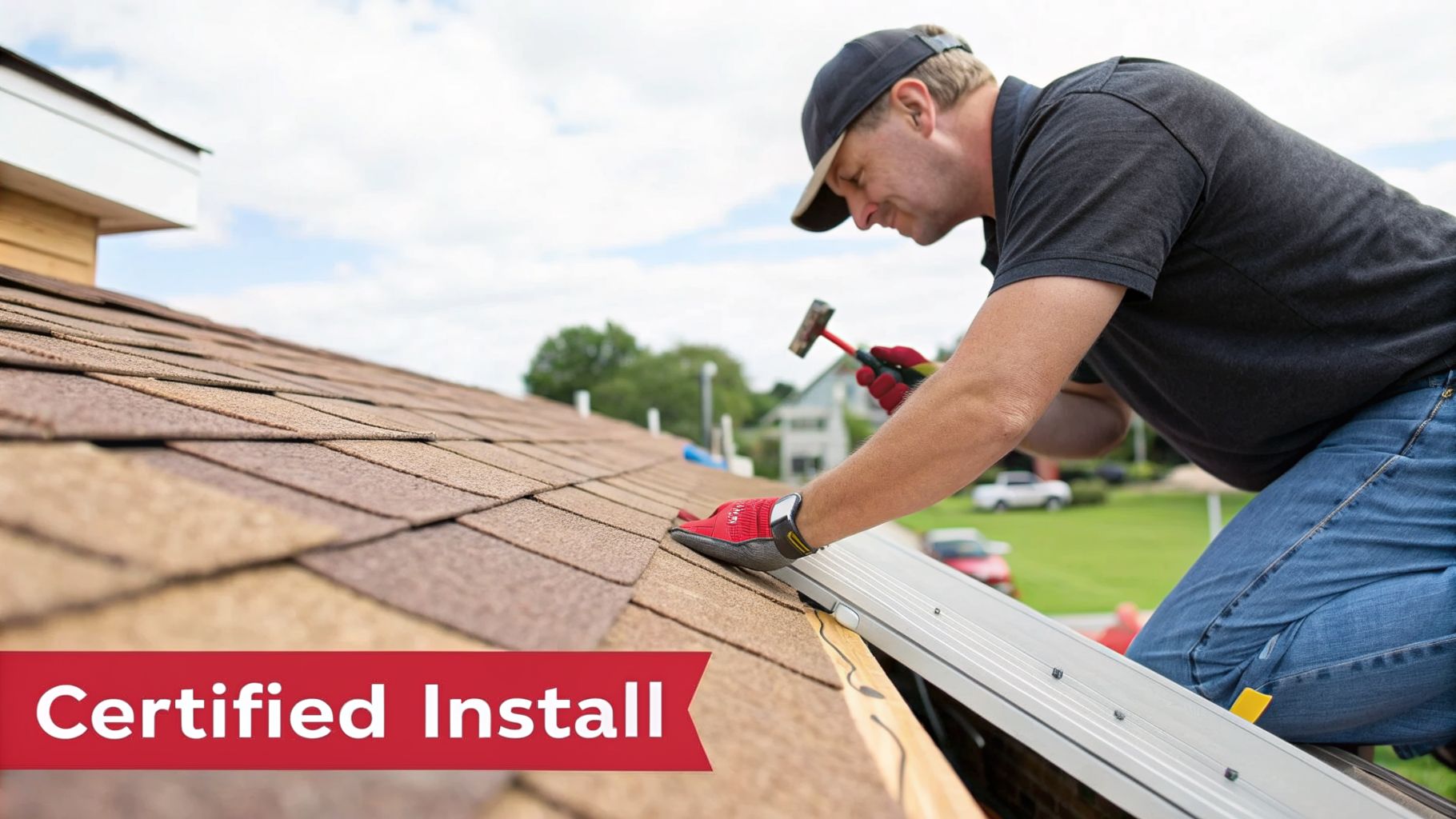
A premium roofing material like synthetic wood shake only lives up to its 50-year potential if the installation is absolutely perfect. This isn't just about nailing down some shingles. It's about a deep understanding of how the entire system works, from the decking up. Choosing a certified, expert installer isn’t just a good idea—it’s the only way to protect your investment and get the performance you paid for.
The process is much more involved than a typical asphalt roof job. For one, you can't install a synthetic wood shake roof over old materials or spaced-out decking boards, which you might find under old natural shakes. We always start with a complete tear-off of your old roof. This lets us get a good look at the underlying wood structure, make any needed repairs, and build your new roof on a solid, continuous foundation.
Laying the Foundation for Performance
With a clean, solid deck, our first step is laying down the underlayment. Think of this as the real waterproof barrier for your home. It’s your last line of defense against wind-driven rain. Here in Texas, we use high-quality synthetic underlayment that won’t tear and can handle our intense heat, giving you far better protection than old-school felt paper.
From there, we focus on the details that separate a professional job from a liability:
- Proper Fastening: Synthetic shakes expand and contract with the heat. A true pro knows the manufacturer's exact nailing pattern and which fasteners to use. This allows for that slight movement and prevents the shakes from warping or cracking down the line.
- Integrated Flashing: We install brand new, custom-fit metal flashing around chimneys, skylights, and in the valleys where roof planes meet. We never cut corners here; good flashing is what creates a permanent, watertight seal at your roof's weakest points.
- Balanced Ventilation: A roof has to breathe. We calculate and install the right amount of intake and exhaust ventilation for your attic. This prevents the heat and moisture buildup that can cook your shingles from below and run up your energy bills.
It's this focus on the complete system that matters. We even make sure small but vital components are correct, like knowing what a gutter apron is and how it protects your roof's edge from water intrusion. Every single layer has a job to do.
Built to Withstand Texas Weather
In Dallas-Fort Worth, our roofs have to meet tough building codes designed for high winds and tornadic weather. A professional installation is the only way to ensure your roof is compliant and truly secure. We use specialized fastening methods that anchor each shake to resist powerful wind uplift, keeping your roof locked down during a severe storm.
The installation process is where your 50-year warranty is either validated or voided. Manufacturers have strict installation guidelines, and if a contractor cuts corners, your warranty won't cover any resulting failures. This is why hiring a certified team is non-negotiable for a high-performance system.
A synthetic shake installation usually takes a little longer than an asphalt shingle project—typically between 3 to 7 days, based on the size and complexity of your home. That extra time is for the precision work we've been talking about. From the full tear-off to the final nail and cleanup, our process guarantees that every part of your roof works together. The result is a stunning, durable roof that gives you real peace of mind for decades.
Common Questions About Synthetic Shake Roofs
Investing in a new roof is a huge decision, and even after you've weighed the pros and cons, it's completely normal to have some lingering questions. We get it. To help you feel confident about your choice, here are some straightforward answers to the things we hear most often from homeowners in Dallas-Fort Worth and across East Texas.
Will It Really Look Like Real Wood?
This is usually the first question we get, and for good reason! Homeowners who love the classic, rustic beauty of cedar are understandably skeptical. But the answer is a resounding yes. Modern synthetic shakes are a world away from the "fake" looking materials of the past.
The best products on the market are cast in molds made from actual, hand-split cedar shakes. This process captures every subtle detail—the deep grain patterns, the irregular textures, and the rich color variations that make natural wood so appealing. Manufacturers even produce them in different widths, so we can install them in a staggered pattern that avoids that repetitive, stamped look. Honestly, from the curb, you’d be hard-pressed to tell the difference between a high-end synthetic shake roof and the real thing.
The best part? Your roof will continue to look that good for decades, without splitting, curling, or turning gray like real wood inevitably does.
Can I Get an Insurance Discount in Texas?
Yes, and this is a game-changer for homeowners in our hail-prone region. Nearly every synthetic wood shake roof we install carries a Class 4 impact resistance rating, which is the highest possible certification from Underwriters Laboratories (UL).
A Class 4 rating means the material has been proven to withstand impacts from hail up to two inches in diameter without damage. Because this drastically lowers the chances you'll need to file a storm damage claim, most Texas insurance companies offer significant premium discounts for homes with these certified roofs. We’ll make sure you have all the proper documentation for your insurer to get those savings applied.
A Class 4 rating isn't just about protection; it's a powerful financial tool. Over the life of the roof, the annual insurance savings can make a serious dent in the initial cost, making it a very smart investment in North Texas.
How Long Does a Synthetic Shake Roof Last?
You can expect a synthetic shake roof to last for an incredibly long time. In fact, it’s one of the most durable residential roofing materials you can buy. Manufacturers typically back their products with a 50-year or even a lifetime limited warranty.
Let's put that into perspective against other common roofing options:
- Architectural Asphalt Shingles: These usually need a full replacement in about 20-30 years.
- Natural Wood Shakes: With constant, expensive maintenance to fight off rot and pests, you might get 20-25 years out of them.
That exceptional lifespan is why synthetic shake offers such fantastic long-term value. You’re not just buying a roof for the next 20 years; you’re investing in a system designed to protect your home for half a century. For many homeowners, it's the last roof they'll ever need to buy.
Ready to see if a durable, beautiful synthetic wood shake roof is the right long-term solution for your Texas home? The team at Hail King Professionals offers free, no-obligation roof inspections to assess your current roof and provide a clear, transparent quote. Schedule your free inspection with Hail King Professionals today