


Gutter Replacement Dallas: Your Guide to Durable, Affordable Gutters
If you're seeing gutters on your Dallas home that are sagging, cracked, or pulling away from the roofline, you're looking at a problem that a simple repair just can't fix. These aren't minor issues; they're warning signs of a system-wide failure. A complete gutter replacement in Dallas is the only real way to head off serious, and seriously expensive, damage to your foundation.
When Is Gutter Replacement Necessary for Your Dallas Home?
It’s easy to forget about your gutters, but they are the unsung heroes of your home's exterior. Day in and day out, they quietly channel thousands of gallons of rainwater away from your foundation, siding, and landscaping. But here in Dallas, where powerful downpours and punishing hailstorms are a fact of life, gutter systems are under constant attack. When they start to fail, the fallout is much worse than just a little water spilling over the edge.
Putting off a gutter replacement is a bit like ignoring a slow leak in your tire. It doesn't seem like a big deal at first, but you're setting yourself up for a blowout at the absolute worst time. A compromised gutter system lets water soak the ground right next to your foundation, which can lead to cracks, shifting, and structural repairs that cost a fortune. That same water also rots the wood fascia boards behind the gutters, creating a welcome mat for pests and mold.
Visual Clues That Signal System Failure
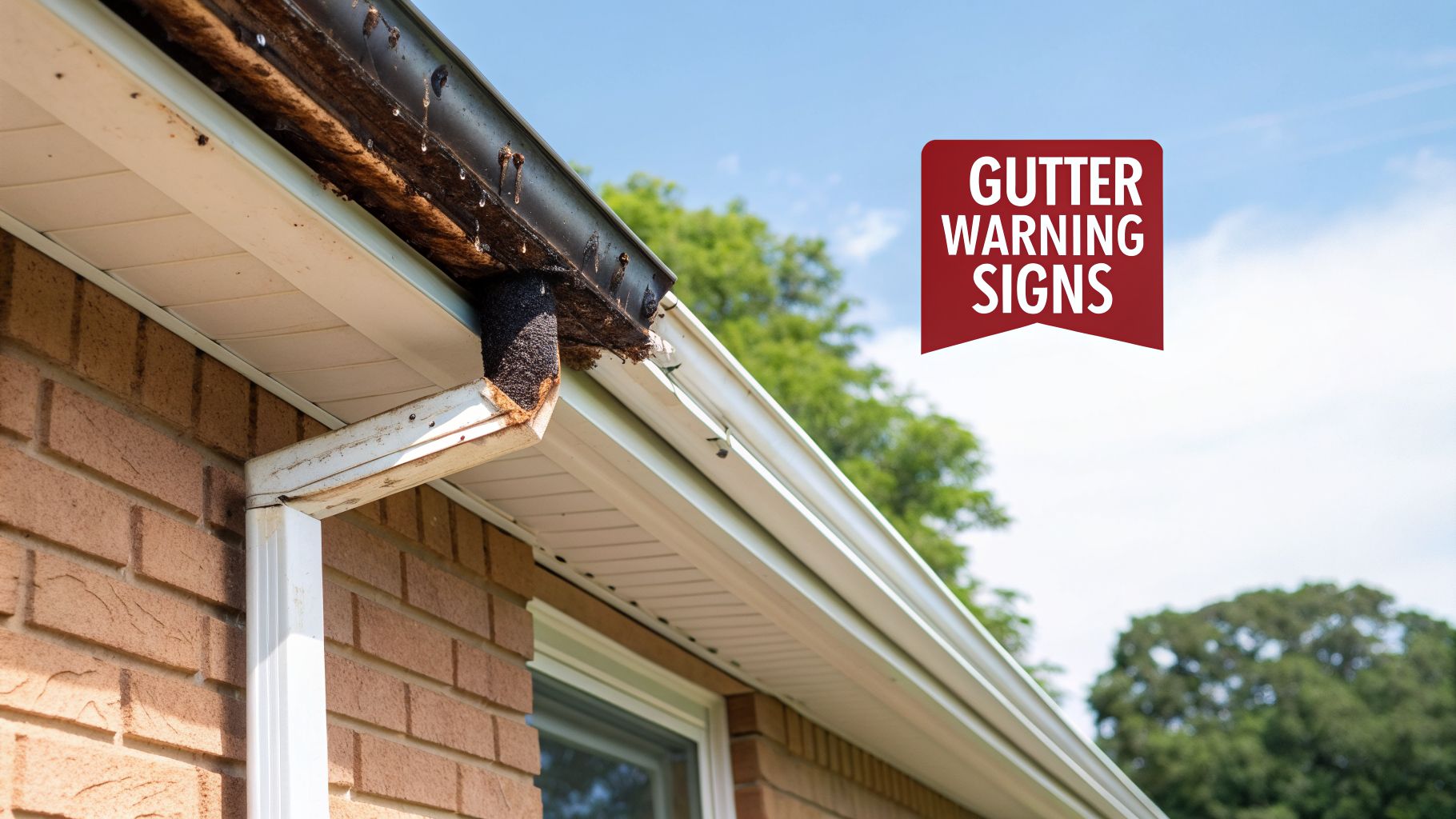
The good news is you don’t have to be a roofing expert to see when your gutters are waving a white flag. A quick walk around your house is often all it takes to spot the obvious signs of trouble.
These problems might look small, but they’re usually symptoms of a much bigger issue. A single crack from a hailstone, for instance, can compromise an entire 10-foot section, allowing water to seep behind it and rot the structure of your home.
Here are the big ones to watch for:
- Visible Cracks or Splits: Even tiny fractures will expand and contract with Dallas's wild temperature swings, quickly becoming major leaks.
- Peeling Paint or Orange Flecks: This is rust getting started. Once rust appears on steel gutters, the metal is losing its integrity and a hole is not far behind.
- Water Damage Stains on Siding: If you see dark streaks on the siding right below your gutters, it’s a dead giveaway that water is spilling over or leaking out.
- Pools of Water Around Your Foundation: After a rainstorm, check the base of your home. If you see standing water, your gutters aren’t doing their one critical job: moving water away from the house.
To make it even easier, we've put together a quick checklist you can use on your next walk around the property.
Gutter Damage Self-Assessment Checklist
Use this table to spot common issues. If you check off more than one or two of these, it's definitely time to call a professional for an inspection.
| Symptom | What It Looks Like | Why It's a Problem in Dallas |
|---|---|---|
| Sagging or Pulling Away | Gutters bowing down in the middle or detaching from the roofline. | The weight of pooled water from intense downpours pulls them down faster. |
| Visible Cracks/Holes | Obvious splits, fractures, or holes in the gutter channel. | Hail is a primary cause. Small impacts become big leaks. |
| Rust & Peeling Paint | Orange specks, discoloration, or paint flaking off the gutter. | High humidity and frequent rain accelerate the corrosion of galvanized steel. |
| Water Stains on Siding | Dark streaks or discoloration on the fascia board or siding. | Proof that overflows are happening, which can lead to wood rot and mold. |
| Foundation Pooling | Puddles of water forming near your home's foundation after rain. | Our clay soil expands and contracts with moisture, putting stress on your foundation. |
Noticing any of these signs means your gutters are likely beyond a simple fix and are putting your home at risk.
More Than Just Clogs
While a bad clog can cause overflow, the problems that truly demand a full replacement are almost always structural. Gutters that are sagging or pulling away from the fascia board are a perfect example. This usually means the fasteners have failed or, worse, the wood they’re attached to has begun to rot. At that point, the system is no longer secure.
A sagging gutter is a compromised gutter. It creates low spots where water pools, adding weight that accelerates its detachment from the home and renders it useless for proper drainage.
For homeowners wanting to better understand the fundamental role these systems play, you might be interested in our guide that explains what a gutter is and why it's so important for your home's health.
Ultimately, patching up an old, failing system gets more expensive and less effective over time. A professional gutter replacement Dallas service provides a long-term solution, ensuring your new system is perfectly installed to handle our Texas weather for years to come.
What Does a Gutter Replacement Really Cost in Dallas?
Trying to budget for a new gutter system can feel like you're aiming at a moving target. But the final price isn't arbitrary—it's a direct response to the unique demands of protecting a home in the Dallas-Fort Worth area. Here, factors like high-quality materials, the size of your home, and the need for a storm-ready installation all shape the final estimate.
Think of it this way: you wouldn't put cheap, all-season tires on a truck you take off-roading every weekend. The same idea applies to your home's gutters. In Dallas, where torrential downpours and hail are just part of the deal, your gutters have to be tough enough to handle a massive, sudden onslaught of water. That necessity for durability is what really drives the cost, because quality materials and expert installation aren't just nice-to-haves; they're essential for a system that lasts.
Key Factors Driving Gutter Costs in DFW
The total bill for a gutter replacement in Dallas really comes down to a few key things: the materials you choose, the labor to install them correctly, and the removal and disposal of your old, failing system. Each part of the equation has its own cost range, influenced by the market and the specific layout of your home.
This isn't just about nailing up some metal troughs. The price covers the expertise needed to perfectly slope the gutters so water actually flows out, not back toward your house. It includes securing them so they don’t pull away from the fascia, and it covers the liability insurance that protects you while a crew is working on your property.
Here's a simple breakdown of what shapes your quote:
- Linear Footage: This is the most straightforward factor. The more feet of gutter your roofline requires, the higher the base cost for materials and labor.
- Material Choice: As we'll get into, the price gap between standard aluminum and something like premium copper is huge. This choice will have the biggest impact on your material costs.
- Labor and Expertise: A professional job isn't just hanging gutters. It's about taking precise measurements, fabricating seamless sections on-site, and ensuring every corner and downspout is perfectly sealed to prevent leaks for years to come.
- Removal of Old Gutters: Part of the service is tearing down the old system safely and hauling it away, which is factored into the project cost.
- Your Home's Complexity: A simple, one-story ranch house is a lot easier to work on than a two-story home with a steep roof, multiple gables, and tricky corners. Height and accessibility always add to the labor time and cost.
Investing in a professional gutter replacement is really an investment in preventative maintenance for your entire home. A properly installed system protects your foundation, siding, and landscaping from water damage that could cost you thousands more than the gutters themselves.
With all these variables, pinning down a firm price without an on-site look is tough. But we can give you a solid ballpark figure. Here in DFW, where hailstorms and severe thunderstorms are an annual guarantee, gutter replacement is a critical home repair. Based on recent data, the average cost for gutter replacement in Dallas falls between $8 and $16 per linear foot. For a typical single-family home, this usually adds up to a total of $1,400 to $3,200. You can see how these costs break down across Texas on Modernize.com.
Understanding the Value Behind the Price
It's always tempting to jump at the lowest bid, but when it comes to gutters, a rock-bottom price is often a red flag for cut corners. A cheap installer might use thinner, weaker aluminum that will dent in the first hailstorm or skimp on sealant, leading to leaks in just a year or two. For a more granular look, check out our guide on gutter installation costs per linear foot to see exactly how these details affect the final price.
A quality gutter replacement Dallas quote is a reflection of durable materials and the skilled work required to build a system that will protect your home for decades. It's a smart, one-time investment that saves you from a constant cycle of patch-up jobs and guards your home’s structure from the top down. When you understand what goes into the cost, you’re much better prepared to sort through quotes and pick a contractor who delivers genuine, lasting value—not just a low upfront price.
Choosing the Right Gutter Materials for Texas Weather
Picking the right material for your gutters in Dallas is about much more than just looks. It’s a critical decision for protecting your home. In a place known for its brutal sun, punishing hailstorms, and sudden cloudbursts, some materials just don’t make the cut. The cheapest option now can easily turn into an expensive headache later.
Think of it this way: you wouldn't head out into a Texas hailstorm wearing a paper jacket. Putting flimsy gutters on your house is just as foolish. You need to find the right balance between durability, how it looks on your home, and your budget, all while making sure it can handle our unique North Texas climate.
Common Gutter Materials: A Battle for Durability
When you start looking, you’ll likely run into four main options: vinyl, aluminum, steel, and copper. Each has its pros and cons, but they perform very differently under the Texas sun and in our wild storms.
Vinyl Gutters: While they’re the cheapest and won't rust, vinyl gutters are a terrible choice for Dallas. The relentless heat and UV rays make them brittle over time, which leads to cracks and leaks. Honestly, they just aren't built to survive the hailstorms we get so often.
Aluminum Gutters: There’s a good reason this is the most popular choice. Modern aluminum gutters, especially the seamless kind, give you a fantastic mix of durability and value. They’re lightweight, rust-proof, and can be painted to match your home’s exterior. It’s a versatile and dependable option for most homeowners looking for a professional gutter replacement in Dallas.
Steel Gutters: Galvanized steel is definitely tougher than aluminum and stands up better to impacts from hail or falling tree limbs. The catch? If that protective galvanized coating gets scratched, it will eventually rust. For ultimate durability, you could go with stainless steel—it's rust-proof and incredibly strong, but it also comes with a much higher price tag.
Copper Gutters: Copper is, without a doubt, the king of gutter materials. It's incredibly durable, will never rust, and develops a beautiful green patina over time that adds serious curb appeal to high-end homes. The biggest hurdle is the cost, which puts it out of reach for many homeowners.
For the vast majority of Dallas homes, seamless aluminum offers the ideal sweet spot of performance, longevity, and affordability. It provides the resilience you need to get through storm season without the premium cost of steel or copper.
Why Gutter Size Matters So Much in Dallas
It’s not just about the material—the size of your gutters is a huge factor that often gets overlooked. Standard gutters are usually 5 inches wide. But here in Dallas, where we can get hit with sudden, torrential downpours, upgrading to 6-inch gutters is a very smart move.
A 6-inch gutter can handle roughly 40% more water volume than a 5-inch one. That extra capacity is your best defense against overflows during those intense storms that can dump inches of rain in less than an hour, making sure all that water gets channeled safely away from your foundation.
Gutter Material Comparison for Dallas Homes
Choosing a material can feel overwhelming, so let's break down how the most common options stack up against each other, specifically for a Dallas-Fort Worth home.
| Material | Average Cost per Foot (Dallas) | Typical Lifespan | Pros | Cons |
|---|---|---|---|---|
| Aluminum | $6 – $12 | 20+ years | Rust-proof, lightweight, variety of colors, great value | Can be dented by severe hail or impacts |
| Vinyl | $3.60 – $6.40 | 10-15 years | Inexpensive, DIY-friendly, won't rust | Becomes brittle in TX heat, cracks easily, not for DFW |
| Steel | $9 – $20+ | 20-40 years | Very strong, resists dents and damage from hail | Galvanized type can rust if scratched, heavy |
| Copper | $25 – $40+ | 50+ years | Extremely durable, beautiful aesthetic, won't rust | Very expensive, requires specialized installation |
As you can see, while copper is the premium standard, aluminum consistently provides the best all-around value and performance needed to protect a home in North Texas.
A Look at Gutter Replacement Costs in DFW
So, what does a full gutter replacement actually cost? This chart gives you a pretty clear breakdown of where the money goes.
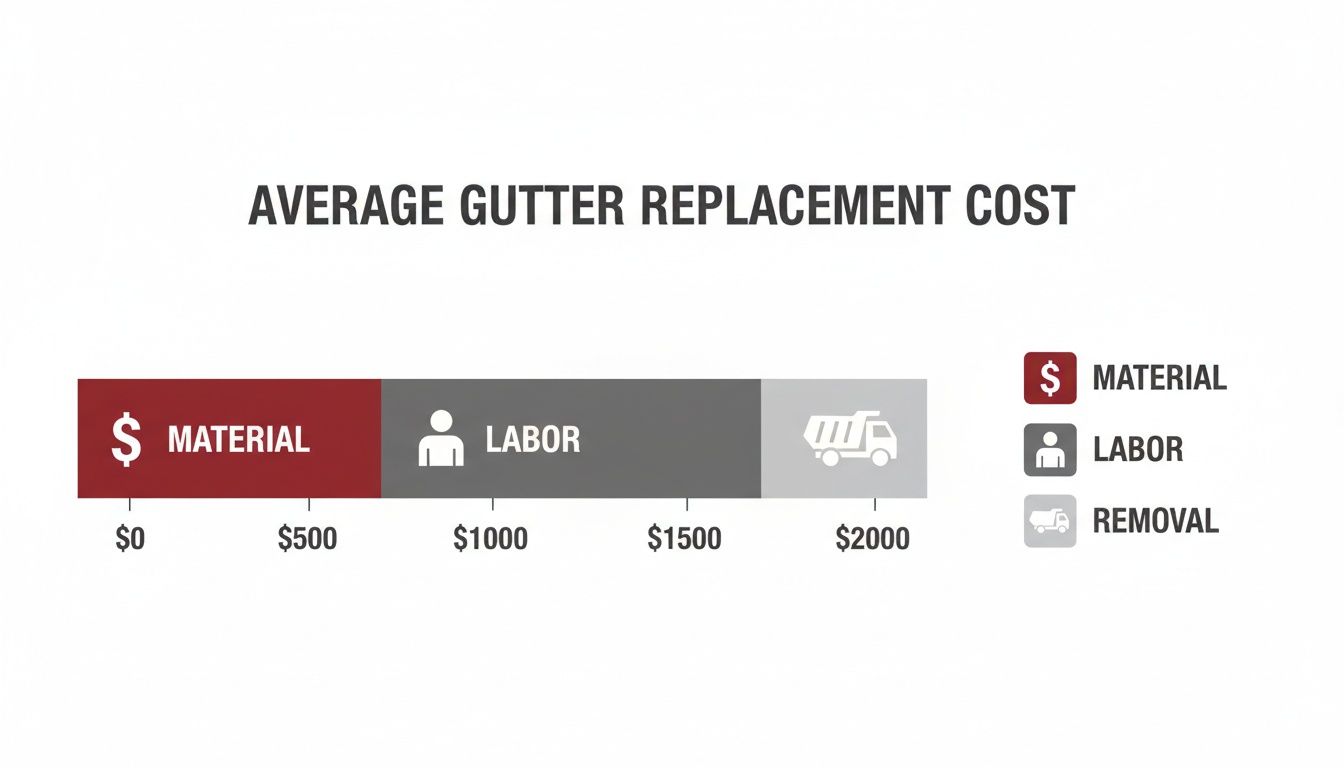
Notice that professional labor is the biggest slice of the pie. That’s because proper installation is what makes the system work—it’s not something you want to cut corners on.
While you can find national gutter pricing data showing averages between $2,624 and $4,723, costs in Dallas often run a bit higher. This is due to the high demand for storm-resistant systems and the skilled labor required to install them correctly.
Ultimately, choosing the right material from the start saves you the stress and expense of having to do this all over again in just a few years.
Navigating Insurance Claims for Storm-Damaged Gutters
When a nasty Dallas hailstorm rolls through, it's not just the yard that takes a beating. More often than not, your gutters are left dented, cracked, or completely broken. The idea of tackling an insurance claim on top of everything else can feel overwhelming, but it doesn't have to be a fight. If you know the steps, it’s just a process.
Before you even think about calling your insurance agent, your first job is to become a detective. Grab your smartphone and start documenting everything. This evidence is your single most important asset in the whole process. Take way more photos and videos than you think you’ll need; you can never have too much proof.
Your Role in Documenting Gutter Damage
Think of yourself as the first responder to your own property's emergency. Your mission is to build an undeniable visual record of what the storm did to your gutters. After a big storm, an adjuster might not make it out to your house for days, or even weeks, so capturing the damage right away is critical.
Here’s a quick checklist of what to capture:
- The Big Picture: Get shots of each side of your house to show the entire gutter system and the scope of the damage.
- The Nitty-Gritty: Zoom in on every single dent, crack, and split you can find. A great tip is to place a coin next to a hail dent—it gives the adjuster an immediate sense of scale.
- Don't Forget Downspouts: Hail loves to crush or dent downspouts, which prevents them from doing their job of directing water away from your foundation.
- Collateral Damage: Snap photos of damage to anything nearby, like dented A/C units, torn window screens, or chipped siding. This helps paint a complete picture of the storm's intensity for the insurance company.
All this documentation creates a solid baseline, making sure nothing gets missed or dismissed later on.
Contractor vs. Adjuster: Understanding the Roles
Once you file your claim, two key people will enter the scene: your contractor and the insurance adjuster. It’s a common mistake for homeowners to think they do the same job, but their goals are very different.
An experienced local contractor is your advocate. They use their expertise to find all the legitimate damage caused by the storm. The insurance adjuster, on the other hand, works for the insurance company to verify your claim and figure out a fair payout based on your policy.
Your contractor, especially one who regularly handles gutter replacement Dallas storm claims, knows exactly what signs of damage to look for. They’ll spot the subtle hits and functional problems an untrained eye would miss and create a detailed scope of work to get your home properly restored. The adjuster's role is to review that scope and make sure it aligns with your policy coverage.
A truly professional contractor will insist on meeting the adjuster on-site to walk them through the damage, point by point. This collaborative approach is hands-down the best way to make sure the final approved scope is accurate and complete. For a deeper look, we break down the entire storm damage insurance claim process in our full guide.
From Claim to Installation: What to Expect
After the inspection, the adjuster will send you a report that outlines the covered damages and what the insurance company estimates it will cost to fix. Go over this document line-by-line with your contractor. If anything is missing, your contractor can file a supplement—which is just a formal request for more funds, supported by photos and their professional estimate.
Once the claim is settled and the scope is final, it's time to get the work done. When picking out new gutters, this is a great opportunity to upgrade. Options like seamless gutters are a fantastic choice for Dallas homes, as they offer much better durability against our wild weather.
Insurance usually pays in two installments. The first check is for the Actual Cash Value (ACV), which is the value of your damaged gutters minus depreciation. You get this upfront. The second payment, called depreciation, is released only after your contractor sends a final invoice proving the work is finished. This two-check system is simply the insurance company's way of making sure the money is used to actually fix your property. With a trusted pro guiding you, a chaotic post-storm headache becomes a smooth, orderly project.
The Gutter Replacement Process From Start to Finish
A full gutter replacement might sound like a huge undertaking, but for a professional crew, it’s a well-oiled machine. The whole operation is designed to be quick and clean, minimizing any disruption to your day.
When we're talking about modern seamless gutters, the process is pretty neat. A specialized truck shows up at your house carrying a big coil of aluminum and a gutter-forming machine. It's essentially a mobile factory that lets the crew create single, continuous gutters cut perfectly to fit your roofline right there on the spot. This eliminates the seams and joints that cause leaks in older, sectional gutters.
The On-Site Workflow
Once the team arrives, they get straight to work. For most average-sized Dallas homes, a complete tear-off and replacement is a one-day job. It’s a fast-moving process that follows a few key steps.
- Precise Measurement: First things first, the crew takes meticulous measurements of every fascia board where a gutter will hang. Accuracy here is everything.
- On-Site Fabrication: With the measurements in hand, they feed the aluminum coil into the gutter machine. It shapes the metal into the profile you chose (like K-style) and cuts each piece to the exact length needed.
- Removing the Old System: Next, the team carefully pries off and dismantles your old gutters and downspouts. They take care to do this without chipping your paint, damaging the siding, or crushing your garden below.
- Fascia Board Inspection: This is a crucial step. With the old gutters gone, the crew gets a clear look at the wooden fascia boards. They're checking for any signs of rot or water damage, which absolutely must be repaired before new gutters can be installed.
Installation and Final Touches
As long as the fascia is solid, the installation can begin. The crew will secure the new seamless gutters with heavy-duty hangers, spaced properly to handle the weight of a torrential Texas downpour.
The most critical part of the installation is getting the correct slope. Gutters aren't installed perfectly level; they're pitched just slightly toward the downspouts. This ensures water flows away briskly instead of sitting stagnant, which leads to clogs and mosquito-breeding puddles.
Finally, the crew will cut the openings for the downspouts and attach them securely, using elbows to guide water safely away from your home's foundation. Once everything is in place, they perform a thorough cleanup of the entire work area, hauling away the old material and any debris. All you’ll see is your beautiful new gutter system.
Here in our storm-prone region, a quality aluminum system can easily last 20 years or more, making a timely replacement a smart investment. Based on local data, you can expect costs to land somewhere between $6 to $12 per linear foot for standard aluminum, with most projects finished in less than a week from the first call. For a closer look at what this means in practice, you can explore these Dallas gutter project insights.
Protecting Your Investment with Proactive Gutter Maintenance
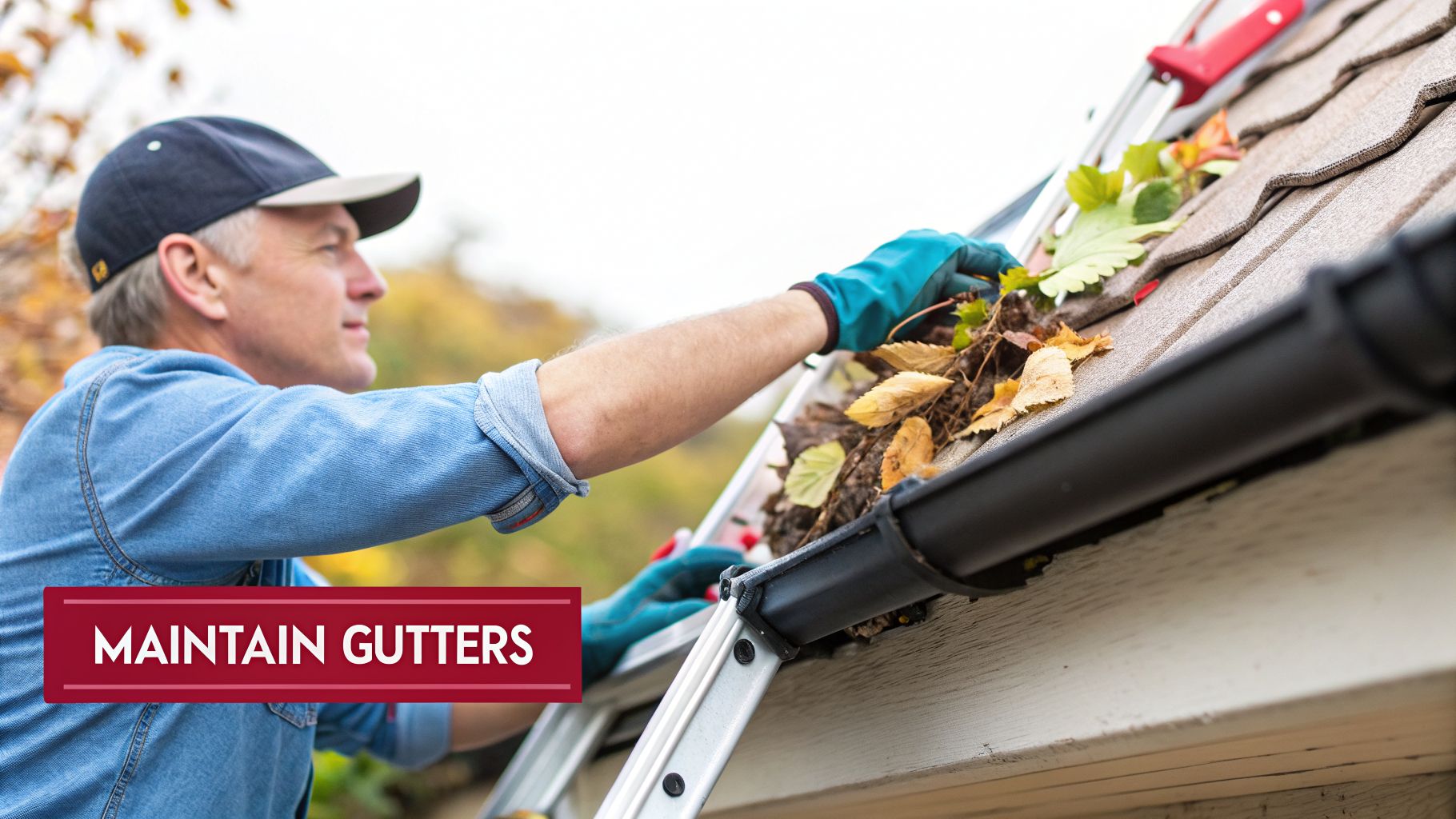
Alright, your new gutters are up, looking sharp and ready to protect your home. But the job isn't quite finished. Now comes the easy but crucial part: keeping them that way. Think of it less as a chore and more as simple insurance for your investment.
A new gutter system is a lot like a new car; you wouldn't just drive it off the lot and never get the oil changed. A little bit of routine upkeep is all it takes to get the maximum lifespan out of your gutters and prevent the exact foundation or siding issues you wanted to avoid in the first place.
It's a step people often forget, but neglecting it means even the best seamless gutters will eventually clog. That's when the real trouble starts.
The Non-Negotiable Dallas Gutter Cleaning Schedule
Here in North Texas, we have two main "clog seasons" that you just can't ignore. If you do, debris will quickly pile up, creating dams that will send the next big rainstorm spilling right over the sides and down to your foundation.
For any Dallas-area homeowner, a twice-a-year cleaning is the absolute minimum. It’s a simple routine that prevents small clogs from becoming catastrophic water damage.
- Late Spring Cleanup: This is for after the oak trees drop their tassels and all those pollen clumps and "helicopter" seeds have fallen. You want to get this done before the heavy summer storms roll in.
- Late Fall Cleanup: Once most of the trees in your yard have shed their leaves for the year, it’s time to clear the channels for any winter rain or ice.
Sticking to this rhythm ensures your gutters are clear and ready to handle whatever the Texas weather throws at them. A clean gutter is the only kind that works.
The Big Question: Are Gutter Guards Worth It?
You’ve probably seen ads for gutter guards, often pitched as a permanent, "set it and forget it" solution. While they can be a fantastic help, it's important to know they aren't a magic wand that eliminates all maintenance.
Gutter guards are filters, not force fields. They do a great job stopping big leaves, but fine debris like pine needles, shingle grit, or oak tassels can sometimes get through or build up on top, still requiring some attention.
Before you decide, weigh the good with the bad:
- Pros: They can drastically cut down on how often you need a full clean-out, keep large leaves and twigs from causing blockages, and stop birds or squirrels from nesting.
- Cons: They come with a significant upfront cost, might not stop all the fine, silty debris, and some designs can actually make the occasional cleaning that is needed more of a hassle.
For many homeowners, spending less time on a ladder is well worth the price of guards. For others, a simple cleaning twice a year is more practical. We can help you look at the trees on your property and figure out if guards are a smart upgrade for your specific situation.
Speaking of smart business, as contractors, we know that when you're up on a ladder, you can't answer the phone. An after hours answering service for small business can be a game-changer, ensuring a potential customer always gets a professional response.
At the end of the day, proactive maintenance isn't just about your gutters—it's about protecting the integrity of your entire home. It’s a small commitment that saves you from huge repair bills down the road, making sure your investment pays off for years to come.
Your Gutter Replacement Questions, Answered
You’ve read up on the basics, but now it's time for the real-world questions we hear from Dallas homeowners every day. Let's clear up a few of the most common ones so you know exactly what to expect for your project.
How Long Does a Gutter Replacement Actually Take?
Believe it or not, for most single-family homes here in Dallas, a full gutter replacement is a one-day job. It's one of the most efficient home upgrades you can make.
Our crew will handle the entire process from start to finish. That includes tearing off the old system, checking the fascia wood underneath, custom-making your new seamless gutters right at your home, and installing them with the perfect slope. We finish with a complete cleanup, leaving your property looking great. Only the largest or most complicated homes might push the job into a second day.
Are Seamless Gutters Really That Much Better?
Yes, without a doubt. Seamless gutters aren't just an upgrade; they are the only type a true professional should install in Dallas, and for good reason. The sectional gutters you find at big-box stores come in pieces, creating dozens of seams that are prone to failing and leaking.
Seamless gutters solve this by being formed from one continuous piece of metal, measured and cut to fit your home's roofline perfectly. This eliminates the weak points entirely, giving you a stronger, cleaner-looking, and far more reliable system to protect your home from our notorious downpours.
Think of it this way: seams are the enemy of any water-handling system. By getting rid of them, you're getting rid of the number one cause of leaks and future water damage. It’s a smarter, more durable solution.
What If My Fascia Boards Are Rotten?
It’s a common discovery. After all, the old, leaky gutters are often what caused the wood fascia to rot in the first place. If we find rot, we stop work immediately to show you the damage and walk you through the issue.
We’ll then give you a separate, straightforward quote for repairing that wood. Simply covering up rotten fascia with new gutters is a recipe for disaster—the new system would have nothing solid to anchor to. A true professional will always insist on fixing the foundation before building on it. It’s the only way to do the job right.
Can I Just Replace the Gutters Myself to Save Money?
While it might be tempting to turn this into a weekend DIY project, gutter installation is more technical—and dangerous—than it looks. You’re dealing with heavy materials on high ladders, and a fall can be serious.
Even more importantly, getting the slope right is critical. A tiny miscalculation of just a quarter-inch over ten feet can make the whole system useless, causing water to stand still or pour over the sides. With a professional job, you get peace of mind knowing the work is backed by a warranty. That’s something you just can’t get when you do it yourself.
Ready to secure your home with a gutter system built to withstand Texas weather? The team at Hail King Professionals has decades of experience protecting Dallas homes with expert installations and durable materials. Contact us today for a free, no-obligation inspection and estimate.