


Roof Replacement Plano Your Complete 2026 Homeowners Guide
It's easy to put your roof in the "out of sight, out of mind" category. That is, until a dark stain suddenly appears on your ceiling. The truth is, the real signs you need a roof replacement in Plano show up long before the first drip. Your roof takes a constant beating from the Texas sun, surprise hail storms, and wild temperature swings, and just like anything else, it eventually wears out.
Knowing what to look for can save you a world of headache and expense down the road.
How to Know You Need a Roof Replacement in Plano
Think about it—a few missing shingles or some odd-looking spots might seem minor, but in a place like Plano where the weather can turn on a dime, those small issues are an open door for major problems. Learning to spot the early warning signs from the safety of the ground is your best defense against a failing roof and the expensive water damage that follows.
For instance, your shingles are covered in a layer of tiny, sand-like granules. This is their primary shield against harsh UV rays and moisture. When you start seeing these granules collecting in your gutters or at the bottom of your downspouts, it's a clear signal that your roof's main line of defense is getting thin.
Ground-Level Visual Inspection Checklist
You don't need a ladder to get a pretty good sense of your roof's health. Just take a slow walk around your house and keep an eye out for these tell-tale signs:
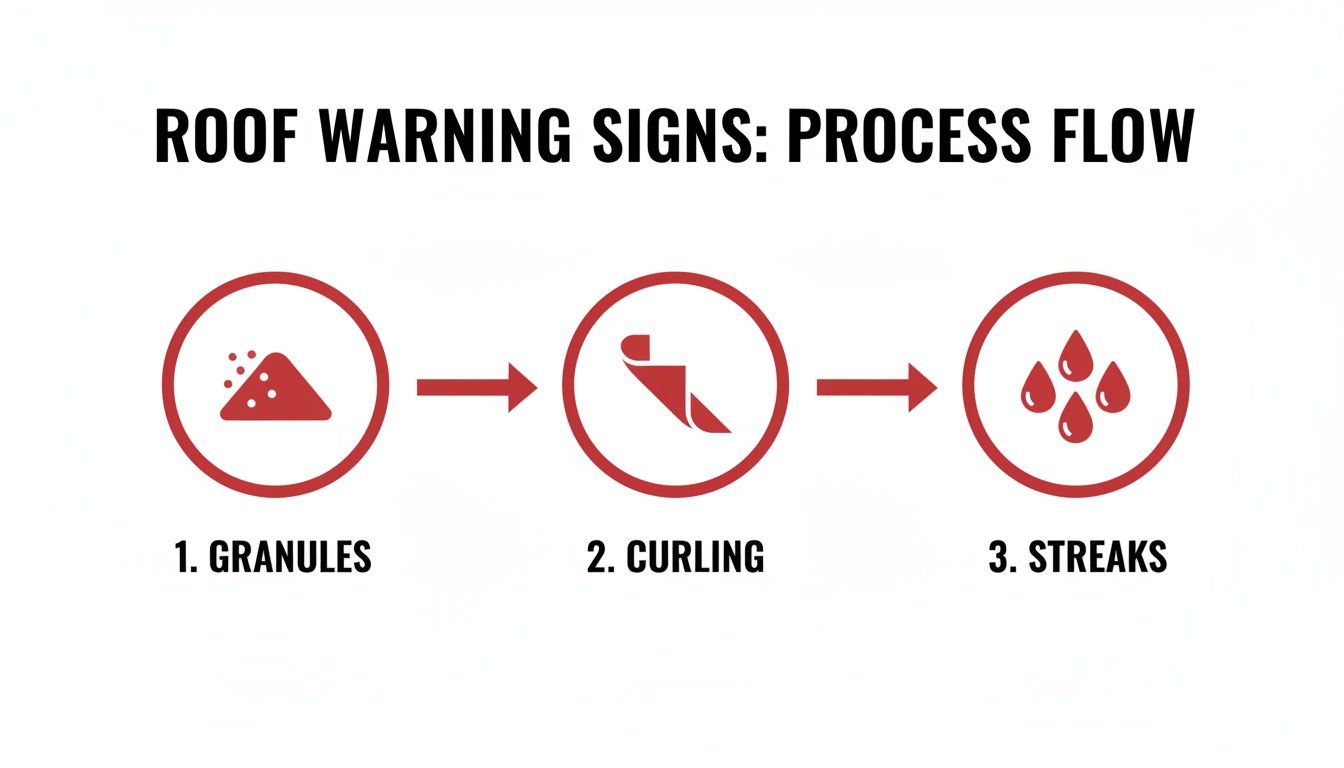
- Granules in Gutters: Finding a handful of what looks like black sand or grit near your downspouts means your shingles are breaking down. This is one of the biggest red flags.
- Curling or Clawing Shingles: When shingle edges start to curl up, or the middle starts to buckle, that's a sign of advanced age and serious heat damage. They've lost their seal and are prime targets to be ripped off by the wind.
- Missing or Cracked Shingles: This one's obvious. Any visible gaps are a direct path for water to get into your home. A few can be repaired, but if you're seeing them all over, it’s a sign of systemic failure.
- Dark Streaks or Algae Growth: While those black streaks are often just a cosmetic problem, heavy algae growth can trap moisture against the shingles, accelerating their decay.
Here’s the bottom line: by the time you see water stains on your ceiling, the damage to your roof's underlying structure—the decking, rafters, and insulation—is already well underway. A quick walk around your yard is the first, and easiest, step to catching problems early.
When to Call a Professional
Spotting one or two of these issues doesn't automatically mean you have to replace your whole roof tomorrow. But it's absolutely a signal to get a professional opinion. An expert inspection for a roof replacement in Plano will go beyond what you can see from the ground, checking for hidden damage around vents, chimneys, and skylights.
They'll be able to tell you definitively if you're looking at a simple repair or if it's time for a new roof. For a deeper dive into this, you can learn more about the common signs you need a new roof in our dedicated guide. Getting an expert assessment is the best way to prevent a small problem from becoming a massive, costly disaster.
Your Step-by-Step Guide to the Roofing Process
Getting a new roof can feel like a huge undertaking, but when you know what to expect, it’s a lot less intimidating. Breaking it down into clear, manageable steps takes the guesswork out of the equation and puts you in the driver's seat.
We'll walk you through the entire journey, from the first inspection to the final nail being swept from your driveway. Think of this as your roadmap for a successful roof replacement in Plano.
Often, this whole process kicks off when you notice a few red flags—like finding a bunch of shingle granules in your gutters or seeing ugly dark streaks running down the roof. These are your roof’s tell-tale signs that it’s time for a closer look.
Let’s dive into what happens once you make that call.
Step 1: The Professional Inspection
It all starts with a thorough, hands-on inspection. A real pro won’t just eyeball it from the street; they’ll get up on your roof to get a true picture of its condition. They'll be looking for specific things like hail pings, shingles that have been lifted by the wind, and cracked sealant around pipes and vents.
Afterward, you should get a detailed report, complete with photos, that clearly explains what they found. It will spell out whether a simple repair will do the trick or if a full replacement is the only way to go. Here in Plano, this inspection report is also your first piece of critical evidence if you’re planning to file an insurance claim for storm damage.
Step 2: Sorting Through Estimates and Choosing a Pro
With damage confirmed, it's time to get a few estimates. But remember, you’re not just shopping for the lowest price. A good estimate is a detailed document, not just a number on a business card. It should break down every cost: materials, labor, permits, and even clean-up.
Be wary of a bid that seems too good to be true. It usually is. A suspiciously low price often means they’re cutting corners—maybe by reusing old flashing or skipping a proper drip edge. Those shortcuts can lead to major water damage down the road.
This is your time to really vet the contractors. Ask for local references, double-check that they carry full liability and workers' compensation insurance in Texas, and make sure they have a long track record in Plano. A trustworthy roofer like Hail King Professionals will walk you through your options without any high-pressure sales tactics.
Step 3: Handling Insurance and Picking Materials
If a storm is the culprit, your contractor is your best ally in the insurance process. A good one will offer to be there when the insurance adjuster comes out, pointing out the damage they found to make sure nothing gets overlooked. Having an expert on your side can make all the difference in getting your claim fully approved.
While the insurance gears are turning, you get to do the fun part: picking your new roofing materials. Your contractor should explain the pros and cons of different options for our local climate, from standard architectural shingles to the tougher Class 4 impact-resistant ones we strongly recommend for North Texas. They'll also help you pick a color and style that looks great and keeps your HOA happy.
Step 4: The Big Day: Installation and Cleanup
This is when the magic happens. On installation day, the crew gets to work tearing off the old roof. This is a crucial step because it lets them inspect the underlying wood decking for any hidden rot or damage that needs to be fixed before the new roof goes on.
From there, they build your new roofing system, piece by piece:
- Underlayment and Drip Edge: The foundation for a watertight seal is laid down first.
- Shingles: Your chosen shingles are installed meticulously, following both manufacturer specs and Plano's local building codes.
- Flashing and Vents: All the penetrations in your roof are expertly sealed to lock out water for good.
Once the last shingle is in place, the job isn’t done. The crew performs a deep clean of your property, even using magnetic rollers to snag any stray nails. The project officially wraps up with a final walkthrough, where we make sure you are 100% satisfied with every detail.
How Long Does It All Take?
One of the most common questions we get is, "How long will my yard be a construction zone?" While every project is unique, most standard residential roof replacements in Plano follow a pretty predictable schedule. The table below gives you a realistic idea of what to expect for each phase.
Plano Roof Replacement Timeline
| Phase | Typical Duration | Key Action |
|---|---|---|
| Inspection & Estimate | 1-3 Days | Initial damage assessment and detailed quote preparation. |
| Insurance & Materials | 1-4 Weeks | Filing the claim, meeting with the adjuster, and ordering materials. |
| Permitting | 3-7 Days | Submitting plans to the City of Plano for approval. |
| Tear-Off & Installation | 1-3 Days | Removing the old roof and installing the new system. |
| Cleanup & Final Walkthrough | 1 Day | Thorough site cleaning and final project review with you. |
Knowing these timelines helps you plan around the work and minimizes surprises. For a more in-depth look at what influences these timelines, you can check out our complete guide on the roof replacement timeline in Plano.
Choosing the Best Roofing Materials for Texas Weather
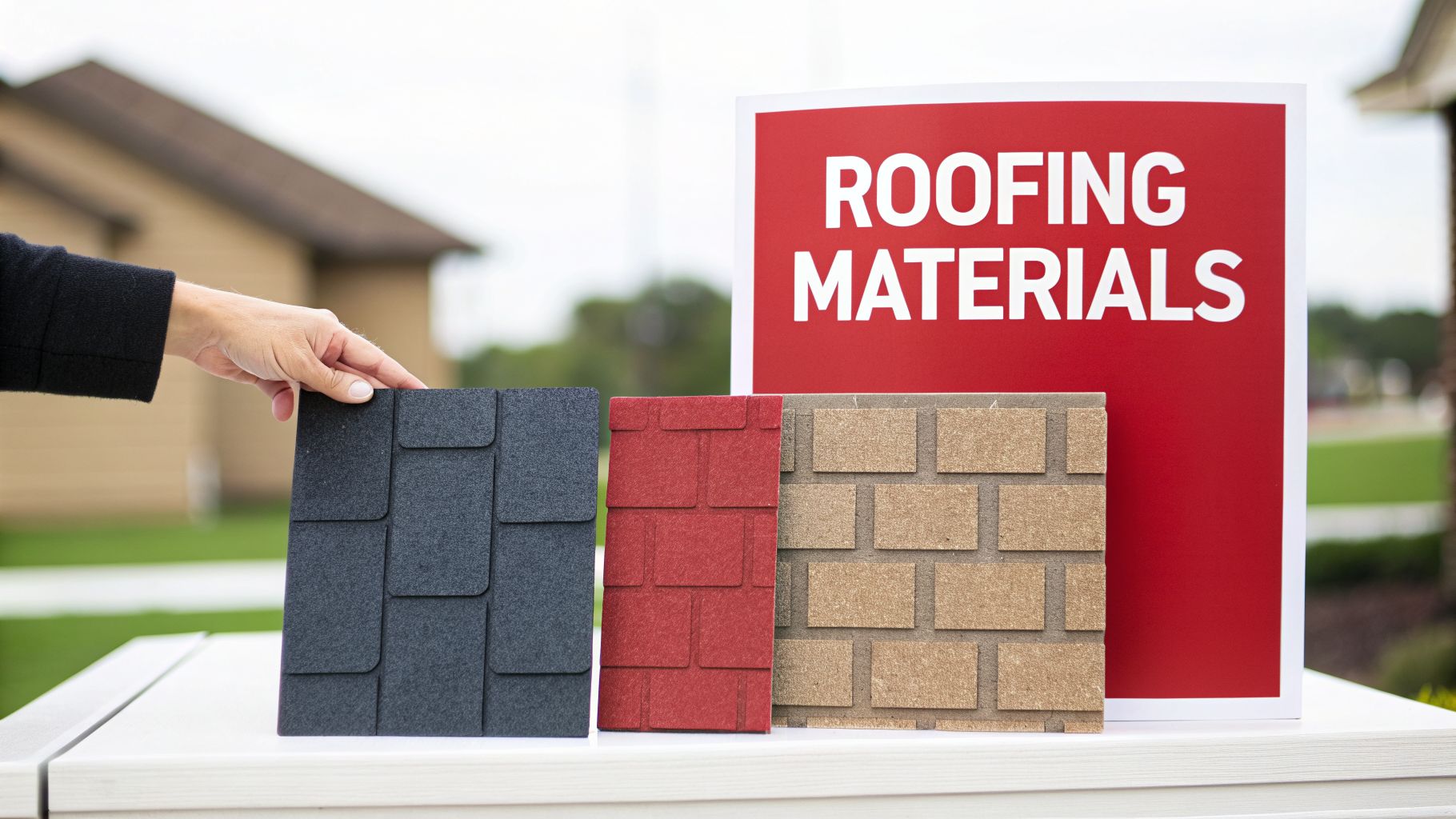
When it comes time for a roof replacement in Plano, picking the right material is probably the single most important decision you'll make for your home's protection. This isn't just about finding a color you like; it’s about choosing a shield tough enough for the punishing weather we get here in North Texas.
Think about it—our roofs face a constant barrage of intense UV rays, high winds, and, of course, destructive hail. Your roofing material is the armor that stands between your family and the elements. Getting this choice right can mean the difference between a roof that lasts for decades and one that needs attention after every storm.
Let's break down the top contenders for Plano homes.
Architectural Asphalt Shingles: The Popular Workhorse
Walk through any neighborhood in Plano, and you'll likely see architectural shingles. They are, by far, the most common choice for residential roofing, and for good reason. Also known as dimensional shingles, they strike a great balance between looks, durability, and cost.
Unlike the flat, basic 3-tab shingles of the past, architectural shingles are thicker and have a layered, textured appearance that adds a lot of curb appeal. They are built to last, typically offering a lifespan of 20 to 30 years. While they handle most weather just fine, their real test comes when the hail starts falling.
Class 4 Impact-Resistant Shingles: The Smart Upgrade
Here in what's known as "hail alley," upgrading to Class 4 impact-resistant shingles isn't an over-the-top expense—it's a smart, strategic investment. These shingles look just like standard architectural shingles but are specially engineered to take a beating from hail.
To earn that Class 4 rating, a shingle has to pass a brutal test: a two-inch steel ball is dropped on it from 20 feet up, multiple times, without cracking or splitting. It's a test designed to mimic the force of severe hail, proving a level of toughness that standard shingles just can't match.
Yes, they cost more upfront, but the long-term savings can be huge. Many insurance providers offer serious discounts on premiums for homes with a Class 4 roof. Even better, you dramatically reduce the odds of needing a full replacement the next time a big hailstorm rolls through town. For a deeper dive, check out our guide to the best roofing shingles for Texas to see which brands perform best.
Metal Roofing: The Champion of Durability
If your top priority is a roof that will last a lifetime, metal is in a league of its own. With lifespans that can easily push past 50 years, metal roofs are incredibly tough. They are fire-resistant and can withstand wind gusts up to 140 mph.
Another huge benefit is energy efficiency. Metal roofs reflect the sun's heat away from your home, which can lower your cooling costs by 10-25% during our sweltering Texas summers. While the initial investment is higher than asphalt, its sheer longevity often makes it the most economical choice in the long run.
Roofing Material Comparison for Plano Homes
Choosing the right material involves balancing your budget, aesthetic preferences, and long-term performance goals. This table breaks down the key considerations for the most popular options in our area.
| Material | Est. Cost (per sq ft) | Typical Lifespan | Hail Resistance | Best For |
|---|---|---|---|---|
| Architectural Shingles | $4 – $7 | 20-30 years | Moderate | Homeowners looking for a balance of curb appeal, performance, and value. |
| Class 4 IR Shingles | $5 – $9 | 25-40 years | Excellent | Homeowners prioritizing storm protection and potential insurance savings. |
| Standing Seam Metal | $9 – $16 | 50+ years | Very Good | Homeowners seeking maximum longevity, durability, and energy efficiency. |
Ultimately, the best roof is one that meets your specific needs. An impact-resistant shingle might be the perfect middle ground, while a metal roof could be a "one and done" solution for your forever home.
The global demand for better roofing shows this is a decision homeowners are taking seriously. Valued at $134.08 billion in 2024, the roofing materials market is projected to hit $192.82 billion by 2032. While asphalt shingles still lead, metal roofing's market share is growing by over 4% a year as people prioritize durability. Here in DFW, specialized products like impact-resistant shingles are becoming less of a luxury and more of a necessity. You can discover more insights about these roofing industry statistics from ConsumerAffairs.
How to Budget for Your 2026 Plano Roof Replacement

Let’s get right to it—the question every Plano homeowner asks first: "What's this going to cost me?" Budgeting for a full roof replacement can feel like a huge undertaking, but when you know what influences the price, you can plan with confidence instead of uncertainty.
Think of it this way: no two roofs are exactly alike, so no two price tags will be either. The final cost is a blend of a few key ingredients, and understanding them is the first step toward a smart investment.
Key Factors That Drive Your Final Cost
Your final estimate will boil down to three main things. Each one has a direct impact on the bottom line.
- Roof Size and Complexity: This is the big one. A simple, low-pitched roof on a single-story home is far more straightforward than a two-story home with steep angles, multiple dormers, and complex valleys. More complexity simply means more labor, more materials, and more time on the job.
- Material Choice: As we’ve discussed, a standard architectural shingle is the most common and budget-friendly option. If you decide to upgrade to a Class 4 impact-resistant shingle for better hail protection or a premium standing seam metal roof, your upfront cost will be higher, but you're also buying more durability and long-term peace of mind.
- Labor and Contractor Quality: You’re not just paying for shingles and nails; you’re paying for expertise. An experienced, properly insured crew might have a higher labor rate, but that rate buys you a correct, safe installation that won’t cause you headaches down the road. It's an investment in getting the job done right the first time.
Uncovering Potential Hidden Costs
Nothing is worse than getting hit with surprise charges halfway through a project. A truly professional roofer will be upfront about what could be hiding under your old roof.
The most common surprise is finding rotten decking after the old shingles are torn off. If the plywood underneath is soft, water-damaged, or compromised, it absolutely has to be replaced. This isn't an upsell; it's a non-negotiable step for the structural integrity of your home and is required by code.
Other things that might pop up include needing to replace old flashing around chimneys or skylights or upgrading your attic ventilation to meet current standards. We make it a point to discuss these possibilities in our initial quotes so you’re prepared. To get a ballpark idea, it’s always helpful to look at the general average roof replacement cost.
Making Your Roof Replacement Manageable
For most homeowners, a new roof is a major expense, and it’s often an unexpected one thanks to a hail storm. The good news is you don’t have to drain your savings to protect your home. At Hail King Professionals, we connect our clients with flexible financing options that don't involve tapping into your home's equity.
These programs typically use soft credit checks that won't ding your score and have no penalties for early prepayment. This flexibility turns a single, large expense into a predictable and manageable monthly payment, making a critical home project much more achievable.
Navigating Plano Permits and HOA Rules
Getting a new roof in Plano involves more than just picking out shingles. Before a single nail is hammered, you have to deal with local regulations. This means satisfying two key groups: the City of Plano and, if you have one, your Homeowners Association (HOA).
Knowing how to work with both is the secret to a smooth project. Think of these rules not as roadblocks, but as guardrails designed to protect you, your home's value, and your neighborhood's appearance. While we handle the paperwork, understanding the process will give you peace of mind.
The City of Plano Building Permit
Any legitimate roof replacement in Plano requires a building permit from the city. This isn't just bureaucratic busywork; it's one of the most important consumer protections you have. The permit ensures your project is on the city's radar and that the work will meet strict local building codes.
When your contractor pulls a permit, it sets a chain of accountability in motion. It gives the city the authority to inspect the job at critical stages. They’ll check to make sure everything from the underlayment to the fastener patterns is up to code.
A permit is your proof that the contractor is doing things by the book and not taking dangerous shortcuts. It’s an official record that your new roof is built to withstand our harsh Texas weather. This is why a reputable contractor will always insist on pulling a permit and will never ask you, the homeowner, to do it for them.
Understanding Your HOA’s Role
While the city cares about safety and structure, your HOA is all about aesthetics. If you live in an HOA community, you'll need their blessing before work can begin. They have rules to maintain a consistent look across the neighborhood.
Before you get your heart set on a specific shingle, you have to consult your community's guidelines. Most HOAs have surprisingly specific rules about:
- Approved Shingle Colors: Many stick to a pre-approved palette of neutral, earthy tones.
- Material Types: Some communities might not allow metal roofing, for example, or may require a specific grade of architectural shingle.
- Pre-Approval Process: You will almost certainly need to submit your material and color choices for formal approval before installation starts.
For anyone in a deed-restricted community, figuring out what are HOA rules is step one. Skipping this can lead to fines or even the nightmare scenario of having to tear off a brand-new, non-compliant roof at your own cost.
Key Plano Building Codes to Know
Your contractor is the expert on local codes, but it’s helpful to know why some things are done a certain way. Plano's building codes are specifically written for our area's notorious high winds and severe storms.
For instance, city codes dictate specific nailing patterns to give your roof maximum wind uplift resistance. Crews must use a certain number of nails per shingle, placed precisely, so they don't tear off in a gale. Another key requirement is installing a proper drip edge—that metal flashing along the roofline that keeps water from rotting your fascia boards.
A roofer's knowledge of these local details is what makes a roof truly "Plano-proof." At Hail King Professionals, we manage the entire city permitting process and provide all the necessary documents for your HOA approval, ensuring your project is compliant and headache-free from day one.
Your Plano Roof Replacement Questions, Answered
Getting a new roof is a big deal, and it's completely normal to have a lot of questions. We get it. Over the years, we've heard just about everything, so we've put together some straight-to-the-point answers to the most common questions Plano homeowners ask us.
How Long Does a Typical Roof Replacement Take?
This is usually the first thing people want to know! For most homes in Plano, the actual hands-on work of tearing off the old roof and installing the new one is surprisingly fast—typically just 1 to 3 days.
Of course, a few things can affect that timeline. A classic North Texas thunderstorm can pause the work, and a larger or more complex roof (think steep angles or lots of dormers) naturally takes more time. If we uncover hidden damage to the underlying wood decking, that will need to be repaired properly, which can also add to the schedule. We’ll always give you a clear, realistic timeline before we ever start.
Will My Homeowner's Insurance Cover a New Roof?
This one's a biggie, and the answer comes down to one thing: why you need a new roof. If your roof was damaged by a specific event like a hail storm, high winds, or a falling tree, your insurance policy will almost certainly cover the replacement, minus your deductible.
Expert Insight: Insurance is there for sudden, accidental damage—not for old age. A policy won't pay to replace a roof that has simply worn out over 20 years. That's why a professional inspection is so critical; we document the specific storm damage to build a solid case for your claim.
What Happens If I Have Solar Panels?
Having solar panels is no problem at all for an experienced roofing team. It just adds a couple of steps to the process. We coordinate a professional "detach and reset," where a specialized solar technician carefully removes your panels and racking system before we touch the roof.
After your brand-new roof is installed and has passed inspection, the same technicians come back to perfectly reinstall your solar array. It's vital to use a roofer who knows how to manage this process to protect both your solar system and its warranty.
Are Class 4 Shingles Really Worth It in Plano?
One hundred percent, yes. For any home in a hail-prone area like North Texas, upgrading to Class 4 impact-resistant shingles is one of the smartest investments you can make for your property. These shingles are engineered and tested to withstand major hail impacts that would shred a standard shingle.
While they do cost more upfront, they can save you the massive headache and expense of replacing your roof again after the next big storm. As a bonus, installing a Class 4 roof often qualifies you for a pretty significant discount on your homeowner's insurance premiums.
Ready to get answers for your specific home and situation? Hail King Professionals offers free, no-obligation inspections to give you a clear picture of your roof's condition and walk you through all your options.
Protect your home and your peace of mind. Schedule your free inspection today by visiting us at https://hailkingpros.com.