

The Ultimate Guide to Tar and Gravel Roofing in Texas
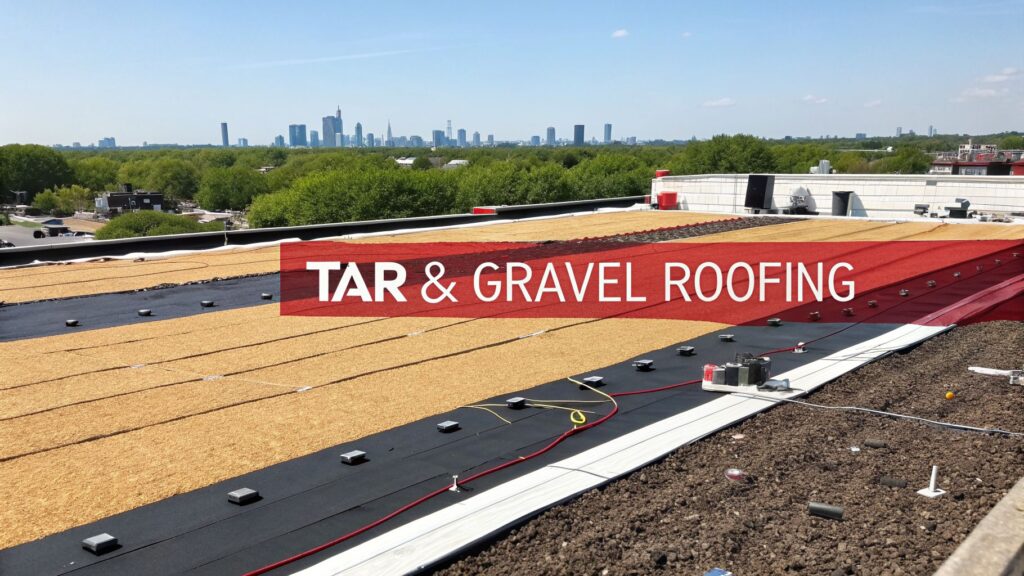
A tar and gravel roof, often called a Built-Up Roof (BUR) in the industry, is one of the most classic and reliable roofing systems out there for flat or low-slope commercial buildings. It's constructed by layering tar (bitumen) and reinforcing fabrics, then finishing it all off with a top coat of gravel. The result is a tough, seamless surface that’s built to last.
What Exactly Is a Tar and Gravel Roof?
Think of a tar and gravel roof as a custom-built shield for your property, assembled right on-site. It’s not a single sheet of material rolled out; it's a "built-up" system created by mopping on hot asphalt and then embedding layers of reinforcing fabric, one after another.
It’s a bit like making a lasagna, but for ultimate waterproofing. Each layer of hot bitumen acts as a powerful adhesive and a waterproof seal. The fabric sheets, or plies, give the whole system its strength and stability. This process is repeated to create a roof membrane that's incredibly thick, monolithic, and durable.
This multi-ply design is the secret to its legendary toughness. If something manages to puncture the top layer, there are several more right underneath to stop a leak in its tracks. That built-in redundancy is something you just don't get with most single-ply systems.
The Critical Role of the Top Gravel Layer
That final layer of gravel isn't just for looks—it’s arguably one of the most important parts of the entire roof. It serves as a rugged protective blanket for the asphalt layers below.
This aggregate is your roof's first line of defense against the elements, and it has several vital jobs:
- UV Radiation Shield: The gravel completely blocks the harsh Texas sun. Without it, intense UV radiation would bake the bitumen, making it brittle and shortening the roof's life.
- Fire Retardant: Loose stone is an excellent fire barrier. This layer is a big reason why many BUR systems earn a Class A fire rating, the highest classification available.
- Wind Uplift Protection: The sheer weight of all that stone helps anchor the membrane, providing serious resistance against wind uplift during the powerful storms we see in Dallas-Fort Worth and East Texas.
- Impact Resistance: From foot traffic and dropped tools to hail, the gravel acts as a buffer, protecting the waterproofing membrane from direct impacts.
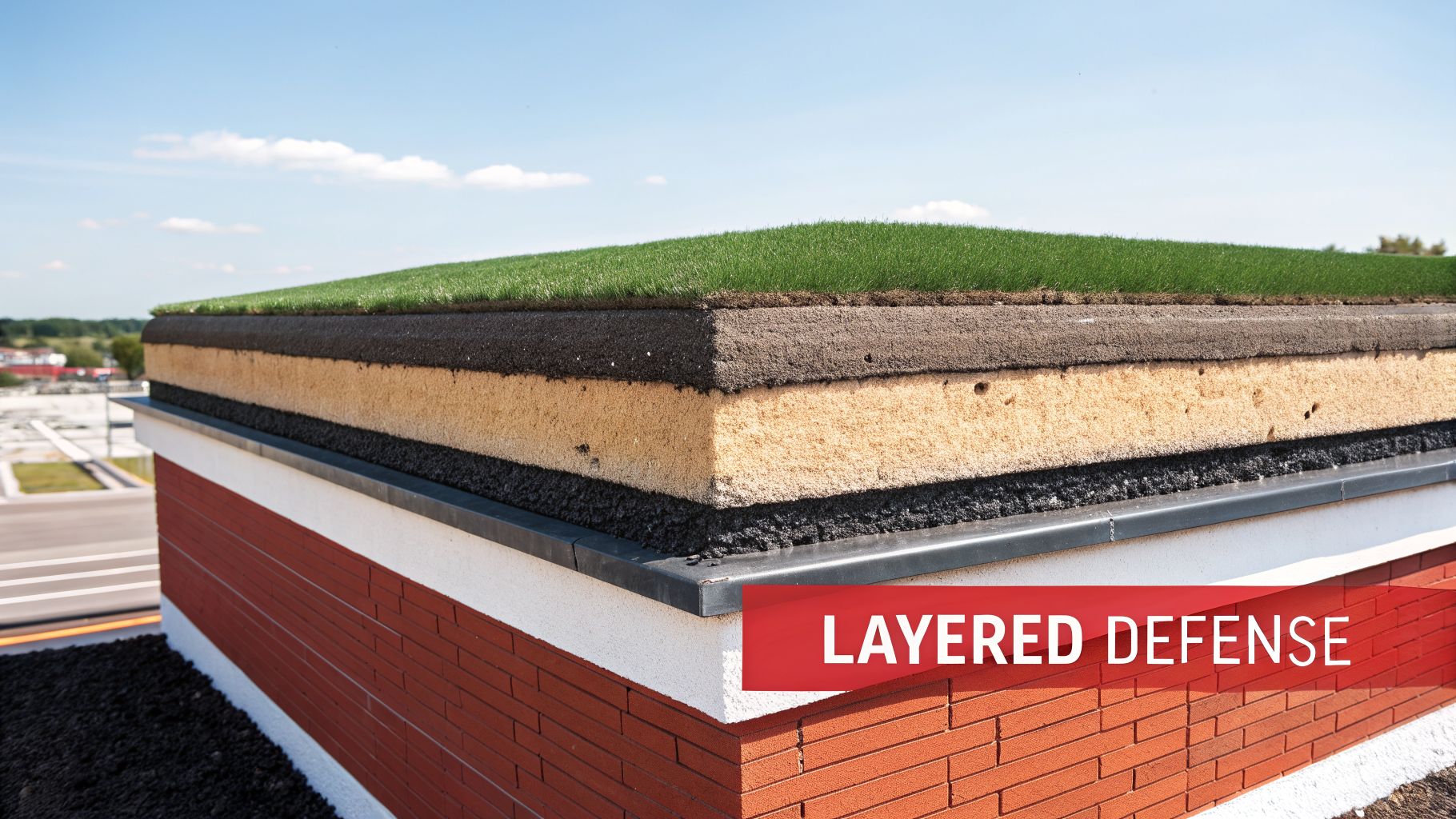
This simple diagram shows how all the pieces fit together.

As you can see, it’s a true system where each layer has a purpose, all working together to create a durable, integrated shield for your building.
At its heart, a tar and gravel roof is a tough, continuous barrier with multiple plies for redundant protection. The gravel on top serves as a natural shield against sun, fire, and physical damage, making the whole system incredibly resilient. This time-tested, layered approach is why BUR has been a go-to for commercial roofs for over 100 years.
The Old-School Strength of Built-Up Roofing
It’s easy to look at a tar and gravel roof and think it’s a relic, but you’re actually looking at a piece of American industrial history. This isn't just an old roofing method; it’s the system that made modern flat-roofed buildings possible. To really get it, you have to go back to a time of massive growth when sprawling factories and warehouses needed a brand-new way to stay dry.
The original patent for this built-up roofing (BUR) system dates all the way back to 1897. But it was the huge commercial building boom after World War II that really put it on the map. By the 1950s, this incredibly tough system covered over 60% of all low-slope commercial roofs in North America. Its redundant, multi-layered design was simply the most reliable waterproofing money could buy. If you're curious about roofing industry trends, you can explore more insights on the state of roofing.
This wasn't some happy accident. As cities grew upwards and outwards, building owners needed a roof that wasn't just a temporary fix but a long-term asset. Tar and gravel delivered exactly that—a rugged, field-proven barrier that became the undisputed king of commercial roofing for decades.
From a Classic System to a Modern Solution
Thinking a system this old must be outdated is a common mistake. The reality is, the core idea behind tar and gravel—multiple waterproof layers protected by a durable top coat of aggregate—is so fundamentally sound that it hasn't been replaced. It's just been improved.
A good analogy is the engine in a classic muscle car. The original design was powerful and reliable, but today's technology can make it stronger, more efficient, and longer-lasting. That's exactly what has happened with BUR systems.
Modern tar and gravel roofs are a far cry from their early predecessors, thanks to some serious upgrades in material science:
- Better Bitumen: Today's asphalt and coal tar are engineered to be far more flexible. They handle the brutal Texas heat and sudden cold snaps much better, resisting cracks and aging for longer.
- Stronger Fabrics: The old-school organic felt layers have largely been swapped out for high-tech fiberglass or polyester mats. These add incredible tensile strength, preventing the kind of stretching and tearing that could happen with older materials.
The secret to tar and gravel's longevity is its ability to evolve. It’s not a dusty antique; it's a time-tested champion that has integrated modern chemistry and engineering to stay at the top of its game.
Meeting Today's Energy Efficiency Standards
Perhaps the most important evolution has been in energy performance. Old tar and gravel roofs were typically black and soaked up the sun, putting a heavy load on air conditioning systems. Today, that's been completely turned around with reflective "cool roof" coatings.
These are highly specialized coatings applied right over the gravel surface. Instead of absorbing the sun’s UV radiation, they reflect it back into the atmosphere. This one simple change can drastically lower the roof's surface temperature, which means lower cooling bills for the building owner and less contribution to the urban heat island effect.
So when you choose a tar and gravel roof today, you’re not stepping back in time. You’re getting a system built on over 125 years of real-world proof, now supercharged with modern materials to give you the rugged durability and efficiency that today's buildings demand.
When you’re looking at a roof that’s been around for over a century, you know it has some serious benefits. Tar-and-gravel systems, also known as built-up roofing (BUR), are true workhorses of the commercial roofing world. But that doesn't mean they're the perfect choice for every building.
Like any major property decision, it's about weighing the good against the bad. This system offers incredible toughness, but its installation and sheer weight demand a close look. Let's get into the practical realities of what it’s like to have a tar-and-gravel roof.
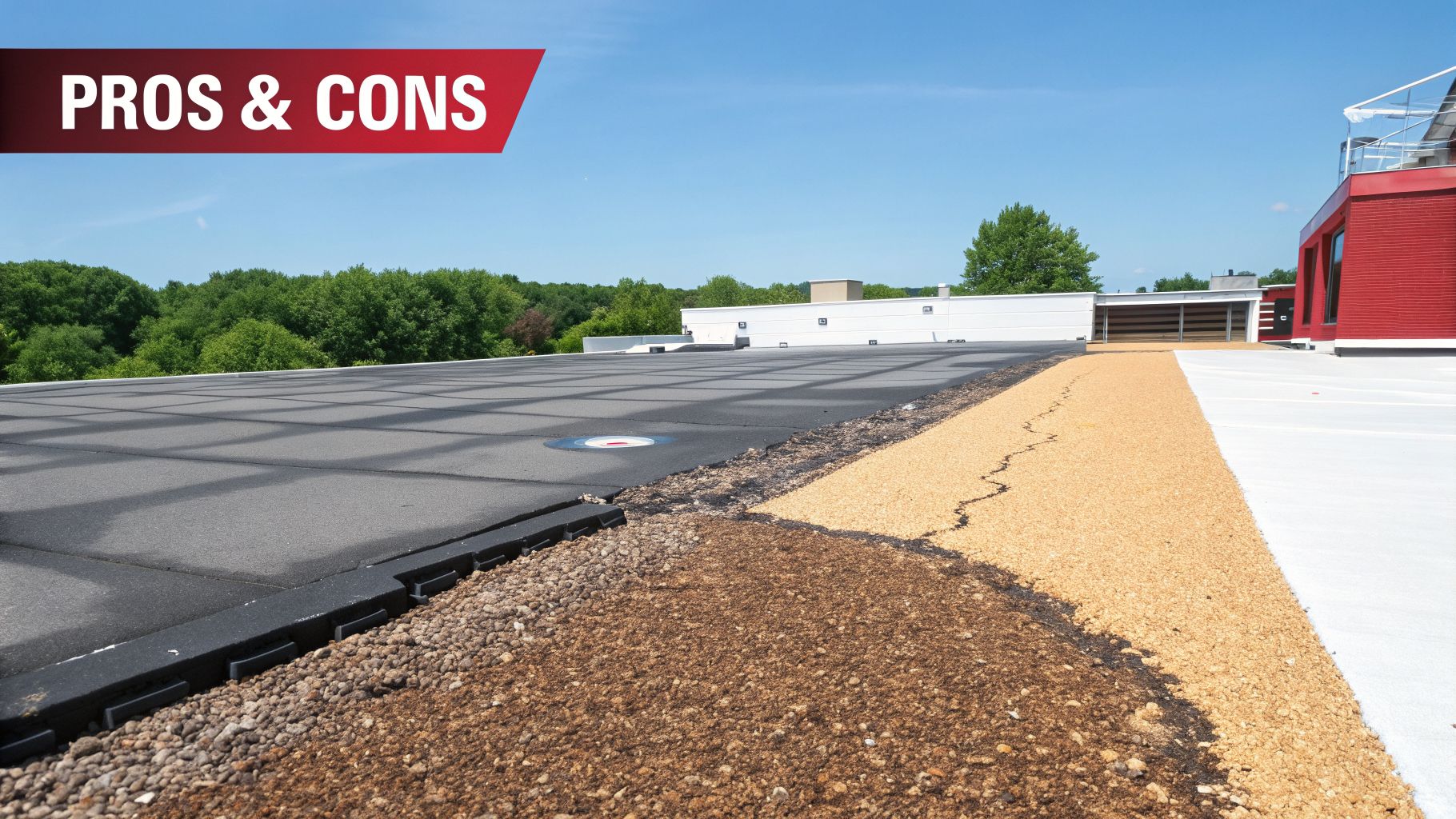
To help you see the full picture, here’s a straightforward comparison of the main benefits and drawbacks you can expect.
Pros and Cons of Tar and Gravel Roofing
| Advantages | Disadvantages |
|---|---|
| Exceptional Durability and Puncture Resistance | Heavy Structural Load |
| Superior Waterproofing | Complex, Messy Installation |
| Excellent UV and Weather Protection | Difficult Leak Detection and Repair |
| Class A Fire Rating | Requires Specialized Expertise |
Ultimately, the choice comes down to whether the impressive durability outweighs the challenges that come with its installation and maintenance.
The Upside: Why Built-Up Roofs Endure
The real strength of a BUR system comes from its layered construction. It isn't just one barrier; it's a thick, seamless membrane made of multiple layers of bitumen (asphalt) and reinforcing fabric. This creates a redundancy that's hard to beat.
Here’s where it really shines:
- Exceptional Durability and Puncture Resistance: Think of those multiple plies as built-in armor for your roof. This makes the surface incredibly resistant to damage from regular foot traffic, dropped tools, and—most importantly for us in North Texas—hail. The gravel on top acts as the first line of defense, shattering impacts that could easily tear through a thinner, single-ply roof.
- Superior Waterproofing: When properly installed, a built-up roof is a fortress against moisture. The overlapping layers create a monolithic barrier, meaning that even if water gets past one layer, there are several more standing by to stop a leak in its tracks.
- Excellent Fire Resistance: That top layer of gravel or slag isn't just for looks; it's a natural fire retardant. This is a huge reason why most tar-and-gravel roofs earn a Class A fire rating, which is the highest level of protection a roofing material can get.
The key takeaway is simple: a tar-and-gravel roof is strong because it's built in layers. It's designed for pure resilience against physical impacts and harsh weather, which is why it remains a popular choice for so many commercial buildings.
The Downside: What to Watch Out For
Of course, it's not all upsides. While incredibly tough, these systems come with a few significant challenges that you absolutely need to factor into your decision.
The biggest drawbacks are tied to its weight and the complexity of putting one on and fixing it.
Heavy Structural Load
There’s no getting around it—a tar-and-gravel roof is seriously heavy. All those layers of asphalt and a thick coating of stone add a substantial dead load to the building. Before you can even think about installation, a structural engineer has to sign off that the roof deck and frame can handle the weight. This can sometimes add an extra step and expense to the project.
Complex Installation Process
Putting down a BUR system is hard, messy work that requires a skilled crew and specialized equipment. The process involves handling kettles of hot-mopped asphalt, which gives off powerful fumes and demands strict safety measures. This is definitely not a DIY job. The final result depends entirely on the crew's experience, and the whole process is much messier than simply rolling out a modern single-ply membrane.
Difficult Leak Detection
Ironically, the very thing that makes a BUR system so waterproof—its layers—can also make finding a leak a nightmare. If water manages to breach the top surface, it can travel between the plies for a long way before it finally drips into your building. For an inexperienced roofer, pinpointing the original point of entry can feel like searching for a needle in a haystack.
If the installation process gives you pause, it's worth exploring other time-tested options. For example, you can learn more about modified bitumen roofing systems, which provide similar durability with a more modern application.
Understanding Your Investment Costs and ROI
When you're looking at a major investment like a new roof, the initial quote is just the beginning of the financial story. To truly understand the value of a tar and gravel roofing system, you have to look past the upfront cost and consider its long-term return on investment (ROI). It's a classic system that really proves its worth over the long haul.
For most commercial properties here in Texas, you can expect an initial installation cost for a built-up roof to land somewhere between $5 to $7 per square foot. Of course, that price isn't set in stone. The final number will depend on a few things, like the total square footage (bigger roofs often mean a lower cost per square foot), how easy it is to get people and materials onto the roof, and the number of vents, pipes, or HVAC units we have to work around. The condition of the underlying roof deck also plays a big part.
Breaking Down the Upfront Cost
So, what’s actually included in that initial price? It’s far more than just a pile of materials. You’re paying for a tough, labor-intensive process that absolutely requires an experienced crew.
Here's a look at where the money goes:
- Materials: This covers the multiple layers of hot asphalt (bitumen), the reinforcing fabric sheets (plies), and that all-important top layer of gravel that acts as a shield. The more plies you choose, the tougher the roof—and the higher the material cost.
- Labor: Putting down a built-up roof is hard, hot work. It takes a skilled team that knows how to handle hot asphalt and heavy equipment safely and efficiently.
- Deck Preparation: Before a single new layer goes down, we have to inspect and prep the existing roof deck. If it needs repairs or a full replacement, that will be part of the initial project cost.
- Tear-Off and Disposal: If we're replacing an old roof, the cost to tear it off and dispose of the old materials responsibly is also factored into the quote.
While a tar and gravel roof might have a higher price tag at first compared to some single-ply options, its financial benefits become crystal clear as the years go by. Think of it as investing in durability to avoid headaches and expenses down the road.
Calculating the Long-Term Return on Investment
A roof's real cost isn't what you pay the day it's installed; it's the total amount you spend on it over its entire life. This is where tar and gravel roofing shines. With a typical lifespan of 20 to 30 years, its incredible durability means you won't be facing another replacement anytime soon.
There's a reason these systems are still a huge player in the commercial roofing market, which is projected to be worth $14.2 billion globally by 2026. Tar and gravel still makes up a massive 20-25% of all low-slope roof installations precisely because of this lifecycle value. As you can review recent roofing industry trends, you'll see that their long lifespans often lead to one of the lowest annual costs per square foot you can find.
The best way to think about a tar and gravel roof isn't as a one-time expense, but as a long-term asset for your building. Its low maintenance demands and fantastic resistance to foot traffic, hail, and UV rays mean fewer repair calls and a predictable, manageable cost over decades.
That low total cost of ownership is what delivers such a strong ROI. By choosing a robust, multi-layer system today, you’re essentially buying yourself decades of peace of mind and protecting your property from the recurring costs that come with less durable roofing materials.
If you’re wondering how to fit this major upgrade into your budget, you can check out our guide on how to finance a new roof for some practical advice.
Essential Maintenance for a Long-Lasting Roof
A tar-and-gravel roof is a real workhorse, but it’s not a 'set it and forget it' system. To get the most out of it, you need a smart maintenance plan. Think of it less like a chore and more like insurance—a little proactive care goes a long way in preventing huge headaches down the road. Especially here in Dallas-Fort Worth and East Texas, where our roofs bake in the sun one day and get hammered by storms the next, staying on top of maintenance is non-negotiable.
Letting small problems slide is a risk you don't want to take. A tiny crack or a thinning spot might seem harmless, but it’s an open invitation for water. Before you know it, you're dealing with major interior leaks, disruptive repairs, and even mold growth. The whole game is about catching these issues while they're still small.
When you look at the numbers, you see why built-up roofing (BUR) has been a commercial standard for so long. These roofs average 25-35 years of service, and their self-sealing layers can cut the risk of leaks by 50%. The gravel on top is more than just ballast; it slashes maintenance needs by 30% by protecting the membrane from UV rays and hail—a huge deal in East Texas, which gets hit with hail over 20 days a year. Plus, when damage does happen, you can often patch it for just $2-4 per square foot, extending the roof's life without a full replacement.
Your Simple Inspection Checklist
You don’t have to be a seasoned roofer to spot trouble brewing on your roof. A couple of times a year—spring and fall are perfect—set aside time for a quick inspection. You can often see what you need to from the ground with binoculars, but if you can get on the roof safely, here are the red flags to look for:
- Ponding Water: If you see puddles still sitting there 48 hours after a rainstorm, that's a big warning sign of poor drainage. That standing water puts relentless pressure on your roof.
- Bare Spots: See any dark patches where the gravel has washed away? That exposed asphalt is now getting cooked by the sun, which will make it brittle and weak.
- Blisters and Bubbles: These raised humps mean moisture or air is trapped between the roofing layers. A small one might be okay for a while, but you need to keep a close eye on it.
- Alligatoring: If the surface has a pattern of cracks that looks like an alligator's hide, the asphalt is drying out and losing its protective oils. It’s a sure sign of aging.
- Clogged Drains and Scuppers: It’s simple, but it’s critical. A handful of leaves and debris can clog a drain, causing water to back up and create the very ponding issues you want to avoid.
A clean roof is a healthy roof. Over time, dirt and grime can hide problems and even damage the surface. Getting a professional cleaning is part of the upkeep budget, and knowing the general roof pressure cleaning costs can help you plan for it.
When to Patch and When to Call a Pro
So, you’ve found an issue. Now what? Knowing the difference between a quick DIY fix and a problem that needs a professional is key.
For a small bare patch, you can often clean the area and carefully spread new gravel. A tiny, single crack might be temporarily sealed with some roofing cement. But think of these as band-aids—they won't solve an underlying problem.
If you’re seeing widespread alligatoring, multiple large blisters, or you have ponding water that just won’t go away, it's time to call in a professional. These are symptoms of a bigger issue that a simple patch won't fix. An expert can figure out if the problem is just the top layer or something deeper, like saturated insulation. Often, applying a modern restorative coating can fix these problems and add years back to your roof's life. If you're wondering if that's the right move, check out our guide on whether a flat roof coating is the right solution for you.
Choosing the Right Partner for Your Roofing Project

Let's be clear: installing or repairing a tar and gravel roofing system is not a weekend DIY job. It’s a demanding process involving specialized equipment, precise techniques, and the careful handling of hot asphalt. This is a job strictly for seasoned professionals.
The single most important decision you'll make for your property is picking the right contractor. A botched installation can cause immediate leaks, drastically shorten your roof's lifespan, and lead to expensive water damage inside. In a place like Dallas-Fort Worth or East Texas, with our volatile weather, any weakness in your roof will be found out fast.
The Hail King Professionals Difference
We’ve been at this a long time. Since 1991, Hail King Professionals has earned the trust of business owners across North Texas by doing things the right way. Our teams are experts in commercial flat roofing, which means we know exactly what a built-up system needs to handle everything from structural loads to local building codes.
We aren't just roofers; we’re storm damage specialists. We’ve seen what hail and high winds do to these roofs, and more importantly, we know how to build them to withstand the next storm. Choosing a reputable professional is key, and many of the same principles apply when learning how to choose a home builder in North Texas.
Our Commitment to You
We believe trust is earned through clear communication and reliable service. When you work with us, you get a straightforward partner who stands behind their work.
- Free, Same-Day Inspections: We’ll get on your roof quickly to give you answers, without any obligation.
- Transparent Assessments: You'll receive a clear, honest report on your roof's condition along with practical options for repair or replacement. No runaround.
- Comprehensive Services: We don't just stop at the roof. We can also handle gutters, siding, and other exterior elements to make sure your whole building is buttoned up.
- Flexible Financing: We provide manageable payment plans to help you afford the protection your property needs without breaking the bank.
Your roof is the first line of defense for your entire property. We reinforce that defense with meticulous work, years of local expertise, and an unwavering commitment to your peace of mind. It’s all backed by our 100% satisfaction guarantee.
Choosing Hail King means choosing a partner who is genuinely invested in protecting your property for the long haul.
Frequently Asked Questions About Tar and Gravel Roofing
Even after covering the basics of tar and gravel roofing, we find most property owners still have a few practical questions. It makes sense—this system has been around for over 100 years, and its old-school construction raises some modern-day concerns.
Here are some straight-to-the-point answers to the most common questions we hear from our clients across Dallas-Fort Worth and East Texas.
Can You Install a Tar and Gravel Roof Over an Existing Roof?
We get this question a lot, and while it might seem like a way to save money, it's almost always a bad idea. We strongly recommend a full tear-off of the old roof before installing a new one.
Why? It's the only way to get a clear look at the roof deck underneath. Without that crucial inspection, you could be sealing in hidden rot, moisture, or structural damage that will turn into a massive headache later. Think of it like putting a new bandage over an old, dirty one—you're just trapping the problem.
Besides, building codes in most Texas municipalities have strict limits on how many roofing layers you can have. Piling on another heavy system could easily overload your building's structural capacity and land you in violation of local regulations. The only way to know for sure is to have an expert perform a thorough assessment.
How Does This Compare to Modern Roofs Like TPO or EPDM?
This really comes down to a choice between brute strength and modern efficiency. The biggest advantage of a tar and gravel roof is its incredible, almost armor-like toughness. Those multiple, overlapping layers provide a level of puncture and impact resistance that single-ply systems just can't duplicate. For a place like North Texas where hail is a constant threat, that multi-ply defense is a serious benefit.
On the flip side, modern single-ply membranes bring their own set of advantages to the table:
- TPO (Thermoplastic Olefin): This is a lightweight material that goes on fast. Its standard white surface is a huge plus for energy efficiency, as it reflects the brutal Texas sun and can lower your cooling bills.
- EPDM (Ethylene Propylene Diene Monomer): Think of this as a highly resilient synthetic rubber sheet. It's famous for its durability and how well it handles temperature fluctuations, staying flexible even in colder weather.
So, what's the right call? If your number one concern is creating a shield against heavy impacts and foot traffic, tar and gravel is a heavyweight champion. If you're prioritizing energy savings and a lighter roof, TPO is probably the better way to go.
Is Tar and Gravel Roofing an Eco-Friendly Choice?
Looking at just the installation—which involves heating asphalt—it doesn't seem very "green" because of the energy use and fumes. But to get the full picture, you have to look at the roof's entire lifecycle.
Because these roofs can last for 20 to 30 years or more, they require fewer replacements over the lifespan of a building. This means significantly less material ends up in landfills compared to less durable roofing options that must be replaced more frequently.
Today, we can also make them much more sustainable. By adding a reflective "cool roof" coating over the top layer of gravel, we can dramatically cut down on the building's heat absorption. This not only slashes your energy costs but also helps reduce the urban heat island effect, making it a surprisingly forward-thinking option.
When you need a roof built to withstand whatever the Texas weather throws at it, you need a partner who values quality and has the experience to back it up. For a free, no-obligation inspection and a clear, honest assessment of your commercial roof, put your trust in the team at Hail King Professionals. Learn more about our dependable roofing solutions and schedule your inspection today.