


Storm Damage? Expert tx roof repair Solutions
When a big Texas storm finally moves on, the silence can be just as unsettling as the storm itself. You're left wondering, "What just happened to my house?" The first thing to do is take a deep breath. Your immediate actions can make a huge difference, so let's walk through them.
What To Do Immediately After A Texas Storm
The most important rule is simple: safety first. That means staying on the ground. Please, don't get out a ladder and climb onto a wet, potentially unstable roof. A safe, ground-level assessment is all you need to do for now.
Once you know the storm has passed, grab your phone, and start documenting what you see. Then, and only then, should you call a trusted professional for a full inspection—long before you even think about calling your insurance company.
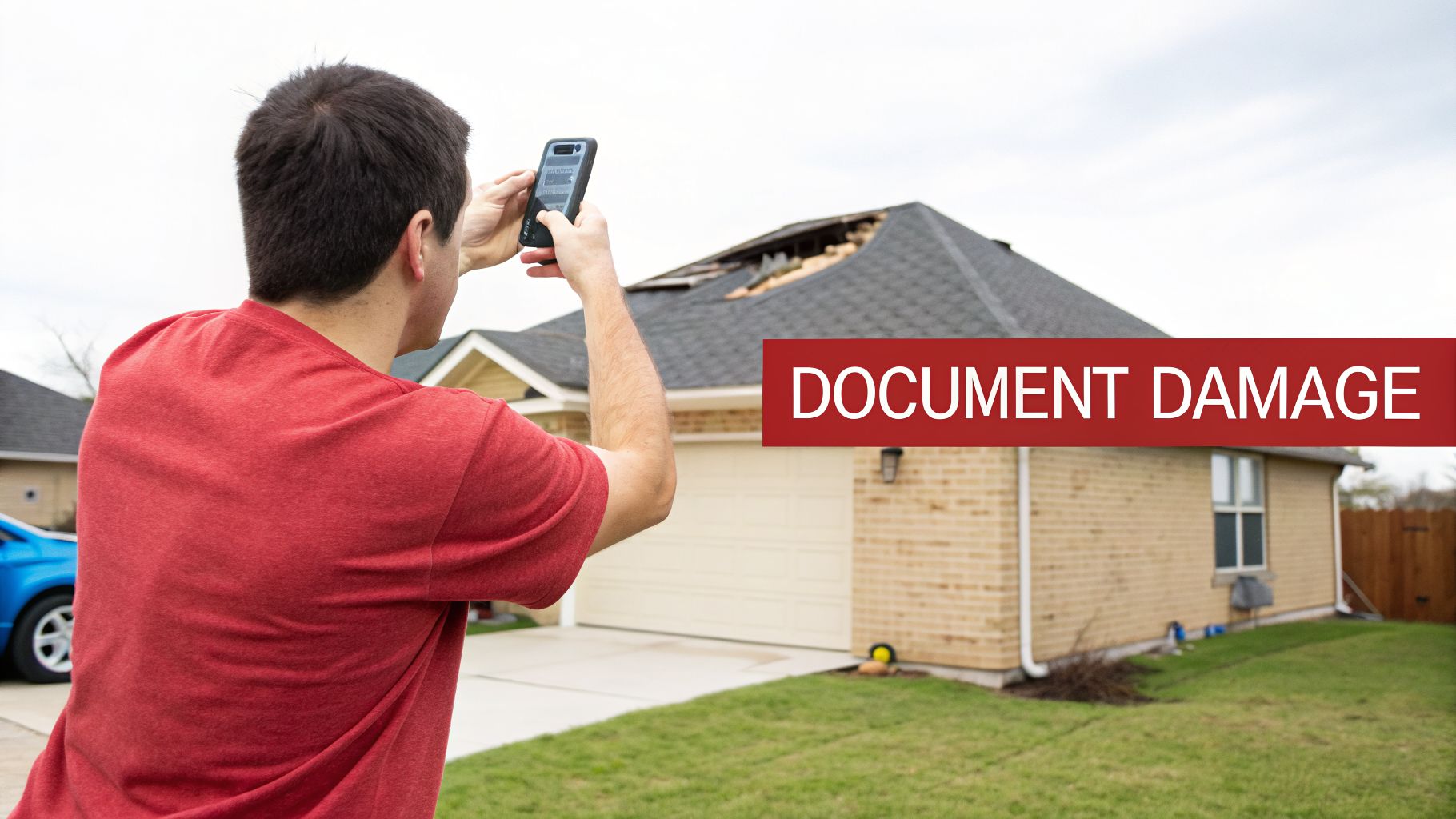
Document Everything From A Safe Distance
In these initial moments, your smartphone is your best friend. Walk the perimeter of your property and take photos and videos of absolutely everything that looks out of place. You can't take too many pictures.
Here are the tell-tale signs we look for from the ground:
- Gutters and Downspouts: Are they dented or pulling away from the roofline? Check the ground where your downspouts empty. A pile of black, sandy material means the storm literally knocked the protective granules off your shingles. This is a huge red flag.
- Siding, Windows, and Screens: Look for dings, cracks, or holes in your siding. Hail can shred window screens and leave impact marks on the frames.
- Fences and Outdoor Equipment: Don't forget the rest of your property. Check your fence, AC unit, and any light fixtures for signs of impact. It all helps tell the story of the storm's intensity.
Think of it this way: a thorough photographic record is your best evidence. When you can show an adjuster pictures of hail on the ground, a fallen branch, and visible damage, you're building a powerful, undeniable narrative.
Here’s a quick guide to help you identify common damage and know what to do right away.
Post-Storm First Response Checklist
| Type of Damage | What It Looks Like | Your First Step |
|---|---|---|
| Granule Loss | Black, sandy grit in gutters or on the ground near downspouts. | Photograph the granules up close and the area where they collected. |
| Dented Gutters/Vents | Visible dings, dents, or impacts on any metal surfaces. | Take photos from several angles to show the extent of the damage. |
| Wind-Lifted Shingles | Shingles that are flipped up, creased, or missing entirely. | Photograph the damaged area from the ground. Do not get on the roof. |
| Siding or Window Damage | Cracks, holes, or clear impact marks on siding or window frames. | Document each point of impact clearly with your phone's camera. |
| Active Leaks Indoors | Water stains on your ceiling or walls; drips of water. | Place a bucket to catch water, move furniture, and call a roofer immediately. |
This checklist helps you gather the initial evidence that a professional will use to build your case.
The Most Important Next Step
Okay, you've taken your pictures. What now? This is the crucial part: Call a reputable, local roofer for a free, professional inspection.
This needs to happen before you file an insurance claim. Why? Because an expert can spot damage that's completely invisible from the ground, like "hail bruising" that cracks the mat of a shingle without knocking off granules yet. This kind of damage is a ticking time bomb for future leaks.
A professional inspection does two things. First, it confirms if the damage is severe enough to warrant a claim. Second, it gives you a detailed report and a powerful ally when you eventually talk to your insurance provider. You can get a head start by reviewing a professional roof inspection checklist template to see what the pros look for.
While this guide helps you react to a storm, proactive care is always best. Following a good annual home maintenance checklist can make your home more resilient. By taking these organized steps, you can turn a chaotic event into a manageable process for any tx roof repair situation.
How to Identify Storm Damage on Your Roof
After a big Texas storm rolls through, that first look at your roof can be nerve-wracking. Is everything okay up there? Learning to spot the tell-tale signs of damage gives you the power to know when it’s time to call in a pro for a closer look. It’s a crucial skill for any homeowner in a storm-prone state.
Think of a hailstone hitting your shingle like a fist hitting an apple. You might only see a small mark on the skin, but the real damage is the bruise underneath. With roofing, what you can't see from the ground is often the biggest problem.
Spotting Hail Damage on Asphalt Shingles
Most Texas homes have asphalt shingles, and they show hail damage in a few specific ways. Honestly, you won't see much by just standing in your driveway and squinting. That's why a hands-on, on-the-roof inspection is non-negotiable.
Here’s what we look for when we get up close:
- Hail Bruising: This is the big one. A hard hail impact fractures the shingle's fiberglass mat, creating a soft, spongy spot. If you were to press on it, it would feel like a bruise on a piece of fruit. This is a critical failure point.
- Missing Granules: Those little sand-like granules aren't just for color; they're your roof's sunscreen, protecting the asphalt from UV rays. When hail and wind scrape them off, it's like getting a bad sunburn that rapidly ages the shingle.
- Circular Impact Marks: You might notice random, dark-colored circles where hail has blasted the granules clean off. Unlike the uniform wear of an old roof, these impacts will be scattered all over, a clear sign of storm damage.
A quick tip: check your gutters and around your downspouts after a big storm. If you find piles of what looks like coarse black sand, you're looking at your roof's protective granules. That’s a sure sign you've sustained damage.
Recognizing Wind and Debris Damage
It's not just the hail, though. Texas winds can be incredibly destructive all on their own, compromising your roof in ways that aren't always immediately obvious but create a perfect setup for future leaks.
An experienced inspector is trained to hunt for these signs of wind damage:
- Lifted Shingle Edges: Powerful winds can break the factory-applied sealant strip that holds a shingle flat. The shingle might settle back down and look fine, but that broken seal is now an open door for wind-driven rain.
- Creased Shingles: When a shingle gets flipped up and folded back by the wind, it leaves a permanent horizontal crease. This weak spot will eventually crack and break off, leaving the layers below exposed.
- Missing Shingles: This is the most glaring sign of wind damage. Any spot where a shingle is completely gone is an emergency, as the wood decking underneath is now totally vulnerable to water.
Understanding these threats is the first step, but proactive roof leak prevention is what truly protects your home in the long run.
Identifying Damage on Metal and Other Roof Types
While asphalt is king, we see all kinds of roofs here in Texas. The evidence of storm damage will look different depending on the material.
- Metal Roofs: On a metal roof, hail means dents. Minor dings might just be a cosmetic issue, but larger impacts can compromise the metal's protective coating. Once that coating is breached, rust and corrosion are not far behind.
- Wood Shakes: Hail can cause wood shakes to split, crack, or even shatter. This can be tricky to spot from the ground because the damage can easily blend in with the natural texture and grain of the wood.
- Flat Roofs: For homes or businesses with flat roofing, hail can actually puncture the membrane. This creates an instant leak. You may also see "ponding" where hail has dented the underlying structure, creating low spots for water to collect.
If you notice any of these signs on your property, it’s a clear signal. You need to get a professional on-site for a complete, on-roof evaluation.
How to Handle a Roof Insurance Claim in Texas (Without Losing Your Mind)
For most Texas homeowners, the thought of dealing with an insurance company after a big storm is more daunting than the storm itself. It’s a confusing maze of paperwork, weird terminology, and a lot on the line. But here’s the thing: with the right approach, you can navigate this process successfully and get the full settlement you’re entitled to for your tx roof repair.
The most critical piece of advice I can give you is this: get a detailed inspection report from a trusted contractor before you file a claim. Going to your insurance company without a professional assessment is like walking into a final exam without studying. An expert’s report documents all the damage, even the stuff you can't see, and establishes exactly what needs to be fixed right from the start.
Call a Roofer First, Not Your Insurance Company
Before you even think about dialing your insurance provider's 800 number, your very first call should be to a reputable local roofer, like us at Hail King Professionals. Taking this one step first completely shifts the claim process in your favor.
Think of an experienced roofer as your advocate. We’ll get on your roof, perform a thorough inspection, and take photos of every single dent, bruise, and lifted shingle. This report becomes your playbook. It’s the hard evidence that proves the storm’s true impact and builds the case for a proper repair or full replacement, so you don't get stuck with a lowball offer.
A professional knows exactly what to look for, but these are the big three.
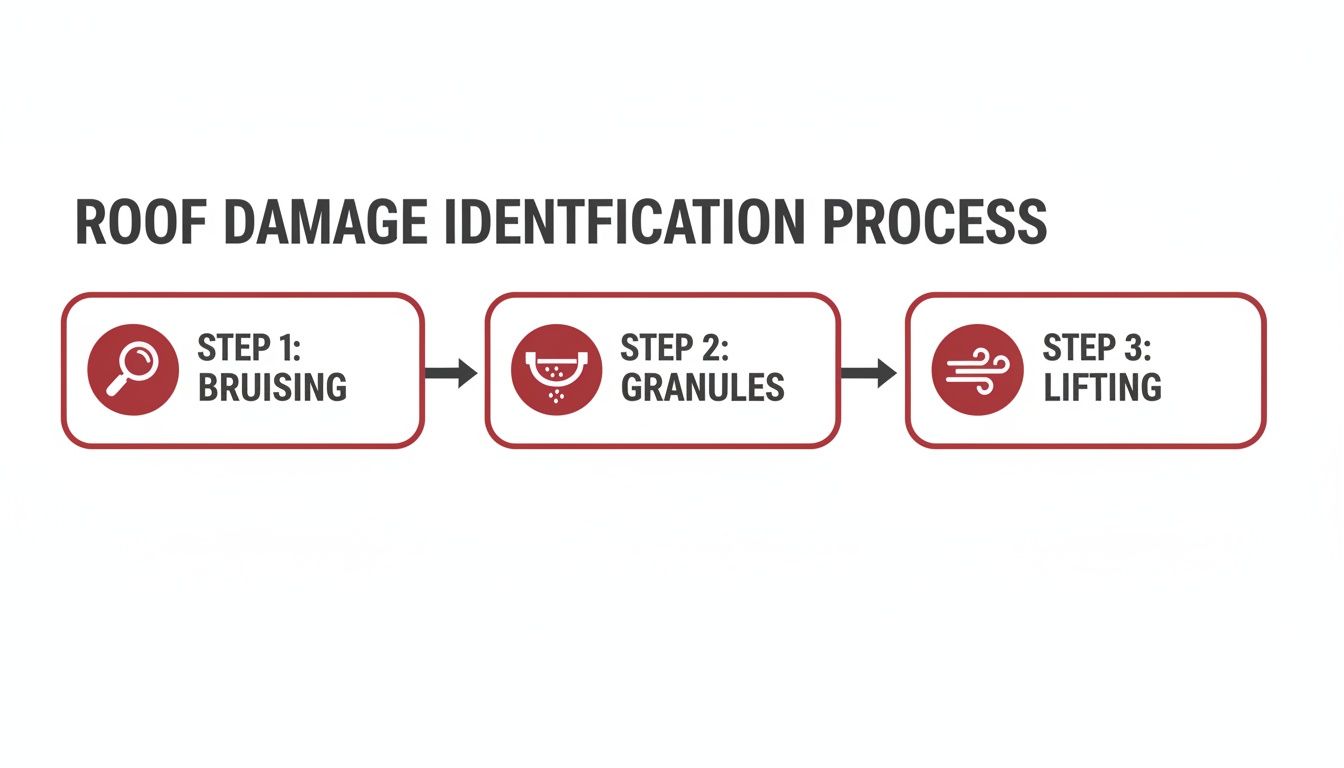
When we see bruising, heavy granule loss, or lifted shingles, we know the roof's ability to protect your home has been seriously weakened.
Insurance Lingo You Actually Need to Know
Once you start a claim, you're going to hear a few terms thrown around. Knowing what they mean puts you in control of the conversation.
- Deductible: This is simply your share of the cost. It's the fixed amount you pay out of pocket before your insurance policy starts paying for the rest.
- Actual Cash Value (ACV): This is the "garage sale" price of your roof. It's what your roof is worth today, considering its age and condition. The first check you get from the insurance company is almost always for the ACV amount.
- Replacement Cost Value (RCV): This is the big one. RCV is the total amount it costs to replace your old, damaged roof with a brand-new one using similar materials. The difference between the RCV and the ACV is called depreciation, and you typically get that money after the job is done and you show the final invoice.
Your most important takeaway: An RCV policy is meant to make you "whole" again by paying for a brand-new roof, minus your deductible. A good contractor makes sure the insurance settlement actually covers everything needed to do that.
The Claim and Settlement Steps
With your inspection report ready, it’s time to get the ball rolling. The process usually looks like this:
- File the Claim: Call your insurance company to report the storm damage. They'll give you a claim number—keep it handy.
- Meet the Adjuster: The insurance company will send their own adjuster to inspect the roof. It is absolutely critical that your roofer is there for this meeting. We’ll walk the roof with the adjuster, point out all the damage we documented, and make sure nothing gets overlooked.
- Review the Settlement: The adjuster will write up a "scope of work" and present a settlement offer. Your contractor needs to review this with a fine-tooth comb. We check to make sure it includes everything—from compliance with local building codes to repairs for related damage to gutters, window screens, and fences. If anything is missing, we'll file a supplement to get it covered.
Hailstorms are a fact of life here, especially in the Dallas-Fort Worth area, where storm activity seems to get worse every year. While Texas has nearly 6,000 roofers (ranking fourth in the US), our constant exposure to severe weather makes us a hotbed for insurance claims.
Having an expert on your side makes all the difference. For a deeper dive into what to expect from start to finish, check out our guide on the storm damage insurance claim process. It will give you the confidence you need to see this through.
Repair or Replace? Making the Right Call for Your Texas Roof
After a big Texas storm rolls through, the single biggest question I hear from homeowners is, "Can you patch this up, or am I looking at a whole new roof?" It's a huge decision, and getting it right is about more than just the upfront cost—it's about protecting your home for years to come.
There's no single, simple answer. The right path depends on a few critical clues that tell the story of your roof's health. When a professional gets up there to take a look, they're not just looking at the obvious damage; they're piecing together the roof's age, the real extent of the storm's impact, and how many times it's been patched up before.
When a Targeted TX Roof Repair Is the Smart Move
For a relatively young roof, a targeted repair is often all you need. If your roof is under 10 years old and in great shape otherwise, a simple fix for a few missing shingles or a localized leak makes perfect sense. Why tear everything off for a problem that's isolated to one small area?
Think of it as a specific problem with a specific solution. Maybe a high wind lifted a few shingles, or the sealant around a vent pipe finally gave out. These are straightforward jobs. We can pinpoint the failure, make a solid repair, and even match the new shingles so you’d never know we were there. The goal is to restore protection without a full, and unnecessary, overhaul.
A key part of a professional repair is aesthetics. New shingles should be carefully color-matched to blend in, keeping your home's curb appeal intact while the roof does its job.
The Tipping Point: When a Full Replacement Becomes Necessary
So, when does the conversation shift from a simple patch to a full-on replacement? It usually comes down to two things: widespread damage and age.
There's a general guideline we often use in the field called the 30% rule. If a storm has damaged more than 30% of your roof's surface, a full replacement is almost always the smarter, more cost-effective option in the long run. At that point, trying to patch dozens of small spots becomes a losing battle—you're just throwing good money after bad.
A 15-year-old roof with a few missing shingles is one thing. But if that same roof is also covered in hail bruises and has widespread granule loss (that gritty stuff you see in your gutters), the system is failing. The missing shingles are just the most obvious symptom of a much bigger problem.
To help you see where your roof might fall, here's a quick breakdown of how we weigh the factors.
Repair vs. Replacement Decision Matrix
| Factor | Favors Repair | Favors Replacement |
|---|---|---|
| Roof Age | Under 10-12 years old and in good overall condition. | Over 15 years old, or showing signs of advanced aging. |
| Damage Extent | One or two small, contained areas are affected. | Damage is widespread, affecting 30% or more of the roof surface. |
| Type of Damage | A few missing shingles or minor flashing issues. | Widespread hail "bruising," significant granule loss, or multiple leaks. |
| Future Costs | A one-time fix that resolves the entire issue. | Multiple, recurring repairs are becoming necessary. |
Ultimately, this matrix helps guide the conversation. If your roof's issues are piling up in the "Favors Replacement" column, you're likely better off investing in a new system rather than facing an endless cycle of costly repairs.
See a Replacement as an Opportunity to Upgrade
If a full replacement is in the cards, don't just see it as a hassle. It’s a chance to seriously upgrade your home's defenses. Here in Texas, opting for impact-resistant Class 4 shingles is one of the smartest moves you can make.
These shingles are engineered to handle the kind of hail that shreds standard roofing. Yes, they cost a bit more upfront, but they often pay for themselves through sheer durability and, in many cases, big discounts on your homeowner's insurance premiums. It’s the best way to turn a necessary TX roof repair or replacement into a long-term, value-adding investment.
How to Choose the Right Texas Roofing Contractor

After a storm rolls through, the most important decision you'll make isn't about shingle colors or insurance adjusters—it's about who you trust to put your home back together. Choosing the right contractor for your TX roof repair is the single biggest factor in whether the process is a success or a nightmare. A great roofer is more than a laborer; they're your project manager, insurance advocate, and skilled craftsman all in one.
Think of it like hiring a financial advisor. You wouldn't hand your life savings to the person with the flashiest ad; you’d choose a proven partner you can trust for the long haul. A cheap, fast-talking roofer might save you a few bucks today, but a true professional protects your home's value for decades to come.
The Non-Negotiable Contractor Checklist
Before you even think about signing a contract, run every potential roofer through this essential checklist. These aren't just suggestions—they are the absolute minimum requirements to protect yourself from shoddy work, legal trouble, and future headaches.
- Properly Insured: Your roofer absolutely must carry both general liability insurance and worker's compensation. If an uninsured worker gets hurt on your property, that lawsuit could land on your doorstep. Always ask to see their current certificates of insurance.
- Deep Local Roots: Look for a company with a long, verifiable history right here in your community. After a big storm, "storm chasers"—out-of-state crews—flood the area with tempting offers. They often do subpar work and are long gone by the time the leaks start. A company like Hail King Professionals, serving DFW and East Texas since 1991, has a reputation to uphold.
- Robust Warranties: A reputable contractor stands behind their work, period. They should offer a manufacturer's warranty on the materials and a separate workmanship warranty that covers the installation itself.
Your takeaway is simple: A proven local track record is your best defense against predatory "storm chasers." These crews are notorious for knocking on doors with too-good-to-be-true offers, only to leave homeowners with faulty roofs and voided warranties.
Spotting a True Professional from the Crowd
So, you’ve filtered out the unqualified candidates. How do you pick the best of the best? The real professionals stand out through their process, their transparency, and the scope of services they provide.
A top-tier contractor does a lot more than just nail down shingles. They see the big picture and understand how the entire exterior of your home works together. For instance, a roof replacement often requires coordinating other trades. Does the roofer also handle services like gutter replacement, siding repair, or even solar panel detachment and resetting? A company that manages the whole project ensures a seamless, high-quality result without you having to juggle multiple contractors.
On top of that, a great contractor makes the financial part of the project less stressful. Look for companies that offer flexible financing options. It’s a good sign that they're established and committed to helping you manage the cost without cutting corners on materials or installation quality. For more on this, you might be interested in our guide on how to choose a roofing contractor.
The Texas Roofing Industry at a Glance
The sheer number of roofers in Texas can feel overwhelming, and there's a good reason for that. Our state is a powerhouse in the US roofing industry, with a market size expected to hit a staggering $10.4 billion in 2026. This massive growth is fueled by our notorious hailstorms, intense summers, and booming population. Today, there are 9,679 roofing businesses across Texas employing over 23,586 skilled workers. You can explore more about the growth of the Texas roofing market on IBISWorld.com.
With so many choices, certifications from leading manufacturers like GAF or Owens Corning become a crucial tie-breaker. This credential means the contractor has been factory-trained, uses proper installation techniques, and can offer enhanced warranties that others can’t. It’s an independent seal of approval that signals true expertise, helping you confidently select the right partner to protect your home.
Your Texas Roof Repair Questions, Answered
Even with all the information, you probably still have a few questions lingering. That’s perfectly normal. When it’s your home and your money on the line for a TX roof repair, you deserve total clarity. Let's tackle the questions we hear most often from homeowners just like you.
How Much Does a Typical Roof Repair Cost in Texas?
The honest answer? It really depends. The cost can swing wildly based on what we find up there.
For a simple fix, like tacking down a few shingles that the last storm tore loose, you’re likely looking at a bill between $300 and $700. This is for a quick, targeted repair to stop a small problem from becoming a big one.
On the other hand, if we find more serious issues, like a leak that has started to rot the wood decking underneath, the scope and cost go up. These kinds of jobs can run anywhere from $1,000 to $3,000. And for a full roof replacement on a standard-sized DFW home? You can expect that to be in the $8,000 to $20,000+ ballpark, factoring in the roof's size, pitch, and the materials you choose.
The only way to know for sure is to get a detailed, itemized estimate. A thorough, professional inspection is the first step to understanding exactly what needs to be done and what it will cost.
How Long Does a Full Roof Replacement Take?
You might be bracing for weeks of disruption, but a professional crew is a well-oiled machine. For most homes, we can complete a full replacement in just one to three days. The only real wild card is the weather—a sudden Texas downpour is the one thing that can put us on pause.
Typically, day one is all about the tear-off and prep work. We remove the old, damaged material and lay down fresh underlayment, which acts as a critical secondary barrier against water. On day two, we get to the main event: skillfully installing your new shingles or metal panels. We work hard to get in, get the job done right, and get your life back to normal as fast as possible.
Will My Insurance Premium Increase After a Storm Claim?
This is a big one, and it causes a lot of anxiety. The short answer is, it shouldn't. When you file a claim for storm damage—something insurance companies call an "Act of God"—they generally can't single you out for a rate hike. It wasn't your fault the hail came down.
What can happen, though, is a rate increase for your entire area. If a massive storm causes widespread damage across a whole zip code, the insurer might adjust rates for everyone in that zone to cover their losses. This can happen whether you filed a claim or not. At the end of the day, the financial risk of leaving your damaged roof unchecked is always much higher than any potential rate adjustment.
Should I Be Home for the Roof Inspection?
It’s not an absolute requirement, but we strongly recommend it. There’s incredible value in being there while the inspection is happening.
When you're present, the inspector can walk you through their findings in real time. They can show you photos and videos of the damage, point out specific areas of concern, and answer your questions on the spot. It turns a confusing process into a transparent one, empowering you to make an informed, confident decision about protecting your home.
Ready to get a clear, honest answer about the condition of your roof? Hail King Professionals offers free, no-obligation inspections across DFW and East Texas. We’ll give you the information you need to move forward with confidence. Book your inspection today.