


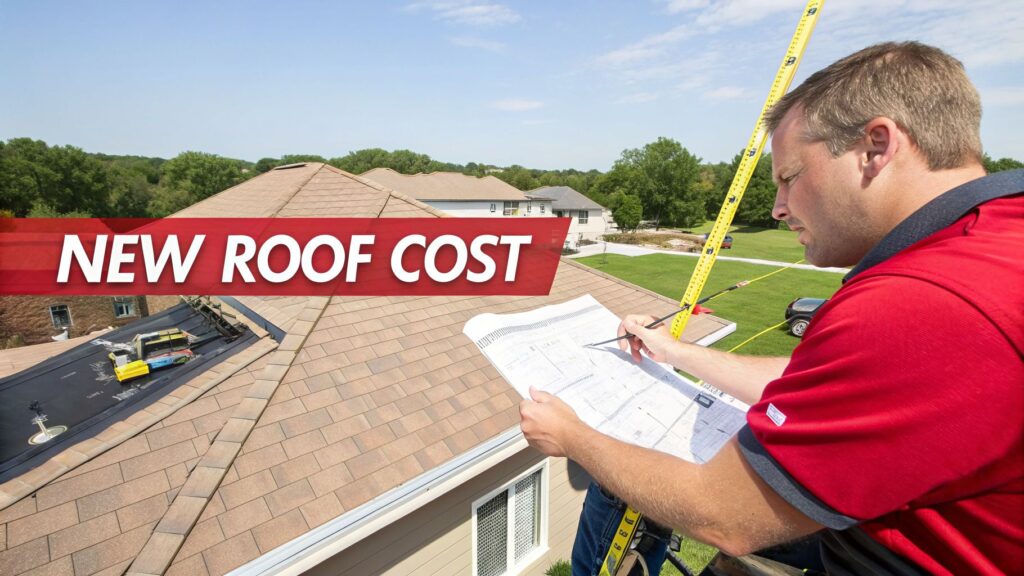
How much does a new roof cost? Essential Guide for Homeowners
So, how much does a new roof actually cost? The short answer for a typical Texas home is somewhere between $9,000 and $28,000, but that's just a ballpark. Think of it like buying a new truck—the final price depends on the make, model, and all the features you add on.
Your Quick Guide to Texas Roofing Costs

Figuring out the exact cost of a new roof isn't like picking an item off a shelf. The final number on your estimate is a mix of several crucial factors, each one playing a part in how well your home stands up to that wild Texas weather. Everything from the materials you choose to the complexity of your roof’s design has a real impact on the bottom line.
To give you a realistic starting point, let's look at the current market. In 2026, the average cost for a residential roof replacement is landing between $4 and $11 per square foot. For some, that could mean a total bill as low as $5,870, while larger, more complex homes could see costs pushing $46,000.
For a typical Texas home with a roof size of 1,800 to 2,400 square feet—or 18 to 24 "squares" as we call it in the industry—you can expect to see prices in the $9,000 to $28,000 range. This usually covers a standard architectural asphalt shingle system, which is the go-to choice for battling those fierce East Texas storms. You can dig deeper into these numbers with this helpful roofing cost guide.
Understanding the Initial Numbers
To help with your budget planning, let's break down what you can generally expect to pay in the Dallas-Fort Worth and East Texas areas. This is more than just a repair; it’s a serious investment in your home’s safety and value. The right roof doesn't just look good—it's your primary defense against hail, wind, and relentless rain.
Your roof is your home's first line of defense. Investing in quality materials and professional installation isn't just a cost—it's a long-term strategy for protecting your most valuable asset from whatever the Texas skies throw at it.
As you look over the numbers below, remember that these are just averages. Your specific quote will change based on factors we’ll get into later, like your roof's pitch, how many old layers of shingles need to be torn off, and whether your roof decking needs repairs.
Average New Roof Cost in DFW & East Texas
Here’s a quick look at typical price ranges for different roofing materials on an average-sized Texas home (approx. 2,000 sq. ft.).
| Roofing Material | Cost Per Square Foot (Installed) | Average Total Cost | Typical Lifespan |
|---|---|---|---|
| Architectural Asphalt | $4.50 – $8.25 | $9,000 – $16,500 | 25-30 Years |
| Impact-Resistant Asphalt | $5.50 – $9.50 | $11,000 – $19,000 | 30-50 Years |
| Standing Seam Metal | $10.00 – $17.00 | $20,000 – $34,000+ | 40-70 Years |
| Flat Roof (TPO/EPDM) | $5.50 – $9.00 | $8,250 – $13,500 | 20-30 Years |
These figures give you a solid foundation for what to expect. Keep in mind that premium materials, custom work, and unexpected structural repairs can all adjust the final cost.
Deconstructing Your Roofing Estimate

Getting a roofing estimate can feel like trying to read a different language. It’s a long list of terms and numbers that can make your head spin. But don't just skip to the bottom line. Think of it more like a recipe for a brand-new roof—every single line item is a crucial ingredient.
Understanding what goes into that final price is the key to knowing you’re getting a fair deal. It shows you that a contractor is building a complete system to protect your home, not just nailing down the shingles you see from the curb. This is how you spot a pro and ask the right questions.
The Core Ingredients: Materials and Labor
No matter the roof, two things will always make up the bulk of your estimate: materials and labor. It’s a common misconception that the shingles are the most expensive part. In reality, skilled labor typically accounts for about 60% of the total project cost.
That number covers more than just a crew on your roof. It reflects the expertise, safety protocols, and sheer hard work required to do the job right—especially on steep roofs or around complex features like chimneys and skylights.
The other 40% goes toward materials. Yes, that includes the shingles or metal panels you chose, but it’s also a whole system of other components working together behind the scenes.
A cheap roof almost always means corners were cut on the parts you can't see, like the underlayment or ventilation. A proper estimate lists every layer, proving your investment is protecting the entire structure, not just making it look good.
Beyond the Shingles: Key System Components
A strong roof is way more than meets the eye. Underneath that top layer is a network of materials that do the heavy lifting. A trustworthy estimate will break these down so you know exactly what you're paying for.
- Tear-Off and Disposal: This is the cost to remove and legally dispose of your old roof. It usually runs from $1 to $3 per square foot, and the price goes up if we find multiple layers of old shingles that need to come off.
- Roof Decking: This is the wood sheeting that forms the foundation of your roof. Your estimate should always include an allowance to replace any water-damaged or soft plywood, which is a common find once the old roof is gone.
- Underlayment: Think of this as your roof’s personal rain jacket. It’s a waterproof barrier that sits between the wood decking and your shingles. This critical layer of protection costs between $0.50 and $1.50 per square foot.
- Flashing and Sealants: These are the custom-fit metal pieces that go around chimneys, vents, and skylights. They are absolutely vital for preventing leaks in the most vulnerable spots on your roof. Meticulous flashing work is a true sign of quality craftsmanship.
Essential Finishing Touches
Finally, a complete estimate will include the finishing details that ensure your roof performs correctly and meets local building codes. These aren’t optional—they’re what makes a roof last.
- Ventilation: A roof needs to breathe. Proper ventilation lets hot air and moisture out of your attic, which helps your shingles last longer and can even lower your energy bills. Your quote should specify what kind of vents are being installed.
- Drip Edge: This is a small piece of metal flashing that runs along the edges of your roof. Its job is to guide rainwater directly into the gutters, protecting the wood trim (fascia) from rot.
- Permits and Fees: Any legitimate roofing job requires a permit from your city or county. We handle all the paperwork for you, and the fee (usually $100 to $500) will be included in the quote so there are no surprises.
Once you understand what each line item means, the estimate goes from being an intimidating document to a clear, logical plan for your project. You can see the true value behind the price and compare quotes with confidence, knowing exactly what a complete, durable roofing system looks like.
Key Factors That Influence Your Final Roof Price
Ever wonder why your neighbor’s new roof cost $12,000, but the quote for your house—which looks almost the same—came in at $20,000? It’s not just a number pulled out of a hat. The final price on any roofing estimate is a carefully calculated sum of several distinct factors, and each one carries its own weight.
Understanding what drives these costs is the first step to making sense of your own estimate. Just like no two homes are exactly alike, no two roofing projects will ever have the same price tag. Let's pull back the curtain on the five main things that determine how much you'll really pay for a new roof.
Your Roof’s Size and Footprint
This one is the most straightforward. Roof size. A bigger roof simply needs more of everything—more shingles, more underlayment, more nails—and, of course, more hours on the job for the crew.
In the roofing world, we measure everything in "squares," where one square is a 100-square-foot area. A simple 1,500-square-foot ranch home might have a 15-square roof. On the other hand, a larger two-story house with a more complex design could easily top 30 squares. This single measurement is the foundation of your base cost, before any other variables come into play.
Pitch and Architectural Complexity
Think about the difference between walking on a flat sidewalk and climbing a steep hill. That’s pretty much the difference between working on a low-pitch roof versus a high-pitch one. The roof pitch, or its steepness, has a huge impact on labor costs.
Steeper roofs (anything over a 6/12 pitch) are a different ballgame. They're more dangerous to work on and demand specialized safety gear like harnesses and roof jacks. Every step is more deliberate and the whole process slows down, which means more labor hours. This alone can bump the labor portion of your bill by 15% to 50%.
Then there’s the complexity factor. A simple, straight-shot gable roof is far cheaper to install than one chopped up with multiple valleys, dormers, chimneys, and skylights. Each of those features requires a roofer to perform custom cutting, meticulous flashing work, and perfect sealing to keep water out. That all adds time and material costs.
A basic roof is a straightforward job. A complex roof with multiple angles and features is custom-fit work, and that level of detailed craftsmanship is reflected in the final price.
As you consider the various elements that shape your total roofing cost, gaining a full picture of how much do skylights cost in Australia can offer valuable perspective on how such add-ons influence the overall budget.
The Condition of the Existing Structure
Sometimes the biggest costs are the ones you can't see. Before we can put a new roof on, the old one has to come off, and that tear-off and disposal process typically runs between $1 to $3 per square foot.
But what if your home has more than one layer of old shingles? It happens more than you’d think. Tearing off two or three layers of roofing takes a lot more time and creates a mountain of debris, driving up both labor and disposal fees.
Once the old shingles are gone, we get a clear look at the wood decking underneath. If we find any spots that are soft, rotting, or water-damaged, they absolutely have to be replaced. This is probably the most common "hidden cost," but it's crucial for giving your new roof a solid foundation to last for decades.
Choice of Roofing Material
The material you choose is arguably the single biggest decision you'll make that affects the cost. The price gap between standard architectural shingles and a premium standing seam metal roof can easily be tens of thousands of dollars.
Here’s a quick rundown of how your choice impacts the price tag:
- Architectural Asphalt Shingles: This is the go-to for most homeowners, offering a fantastic balance of good looks, durability, and affordability. It’s a reliable workhorse for Texas homes.
- Impact-Resistant (Class 4) Shingles: A very smart upgrade around here. They cost more upfront but often get you a nice discount on your homeowner’s insurance and can save you from filing another claim after the next hailstorm.
- Metal Roofing: This is a long-term investment. With a lifespan of 40-70 years and excellent energy efficiency, it can save you a ton of money over the life of your home, even though the initial cost is higher.
Your Geographic Location
Finally, where you live plays a part. Labor rates, city permit fees, and even the cost to transport materials vary from one area to another. You can expect a roofing project in a major metro area like Dallas to have higher labor costs than one in a quieter, more rural part of East Texas.
Local building codes also have a say. Some cities have stricter rules about underlayment, ventilation, or certain installation methods, all of which can add to the project's bottom line. A good local contractor knows these codes inside and out and will build them into your estimate from the very beginning.
Choosing Your Armor: A Cost-Benefit Analysis Of Roofing Materials
Picking a new roofing material is a lot like choosing armor for your home. It’s the single most important barrier standing between your family and the wild Texas weather, from scorching sun to baseball-sized hail. The material you select is the biggest factor in your final roof replacement cost, but this decision goes way beyond the initial price tag—it’s about long-term value, durability, and your peace of mind.
Let's break down the most popular options for Texas homeowners so you can see exactly what you’re getting for your money.

This graphic gets right to the point, showing the three levers that control your final roof price: the total size of your roof, its steepness (pitch), and the material you choose. Understanding how these pieces fit together is the key to setting a realistic budget.
Asphalt Shingles: The All-Around Champion
There's a good reason asphalt shingles are the most common choice across the country. They hit the sweet spot between cost, durability, and style, making them a solid, budget-friendly option for the vast majority of homes. Think of them as the go-to standard—effective, widely available, and proven to perform.
Architectural shingles, the most popular style today, offer a modern, dimensional look and typically last 25-30 years. They are the true workhorse of the roofing industry, giving you great protection without emptying your wallet.
But if you live in a hail-prone area like North Texas, a simple upgrade is one of the smartest investments you can make.
Why Class 4 Impact-Resistant Shingles are a Must-Have in Texas:
This isn't just an upsell; it's essential protection. Class 4 shingles are engineered with a rubberizing polymer that helps them absorb the force of hail strikes. Not only does this prevent costly damage, but it often qualifies you for a significant discount on your homeowner's insurance policy. The upfront cost is higher, but they can easily pay for themselves by preventing a future claim.
To get a better handle on your options, check out our guide on the best roofing shingles for Texas and see which ones hold up best to our unique climate.
Metal Roofing: The Lifetime Investment
If asphalt shingles are the trusted standard, a metal roof is the top-of-the-line upgrade. It's a bigger upfront investment, no doubt, but its performance and sheer longevity are in a class of their own. A well-installed metal roof can easily last 40 to 70 years, sometimes even longer—that’s two or three times the lifespan of a standard asphalt roof.
They’re incredibly durable, fire-resistant, and fantastic at reflecting the sun’s heat, which can noticeably lower your cooling bills during those brutal Texas summers.
Metal roofing isn't a fad; it’s a smart, long-term investment that’s gaining huge traction in markets like Dallas-Fort Worth, where severe wind and hail demand tougher protection. The global metal roofing market, valued at $23.8 billion in 2020, is on track to hit $33.5 billion by 2030, driven by homeowners who want a roof that lasts a lifetime.
Flat Roofing Systems: The Modern Solution
For homes with modern, low-slope architecture or for commercial buildings, you need a different kind of solution. Flat roofing systems require specialized materials designed to create a seamless, waterproof membrane that prevents water from pooling.
The two most common choices are:
- TPO (Thermoplastic Olefin): A single-ply white membrane that's highly reflective and energy-efficient. It’s a popular choice thanks to its durability and resistance to punctures.
- EPDM (Ethylene Propylene Diene Monomer): A synthetic rubber membrane known for its incredible durability and long lifespan, holding up exceptionally well in extreme temperatures.
These systems are precisely engineered to manage water on structures that can't use traditional pitched roofing materials, offering robust and reliable protection.
Roofing Material Comparison For Texas Homeowners
To make the decision a little easier, here's a side-by-side look at how these materials stack up on the key metrics that matter most to homeowners: cost, lifespan, and overall benefits.
| Material Type | Installed Cost / Sq. Ft. | Lifespan | Pros | Cons |
|---|---|---|---|---|
| Architectural Asphalt | $4.50 – $7.00 | 25-30 Years | Affordable, wide style variety, easy repairs | Shorter lifespan, vulnerable to severe hail |
| Class 4 Asphalt | $5.75 – $9.00 | 30-50 Years | Hail resistant, insurance discounts, long-lasting | Higher initial cost than standard shingles |
| Standing Seam Metal | $9.00 – $16.00+ | 40-70+ Years | Extremely durable, energy efficient, fire resistant | Higher upfront cost, specialized installation |
| TPO / Flat Roof | $7.00 – $13.00 | 15-30 Years | Waterproof, energy efficient, great for low slope | Shorter lifespan than metal, requires expert install |
Ultimately, choosing the right material is a balancing act between your budget, your home’s style, and the level of protection you need. By weighing the pros and cons of each, you can make an informed decision that secures your home and your investment for decades to come.
Navigating Insurance Claims and Financing After a Storm
When a Texas hailstorm rolls through, the stress doesn't end when the skies clear. The big question shifts from "How bad is the damage?" to "How on earth am I going to pay for this?"
The good news? A legitimate storm damage claim can cover most, if not all, of the expense. But how you start the process is critical. Your first call shouldn't be to your insurance company—it should be to a trusted roofer. A professional inspection gives you an unbiased, expert assessment of the damage, complete with photographic evidence, before you even file a claim. This arms you with the right documentation from day one.
Understanding Your Insurance Policy
Diving into your policy can feel like reading a foreign language, but it really boils down to two key terms you absolutely need to know: Actual Cash Value (ACV) and Replacement Cost Value (RCV). The difference between them will make or break your budget.
Actual Cash Value (ACV): This is the tricky one. An ACV policy only pays you for the depreciated value of your old roof. Think of it like trading in a 10-year-old car—you get what it’s worth today, not what you paid for it. This almost always leaves homeowners with a huge gap between the insurance check and the actual cost of a new roof.
Replacement Cost Value (RCV): This is the policy you want to have. RCV coverage is designed to pay the full cost to replace your roof with brand new, comparable materials, minus your deductible. It’s built to make you whole again after a storm.
It's so important to understand how home and contents insurance can help you navigate these big, unexpected costs. Knowing which policy you have is the first step to planning properly and avoiding any nasty financial surprises.
The Storm Damage Claim Process, Step by Step
Once you have that professional inspection report in your hands, the claims process gets a whole lot clearer. While every situation is a little different, it generally follows a predictable path from damaged roof to a secure new one.
- File the Claim: Armed with your roofer's report, contact your insurance provider to officially open a claim. Give them the date of the storm and share the details from the professional assessment.
- Meet the Adjuster: Your insurance company will send out their own adjuster to inspect the damage. We can't stress this enough: have your roofer present for this meeting. Your roofer acts as your advocate, pointing out damage the adjuster might otherwise miss and ensuring the scope of work is accurate.
- Review the Scope of Loss: You'll get a document from the insurer detailing the approved repairs and the money they've allocated. Your contractor should review this with a fine-tooth comb to ensure it covers all the work required by local building codes.
- Receive Your First Check (ACV): The insurance company will typically cut an initial check for the Actual Cash Value of the damage. This is the green light for the project to start.
- Complete the Work: Your roofing crew gets to work, completing the full replacement or repair as laid out in the approved scope.
- Final Invoice and Second Check (Recoverable Depreciation): After the job is done, your roofer sends a final invoice to the insurer. This triggers the release of the remaining funds—the "recoverable depreciation"—which brings the total payout to the full Replacement Cost Value.
What if Insurance Isn't an Option?
Sometimes, a roof just gets old and wears out—something insurance won't cover. But that shouldn't stop you from protecting your home. Modern financing options make a new roof surprisingly affordable, without forcing you to drain your savings.
A lot of homeowners are surprised to find out that financing a roof can be just as straightforward as financing a car. With flexible terms and fast approvals, you can get the protection your home needs now and spread the cost over time with manageable monthly payments.
At Hail King Professionals, we offer simple financing with soft credit checks that won't ding your score. Plus, there are no prepayment penalties, so you can pay it off early if you want. To see what might work for you, you can learn more about how to finance a new roof and find a plan that fits your budget.
Uncovering Hidden Costs and Smart Savings
Even the most thorough roofing estimate can't see through walls—or in this case, through your old shingles. The final price tag for a new roof can sometimes creep up once we tear off the old layers and see what’s really going on underneath. What you don't know can hurt your budget, but a little preparation can help you manage these potential surprises.
The biggest culprit we run into is rotted or damaged roof decking. This is the plywood base that your entire roof is built on. If a slow, hidden leak has been festering for years, some of that wood will be compromised. Replacing those sheets isn't optional; it's essential for a secure roof, and it can add $100 to $150 or more per sheet to the job.
Another common issue is outdated ventilation. Many older homes simply weren't built with the kind of attic ventilation modern building codes require. Getting that airflow right is absolutely critical for the health of your new shingles and for keeping your energy bills down. Think of it as an investment, not just an expense.
Protecting Your Budget Proactively
The best way to handle the unknown is to plan for it. Having a small contingency fund set aside for your roofing project is just smart thinking. It gives you a buffer for the issues that can only be found once work begins.
Here are a few things that often come up:
- Solar Panel Detach and Reset: Got solar? Those panels need to be carefully removed by specialists and then reinstalled after the new roof is on. This is a delicate process and a significant line item, often running several thousand dollars.
- Upgrading Flashing: The old, rusty flashing around your chimney, skylights, or pipes is a ticking time bomb for leaks. Any good roofer will insist on replacing it to guarantee a watertight seal. It's a crucial part of the job that sometimes gets overlooked in initial quotes.
- Improving Gutter Systems: A full roof replacement is the absolute best time to fix or upgrade your gutters. If your current ones are bent, leaking, or just too small for a Texas downpour, now's the time to act. Learning about the different parts of your gutter system can help you decide on the right upgrade.
We're not just here to nail down new shingles; we're building a complete, high-performance roofing system. Dealing with decking, ventilation, and flashing isn't an upsell—it's what makes the difference between a roof that fails in ten years and one that protects your home for thirty.
Smart Strategies for Saving Money
You should never, ever cut corners on materials or installation quality. That said, there are some clever ways to manage your roofing costs without sacrificing an ounce of protection.
One of the simplest strategies is scheduling your project during the off-season. Peak roofing season hits hard in late spring and summer, right after the storms. If you can wait until late fall or early winter, you might find contractors have more flexibility in their schedules and pricing.
It also never hurts to ask about discounts. For example, installing Class 4 impact-resistant shingles will cost more upfront, but most insurance companies offer big discounts on your homeowner's premium for that upgrade. Over a few years, those savings can completely pay for the better shingles.
A Few More Questions About Your Roof's Cost
Even after you've reviewed a detailed estimate, it's completely normal to have more questions pop up. Getting a handle on the finer details is what helps you move forward with confidence. Let's walk through some of the most common things homeowners ask when budgeting for a new roof.
Can I Just Put a New Roof Over My Old One to Save Money?
I get this question a lot. It seems like an easy way to cut costs, but layering new shingles over an old roof is almost always a bad move, especially here in Texas. This "roof-over" method traps a massive amount of heat, which will literally cook your new shingles from below and drastically shorten their lifespan—not to mention it usually voids the manufacturer's warranty.
The biggest risk, though, is what you can't see. Without tearing off the old layer, there’s no way for a roofer to properly inspect the wooden decking underneath for rot or soft spots. A complete tear-off is the only way to guarantee your new roof is going onto a solid foundation, which is crucial for preventing leaks and ensuring it lasts for decades.
How Long Does a Typical Roof Replacement Take?
For an average-sized home, a professional crew can usually knock out a full roof replacement in just one to three days. We aim to be as efficient as possible to minimize the disruption to your daily life.
Of course, a few things can adjust that timeline:
- Size and Complexity: Bigger homes or roofs with steep pitches and lots of angles will naturally take a bit longer.
- Roofing Material: Installing a standing seam metal roof, for instance, is a more meticulous process than laying traditional asphalt shingles.
- Weather: Here in Texas, a sudden downpour or dangerously high winds can mean pausing for safety. It's a necessary delay you'll be glad your crew takes.
Does a New Roof Actually Increase My Home's Value?
It absolutely does. A new roof is one of the first things potential buyers notice, and it sends a powerful message that the home has been cared for. It offers serious peace of mind, assuring them they won't be facing a major expense right after moving in.
A new roof isn't just a repair—it's a smart investment. A 2024 analysis found that a new asphalt shingle roof can recoup over 57% of its cost in added home value, making it one of the best exterior upgrades you can make.
In a competitive market, upgrading to something like Class 4 impact-resistant shingles can be a huge selling point, showing that the home is built to handle whatever the Texas skies throw at it.
Ready to get a clear, no-nonsense answer for your roofing project? Hail King Professionals offers free, same-day inspections to give you the expert assessment you need. Get your free inspection today!