
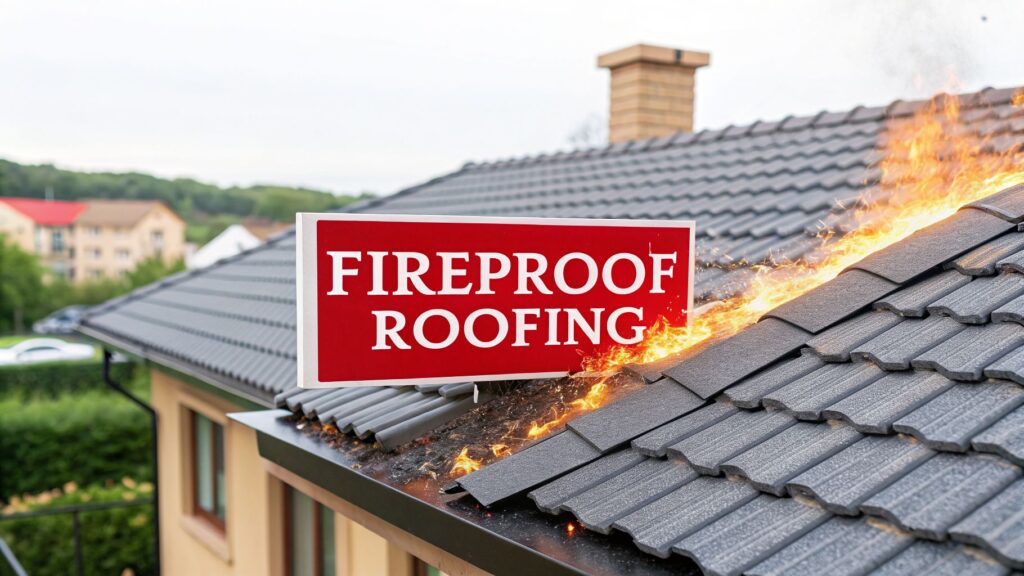
A Homeowner’s Guide to Fireproof Roofing Materials
When you live in Texas, you learn to think about your roof a lot. Most of the time, that means worrying about hail and high winds. But as our weather patterns continue to shift, fire has become a serious threat that many homeowners are just now starting to consider. The truth is, investing in a fireproof roof is one of the smartest, most proactive moves you can make.
Protecting Your Home From More Than Just Hail
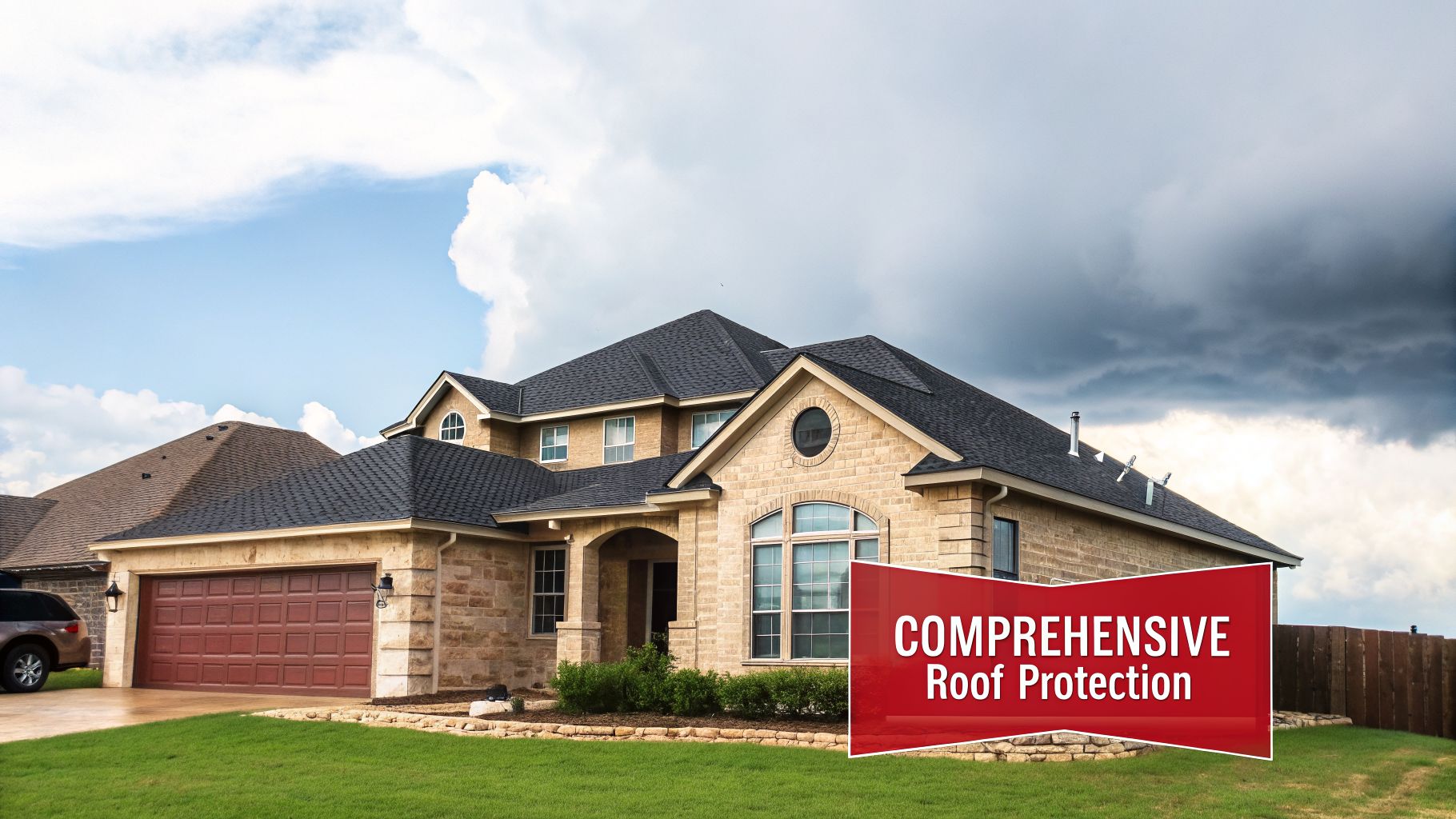
For anyone in Dallas-Fort Worth or out in East Texas, storm season is a familiar drill. But what many folks don't realize is that the danger isn't just coming from the sky. A stray ember from a backyard grill, a downed power line in a storm, or a nearby brush fire can put your home at risk in seconds.
Your roof is the first line of defense against everything, not just rain. Modern fireproof roofing materials are designed to act as a shield, stopping those airborne embers cold before they can land on and ignite the structure underneath. It’s about creating a complete barrier of protection.
Understanding Fire Resistance Ratings
So, how do you know if a roof is truly fire-resistant? It’s not a guessing game. Materials are tested and graded on a clear, standardized system. The best way to think about it is like SPF for your house—some materials offer minimal protection, while others provide a serious, fire-stopping barrier.
This system is called the UL 790 standard, and it classifies roofing materials based on how they hold up under intense fire exposure.
Here’s a quick breakdown of the ratings you’ll see.
Quick Guide to Roof Fire Resistance Ratings
| Rating Class | Level of Fire Resistance | Common Materials |
|---|---|---|
| Class A | Severe Fire Exposure | Metal, Concrete/Clay Tile, Slate, Fiberglass Shingles |
| Class B | Moderate Fire Exposure | Pressure-Treated Shakes & Shingles |
| Class C | Light Fire Exposure | Untreated Wood Shakes, Plywood, Particleboard |
Ultimately, for maximum safety—especially in our often dry Texas climate—a Class A fire rating is what you should be looking for. It gives you the highest level of confidence that your roof can defend your home against a serious external fire threat.
A Growing Need For Protection
This push for better fire safety isn't just something we're seeing locally; it's happening all over the world. Stricter building codes and a greater awareness of risk have caused the market for fireproofing materials to expand significantly.
Globally, the market for these materials was valued at $1.37 billion in 2025 and is on track to reach $1.59 billion by 2026. North America is leading the charge, thanks to our rigorous safety standards. It’s also important to understand how local fire zones are changing design decisions for entire properties, not just the roof.
By choosing the right fire-rated materials, you aren't just meeting a code requirement. You're making a critical investment in protecting your home, your property, and your family.
What Do Roof Fire Ratings (Class A, B, & C) Actually Mean?
When you hear a roofer talk about a "Class A fire rating," it might sound like a bunch of technical jargon. But it's actually a pretty simple concept. Think of it like sunscreen: some give you light protection, while others are a heavy-duty barrier against serious exposure. Roof fire ratings work the same way, protecting your home from stray embers and flames.
These ratings aren't just arbitrary labels. They're earned through a rigorous, standardized test called UL 790 (also known as ASTM E 108), which is conducted by the experts at Underwriters Laboratories. The test doesn't just see if a shingle will burn. It simulates real-world fire conditions, measuring how well the entire roofing system stops flames from spreading, resists catching fire from flying embers, and prevents the fire from burning right through into your attic.
Class A Fire Rating: The Gold Standard
A Class A fire rating is the best you can get. It means the roof can withstand severe fire exposure, giving you the highest level of protection available. To earn this top-tier rating, a roof has to prove it can handle direct, intense flames for a significant amount of time without the fire spreading or breaking through to the roof deck.
For anyone living in Texas—whether you're in a tightly packed DFW suburb or out in an East Texas community surrounded by dry grass and trees—a Class A rating isn't just a good idea, it's essential. It’s your number one defense against airborne embers, which, believe it or not, are what cause most homes to catch fire during a wildfire, not the main blaze itself.
Materials that consistently achieve a Class A rating include:
- Metal roofing (steel, aluminum, copper)
- Concrete and clay tiles
- Natural slate tiles
- Specially designed fiberglass-based asphalt shingles
What About Class B and Class C Ratings?
While Class A is the goal, it helps to know what the other ratings mean. They really put the value of a Class A system into perspective.
A Class B fire rating signifies that a roof can hold up against moderate fire exposure. These systems are a definite step up from the lowest-rated options, but they can still ignite if exposed to intense heat for too long. Pressure-treated wood shakes are a common example of a material that might land in this category.
A Class C fire rating offers protection against light fire exposure only. These roofs, which include materials like untreated wood shakes or basic plywood, provide minimal resistance and will eventually catch fire and burn. For this reason, we almost never recommend them in any area with a measurable fire risk.
Key Takeaway: The rating applies to the entire roofing system, not just the shingle or tile itself. This includes the underlayment and the roof deck. Putting a Class A shingle over the wrong underlayment can compromise the whole system and void its top-tier rating.
Fire-Resistant vs. "Fireproof"
Here’s a critical distinction to understand: there’s no such thing as a truly "fireproof" residential roof. That term implies it could withstand infinite heat forever, which is impossible. The correct term we use in the industry is fire-resistant.
Fire-resistant means the material is specifically engineered to resist catching fire and slow a fire’s spread for a specific amount of time. Think of a firefighter's gear—it's not "fireproof," but it's highly resistant to heat and flames, giving that firefighter crucial time to work safely. A Class A roof does the same for your home. It buys you time, fighting off ignition from embers and slowing a fire's advance. That resistance can be the difference between a small repair and losing your entire home.
Exploring the Best Fireproof Roofing Materials
Okay, you’ve got the basics of fire ratings down. Now for the important part: choosing the right material for your roof. This decision is about more than just picking a color; you’re balancing aesthetics, budget, structural weight, and long-term performance, especially with the kind of weather we get here in Texas.
Let's walk through the top contenders that consistently earn a Class A fire rating. I'll give you a straight, honest look at each one to help you make a solid choice for your home or commercial property.
Metal Roofing
When it comes to fire resistance, metal is an absolute beast. Materials like steel, aluminum, and copper are non-combustible—they just won’t burn. It’s as simple as that. This inherent quality makes them a go-to choice, particularly in high-risk areas.
Think about it: the biggest threat during a wildfire isn't always the flame front, but the thousands of burning embers carried on the wind. When an ember lands on a metal roof, it just fizzles out without ever having a chance to ignite your home's structure.
- Pros: Top-tier fire resistance (Class A), incredible durability with a lifespan of 50+ years, great hail resistance, and it even helps with energy bills by reflecting sunlight.
- Cons: The upfront cost is higher than for standard shingles. While modern steel is tough, very large hail can still cause cosmetic denting.
Concrete and Clay Tiles
For a timeless look combined with serious fire protection, it’s hard to beat concrete and clay tiles. Just like metal, these materials are completely non-combustible. You can't set a piece of tile or a slab of concrete on fire, and that same principle protects your roof.
Their Class A fire rating is a direct result of what they're made of. Tiles create a formidable shield that embers simply can't penetrate.
The real secret to a tile roof's performance, though, is the quality of the installation. Any gaps between the tiles must be perfectly sealed or have proper "bird stops" to keep wind-driven embers from sneaking underneath to the roof deck. A well-installed tile roof is one of the safest systems you can get.
These materials also hold up beautifully against the relentless Texas sun and heat, resisting wear and tear for decades.
Slate Roofing
Slate isn't just fire-resistant; it's the original fireproof roof. People have been using it for centuries for one simple reason: it's literally a rock. As a natural stone, slate is 100% non-combustible and will never burn, easily earning its Class A rating.
Its sheer density provides a nearly impenetrable barrier against both flame and embers. A slate roof offers a permanent sense of security that few other materials can even come close to matching.
If you’re considering this premium option, its incredible durability is a huge part of the appeal. To get a better sense of what that means, you can learn more about slate roof longevity in our detailed guide. While its lifespan is legendary, often lasting 100 years or more, it does come with some major considerations.
- Pros: The ultimate in fire resistance, an unmatched lifespan, and a stunning, classic look that adds significant value.
- Cons: It's incredibly heavy, often requiring extra structural support for your home. It also carries the highest price tag of any roofing material on the market.
Fire-Rated Fiberglass-Asphalt Shingles
Asphalt shingles are on nearly every roof in America, but not all of them offer the same level of fire protection. While a standard shingle might only have a Class C rating, manufacturers have developed advanced Class A fire-rated asphalt shingles that are a world apart.
The magic is in the construction. These shingles start with a fiberglass mat, which doesn't burn easily. That core is then coated in asphalt and covered with a dense layer of mineral granules. This multi-layer system works together to deflect heat and stop embers in their tracks, earning the entire assembly a Class A rating. They strike a great balance between cost, performance, and aesthetics.
This decision tree gives you a clear visual of how to match the right material to your property's fire risk.
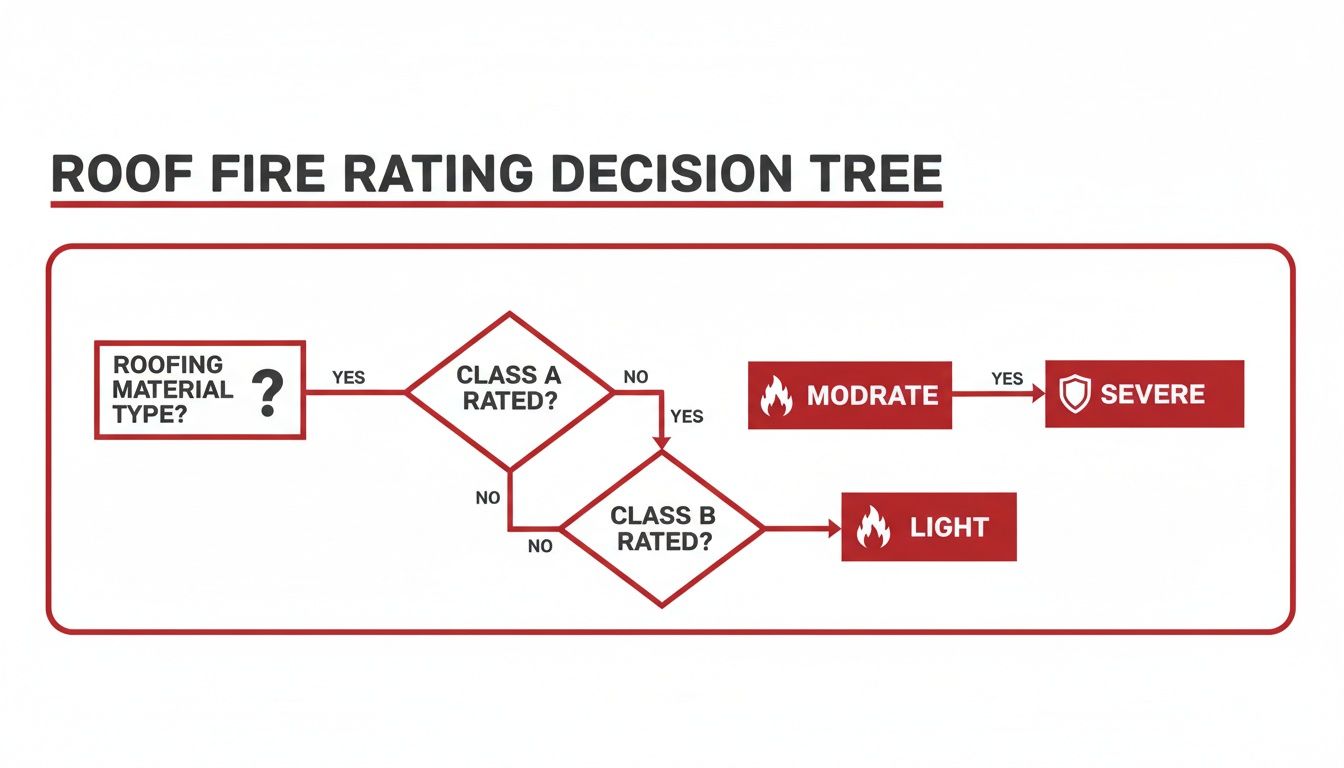
As you can see, for areas with severe fire exposure, naturally non-combustible materials like metal, tile, and slate are the top recommendation. At a minimum, a Class A-rated system is the standard for true protection.
Comparing Fireproof Roofing Materials
Choosing the right material means looking at the whole picture. Fire resistance is your priority, but you also have to consider cost, lifespan, and how well it will stand up to a DFW hailstorm.
To make it easier, we've put together a side-by-side comparison of the top fireproof options. This table lays out the key factors to help you understand the long-term value of your investment.
| Material | Fire Rating | Avg. Lifespan (Years) | Hail Resistance | Estimated Cost Per Sq. Ft. |
|---|---|---|---|---|
| Metal | Class A | 50-70+ | Excellent | $9 – $20 |
| Clay/Concrete Tile | Class A | 50-100+ | Excellent | $10 – $25 |
| Slate Tile | Class A | 75-200 | Superior | $15 – $40+ |
| Class A Asphalt Shingle | Class A | 20-30 | Good to Excellent | $5 – $10 |
| Modified Bitumen | Class A/B | 10-20 | Good | $4 – $9 |
You can see a clear trend: materials with a longer lifespan and superior protection, like slate and tile, come with a higher initial cost. On the other hand, metal and Class A asphalt shingles provide outstanding fire safety at a more accessible price point, making them incredibly popular choices for homeowners across Dallas–Fort Worth and East Texas.
Ultimately, the best fireproof roof is the one that fits your budget, looks great on your home, and gives you the peace of mind you deserve.
Balancing Fire Safety With Hail and Storm Resistance
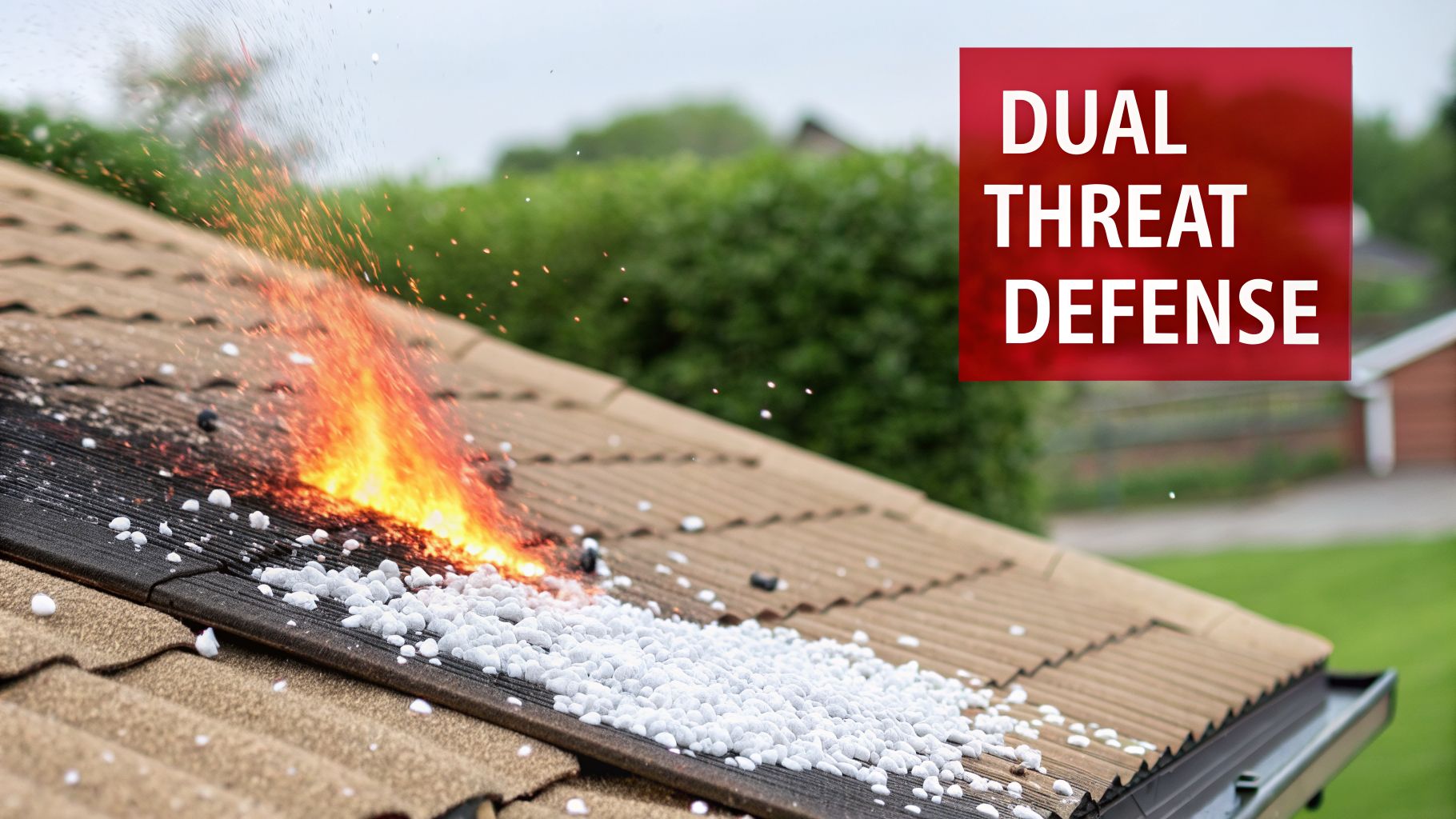
Here in Texas, you shouldn't have to pick your poison. Do you install a roof that can stand up to a summer hailstorm, or one that protects you from the threat of fire? The good news is, you don't have to choose. The best roofing materials often pull double duty.
It turns out that many of the toughest, most fire-resistant roofing options are also champs at shrugging off hail. This isn't a coincidence. By choosing one of these systems, you’re not just solving one problem; you're making a smart, comprehensive investment in your property's future, preparing it for the wild weather we see across Dallas-Fort Worth and East Texas.
Why Fireproof Materials Are Naturally Storm-Tough
The connection between fire resistance and impact resistance comes down to the material’s fundamental toughness. The very qualities that prevent a material from burning or melting under extreme heat are often the same ones that make it incredibly durable against physical blows.
A standing seam metal roof is a perfect example. Steel is completely non-combustible, which is why it easily earns a Class A fire rating. That same brute strength means it can handle hailstones that would shatter or tear through a standard shingle.
It’s the same story with clay tile and slate. These materials are essentially stone and fired ceramic, so they're naturally immune to fire. Their sheer density and rigid structure also happen to provide incredible protection from hail impacts. This is why you see these roofs last for generations, weathering both fire seasons and violent storms.
Class 4 Shingles: The Best of Both Worlds
What if you prefer the classic look and budget-friendliness of asphalt shingles? You're in luck. The industry has developed advanced shingles that carry two separate, top-tier ratings, giving you a powerful one-two punch of protection.
- Class A Fire Rating: This is the highest level of fire resistance, certifying that the shingle will not ignite from flying embers.
- Class 4 Impact Rating: This is the top rating for hail resistance, tested to withstand direct impacts from 2-inch steel balls simulating massive hailstones.
A shingle with both ratings is the ultimate problem-solver for a Texas property owner. You get elite fire safety without giving up an ounce of the storm durability your roof demands.
A roof with both a Class A fire rating and a Class 4 impact rating sends a clear message to your insurance company. It shows you’ve taken serious steps to reduce risk from multiple angles, which often translates directly into significant savings on your premiums.
Unlock Insurance Savings and Total Peace of Mind
Insurance carriers love seeing reduced risk. When you upgrade your roof to one that is both Class A fire-rated and Class 4 impact-rated, you make your property far less likely to suffer a catastrophic loss from either fire or hail. Insurers frequently reward this proactive protection with substantial discounts on your homeowner's insurance policy.
Over time, these premium savings can help offset the initial investment, making a high-performance roof a smart financial decision in the long run. If you’re exploring all your options for storm-proofing your property, be sure to check out our detailed guide on the top hail-resistant roofing materials on the market today.
Choosing a roof that defends against both fire and hail means you're covered, no matter what Texas weather throws at you. It’s an investment that delivers an unmatched level of security and true peace of mind.
Navigating Costs, Codes, and Insurance Benefits
Putting a new fire-resistant roof on your property is a big decision, and it’s about more than just protecting your home or business from a single disaster. The choice you make has a ripple effect, touching everything from local building codes and your long-term budget to how much you pay for insurance each year. Getting a handle on these numbers is the key to making a smart investment.
Here in Dallas–Fort Worth and across East Texas, building codes are getting stricter for good reason. It’s becoming more and more common for a Class A fire rating to be the mandatory minimum, especially when you're building new or doing a major roof replacement. This isn't just about a city inspector checking a box; it’s a critical safety standard designed to keep fires from jumping from one building to the next and devastating an entire neighborhood.
Looking Beyond the Initial Price Tag
Let’s be honest: the sticker shock on high-performance fireproof roofing materials can be real. They almost always cost more upfront than standard asphalt shingles. But that initial expense is only the beginning of the story. When you look at the full picture over the lifetime of your roof, the numbers start to look very different.
It’s a bit like choosing between two cars. One is cheaper today, but the other is more durable and fuel-efficient. It costs more at the dealership, but you save money year after year on gas and repairs. A fire-resistant roof pays you back in a similar way:
- Incredible Lifespan: Materials like metal, tile, and slate can last 50 years or more. For many property owners, that means it’s the last roof they’ll ever need to buy.
- Fewer Repair Bills: These materials are tough. They stand up to storms and wear and tear much better, which means you’re not shelling out cash for constant fixes.
- Big Insurance Savings: This is often where you see the most significant financial return. A safer roof almost always means a lower premium.
This incredible long-term value is a huge driver behind the roofing materials market, which is on track to hit $151.8 billion by 2026. And fire-resistant options are a massive part of that growth. In areas prone to wildfires, a properly rated roof can slash the risk of ember ignition by 70-90% and cut total property losses in a fire by an average of 40%.
How a Class A Roof Can Lower Your Insurance Premiums
Insurance companies are in the business of calculating risk. From their perspective, a building with a standard, flammable roof is a much bigger liability than one protected by a Class A system. When you upgrade your roof, you’re actively reducing their risk—and they are often happy to reward you for it.
By installing a Class A fire-rated roof, you're sending a clear signal to your insurance provider: you’ve made a serious investment in preventing a catastrophe. This almost always translates into better policy terms and lower annual payments.
Many homeowners in Texas see a real drop in their premiums after making the switch, particularly if the roof also has a Class 4 impact rating for hail. Over the years, those savings add up, helping to offset the initial cost of the roof and providing a tangible return on your investment. As you weigh your options, it's also smart to understand the potential financial fallout from a fire; you can learn more about fire damage restoration costs and insurance claims to see the full scope.
Figuring out how to pay for a major upgrade like this can feel daunting, but there are flexible options available. If you're exploring how to make it work for your budget, our guide on how to finance a new roof walks you through the possibilities. In the end, a fire-resistant roof isn't just another expense. It’s a powerful financial asset that protects your property, increases its value, and saves you money for decades to come.
Why Professional Installation and Maintenance Matter
Choosing top-tier fireproof roofing materials is a fantastic first step, but it’s really only solving half of the equation. Even the most robust Class A metal panels or slate tiles can be rendered ineffective if they aren't installed with absolute precision.
Think of it this way: a fire-resistant roof is an entire defensive system, and its true strength is only as good as its weakest point. A sloppy installation leaves behind hidden vulnerabilities. Shortcuts like using the wrong fasteners or improperly sealing the flashing around a chimney might not be visible from the ground, but to a wind-driven ember, they’re a wide-open door. Those tiny gaps allow fire to completely bypass your expensive, fire-resistant materials and ignite the vulnerable wood decking underneath.
Installation Details That Cannot Be Overlooked
This is where a professional roofing crew, specifically one with experience in fire-rated assemblies, becomes essential. They understand that achieving a true Class A rating involves far more than just laying down the right shingles. It’s a meticulous process where every detail counts.
Here are a few key factors that a pro will never miss:
- Correct Underlayment: Using the manufacturer-specified fire-resistant underlayment is non-negotiable. This is your critical second line of defense if embers manage to get past the primary roofing material.
- Proper Fastening: Every material, from concrete tile to standing seam metal, has very specific fastening requirements. The right technique ensures a seamless fit with no weak points or gaps for embers to exploit.
- Sealed Edges and Vents: All roof penetrations—like vents, skylights, and chimneys—are potential failure points. They must be perfectly flashed and sealed to lock out fire. This is where most DIY or cut-rate jobs fail spectacularly.
Simply put, professional installation ensures that the fire-resistant system you paid for is the system you actually get. The integrity of the entire assembly depends on the skill and knowledge of the installer.
Ongoing Maintenance for Lasting Protection
Once your new roof is perfectly installed, a little routine upkeep is all it takes to maintain its protective qualities for the long haul. Remember, a fire doesn't need a lot of fuel to get out of control.
One of the most effective things any property owner can do is keep their roof and gutters clear of flammable debris. A thick blanket of dry leaves, pine needles, and twigs is basically a pile of kindling sitting on top of your home. Regular cleanings, especially before the hot, dry seasons in Texas, completely eliminate this risk. A clean roof is a safer roof, allowing your fire-resistant materials to do their job without any added fuel.
Your Top Questions About Fireproof Roofing Answered
When you start digging into fire-resistant roofing, a lot of practical questions come up. We get it. As a homeowner or business owner in Texas, you want to be sure you're making a smart choice. Here are the answers to the questions we hear most often.
Will a Class A Fire-Rated Roof Actually Get Me an Insurance Discount?
For most Texas homeowners, the answer is a big yes. Insurance carriers love to see a Class A rated roof because it dramatically lowers their risk. When you combine that with a Class 4 impact rating for hail, the savings can be even more substantial. You’re protecting your property against the two biggest threats in our area, and your insurer will likely reward you for it.
Are Fireproof Roofs Also Better at Handling Texas Hail?
They certainly tend to be. Many of the materials that are naturally non-combustible—like metal, slate, and tile—are also incredibly tough and stand up well to hail.
You don’t have to choose between fire and hail protection, either. You can find Class A fire-rated asphalt shingles that are also rated Class 4 for impact resistance. It’s the ultimate one-two punch for Texas weather.
How Much More Expensive Are Fireproof Roofing Materials?
The upfront cost for fireproof roofing is usually higher than for basic shingles, but how much more depends entirely on the material. Moving up to a high-end Class A asphalt shingle might be a smaller jump in price. Opting for premium materials like metal or slate will be a more significant initial investment.
But don't just look at the initial price tag. With their incredible lifespan, lower maintenance, and potential insurance savings, these stronger roofs often end up being the more cost-effective choice over the long haul.
Can Any Roofer Install a Class A Roofing System?
Absolutely not. This is one area where you can't cut corners. A Class A roofing system is only as good as its installation. If a roofer installs a top-rated shingle incorrectly, you won't get that Class A protection you paid for.
You need a certified, experienced roofing contractor who knows the specific techniques required for these systems. That means using the right underlayment, proper fastening methods, and correct sealing to create a complete, fire-resistant barrier. Anything less is a gamble.
Ready to see what a fireproof roof could look like for your property? The team at Hail King Professionals has been installing and inspecting high-performance roofs across Texas since 1991. Contact us today for a free, no-obligation roof inspection and let’s build something that lasts.