

What Is Elastomeric Roof Coating?
Ever wonder what an elastomeric roof coating actually is?
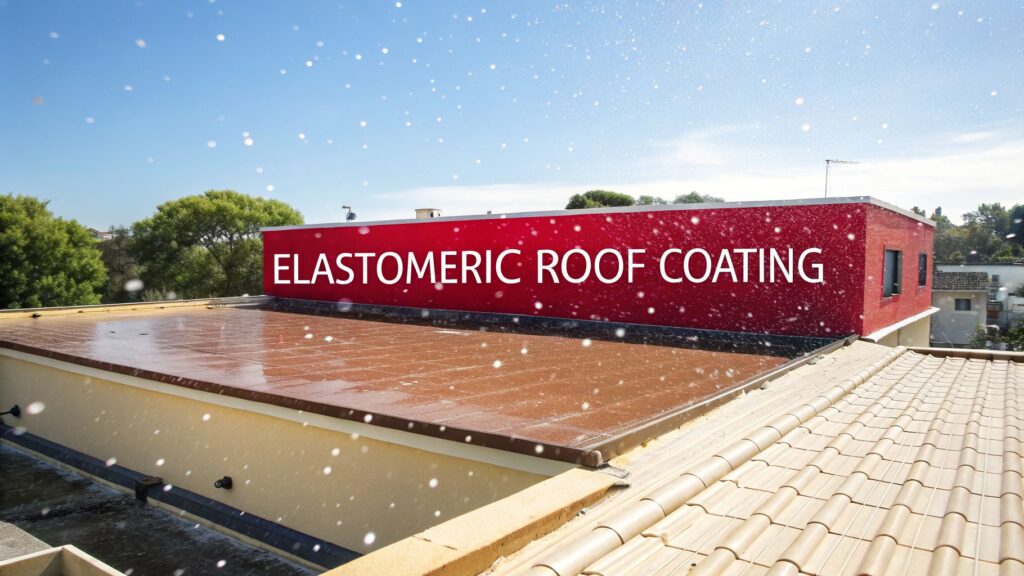
Picture a seamless, waterproof jacket for your roof that also acts as a powerful sunscreen. That's the best way to describe it. These coatings are applied as a thick liquid directly over your existing roof. As they dry, or "cure," they form a single, continuous membrane—a flexible, durable shield that seals your roof from the elements.
Understanding Your Roof's Flexible Shield
Think of it as a high-performance, paint-on layer of protection. Because it’s applied as a liquid, it creates a monolithic surface with no seams, gaps, or overlaps. Those are the very places where water typically finds a way to sneak in.
But the real magic is right in the name: "elastomeric." This simply means it's incredibly elastic.
Much like a rubber band, an elastomeric coating can stretch and return to its original shape without cracking or tearing. This flexibility is absolutely critical for roofs, especially under the intense Texas sun.
Roofs are constantly expanding and contracting. As temperatures soar during the day, the materials swell. When night falls and things cool down, they shrink. This daily cycle, known as thermal shock, is brutal on rigid materials, often causing them to crack and split over time. An elastomeric coating, however, moves with your roof, absorbing that stress and preventing leaks before they start.
Two Superpowers for Texas Properties
For anyone managing a property in Texas, these coatings are a smart investment against our harsh climate, primarily for two reasons.
- Superior Waterproofing: The seamless barrier is your best line of defense against our famous thunderstorms and the potential for ponding water—a constant headache for flat or low-slope roofs.
- Powerful Solar Reflection: Most elastomeric coatings are bright white, which essentially turns your roof into a "cool roof." This reflective surface bounces the sun's harsh solar radiation back into the atmosphere instead of letting your building absorb it as heat.
This "cool roof" effect can drastically lower your roof's surface temperature. That means less heat gets transferred into your building, giving your air conditioning system a much-needed break and leading to real energy savings during those scorching Texas summers.
A Legacy of Innovation
While the idea of using synthetic polymers for roofing isn't new—it dates back to the 1950s—the real breakthrough came in the late 1970s with the introduction of modern, water-based acrylics. These formulations finally delivered the long-lasting flexibility needed to bridge cracks and handle our climate's extremes.
Today's coatings can reflect up to 80-90% of solar radiation, protecting everything from metal to asphalt roofs across Texas. It’s a practical, proven technology that extends the life of your roof and protects your most important asset. If you're interested, you can learn more about the history behind these materials and their evolution into today's advanced solutions.
Comparing The Three Main Types of Elastomeric Coatings
When you're looking at roof coatings, you'll quickly find it's not a one-size-fits-all deal. The three main players in the market—acrylic, silicone, and polyurethane—each bring something different to the table. Choosing the right one really boils down to your specific roof, your budget, and the unique challenges of the Texas climate.
Think of it as picking a specialized tool for a job. Are you primarily fighting off blistering sun, dealing with constant puddles after a downpour, or protecting against foot traffic and hail? The answer will point you toward the best chemistry for your building.
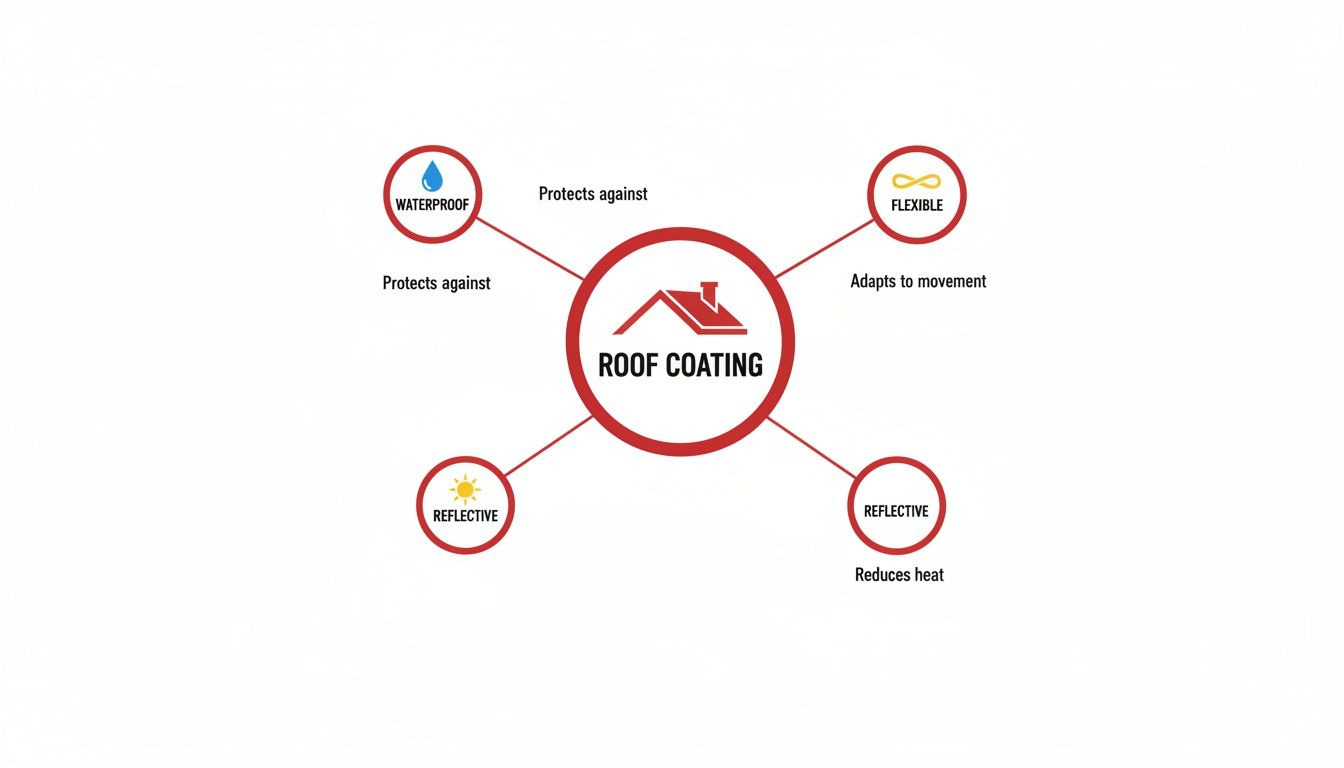
As you can see, the real magic happens when these coatings deliver on three fronts at once: they form a waterproof seal, they remain flexible to prevent cracks, and they reflect sunlight to cool the building down.
Acrylic: The Cost-Effective Sun Shield
Acrylic coatings are the workhorses of the industry, and for good reason. These water-based formulas are your best bet for fighting the sun. Their main claim to fame is exceptional reflectivity, making them the go-to choice for creating a "cool roof."
By reflecting a huge portion of the sun's heat, an acrylic coating can dramatically lower the temperature on your roof's surface. That translates directly into a cooler building and very real savings on your air conditioning bill during those brutal Texas summers.
The one major watch-out for acrylics is ponding water. Since they're water-based, they can soften and lose mil thickness if they're sitting in a puddle for too long. That makes them a poor fit for truly flat roofs where water just doesn't drain.
- Best For: Pitched or sloped roofs with good drainage.
- Primary Strength: Top-tier solar reflectivity and UV protection at a great price point.
- Key Consideration: Avoid using it on roofs with persistent standing water issues.
Silicone: The Unbeatable Rain Armor
If your top priority is absolute, positive waterproofing, silicone is the champion. Unlike acrylics, silicone is a moisture-cured material that is completely unfazed by standing water. It's essentially 100% waterproof, making it the ultimate "rain armor" for flat and low-slope commercial roofs.
Imagine a flat roof in East Texas that's always holding puddles after a storm. A silicone coating creates a seamless, rubber-like membrane that water simply cannot get through. It won't degrade, soften, or peel even when submerged.
Silicone also holds up incredibly well against UV radiation, so it won't chalk or break down under the constant sun. The trade-offs? It attracts dirt more than other types (which can slightly reduce its reflectivity over time) and it gets very slick when wet. Also, once you go silicone, you have to stick with it—nothing else adheres to a cured silicone surface, so future recoats must be with a compatible silicone product.
Polyurethane: The Impact Defender
For situations that demand sheer toughness, you need polyurethane. These coatings are the heavy-hitters, known for superior strength and abrasion resistance. Think of polyurethane as the "impact defender" for your roof. It creates a hard-wearing surface that stands up to heavy foot traffic, making it perfect for roofs with lots of HVAC units or regular maintenance.
That toughness is also a huge advantage in hail-prone areas like the Dallas-Fort Worth metroplex. Polyurethanes come in two main types, which are often used together as a system:
- Aromatic Polyurethane: The more affordable of the two, used as a tough, durable base coat. It's not as UV-stable.
- Aliphatic Polyurethane: The pricier, UV-stable top coat that holds its color and protects the aromatic base coat from the sun.
This one-two punch creates an incredibly durable, waterproof system. The downside is that polyurethanes are the most expensive of the three options.
Acrylic vs. Silicone vs. Polyurethane Roof Coatings
To make things a bit clearer, we've put together a quick comparison table. This should help you line up your roof's needs with the right coating chemistry.
| Feature | Acrylic | Silicone | Polyurethane |
|---|---|---|---|
| Ponding Water | Poor | Excellent | Good |
| UV Resistance | Very Good | Excellent | Excellent (Aliphatic) |
| Durability & Traffic | Fair | Fair | Excellent |
| Cost | Low | Medium | High |
| Best Use Case | Sloped roofs, high sun | Flat roofs, high rain | High traffic, hail risk |
Ultimately, each coating has a clear purpose. Acrylics are fantastic for deflecting heat on sloped roofs, silicones are unbeatable for waterproofing flat roofs, and polyurethanes offer the best defense against physical damage and foot traffic.
Key Benefits for Texas Property Owners
Let’s get down to what really matters. Beyond the science, what does an elastomeric roof coating actually do for a property owner in Texas? This isn't just about slapping on a new layer of paint—it's a strategic move that addresses the real-world headaches of building ownership in our climate, from the brutal summer heat to those out-of-nowhere hail storms.
Think of it as giving your roof a new lease on life. A professionally applied elastomeric coating essentially becomes a shield, taking all the punishment from UV rays, wild temperature swings, and severe weather. This can add an incredible 10 to 20 years of service life to a roof that's still in decent shape, letting you push a full, disruptive, and expensive tear-off years down the road.
You're shifting from a reactive "fix-it-when-it-breaks" mindset to a proactive one. It’s not just about patching a leak; it's about protecting the entire roof assembly for the long haul.
Drastic Energy Savings
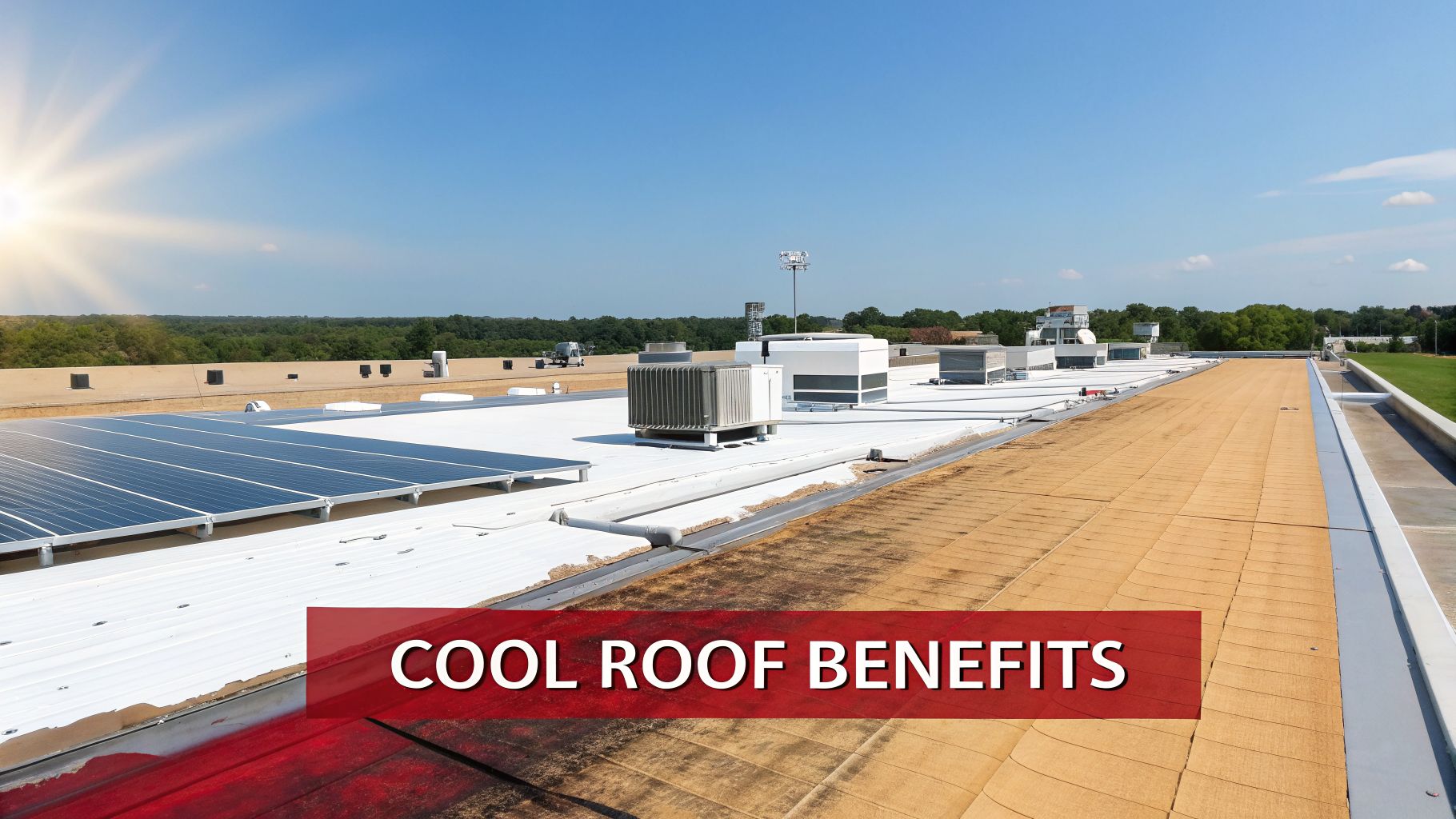
Anyone who’s lived through a Texas summer knows the fight against the heat is constant, and your roof is ground zero. A traditional dark roof can easily soar past 170°F, essentially cooking your building from the top down and forcing your air conditioning to run nonstop.
A reflective "cool roof" coating completely changes the game.
Instead of soaking up the sun’s brutal energy, a white elastomeric surface reflects it away. The roof stays dramatically cooler, which means far less heat gets transferred inside.
The impact shows up directly on your utility bills. Building owners regularly report a 15-30% drop in cooling costs during the hottest months. That’s a real return on investment that pays you back year after year.
This surge in energy efficiency is one of the biggest reasons for the coating boom. It’s a global trend, with the market expected to grow from USD 27.3 billion in 2026 to USD 47.1 billion by 2033, largely driven by the demand for sustainable, resilient building solutions. If you're interested in the numbers, you can explore more about this market growth and what's behind it.
Seamless Waterproofing and Hail Resistance
Texas weather is reliably unpredictable. You get everything from biblical downpours to hail that sounds like rocks hitting your roof. An elastomeric coating offers a formidable defense against both.
Complete Waterproofing: Since the coating is applied as a liquid, it cures to form a single, unbroken membrane across your entire roof. There are no seams, joints, or fasteners—the typical weak spots where leaks love to start. You get a monolithic, bathtub-like seal against water.
Enhanced Hail Resistance: That "elastic" quality isn't just for temperature swings. The coating’s tough but flexible, rubber-like finish helps it absorb and deflect the impact of small-to-moderate hail. Instead of cracking a rigid surface or denting a metal panel, the hailstones bounce off, drastically cutting the risk of damage.
For property owners here in Texas, it helps to keep an eye on the bigger picture. Understanding trends in the broader Texas construction market can give you valuable context on project costs, contractor availability, and where your investment fits into the local economy. It’s all part of making a smart, informed decision for your asset.
Is Your Roof a Good Candidate for Coating?
An elastomeric roof coating can be a game-changer, but it’s not a magic fix for every single roofing issue. The real question is whether your existing roof is fundamentally healthy enough to be restored. Think about it this way: you wouldn't put a beautiful, expensive paint job on a car with a rusted-out frame and a failing engine. The same principle applies here. A coating is meant to protect and preserve a solid roof, not bring a dead one back to life.
The sweet spot for a coating is a roof that’s structurally sound but is starting to show its age on the surface. The "bones" are good, but the outer layer is getting tired. You might see seams starting to pull, a few nagging minor leaks, or just general wear from years of brutal Texas sun. This is where a coating works wonders, giving your roof a brand-new, seamless, and waterproof skin that can add years to its life.
Roofs That Are Perfect for Coating
Some roofing materials are practically begging for a coating once they reach a certain age. These are the systems we see succeed with restoration time and time again across Texas. While you always need a professional inspection, these are generally the best candidates:
- Metal Roofs: This is the ideal scenario. A coating can seal every last fastener and seam, stop surface rust in its tracks, and drastically lower your cooling costs by reflecting the sun's heat.
- TPO and EPDM (Single-Ply): These common flat roof membranes are great candidates once they start to age. Over time, the sun makes them chalky and brittle. A coating restores that lost UV protection and seals up weathered seams for good.
- Modified Bitumen and Built-Up Roofs (BUR): Famous for their "alligatoring" (a pattern of cracks that looks like alligator skin), these asphalt-based roofs are prime for restoration. A thick, flexible coating fills those cracks and creates one monolithic surface, putting an end to leaks.
Clear Red Flags Your Roof May Not Qualify
Knowing when not to coat a roof is just as important. Slapping a coating on a failing roof is what we in the business call putting a "Band-Aid on a bullet wound." It might cover up the problem for a little while, but it won't fix the underlying damage—and it's a complete waste of money. If your roof has these problems, a full replacement is almost always the smarter, safer path.
The single biggest dealbreaker for a roof coating is wet or saturated insulation. If water has been trapped underneath your roof's membrane, the insulation is ruined. Coating over it just traps that moisture, which leads to deck rot, mold, and catastrophic failure from the inside out.
Here are the most significant red flags we look for:
- Saturated Insulation: A pro will check for this by taking core samples or using an infrared scanner to find hidden moisture.
- Major Structural Damage: This isn't surface-level stuff. We're talking about rust that has eaten all the way through metal panels, widespread rot in the wood deck, or parts of the roof that are noticeably sagging.
- Multiple Pre-Existing Roof Layers: Building codes usually cap you at two roof systems. If someone already installed a new roof over the old one, you’ll most likely need a full tear-off before anything else can be done.
Getting this right is everything. For property owners, understanding when restoration is a viable option can save you a tremendous amount of money and headache. To get a better sense of how these solutions apply to low-slope commercial buildings, you can check out our guide on flat roof coating options for a deeper dive.
The Professional Application Process Explained
What’s the difference between a roof coating that fails in two years and one that protects your building for twenty? It all comes down to the application. Anyone can slap some white paint on a roof, but a professional-grade coating system is a different beast entirely. It’s a precise process where expertise isn't just a nice-to-have—it's what makes the investment worthwhile.
Here’s a fact that might surprise you: most seasoned contractors will tell you that 90% of a roof coating's success is locked in before a single drop of product is applied. Skipping steps in the prep phase is a guaranteed recipe for failure, leading to peeling, bubbling, and the very leaks you were trying to prevent.
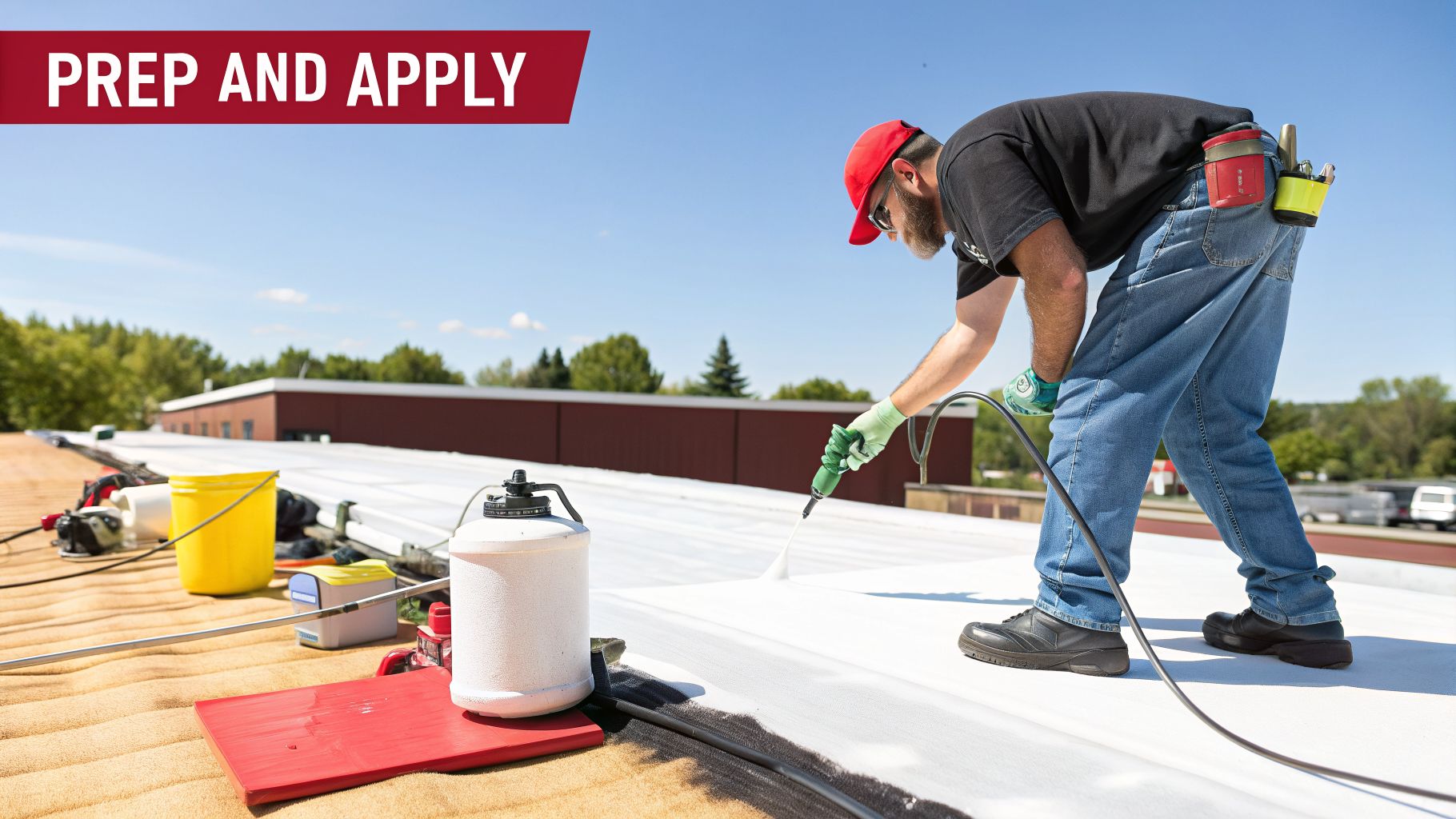
A true professional follows a strict protocol. It's the only way to ensure the coating bonds correctly and performs the way it was engineered to for years on end.
Step 1: Thorough Inspection and Diagnosis
The job always starts with a deep-dive inspection. A good contractor plays the role of a roof detective, hunting down every current and potential problem. This means walking the entire roof surface, checking for weak spots, inspecting the flashing around every pipe and HVAC unit, and looking for signs of trapped moisture.
They’ll often take core samples or use an infrared scanner to make sure the insulation under the roof membrane is bone dry. This is a critical, non-negotiable step. If you coat over wet insulation, you’re just trapping the moisture, which can cause the roof deck to rot from the inside out.
Step 2: Intensive Surface Preparation
Once the roof gets the green light, the real work begins. This isn't your average spring cleaning; it’s an intensive surface prep that makes or breaks the job.
Contractors will bring in high-pressure power washers—we're talking 1,500 PSI or higher—to blast away decades of accumulated dirt, grime, algae, and any loose, flaky material. The coating needs a clean, dry, and solid surface to create a permanent chemical bond.
With the roof stripped clean, the detail work starts. Every seam, screw, and penetration gets special attention. This typically involves:
- Applying specialized sealants or waterproof caulks to fill any cracks and gaps.
- Reinforcing seams and joints with fabric tape for added strength against movement.
- Treating any rust on metal components with a dedicated red iron oxide primer to stop corrosion in its tracks.
Step 3: Expert Coating Application
Only when the surface is perfectly prepped and repaired can the coating be applied. Professionals use a high-powered airless sprayer to lay down the material, usually in two separate coats. This method is far superior to rolling, as it creates a thick, seamless layer without any weak points or pinholes.
The goal is to achieve the manufacturer's specified dry film thickness (DFT), measured in mils (a thousandth of an inch). Hitting this target is essential for proper waterproofing and to keep the warranty valid. Applying the coats in a perpendicular pattern—the first going north-to-south, the second east-to-west—builds a stronger, more uniform membrane.
After that, a simple annual inspection and cleaning are all it takes to keep the coating reflective and effective. For a closer look at the techniques involved, you can learn more about how to apply roof coating in our detailed guide. This professional process is what turns a simple coating into a long-term roofing solution.
When your roof is showing its age, you’re at a fork in the road. Do you go for a restorative coating, or do you bite the bullet for a full—and much more expensive—roof replacement? It's a huge financial decision, and understanding the real-world costs is key to protecting your investment.
Nine times out of ten, an elastomeric roof coating is going to be friendlier to your wallet. It's a capital expense that breathes new life into the roof you already own, rather than tearing it all off and starting from scratch. A full replacement is a massive undertaking involving tear-off labor, disposal fees, and the sky-high cost of new materials. A coating project sidesteps most of that.
The Financial Case for Restoration
So, let's talk numbers. Restoring a roof with a quality coating typically runs between $2 to $6 per square foot. That price depends on a few things, like which coating we use (acrylic, silicone, or polyurethane) and the current state of your roof. If it needs a lot of cleaning and repairs before we can even start coating, the cost will naturally be on the higher end of that range.
Now, compare that to a full commercial roof replacement, which can easily cost $10 to $25+ per square foot. On a large commercial facility, that difference is enormous. We're talking about a move that could save you tens, or even hundreds, of thousands of dollars.
The bottom line is this: a roof coating can push the massive expense of a full replacement down the road for another 10 to 20 years. You're squeezing every bit of value out of your original roof investment instead of just throwing it away.
Beyond the upfront savings, a coating project causes far less chaos. A full replacement is a noisy, messy, and drawn-out affair. Applying a coating is much faster and less disruptive for your tenants or business operations.
When to Repair and Coat vs. When to Replace
How do you make the call? It all comes down to the condition of the roof underneath the surface. A thorough professional inspection is the only way to know for sure, but this is the decision-making framework we use every day.
Choose to Repair and Coat if:
- The roof structure is solid, with no sagging or deck damage.
- The insulation is still dry and doing its job.
- The problems are mostly on the surface—things like aging, a few minor leaks, or seams that are starting to separate.
Choose to Replace if:
- There's widespread water saturation trapped under the membrane (a classic sign of a failing system).
- You have significant structural decay, like rusted metal or rotted wood, which is a major safety issue.
- You're already sitting on two or more roof layers. Building codes will almost always require a full tear-off at that point.
For contractors trying to nail down their estimates, specialized tools like Exayard roofing estimating software are invaluable for creating precise and competitive bids.
Ultimately, if your roof's "bones" are good, restoration is almost always the smartest financial move. To see how these numbers stack up against a full tear-off in our area, you can check out our guide to the cost of a new roof in Texas.
Frequently Asked Questions
Even after getting the full rundown on elastomeric coatings, you probably have a few practical questions. Let's tackle the common concerns we hear from Texas property owners every day, giving you the straight answers you need to make a confident choice.
Can An Elastomeric Coating Really Withstand A Texas Hail Storm?
Yes, it makes a huge difference. While nothing can make a roof completely "hail-proof," the rubber-like flexibility of a coating allows it to absorb the shock from small to moderate hail without cracking or shattering. Think of it as a built-in shock absorber for your roof.
This is a massive advantage over more rigid materials. A good coating can prevent the thousands of dents that turn a metal roof into a dimpled mess or stop the severe granule loss on shingles that leads to leaks and a guaranteed insurance claim. It acts as a tough, impact-resistant shield, especially when it’s applied over a solid, well-maintained roof deck.
Will A Roof Coating Void My Original Roof's Warranty?
That’s a critical question, and the honest answer is: it absolutely can. Many roofing manufacturers will void their material warranty the second an unapproved product is applied over their shingles or membrane. This is exactly why hiring an experienced, professional contractor is not just a good idea—it's essential.
A true pro will always check the terms of your existing warranty first. If there’s a conflict, they won't move forward. Instead, they'll spec out a complete coating system that comes with its own powerful, long-term manufacturer's warranty covering both materials and labor, ensuring your property remains fully protected.
How Much Can I Realistically Save On My Energy Bills?
The savings can be dramatic, especially when a Texas summer is in full swing. A reflective "cool roof" coating can knock your roof's surface temperature down by as much as 60°F. That drastically cuts down on the heat being baked into your building.
The real-world result is that your AC unit gets a much-needed break. We consistently see commercial and residential clients reduce their summer cooling costs by 15-30%. Over the life of the coating, those energy savings can often add up to pay for the entire project.
My Commercial Flat Roof Has Ponding Water. Is Coating Still An Option?
It’s not just an option—it’s often the best solution, but only if you use the right product. This exact scenario is where a silicone roof coating really proves its worth. Unlike water-based acrylics, silicone is 100% waterproof and simply doesn't care about being submerged; it won't break down, soften, or peel even when it’s under standing water for days.
Of course, any good contractor will first address the root cause of the ponding, like clearing blocked drains or building up low spots. But applying a seamless silicone system provides the ultimate, long-term defense against leaks on flat roofs that are prone to ponding after our intense Texas downpours.
Ready to protect your property with a solution that saves money and extends the life of your roof? The team at Hail King Professionals has been serving Dallas-Fort Worth and East Texas since 1991. Contact us today for a free, no-obligation roof inspection and see if a coating is right for you. Find out more at https://hailkingpros.com.